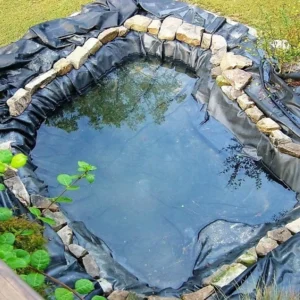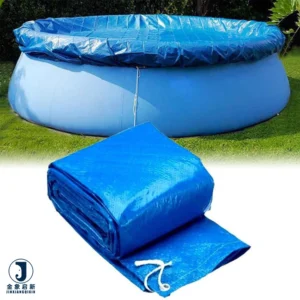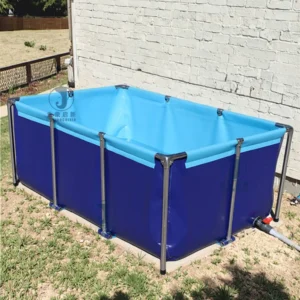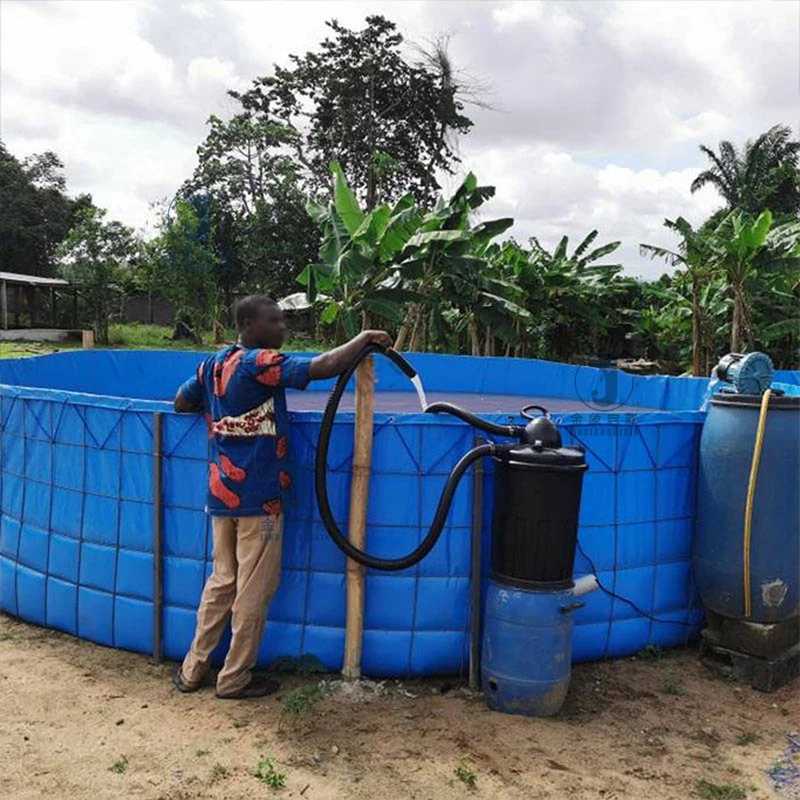
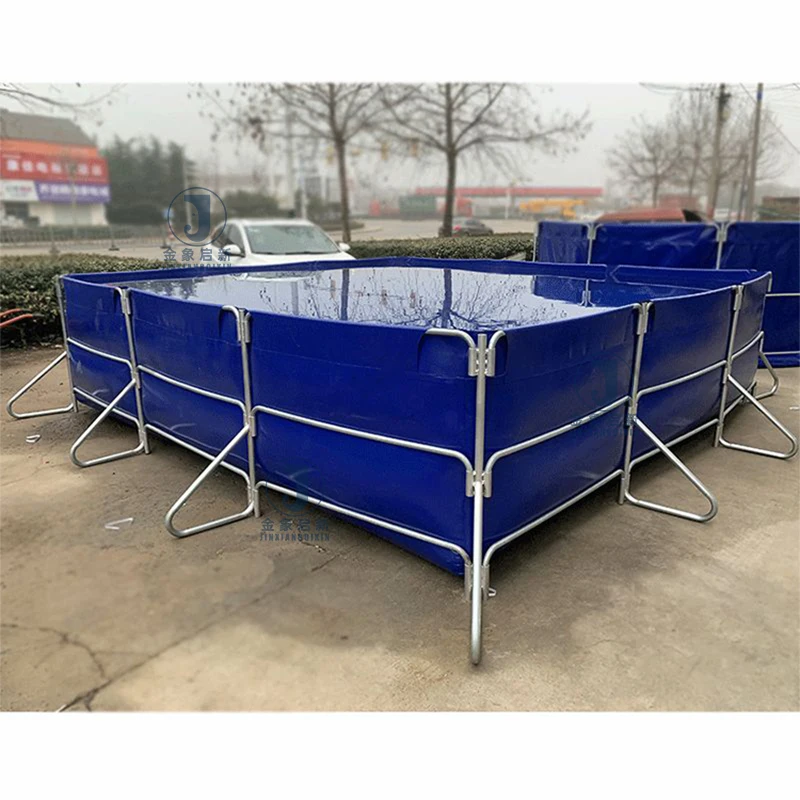
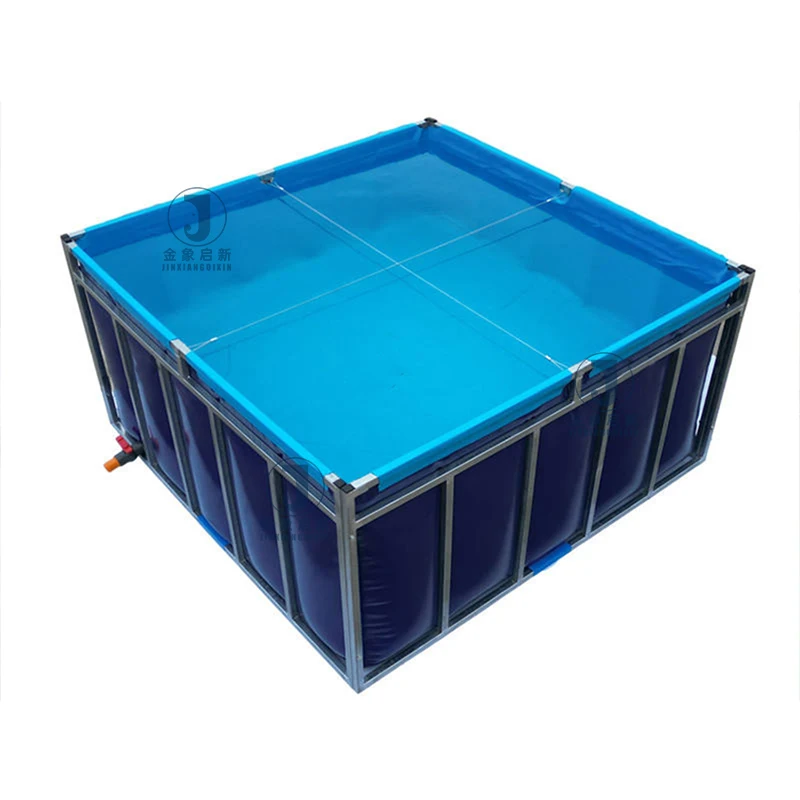
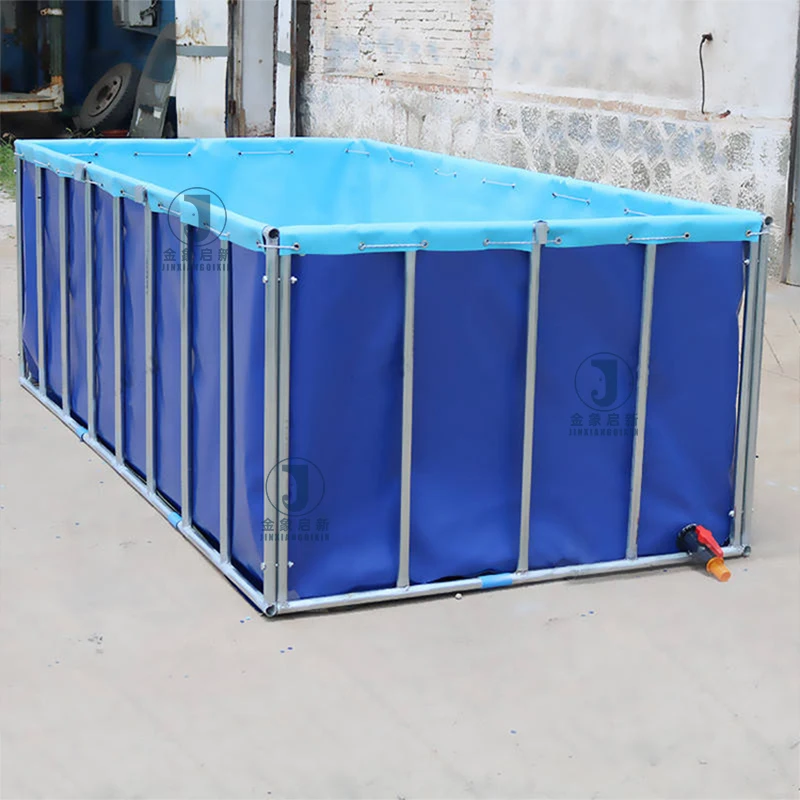
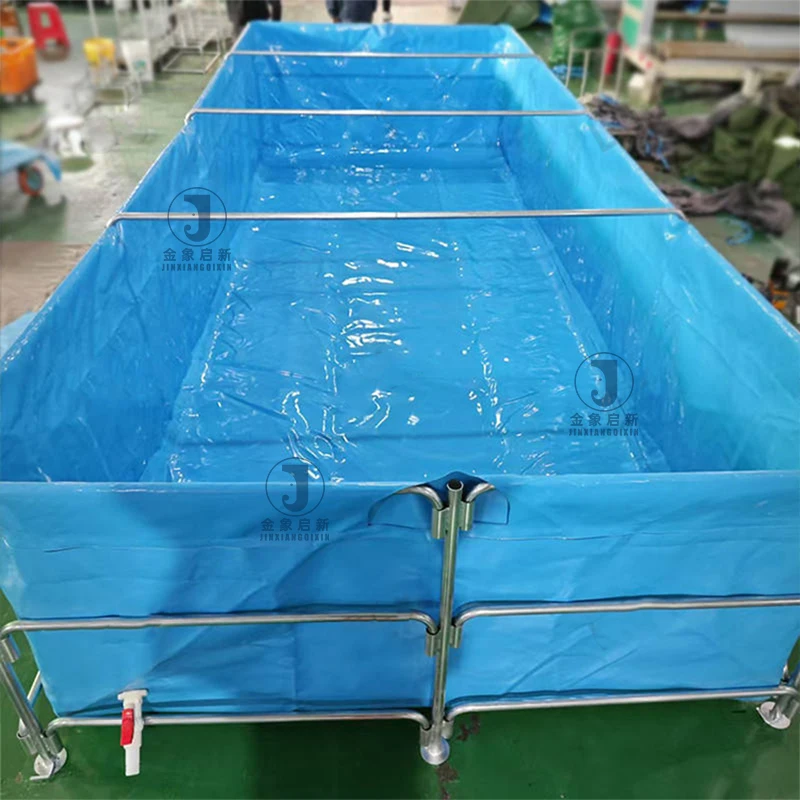
PVC Tarpaulin Fish Pond Liner, 350–900 g/m², 500D–1300D Base — double-sided PVC coated polyester with heat-weldable seams for aquaculture and water containment applications.
GSM and yarn count together determine tensile and puncture resistance, allowing buyers to match material weight to pond depth and substrate conditions. Double-sided coating delivers consistent adhesion and reliable hot-air welding at seam joints where flex stress concentrates.
- Yarn options from 500D×840D to 1300D×1300D across eight weight grades
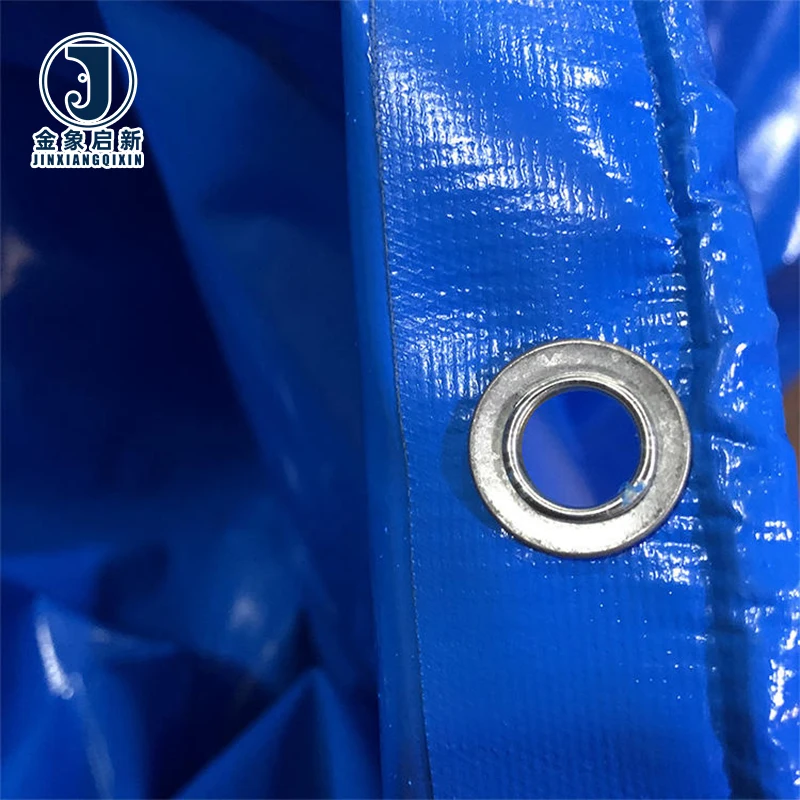
- Custom-cut panels with eyelets and reinforced hems available
- Thickness range 0.29mm–0.65mm to suit varying water pressure loads
- UV and flame-retardant treatment options with test-report documentation
Backed by 30 years of coating process expertise, 100% pre-shipment inspection on every roll, and a 10-person R&D team supporting full custom sizing and fabrication.
Description
Proven Process Control — Every roll of PVC coated tarpaulin for fish pond undergoes stage-gate QA from coating weight to final inspection, ensuring the GSM on your order matches the GSM you receive.
Technical Specifications
| Parameter | Value |
|---|---|
| Product Type | PVC Coated Tarpaulin Roll / Pond Liner |
| Total Thickness | 0.65mm |
| Base Fabric Denier | 1000D×2000D |
| Mesh Count / Density | 30×15 |
| Tensile Strength (Warp) | 3900 N |
| Tensile Strength (Weft) | 3500 N |
| Coating Material | PVC |
| Base Fabric Material | Polyester |
| Key Features | Water resistant, waterproof, available in flame retardant grades — confirm the grade required for your market, available with anti-UV treatment — confirm test basis for prolonged outdoor exposure |
Application Suitability
| Application | Exposure & Requirement |
|---|---|
| Fish pond lining | Permanent water immersion, hydrostatic pressure, soil chemistry contact, puncture risk from substrate |
| Aquaculture tank and shrimp pond | Continuous water containment, biological load, cleaning chemical exposure, UV exposure at water surface |
| Agricultural water reservoir | Seasonal fill-drain cycles, weathering, debris impact, UV exposure on exposed edges |
| Decorative and commercial pool | Prolonged UV and water immersion, aesthetic consistency across panels, chemical treatment contact |
When the Quoted GSM Does Not Match What Arrives on Site
A pond liner that is lighter than specified compromises tensile capacity and puncture resistance precisely where hydrostatic load is greatest.
Buyers sourcing PVC coated tarpaulin for fish pond applications frequently report material arriving lighter than the agreed specification. A quoted 650 GSM roll that measures closer to 580 GSM on arrival means the base fabric and coating together fall short of the structural margin the pond depth demands. This shortfall is rarely visible until the liner is under water pressure and a seam or panel begins to yield. [NEED_CITE: pre-shipment weight verification methods for coated fabrics per ISO 1421]
How Coating Weight and Base Fabric Denier Work Together
The 0.65mm construction pairs a 1000D×2000D polyester base with double-sided PVC coating to deliver tensile capacity where pond liners face the greatest stress — at the base and lower walls where hydrostatic pressure concentrates. The warp tensile strength of 3900 N and weft tensile strength of 3500 N reflect the contribution of the heavier 2000D weft yarn in resisting lateral water pressure. A PVC coated tarpaulin for fish pond use must balance coating thickness against base fabric integrity; excessive coating on a light base adds weight without proportional strength, while a heavy base with insufficient coating leaves yarn exposed to water ingress.
Why Density and Weave Structure Matter for Water Containment
The 30×15 mesh density provides a tighter weave in the warp direction, distributing point loads from rocks or uneven substrate across a wider area of the base fabric. This density supports the PVC coating adhesion during thermal welding, where the heat must penetrate the coating layer without degrading the polyester yarn beneath. For large-format pond installations requiring multiple welded panels, consistent weave density across every roll ensures that welding parameters remain stable from one seam to the next. [NEED_CITE: tensile and tear test methods for coated fabrics per ISO 1421]
Reading the Specification Sheet Beyond the GSM Number
GSM alone does not reveal how the weight is distributed between base fabric and coating. A 0.65mm PVC coated tarpaulin for fish pond application can achieve its weight through a heavier base fabric with moderate coating, or a lighter base with thick coating layers — each approach behaves differently under puncture load and welding heat. The 1000D×2000D denier specification tells you the individual yarn thickness in each direction, which directly governs tear propagation resistance. The 30×15 density indicates how tightly those yarns are woven, affecting both the coating’s mechanical bond to the fabric and the material’s resistance to water penetration at the yarn crossover points. When evaluating pond liner options, request the full construction breakdown rather than relying on a single weight figure.
The Hidden Cost of Underspecified Pond Liner Material
A liner that fails at a welded seam rather than in the fabric body points to a specification mismatch — the coating may be too thin to form a reliable thermal bond, or the base fabric density too open to hold the weld. Buyers who select pond liner material on price per square metre alone often discover the real cost when a seam opens under full pond load, requiring partial drainage, panel replacement, and stock loss. Colour variation between rolls in a single installation becomes visible once panels are welded side by side and the pond is filled, forcing either acceptance of an uneven appearance or costly rework. [NEED_CITE: common failure modes in welded PVC pond liner installations]
Why Source Pond Liner Fabric Through This Production Line
Dedicated QA/QC checkpoints at every production stage mean the 0.65mm thickness and 1000D×2000D base fabric denier are verified during coating, not only at final inspection. The three full production lines and 36 sets of professional equipment support bulk roll output while maintaining batch-to-batch coating consistency critical for welded seam reliability. A 10-person R&D team handles custom width, colour matching, and sample development within days, so large pond projects can confirm material performance before committing to full production volume. Pre-shipment inspection covers every roll, confirming weight, thickness, and coating adhesion against the order specification before dispatch.
Documentation & Verification
- Material specification sheet stating GSM, base fabric denier, coating type, and colour reference for each roll
- Pre-shipment inspection record confirming 0.65mm thickness and weight against order specification
- UV and flame retardant test reports provided where treatment is specified and confirmed at order
- Certificate of origin and customs documentation prepared for cross-border pond liner shipment
Fabrication, Handling & Storage
- Hot air welding at manufacturer-recommended temperature and speed to ensure coating-to-coating bond across 0.65mm panels
- Store rolls on flat, elevated racking to prevent permanent creasing of the PVC coating surface
- Allow cold-transported rolls to reach ambient temperature before unrolling to avoid coating micro-cracking
- Use compatible PVC cleaning agents only; solvent-based cleaners may degrade the coating surface layer
- Cut panels with allowance for thermal expansion to prevent tension stress at welded seams during warm weather
What to Include in Your Pond Liner Inquiry
Specify your pond dimensions, maximum water depth, and substrate conditions so the appropriate GSM and thickness can be confirmed. Indicate whether you require roll stock for on-site fabrication or factory-cut panels with welded seams and edge reinforcement. Confirm your market’s requirements for UV treatment documentation or flame retardant certification so the correct test reports accompany your shipment.
Frequently Asked Questions
Q: How is GSM verified before shipment and how should I recheck on arrival?
A: Each roll undergoes weight and thickness verification during production and again at pre-shipment inspection. On arrival, cut a measured sample from the roll edge, weigh it on a calibrated scale, and compare the result to the specification sheet. Any discrepancy beyond normal tolerance should be reported with photographs before installation begins.
Q: What UV treatment test basis is available for prolonged outdoor pond exposure?
A: Anti-UV treatment is available and the applicable test basis can be confirmed before order placement. Request the specific test report matching your market’s requirements during the inquiry stage so the correct formulation is applied to your production batch.
Q: Which welding method is recommended for joining pond liner panels on site?
A: Hot air welding is the standard method for PVC coated polyester pond liner panels. Maintain consistent heat and speed across the seam to ensure full coating fusion without damaging the 1000D×2000D base fabric beneath. Test weld parameters on an offcut before joining production panels.
Q: How is batch-to-batch colour consistency controlled across multiple rolls?
A: Colour reference is locked at the sample approval stage and monitored through the coating process. All rolls for a single project are scheduled in one production run wherever possible. The pre-shipment inspection includes visual colour comparison across rolls before packing.
Q: What custom widths and roll lengths are available for large pond projects?
A: Custom widths and lengths can be produced to match your pond dimensions and reduce on-site welding. Provide your panel layout plan during inquiry so the production team can optimise roll dimensions for minimum waste and maximum fabrication efficiency.
Related products
-
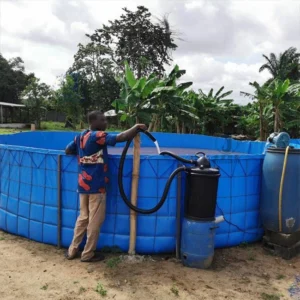
PVC Tarpaulin for Fish Pond – Custom Made
Read more -
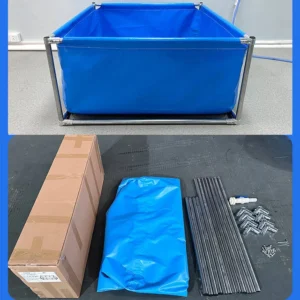
Foldable Circular Rectangular PVC Tarpaulin Fish Pond Tarpaulin for Fish tank
¥0.53 Select options This product has multiple variants. The options may be chosen on the product page -
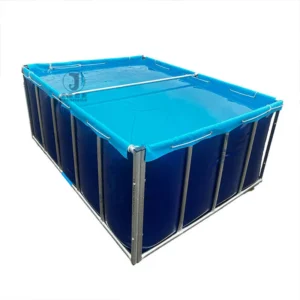
Coated PVC Laminated Tarpaulin Above Ground Swimming Pool Metal Frame High Tensile Foldable Tarp
¥1.00 Select options This product has multiple variants. The options may be chosen on the product page -
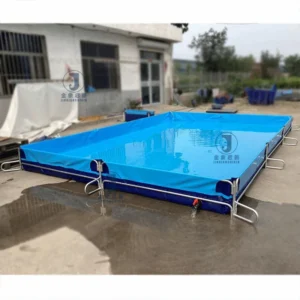
Custom PVC Fish Pond Liner 500gsm – Full Range
Read more