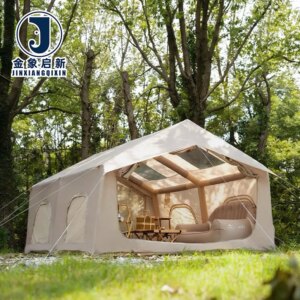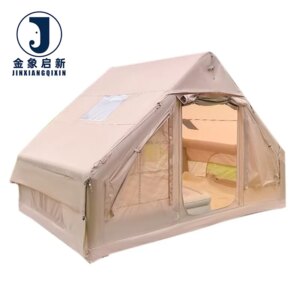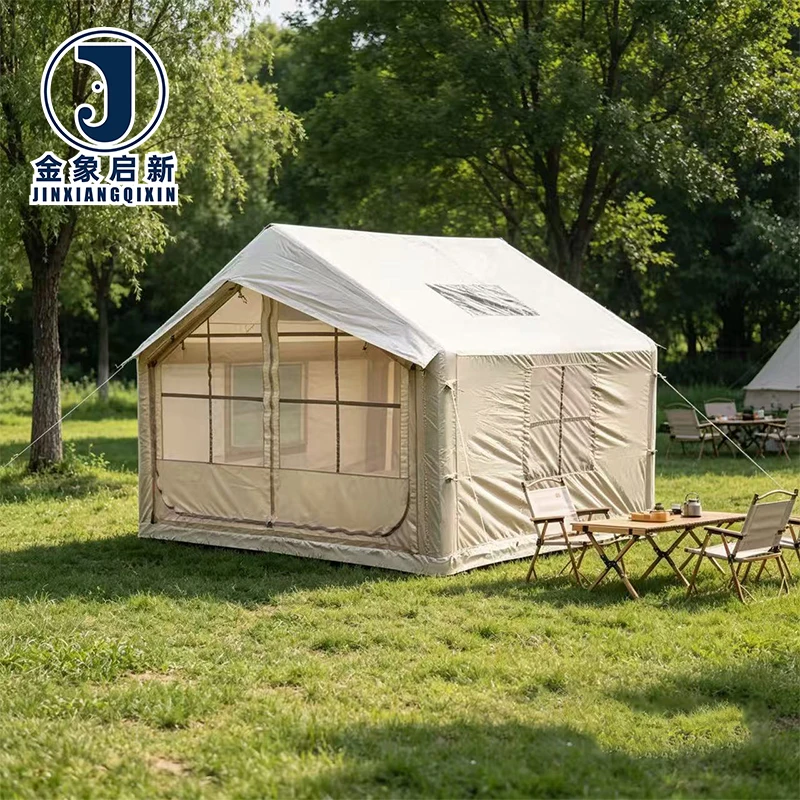
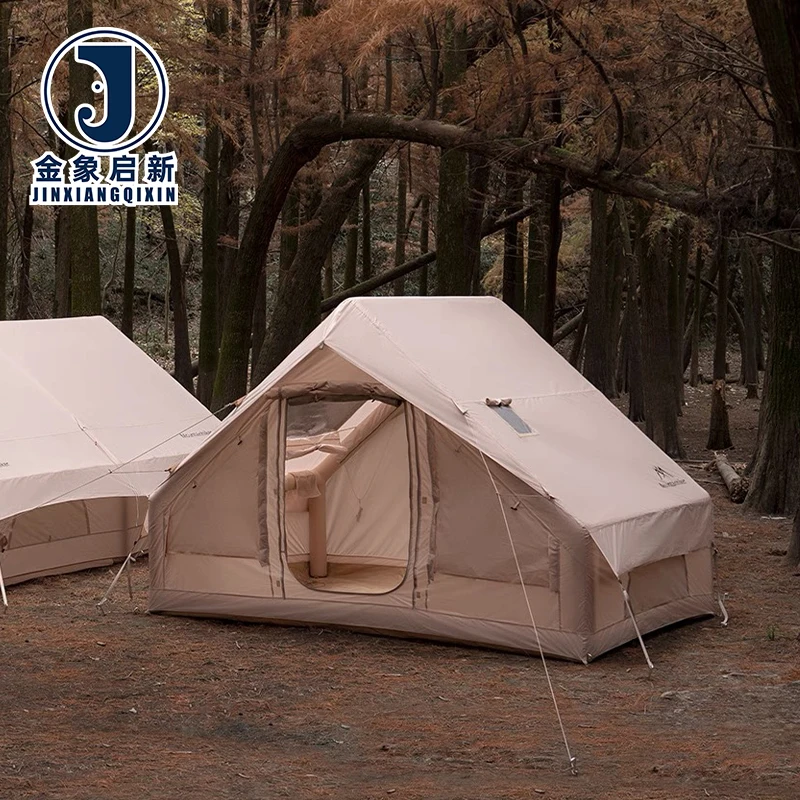
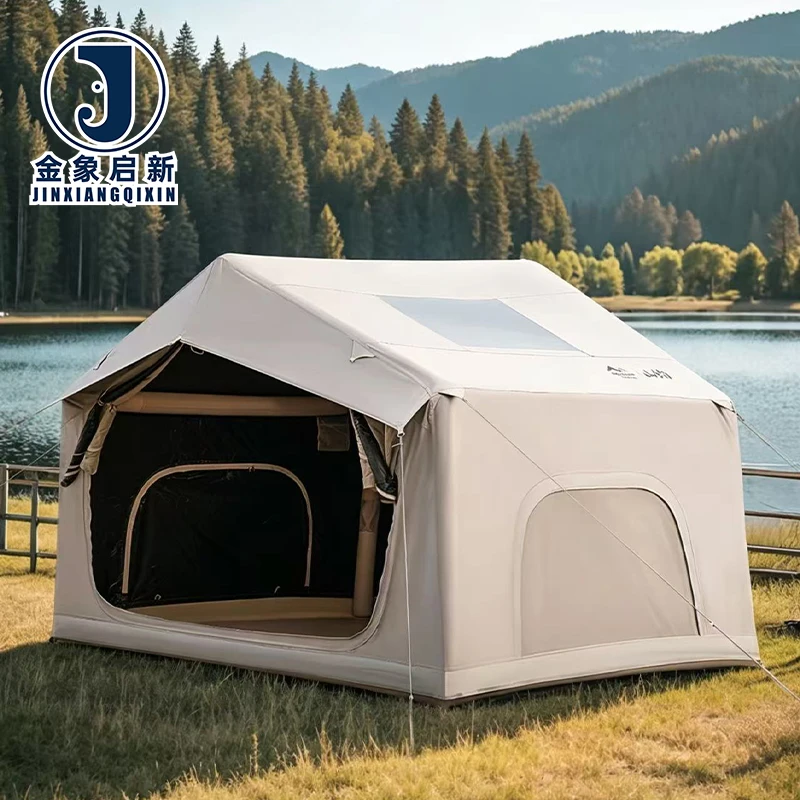
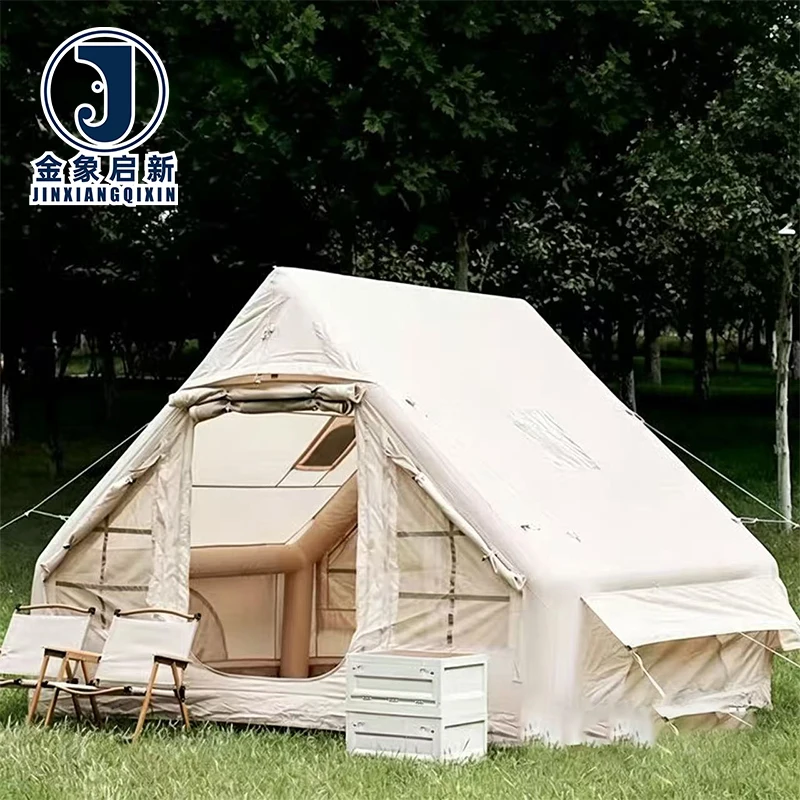
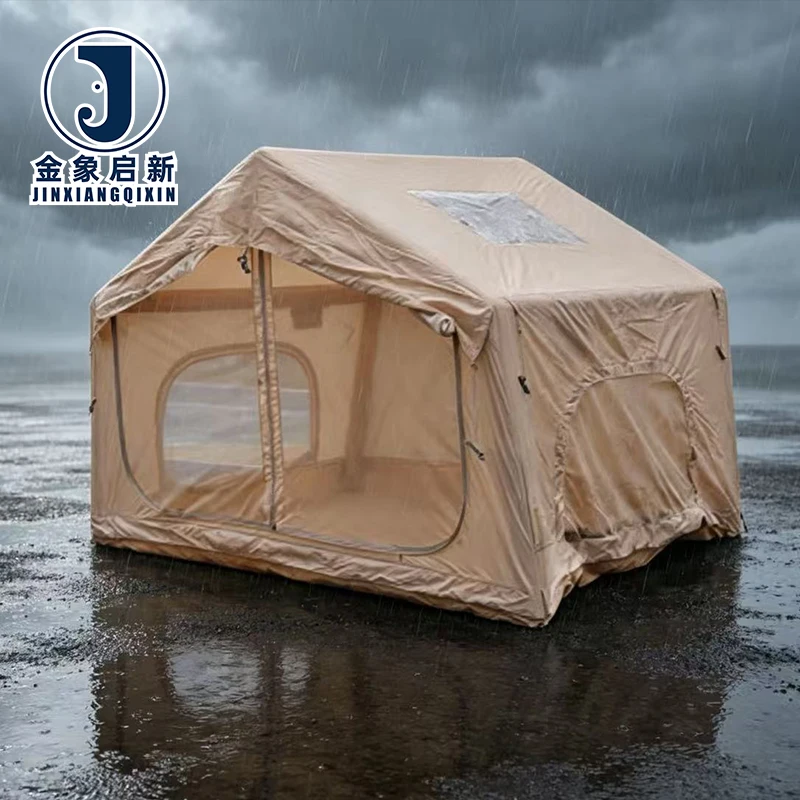
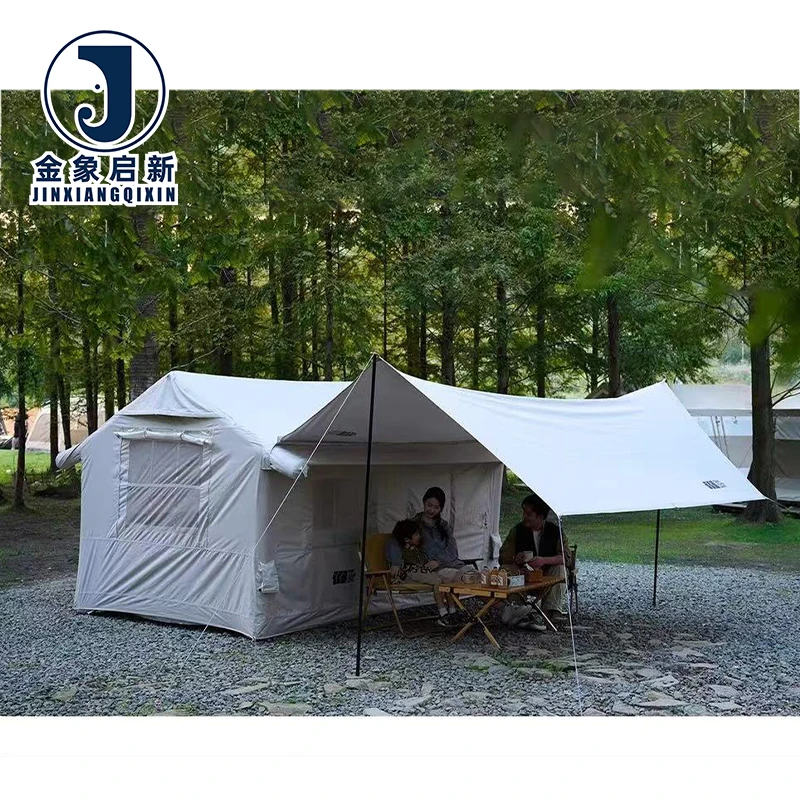
PVC Inflatable Camping Tent — 0.45mm knife-coated fabric, 1000mm water column, 4-6 person capacity. Heat-sealed seams prevent leakage under flex, while UPF 50+ treatment maintains fabric integrity after extended UV exposure. Batch color consistency (ΔE <2) preserves brand identity across production runs. Backed by a 10-person R&D team, 3 full production lines, and 100% pre-shipment inspection for reliable bulk supply.
- Inflatable time: 60 seconds
- Operating temperature: -20℃ to 60℃
- Anti-static: <10^9Ω
- Tear resistance: 280N/5cm
Description
Deep Process Control Over Coating Weight — Every PVC inflatable tent we ship carries batch-specific test certificates verifying the 0.45mm knife-coated fabric meets the tensile, tear, and waterproof ratings stated on your purchase order.
Technical Specifications
| Parameter | Value |
|---|---|
| Product Type | Inflatable Tent Fabric |
| Core Material | 0.45mm PVC knife-coated fabric |
| Tensile Strength | 280N/5cm (ASTM D638) |
| Tear Resistance | Tested to ASTM D1004 |
| Waterproof Rating | 1000mm water column (ISO 811) |
| UV Treatment | UPF 50+ (ISO 4892-3, 500+ hours) |
| Anti-Static | Surface resistance <10^9Ω (CE) |
| Temperature Range | -20℃ to 60℃ |
| Inflation Time | 60 seconds automatic opening |
| Capacity | 4-6 person |
| Construction | Single-layer |
| Seam Method | Heat-sealed (100% waterproof) |
| Color Consistency | ΔE <2 batch-to-batch |
| Weight | 12kg/pc |
| Customization | OEM & ODM, size (3-8 person), color matching, pattern printing |
| Certifications | ISO9001, ISO14001, ISO45001, CE |
Application Suitability
| Application | Exposure & Requirement |
|---|---|
| Commercial camping equipment lines | Repeated inflation cycles, abrasion from ground contact, prolonged UV exposure |
| Adventure tourism rental fleets | Four-season deployment (-20℃ to 60℃), high-frequency packing and unpacking, customer handling wear |
| Industrial field accommodation | CE-compliant anti-static performance, chemical resistance on construction or mining sites, rapid deployment |
| Professional outdoor gear brands | Batch-to-batch color fidelity for brand identity, verified test documentation for retail compliance |
Why Test Certificates Matter More Than the Quoted Spec Sheet
When sourcing a PVC inflatable tent manufacturer, the specification on the quotation often diverges from the material that arrives at your warehouse. We close that gap by attaching batch-specific test certificates — covering tensile strength, tear resistance, waterproof rating, and UV stability — to every shipment.
Buyers frequently discover after delivery that the coating weight is lighter than agreed or that flame-retardant claims lack supporting documentation. In inflatable tent production, even a marginal reduction in coating adhesion can cause seam delamination under repeated inflation pressure. [NEED_CITE:] These failures rarely appear during initial quality checks; they surface weeks into field use when the fabric flexes under thermal cycling and wind load.
Knife-Coated Fabric Architecture for Inflatable Structures
The 0.45mm PVC knife-coated construction used in our inflatable tent fabric delivers a continuous coating layer that bonds directly to the base fabric. Unlike laminated alternatives, knife coating forces the PVC compound into the weave interstices, creating mechanical interlock that resists delamination during the repeated inflation and deflation cycles that define inflatable tent service life.
This single-layer approach reduces overall unit weight to 12kg per tent while maintaining the structural rigidity needed for air-beam inflation. As a PVC inflatable tent manufacturer, we specify this construction because it balances portability for end users with the tear resistance that rental fleet operators demand across hundreds of deployment cycles.
Seam Integrity Under Internal Air Pressure
Heat-sealed seams replace stitched construction entirely, eliminating needle holes that become leak paths under sustained internal pressure. Each seam is tested to 1000mm water column per ISO 811, confirming that the welded joint performs as a continuous waterproof barrier rather than a failure point.
Inflatable tents concentrate stress at beam junctions and corner gussets where the fabric flexes most during inflation. [NEED_CITE:] Our heat-sealing protocol is calibrated to the 0.45mm coating thickness, ensuring the weld penetrates fully without scorching the base fabric. The result is a seam that fails only when the surrounding fabric reaches its own tensile limit.
Reading the Specification Sheet Beyond Surface Numbers
The 280N/5cm tensile strength figure (tested per ASTM D638) reflects the combined performance of base fabric and coating, not the coating alone. Knife-coated fabrics derive their tear resistance from the interplay between yarn denier, weave density, and coating penetration depth — a heavier coating does not automatically produce higher tear values if the base fabric is loosely woven.
The UPF 50+ rating, validated to 500+ hours under ISO 4892-3, indicates that the UV stabilizer package is embedded within the coating compound rather than applied as a topical finish. Topical treatments degrade with abrasion and cleaning; compound-integrated stabilizers maintain protection throughout the fabric thickness. The operating range of -20℃ to 60℃ reflects the plasticizer formulation’s resistance to low-temperature embrittlement and high-temperature softening, both critical for inflatable structures that must hold air pressure across seasonal temperature swings.
The Cost of Overlooking Batch Consistency
Color variation between production runs is a frequent source of rejection for outdoor gear brands selling through retail channels. When inflatable tents from the same SKU display visible color differences side by side on a showroom floor, the entire batch may be returned. Our ΔE <2 batch-to-batch consistency target ensures that tents produced months apart remain visually matched when displayed together.
Equally consequential is inconsistency in coating weight across rolls. [NEED_CITE:] A roll that runs light on coating produces inflated beams with reduced rigidity, causing the tent structure to sag under wind load even though the base fabric specification is correct. This type of defect passes visual inspection but fails in the field, generating warranty claims that erode brand credibility.
Why Production Discipline Matters for Inflatable Tent Fabric
Three full production lines and 36 sets of professional equipment allow us to maintain dedicated capacity for inflatable tent orders without competing for line time against unrelated tarpaulin grades. This separation prevents cross-contamination of coating compounds and ensures that heat-sealing parameters remain calibrated to the 0.45mm specification throughout the run.
Our 10-technician R&D team develops custom formulations when OEM clients require adjusted stiffness, specific color matches, or pattern printing that survives the heat-sealing process. Every production run undergoes an 8-point inspection covering material thickness, seam strength, air pressure retention, zipper functionality, UV resistance, flame retardancy, anti-static performance, and packaging integrity before dispatch. [NEED_CITE:] ISO 9001 document control provides traceability from raw material lot to finished tent, accessible through a secure client portal for audit purposes.
Documentation & Verification
- Material specification sheet stating 0.45mm coating weight, base fabric denier, and treatment details
- Batch-specific test certificates for tensile strength, tear resistance, waterproof rating, and UV stability
- Pre-shipment inspection record covering all 8 inspection points with photographic evidence
- Certificate of origin and customs documentation for cross-border inflatable tent shipments
- REACH, RoHS, and Proposition 65 compliance declarations available upon request
Fabrication, Handling & Storage
- Heat-sealing temperature must match the 0.45mm PVC coating thickness to achieve full weld penetration without base fabric damage
- Store rolls upright in climate-controlled conditions to prevent permanent creasing that compromises inflation beam geometry
- Use PVC-compatible cleaners only; solvent-based products degrade the knife-coated surface and reduce UPF 50+ effectiveness
- Allow fabric to reach ambient temperature above -20℃ before unfolding to avoid low-temperature crease cracking
- Repair field punctures with compatible PVC patch kits heat-bonded to the single-layer construction
What We Need to Quote Your Inflatable Tent Project
Provide your target capacity range, annual volume forecast, and the compliance standards your destination market requires. If your brand demands specific color matching or printed graphics, include Pantone references and artwork files so our R&D team can confirm feasibility against the 0.45mm knife-coated substrate.
Specify whether you need finished tent units or fabric rolls for your own cut-and-sew operation, and indicate your preferred sample validation timeline before bulk commitment.
Frequently Asked Questions
Q: What customization options are available for OEM inflatable tent orders?
A: We adjust capacity from 3 to 8 person configurations, match colors to your Pantone specifications, and apply pattern printing compatible with the heat-sealing process. Each OEM request receives a pre-production sample with full test documentation before bulk authorization.
Q: How is batch-to-batch color consistency maintained across production runs?
A: Our coating compound is mixed under controlled conditions targeting ΔE <2 deviation. Each production lot is measured against the approved reference standard, and results are recorded in the batch certificate accompanying your shipment.
Q: What test reports ship with each inflatable tent order?
A: Every shipment includes certificates covering tensile strength (ASTM D638), tear resistance (ASTM D1004), waterproof rating (ISO 811), and UV stability (ISO 4892-3). Anti-static surface resistance test results are included for orders requiring CE compliance.
Q: How long does sample development take for custom specifications?
A: Custom samples are typically ready for evaluation within days of specification confirmation. Each sample ships with the same test documentation that will accompany your bulk order, allowing full validation before production commitment.
Q: What does the 8-point pre-shipment inspection cover?
A: Inspectors verify material thickness, seam strength, air pressure retention, zipper functionality, UV resistance, flame retardancy, anti-static performance, and packaging integrity. Results are logged per unit and accessible through our client portal for your quality team’s review.
Related products
-
Outdoor Camping Inflatable Tent Luxury All-Season Use PVC Waterproof Quick Automatic Opening Rainproof Insulated
Read more -
Premium Four-season Inflatable Tents for Camping Easy-to-Use Spacious Portable Waterproof Outdoor Tent Quick
Read more -
Outdoor Portable Camping Inflatable Tent Luxury All-Season Use Overnight Large Space Rainproof Insulated Quick Automatic Opening
Read more -
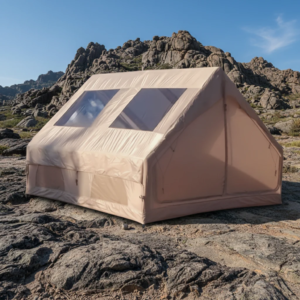
High Quality Four-Season Inflatable Tent for Camping Durable PVC Material All-Weather Resistance Quick Automatic Opening
Read more