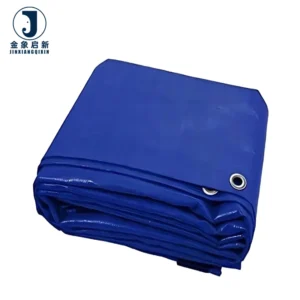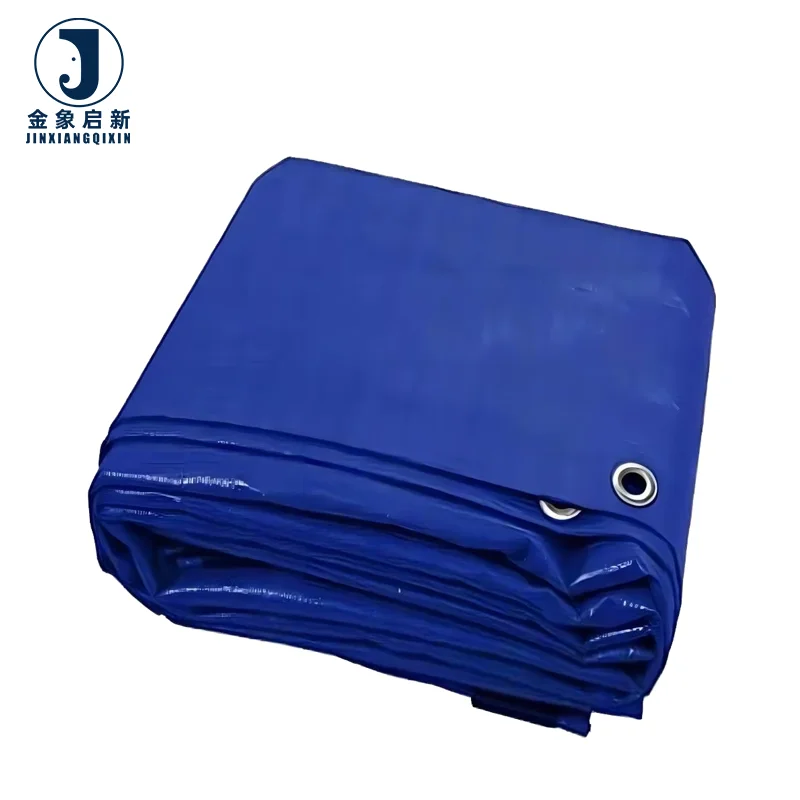
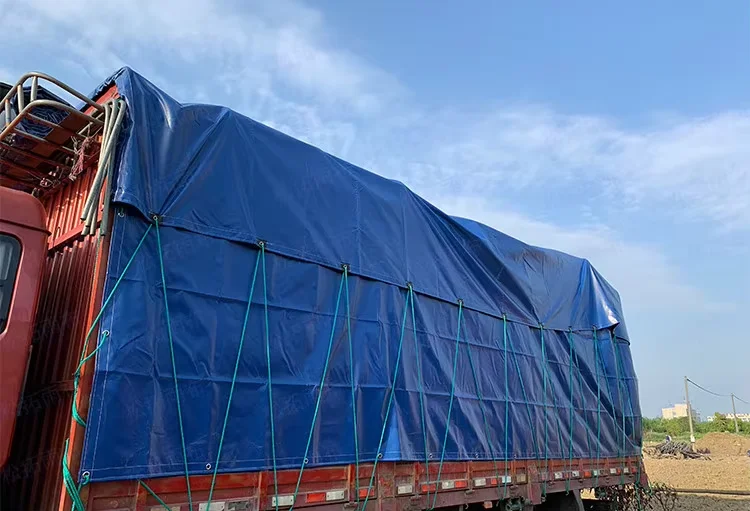
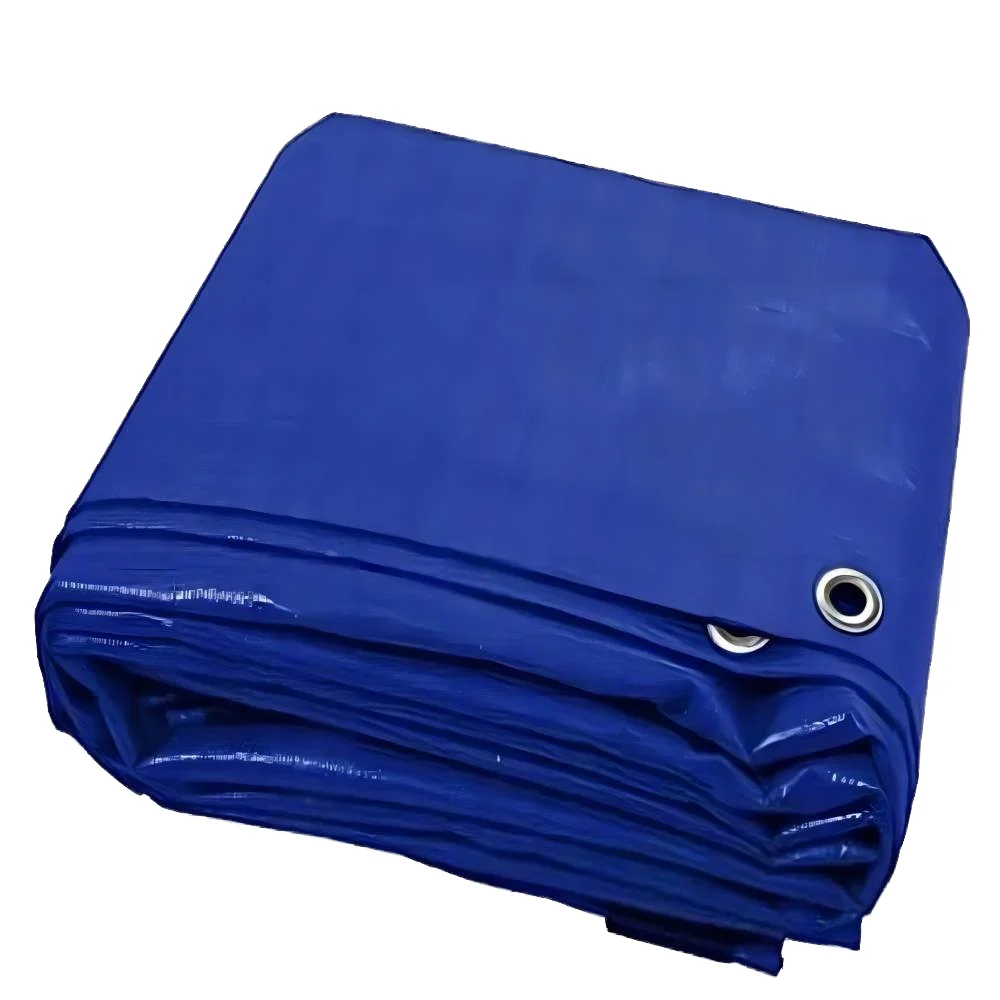
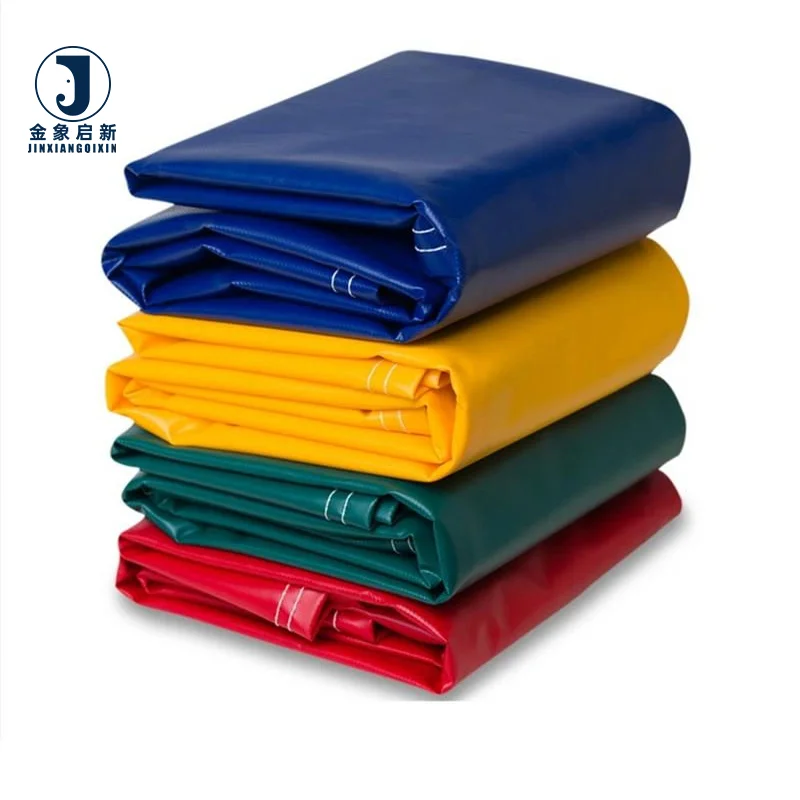
Waterproof Heavy Duty PVC Lorry Tarpaulin Truck Cover with high-strength polyester mesh base, 350–750gsm weight range, 0.32–0.65mm thickness, and laminated or hot-melt coating technology for superior peel strength and heat-weld performance.
- Roll-to-roll color consistency with batch-controlled production across blue, red, yellow, grey, and custom shades
- Anti-static treatment applied for cargo safety, with full GSM verification matching your quotation
- Multiple widths (2m × 75m, 2.1m × 50m) reduce seam count and cutting waste on large-format covers
Backed by dedicated QA/QC at every production stage, 100% pre-shipment inspection, and nearly 30 years of coated fabric process control.
Description
Coating Process Control — Hot-melt and laminated coating lines maintain consistent adhesion between PVC and high-strength polyester mesh across every roll shipped.
Technical Specifications
| Parameter | Value |
|---|---|
| Product Type | PVC Coated Truck Tarpaulin |
| Material | PVC coating on high-strength polyester mesh fabric |
| Coating Method | Laminated technology & hot-melt coating technology |
| Weight (GSM) | 350gsm / 420gsm / 500gsm / 550gsm / 600gsm / 750gsm |
| Total Thickness | 0.32mm / 0.35mm / 0.4mm / 0.45mm / 0.5mm / 0.65mm |
| Width | 2m / 2.1m |
| Roll Length | 75m (2m width) / 50m (2.1m width) |
| Available Colors | Blue, Red, Yellow, Light Blue, Grey (customized) |
| Key Features | Cold crack resistance, anti-mildew, waterproof, sunproof, color fastness, outstanding tearing strength for welding |
| Anti-Static | Treatment available — confirm standard required for your market |
| UV Treatment | Sunproof claimed — test basis available upon request |
| Flame Retardant | Available in flame retardant grades — confirm the grade required for your market |
| Standards | ISO, CE certified production |
Application Suitability
| Application | Exposure & Requirement |
|---|---|
| Truck side curtain and trailer cover | Constant flexing at tie-down points, road abrasion, UV exposure, repeated roll and unroll cycles |
| Cargo ship deck cover | Salt spray, sustained wind load, prolonged water contact, heavy cargo compression |
| Tent and awning fabric by the roll | Tension framing stress, outdoor weathering, custom width and colour requirements per project |
| Fish tank and pool liner | Permanent water immersion, puncture risk from substrate, anti-mildew demand |
Why Your Truck Cover Fails at the Weld Before the Fabric Does
Weld failure traces back to coating adhesion and base fabric construction, not just fabric weight.
When a PVC coated truck tarpaulin tears at a heat-welded seam while the main panel remains intact, the root cause is typically a mismatch between the coating chemistry and the welding temperature profile. High tenacity polyester yarns with PVC coating require precise thermal input — too low and the coating does not fuse fully across the seam, too high and the plasticiser migrates away from the weld zone, leaving a brittle join. Fleet operators replacing covers mid-season frequently discover that the specification on the quotation did not account for the flex load at the hem and eyelet reinforcement line [NEED_CITE: tensile and tear test methods for coated fabrics per ISO 1421]. The PVC coated truck tarpaulin custom manufacturer you choose must control coating weight and adhesion at every production stage, not simply meet a GSM target on the scale.
Matching Coating Technology to End-Use Stress
Laminated coating technology bonds the PVC film to the polyester mesh under heat and pressure, producing a coating layer with strong peel resistance — suited to applications where the fabric undergoes repeated folding, such as truck side curtains that are rolled and unrolled daily. Hot-melt coating technology flows liquid PVC into the mesh structure, filling the gaps between yarns and creating a more integrated composite. Each PVC coated truck tarpaulin grade in this range uses one or both of these methods depending on the target GSM and end-use, and the choice directly influences how the material behaves during fabrication and in service.
Colour Consistency Across Multi-Roll Fleet Orders
When a logistics company orders enough PVC coated truck tarpaulin to cover an entire fleet, even a slight colour shift between rolls becomes visible once the covers are installed side by side on adjacent trailers. Batch-level pigment dosing control and consistent coating thickness are the two variables that determine whether roll number three matches roll number twelve. This range is produced with colour reference control at the coating stage, and custom colours are developed through sample approval before bulk production begins. Buyers specifying a Pantone or RAL reference should request a strike-off sample to confirm the match under daylight conditions [NEED_CITE: colour fastness assessment methods for coated textiles].
Reading the Specification Sheet Beyond GSM
Weight per square metre tells you how much material is present, but it does not tell you how that weight is distributed between base fabric and coating. A 550gsm PVC tarpaulin with a heavy coating over a light mesh may feel stiff yet tear easily along the warp, while the same weight built on a denser polyester mesh with a thinner coat delivers substantially higher tear resistance and better flexibility at low temperatures. Thickness values in this range run from 0.32mm to 0.65mm, and the ratio of thickness to GSM reveals whether the product is coating-heavy or yarn-heavy — a distinction that matters when you are specifying for cold crack resistance in winter logistics or for welding performance in a fabrication shop.
The Hidden Cost of Specifying on Price Per Kilogram
Choosing a PVC coated truck tarpaulin purely on cost per kilogram invites the supplier to reduce coating weight or substitute a lighter base fabric to hit the target price, and the shortfall only appears after months of road exposure. Anti-UV treatment claimed without a supporting test report means the cover may chalk and embrittle far earlier than expected, forcing a fleet operator into an unplanned replacement cycle. Welded seams on an under-coated fabric fail at the point the load flexes most — typically the rear quarter panel — and a roadside repair costs more in downtime than the saving on the original material [NEED_CITE: field failure patterns in transport tarpaulin covers].
Why Source This PVC Coated Truck Tarpaulin Here
Three full production lines and 36 sets of professional equipment support bulk roll output while maintaining coating consistency across the 350gsm to 750gsm range. A dedicated 10-person R&D team handles custom colour matching, pattern printing and cut-to-size development in-house, so samples for a specific trailer model or Pantone reference are developed within days rather than weeks. Every roll passes through QA/QC inspection at each production stage, with a pre-shipment check covering weight, colour, and surface quality before dispatch. ISO and CE certified production documentation ships with every order, and the material specification sheet states the exact GSM, base fabric, and coating method for traceability.
Documentation & Verification
- Material specification sheet stating exact GSM, base fabric denier and coating method per roll
- Pre-shipment inspection record confirming weight and surface quality before dispatch
- UV and flame retardant test reports provided where treatment grade is specified
- Roll packing list with net weight and roll dimensions for customs clearance
- Certificate of origin and full export documentation for international shipment
Fabrication, Handling & Storage
- Heat-weld at temperatures matched to the laminated or hot-melt coating type to prevent seam delamination on 600gsm and above grades
- Store rolls vertically on end caps to avoid flat-spot creasing across the 2m and 2.1m widths
- Allow cold-stored rolls to reach ambient temperature before unrolling to prevent coating crack on cold-resistant grades
- Use polyester thread and double-stitch hems before welding eyelet zones to distribute tie-down load on heavy-grade covers
- Cut panels with a 15mm overlap allowance for heat-weld seams to achieve full bonding width on 0.45mm+ thicknesses
What to Include in Your Enquiry
Provide the specific trailer model or finished cover dimensions so that sizing can be matched to your fleet rather than supplied in generic cut sizes. State the target GSM, preferred coating method, and any colour or branding requirement including Pantone reference and print placement. Confirm whether you need roll stock for in-house fabrication or finished covers with eyelets and reinforced hems, and indicate your market’s fire safety or anti-static compliance requirements if applicable. Request a sample for approval before committing to bulk production.
Frequently Asked Questions
Q: How is the GSM of each roll verified before shipment?
A: Every roll is weighed and measured during the pre-shipment inspection. The material specification sheet accompanying your order states the confirmed GSM, base fabric construction, and coating weight for each roll, so you can cross-check on arrival against the values stated in the original quotation.
Q: Can you supply truck covers cut to specific trailer models rather than generic sizes?
A: Yes. The R&D team develops pattern-based sizing matched to your exact trailer dimensions, including side curtain panels, rear flap covers, and roof sections. Samples are produced for fitment check before bulk cutting begins, eliminating the mismatch that generic sizing creates across a mixed fleet.
Q: How is colour consistency controlled across multiple rolls in the same order?
A: Pigment dosing is controlled at the coating stage with colour reference checks against the approved sample. For fleet-scale orders spanning multiple rolls, batch-level consistency is verified during the pre-shipment inspection. Buyers specifying a custom colour receive a strike-off sample for approval before production.
Q: What is the sample lead time for custom GSM, colour, or print requirements?
A: Samples for custom specifications are typically developed within days by the in-house R&D team. The sample includes the requested GSM grade, colour match, and any print or finish requirement so you can evaluate material hand, weld behaviour, and colour accuracy before placing the bulk order.
Q: What roll widths and lengths are available for container loading?
A: Rolls are produced in 2m width at 75m length and 2.1m width at 50m length. Container loading plans are calculated by roll count and weight to maximise utilisation, and the roll packing list details dimensions and net weight for each roll to support customs documentation.