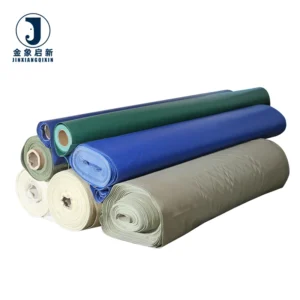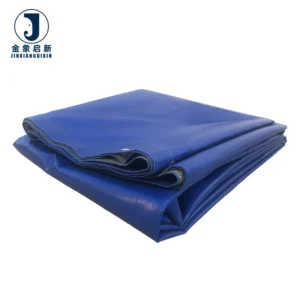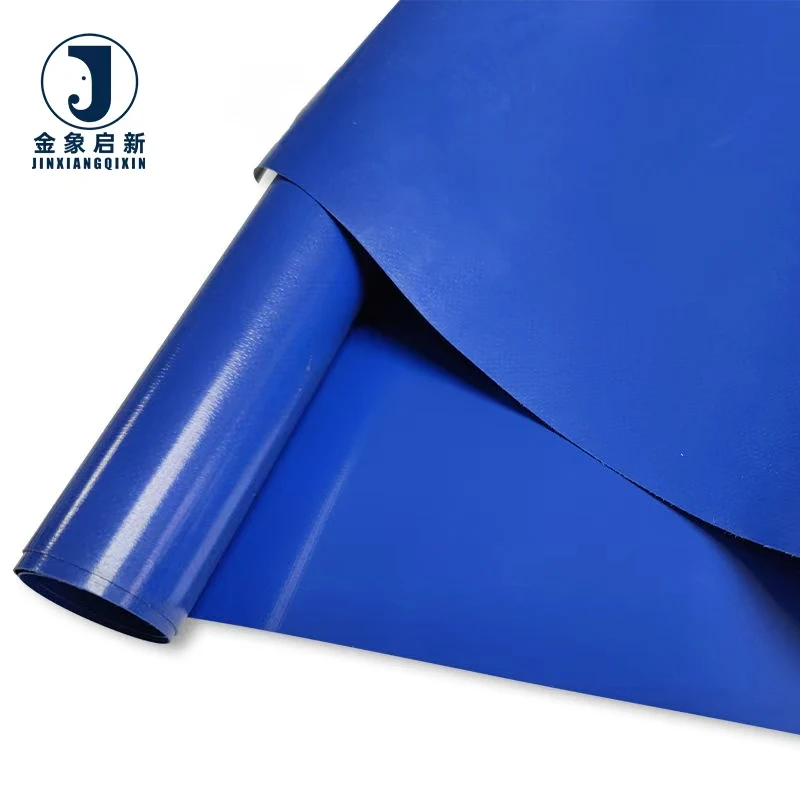
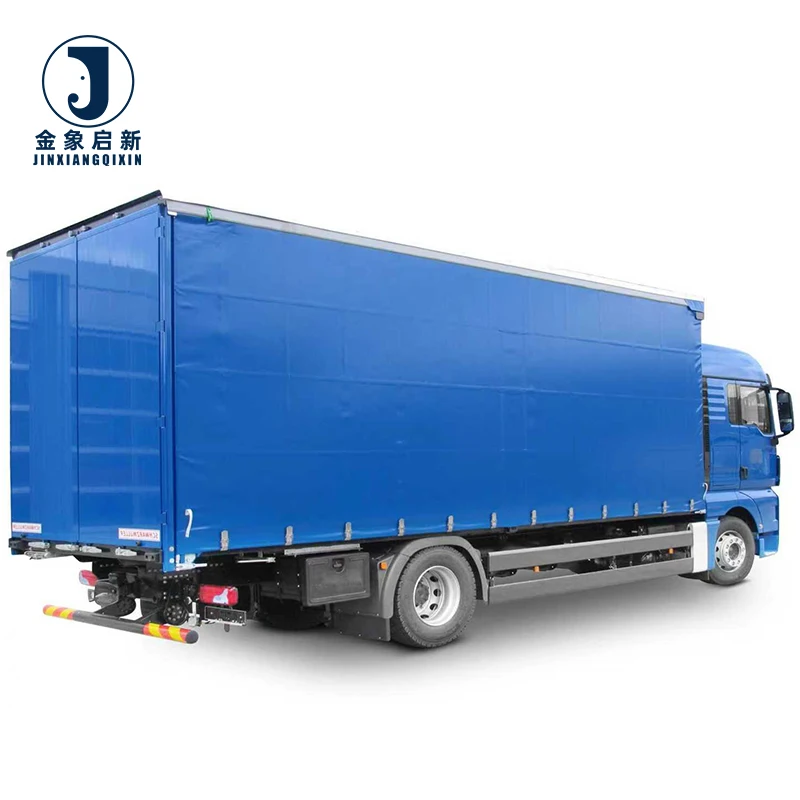
PVC Tarpaulin Roll 350–750gsm, Laminated & Hot-melt Coated — available in 2m×75m and 2.1m×50m rolls with flame retardant, anti-static, UV, anti-cold, and anti-mildew treatment options for construction covers, truck awnings, tent fabric, and pond liners.
- Coating weight and adhesion are tightly controlled across three full production lines, keeping GSM consistent roll-to-roll and minimizing seam failures at flex points.
- Backed by a 10-person R&D team for custom width, colour, and pattern printing, with samples developed within days and 100% pre-shipment inspection on every order.
Description
Deep Coating Process Control — Every PVC Coated Tarpaulin Roll is produced under strict weight and adhesion monitoring across three dedicated coating lines, ensuring the material you receive matches the specification sheet roll for roll.
Technical Specifications
| Parameter | Value |
|---|---|
| Product Type | PVC Tarpaulin Roll |
| Base Fabric | High-strength polyester mesh fabric |
| Coating Material | PVC |
| Coating Method | Laminated technology & Hot-melt Coating technology |
| Weight (GSM) | 350gsm / 420gsm / 500gsm / 550gsm / 600gsm / 750gsm (multiple grades available — confirm grade for your application) |
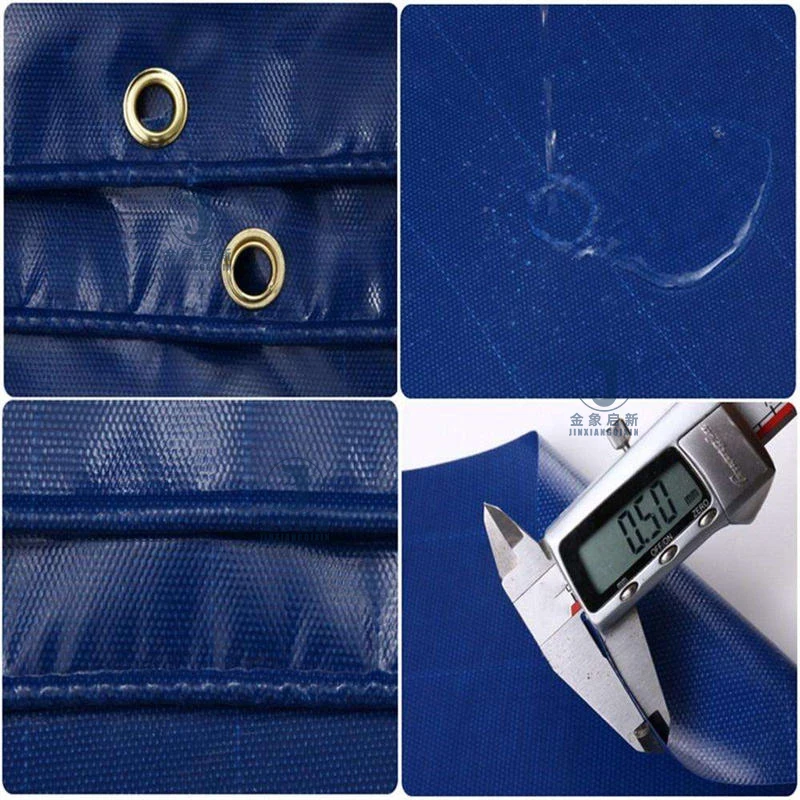
| Total Thickness | 0.32mm / 0.35mm / 0.4mm / 0.45mm / 0.5mm / 0.65mm |
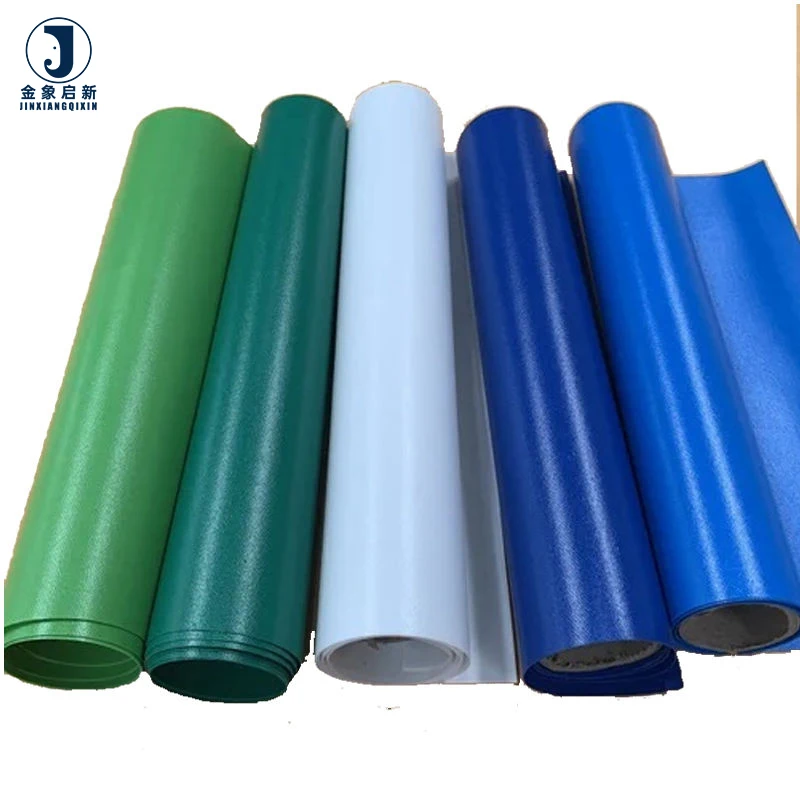
| Roll Width | 2m / 2.1m |
| Roll Length | 75m (2m width) / 50m (2.1m width) |
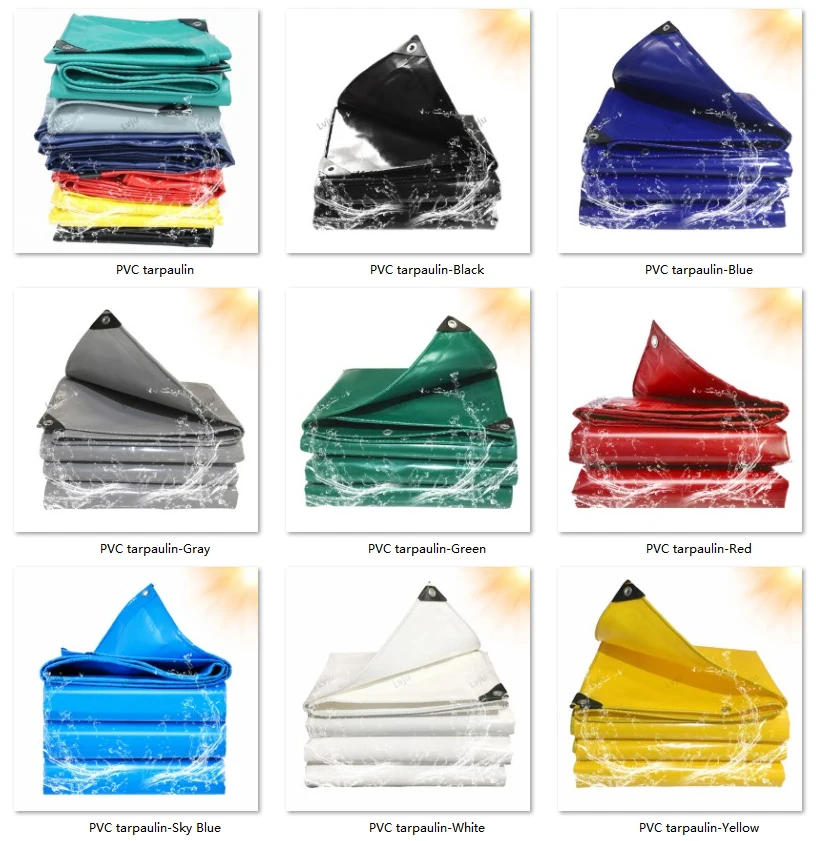
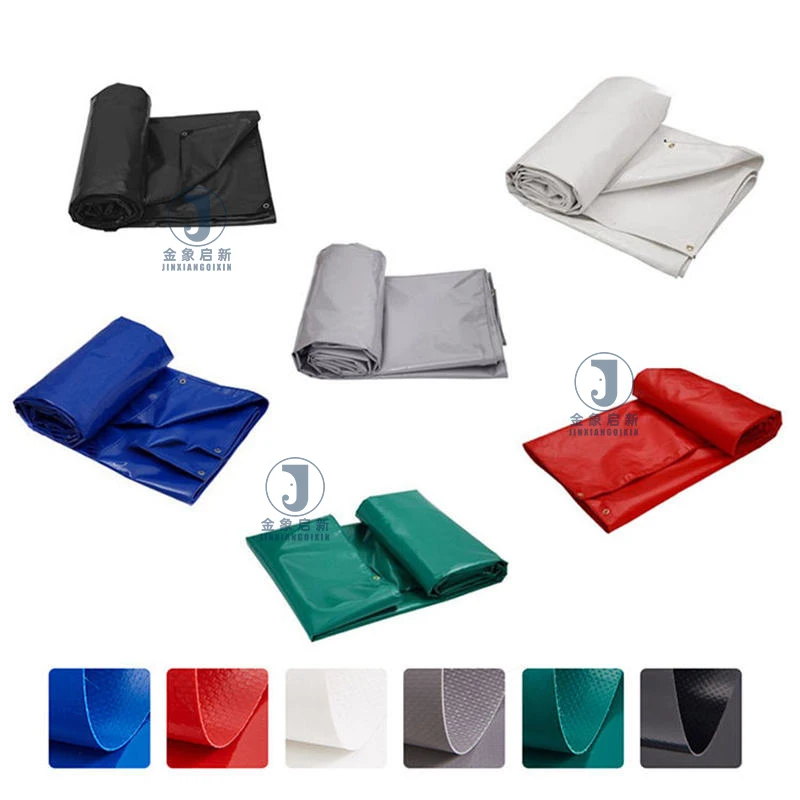
| Color Options | Blue / Red / Yellow / Light Blue / Grey (Customized) |
| Key Features | Waterproof, anti-mildew, cold crack resistance, UV treatment (test basis not stated in source), flame retardant available (grade not stated), anti-static available (standard not stated) |
| Certifications | ISO, CE |
Application Suitability
| Application | Exposure & Requirement |
|---|---|
| Construction scaffolding enclosure | Wind-driven rain, debris impact, daily UV exposure, frequent rigging contact |
| Truck and trailer side curtains | Constant flexing at hinges, road abrasion, tie-down strap friction, weather cycling |
| Agricultural pond and reservoir lining | Permanent water immersion, soil chemistry, puncture from substrate irregularities |
| Tent and awning fabrication | Roll-to-roll colour consistency, heat-weld seam integrity, prolonged sun exposure |
| Equipment and machinery covers | Outdoor storage, dust ingress prevention, occasional handling and repositioning |
| Cargo ship deck covers | Salt spray, heavy weather, cargo shift abrasion, UV degradation at sea |
Why GSM Alone Does Not Tell You How Strong the Fabric Is
Coating weight must be verified against the base fabric specification, not quoted in isolation.
Buyers frequently receive rolls where the stated GSM on the quotation does not match the material that arrives on site. A lighter coating reduces tensile capacity and shortens service life, yet the shortfall is invisible until the fabric fails under load. [NEED_CITE: coating weight verification methods for PVC tarpaulin per ISO standards] With this PVC Coated Tarpaulin Roll range, each grade pairs a specific polyester mesh denier and weave density with a controlled coating application, so the relationship between weight and strength is documented rather than assumed.
Coating Adhesion and the Laminated Construction
The base fabric in every PVC Coated Tarpaulin Roll is a high-strength polyester mesh, which provides the structural backbone for tensile and tear performance. Laminated and hot-melt coating technologies bond the PVC layers to this mesh under heat and pressure, creating a unified composite rather than a surface film that can delaminate under flex stress. This bonding method is critical for applications where the fabric bends repeatedly — truck curtains, folding enclosures, and tensioned structures all depend on the coating staying fused to the base through thousands of flex cycles.
Selecting the Right Weight Grade for Your End Use
The available grades span from 350gsm for lighter temporary covers up to 750gsm for heavy-duty industrial containment. Choosing between them depends on the mechanical and environmental demands of your application, not simply on picking the heaviest option. A tent manufacturer may prioritise flexibility and pack weight, favouring a mid-range grade, while a mining ventilation contractor needs the puncture resistance and dimensional stability of the upper grades. [NEED_CITE: PVC coated fabric selection criteria for industrial end uses] The specification sheet provided with each order confirms the exact GSM, thickness, and base fabric construction for the grade supplied.
Thickness, Weave Density, and Real-World Durability
Total thickness in coated fabrics is the combined result of base fabric construction and coating application weight. A 0.65mm roll at 750gsm achieves its mass through a denser polyester mesh and heavier PVC coat, which together improve resistance to puncture and abrasion. However, thickness alone does not predict tear propagation — that depends on the warp and weft yarn density in the base mesh and how well the coating penetrates the weave. Hot-melt coating technology forces PVC into the mesh interstices, reducing the risk of the coating separating from the yarns when the fabric is stressed at seams and fixation points. The laminated method, applied to lighter grades, offers a cost-effective bond suited to applications with lower mechanical demand.
The Hidden Cost of Specifying on Price Per Kilogram
When procurement decisions focus on the lowest cost per kilogram of PVC Coated Tarpaulin Roll, the supplier has an incentive to reduce coating weight while maintaining the quoted GSM through a heavier base fabric of lower quality. The result is a roll that passes a weight check but lacks the coating thickness needed for waterproofing integrity and UV protection. Seams may weld poorly because there is insufficient PVC at the surface to form a strong bond. Colour consistency between rolls can also suffer when coating batches are rushed. [NEED_CITE: common causes of PVC tarpaulin field failures related to coating weight deviation] These defects typically appear only after installation, when replacement costs far exceed the original savings.
Why Source This PVC Tarpaulin Range Here
Three full production lines and 36 sets of professional coating equipment provide the capacity to fulfil bulk roll orders without compromising delivery schedules. A 10-person R&D team develops custom colour matches, width adjustments, and pattern prints, producing samples within days rather than weeks so you can validate the material before committing to volume. Dedicated quality inspection at every production stage, culminating in a 100% pre-shipment check, catches coating weight deviations and colour variance before rolls leave the facility. The hot-melt and laminated coating processes are controlled in-house, giving direct oversight of adhesion quality rather than relying on third-party coating. Roll-to-roll colour consistency is managed through calibrated dosing and batch tracking, so multiple rolls in the same order install without visible variation.
Documentation & Verification
- Material specification sheet stating exact GSM, base fabric denier, coating method, and colour reference per roll grade
- Pre-shipment inspection record verifying weight, dimensions, and colour against the confirmed order specification
- Test reports for UV and flame-retardant treatments where applicable, with the relevant standard identified
- Roll packing list with individual roll identifiers for traceability from production batch to delivery
- Certificate of origin and customs documentation to support import clearance in your destination market
Fabrication, Handling & Storage
- Heat-weld seams at temperatures matched to the PVC coating method — hot-melt coated grades may require different dwell times than laminated grades
- Store rolls upright on pallets in a shaded, ventilated area to prevent flat-spot deformation on the coating surface
- Allow cold-stored rolls to reach ambient temperature before unrolling to avoid cracking the PVC coating at low flexibility
- Use a rotary blade or shear cutter on the 2m or 2.1m widths to maintain a clean edge that welds without fraying
- Clean finished fabric with mild detergent and soft brush — avoid solvent-based cleaners that can soften the PVC coating layer
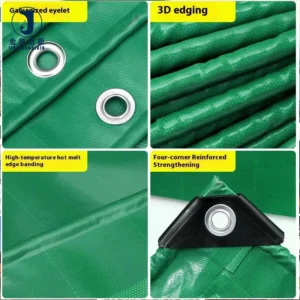
- Reinforce eyelet and tie-down positions with additional PVC patches, distributing load across the polyester mesh weave
What We Need to Move Your Inquiry Forward
Provide the end-use application and the environmental conditions the fabric will face — wind load, UV exposure duration, temperature range, and any chemical contact. Specify the GSM grade, roll width, and total linear metres required, along with your target delivery window. If flame-retardant or anti-static treatment is required for your market, indicate the standard or grade your project must meet. Share any colour reference or pattern print files so we can develop a sample roll section for your approval before production begins.
Frequently Asked Questions
Q: How is GSM verified on arrival and what documentation supports the quoted weight?
A: Each roll is weighed and measured during the pre-shipment inspection, and the results are recorded against the specification sheet that accompanies your order. This inspection confirms that the coating weight and total GSM match the grade you confirmed during sampling, providing traceable evidence rather than relying on supplier claims alone.
Q: What flame retardant grades are available and which test standards do they meet?
A: Flame retardant treatment is available as a special option across the PVC Coated Tarpaulin Roll range. The specific grade and corresponding test standard depend on your market requirements — please specify the standard your project demands so we can confirm the appropriate formulation and provide the matching test report.
Q: How is batch colour consistency controlled across multiple rolls in the same order?
A: Colour is managed through calibrated dosing systems and batch tracking across the production run. Rolls within a single order are produced from the same coating batch where possible, and each roll is visually inspected against the confirmed colour reference before dispatch to prevent visible variation once installed side by side.
Q: What custom widths, lengths, and printing options are available?
A: Standard roll widths of 2m and 2.1m are held in production, and custom widths can be developed based on your fabrication requirements. Pattern printing and branding are available with sample development completed within days, allowing you to approve colour and print registration before the full order runs.
Q: How are rolls packed for container loading to prevent transit damage?
A: Rolls are packed upright on pallets with protective wrapping to prevent crushing and edge damage during transit. The packing list details each roll’s position and identifier, supporting efficient unloading and inventory matching at your receiving warehouse.
Related products
-
Custom Reinforced Edges Rip-Stop Rubberized PVC Tarpaulin Industry Covering Vinyl Coated Polyester Tarps for Trucks
¥8.00 Select options This product has multiple variants. The options may be chosen on the product page -
High Quality Windproof Waterproof PVC Coated Plain Tarpaulin for Industrial Shelter Use
¥0.53 Add to cart -
Heavy Duty Fire Retardant Waterproof PVC Coated Tarpaulin Rolling Tarp Materials for Truck Cover Tents Outdoor Usage
¥1.40 Add to cart -
PVC Tarpaulin Waterproof Triangular Tarpaulin Folha De Tarpaulina Truck Tarpaulin
¥0.90 Select options This product has multiple variants. The options may be chosen on the product page