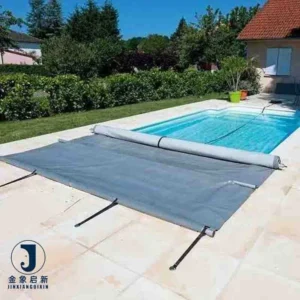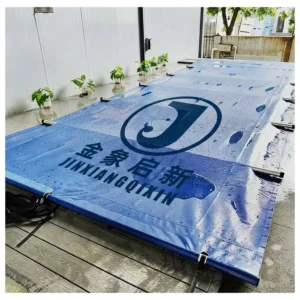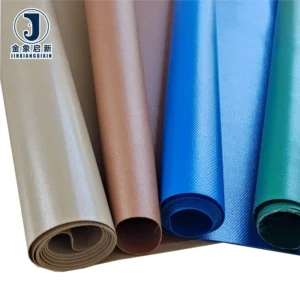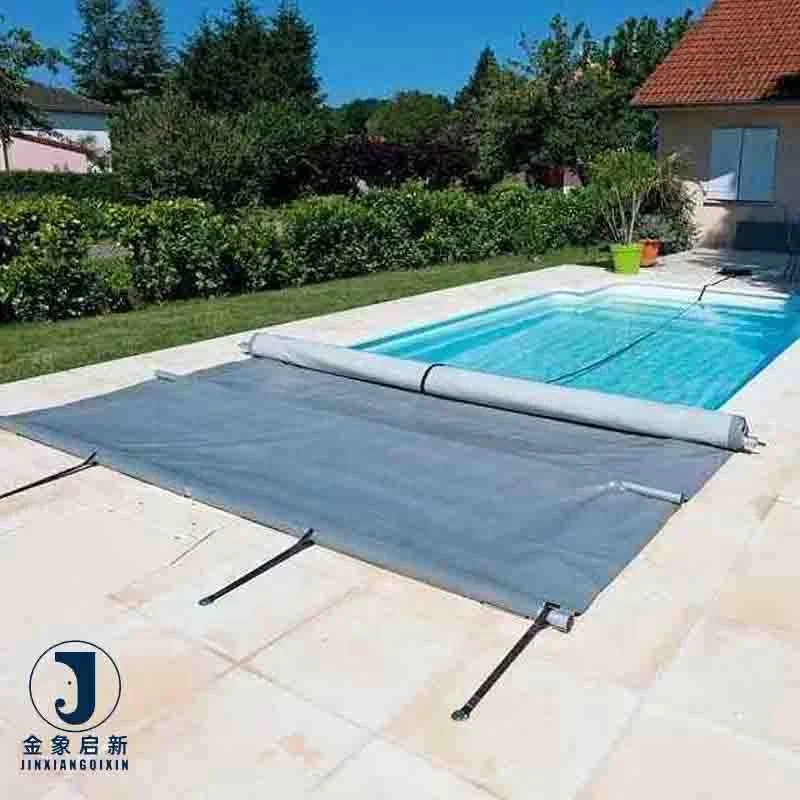
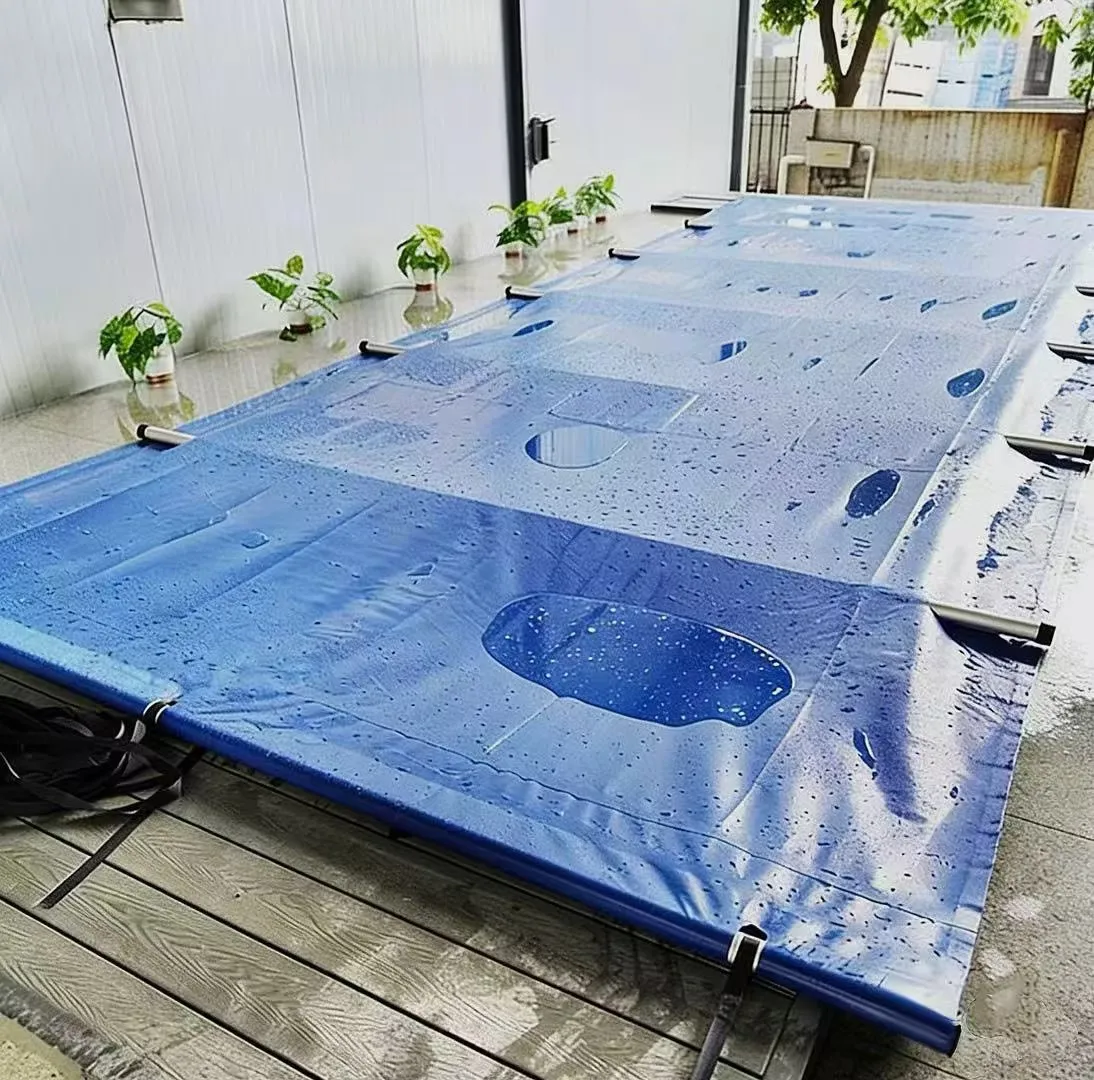
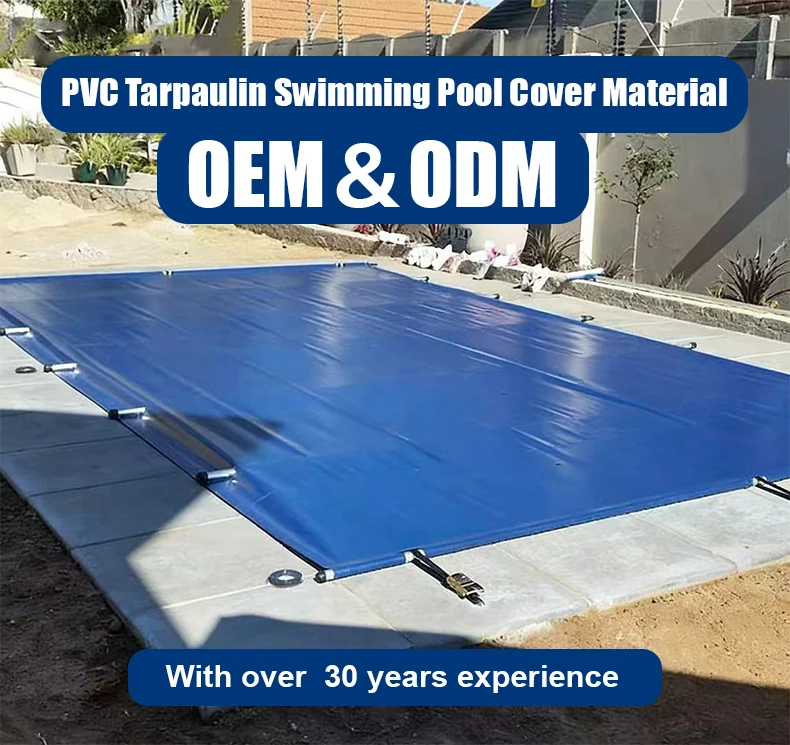
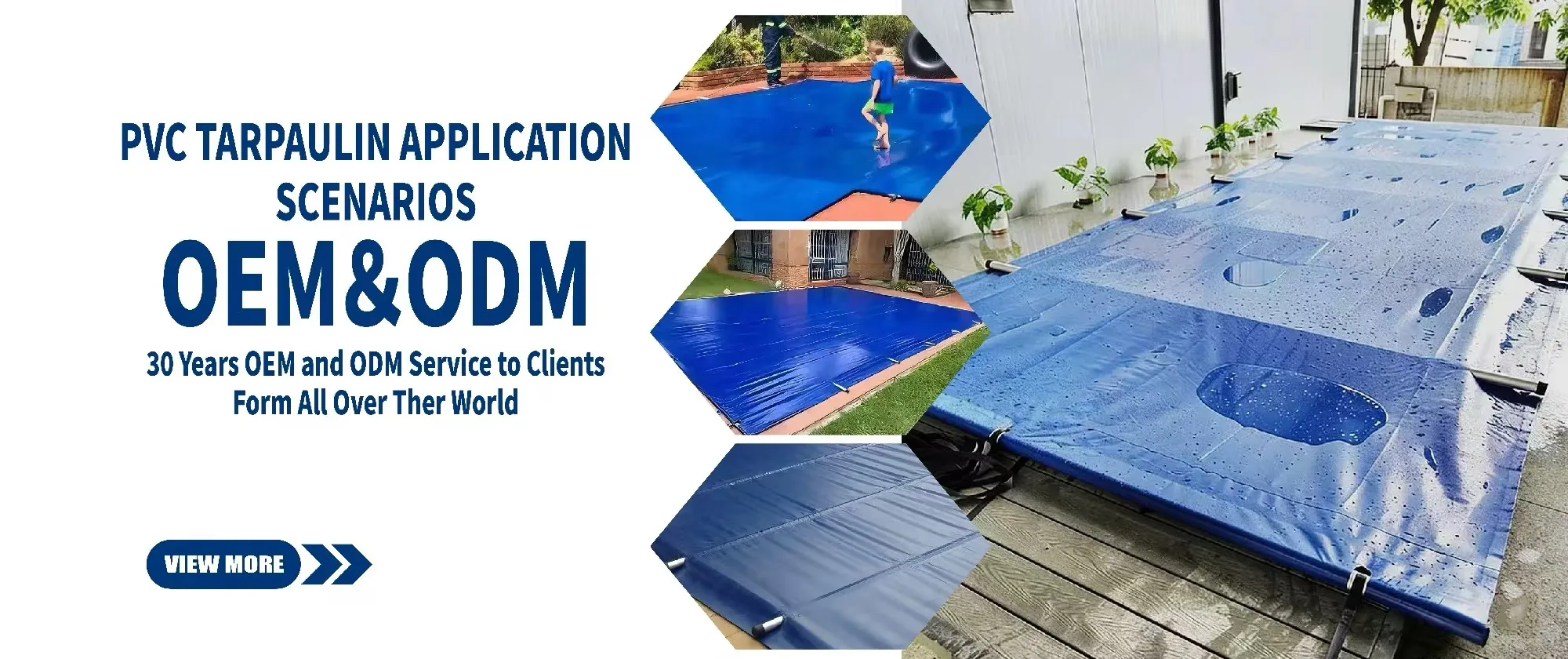
PVC Tarpaulin Swimming Pool Cover Material — knife-coated PVC fabric engineered for pool environments, featuring 100% waterproof construction, UV-resistant anti-aging treatment, and anti-mildew surface.
- Tear-resistant structure handles flex stress at seams during installation and wind exposure
- Surface treatment reduces biological growth in high-humidity pool conditions
- Suitable for rain, wind, snow, and extreme seasonal temperature variations
- Custom sizing and color matching to exact pool dimensions
Samples developed within days for custom pool shapes and specifications, with 100% pre-shipment waterproof integrity inspection.
Description
Proven Coating Expertise — Nearly 30 years focused on PVC coated fabric with deep process control over coating weight and adhesion, applied here to deliver consistent waterproof integrity across every pool cover roll.
Technical Specifications
| Parameter | Value |
|---|---|
| Product Type | PVC Coated Tarpaulin |
| Coating Material | PVC |
| Coating Method | Knife Coated |
| Waterproof Performance | Fully waterproof coated construction |
| UV Resistance | Anti-UV treatment (test basis not stated in source — confirm grade required for your market) |
| Anti-Mildew | Yes |
| Surface Finish | Easy clean surface |
| Weather Resistance | Suitable for rain, wind, snow, and extreme temperatures |
| Tear Resistance | High strength and tear resistant structure |
| Custom Size | Available |
| Custom Color | Available |
| Standards | ISO, CE |
Application Suitability
| Application | Exposure & Requirement |
|---|---|
| Residential in-ground pools | Seasonal debris protection, UV exposure, repeated deployment and folding |
| Hotel and resort pools | Daily handling, high-humidity poolside environment, low-maintenance durability |
| Outdoor commercial pools | Year-round weather exposure, wind load, contamination from dust and leaves |
| Pool construction projects | Integration into contractor packages, custom sizing to non-standard geometries |
Why "Waterproof" Is Not Enough When Sourcing a PVC Pool Cover Tarpaulin
A pool cover must hold its waterproof integrity at the seams, not just across the field of the fabric.
Generic tarps often pass a basic water column test on the flat material but fail at welded seams where the cover flexes most under wind load or snow accumulation. Buyers specifying a PVC pool cover tarpaulin for residential or commercial pools discover mid-season that seam delamination — not fabric degradation — is the first point of failure [NEED_CITE: tensile and tear test methods for coated fabrics per ISO 1421]. Knife coated PVC construction addresses this by producing a unified coating-to-base-fabric bond that survives the heat welding process without separating at the interface.
Knife Coated Construction and What It Means for Pool Cover Longevity
Knife coating applies PVC directly onto the base fabric under controlled tension, forcing the coating compound into the weave interstices. For a PVC pool cover tarpaulin, this produces a bond between coating and yarn that resists delamination when the cover is folded, dragged across pool coping, or subjected to standing water. The result is a material that maintains its waterproof barrier through repeated seasonal deployment cycles without the coating lifting at stress points.
Anti-Mildew Treatment for the Poolside Environment
Pool surrounds generate persistent humidity and condensation on the underside of covers. Without anti-mildew treatment, biological growth develops between the cover and the water surface, staining the fabric and degrading the coating over time [NEED_CITE: ASTM G21 standard practice for determining resistance of synthetic polymeric materials to fungi]. The anti-mildew surface treatment specified for this PVC pool cover tarpaulin targets exactly this failure mode, keeping the underside clean across extended coverage periods and reducing the maintenance burden on facility operators.
Reading the Specification Sheet Beyond the Headline Weight
Coating method matters as much as coating weight. A knife coated PVC fabric achieves higher peel strength than laminated alternatives because the coating penetrates the base fabric rather than sitting on top as a separate film. This distinction is critical for pool covers: when wind lifts the cover and the material snaps back, the coating-to-fabric bond determines whether the surface cracks or holds. The easy clean finish further reduces particulate adhesion, meaning dust and pollen release more readily during rain or hose-down, extending intervals between manual cleaning [NEED_CITE: DIN 53354 coated fabric adhesion and peel testing methodology].
The Cost of Getting the Specification Wrong
Ordering a pool cover material without verifying that the anti-UV claim is backed by a test report leads to covers that embrittle and crack after one or two seasons of direct sunlight, forcing early replacement and reputational damage with end users. Similarly, specifying a standard tarpaulin without confirming anti-mildew treatment results in visible mold growth on the underside, prompting complaint calls from hotel pool managers who expected a maintenance-free solution [NEED_CITE: accelerated UV weathering test standards for PVC coated textiles]. Batch color inconsistency across multiple covers on a single resort project creates a patchwork appearance that undermines the property’s visual standards and triggers costly partial re-orders.
Why Source This PVC Pool Cover Tarpaulin Here
Three full production lines and 36 sets of professional equipment support bulk output with on-time delivery, whether you need a single custom-sized cover or container loads of roll stock for a distributor network. A 10-person R&D team handles material selection, custom sizing, and sample development, producing confirmation samples within days so you can verify color, weight, and finish before committing to production. Every production stage includes dedicated QA/QC with full pre-shipment inspection, meaning dimensional verification against your pool drawing happens before the material leaves the facility rather than after it arrives at your warehouse. The knife coating process is controlled in-house, giving direct oversight of coating weight and adhesion consistency from first roll to last.
Documentation & Verification
- Material specification sheet confirming coating method, base fabric, and treatment options for each batch
- UV test report provided on request — confirm the grade required for your market before ordering
- Pre-shipment inspection record with dimensional verification against your submitted pool drawing
- ISO and CE certificates included with every shipment for import compliance
- Roll packing list with individual roll identification for traceability
Fabrication, Handling & Storage
- Heat welding parameters must be matched to knife coated PVC construction to avoid seam delamination at stress points
- Reinforce eyelet zones and tie-down points with additional PVC patches to distribute load across the base fabric
- Store rolls horizontally on pallets in shaded areas to prevent UV exposure before fabrication and permanent creasing
- Deploy covers in temperatures above freezing to maintain PVC flexibility and prevent cold-cracking at fold lines
- Clean with mild detergent and soft brush — the easy clean surface tolerates standard poolside cleaning agents without coating damage
- Custom sizing requests should include pool drawings with coping overhang dimensions to ensure proper hem and eyelet placement
What to Include in Your Enquiry
To specify the right PVC pool cover tarpaulin for your project, provide the pool dimensions including any coping overhang, the deployment climate and expected UV exposure intensity, and whether you require roll stock or finished cut-to-size covers with hemming and eyelets. If ordering for a multi-pool hospitality project, include the total cover count and any color consistency requirements across the batch so production can be scheduled from a single coating run.
Frequently Asked Questions
Q: How do I verify the GSM and coating weight on arrival match what was quoted?
A: We provide a pre-shipment inspection record with weight verification per roll. On receipt, you can cut a measured sample from the roll edge and weigh it on a calibrated scale. Our specification sheet states the target GSM and coating weight, and any deviation outside agreed tolerance is flagged before dispatch so there are no surprises at your warehouse.
Q: What UV test basis supports the anti-UV claim on your pool cover fabric?
A: Our anti-UV treatment is applied during the coating stage, but the specific test basis and exposure duration should be confirmed for your market requirements. We supply a test report on request — share your regional standard or target exposure hours before order confirmation so we can match the treatment grade and provide the corresponding documentation.
Q: Can you cut and hem pool covers to irregular pool shapes with reinforced eyelets?
A: Yes. Our R&D team works from your pool drawings to produce custom-cut covers matching non-standard geometries including kidney, L-shape, and freeform designs. Hemming and eyelet placement are specified per your tie-down layout, with reinforcement patches applied at high-load points to prevent tear propagation through the knife coated PVC fabric.
Q: How do you control color consistency when ordering multiple covers for a hotel project?
A: Multi-cover orders are scheduled from a single coating batch wherever possible to eliminate inter-batch color variation. Each roll is inspected against the approved color reference under standardized lighting before packing. For projects spanning multiple production runs, we retain a master sample and spectrophotometer record to match subsequent batches.
Q: What is the minimum order for a custom-sized PVC pool cover?
A: Minimum order quantities depend on whether you need roll stock or finished cut-to-size covers, and whether the color is a standard option or a custom match. Contact us with your dimensions, quantity, and color requirement so we can confirm the applicable minimum and lead time for your specific configuration.
Related products
-
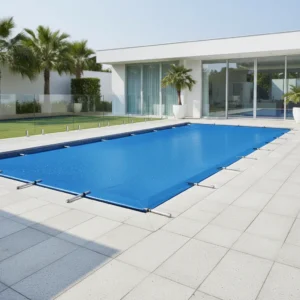
JX PVC Laminated Waterproof Breathable Anti-UV Blackout Organic Plain Weft Swimming Pool Covers Tarpaulin Coated
¥1.78 Select options This product has multiple variants. The options may be chosen on the product page -
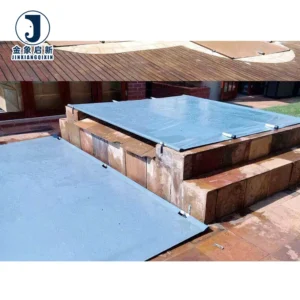
18oz 610gsm PVC Swimming Pool Cover Tarpaulin Fabric – Custom Made
Read more -
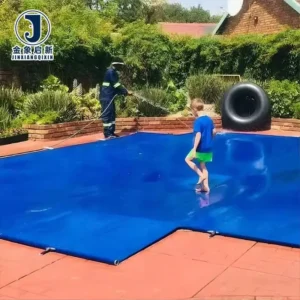
PVC Laminated Waterproof Breathable Anti-UV Blackout Organic Plain Weft Swimming Pool Covers Tarpaulin Coated
¥1.78 Select options This product has multiple variants. The options may be chosen on the product page -
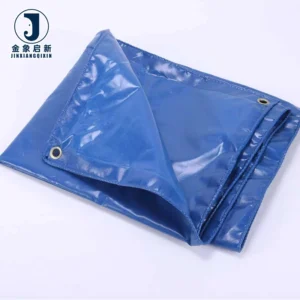
JX PVC Tarpaulin Swimming Pool Cover Material Knife Coated Fabric Waterproof UV-Resistant Windproof
¥13.00 Select options This product has multiple variants. The options may be chosen on the product page