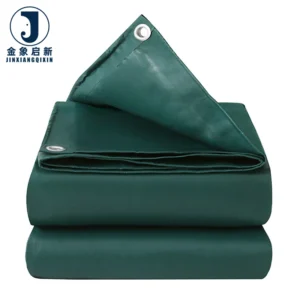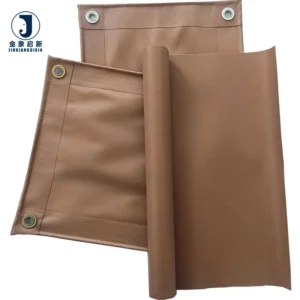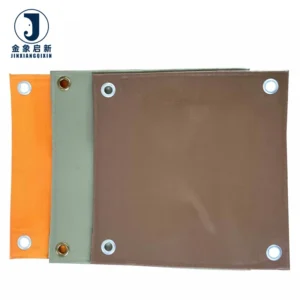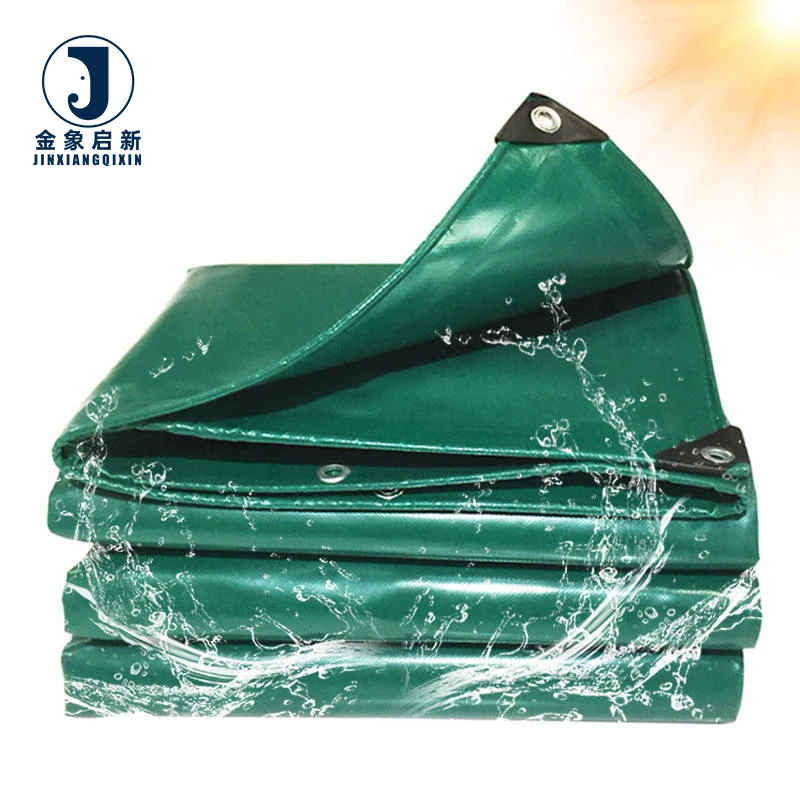
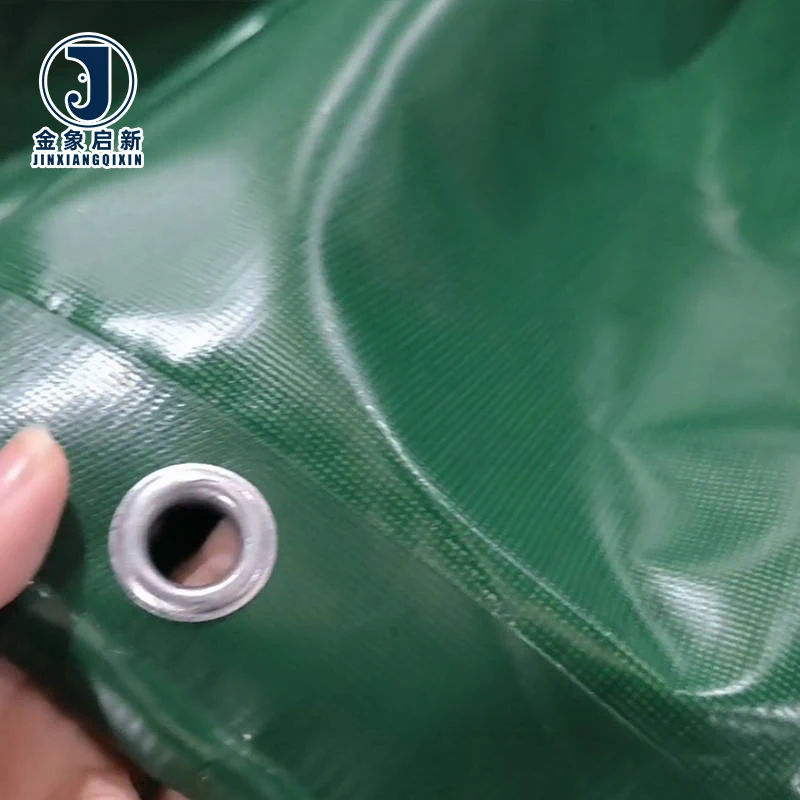
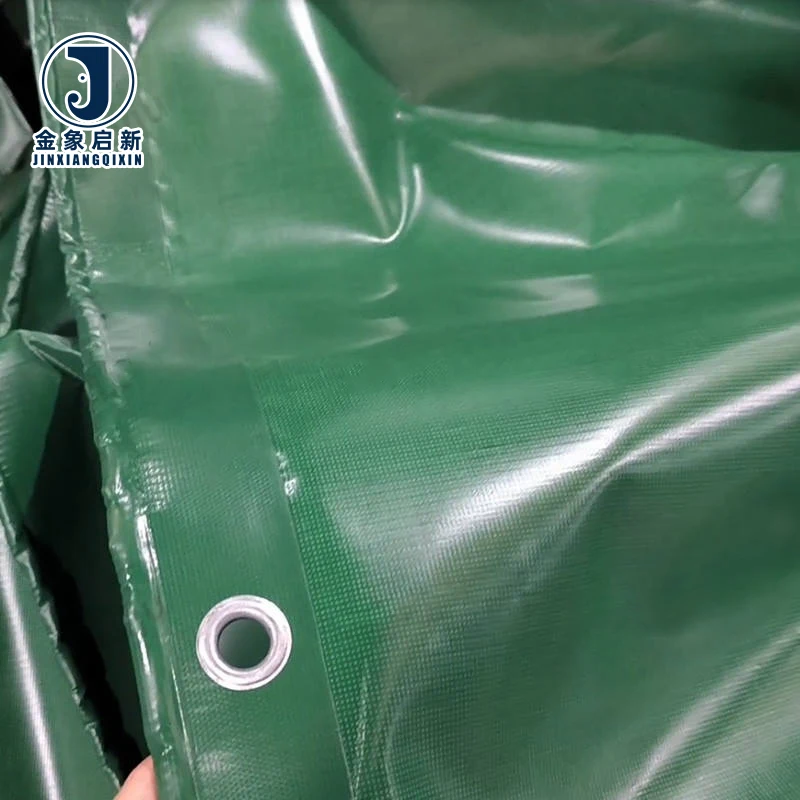
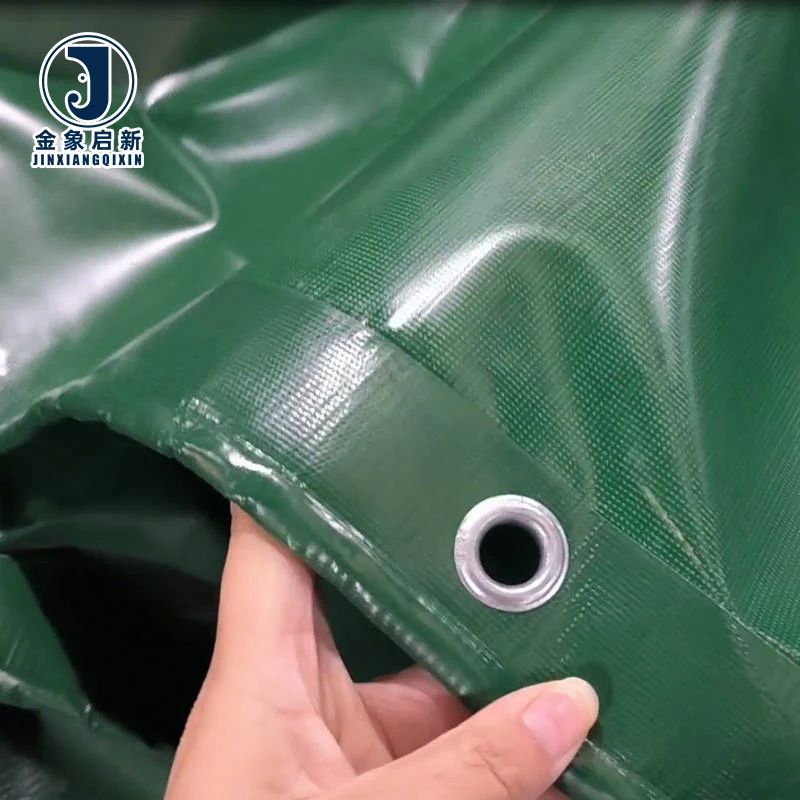
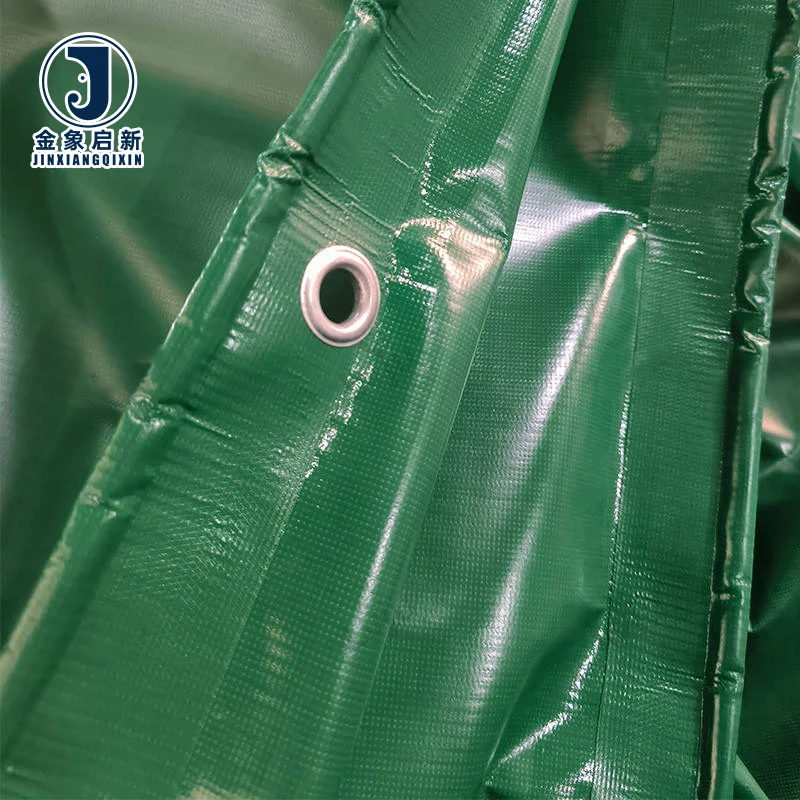
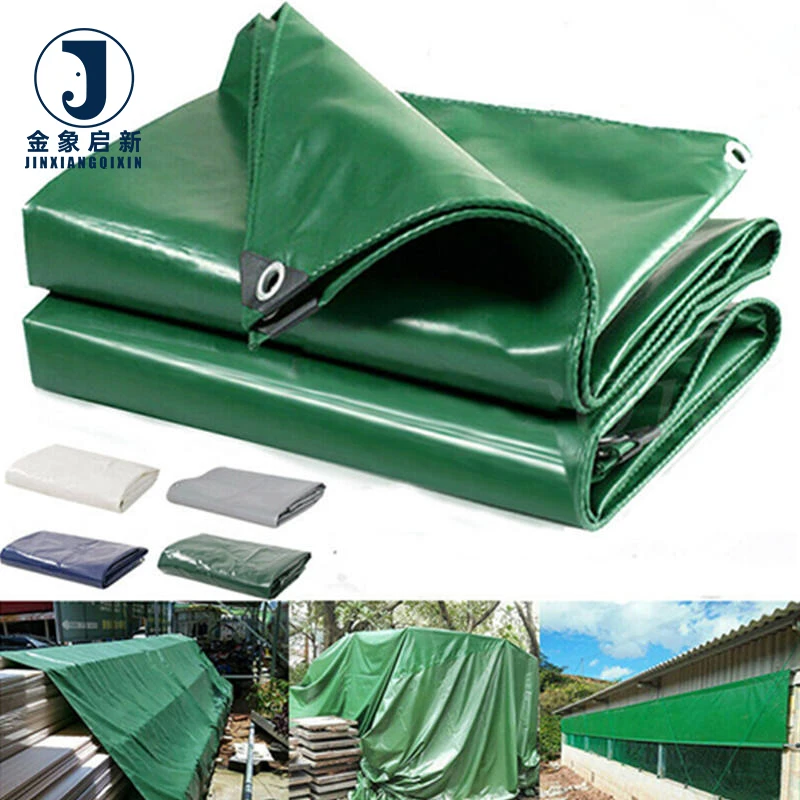
PVC Coated Tarpaulin with 350gsm–1000gsm range, polyester base in 500D×840D to 1000D×2000D yarn counts, double-sided PVC coating with waterproof and anti-mildew treatment
- Complete catalogue spanning lightweight to heavy-duty grades, with custom width, colour, treatment and printing from roll stock to finished cover
- Eight spec grades with documented tensile strength, density and yarn count per weight class — select by application load, not GSM alone
- Edge finished with 5mm rope reinforcement, heat-sealed seamless wrapping and 3cm aluminum alloy eyelets at reinforced corners
Backed by dedicated QA/QC at every production stage with 100% pre-shipment inspection and documented test reports for applicable treatments.
Description
Full Range Custom Capability — Eight weight grades with matched denier and mesh counts, each verified by material specification sheet and pre-shipment inspection before dispatch.
Technical Specifications
| Parameter | Value |
|---|---|
| Product Type | PVC Coated Tarpaulin |
| Material Construction | Polyester Base Fabric + Double-Sided PVC Coating |
| Weight (GSM) | 350, 400, 420, 500, 600, 650, 750, 900 |
| Base Fabric Denier | 500D×840D (350/400/420); 500D×1000D (500); 1000D×1000D (600); 1000D×1300D (650); 1300D×1300D (750); 1000D×2000D (900) |
| Mesh Count (Density) | 30×19 (350/400/420/500); 20×20 (600/650/750); 30×15 (900) |
| Total Thickness (mm) | 0.29 (400); 0.32 (420); 0.38 (500); 0.44 (600); 0.46 (650); 0.55 (750); 0.65 (900) |
| Tensile Strength Warp (N) | 1650 (350); 1800 (400); 1850 (420); 2050 (500); 2500 (600); 2550 (650); 2750 (750); 3900 (900) |
| Tensile Strength Weft (N) | 1600 (350); 1700 (400); 1750 (420); 1900 (500); 2200 (600); 2250 (650); 2850 (750); 3500 (900) |
| Roll Width (m) | 2 |
| Coating Method | Double-Sided PVC |
| Flame Retardant | Available in flame retardant grades — confirm the grade required for your market |
| UV Treatment | Available with anti-UV treatment — request applicable test report for your region |
| Anti-Mildew | Yes |
| Temperature Range | Brittle ≤ -50 to -60 °C; Softening ≥ 80 °C |
| Key Features | Waterproof, Printable, Customizable sizing and colour, Heat weldable |
Application Suitability
| Application | Exposure & Requirement |
|---|---|
| Truck and trailer covers | Constant road vibration, wind loading at high speed, abrasion from tie-down straps at flex points |
| Side curtain fabric | Repeated rolling and unrolling, lateral tension, exposure to diesel exhaust and road salt |
| Pallet and equipment covers | Outdoor stacking, UV exposure, forklift handling abrasion, moisture ingress prevention |
| Outdoor event tents (block out) | Sun exposure, wind uplift, temporary structure loading, crowd safety fire compliance |
| Awnings and rain shelters | Prolonged UV exposure, water pooling on horizontal spans, thermal expansion and contraction |
| Inflatable fabric | Internal air pressure stress, sealed seam integrity, repeated inflation cycles |
Why the Quoted Weight Does Not Always Match What Arrives
A PVC coated tarpaulin manufacturer custom order should deliver exactly what was specified, yet buyers frequently find rolls arriving lighter than the GSM stated on the original quotation. Every roll dispatched is backed by a material specification sheet that states the verified GSM, base fabric denier, coating weight and colour reference so the material you receive matches the material you ordered.
When the weight falls short, the tensile and tear performance drops accordingly — a fabric quoted at 650 GSM but delivered at 600 GSM will not meet the same load-bearing expectations on a trailer side curtain. This discrepancy often goes unnoticed until the cover is installed and subjected to wind loading or tie-down tension [NEED_CITE: tensile and tear test methods for coated fabrics per ISO 1421]. Dedicated QA at every production stage with full pre-shipment inspection addresses this gap before the material leaves the facility.
Eight Specification Grades for Every Load Class
The catalogue spans from lightweight 350 GSM grades suited to pallet covers and temporary shelters through to heavy-duty 900 GSM fabric engineered for high-tension applications. Each grade pairs a specific base fabric denier with a matched mesh count, ensuring the PVC coated tarpaulin manufacturer custom offering is not simply a thickness range but a structured series of material constructions. Buyers sourcing for a specific application can select the grade that aligns with their mechanical and environmental requirements rather than guessing between generic light, medium and heavy labels.
Treatment Options Verified by Documentation
Functional treatments including flame retardancy and anti-UV protection are available across the range, but claims require supporting evidence. Where flame retardant or UV-treated grades are specified, test reports are issued alongside the shipment so buyers can confirm compliance with their local regulatory or site requirements. This documentation-first approach means a mining contractor or event organizer can present the necessary certification to their safety officer without delay [NEED_CITE: fire classification standards for temporary structures and ventilation ducts].
How Denier, Density and Coating Weight Work Together
The relationship between base fabric construction and final performance is not linear — a 1000D×1000D base at 20×20 density provides different tear propagation behaviour than a 500D×840D base at 30×19 density, even when both are coated to a similar GSM. The tighter mesh count in the lighter grades distributes load across more yarn intersections, while the heavier denier in the upper grades resists individual yarn rupture under point loads such as tie-down hooks or sharp equipment edges. Coating weight on both sides of the base fabric contributes to waterproofing, abrasion resistance and heat-sealing performance during fabrication. The double-sided PVC coating method ensures adhesion strength sufficient for hot air welding, where the seam must perform as reliably as the parent fabric under flexing loads.
The Cost of Specifying on GSM Alone
When a buyer selects material based solely on a GSM figure without confirming the base fabric denier, mesh count or coating adhesion method, the installed cover may fail at the weld line before the fabric body shows any degradation. This is particularly common on truck side curtains where the fabric flexes continuously during transit and the welded seam bears the same cyclic stress as the coated surface. Colour variation between rolls in the same order creates visible banding once the material is installed side by side on a large structure, forcing the contractor to reject the entire batch and delay the project [NEED_CITE: colour consistency standards for coated fabric batches]. These failures trace back to insufficient specification at the enquiry stage rather than any single manufacturing defect.
What the Production Process Delivers
Three full production lines with 36 sets of professional equipment support bulk volume with consistent output across the eight weight grades. A 10-person R&D team handles material selection, custom sizing, pattern printing and sample development, with samples turned around within days for non-standard requirements. Dedicated QA and QC checkpoints operate at every production stage rather than only at final inspection, catching coating weight deviation and colour drift before the roll is wound. Every order ships with a 100% pre-shipment inspection record, providing documented evidence that the specification was met before the container was sealed. Custom width, colour and printing options are supported without prohibitive minimums, allowing buyers to source exactly what their application requires.
Documentation & Verification
- Material specification sheet stating GSM, base fabric denier, coating type and colour reference per roll
- Test reports for UV and flame retardant grades supplied with applicable orders
- Pre-shipment inspection record confirming weight, dimensions and visual quality before dispatch
- Roll packing list with individual roll identification for traceability
- Certificate of origin and customs documentation for international shipment
Fabrication, Handling & Storage
- Hot air welding parameters vary by GSM grade — confirm temperature and speed settings for the specific weight ordered
- Heat-sealed seamless edge wrapping with 5mm rope reinforcement prevents unraveling at cut edges
- Store rolls upright on pallets to avoid flat-spotting the PVC coating surface under sustained pressure
- Allow cold-stored rolls to reach ambient temperature before unrolling to prevent coating crease damage
- Aluminum alloy eyelets at specified spacing distribute tie-down load across the reinforced hem area
Request a Specification Match for Your Application
Provide your application type, exposure conditions and any regulatory compliance requirements so the correct grade and treatment combination can be recommended. Specify whether you require roll stock or finished cut-to-size covers with eyelet and hem details, and confirm your target colour or printing requirements along with estimated annual volume. Sample development is available for custom sizing, colour matching and treatment verification before production commitment.
Frequently Asked Questions
Q: How is GSM verified on arrival and what documentation accompanies each roll?
A: A material specification sheet accompanies every shipment stating the verified GSM, base fabric construction and colour reference for each roll. A pre-shipment inspection record documents that weight and dimensions were checked before dispatch, giving you documented evidence to cross-reference against your original quotation upon receipt.
Q: What UV and flame retardant test reports are available?
A: Test reports are issued for UV-treated and flame retardant grades where applicable, aligned to recognised test standards. Specify your target market and the compliance framework required — such as building regulations or site safety codes — so the correct grade and supporting documentation can be supplied with your order.
Q: How is batch-to-batch colour consistency controlled across rolls?
A: Colour matching is confirmed at the sample approval stage, and in-process quality checks monitor coating colour throughout the production run. This prevents the visible banding that occurs when rolls of slightly different shade are installed side by side on a single truck curtain or large tent structure.
Q: What custom width, length and printing options are available?
A: Custom widths, cut-to-length rolls and printed branding or patterns are available across all eight weight grades. Provide your dimensional requirements and artwork at the enquiry stage so samples can be developed and approved before the production run begins, confirming fitment and visual result.
Q: How are eyelet spacing and hem reinforcement specified?
A: Eyelet spacing, hem construction and corner reinforcement are confirmed during the sample stage based on your tie-down method and load requirements. Options include 3cm aluminum alloy buttonholes, 5mm rope hem insertion and heat-sealed seamless edge wrapping, selected to match the specific grade and application.
Related products
-
JX PVC Waterproof Fabric High-strength Sheeting for Industrial and Outdoor Coverings
¥1.90 Select options This product has multiple variants. The options may be chosen on the product page -
Waterproof Heavy Duty Tarpaulin Water Proof Cover Tarpaulin Manufacturer
¥1.48 Add to cart -
Factory Direct Sale Flatbed Trailer Tarps Black Heavy Duty Lumber Pe Tarp Flatbed Truck Transportation Tarpaulin Roll Sheet
¥1.25 Select options This product has multiple variants. The options may be chosen on the product page -

Hotsale Custom China Supplier Super Strength Industrial Grade 680GSM RIPSTOP PVC Tarpaulin for Builders Roof Tarp and Sheeting
¥2.80 Add to cart