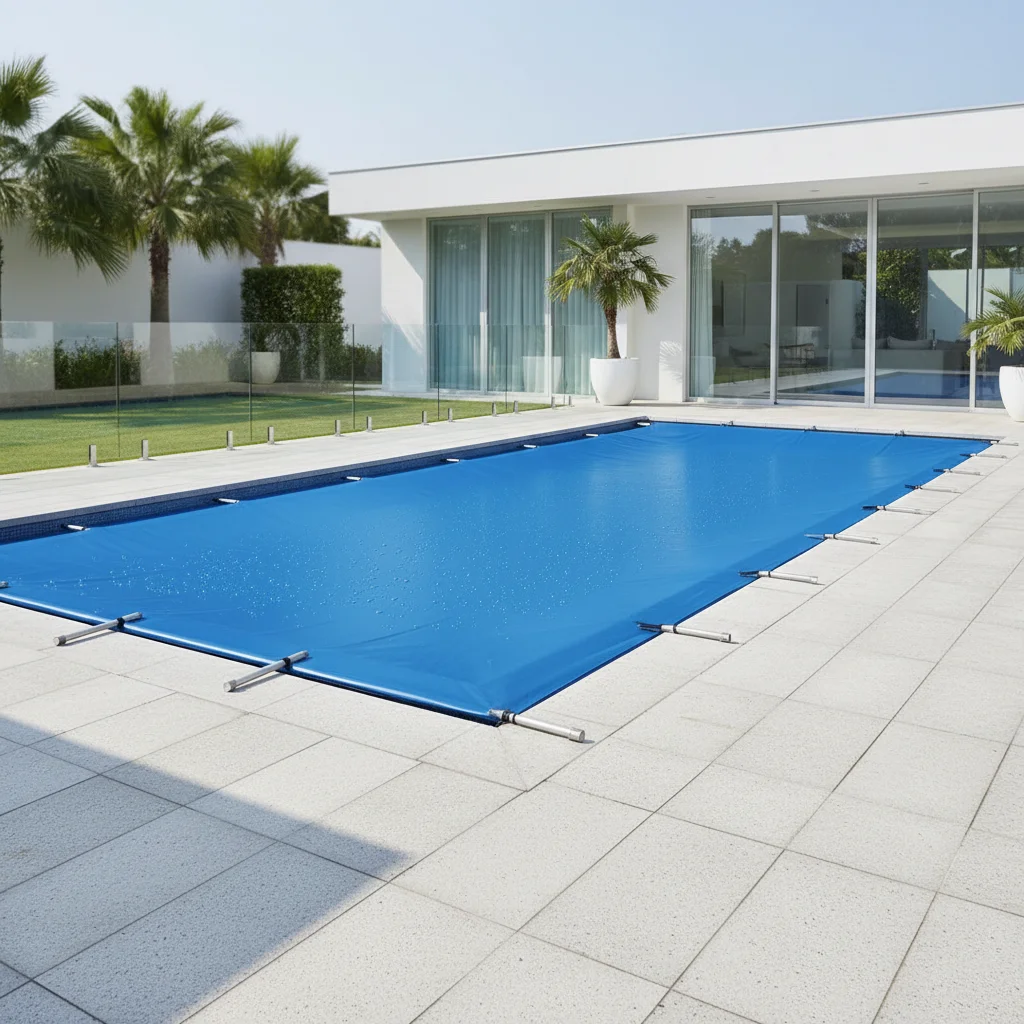
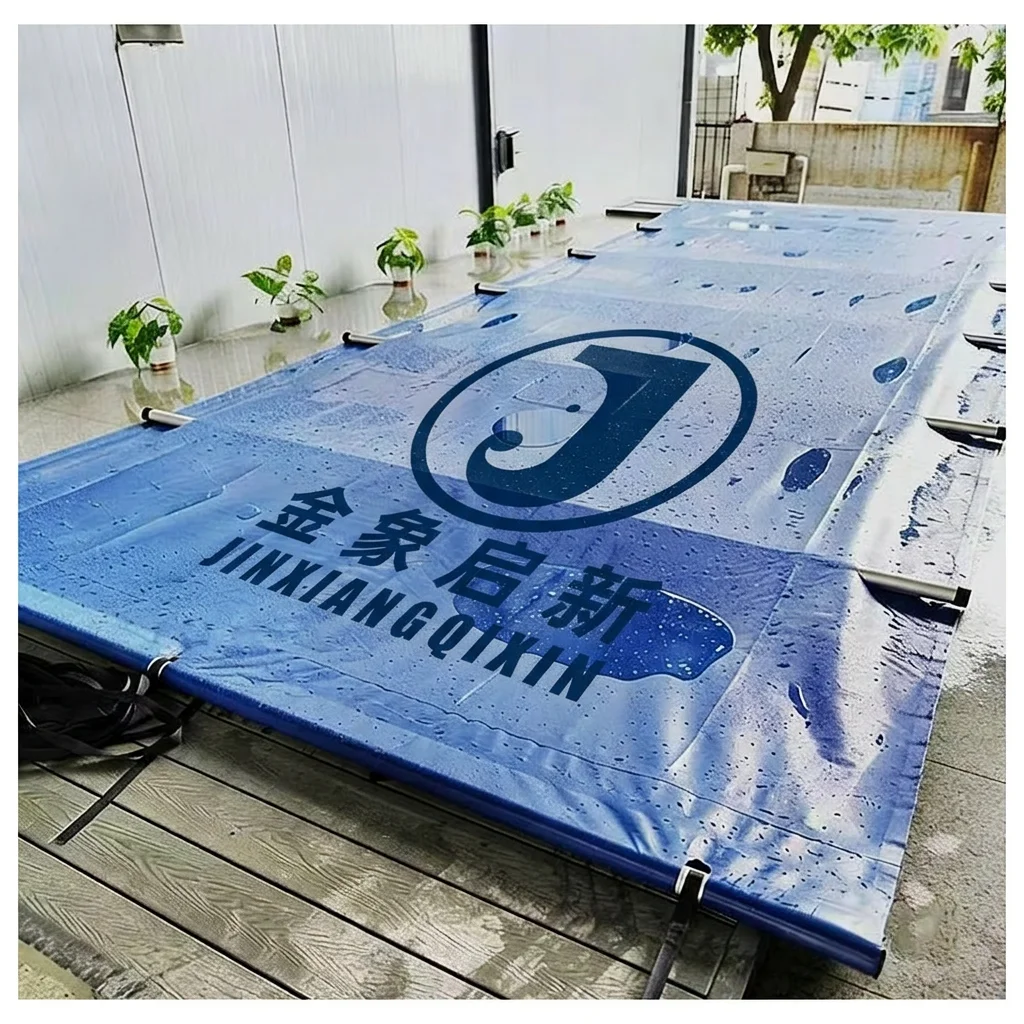
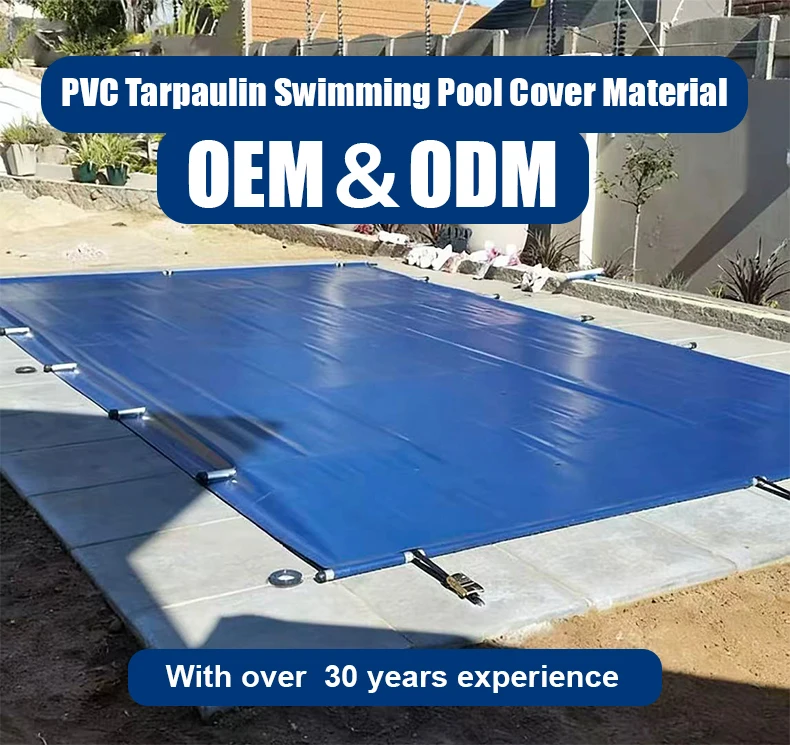
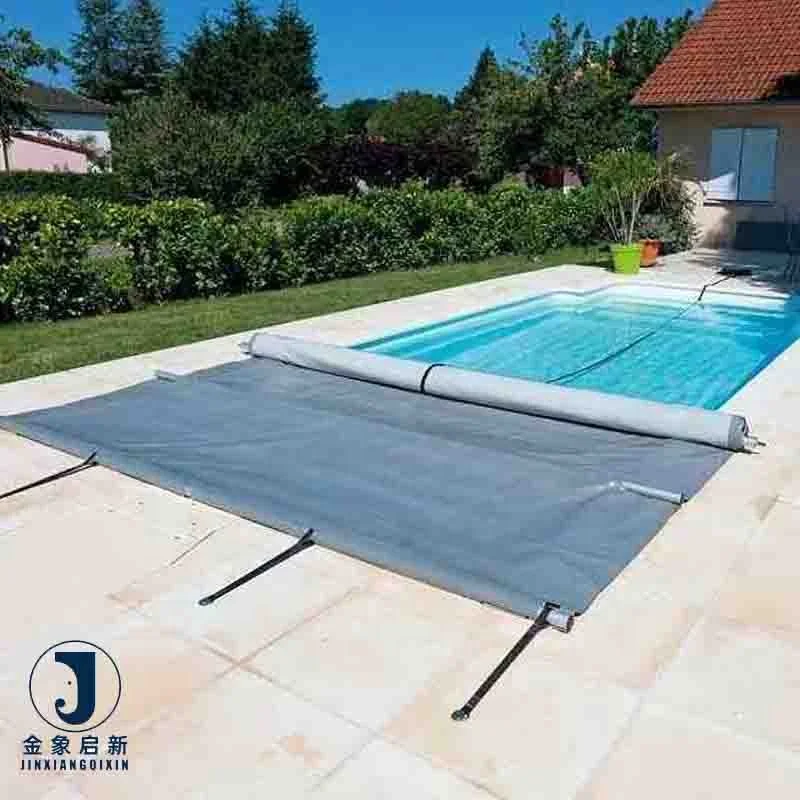
PVC Tarpaulin Pool Cover, Medium Weight, Anti-UV & Waterproof — engineered for outdoor pool covering, shade sails and canopy applications.
- Coating adhesion and consistent GSM across batches ensure reliable tensile performance at welded seams
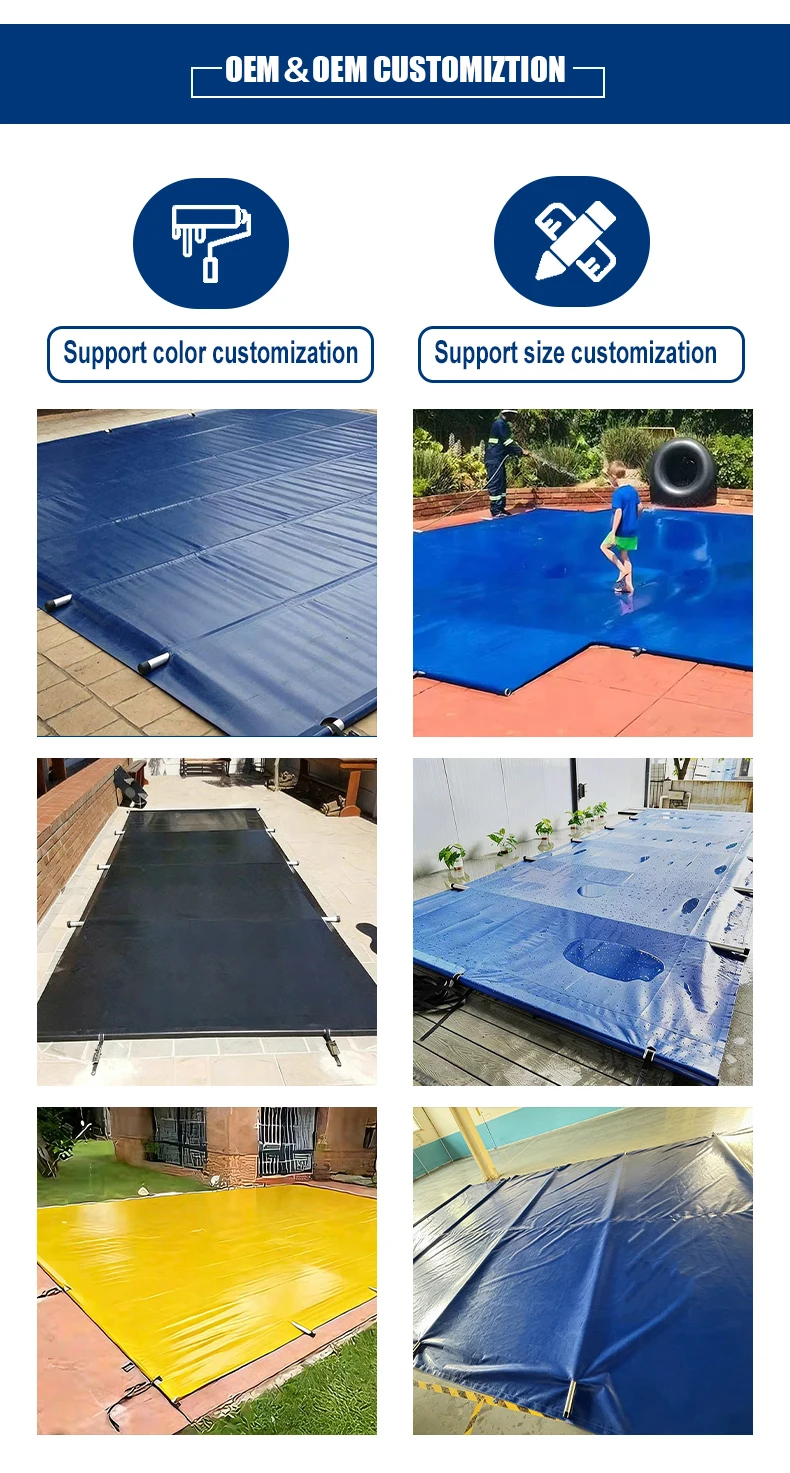
- Custom sizing with reinforced hems and eyelets for secure fitment on residential and commercial pools
- Backed by dedicated QA at every stage, 100% pre-shipment inspection, and full export documentation
Description
Deep Coating Adhesion Control — every roll of PVC coated tarpaulin we ship carries a batch-matched coating weight record verified at the line, not assumed from a catalogue average.
Technical Specifications
| Parameter | Value |
|---|---|
| Product Type | PVC Tarpaulin Pool Cover |
| Material | PVC Coated Tarpaulin |
| Weight Grade | Medium Weight |
| Treatment | Anti-UV, Waterproof, Rainproof |
| Application | Outdoor Awning, Shade Sail, Canopy, Pet Dog House Cover |
| Customization | Size and printing available |
| Certification | ISO, CE |
Application Suitability
| Application | Exposure & Requirement |
|---|---|
| Residential and commercial pool covers | Continuous UV exposure, standing water contact, chemical splash from pool treatment, wind uplift on large spans |
| Outdoor awning and canopy structures | Daily sun cycle, rain pooling, repeated deployment flex at mounting rails |
| Shade sail installations | Constant tension load, UV degradation risk at corner reinforcement points, colour stability across adjacent panels |
| Pet shelter and dog house covers | Abrasion from animal contact, moisture and waste exposure, need for easy wipe-down cleaning |
| General outdoor equipment covers | Dust ingress, rainfall, UV fading on stored machinery and building materials |
Why Coating Weight Verification Matters More Than the GSM Number on the Quotation
A stated GSM figure tells you almost nothing if the material that arrives weighs less than what was agreed. Weighing every roll before it leaves the factory floor is the only way to close the gap between quotation and delivery.
I remember a shipment of PVC pool covers destined for the Middle East where the quoted medium-weight specification read correctly on paper but arrived 60 grams lighter per square metre on the buyer’s scale. The entire container was rejected. [NEED_CITE: coating weight variance and its effect on tensile performance per ISO 1421]. Since then, every production run I oversee goes through in-line coating weight checks and a final roll-by-roll weigh-in before packing. A PVC Pool Cover aftermarket supplier that cannot show you the weight record for your specific batch is asking you to trust a number that was never verified against the physical product in your hands.
What Separates a Pool Cover Fabric from a General-Purpose Tarpaulin
Pool environments expose fabric to conditions that generic outdoor tarpaulins are never tested against. Chlorine and bromine vapour rise from treated water and settle on the underside of a cover, slowly attacking plasticisers in the PVC coating. A PVC Pool Cover aftermarket supplier who understands this will formulate the coating compound to resist chemical softening, not just water penetration.
Medium-weight PVC coated tarpaulin used for pool covers must also handle the mechanical stress of being pulled taut across a span, often several metres wide, while resisting sag from rainwater pooling on top. The balance between flexibility for deployment and stiffness for water shedding is controlled by the base fabric weave density and the coating thickness applied on each side.
How Anti-UV Treatment Holds Up Under Full Summer Exposure
Anti-UV treatment is a claim that means very little without a test result to back it. Available in anti-UV treated grades — confirm the UV stabiliser package required for your climate zone and expected exposure duration. Pools in southern Europe or the Middle East face a far more aggressive UV load than those in northern latitudes, and the additive concentration must match. [NEED_CITE: UV exposure testing standards for PVC coated fabrics]
When the UV package is correct, the surface resists chalking and colour shift over extended seasons of direct sun. When it is insufficient, the coating surface breaks down first, becoming brittle at the fold lines where the cover is repeatedly gathered and redeployed. This is why we recommend buyers request the specific test documentation for the anti-UV grade they are purchasing.
Reading the Specification Sheet Beyond the Headline GSM
The weight grade on a PVC tarpaulin data sheet is only one part of the performance picture. Medium-weight fabric can be built with a high-denier, low-density weave or a low-denier, high-density weave, and the two constructions behave very differently under load. High-density weaves resist tear propagation better, which matters when a pool cover is punctured by a branch or a sharp edge.
The PVC coating method also shapes the final behaviour. Knife-over-roll coating pushes compound into the weave interstices, creating a mechanical lock that improves peel strength at welded seams. This matters for pool covers because the seams are where wind uplift concentrates force. Surface finish — glossy versus matte — affects how easily algae and dirt release during cleaning, a practical concern for any cover sitting over standing water. Width availability determines how many panels must be welded together to span a large pool; fewer welds mean fewer potential failure lines.
The Hidden Cost of Specifying on Price Alone
When a buyer selects a PVC pool cover based on the lowest per-square-metre quote, the savings often evaporate on the first site visit after installation. Covers that are lighter than quoted sag under rain load, pooling water in the centre until the fabric stretches beyond recovery. Anti-UV claims that lack supporting test data surface as fading and brittleness within a single season, forcing an early replacement that costs more than specifying correctly from the start. [NEED_CITE: common failure modes in PVC tarpaulin pool covers]
Colour inconsistency between rolls in the same order becomes visible the moment two panels are installed side by side on a shade sail or awning. Welded seams that fail before the fabric body does leave the buyer with an irreparable cover, because re-welding a seam on aged, UV-degraded PVC rarely produces a reliable bond.
Why Sourcing Your PVC Pool Cover Fabric Here Makes Sense
Thirty years of running PVC coating lines means we have seen every formulation mistake that can happen on a production floor and built our process controls around preventing them. Our ten-person R&D team handles material selection, custom sizing, colour matching and sample development in-house, so a specification change does not require waiting on a third-party compounder.
Three full production lines and thirty-six sets of professional equipment give us the capacity to run bulk orders without compressing lead times into unrealistic schedules. Dedicated quality inspection at every stage — base fabric incoming check, mid-coat weight verification, final surface and colour audit — means problems are caught before they reach the packing area, not after the buyer opens the container.
Documentation & Verification
- Material specification sheet stating weight grade, base fabric type and PVC coating composition for each batch
- Test report for anti-UV and waterproof treatment where applicable to the ordered grade
- Pre-shipment inspection record covering roll count, weight verification and visual surface check
- ISO and CE certificates confirming management system and product compliance
- Certificate of origin and customs documentation package for destination country clearance
Fabrication, Handling & Storage
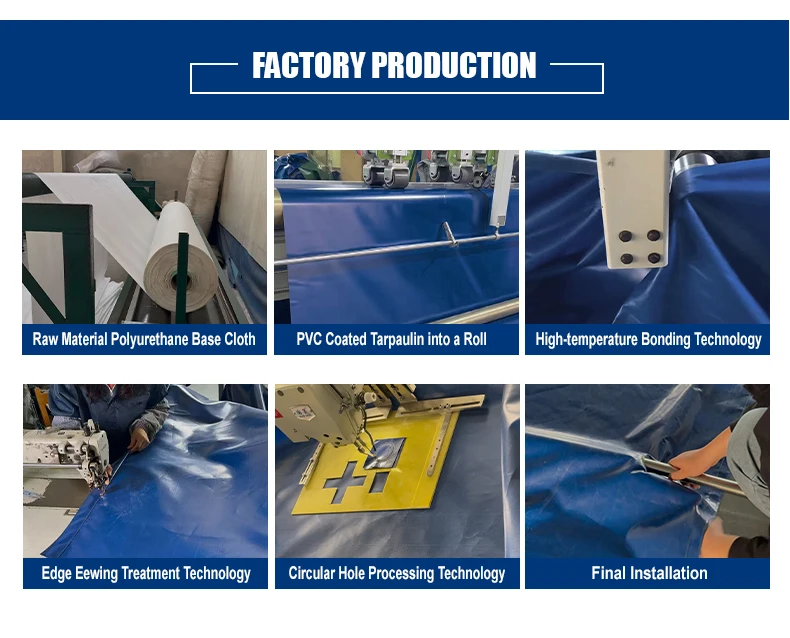
- Weld medium-weight PVC covers with hot air at temperature and speed matched to coating thickness to avoid cold joints
- Reinforce eyelet positions with additional PVC patches to distribute tie-down load across the base fabric weave
- Store rolls upright on pallets in shaded, ventilated areas to prevent flat-spot deformation of the coating surface
- Avoid deploying covers below the coating’s low-temperature flexibility threshold to prevent cracking at fold lines
- Clean with mild detergent and soft brush; solvent-based cleaners may soften the plasticiser in the PVC compound
- When cutting panels for shade sails, plan the nesting layout to minimise off-cuts and weld seam count across the span
What We Need from You to Quote Accurately
Tell us the pool dimensions or awning span you are covering, the wind and sun exposure conditions at the installation site, and any colour or printing requirements you have for the finished cover. Let us know whether you need rolls in stock width or custom-cut panels with welded hems and eyelets, and what annual volume you are planning so we can structure production runs for batch-to-batch consistency.
Frequently Asked Questions
Q: How do you verify the Anti-UV and waterproof treatment on your PVC covers?
A: Each production batch of PVC coated tarpaulin is checked against the treatment specification on the material data sheet. We provide test reports for the anti-UV and waterproof grades ordered, so you can confirm the additive package matches your market’s exposure requirements before the goods ship.
Q: Can you match a specific colour across multiple rolls in one order?
A: Yes. Our coating line uses controlled pigment dosing and in-process colour checks to keep shade variation within tolerance across every roll in a single production run. We supply a colour reference sample with the shipment so you can verify consistency against your approved standard on arrival.
Q: What customization options are available for sizing, printing and edge reinforcement?
A: We cut panels to your specified dimensions, apply custom pattern printing where required, and add reinforced hems with welded edge strips. Eyelet spacing and reinforcement patch size are configured to match your installation method and the tie-down loads the cover will face in service.
Q: How do you handle quality inspection before shipment?
A: Every roll goes through a full inspection covering coating weight, surface finish, colour consistency and dimensional accuracy before packing. We maintain a pre-shipment inspection record for each order that documents the checks performed and the results, available to the buyer before dispatch.
Q: What documentation do you provide for international export?
A: Each shipment includes a material specification sheet, relevant treatment test reports, ISO and CE certificates, packing list with roll-level detail, certificate of origin and the customs documentation needed for clearance at the destination port.
Related products
-
JX PVC Laminated Waterproof Breathable Anti-UV Blackout Organic Plain Weft Swimming Pool Covers Tarpaulin Coated
¥1.78 Select options This product has multiple variants. The options may be chosen on the product page -
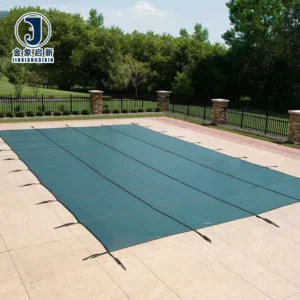
Custom Made PVC Pool Cover 500gsm Blackout – Manufacturer
Read more -
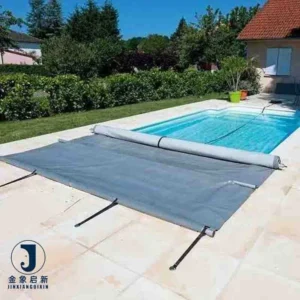
JX PVC Laminated Waterproof Breathable Anti-UV Blackout Organic Plain Weft Swimming Pool Covers Tarpaulin Coated
¥1.78 Select options This product has multiple variants. The options may be chosen on the product page -
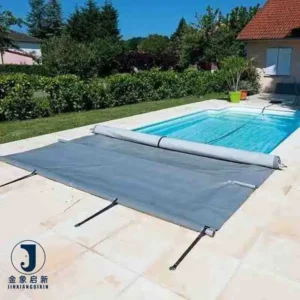
JX PVC Tarpaulin Swimming Pool Cover Material Knife Coated Fabric Waterproof UV-Resistant Windproof
¥13.00 Select options This product has multiple variants. The options may be chosen on the product page