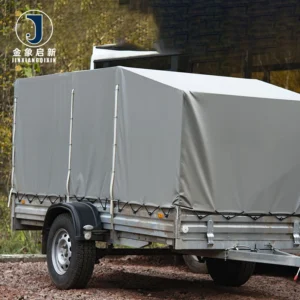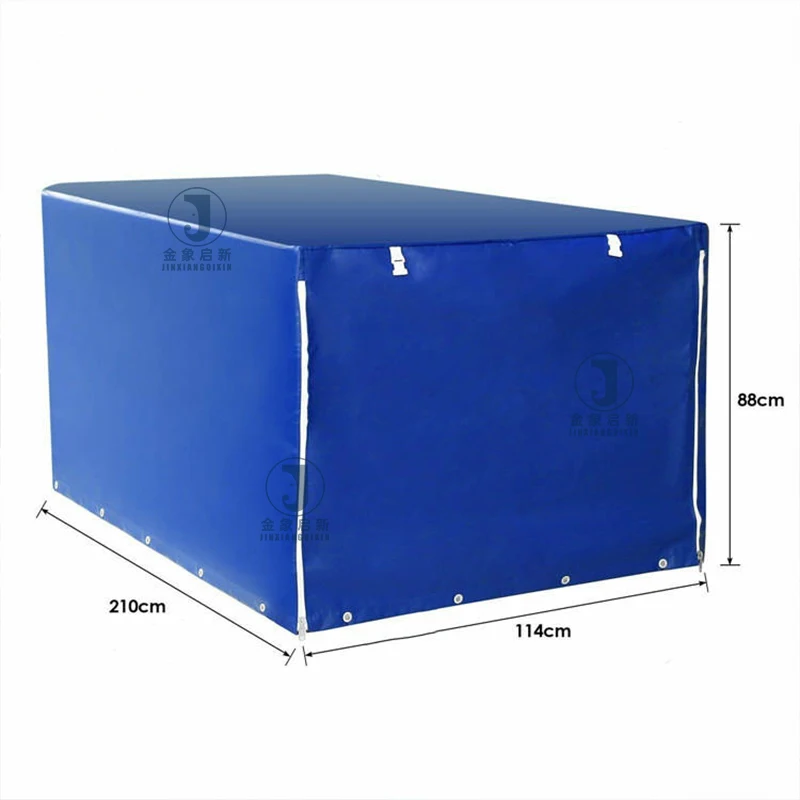
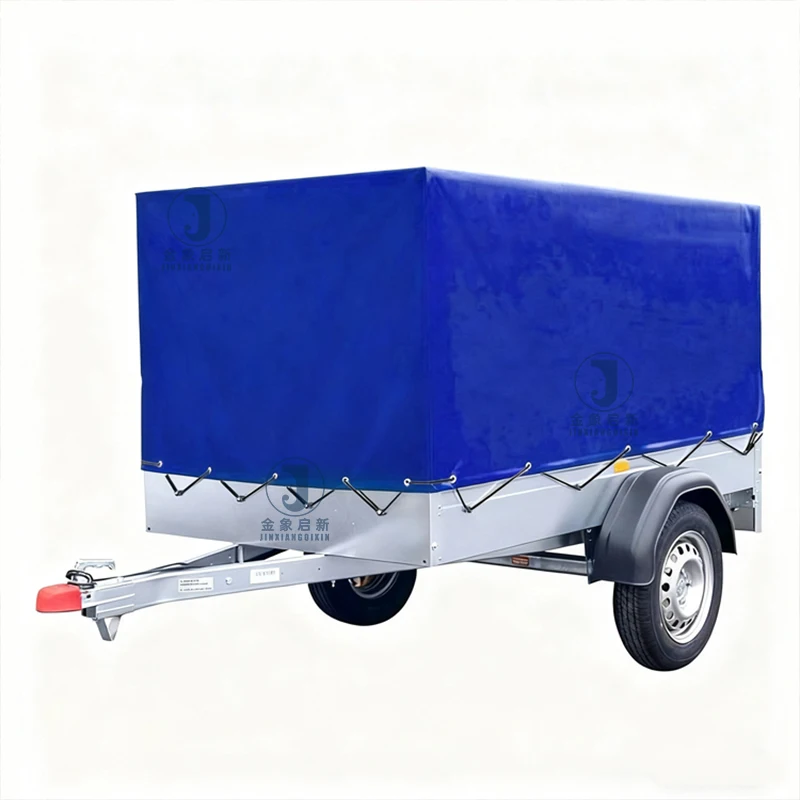
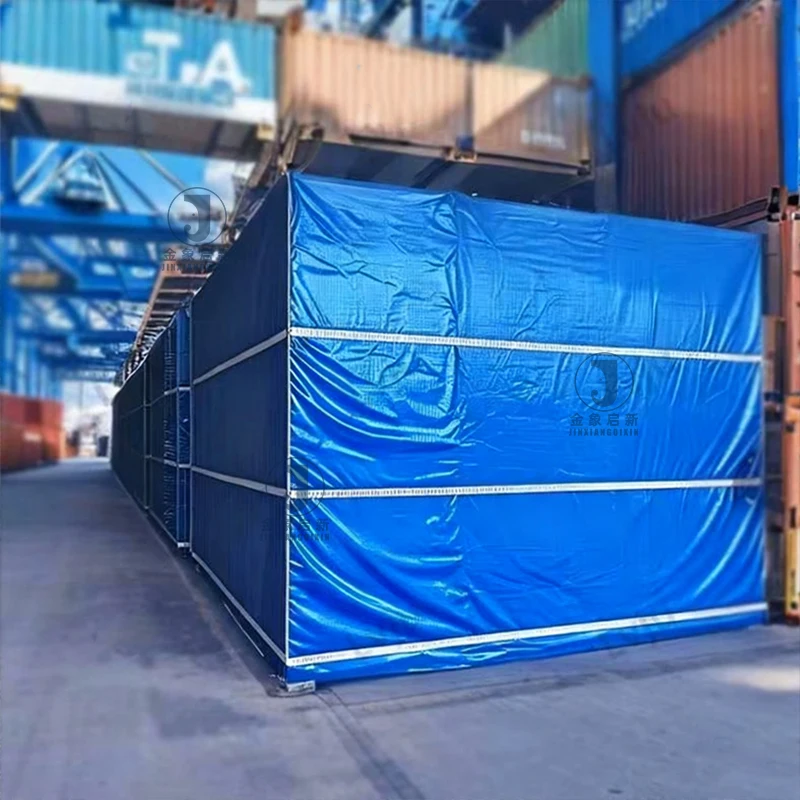
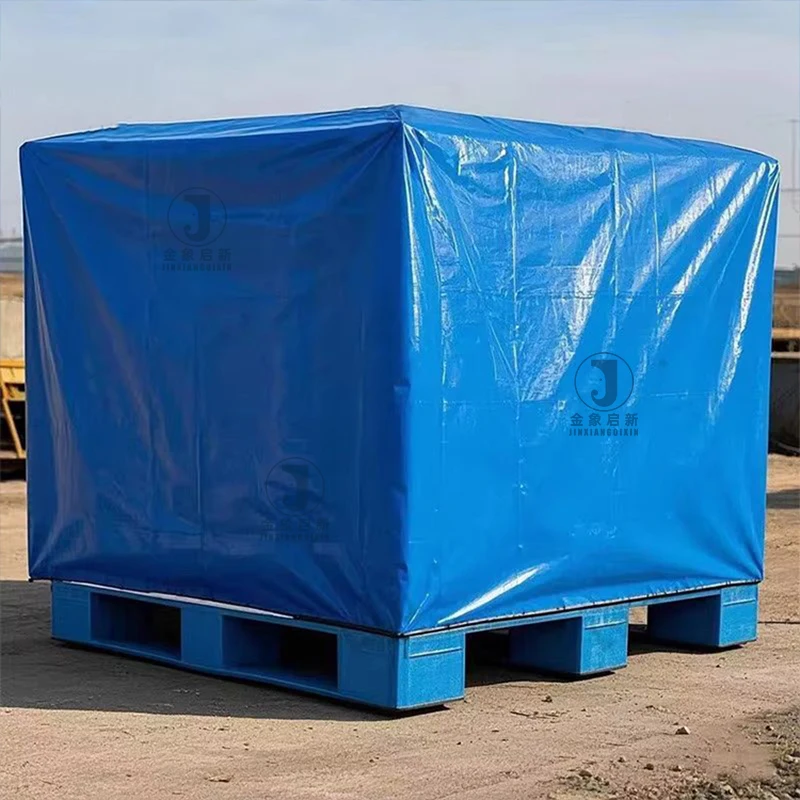
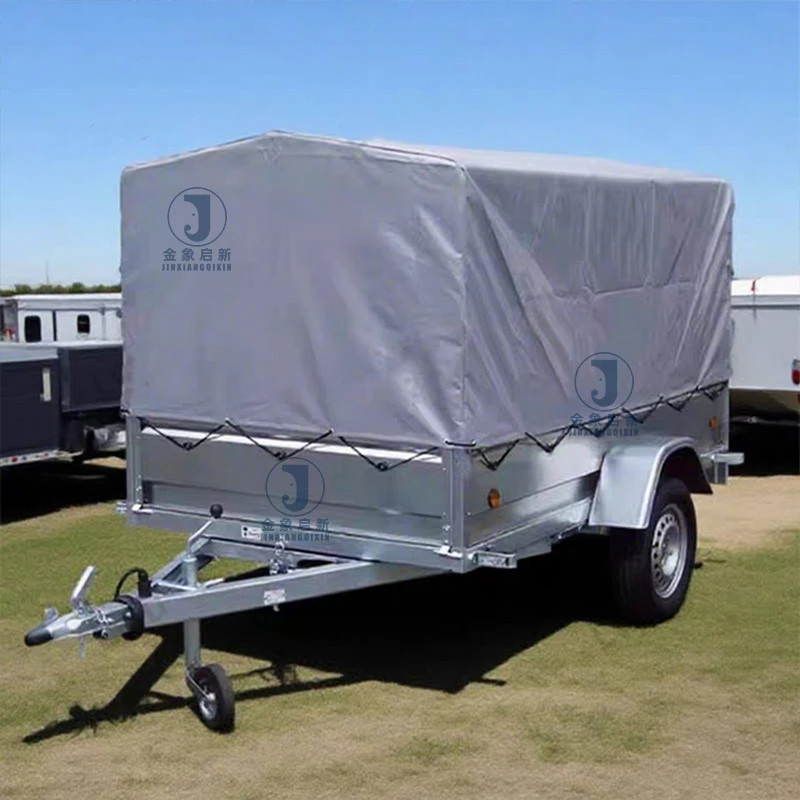
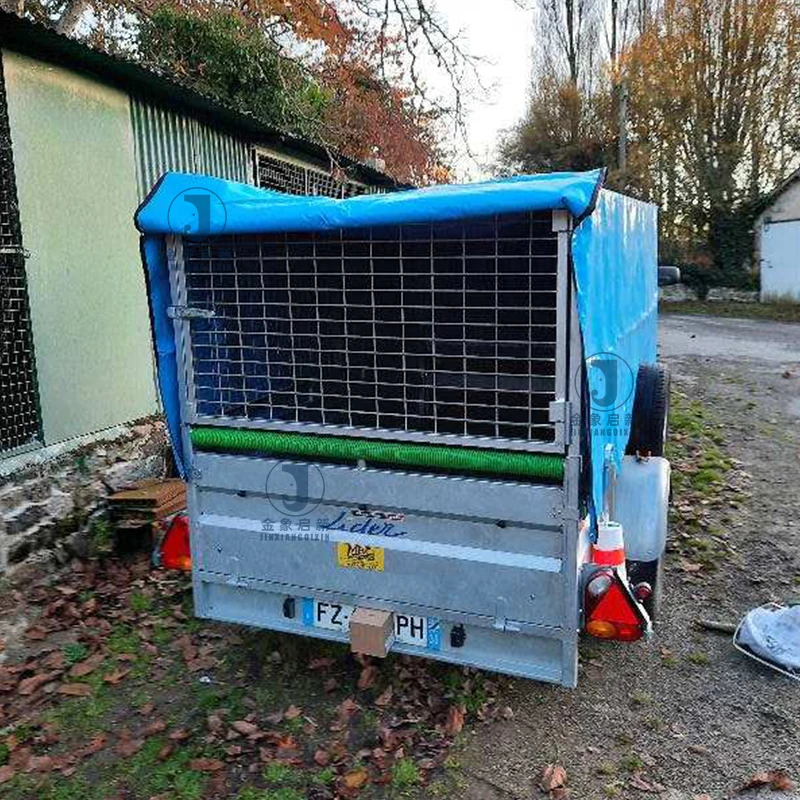
Waterproof PVC Coated Trailer Cover with 350gsm–750gsm range and hot-melt coating technology — engineered for flatbed and cargo truck protection.
- Laminated and hot-melt coating ensures strong adhesion at welded seams, critical where loads flex most during transit
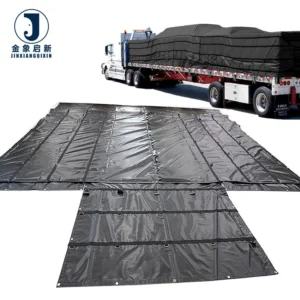
- Custom sizing per trailer model with UV-treated material, hot-welded bottom hems, and optional eyelets or zipper closures
- 100% pre-shipment inspection with material spec sheets verifying exact GSM, base fabric, and coating weight for every roll
Description
Proven Coating Adhesion — our 10-person R&D team controls every layer of the laminated and hot-melt coating process, ensuring PVC truck covers that hold together at the weld long after the fabric takes its first road abrasion.
Technical Specifications
| Parameter | Value |
|---|---|
| Product Type | PVC Tarpaulin Truck Cover |
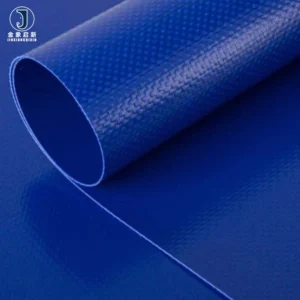
| Material | PVC + High-strength polyester mesh fabric |
| Weight (GSM) | 350gsm / 420gsm / 500gsm / 550gsm / 600gsm / 750gsm |
| Total Thickness | 0.32mm / 0.35mm / 0.4mm / 0.45mm / 0.5mm / 0.65mm |
| Coating Method | Laminated technology & Hot-melt Coating technology |
| Finish Product Size | Custom as per customer’s needs or sold by inventory |
| Color Options | Blue / Red / Yellow / Light blue / Grey (Customized) |
| Key Features | Waterproof, sunproof, cold crack resistance, anti-mildew, anti-static treatment (grade not stated), UV treated material (test basis not stated), hot welded hem at the bottom, eyelets / zipper / velcro as option |
| Standards | ISO, CE |
Application Suitability
| Application | Exposure & Requirement |
|---|---|
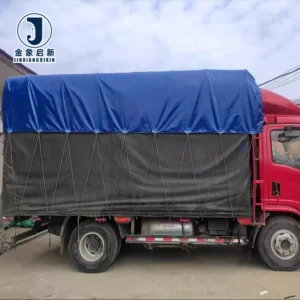
| Trailer cover | Continuous highway wind load, flex stress at corners, UV and rain exposure, tie-down abrasion at eyelets |
| Truck cover | Road debris impact, diesel exhaust soiling, daily folding and unfolding, dust and water ingress prevention |
| Tent cover | Prolonged sun exposure, wind uplift on frame structures, repeated assembly and teardown |
| Cargo ship cover | Salt spray, heavy rain, sustained UV, cargo shifting forces against the fabric |
Why a Generic PVC Truck Cover Fails Where Your Load Flexes Most
The weld line fails first, not the fabric — because generic sizing puts seams at the wrong stress points.
Most buyers specify a PVC truck cover by GSM alone, assuming heavier weight means a stronger cover. Yet when the trailer hits a bump or the load shifts under braking, the highest stress lands on the welded seams, not the field of the fabric. A cover cut to generic dimensions places those seams wherever the standard pattern dictates, often right at the point the load flexes most [NEED_CITE: tensile and tear test methods for coated fabrics per ISO 1421]. We have seen heavy-grade coated rolls fail at the weld line while the surrounding fabric remained intact. The fix is not thicker material — it is a cover sized to your specific trailer model so the seams sit where the fabric does not bend.
Sizing to the Trailer, Not to the Catalogue
Every PVC truck cover we produce starts from the actual dimensions of your trailer model, not from a standard cut sheet. Side curtain fabric, top covers, and rear flaps are each patterned to match the frame profile, so the fabric sits flat under tension instead of bunching at the rails. This matters because a loose cover flaps in highway wind, accelerating coating fatigue at the fold lines. Our design process captures the trailer frame geometry before the first panel is cut.
Coating Adhesion That Outlasts the Weld
The laminated and hot-melt coating technology we use bonds the PVC layer to the high-strength polyester mesh at a molecular level. This matters most at the hot welded hem where the bottom edge takes the full force of tie-down straps. When adhesion is weak, the coating peels back from the base fabric at the weld, and moisture enters the mesh [NEED_CITE: hot-melt coating adhesion standards for PVC tarpaulin]. Our coating process is controlled so the peel strength at the weld zone matches or exceeds the tear strength of the base fabric itself.
Reading the GSM and Thickness Range Correctly
GSM tells you how much material sits on each square metre, but it does not tell you how that weight is distributed between the base fabric and the coating. A 550gsm cover with a dense polyester mesh will resist tearing far better than a 550gsm cover where most of the weight comes from a thick PVC layer over a loose weave. Our thickness range from 0.32mm to 0.65mm lets you match the cover to the actual mechanical demand: lighter grades for dust and rain protection on short-haul trucks, heavier grades for long-haul trailers carrying abrasive loads. The high tenacity polyester yarns provide the structural backbone; the PVC coating handles weather, abrasion, and chemical exposure. Cold crack resistance ensures the fabric stays flexible in freezing conditions, while anti-mildew treatment prevents biological growth during extended wet storage.
The Hidden Cost of Skipping a Pre-Shipment Weight Check
A quotation that promises 600gsm but delivers 520gsm is not a small discrepancy — it means less coating, thinner protection, and a shorter interval before the base fabric shows through at high-wear zones. Buyers who do not request a pre-shipment inspection record have no leverage when the roll arrives underweight [NEED_CITE: pre-shipment inspection protocols for coated textile shipments]. The cost of replacing a failed truck cover on the road — driver downtime, cargo exposure, emergency tarp purchase — dwarfs the savings of a lighter roll. We run 100% inspection before dispatch and provide a documented weight verification per roll.
Why Fleet Operators Source PVC Truck Covers Here
Our three full production lines and 36 sets of professional equipment handle bulk fleet orders without compressing lead times, so you receive every cover on schedule. The 10-person R&D team develops samples within days, letting you confirm fit, color, and treatment before committing to the full production run. Every roll is inspected against the stated GSM, base fabric specification, and color reference before it leaves the facility. ISO and CE certification backs the manufacturing system, and we supply the complete documentation package — from material specification sheets to certificates of origin — so your customs clearance and internal compliance audits proceed without delays.
Documentation & Verification
- Material specification sheet stating GSM, base fabric denier, and coating type for each roll
- UV and flame-retardant test reports where applicable — confirm the grade required for your market
- Pre-shipment inspection record with weight verification per roll against the stated GSM
- Roll packing list with roll ID, net weight, and dimensions for container loading plans
- Certificate of origin and customs documentation for cross-border shipment
Fabrication, Handling & Storage
- Hot weld the hem at a temperature matched to the coating method — laminated and hot-melt coatings respond differently to heat input
- Space eyelets at intervals suited to the GSM; heavier 750gsm grades need closer spacing to distribute tie-down load
- Store rolls upright on a flat surface to prevent permanent creasing in the PVC coating layer
- Unfold covers above freezing to avoid cold crack stress on the PVC surface during deployment
- Clean with mild detergent; avoid solvent-based cleaners that can soften the PVC coating and reduce color fastness
- Repair minor punctures with PVC-compatible adhesive patches applied to a clean, dry surface
What to Include in Your PVC Truck Cover Inquiry
Tell us the exact trailer model, the cargo type, and the typical route climate so we can recommend the right GSM and treatment combination. If your fleet operates across regions with specific fire safety or anti-static requirements, state the standard your site demands so we can confirm the available grade. Let us know whether you need finished covers with eyelets and welded hems or roll stock for your own fabrication line.
Frequently Asked Questions
Q: How do you ensure the GSM on the PVC truck cover matches the quotation?
A: We weigh every roll during our 100% pre-shipment inspection and record the actual GSM against the agreed specification. The inspection report travels with the shipment, so you can cross-check on arrival. If a roll falls outside tolerance, it is held and replaced before dispatch.
Q: Can you size a PVC truck cover to my specific trailer model?
A: Yes. We pattern each cover from the trailer frame dimensions you provide, including side curtain drops, top cover overlaps, and rear flap lengths. This ensures the hot welded seams sit away from high-flex zones and the eyelets align with your tie-down points.
Q: How do you control color consistency across a fleet order?
A: We use a single coating batch for all covers in one order and reference a confirmed color standard. Rolls from the same batch are grouped on the packing list so you can track which covers were produced together if a future reorder is needed.
Q: What eyelet, zipper, and velcro options are available?
A: Eyelets can be spaced to your tie-down layout. Zippers and velcro are added where the cover needs partial access for loading or inspection. All hardware is installed after the hot welded hem is complete so the reinforcement carries the load, not the field fabric.
Q: Do you supply roll stock or only finished PVC truck covers?
A: Both. We ship custom-size finished covers with welded hems and hardware, or roll stock in standard widths for distributors and fabricators who cut and weld in-house. Roll stock orders include a packing list with roll ID and verified GSM per roll.
Related products
-
PVC Lumber Tarpaulin 24′ X 27′ with 8ft Drop – Custom Made
Read more -
610g Blackout Coated PVC Tarpaulin for Tents & Truck Covers Waterproof Outdoor Use Boys & Girls
¥1.20 Select options This product has multiple variants. The options may be chosen on the product page -
Custom PVC Truck Cover for Trailer – Manufacturer
Read more -
Custom PVC Truck Cover for Flatbed Semi – Manufacturer
Read more