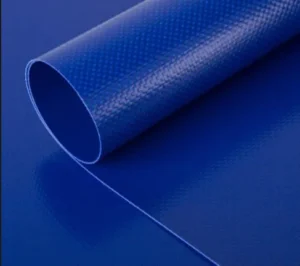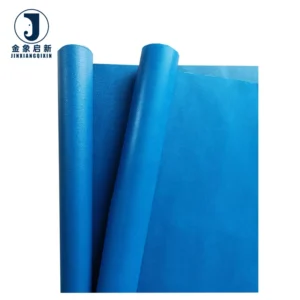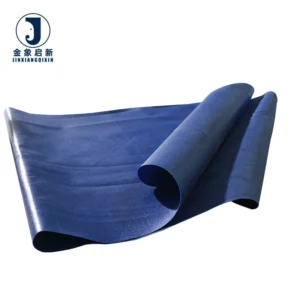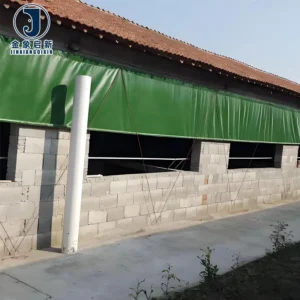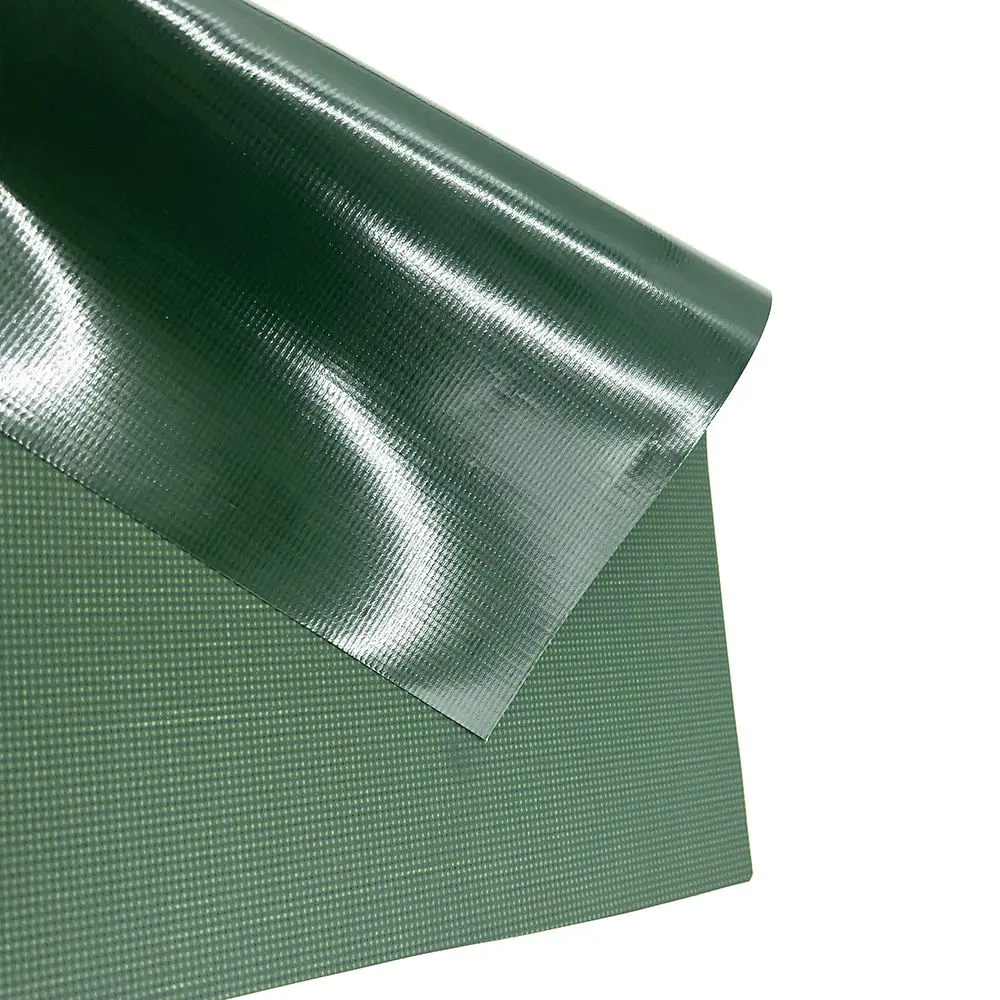
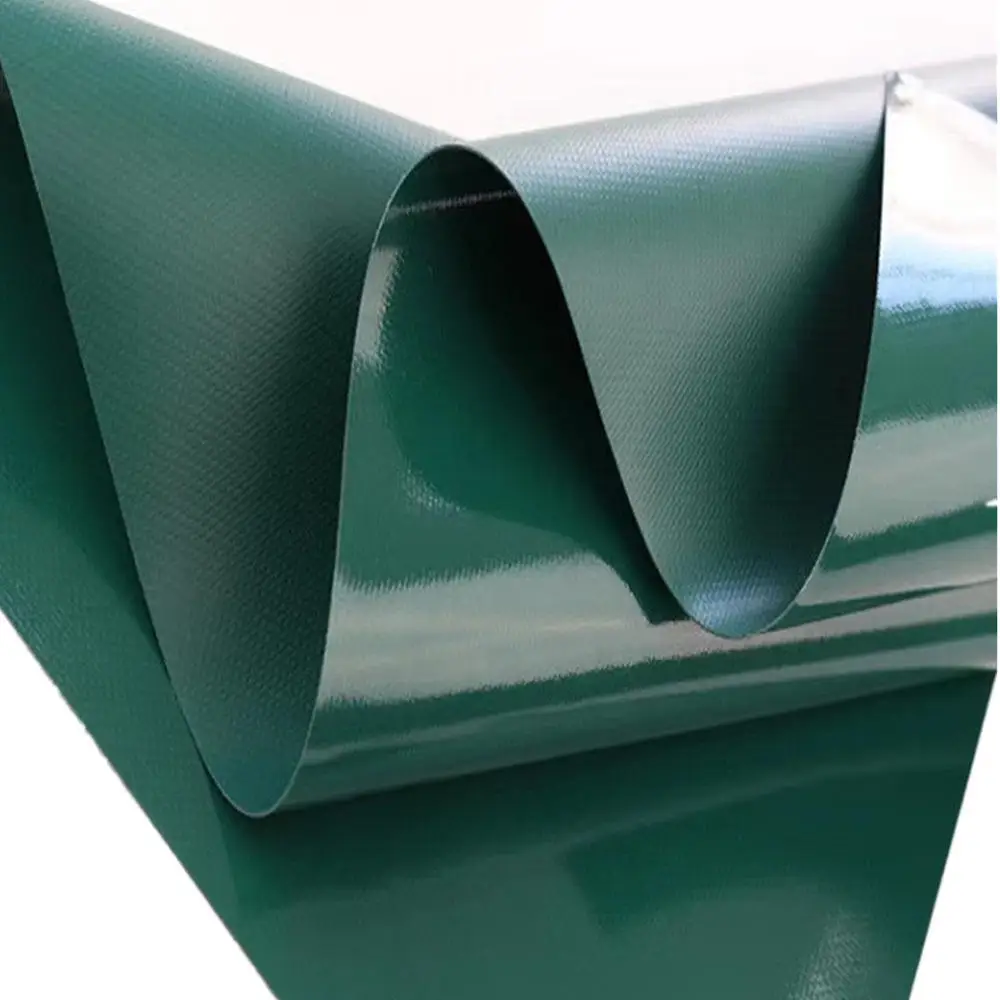
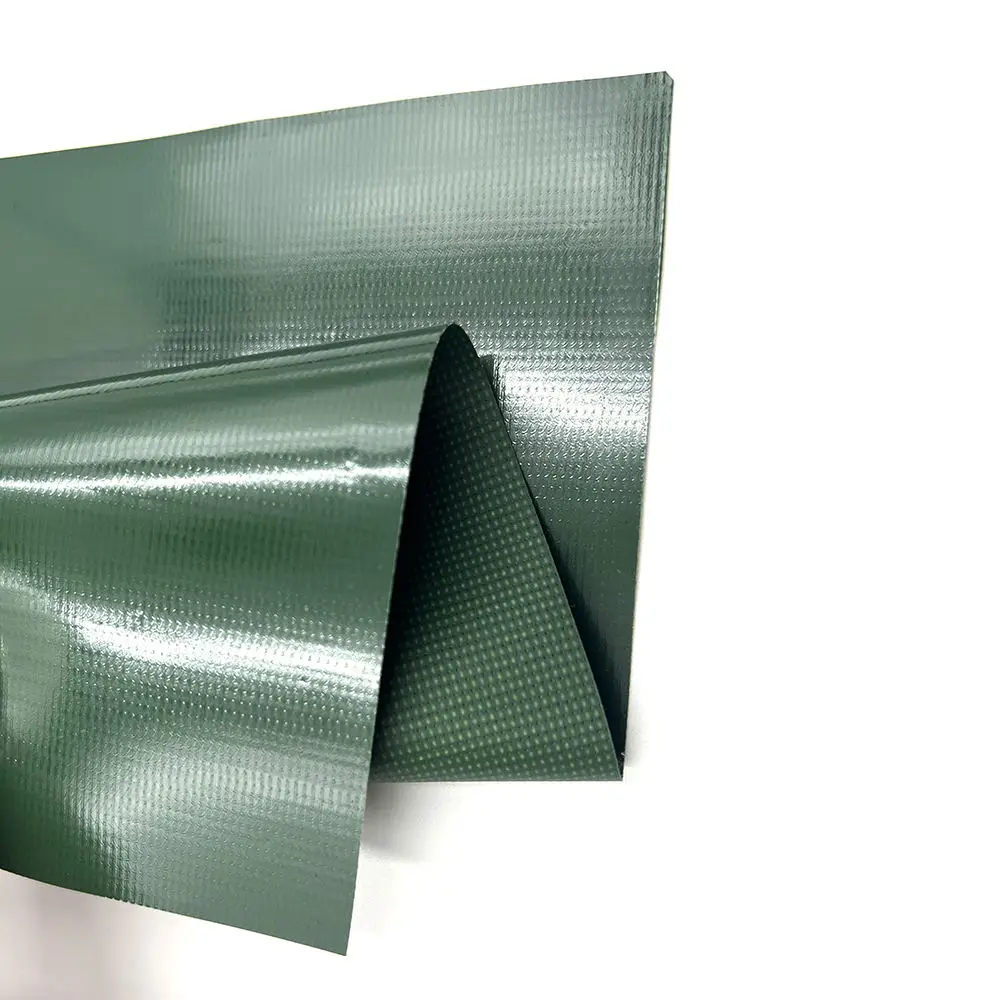
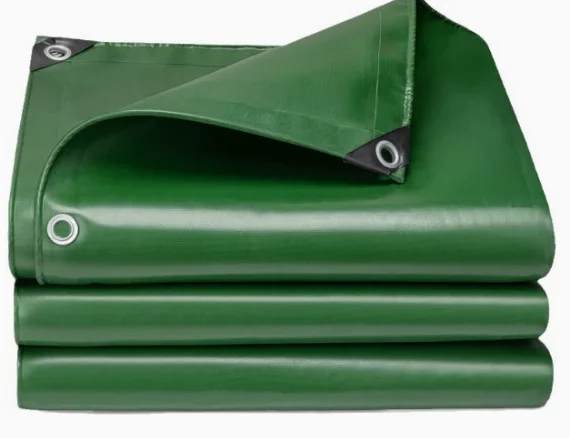
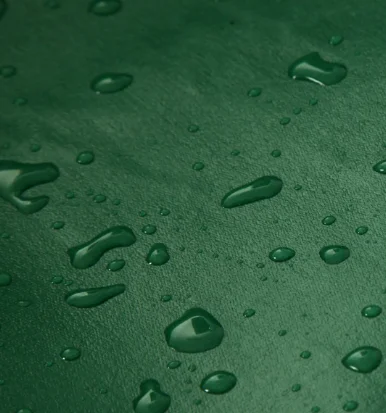
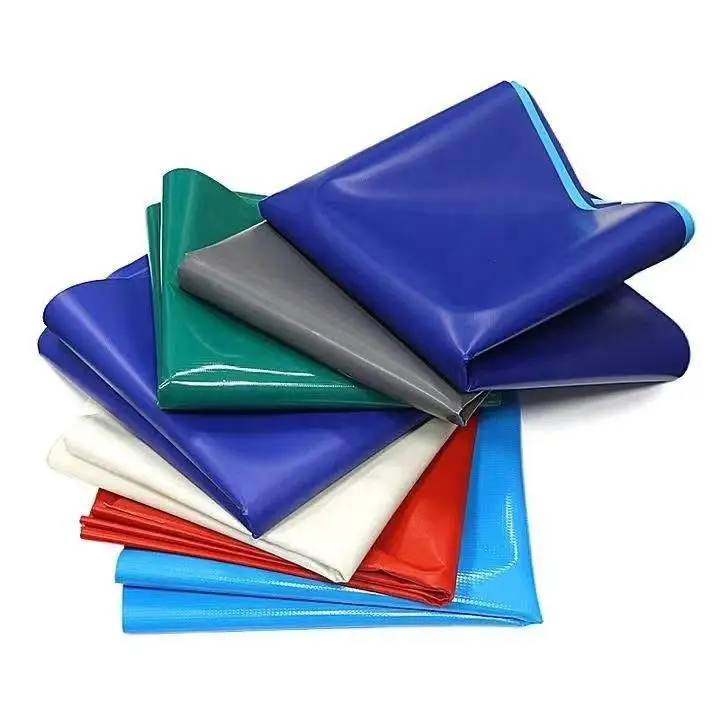
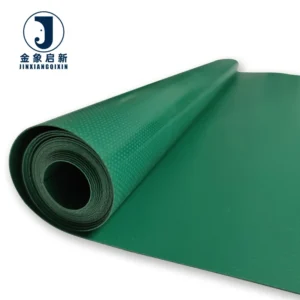
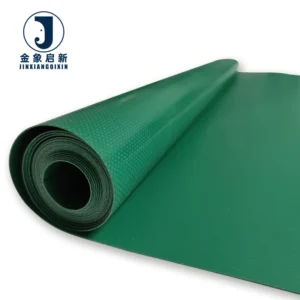
Green PVC Knife Coated Tarpaulin Roll — heavy-duty waterproof fabric with UV resistant and fire retardant treatment options for truck covers and tensile structures.
- Knife coated construction ensures strong adhesion between PVC layers and base fabric for reliable welding performance
- Full customisation in colour, width and GSM supported by dedicated QA with 100% pre-shipment inspection across three production lines
Description
Process-Controlled Coating Weight — every roll of Green PVC Knife Coated Tarpaulin ships with a specification sheet stating GSM, base fabric and coating for independent verification.
Technical Specifications
| Parameter | Value |
|---|---|
| Product Type | PVC Knife Coated Tarpaulin Fabric |
| Coating Method | Knife coated |
| Coating Material | PVC |
| Color | Green |
| Flame Retardant Grade | Available in flame retardant grades — confirm the grade required for your market |
| UV Treatment | UV resistant (test basis available on request) |
| Anti-Mildew | Antibacterial and mildew proof |
| Oil & Stain Resistance | Supported |
| Acid & Alkali Resistance | Supported |
| Temperature Range | High temperature and cold resistance (specific range available on request) |
| Welding Options | HF, Hot Air, Sewing |
| Flexibility | Highly flexible, resistant to cracking |
| Self-Cleaning | Supported |
| Surface Treatment | UV resistant |
Application Suitability
| Application | Exposure & Requirement |
|---|---|
| Truck side curtain and trailer cover | Constant flexing at load points, road abrasion, weather exposure, UV degradation |
| Tensile and architectural membrane structures | Permanent outdoor tension, wind load cycling, solar exposure, colour consistency across panels |
| Stadium canopy and shade systems | Long-term UV and rain exposure, large panel welding, aesthetic surface finish |
| Airport hangar and portable storage fabric | Wide-span tension, temperature fluctuation, fire safety compliance |
| Industrial tarpaulin and equipment cover | Abrasion from handling, chemical splash, moisture ingress |
Why a Stated GSM on Paper Does Not Guarantee a Strong Weld in the Field
Actual coated weight and consistent adhesion between coating and base fabric determine whether the seam outlasts the material.
A PVC coated tarpaulin roll may arrive with the correct label, yet the coating weight can vary across the roll width or from one batch to the next. When the knife-coated layer is thinner at the edges, the heat-welded seam absorbs less energy before the PVC separates from the polyester base. Fabricators cutting truck cover panels discover this only after the first season of flexing. For buyers sourcing green PVC knife coated tarpaulin rolls across multiple containers, batch-to-batch coating consistency is as critical as the headline GSM figure. [NEED_CITE: coating adhesion and peel strength test methods for PVC coated polyester]
How Knife Coating Controls the Layer That Matters Most
Knife coated PVC construction deposits a measured paste layer onto the moving base fabric, then passes through a controlled oven zone to gel and fuse. This method gives tighter control over coating weight distribution compared to dip or calendar processes. For tensile structure panels and truck curtain fabricators, the result is a predictable surface that responds consistently to HF or hot-air welding. The PVC coated tarpaulin roll range supports full treatment customization, including UV-resistant and anti-mildew additives blended into the coating paste before application.
Welding Compatibility Across Fabrication Methods
Fabricators working with high-frequency welders rely on the PVC coating’s dielectric properties to fuse seams without burning through the base fabric. Hot-air welding suits field repairs and on-site joining of large membrane panels where HF equipment cannot reach. Sewn seams with sealed thread handle applications where mechanical fastening is preferred, such as tie-down attachment points on transport covers. Each method places different demands on coating thickness and plasticiser content, which is why samples are developed before bulk production to confirm weld behaviour. [NEED_CITE: high-frequency versus hot-air welding performance on PVC coated fabrics]
Reading the Specification Sheet Beyond the GSM Number
Coating weight and base fabric denier work together to set tensile and tear performance. A heavier coating on a low-denier base may give high GSM but poor tear propagation resistance. The base fabric’s warp and weft density determines how a puncture or cut spreads under load — critical for truck covers where strap tension concentrates stress. Knife coating also influences peel strength between layers; if adhesion is weak, the coating delaminates before the fabric tears. Surface finish, whether glossy or matte, affects self-cleaning behaviour and print adhesion for branded side curtains. Width and roll length determine how many transverse welds a large tensile panel requires, directly influencing installed appearance and long-term seam integrity. [NEED_CITE: relationship between base fabric denier, mesh count and tear propagation in coated textiles]
What Happens When Roll-to-Roll Colour Drifts Mid-Project
A shade system contractor installing adjacent panels from two different rolls expects identical green tone under direct sunlight. When pigment dosing varies between batches, the mismatch becomes visible only after installation, forcing partial teardown and replacement. The same inconsistency affects truck fleet operators whose branded side curtains must match across a vehicle renewal programme. Colour control starts at pigment dispersion in the coating paste and continues through oven temperature stability during curing — both requiring in-process checks that generic inspection protocols miss. [NEED_CITE: colour measurement methods and Delta E tolerances for architectural PVC membranes]
What the Production Floor Does Before Your Rolls Ship
Dedicated QA/QC checks occur at coating weight application, oven cure temperature and final winding tension — not just at the packing stage. A 10-person R&D team handles material selection, custom colour matching and sample development, returning approval samples within days so you can test weld parameters before committing to bulk. Three full production lines with 36 sets of equipment support simultaneous runs, keeping lead times predictable even when custom widths or treatments are specified. Every PVC coated tarpaulin roll undergoes inspection against the stated specification before dispatch, with records retained per batch. ISO and CE certified processes underpin the production environment. [NEED_CITE: ISO quality management requirements for coated fabric manufacturing]
Documentation & Verification
- Material specification sheet per roll stating GSM, base fabric denier, coating material and colour reference
- UV and flame retardant test reports matched to the batch supplied, available on request
- Pre-shipment inspection record confirming coating weight, colour consistency and roll dimensions
- ISO and CE certificates included with shipment documentation package
- Certificate of origin and customs support documentation for international dispatch
Fabrication, Handling & Storage
- HF welding: adjust power and dwell time to the PVC knife coated layer thickness for clean seam fusion
- Hot-air welding: set temperature and speed according to coating weight to avoid base fabric scorching
- Store rolls upright on pallets to prevent flat-spot deformation of the coated surface
- Allow cold-stored rolls to reach ambient temperature before unrolling to prevent coating crack
- Use mild detergent for cleaning; avoid solvent-based products that attack the PVC plasticiser system
Starting Your Specification Conversation
Provide the end-use application and the environmental conditions the fabric will face — UV exposure duration, temperature extremes, chemical contact or fire safety class required by local building code. Indicate the roll width and length you need, along with annual volume, so production scheduling can be confirmed early. Share any colour reference or print artwork if branding is required on truck side curtains or tensile panels. State whether you need raw roll stock or if cut-to-size panels with welded hems and eyelets are preferred.
Frequently Asked Questions
Q: How is the actual GSM verified and how can I re-check the PVC coated tarpaulin roll on arrival?
A: Each roll ships with a material specification sheet stating the target GSM, base fabric and coating details. You can cut a measured sample from the roll edge and weigh it on a calibrated scale to confirm. The pre-shipment inspection record provides the measured values from our QA team for comparison against your own results.
Q: What flame retardant grades are available and how do I specify the right one?
A: Flame retardant treatment is available in multiple grades depending on your market and application — from building membrane standards to transport vehicle requirements. Specify the standard or classification your project demands, and the matching grade is blended into the coating formulation with a test report supplied per batch.
Q: How is colour consistency controlled across multiple rolls in the same order?
A: Pigment is metered into the coating paste under controlled dispersion conditions, and oven temperature is stabilised throughout the run. In-process colour checks are performed during production, and pre-shipment inspection compares rolls side by side. A colour reference is stated on the specification sheet for your own verification on arrival.
Q: What is the sample development process for custom width, colour or printed branding?
A: Share your specification including target GSM, colour reference, width and any treatment requirements. The R&D team develops a sample roll section within days, which you can test for welding behaviour, colour approval and print clarity before authorising bulk production. Sample lead time depends on treatment complexity.
Related products
-
Awning and Tents Waterproof Fabric PVC Tarpaulin
¥1.50 Add to cart -
JX PVC Coated Tarpaulin/Cover for Farm Waterproof Warp Knitted Tent Pig Broiler Sheep Chicken Farm Plain Style
¥1.40 Add to cart -
Wholesale Pricehigh Quality Outdoor Waterproof Tarp Customized Pvc Tarpaulin Roll
¥1.20 Add to cart -
High Quality Windproof Waterproof PVC Coated Plain Tarpaulin for Industrial Shelter Use
¥0.53 Add to cart