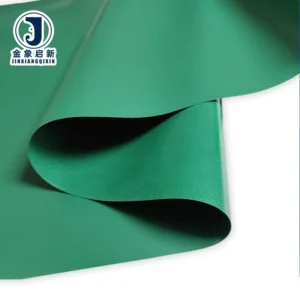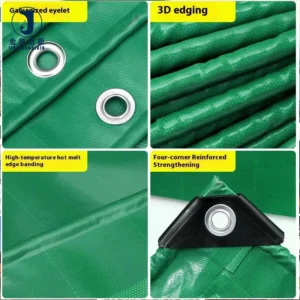
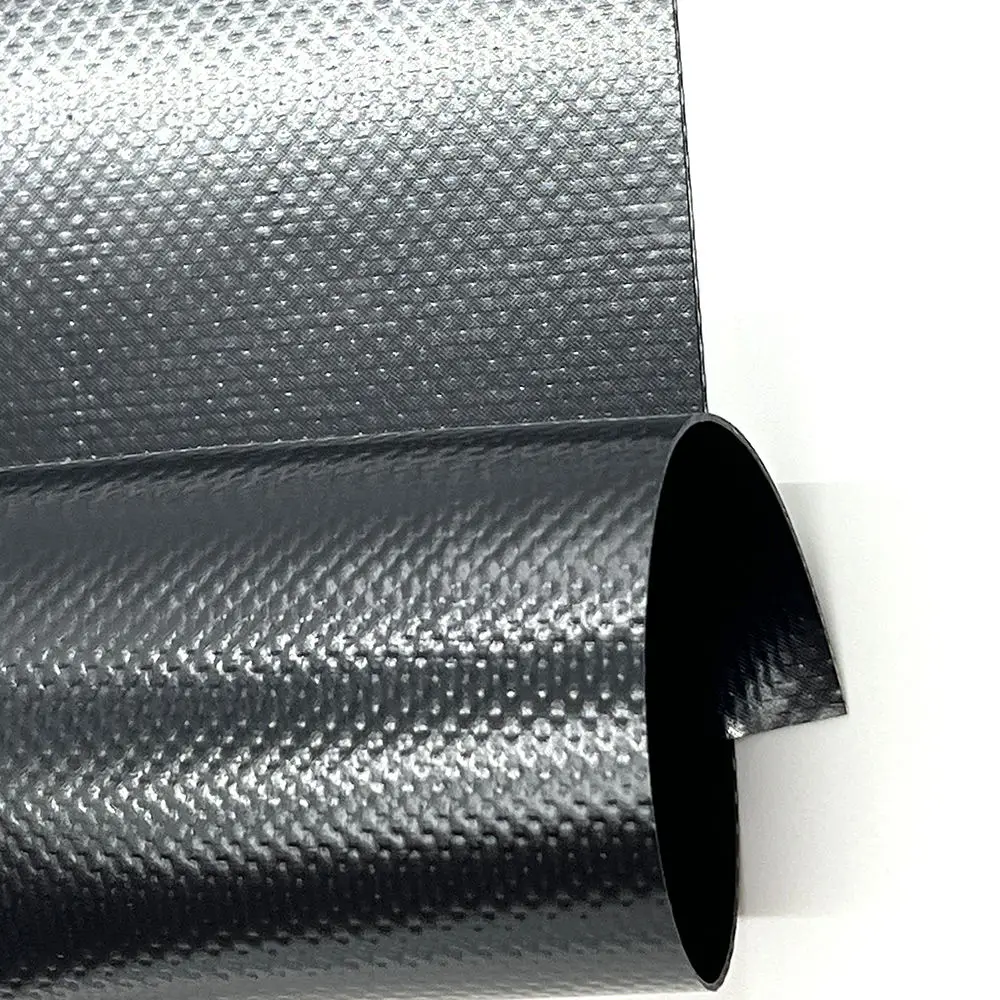
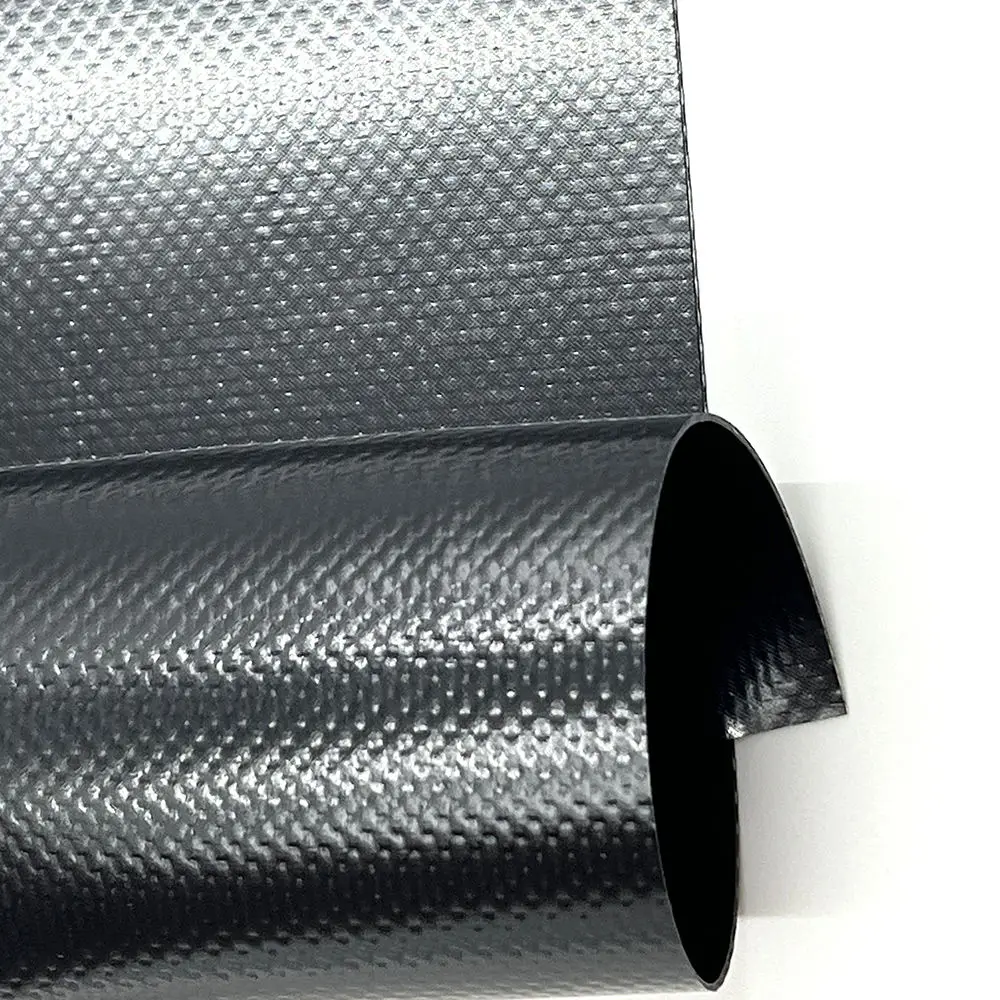
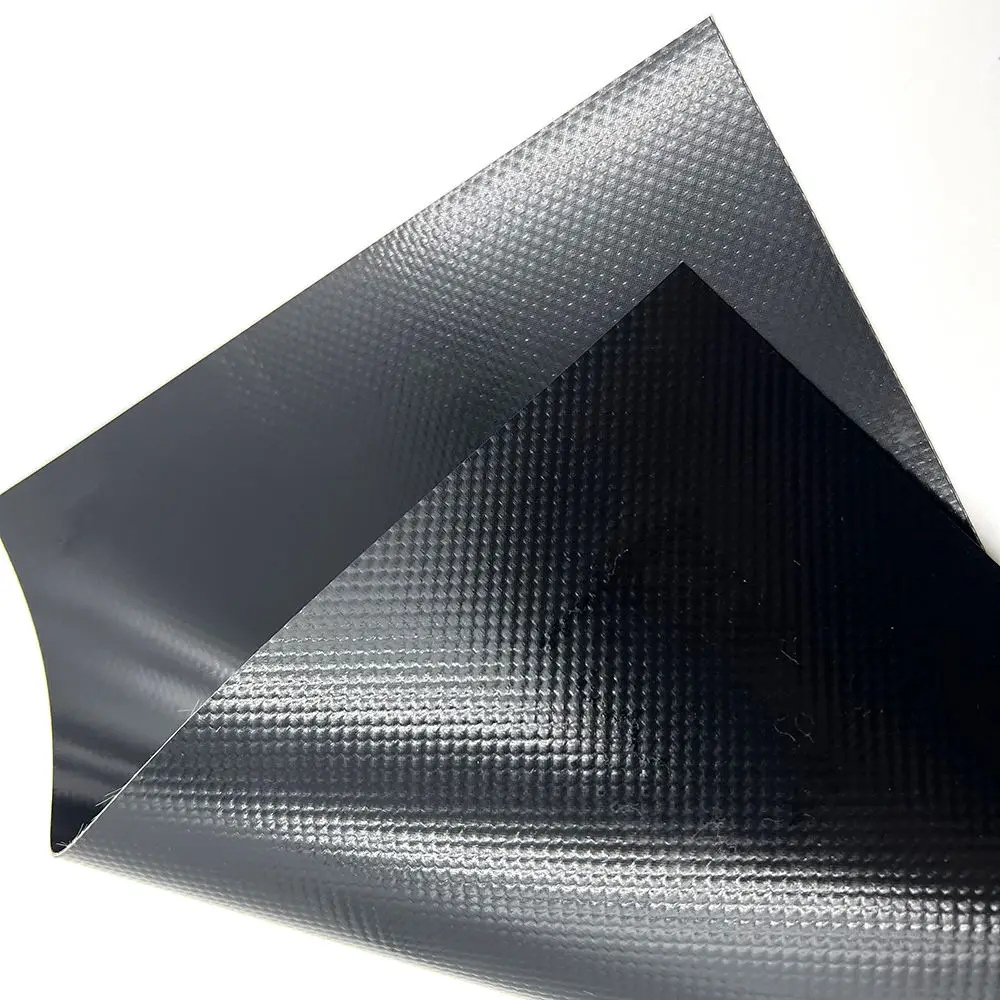
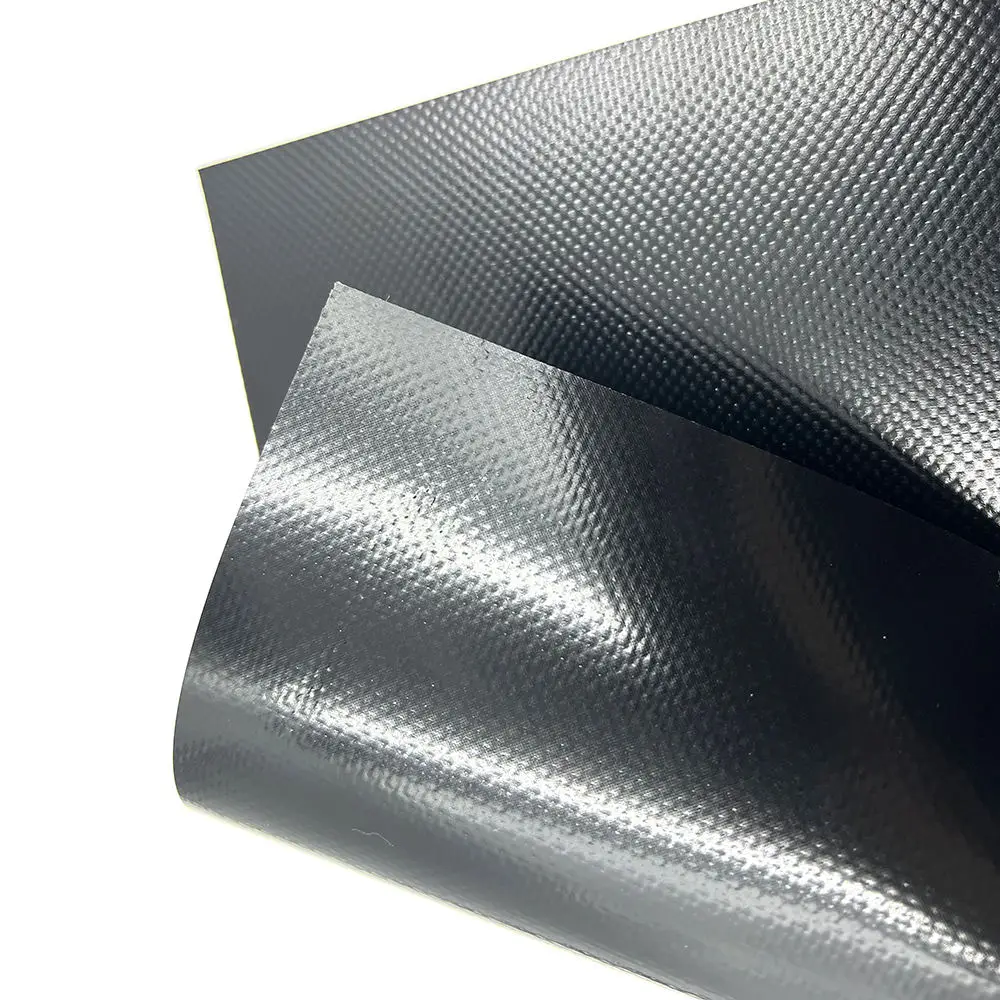
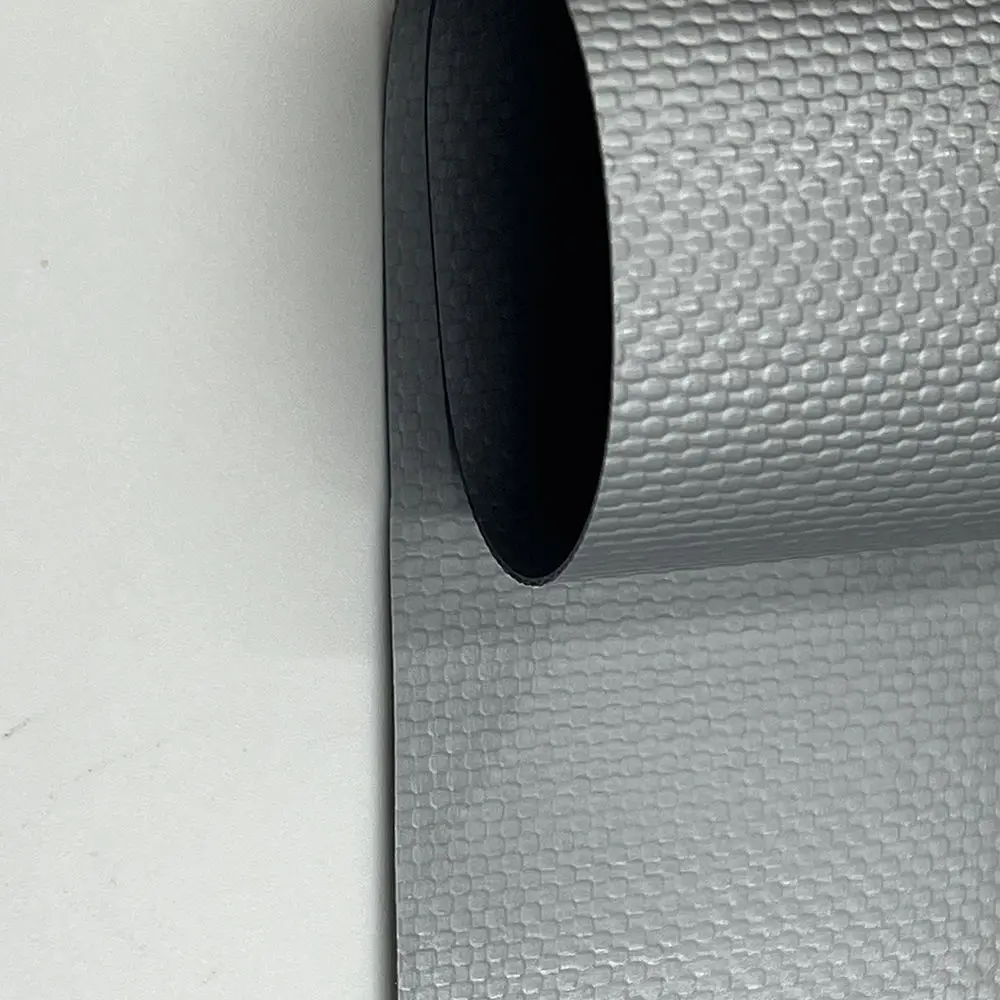
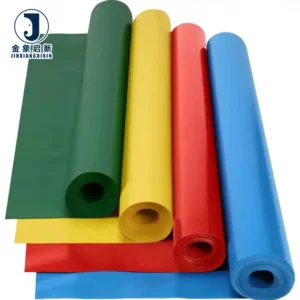
PVC Knife Coated Tarpaulin Roll — UV resistant, fire retardant and mildew proof with self-cleaning surface formulation for reduced on-site maintenance.
- Specifying multiple treatments across different suppliers creates colour mismatch and lead-time gaps on a single project — this roll combines UV, fire retardant, antibacterial and acid resistance from one production source.
- Full welding compatibility (HF, hot air, sewing) supports tensile structures, truck covers and architectural membranes without delamination at flex points.
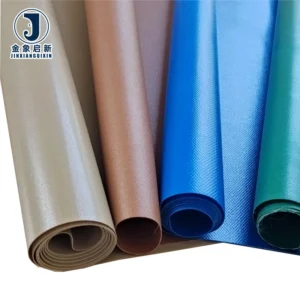
- Compatible with custom width, length, colour and pattern printing direct from roll stock.
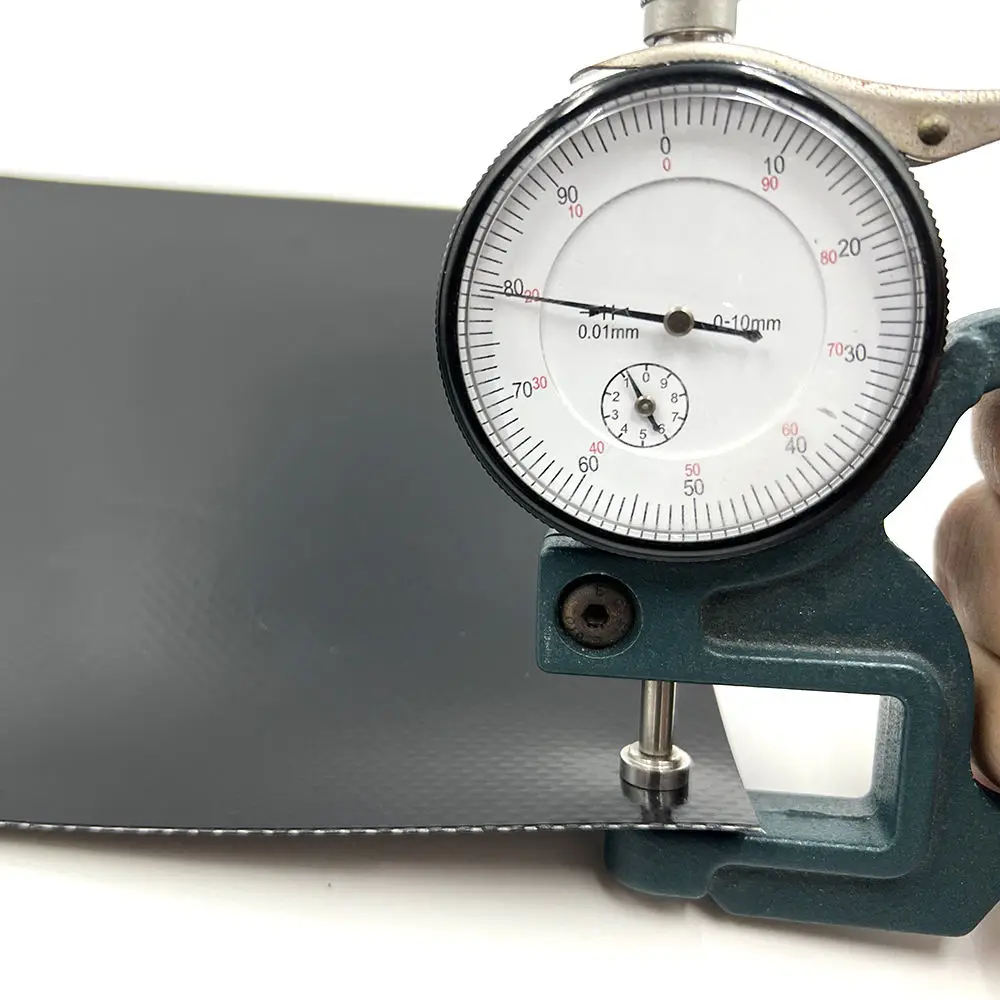
GSM and coating weight confirmed on material specification sheet before production, with 100% roll-by-roll pre-shipment inspection for batch colour consistency.
Description
Full Custom Specification — Every PVC knife coated tarpaulin roll is verified against the agreed material specification sheet with 100% pre-shipment inspection before leaving the factory, ensuring the GSM, treatment and colour you approve is what you receive.
Technical Specifications
| Parameter | Value |
|---|---|
| Product Type | PVC Coated Tarpaulin |
| Coating Method | Knife Coated |
| Coating Material | PVC |
| Finish | Gray (custom colours available) |
| UV Treatment | Available — confirm the UV grade required for your application |
| Flame Retardant | Available in flame retardant grades — confirm the grade required for your market |
| Antibacterial & Mildew Proof | Stated |
| Chemical Resistance | Oil and stain resistant, acid and alkali resistant |
| Temperature Resistance | High temperature and cold resistant |
| Anti-Oxidation | Stated |
| Surface Properties | Self-cleaning, highly flexible, resistant to cracking |
| Welding Compatibility | High-frequency, hot air, sewing |
| Custom Options | Width, length, GSM, colour, pattern printing, treatment combinations |
Application Suitability
| Application | Exposure & Requirement |
|---|---|
| Tensile and membrane structures | Long-term weathering, structural wind loads, custom colour and width for architectural spans |
| Stadium architectural covers | UV exposure, rain and thermal cycling, flame retardant compliance for public venues |
| Airport hangar enclosures | Large-format fabric with minimal seams, wind-driven rain, fuel and chemical proximity |
| Portable storage structures | Repeated assembly and disassembly, flexing at frame contact points, abrasion resistance |
| Shade systems and shadings | Constant solar exposure, colour fastness over time, lightweight handling for installation |
| Truck cover fabric | Road debris impact, constant flexing at load movement points, tie-down stress concentrations |
What Happens When the Roll That Arrives Does Not Match the Quoted Specification
A material specification sheet that documents every parameter before production eliminates the most common disputes in PVC tarpaulin procurement.
I have watched projects stall because the PVC knife coated tarpaulin roll delivered to site was lighter than the GSM stated on the quotation, and the buyer had no documentation to hold the supplier accountable. The fabric may look similar when unrolled, but the tensile and tear performance diverges once the cover is under tension or the membrane is loaded by wind. This is not a margin issue — it is a structural and safety issue that surfaces only after installation, when replacement costs multiply [NEED_CITE: tensile and tear test methods for coated fabrics per ISO 1421]. The gap between what is quoted and what is shipped widens further when treatments like UV resistance or flame retardancy are claimed without a test report tied to the specific batch.
Specifying Treatment Combinations Without Colour or Lead-Time Conflicts
When a project demands both UV stability and flame retardancy on the same PVC knife coated tarpaulin roll, sourcing each treatment from a different supplier introduces colour mismatch between batches and unpredictable lead-time gaps across a single installation. Producing all treatment layers within one coating line ensures the plasticiser, stabiliser and additive packages are chemically compatible, which protects the long-term flexibility and crack resistance of the finished fabric.
Welding Behaviour Across High-Frequency, Hot Air and Sewing
The knife coated construction produces a uniform PVC layer that bonds predictably under high-frequency and hot-air welding, creating seams that match or exceed the base fabric strength. Fabricators working on tensile structures or truck covers need this consistency because a seam that fails before the fabric does is almost always traceable to uneven coating adhesion or plasticiser migration at the weld zone. Sewing remains an option for applications where mechanical fastening is preferred, though needle holes in heavier-grade material require careful spacing to prevent tear propagation from stitch lines [NEED_CITE: peel adhesion test methods for coated fabrics per ISO 2411].
Why Coating Method Determines More Than Just Weight
Knife coating applies a controlled PVC paste layer directly onto the base fabric, producing a bond that resists delamination under flexing and thermal cycling. This matters for membrane structures and truck covers where the fabric bends repeatedly at frame contact points. The coating weight and base fabric denier together determine the tensile and tear performance — a heavier coating on a loosely woven base will peel before it tears, while a lighter coating on a dense weave may crack at the surface. Buyers should evaluate GSM alongside the base fabric construction rather than treating weight as the sole indicator of durability. Surface finish — whether glossy or matte — influences self-cleaning behaviour and how readily dust and pollutants wash off during rain, which is a practical concern for large-format architectural installations where manual cleaning is costly.
The Hidden Cost of Ignoring Roll-to-Roll Colour Consistency
When multiple PVC knife coated tarpaulin rolls are installed side by side on a tensile structure or shade system, even a slight colour shift between rolls becomes immediately visible. This is not a cosmetic complaint — it triggers rejection at site inspection, forces the contractor to reorder, and delays handover. Colour variation between rolls usually traces back to inconsistent pigment dispersion during compounding or temperature drift across the coating oven. Catching this at the pre-shipment inspection stage, where every roll is checked against the approved colour reference, prevents the problem from reaching the job site [NEED_CITE: colour measurement standards for coated textiles per ISO 105].
Why Procurement Teams Consolidate PVC Tarpaulin Sourcing Here
The 10-person R&D team develops custom samples within days, covering GSM grade, width, colour, treatment and pattern printing from a single production source rather than splitting an order across multiple suppliers. Three full production lines and 36 sets of professional equipment maintain batch capacity so that reorder colour and weight stay consistent with the initial approval sample. Every roll undergoes dedicated QA/QC at each production stage, with 100% pre-shipment inspection verifying GSM, coating adhesion and colour before packing. Documentation accompanies every dispatch — material specification sheet, test reports for the specific treatments applied, and a roll packing list that supports traceability. Nearly 30 years of coated fabric process control means coating weight and adhesion are managed from the paste formulation stage, not adjusted reactively after a test failure.
Documentation & Verification
- Material specification sheet confirming GSM, base fabric, coating weight and colour reference per roll
- UV and flame retardant test reports matched to the production batch, not generic grade certificates
- Pre-shipment inspection record documenting roll-by-roll GSM and colour verification
- Roll packing list with individual roll weights and dimensions for receiving inspection
- Certificate of origin and customs documentation for international shipment routing
Fabrication, Handling & Storage
- High-frequency welding parameters should be calibrated to the specific PVC coating thickness for consistent seam strength
- Hot-air welding temperature and speed must account for the self-cleaning surface treatment layer to achieve full bond
- Store rolls upright on pallets to prevent permanent creasing across the knife coated PVC surface
- Allow rolls to acclimatise to ambient temperature before unrolling in cold conditions to avoid stiffness-related cracking
- Use mild detergent for cleaning — solvent-based agents may degrade the plasticiser package in the PVC coating
What to Include in Your PVC Tarpaulin Enquiry
To receive a specification and sample that matches your project, share the end-use application and the environmental exposure the fabric will face, along with any fire safety or building code requirements for your market. Specify the roll width and approximate annual volume so that production can be scheduled on the appropriate line. If the installation requires colour matching or pattern printing, provide the Pantone or RAL reference and confirm whether you need finished cut sizes or roll stock only.
Frequently Asked Questions
Q: How is the GSM of each PVC knife coated tarpaulin roll verified before it ships?
A: Every roll is weighed and measured during the pre-shipment inspection to confirm the GSM matches the material specification sheet. The inspection record documents individual roll values, so buyers receive verification data rather than relying on the quoted figure alone. Any roll that falls outside the agreed tolerance is held and replaced before packing.
Q: Can flame retardant and UV treatment be combined on the same roll?
A: Yes, both treatments can be incorporated during the knife coating process on a single roll. The additive packages are formulated for compatibility so that neither performance is compromised. Confirm the specific flame retardant grade and UV test standard required for your market so that the correct formulation is applied and documented.
Q: How is colour consistency maintained when ordering multiple rolls for one project?
A: Pigment compounding is controlled at the paste preparation stage, and every roll is checked against the approved colour reference during pre-shipment inspection. Rolls showing visible deviation are separated before packing. This is particularly important for architectural membranes and shade systems where adjacent rolls are viewed together under natural light.
Q: Which welding method works best with this knife coated PVC fabric?
A: High-frequency and hot-air welding both produce strong seams on knife coated PVC, with the choice depending on the seam geometry and production equipment available. Sewing is suitable for applications where mechanical joints are preferred. The uniform coating layer supports consistent weld parameters across the full roll width.
Q: How long does it take to receive a custom sample before placing a bulk order?
A: Custom samples covering GSM grade, colour, width and treatment combination are developed within days. The sample is produced on the same coating line used for bulk orders, so the material you approve is representative of the production run. Sample approval triggers the full production schedule.
Related products
-
Best Quality 650gsm Waterproof Polyester Heavy Duty Bache PVC Tarpaulin Manufacturer
¥1.25 Select options This product has multiple variants. The options may be chosen on the product page -
PVC Tent Fabric Shelter Blackout Anti-UV PVC Tarpaulins 1000D for Tent Fabric for Event Exhibition Shade Tents
¥1.45 Select options This product has multiple variants. The options may be chosen on the product page -
Wholesale Pricehigh Quality Outdoor Waterproof Tarp Customized Pvc Tarpaulin Roll
¥1.20 Add to cart -
PVC Tarpaulin Glossy 650GSM 1000D*1000D 23*23 1.50*50M/R for Multi-purpose Cover SAMPLE FREE
¥2.70 Add to cart