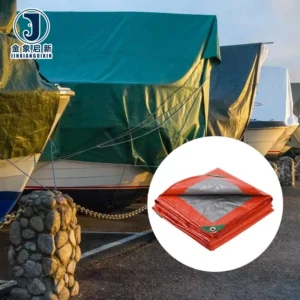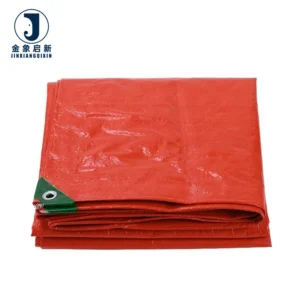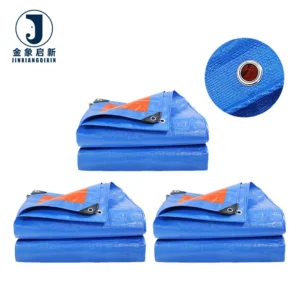
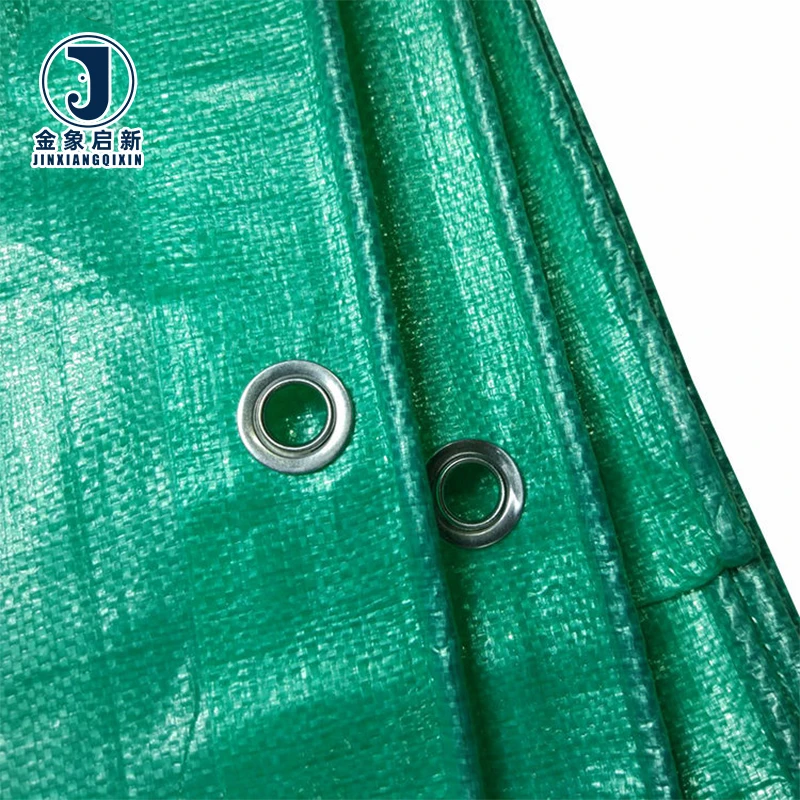
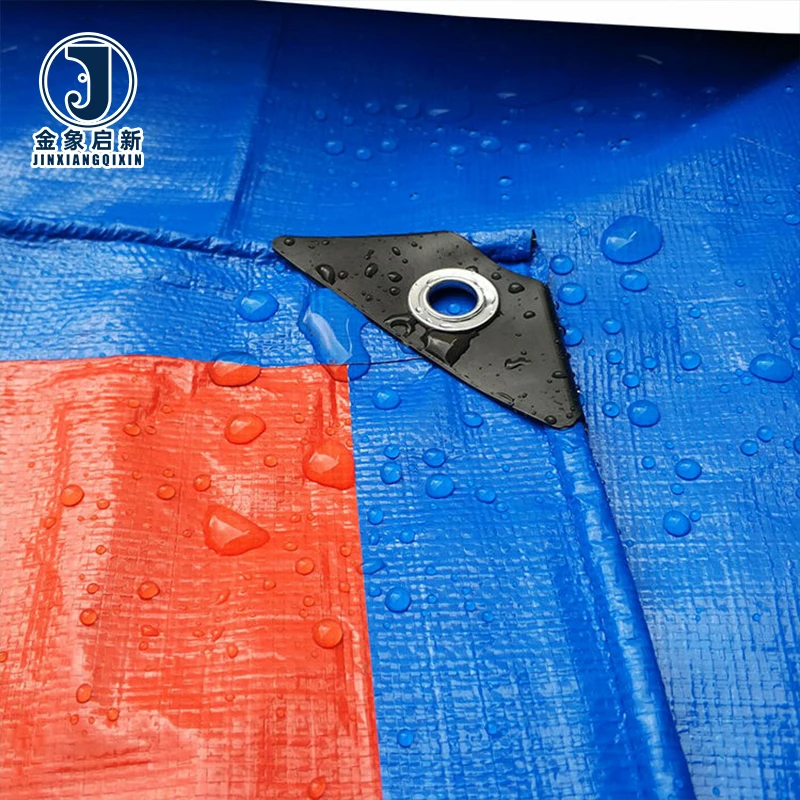
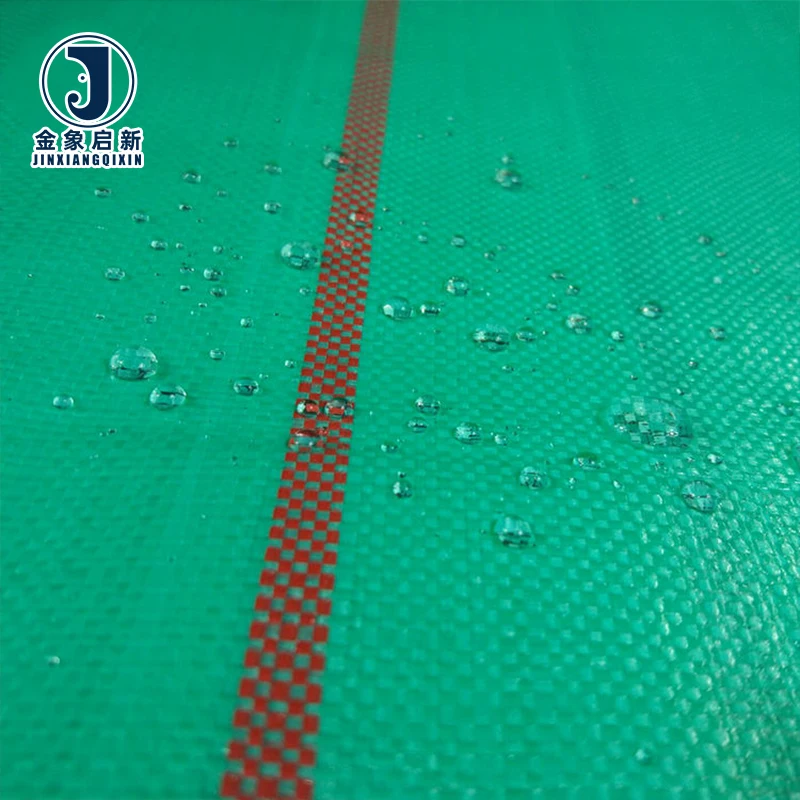
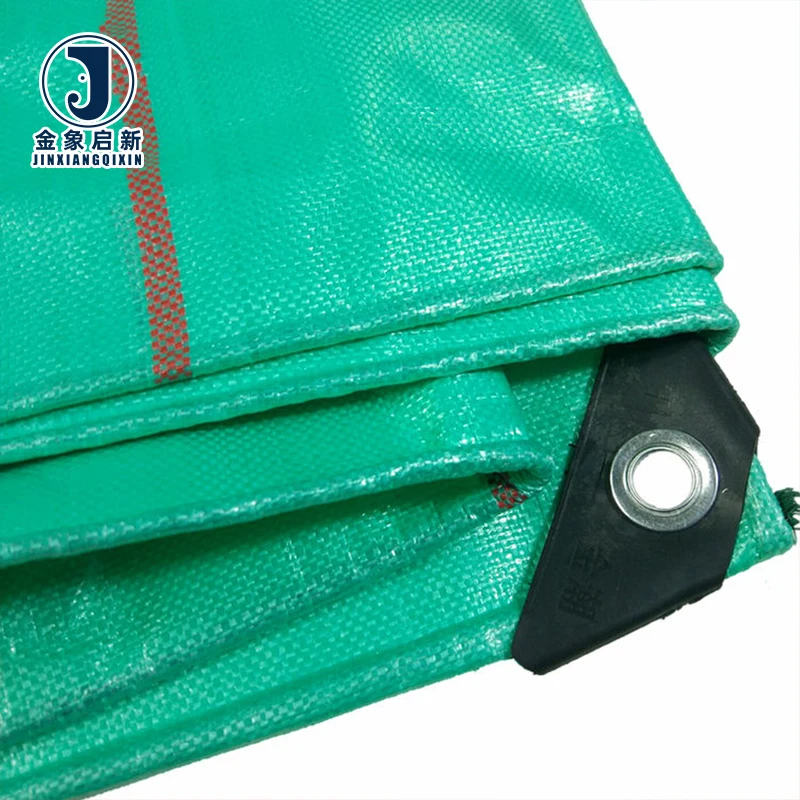
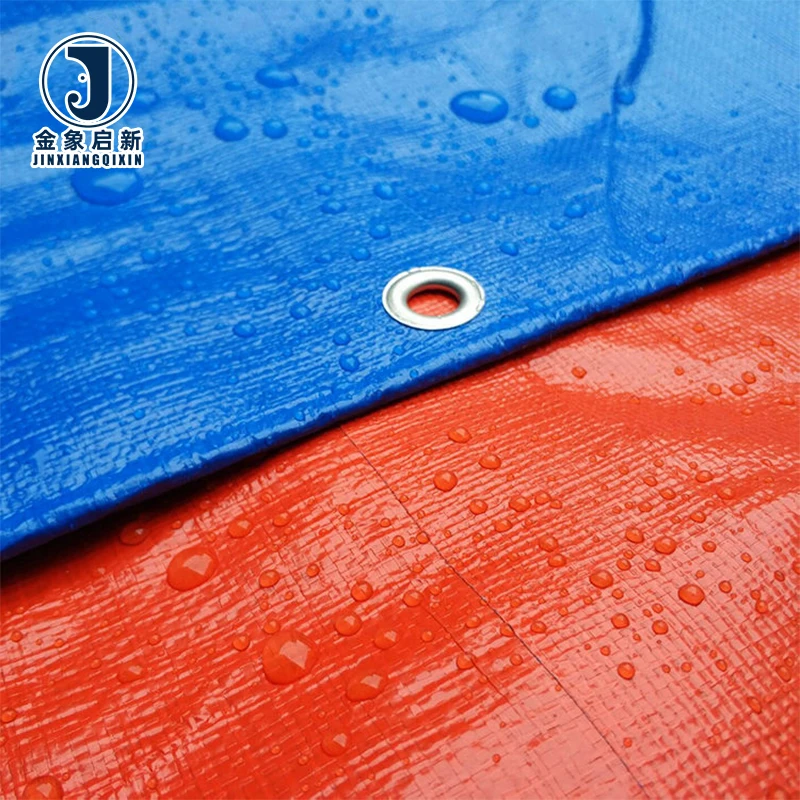
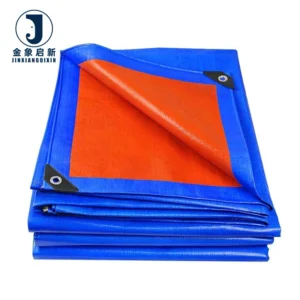
PE Tarpaulin 100-300gsm, HDPE Weave with LDPE Lamination, Waterproof — available in densities from 6×6 to 14×16, roll widths up to 6m, and regular cut sizes from 2x2m to 8x10m. Eyelets spaced every 3ft or 1 meter with PP rope reinforced hems and corner patches for secure tie-down under load.
Covers a moving load: truck and trailer fitment, side curtain exposure, and abrasion at flex points demand consistent GSM and seam integrity across every panel. We control coating weight and lamination adhesion in-house.
- Samples developed within days for custom color, width, and print requirements
- 100% pre-shipment inspection with roll packing list and material spec sheet
- Three full production lines delivering reliable on-time bulk dispatch
Description
Proven Process Control — Nearly 30 years of HDPE weaving and LDPE lamination expertise ensures every PE tarpaulin roll or cut size leaves the facility with verified GSM and consistent coating adhesion.
Technical Specifications
| Parameter | Value |
|---|---|
| Product Type | PE Tarpaulin |
| Material Construction | HDPE weaving with LDPE lamination on both sides |
| Weight Range | 50gr/m² ~ 300gr/m² (confirm the grade for your application) |
| Density Options | 6×6, 6×7, 7×7, 7×8, 8×8, 9×9, 8×10, 10×10, 12×12, 14×14, 14×16 weave |
| Total Thickness | 0.2–0.4mm / 8–16 mil / Custom |
| Roll Widths | 6ft, 8ft, 10ft, 12ft, 2m, 4m, 6m |
| Roll Lengths | 100 yards, 100 meters, or custom |
| Finished Edge | PP rope reinforced hem, galvanized eyelets every 3ft or 1m, reinforced plastic corners |
| Regular Cut Sizes | 2x2m to 8x10m (multiple options available) |
| Color Options | Blue, Blue/Orange, Green, Grey, Black, Clear, Grey/Green, Orange, or custom |
| Key Features | Waterproof, washable, tear resistant, weather proof, mildew proof, anti-aging |
| UV Treatment | Available — confirm the test basis required for your market |
| Flame Retardant Grade | Available in flame retardant grades — confirm the grade required for your market |
| Certifications | ISO, CE |
Application Suitability
| Application | Exposure & Requirement |
|---|---|
| Truck and trailer load covers | Constant road abrasion, wind flexing, rain exposure, tie-down friction at eyelets |
| Construction site and material covers | UV exposure, debris impact, repeated folding and unfolding, scaffold contact |
| Agricultural crop and hay covers | Moisture ingress, mold growth, prolonged sun exposure, wind uplift |
| Pond and reservoir liners | Permanent water contact, soil chemistry, puncture risk from substrate |
| Home and garden furniture covers | Seasonal UV exposure, mildew in humid conditions, frequent handling |
Why Buyers Still Receive Tarpaulins That Do Not Match the Quoted GSM
Verifiable weight starts with controlled coating, not a promise on a proforma invoice.
When sourcing PE tarpaulin, one of the most common frustrations is receiving material that feels noticeably lighter than the GSM stated on the quotation. The discrepancy often shows up when the fabric is put under tension during installation — a cover that was supposed to withstand sustained wind load tears at the first gale because the base weave was thinner than specified. This problem compounds when multiple rolls are deployed side by side and color variation becomes visible once installed [NEED_CITE: GSM verification practices across coated fabric supply chains].
Density and GSM: What the Numbers Actually Mean Together
GSM alone tells only part of the story when evaluating a custom PE tarpaulin for heavy-duty applications. A 14×16 weave at 250gsm–300gsm provides substantially more resistance to tear propagation than a 10×10 weave at 100gsm–120gsm because the higher yarn density distributes load across more intersecting filaments. The HDPE weaving structure acts as the load-bearing skeleton, while the LDPE lamination on both sides seals the fabric and adds puncture resistance. Buyers who focus only on GSM without cross-referencing density often end up paying for coating weight that masks a thin base fabric.
Custom PE Tarpaulin for Demanding Environments
Selecting the right grade depends on how and where the tarpaulin will be deployed. Agricultural operators covering hay bales through an entire season need a grade that resists UV degradation and mildew, making UV treatment verification essential before committing to a bulk order. Construction contractors using scaffold covers face constant abrasion from steel tube contact, so a heavier weave with reinforced PP rope hems and galvanized eyelets is the appropriate choice. Fleet operators securing loads on open trailers need the fabric to flex repeatedly without delaminating at the coating interface [NEED_CITE: delamination failure modes in laminated PE tarpaulins under cyclic loading].
Understanding the Weave-to-Performance Relationship
The density mapping in PE tarpaulin directly governs mechanical behavior. At the lower end, a 6×6 weave at 50gsm–60gsm serves as a lightweight dust cover or short-term groundsheet where cost matters more than longevity. Moving to an 8×10 weave at 90gsm–100gsm adds enough yarn density to resist tearing when the fabric is folded and refolded on a construction site. The 12×12 weave at 120gsm–150gsm introduces a tighter interlock that limits tear propagation even if the fabric is punctured by sharp debris. At the upper end, a 14×14 or 14×16 weave at 150gsm–300gsm creates a fabric dense enough for long-term outdoor exposure where the tarpaulin must survive sustained wind load and repeated mechanical stress. The LDPE lamination on both sides bridges the gaps in the weave, providing waterproof continuity that the base fabric alone cannot achieve.
The Real Cost of Getting the Specification Wrong
Choosing a PE tarpaulin grade that is too light for the intended environment leads to failures that surface quickly and expensively. A cover specified for long-term agricultural use but supplied in a lightweight 6×6 weave will degrade under sustained UV exposure far sooner than expected, requiring unplanned replacement mid-season. When flame retardant treatment is claimed but no test basis is provided, the fabric may fail a site safety inspection, forcing the contractor to remove and replace the entire installation [NEED_CITE: fire safety compliance requirements for temporary covers on construction sites]. Color inconsistency across rolls in the same order becomes a visible defect the moment two adjacent panels are installed on a visible structure, triggering disputes and returns that delay the project.
Why Procurement Teams Source From This Facility
Three full production lines running dedicated HDPE weaving and LDPE lamination processes maintain batch consistency across high-volume roll orders. A 10-person R&D team handles material selection and custom sizing, developing samples within days so buyers can verify hand-feel, weight, and color before production begins. Every production stage includes dedicated QA/QC checkpoints with full inspection before shipment, ensuring the GSM on the roll matches what was quoted. Roll widths up to 6m and lengths of 100 yards or 100 meters ship as stock, while custom widths, colors, and printed branding are accommodated without prohibitive minimums. Documentation accompanies every dispatch, from material specification sheets to pre-shipment inspection records, giving buyers a complete audit trail.
Documentation & Verification
- Material specification sheet stating exact GSM, HDPE base fabric density, and LDPE coating weight
- Test reports for UV treatment and flame retardant grades where applicable to the order
- Pre-shipment inspection record confirming weight and color consistency across all rolls
- Roll packing list detailing dimensions, roll count, and net weight per unit
- ISO and CE certificates covering the production facility and coating processes
- Certificate of origin and customs documentation for international PE tarpaulin shipments
Fabrication, Handling & Storage
- Hot-air welding works well on LDPE-laminated surfaces; set temperature to suit the 0.2–0.4mm thickness range
- Galvanized eyelets at 3ft or 1m intervals distribute tie-down load; reinforce corner eyelets for high-tension points
- Store rolls flat on pallets to prevent permanent creasing in the HDPE weave structure
- Allow cold-stored rolls to acclimate to ambient temperature before unrolling to avoid coating crack
- Use mild detergent for cleaning; avoid solvents that degrade the LDPE lamination layer
- When cutting to finished size, leave adequate hem allowance for PP rope insertion and double-fold reinforcement
What to Include in Your PE Tarpaulin Inquiry
Provide your intended application and the primary exposure conditions — whether the fabric will face sustained UV, mechanical abrasion, or permanent water contact. Specify whether you need roll stock or finished cut sizes with eyelets and reinforced hems. If your market requires UV test documentation or a specific flame retardant grade, state the standard so the correct treatment can be confirmed before sample development.
Frequently Asked Questions
Q: How is the stated GSM verified upon arrival and what is your tolerance policy?
A: Every roll undergoes weight verification against the stated GSM during our pre-shipment inspection process. The material specification sheet provided with your order documents the target weight and base fabric density. If you require independent third-party verification, we support sampling for external lab testing before the container is sealed.
Q: What test basis or standards support your UV treatment and anti-aging claims?
A: UV treatment is available across our PE tarpaulin range. The specific test method and duration should be confirmed based on your market requirements and end-use environment. Request the test report applicable to your grade at the quotation stage so the correct treatment level is locked in before production.
Q: How do you ensure color consistency across multiple rolls in a single bulk order?
A: Color matching is controlled at the LDPE lamination stage using reference standards approved during sample development. Our in-process QA checks color across the production run, and the pre-shipment inspection record documents consistency before dispatch. For large orders, we recommend approving a production sample cut from the first roll off the line.
Q: What are the lead times and minimum order quantities for custom widths, colors, or printed branding?
A: Custom widths, colors, and printed branding are supported across our production lines. Lead times and minimums depend on the specific customization requested and current production scheduling. Provide your required dimensions, color references, and print artwork during the inquiry stage so we can confirm availability and timeline with your quotation.
Q: What documentation is provided to support customs clearance for international shipments?
A: Each shipment includes a roll packing list, certificate of origin, ISO and CE certificates, and material specification sheets. Pre-shipment inspection records are also available upon request. All documents are prepared to match the commercial invoice and bill of lading, reducing delays at the port of entry.
Related products
-
Custom PE Tarpaulin for Industrial Use – Full Range
Read more -
Heavy Duty Poly Tarps 5/10/12/16/20 Mil Waterproof Tarpaulin Cover 701 Fire Retardant Anti-UV and Windproof for Cars Tents
¥0.20 Select options This product has multiple variants. The options may be chosen on the product page -
Custom Made PE Tarpaulin with Eyelets – Waterproof Tear-Resistant
Read more -
160gms Organic Coated Polyethylene Tarpaulin Trucking Covering Roll Waterproof Blackout Eco-Friendly Fabric Blue Orange Outdoor
¥0.71 Select options This product has multiple variants. The options may be chosen on the product page