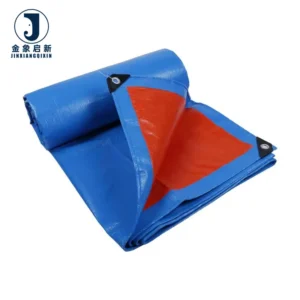
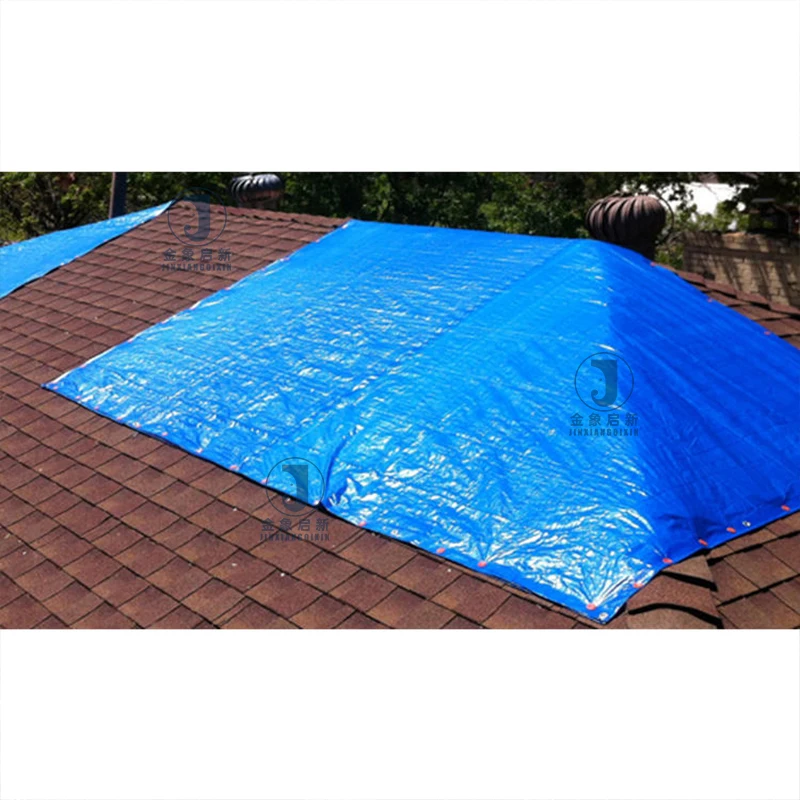
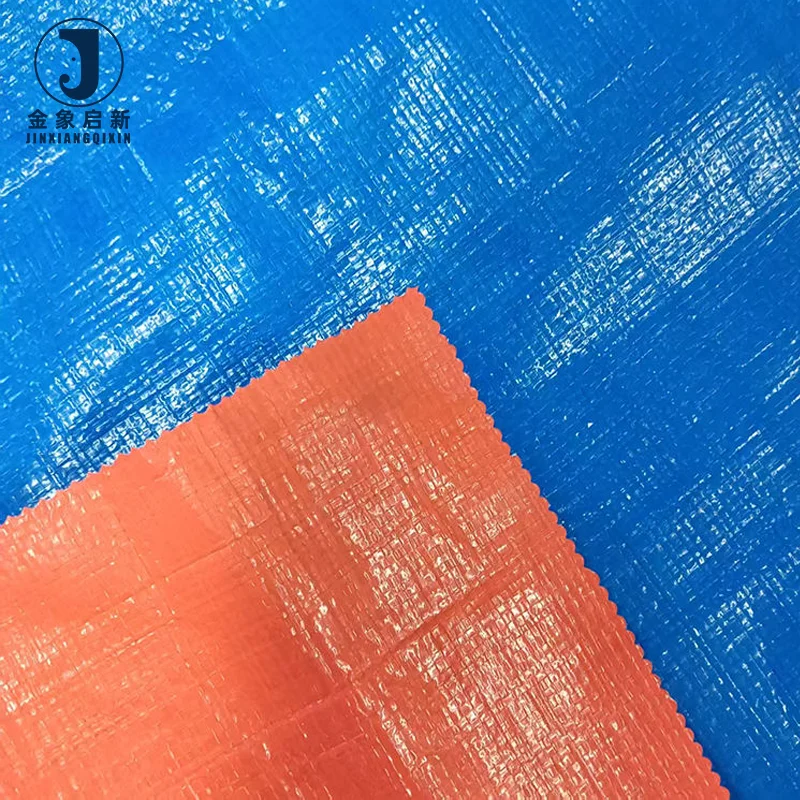
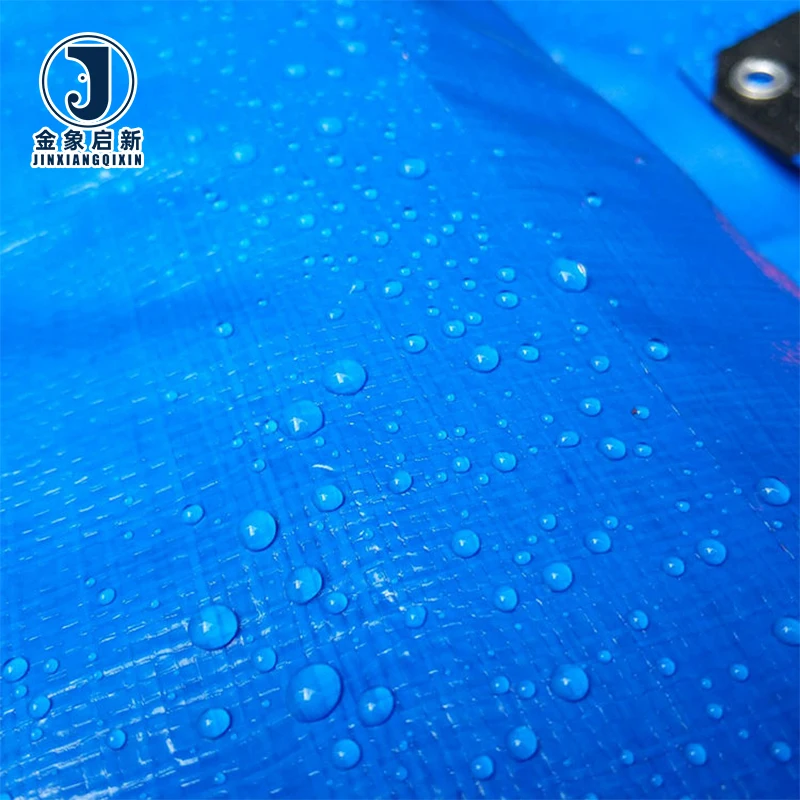
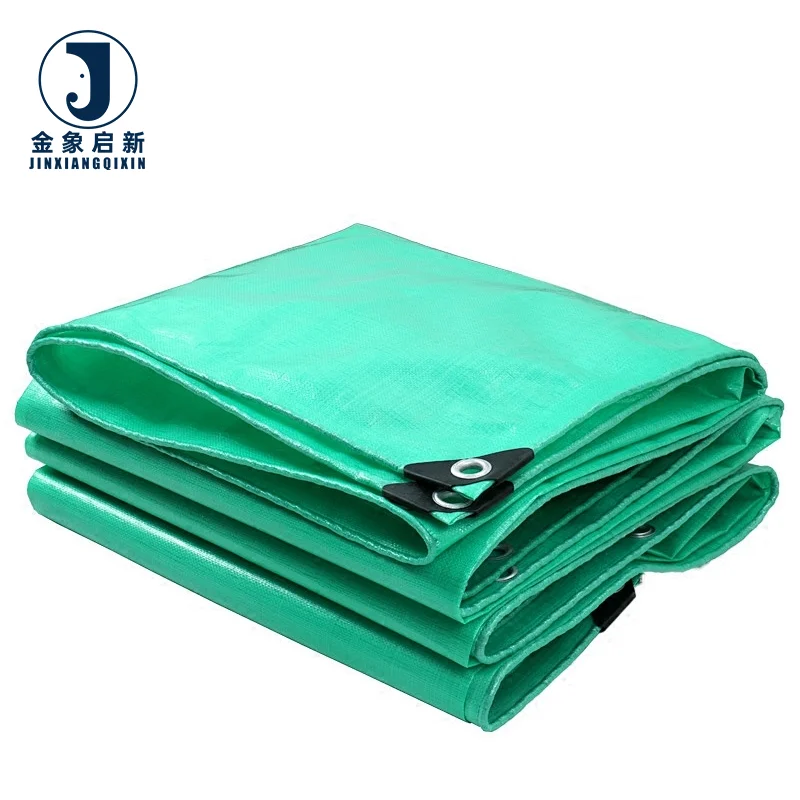
HDPE Coated PE Tarpaulin, 50–300 g/m², HDPE Woven with LDPE Lamination — available in weave densities from 6×6 to 14×16, roll widths up to 6m, and custom cut sizes with galvanized eyelets and PP rope reinforced hems.
- Sourcing the full PE tarpaulin spec range from one supplier eliminates colour mismatch between rolls and GSM discrepancies on arrival — widths, lengths, colours and branding all handled under one production line.
- 10-person R&D team develops samples within days, with 100% pre-shipment inspection across every roll and finished sheet before dispatch.
Description
Proven Coated Fabric Expertise — Nearly 30 years of focused PE tarpaulin production with dedicated QA at every stage, ensuring each roll meets the stated specification before dispatch.
Technical Specifications
| Parameter | Value |
|---|---|
| Product Type | PE Tarpaulin |
| Material | HDPE weaving with LDPE lamination on both sides |
| Weight (GSM) | 50 g/m² ~ 300 g/m² (confirm the grade for your application) |
| Total Thickness | 0.2–0.4 mm / 8–16 mil |
| Weave Density Options | 6×6, 6×7, 7×7, 7×8, 8×8, 9×9, 8×10, 10×10, 12×12, 14×14, 14×16 |
| Roll Width | 6 ft, 8 ft, 10 ft, 12 ft, 2 m, 4 m, 6 m |
| Roll Length | 100 yards, 100 meters, or custom |
| Edge Reinforcement | PP rope in hem on all four edges |
| Eyelets | Galvanized, spaced every 3 ft or 1 m |
| Corners | Reinforced plastic corners |
| Colour Options | Blue, Blue/Orange, Green, Grey, Black, Clear, Grey/Green, Orange, or custom |
| Waterproof | Yes |
| UV Treatment | Available (test basis not stated — confirm requirement for your market) |
| Anti-Mildew | Yes |
| Standards | ISO, CE |
Application Suitability
| Application | Exposure & Requirement |
|---|---|
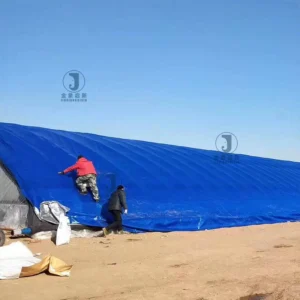
| Truck and trailer load covers | Road vibration, constant tie-down stress, weather exposure, abrasion at flex points |
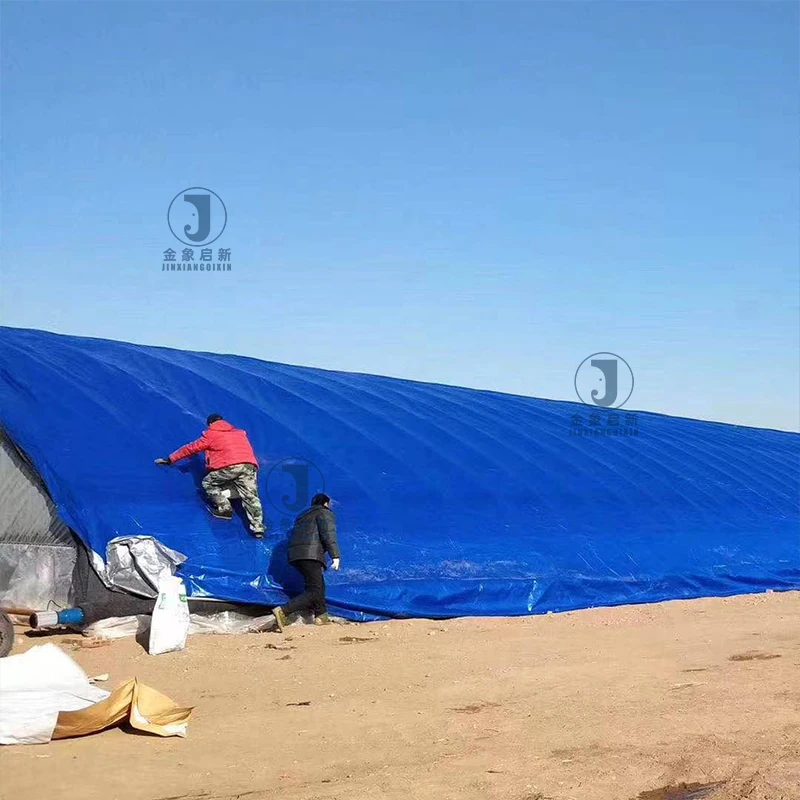
| Timber, hay and crop covers | Prolonged UV exposure, moisture ingress, wind uplift, repeated handling |
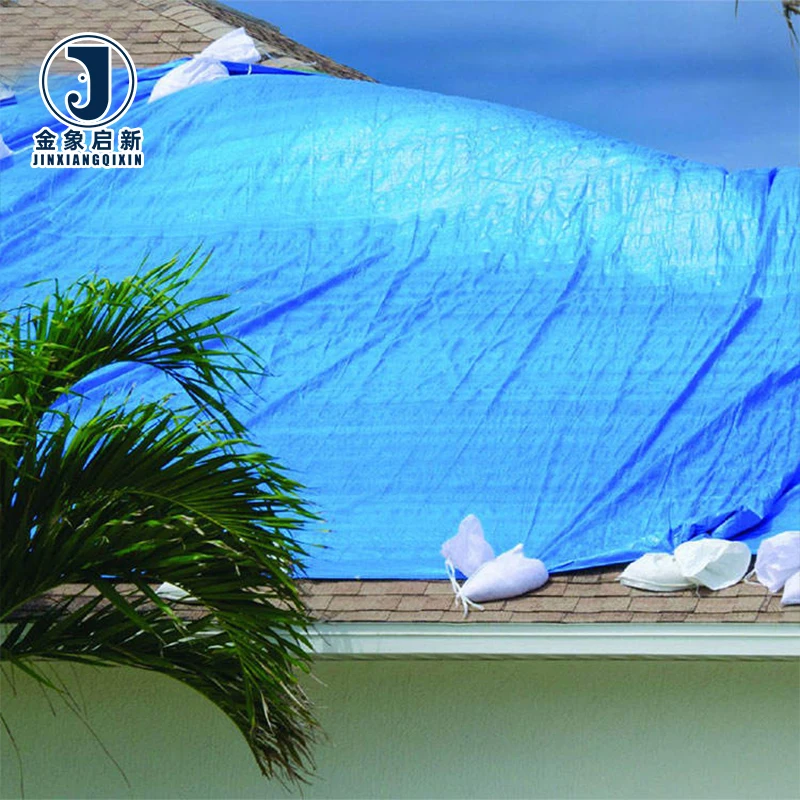
| Construction site material protection | Debris impact, scaffold contact, dust and rain exposure, frequent repositioning |
| Pond and reservoir liners | Permanent water contact, soil chemistry, puncture risk from substrate |
| Garden furniture and gazebo covers | Seasonal UV, condensation, mildew risk, aesthetic consistency |
| Container and boat covers | Salt air, high humidity, mechanical abrasion during loading |
Why GSM Alone Does Not Define a Reliable PE Tarpaulin
A quoted GSM means nothing without verified weave density and coating weight behind it.
When sourcing a PE Tarpaulin manufacturer, buyers often reduce the entire specification to a single number — grams per square metre. Yet two rolls both labelled 90 gsm can behave entirely differently if one uses an 8×8 weave with heavier lamination and the other uses a 10×10 weave with lighter coating. The weave provides tensile structure; the LDPE lamination provides waterproofing and abrasion resistance. Neither does the job alone. In field returns analysed across the industry, a significant share of premature failures traces back to coating weight being substituted for base fabric density to hit a target GSM on paper [NEED_CITE: relationship between weave density and tensile performance in woven PE fabrics].
Weave Density as the Structural Backbone
Every PE tarpaulin in this range starts with an HDPE woven base fabric. The mesh count — from 6×6 for lightweight grades up to 14×16 for heavy-duty sheets — determines how load distributes across the sheet. A tighter weave resists tear propagation because individual yarns share stress across more intersection points. This is why a 14×14 weave at 150 gsm outperforms a loosely woven 8×8 fabric of the same stated weight when exposed to wind gusting and tie-down tension.
LDPE Lamination and Waterproof Integrity
Both sides of the HDPE base receive LDPE lamination, sealing the weave and producing a fully waterproof surface. The lamination weight must be balanced: too thin and the coating wears through at high-abrasion zones such as trailer edges and scaffold contact points; too thick and the sheet becomes stiff, increasing the risk of cracking at folded hems in cold weather. Process control over coating weight across the full width is what separates a consistent roll from one that develops thin spots [NEED_CITE: coating adhesion and lamination uniformity standards for PE woven fabrics].
Reading the GSM-to-Weave Mapping Correctly
Selecting the right grade means matching the weave density to the mechanical demand, not simply choosing a higher GSM. Lightweight 50–60 gsm sheets at 6×6 or 6×7 weave serve well for temporary dust covers and short-term crop protection. Mid-range 80–120 gsm fabrics at 8×8 through 10×10 weave handle transport covers and construction material protection. Heavy-duty 150–300 gsm grades at 12×12 through 14×16 weave are specified for long-term outdoor installations, pond liners, and applications where puncture resistance is critical. Asking for a sample cut from the exact roll grade — and weighing it — removes ambiguity before bulk commitment.
What Happens When Specification Gaps Reach the Field
A roll that arrives lighter than the quoted GSM typically fails first at the eyelets and hem line, where tie-down loads concentrate. If the LDPE lamination is uneven, water penetrates at thin spots while adjacent areas remain intact — a defect that only shows up after weeks of rain. Colour variation between rolls in the same order becomes visible the moment sheets are installed side by side on a scaffold or truck fleet, forcing partial rejection and reorder delays [NEED_CITE: common causes of batch inconsistency in PE tarpaulin production]. These are not cosmetic issues; they represent total cost of replacement, freight, and project downtime.
Sourcing Certainty for Bulk PE Tarpaulin Orders
Three full production lines and 36 sets of professional equipment support bulk roll output with on-time dispatch, reducing the need to split orders across multiple vendors.
A 10-person R&D team develops samples within days for custom width, colour, and branding requirements, allowing buyers to confirm the exact specification before committing to container quantities.
Dedicated QA/QC runs at every production stage, with 100% inspection before shipment — roll weight, weave density, lamination coverage, and eyelet placement are all checked against the purchase specification.
Custom widths up to 6 m and custom roll lengths are produced on the same lines as standard stock, meaning volume buyers receive the same process control whether ordering 6 ft utility rolls or wide-format sheets.
Pattern printing and branding options allow distributors to mark rolls with product line identification, enabling traceability downstream without separate labelling steps.
Documentation & Verification
- Material specification sheet stating exact GSM, HDPE weave density, LDPE coating, and colour reference
- UV test report provided where UV treatment is specified — confirm test basis for your target market
- Pre-shipment inspection record covering roll weight, dimensions, eyelet count, and visual defects
- Roll packing list with gross and net weight per roll for customs and warehouse reconciliation
- Certificate of origin and customs documentation prepared for cross-border shipment
Fabrication, Handling & Storage
- Heat-seal LDPE-laminated surfaces at moderate temperature to avoid melting the HDPE base yarn
- Place galvanized eyelets through the PP rope hem to distribute tie-down load across all four edges
- Store rolls upright on pallets to prevent flat-spot creasing that weakens the lamination bond
- Allow cold-stored rolls to reach ambient temperature before unrolling to avoid lamination cracking
- Clean with mild detergent; avoid solvent-based cleaners that degrade the LDPE surface
- Cut with sharp blades and seal edges to prevent HDPE yarn fraying beyond the hem line
Requesting the Right Specification for Your Project
Provide the intended application, expected exposure conditions, and target market compliance requirements so the correct weave density and treatment package can be recommended. Specify whether you need roll stock in standard or custom width, or finished cut-to-size sheets with eyelet spacing matched to your tie-down system. If colour consistency across multiple rolls is critical — such as for fleet branding or visible architectural use — request a pre-production colour reference sample before the full order enters production.
Frequently Asked Questions
Q: How is GSM verified per roll and what documentation accompanies shipment?
A: Each roll undergoes weight verification during the pre-shipment inspection. The accompanying material specification sheet states the exact GSM, HDPE weave density, and LDPE lamination details. A pre-shipment inspection record is included in the shipping documentation, allowing you to cross-check weight against your purchase order before the container leaves the factory.
Q: What test basis supports the UV treatment claim, and what evidence is provided?
A: UV treatment is available as an additive package during lamination. The specific test basis depends on the target market — request the applicable test report with your sample so you can confirm it meets your regional outdoor exposure requirements before placing a bulk order.
Q: How do you ensure colour consistency across multiple rolls in one order?
A: All rolls in a single order are produced in the same batch run using matched LDPE compound and pigment lots. A colour reference sample can be developed within days before production, and pre-shipment inspection includes visual comparison across rolls to flag any variation before dispatch.
Q: What is the maximum custom width and roll length available?
A: Rolls are produced in widths up to 6 m, and roll length is available at 100 yards, 100 metres, or a custom length specified by the buyer. Minimum order quantities depend on the selected colour and weave grade — confirm your required combination during the inquiry stage.
Q: Can finished tarpaulin sheets be cut to exact dimensions with custom eyelet spacing?
A: Yes. Finished sheets are cut and hemmed to specified dimensions with PP rope reinforcement on all four edges. Galvanized eyelets can be placed at standard 3 ft or 1 m intervals, or at a custom spacing matched to your tie-down system, with reinforced plastic corners at each corner.
Related products
-
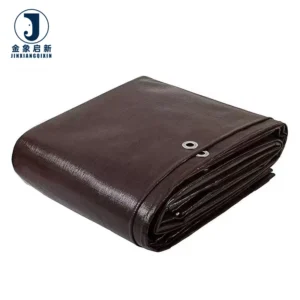
Custom PE Tarpaulin for Industrial Use – Full Range
Read more -
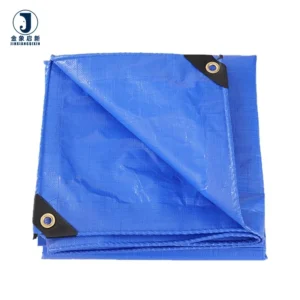
Hot Selling Organic Coated Blackout Waterproof Canvas PE Tarpaulin Tarp for Boys & Girls Construction Transportation Cover
¥1.68 Select options This product has multiple variants. The options may be chosen on the product page -
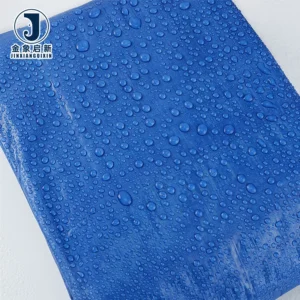
PE Coated Tarpaulin Waterproof Rainproof Outdoor Awning Shade Sail Canopy Pet Dog House Cover for Boys Anti-UV Medium Weight
¥0.70 Select options This product has multiple variants. The options may be chosen on the product page -
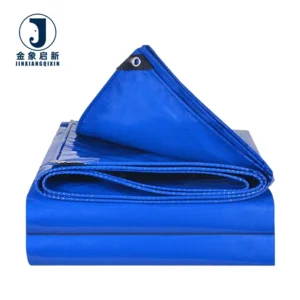
Hot Selling Heavy Duty PVC Coated Tarpaulin Covers Waterproof Plastic for Truck Tent Outdoor
¥3.10 Select options This product has multiple variants. The options may be chosen on the product page