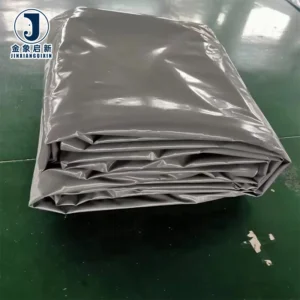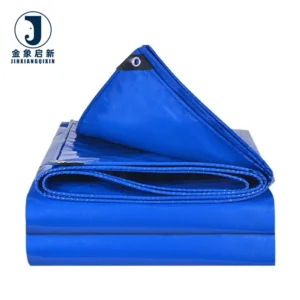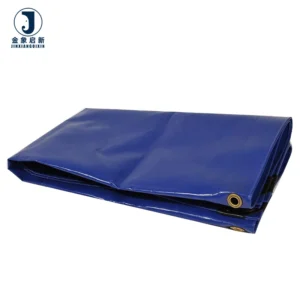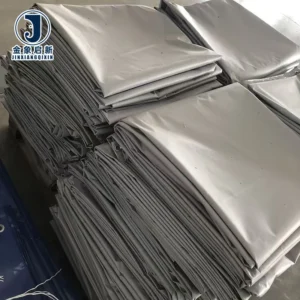
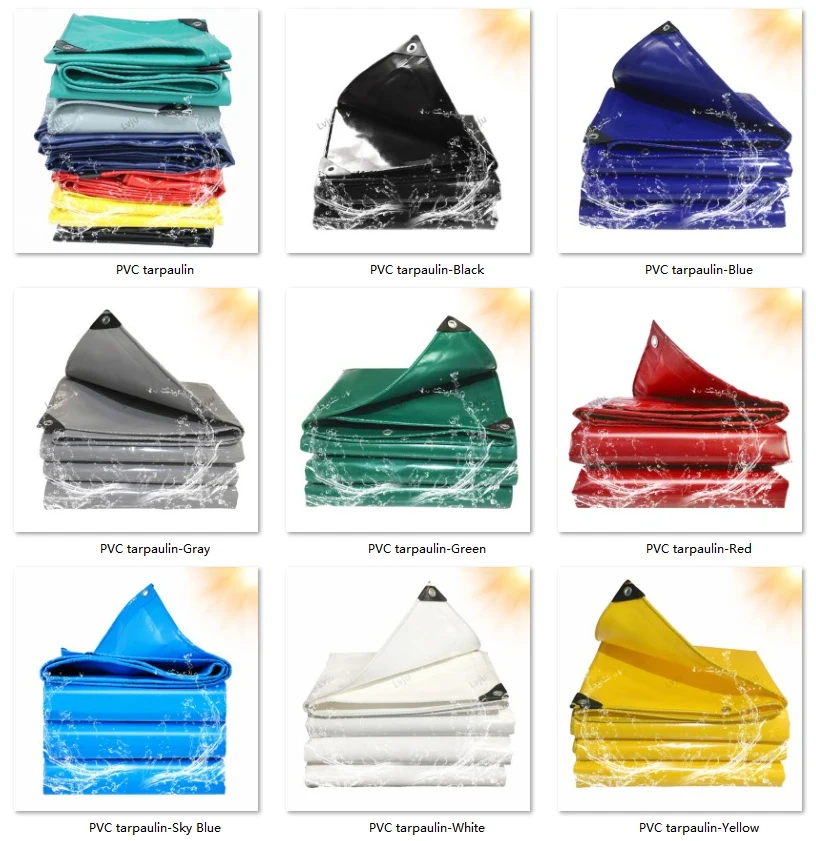
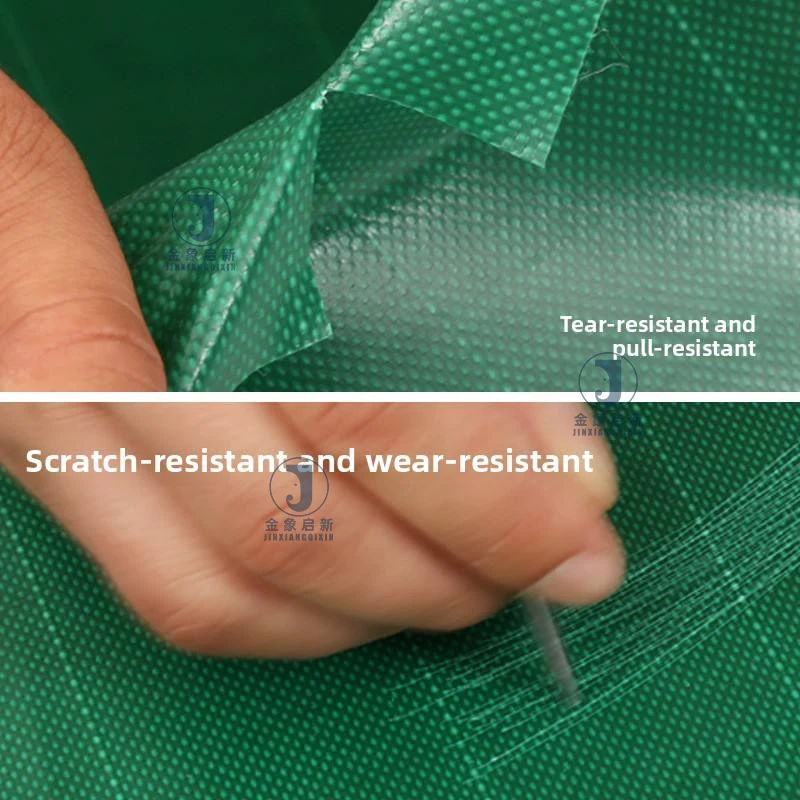
PVC Coated Tarpaulin — available in 400-1500 g/m² across three weight tiers with 500D to 2000D base fabric, supplied in rolls up to 6m width or finished cut sizes with reinforced hems and galvanized eyelets.
- Selecting the right denier and GSM for your load profile prevents premature failure at flex and weld points, not simply choosing the heaviest option available.
- 10-person R&D team handles custom width, colour matching and pattern printing with samples developed in days, backed by 100% pre-shipment inspection and full documentation including material spec sheets and test reports.
Description
Precision-Coated Fabric Expertise — Every roll of PVC Coated Waterproof Heavy Duty Tarpaulin undergoes 100% pre-shipment GSM and seam inspection, ensuring the material leaving our Jinan facility matches the specification you approved.
Technical Specifications
| Parameter | Value |
|---|---|
| Product Type | PVC Coated Tarpaulin |
| Material | PVC coated polyester fabric |
| Coating Process | 100% PES dipping coating (vinyl-coated polyester mesh) |
| Base Fabric Denier | 500D (medium), 1000D (heavy-duty), 500D-2000D (super heavy) |
| Thickness | 0.35-0.45mm (medium), 0.70-1.0mm (heavy-duty), 1.2-1.5mm (super heavy) |
| Weight (GSM) | 400-500 g/m² (medium), 700-1000 g/m² (heavy-duty), 1100-1500 g/m² (super heavy) |
| Tensile Strength | Warp 1500-2000 / Weft 1200-1800 N/5cm (medium); Warp 2000-2500 / Weft 1800-2200 N/5cm (heavy-duty); Warp 2500-3000 / Weft 2200-2800 N/5cm (super heavy) |
| Roll Width | 6ft, 8ft, 10ft, 12ft / 2m, 4m, 6m or custom |
| Roll Length | 100 yards, 100 meters or custom |
| Finished Sizes | 2x2m to 8x10m+ (multiple standard sizes) |
| Edge Reinforcement | PP rope in hem, galvanized eyelets every 3ft or 1m, reinforced plastic corners |
| Key Features | Waterproof, washable, tear resistant, mildew proof, anti-aging, UV treatment available (grade not stated) |
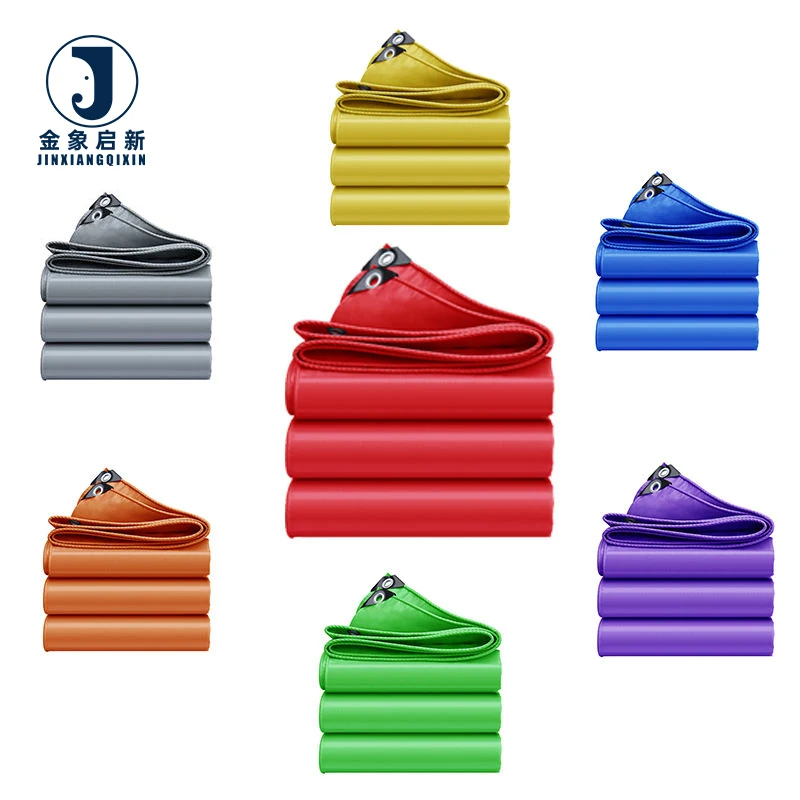
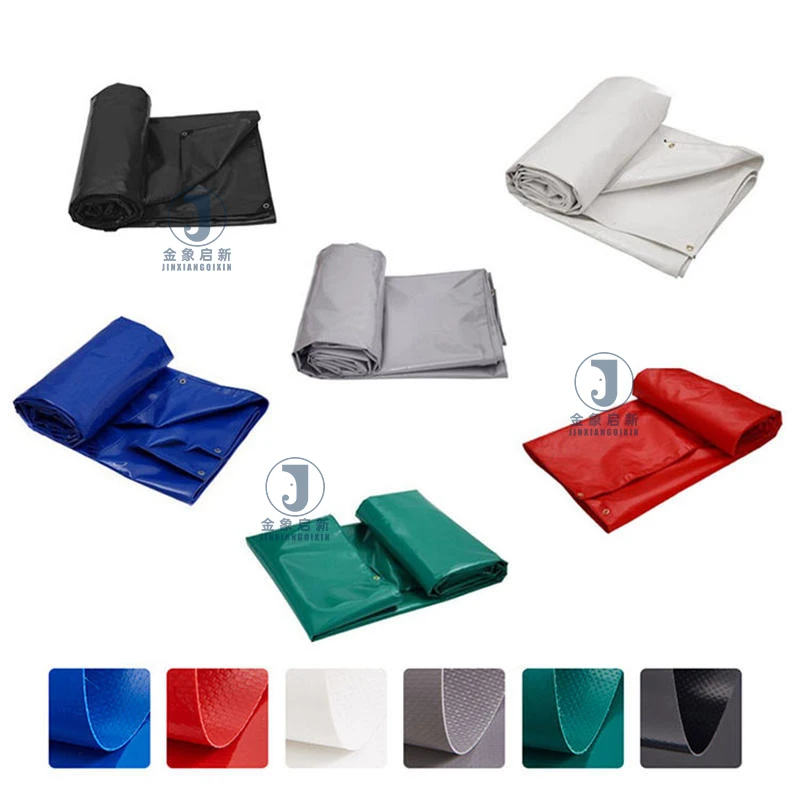
| Colors | Blue, Blue/Orange, Green, Grey, Black, Clear, Grey/Green, Orange, or custom |
| Certifications | ISO, CE |
Application Suitability
| Application | Exposure & Requirement |
|---|---|
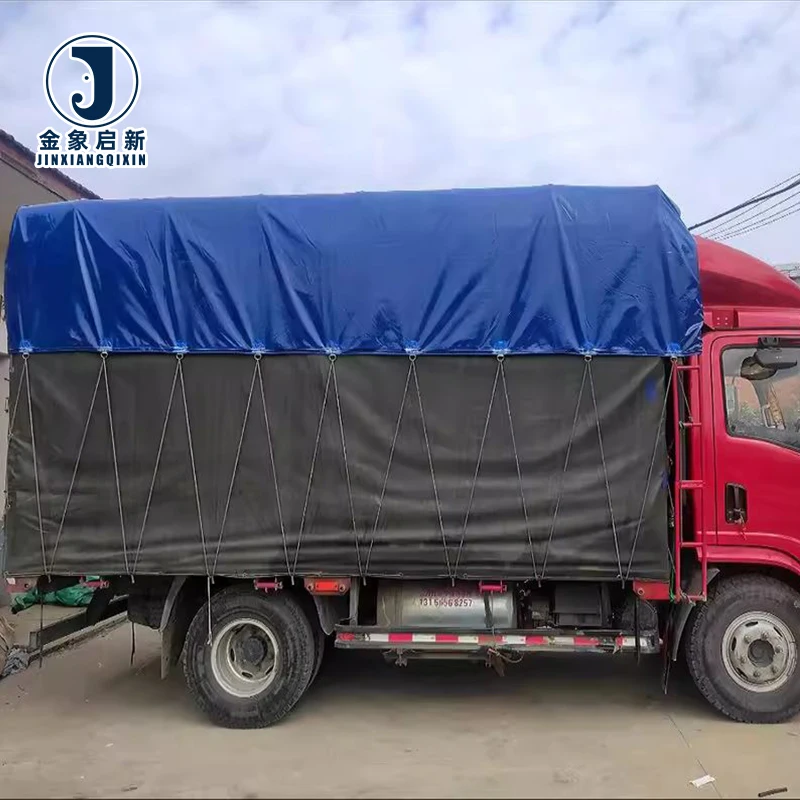
| Truck and trailer tarpaulin | Constant flexing at load points, road abrasion, tie-down stress at eyelets, UV exposure |
| Tent and awning covers | Prolonged outdoor weathering, tension loading at frame points, frequent assembly and teardown |
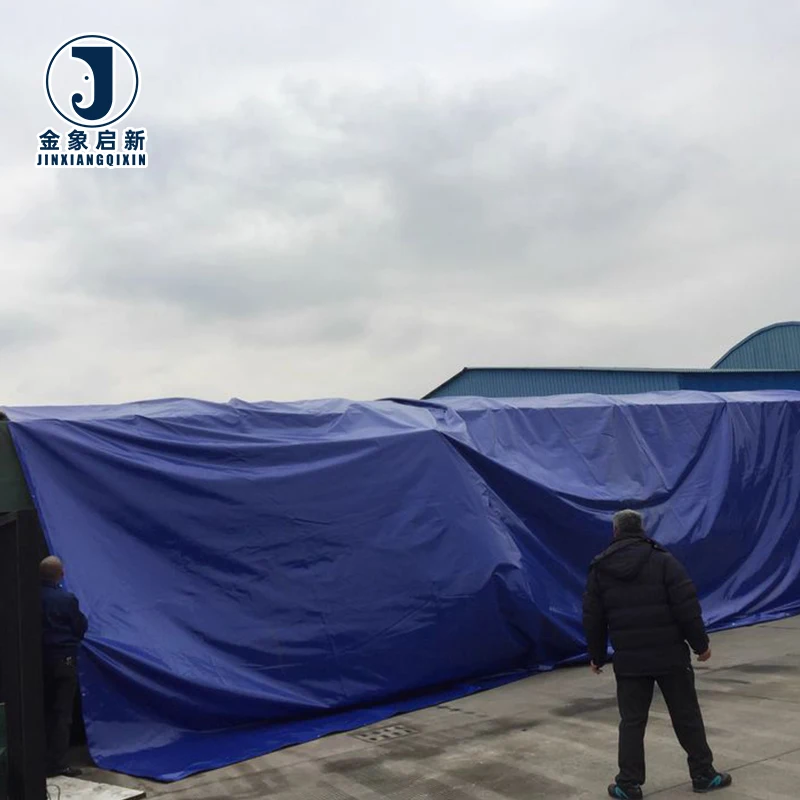
| Industrial pipe canopy | Sun exposure, wind loading, chemical splash risk, need for heat-welded seams |
| Tensioned structural fabric | High sustained tensile loads, snow or ponding water weight, long-span membrane stress |
| Pond and reservoir liners | Permanent water contact, soil chemistry exposure, puncture risk from substrate |
| Waterproof fabric cover (equipment) | Dust and moisture ingress, outdoor storage, handling abrasion |
Why Stated GSM Fails When the Base Fabric Is Wrong
GSM without denier and weave density is a misleading number on any PVC Coated Tarpaulin aftermarket supplier quotation.
I have seen heavy-grade coated rolls fail at the weld line not because the PVC was thin, but because the base scrim was woven too open to hold the coating under flex load. The total weight met the purchase order, yet the tear propagated from the first eyelet pull within a season. A 1000D base at a tight weave delivers different real-world strength than a 500D base loaded with extra coating to reach the same GSM figure [NEED_CITE: tensile and tear test methods for coated fabrics per ISO 1421]. The spec sheet must show denier and weave count alongside the weight, or the number you approved means very little once the cover is under tension on a trailer or a tent frame.
Selecting the Right Weight Tier for Your End Use
The medium tier at 400-500 g/m² with 500D base fabric serves applications where the PVC Coated Tarpaulin sees moderate handling and limited sustained tension, such as temporary equipment wraps or short-run event tents. Moving to the heavy-duty tier at 700-1000 g/m² with 1000D scrim provides the tensile reserve needed for truck side curtains that flex daily and for awning structures that carry wind load across wide spans.
The super-heavy tier at 1100-1500 g/m² with up to 2000D base yarn is specified for membrane structures and permanent pond liners where the fabric must resist puncture and sustain high static loads without creep. Choosing below the required tier leads to premature failure at stress concentrations; choosing above it adds unnecessary weight and cost to the finished product.
How Dipping Coating Affects Seam and Fabric Behaviour
The 100% PES dipping coating process encapsulates each yarn in the polyester mesh, rather than simply laying a film on top. This means the PVC bonds into the weave structure, giving the PVC Coated Tarpaulin higher peel strength at heat-welded seams compared to laminated alternatives.
When the coating penetrates the scrim fully, the weld zone carries load through both the coating and the yarn, so the seam is less likely to delaminate at the point where the cover flexes most [NEED_CITE: weld peel strength testing for coated polyester fabrics]. This construction also allows the fabric to accept high-frequency welding cleanly, which matters when fabricators produce finished truck covers or tensioned panels with complex seam geometries.
Reading the Specification Sheet Beyond the Weight Number
Base fabric denier directly controls tear propagation resistance. A 1000D yarn in the weft direction means a tear that starts at a puncture or an eyelet must break substantially more fibre before it runs, compared to a 500D yarn carrying the same coating weight. The tensile strength values across the three weight tiers reflect this — the jump from medium to heavy-duty comes from denser, heavier yarn, not from thicker PVC alone.
Coating weight and base fabric density together determine how the material behaves during fabrication. A tightly woven 1000D scrim with dipping coat holds a clean heat-weld bead and resists fraying at cut edges, while a loosely woven base with the same GSM may fuzz at the weld and weaken over repeated flex cycles. Thickness readings of 0.70-1.0mm in the heavy-duty tier indicate a coating build that protects the scrim from abrasion while maintaining enough flexibility for folding and deployment. Available in UV treatment grades — confirm the UV stabiliser package required for your target climate and exposure duration.
The Hidden Cost of Batch Inconsistency Across Rolls
When rolls within the same container order vary in colour or in actual coating weight, the consequences show up after installation. A truck fleet operator who installs side curtains from mixed rolls sees visible colour banding across the trailer once the covers are in sunlight, forcing a full replacement to maintain a professional appearance [NEED_CITE: batch colour consistency standards for coated fabrics in transport applications].
Rolls that come in under the stated GSM may pass a casual check but fail at the welded seams after months of load flexing, because the lighter coating provides less adhesion in the weld zone. This failure mode is expensive to remedy once the covers are fitted to vehicles and in daily service, which is why documented roll-to-roll inspection before dispatch is non-negotiable for any serious PVC Coated Tarpaulin aftermarket supplier relationship.
Why Procurement Teams Specify With Us
Three full production lines and 36 sets of professional equipment give us the capacity to run your full order in a single batch, reducing the roll-to-roll variation that plagues multi-batch sourcing. Every roll of PVC coated polyester tarpaulin passes dedicated QA at each production stage, with GSM, colour and seam strength checked against your spec before packing.
Our 10-person R&D team handles custom width, colour matching and sample development, delivering approval samples within days rather than weeks so your project timeline stays on track. We provide the full documentation set — material spec sheet, test reports for applicable grades, pre-shipment inspection records — so your receiving team can verify the shipment without guesswork.
Documentation & Verification
- Material specification sheet listing GSM, base fabric denier, coating type and colour reference for every PVC Coated Tarpaulin order
- UV and flame retardant test reports citing named standards, provided for applicable grades upon confirmation
- Pre-shipment inspection record confirming GSM, colour consistency and seam strength per roll before dispatch
- ISO and CE certificates included with every shipment for customs and compliance submission
- Roll packing list with individual roll weights and dimensions for receiving verification
- Certificate of origin and full customs documentation package to support smooth import clearance
Fabrication, Handling & Storage
- Heat-weld using temperature and dwell settings matched to the dipping-coated PVC layer; test weld on a scrap piece of the same GSM before production runs
- Position galvanized eyelets at the specified 1m or 3ft spacing and reinforce with the plastic corner patches to distribute tie-down loads across the 1000D base fabric
- Store rolls upright on pallets in a covered area; laying heavy-duty 700-1000 g/m² rolls flat for extended periods can cause permanent crease marks in the coating
- Allow cold-stored rolls to reach ambient temperature before unrolling; the PVC coating becomes stiff at low temperatures and may crack if force-flexed
- Clean the waterproof coated surface with mild detergent and soft brush; avoid solvent-based cleaners that can degrade the PVC coating over repeated use
What to Include in Your Enquiry
To specify the correct PVC coated polyester tarpaulin for your project, share the end-use application and the primary exposure conditions — whether the fabric will face sustained tension, daily flexing, chemical contact or permanent water immersion. Confirm your target market’s fire classification or UV performance requirements so we can match the treatment grade.
Let us know whether you need roll stock in standard widths or finished cut sizes with eyelets and hemming, along with your colour requirements and estimated annual volume. If Pantone or RAL colour matching is required, request an approval sample before bulk production so the shade is locked to your standard.
Frequently Asked Questions
Q: How do I specify the right GSM and denier for my application?
A: Start with the mechanical demands of your end use. Truck side curtains that flex daily need at least the heavy-duty tier with 1000D base fabric for tear resistance at weld and eyelet points. Static covers for equipment or short-term site use can work with the medium 500D tier. Share your load profile and span dimensions, and we will recommend the weight and denier combination that balances strength, weight and fabrication behaviour.
Q: Can you match a Pantone or RAL colour and guarantee consistency across an entire container order?
A: Yes, our R&D team develops custom colour samples for approval before production, matched to your Pantone or RAL reference. To ensure roll-to-roll consistency, we run your full order through a controlled batch process and inspect every roll against the approved standard before packing. You receive the pre-shipment inspection record documenting colour compliance per roll.
Q: What test reports do you provide for UV resistance and flame retardant grades?
A: We supply test reports citing the specific standard used — such as a named fire classification or UV exposure test method — for the grades you specify. These are not self-declarations but third-party or in-lab test results tied to the batch. Confirm the grade your market requires during enquiry so we include the correct documentation with your shipment.
Q: What is the lead time and MOQ for custom width, colour or printed branding?
A: Lead time depends on the complexity of the customisation and current production scheduling. Custom widths and colours require a sample approval step before bulk production begins. Contact our team with your required dimensions, colour reference and volume, and we will provide a schedule with minimum order details for your specific configuration.
Q: How is the tarpaulin packed for container shipment and what documentation ships with the order?
A: Rolls are packed on pallets suitable for container loading, with each roll labelled for identification against the packing list. Your shipment includes the material specification sheet, packing list, ISO and CE certificates, pre-shipment inspection record, and certificate of origin. Any applicable test reports for UV or flame retardant grades are included as specified in your order documentation.
Related products
-
Factory Direct Sale Flatbed Trailer Tarps Black Heavy Duty Lumber Pe Tarp Flatbed Truck Transportation Tarpaulin Roll Sheet
¥1.25 Select options This product has multiple variants. The options may be chosen on the product page -
Secure Green PVC Coated Blackout Tarpaulin Truck Tent Cover Anti-Aging Waterproof Folding Design Breathable Woven Technics
¥0.83 Select options This product has multiple variants. The options may be chosen on the product page -
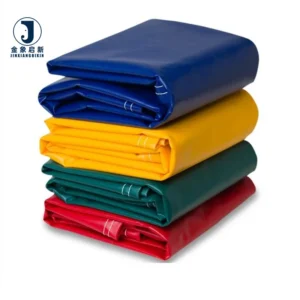
Heavy Duty Waterproof PVC Tarpaulin Roll Cover for Truck Tent Outdoor Storage and Industrial Use
¥1.48 Add to cart -
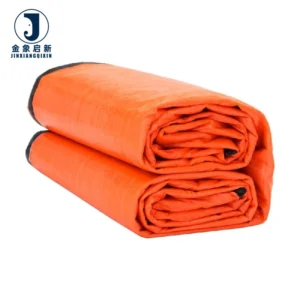
Factory 12ftx20ft Construction Cold Weather Insulated Pe Tarps Poly Tarp Heavy Duty Concrete Curing Blanket Tarpaulin Roll Sheet
¥0.66 Add to cart