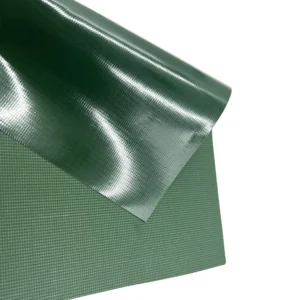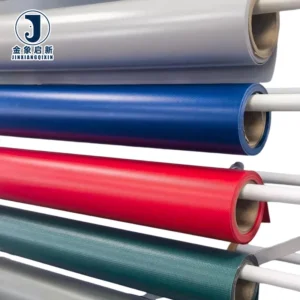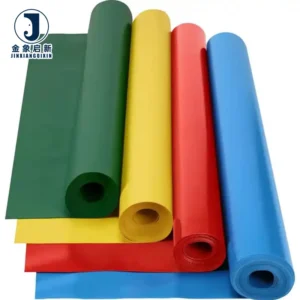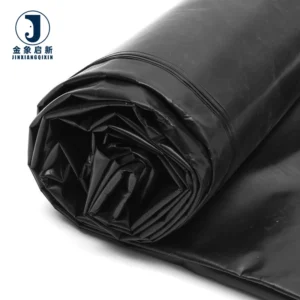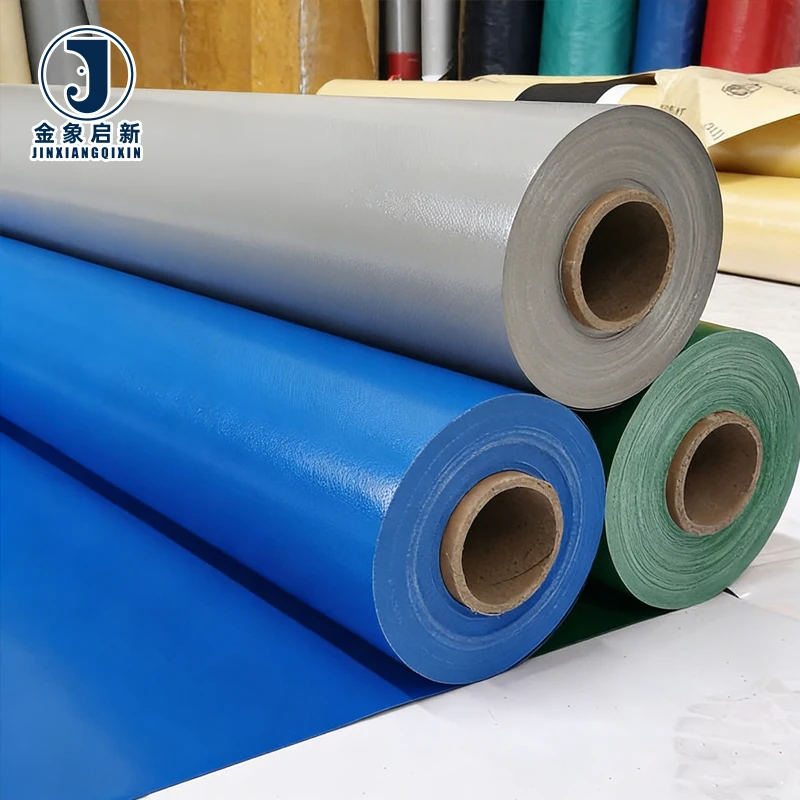
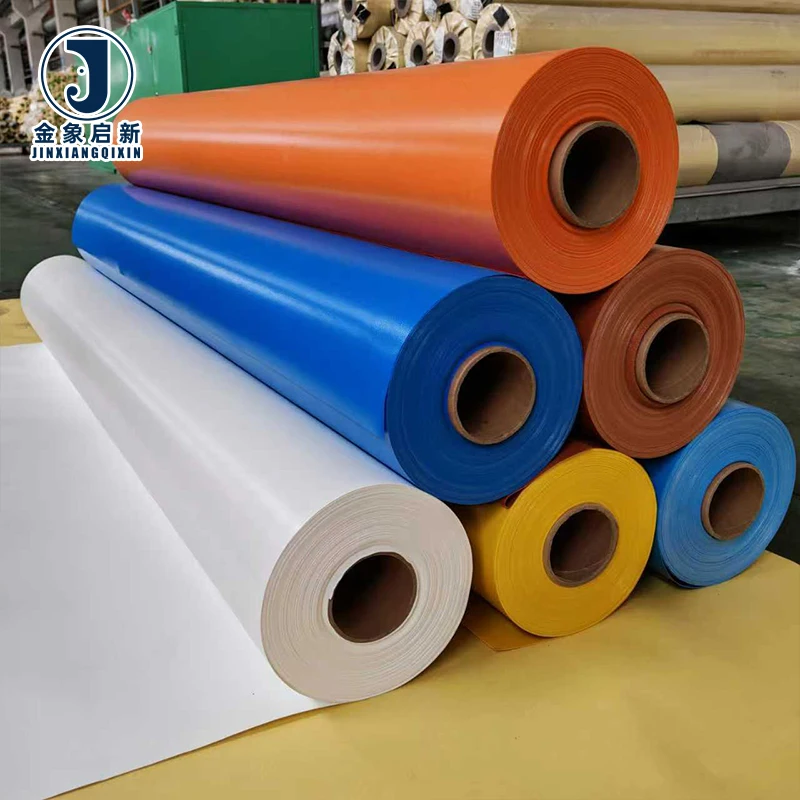
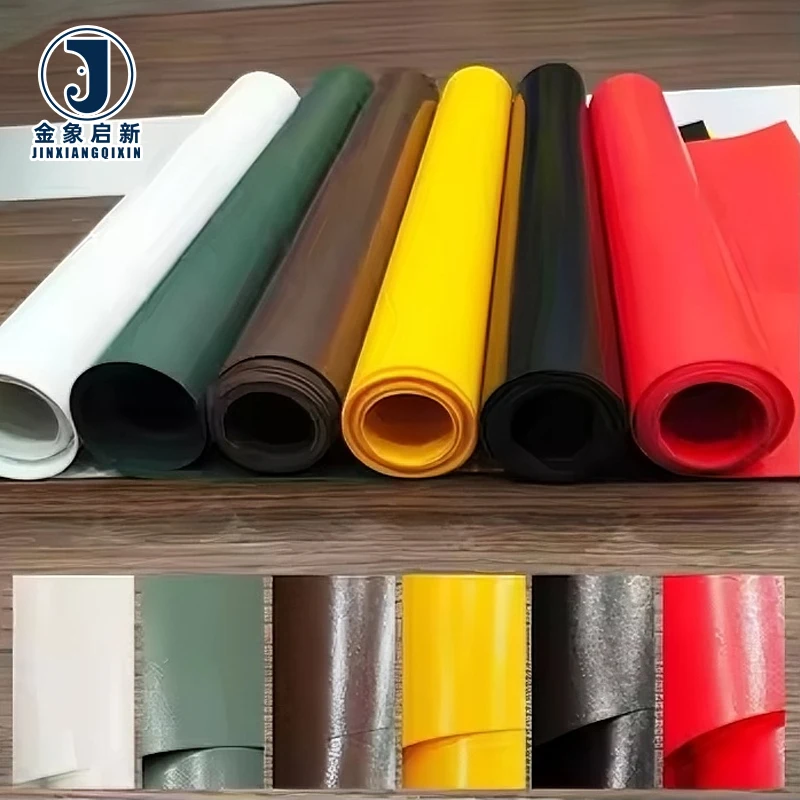
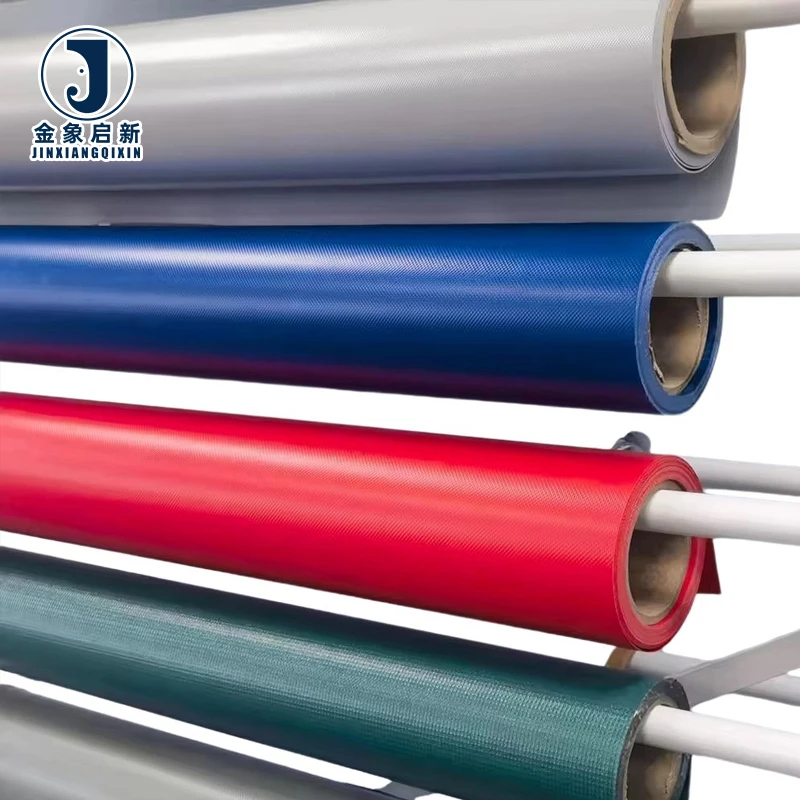
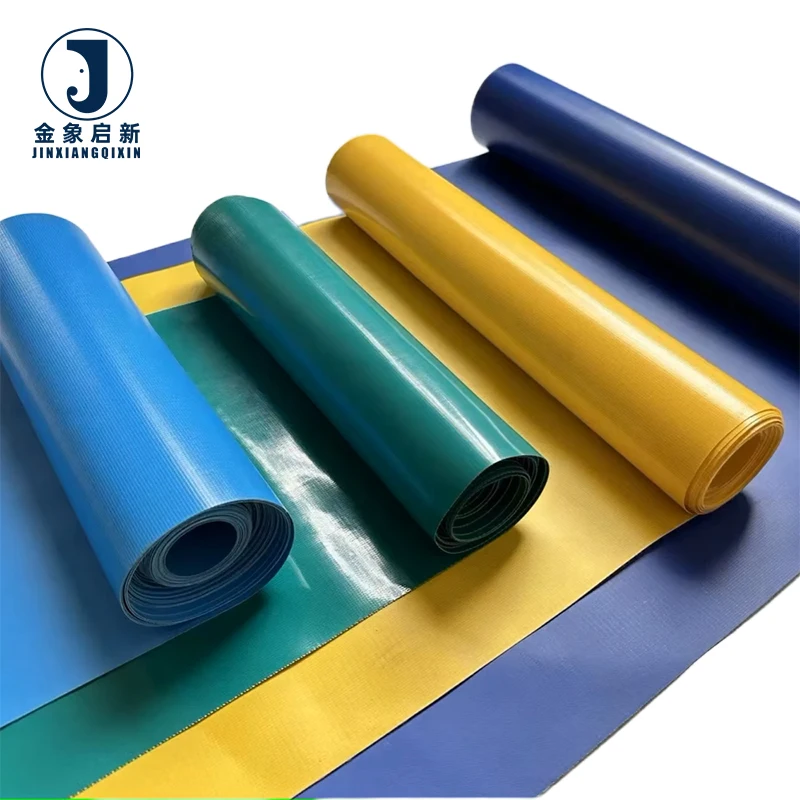
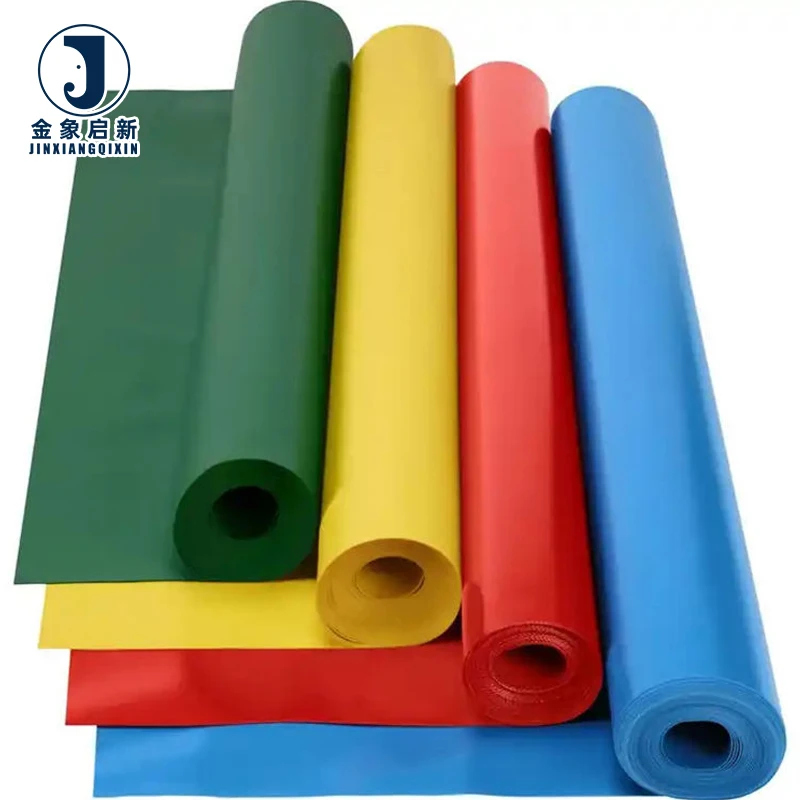
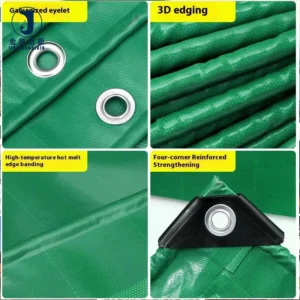
PVC Coated Tarpaulin Roll, 350–750 GSM, Polyester Mesh Base — laminated and hot-melt coated for strong weld adhesion at flex points where seams typically fail. Available in glossy or matte finish with UV resistance backed by test reports, covering truck covers, tents, awnings, and pool liners.
- Roll-to-roll color consistency across the full order, no visible variation when panels are installed side by side
- Precise GSM control verified in-process so delivered weight matches the quotation specification
- Full customization on width, length, color, and branding supported by a 10-person R&D team
Backed by nearly 30 years of coated fabric production, 100% pre-shipment inspection, and dedicated QA at every stage.
Description
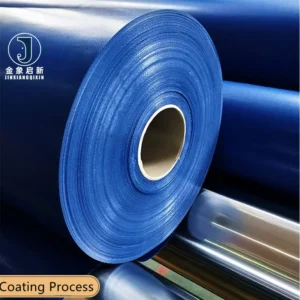
Process-Controlled Coating — every roll verified for GSM and coating adhesion on the line before it leaves the factory.
Technical Specifications
| Parameter | Value |
|---|---|
| Product Type | PVC Coated Tarpaulin |
| Material | PVC + High-strength polyester mesh fabric |
| Coating Technology | Laminated technology & Hot-melt Coating technology |
| Weight (GSM) | 350gsm / 420gsm / 500gsm / 550gsm / 600gsm / 750gsm |
| Thickness | 0.32mm / 0.35mm / 0.4mm / 0.45mm / 0.5mm / 0.65mm |
| Surface Finish | Glossy or Matte |
| Color Options | Blue / Red / Yellow / Light Blue / Grey (Customizable) |
| Roll Size | 2m width × 75m length / 2.1m width × 50m length |
| Key Features | Waterproof (double-sided), High tensile strength, High tear strength, Cold crack resistance, Anti-mildew, Anti-static treatment, UV resistance (Sunproof), Color fastness, Weldable |
| Service Life | 3–7 years under normal conditions |
| Customization | Custom sizes, colors, and branding available |
| Certification | ISO, CE |
Application Suitability
| Application | Exposure & Requirement |
|---|---|
| Truck and lorry tarpaulin covers | Constant flexing, road debris abrasion, UV exposure, wind load on tie-down points |
| Cargo ship covers | Salt spray, sustained moisture, heavy cargo abrasion, long-term UV |
| Tent and awning covers | Repeated assembly and teardown, weather cycles, seam stress at frame joints |
| Fish tank and pool liners | Permanent water immersion, chemical contact from treatment agents, puncture risk from substrate |
| General outdoor waterproof covers | Seasonal temperature swings, UV degradation, mildew in humid storage |
Why Roll-to-Roll Color Consistency Is the Real Test of a PVC Coated Tarpaulin Roll Aftermarket Supplier
Color matching at the sample stage means nothing if the production run ships in three different shades.
I have watched installers unroll two panels side by side on a warehouse canopy frame and see a visible tone shift where the rolls met. The fabric itself was sound — the problem was batch blending at the coating line. When a PVC coated tarpaulin roll aftermarket supplier sources from multiple coaters or blends pigment batches mid-run, the inconsistency shows up on the roof, not in the warehouse. Color drift between rolls forces rework, wastes cut panels, and damages your reputation with the end user. [NEED_CITE:]
Coating Weight Verification Across Every Production Run
The weight printed on the quotation must match the roll that arrives on the dock. Our in-process QA checks coating weight at defined intervals on each of the three production lines, so the GSM you specify is the GSM you receive. This matters because a PVC coated tarpaulin roll aftermarket supplier who skips in-line verification leaves the buyer to discover shortfalls only when the roll is weighed at destination.
Weldable Seams That Hold Where the Load Flexes Most
Seam failure on coated fabric almost always starts where the material bends repeatedly — at tie-down edges, trailer curtain runners, and awning frame contact points. The hot-melt coating and laminated construction used on these rolls produce strong weld adhesion at those flex zones. I once had a side curtain job where the weld parameters were set too low; the seam peeled clean under the first strap load. That failure taught us to verify peel strength on every hot-melt batch before it reaches the slitter. [NEED_CITE:]
How Base Fabric and Coating Weight Work Together
The polyester mesh base fabric provides tensile and tear strength, while the PVC coating adds waterproofing, UV resistance, and surface durability. A heavier GSM does not automatically mean a stronger fabric — a 650gsm roll with a thin base fabric and thick coating can tear more easily than a 550gsm roll built on a denser weave. The denier of the polyester yarn and the warp-and-weft density determine how well the material resists tear propagation once a puncture starts.
Coating technology also shapes performance. Hot-melt coating penetrates the mesh and bonds at the fiber level, which supports reliable heat welding and long-term adhesion. Laminated technology sandwiches the mesh between PVC films under heat and pressure, producing a smooth surface well suited to printing and a consistent finish across the full roll width. Both methods appear in this range, and the choice depends on whether your fabrication prioritizes weld strength or surface appearance.
Surface finish — glossy or matte — affects more than looks. Glossy surfaces shed dirt and water more readily, which matters for truck covers and outdoor structures that need to stay clean. Matte finishes reduce glare and accept ink adhesion more predictably when branding or pattern printing is required. [NEED_CITE:]
The Hidden Cost of Choosing the Wrong Roll Specification
Ordering a lighter GSM to save on material cost often shows up later as premature failure at stress points — tie-down edges splitting, weld seams peeling, or pinholes developing where the coating was stretched too thin during fabrication. When the specification calls for UV or flame-retardant treatment, accepting a roll without a matching test report means the material may not pass site inspection or local compliance checks. Batch color variation between rolls in the same shipment forces fabricators to reject panels that do not match, turning what should have been a straightforward production run into a sorting exercise. [NEED_CITE:]
Why Procurement Teams Source This PVC Coated Tarpaulin Roll Range Here
Three full production lines and 36 sets of professional equipment support volume orders with consistent scheduling, so lead times stay predictable even when custom widths or colors are specified. The 10-person R&D team develops samples within days for custom color, width, or branding requests — you confirm the sample before the full run starts, locking in finish, hand feel, and shade. Every roll passes dedicated QA/QC at each production stage, with full pre-shipment inspection covering weight, width, and surface quality. Hot-melt coating and laminated technology are both available, giving fabricators the right construction for their welding and finishing requirements.
Documentation & Verification
- Material specification sheet confirming GSM, base fabric construction, and coating type per roll
- UV and flame-retardant test reports matched to the specific grade ordered
- Pre-shipment inspection record with measured roll weight and width values
- Roll packing list detailing batch number, color reference, and dimensions per unit
- ISO and CE certificates covering the production facility and process
Fabrication, Handling & Storage
- Heat-weld seams at temperatures matched to the coating technology — hot-melt and laminated grades require different settings
- Store rolls upright on pallets to prevent flat-spot deformation across the 2m or 2.1m width
- Allow cold-stored rolls to reach ambient temperature before unrolling to avoid coating crack at low flex points
- Use compatible PVC adhesive for field repairs on glossy or matte surfaces
- Plan cut layouts to minimize cross-grain waste on the 75m or 50m roll length
What We Need to Quote Your Roll Order Accurately
Tell us the target GSM, the roll width and length you run on your equipment, and whether you need glossy or matte finish. If your end use requires UV or flame-retardant treatment, share the specific grade or test standard your market demands. For custom color orders, provide a Pantone or RAL reference so we can develop a production sample for your approval before the full run.
Frequently Asked Questions
Q: How is GSM verified before shipment, and can I receive a test report with my order?
A: Coating weight is checked at defined intervals during production on each line. A weight verification record is included with your shipment showing the measured GSM per roll. You can request a full material test report covering the specific grade and treatment you ordered.
Q: What is the maximum custom width available, and does it affect lead time?
A: Standard widths in this range are 2m and 2.1m. Custom widths can be produced based on equipment capacity and order volume. Wider formats may require adjusted scheduling on the coating line, so we confirm lead time at the quotation stage based on your specification.
Q: Can you match a Pantone or RAL color reference, and what is the approval process?
A: We develop a lab sample matched to your Pantone or RAL reference. Once you approve the sample for color, finish, and hand feel, we lock that formula for the full production run to ensure consistency across every roll in the order.
Q: What documentation ships with the rolls?
A: Each shipment includes a material specification sheet, roll packing list with batch and dimension data, ISO and CE certificates, and where applicable, UV or flame-retardant test reports for the grade ordered. Certificates of origin and customs documentation are provided on request.
Q: Do you supply only roll stock, or can you provide cut-to-size panels?
A: Both are available. We supply full rolls in standard and custom widths for fabricators who cut in-house, and we also produce cut-to-size panels and finished covers based on your dimensions and finishing requirements.
Related products
-
Awning and Tents Waterproof Fabric PVC Tarpaulin
¥1.50 Add to cart -
Wholesale PVC Coated Breathable Tarpaulin Fabric Rolls Waterproof Fire-Retardant for Boys & Girls Outdoor Use
¥0.79 Select options This product has multiple variants. The options may be chosen on the product page -
PVC Tarpaulin Waterproof Triangular Tarpaulin Folha De Tarpaulina Truck Tarpaulin
¥0.90 Select options This product has multiple variants. The options may be chosen on the product page -
Best Quality 650gsm Waterproof Polyester Heavy Duty Bache Pvc Tarpaulin
¥0.53 Add to cart