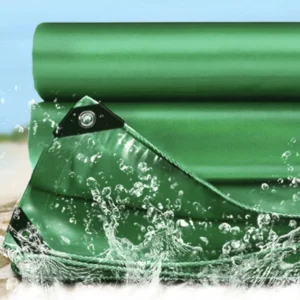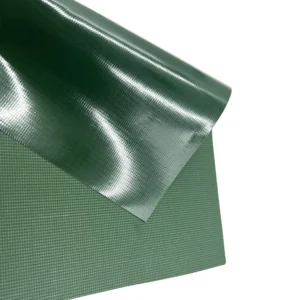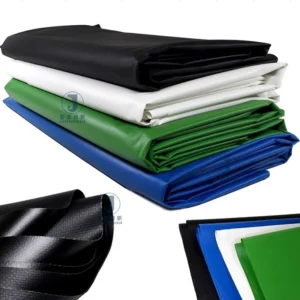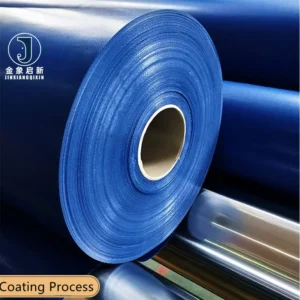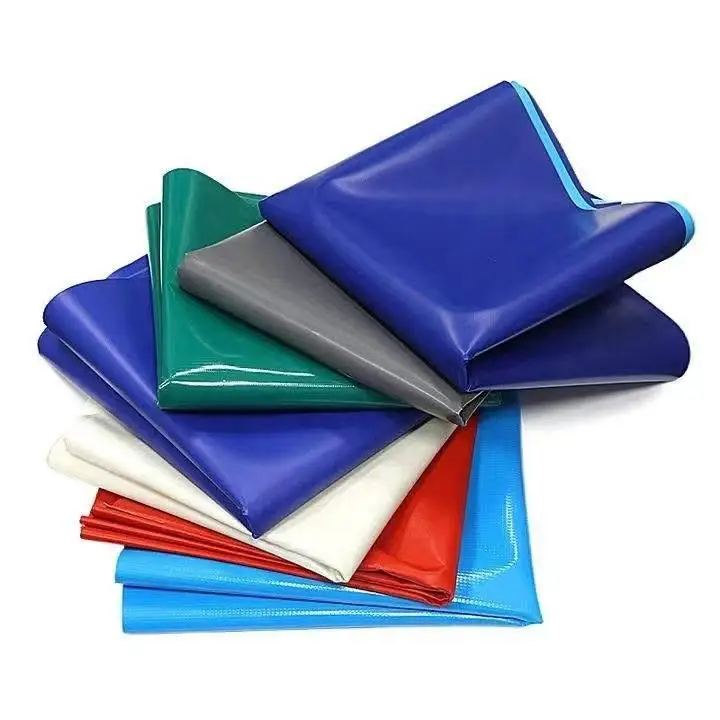
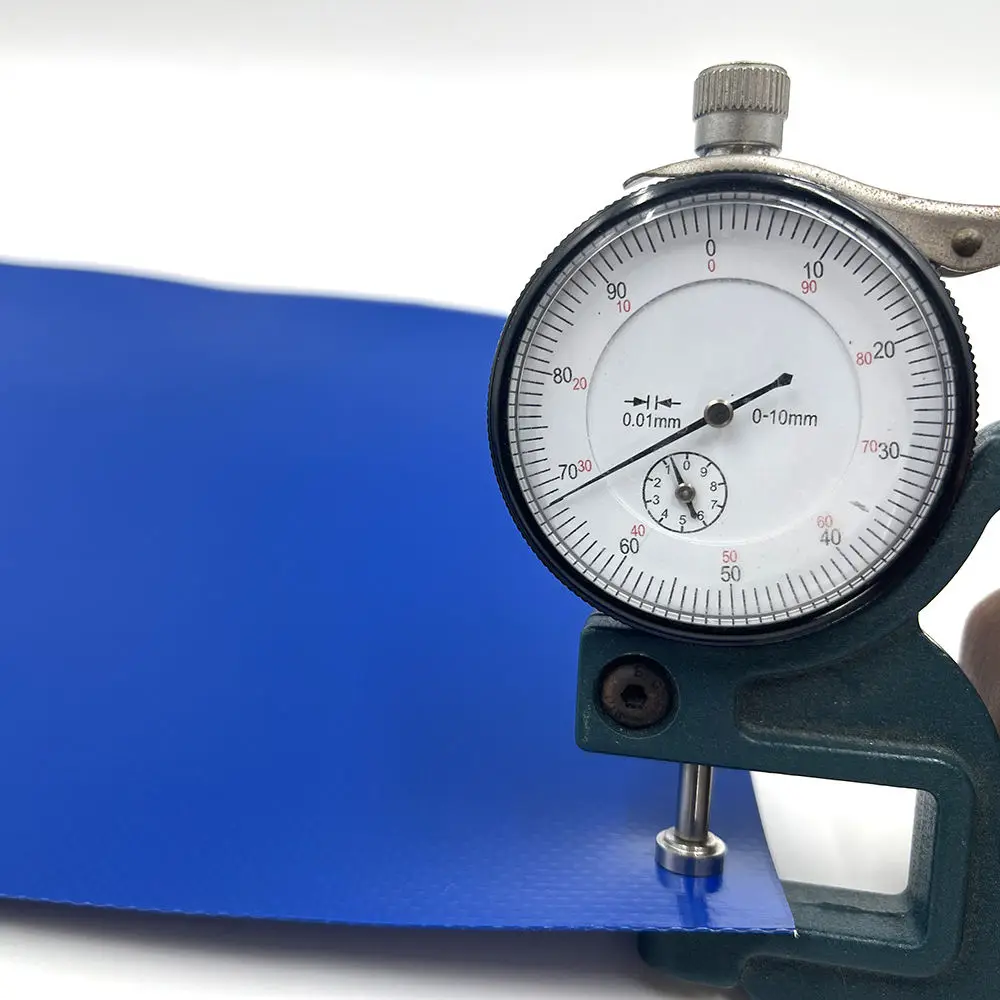
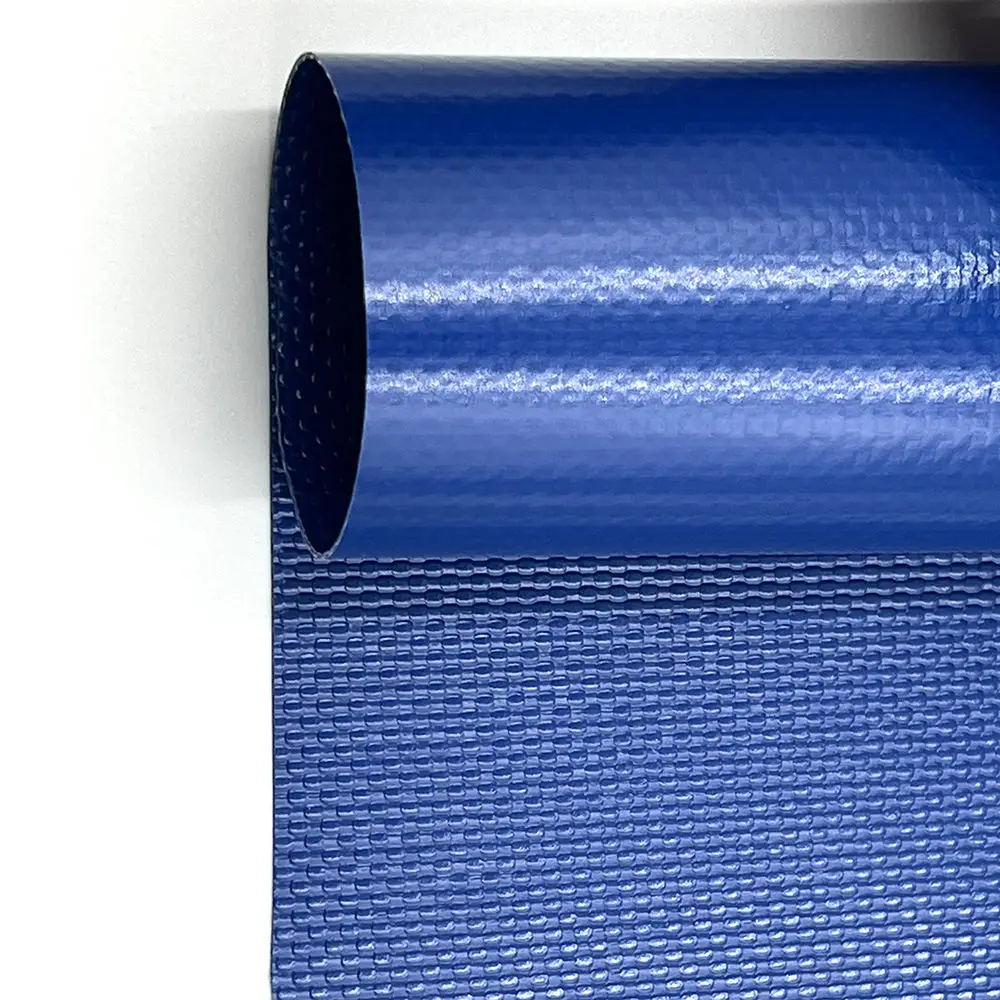
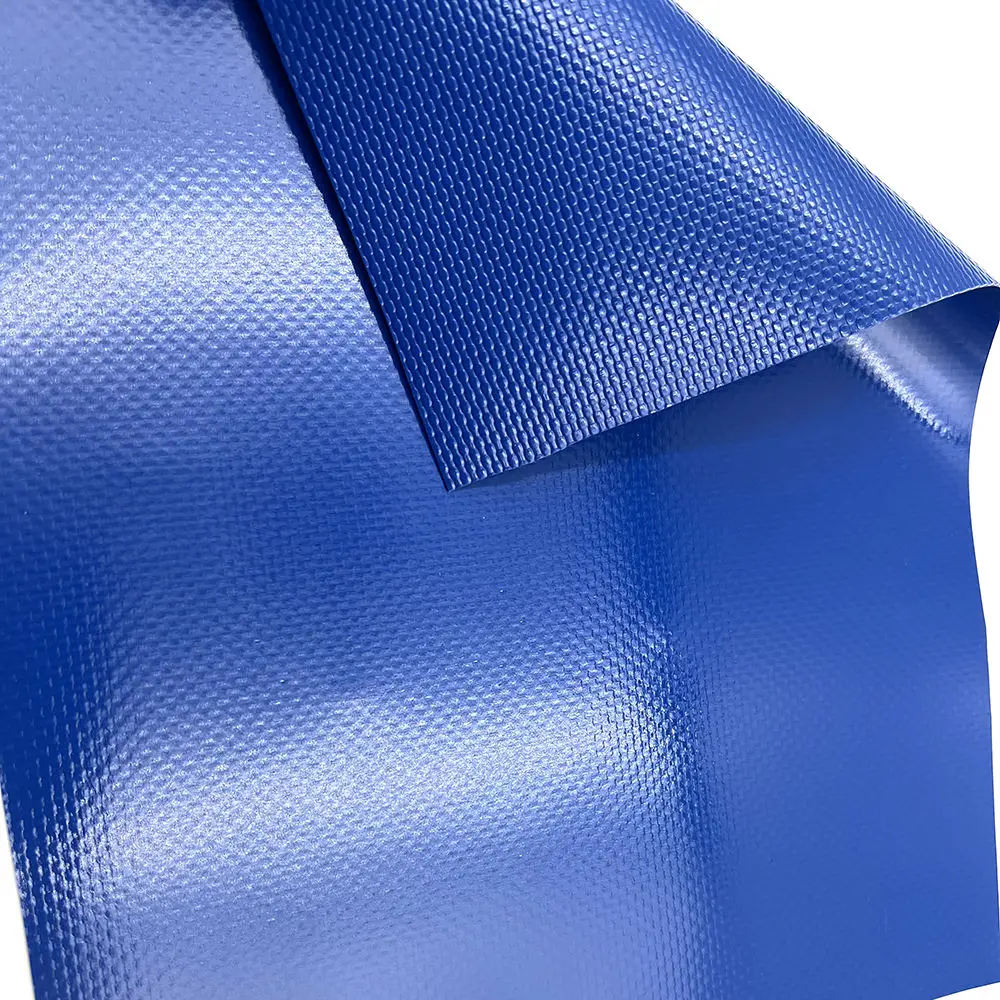
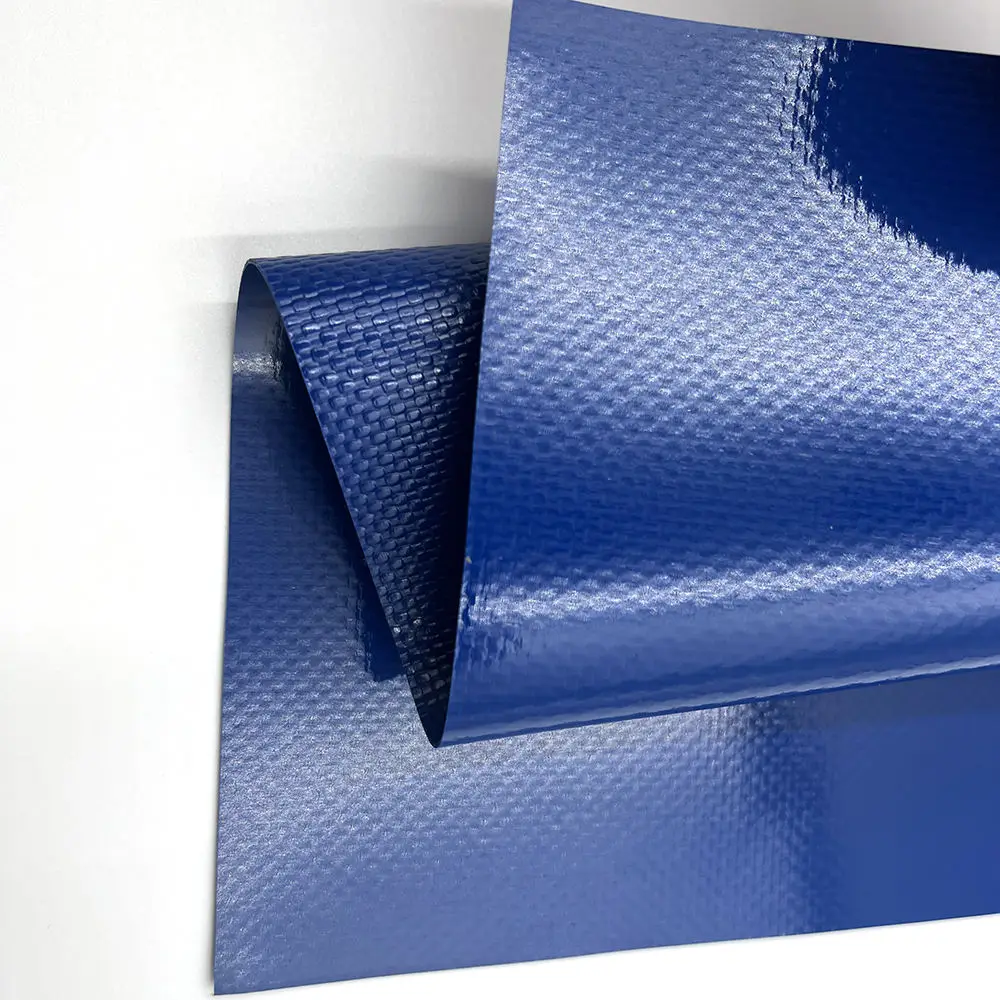
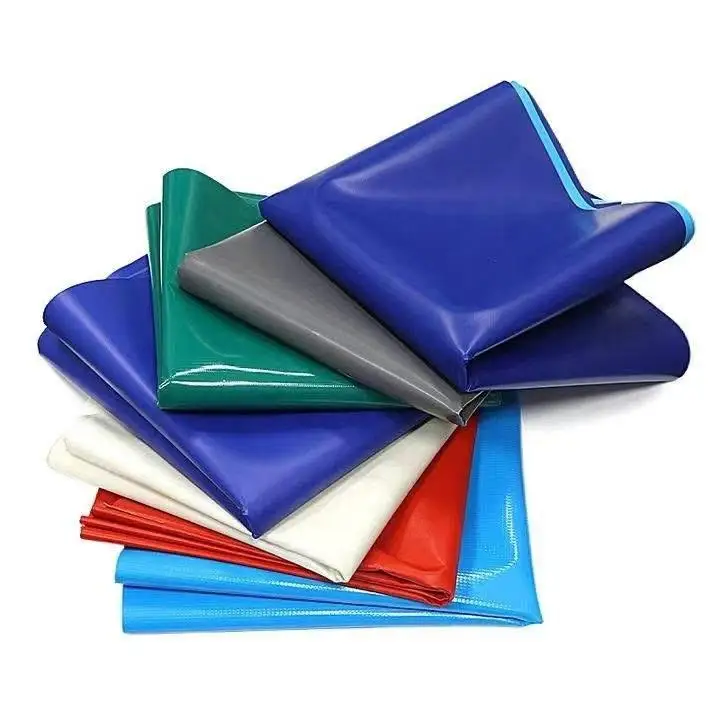
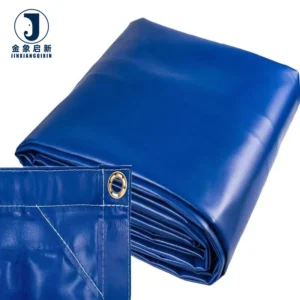
Blue PVC Knife Coated Tarpaulin Roll — heavy-duty waterproof fabric for truck covers and industrial applications, with full HF, hot air and sewing weld compatibility.
- Knife coated construction ensures controlled coating weight and consistent adhesion across every roll
- Fire retardant and UV resistant treatments verified by test documentation on request
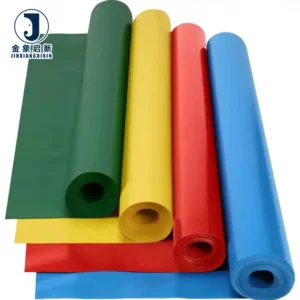
- Custom width, length, colour, GSM grade and finish developed to your project specification
Three full production lines and 36 sets of equipment deliver reliable bulk capacity with on-time dispatch for every roll order.
Description
Process Control Over Coating Weight — Every roll of Blue PVC Knife Coated Tarpaulin is inspected for GSM and coating adhesion before dispatch, eliminating the gap between quoted specification and delivered fabric.
Technical Specifications
| Parameter | Value |
|---|---|
| Product Type | PVC Tarpaulin Roll |
| Material | PVC Knife Coated Fabric |
| Finish | Blue |
| Welding Options | HF / Hot Air / Sewing |
| Fire Retardant | Yes (grade not stated — confirm required grade) |
| UV Resistance | Yes (test basis not stated — request report at inquiry) |
| Antibacterial & Mildew Proof | Yes |
| Oil & Stain Resistance | Yes |
| Acid & Alkali Resistance | Yes |
| Temperature Resistance | High temperature and cold resistance (range not stated) |
| Anti-Oxidation & Weather Resistance | Yes |
| Cracking Resistance | Highly flexible, resistant to cracking |
| Self-Cleaning Surface | Yes |
| Standards | ISO / CE |
Application Suitability
| Application | Exposure & Requirement |
|---|---|
| Tensile and membrane structures | Permanent tension, UV exposure, wind load, visible colour consistency |
| Airport hangar enclosures | Large span coverage, fire compliance, chemical exposure from aviation fluids |
| Stadium architectural structures | Public assembly fire codes, long-term weathering, self-cleaning demand |
| Shade systems and shadings | Continuous UV and heat exposure, colour match across multiple panels |
| Portable storage structures | Frequent assembly and teardown, flex cracking risk, abrasion at frame contact |
| Truck cover fabric | Road vibration, weather exposure, tie-down stress at seams |
Why "Fire Retardant" Without a Grade Costs You More Than the Fabric
Always request the specific fire classification before placing a roll order — market acceptance depends on documented grades, not marketing claims.
When a contractor specifies fire retardant PVC coated tarpaulin for a stadium canopy or an airport hangar, the approval authority will ask for a test certificate tied to a recognised standard. Stating "fire retardant" on a quotation does not satisfy building inspectors in Europe asking for B1 per DIN 4102, nor does it satisfy North American venues requiring NFPA 701 compliance. I have seen membrane fabricators lose entire project approvals because the mill certificate did not match the grade the architect specified. [NEED_CITE: DIN 4102 fire classification for building materials]
The Blue PVC Knife Coated Tarpaulin is produced with fire retardant treatment available. The exact grade must be confirmed at inquiry stage so that the correct formulation is applied and the matching test report ships with your rolls. This applies equally to UV resistance — if your market requires verified UV stability data, the test basis should be agreed before production begins.
Knife Coated Construction for Architectural and Technical Fabrication
The knife coating process applies PVC directly onto the base fabric under controlled blade tension, building coating weight layer by layer. This produces a Blue PVC Knife Coated Tarpaulin with strong coating-to-substrate adhesion, which is critical when the fabric will be tensioned into tensile structures or heat-welded at seams. The PVC coated tarpaulin roll manufacturer process ensures that the coating penetrates the weave rather than sitting on the surface, reducing delamination risk under sustained load.
Welding Compatibility Across Fabrication Methods
Fabricators working with architectural membrane and truck cover applications need joining methods that match their shop equipment. This PVC coated tarpaulin supports high-frequency welding, hot air welding and conventional sewing. HF welding produces clean, flexible seams suited to tensile structures where the weld line must follow curved geometry. Hot air welding is the standard for on-site membrane joining in stadium and hangar projects. Sewn seams with thread sealed by PVC tape serve heavy-duty truck covers where mechanical fastening shares load with the seam. [NEED_CITE: tensile and tear test methods for coated fabrics per ISO 1421]
Reading the Specification Sheet Beyond GSM
GSM alone tells you how much the fabric weighs per square metre, but it does not tell you how that weight is distributed between the base fabric and the coating. A high GSM achieved through heavy coating with a light base fabric may resist puncture but tear easily along the warp. A balanced construction — adequate denier in the base yarn and controlled knife coating weight — delivers both tensile and tear performance. The self-cleaning surface finish is a coating formulation property: the PVC top layer is designed to shed dirt and rain residue, which reduces maintenance cycles on large architectural installations such as stadium roofs and shade canopies where manual cleaning is costly or impractical.
The Hidden Cost of Specification Gaps in Coated Fabric Orders
When colour varies between rolls in a single order, the inconsistency becomes visible once panels are installed side by side on a tensile canopy or shade structure. This is not a cosmetic issue — it triggers rejection by the client and forces the fabricator to replace panels at their own cost. Batch-to-batch colour control during production is the only defence. Similarly, when fire retardant treatment is claimed but the grade is not documented, the fabricator faces rejection at building inspection, project delays and potential re-ordering of the entire membrane. Welded seams failing before the fabric itself is another recurring issue: if the coating formulation does not respond well to the welding temperature your shop uses, the joint becomes the weakest point in the structure. [NEED_CITE: welding parameter compatibility with PVC coated fabric formulations]
Why Fabricators Source This PVC Coated Tarpaulin From Jinxiang
Three full production lines and 36 sets of professional equipment support bulk roll output with consistent delivery scheduling, which matters when a stadium or hangar project requires multiple containers of matched fabric. The 10-person R&D team handles custom width development, colour matching and sample production, allowing fabricators to validate material behaviour on their own welding equipment before committing to a production run. Dedicated QA and QC operates at every production stage with full pre-shipment inspection on every roll. Samples are developed within days for custom requirements. ISO and CE certified processes underpin the production system, and export documentation is prepared for each consignment.
Documentation & Verification
- Material specification sheet confirming GSM, base fabric denier and coating weight per roll
- Test report for UV stability and fire retardant grade where specified at inquiry
- Pre-shipment inspection record covering roll-by-roll colour and surface check
- Roll packing list with individual roll weight and dimensions for container loading
- Certificate of origin and customs documentation included with each dispatch
Fabrication, Handling & Storage
- HF welding parameters should be tested on sample pieces of this knife coated PVC before full production
- Hot air welding temperature must match the specific coating formulation to avoid seam delamination
- Store rolls upright on end caps to prevent flat spots and permanent creasing on the coating surface
- Allow cold-stored rolls to reach ambient temperature before unrolling to prevent cracking at low temperature
- Use mild, non-solvent cleaners on the self-cleaning surface to preserve the top coat formulation
- Plan cutting layouts to minimise off-cuts, accounting for the available roll width and pattern direction
What to Include in Your PVC Coated Tarpaulin Inquiry
Provide your intended application, the environmental exposure conditions and any fire classification or UV test requirements mandated by your market or project specification. State the roll width, roll length and colour reference you need, along with your estimated annual volume. Confirm whether you require raw roll stock for your own fabrication or finished cut-to-size panels. Request samples if you need to validate welding behaviour or colour accuracy before placing the production order.
Frequently Asked Questions
Q: How is GSM verified on arrival and what tolerance applies?
A: Each roll is inspected against the stated GSM during pre-shipment quality control. The material specification sheet shipped with your order documents the measured coating weight and base fabric denier. On arrival, you may verify GSM by cutting a measured sample and weighing it. Any tolerance expectations should be agreed at the quotation stage so that production targets are set accordingly.
Q: What fire retardant grades are available and can they be tested?
A: Fire retardant treatment is available for this PVC coated tarpaulin roll. The specific grade — such as B1, M2 or NFPA 701 — must be confirmed at inquiry so that the correct formulation is applied and the corresponding test report is generated. Always match the grade to the fire code required by your project’s building authority or venue operator.
Q: How is roll-to-roll colour consistency controlled across a large order?
A: Colour consistency is managed through controlled pigment dosing during the knife coating process and verified during pre-shipment inspection. For projects where multiple rolls will be installed as adjacent panels, communicate your colour tolerance expectations at the sample approval stage so that production batch parameters are set to match.
Q: What custom widths, roll lengths and printing options are supported?
A: The PVC coated tarpaulin roll manufacturer supports custom width and roll length development based on your fabrication requirements. Pattern printing and branding options are handled by the in-house R&D team. Submit your dimensional and visual requirements at inquiry stage to receive a sample and specification proposal before production commitment.
Q: Which welding methods work best for architectural membrane joints?
A: This fabric supports HF welding, hot air welding and sewing. HF welding suits curved seam geometry common in tensile structures. Hot air welding is standard for on-site membrane joining in large-span projects. Sewn seams with sealed thread serve truck cover applications. Test your preferred method on supplied samples before full production.
Related products
-
Fabricante de Lona de PVC Resistente al Agua de Poliéster de 650gsm de Mejor Calidad
¥1.25 Select options This product has multiple variants. The options may be chosen on the product page -
JX Ventas Directas del Fabricante Cubierta de Piscina Recubierta de PVC. Tela de Cubierta de Piscina de Suelo Duradera, Impermeable y Resistente a los UV
¥1.78 Select options This product has multiple variants. The options may be chosen on the product page -
Cubierta de industria de tarpaulines de poliéster recubiertos de vinilo con bordes reforzados de PVC de caucho rip-stop para camiones
¥8.00 Select options This product has multiple variants. The options may be chosen on the product page -
Lona de PVC Brillante 650GSM 1000D*1000D 23*23 1.50*50M/R para Cubierta Multiuso MUESTRA GRATIS
¥2.70 Add to cart