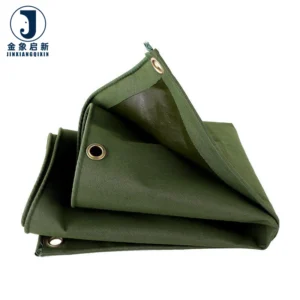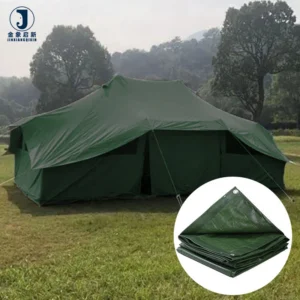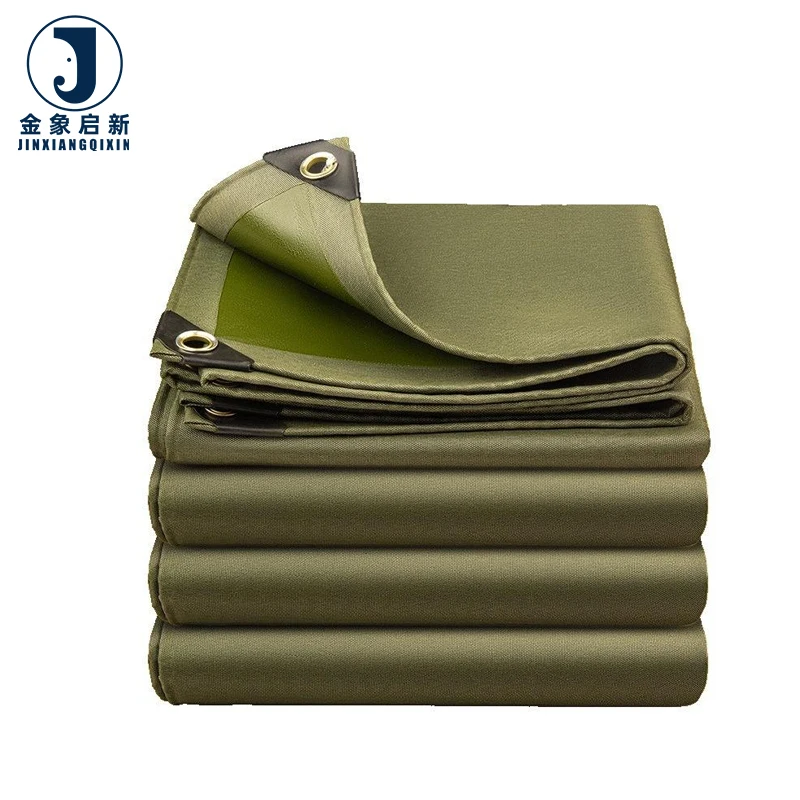
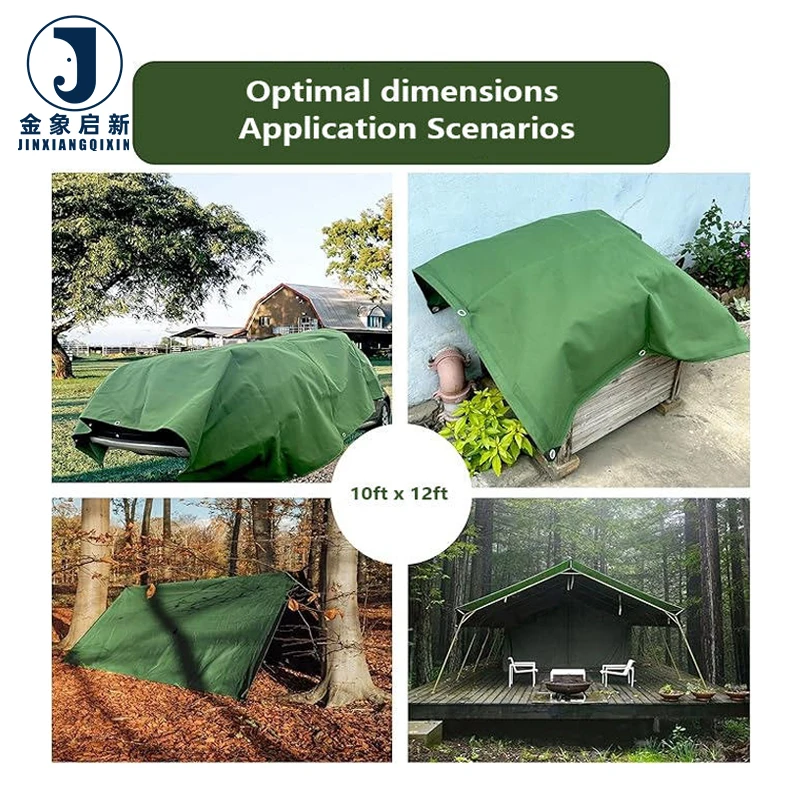
Canvas Tarps 600gsm, 0.5–0.7mm, 2m Roll Width — PVC laminated woven polyester canvas with aluminum eyelets every 1 meter and poly-rope reinforced hems. Waterproof, UV and mold resistant treatment verified by test report, not just quotation claims. Roll-to-roll colour and coating weight consistency controlled across three full production lines. Backed by nearly 30 years of coated fabric process control and 100% pre-shipment inspection before dispatch.
- Material: polyester cotton base, 8–12 strand fine cotton yarn
- Finish: custom cut sizes or sold by inventory roll
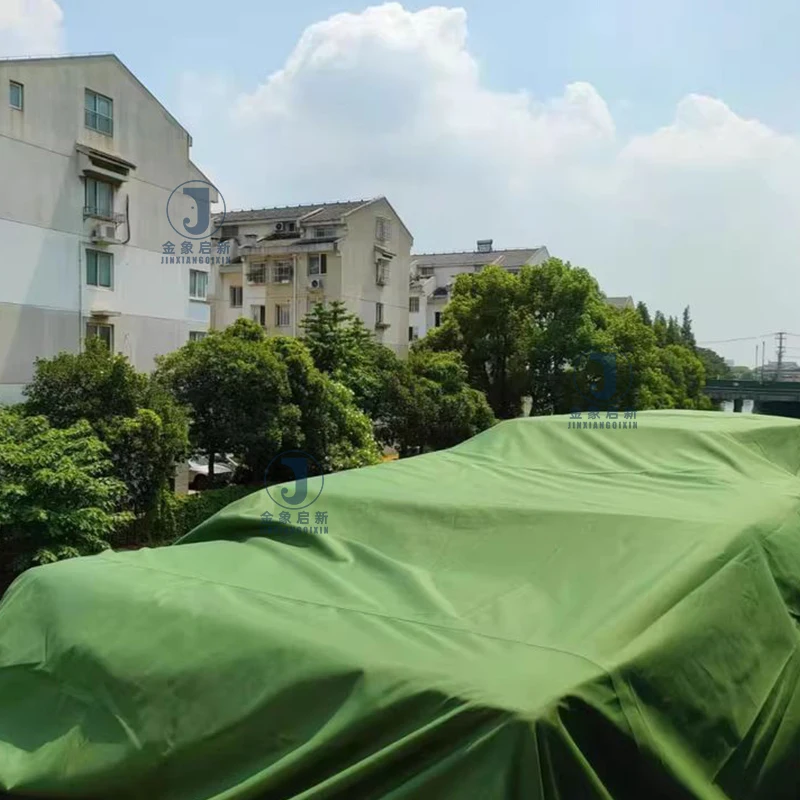
- Service applications: truck cover, construction site, awning, asphalt protection
Description
Precision Coating Control — Three dedicated production lines with in-process GSM verification ensure every roll of 0.9mm PVC laminated woven canvas tarpaulin ships at the stated 600gsm weight and coating thickness.
Technical Specifications
| Parameter | Value |
|---|---|
| Product Type | Canvas Tarps |
| Base Fabric | Polyester cotton industrial textile with 8-12 strands of fine cotton yarn |
| Coating Material | PVC Laminated |
| Total Thickness | 0.9mm |
| Weight | 600gsm |
| Roll Width | 2m |
| Roll Length | 100m |
| Colour | Army Green Camouflage / Custom |
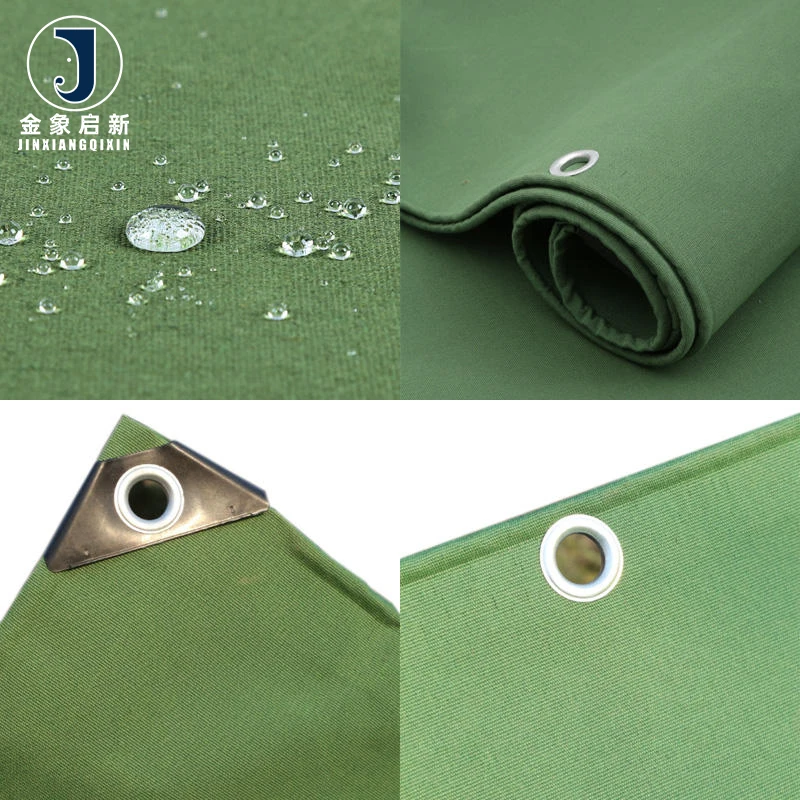
| Edge Reinforcement | Rust-proof aluminum eyelets at 1m intervals; welded and sewn poly-rope hems |
| UV Treatment | UV resistant (test basis not stated) |
| Flame Retardant Grade | Grade not stated — available in flame retardant grades, confirm the grade required for your market |
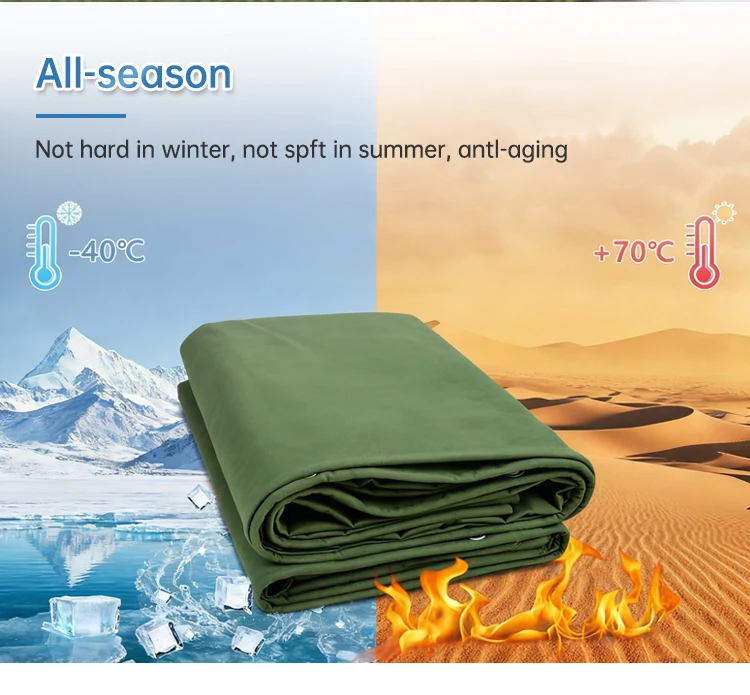
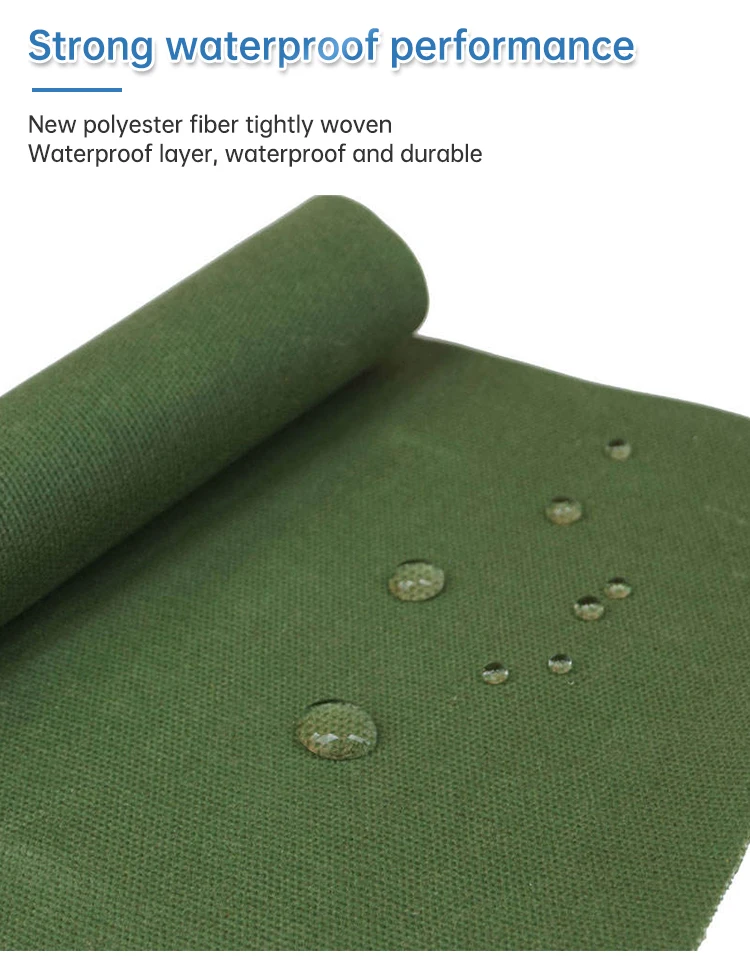
| Key Features | Waterproof, wear-resistant, corrosion-resistant, tensile-resistant, high- and low-temperature resistant, shrink-proof, mold-resistant |
| Service Life | 5-8 years even longer |
| Standards | CE, ISO |
Application Suitability
| Application | Exposure & Requirement |
|---|---|
| Truck and trailer covers | Constant flexing at load points, road abrasion, UV exposure, wind load on eyelets |
| Construction site and asphalt covers | Prolonged ground contact, chemical exposure from bitumen, puncture from aggregate |
| Outdoor awnings and shading sails | Sustained sun exposure, wind uplift, rain pooling on horizontal spans |
| Tent and canopy structures | Repeated assembly and teardown, crease stress, moisture ingress at seams |
| Engine hood and car covers | Oil and fluid contact, thermal cycling, surface abrasion during fitment |
| Open-air industrial covers | Dust ingress prevention, moisture barrier, extended outdoor weathering |
When GSM Claims Do Not Match What Arrives on Site
GSM verification at every production stage prevents the gap between quoted specification and delivered fabric.
The most frequent complaint from fleet operators and construction buyers is that the canvas tarpaulin manufacturer custom order arrives lighter than the quotation stated. A 600gsm roll that measures below spec on arrival means the PVC laminated coating was applied too thin, the base fabric was swapped for a lower-denier weave, or both. The result is a truck cover that tears at the first flex point or an asphalt cover that punctures under aggregate load. We verify coating weight and base fabric mass independently before lamination, then confirm the combined GSM per roll before packing. [NEED_CITE: GSM measurement methods for coated industrial fabrics per ISO 2286]
Full Custom Sizing from Roll Stock to Finished Covers
This PVC laminated woven canvas tarpaulin is produced in 2m by 100m rolls as standard, but the real capability lies in what happens after the coating line. Cut-to-size panels, welded seams, and heat-sealed hems are all handled in-house on 36 sets of professional equipment. Whether you need a truck cover dimensioned to a specific trailer model or a batch of awning panels cut to a non-standard width, the 10-person R&D team develops samples within days. Colour matching runs from the standard Army Green Camouflage to custom Pantone references, with batch-to-batch consistency controlled across every roll in the order.
Coating Adhesion and Seam Integrity Under Load
The PVC lamination process bonds the coating to the polyester cotton base fabric through heat and pressure, creating a single-layer composite rather than a surface film that can delaminate. This matters most at welded seams, where the lamination layer fuses under radio-frequency or hot-air welding. A laminated canvas tarpaulin that delaminates at the seam fails before the base fabric reaches its tensile limit — a failure mode that is invisible during pre-shipment visual inspection but appears the first time a loaded truck cover flexes on the highway. Our QA/QC protocol checks peel strength at sample stage and again during in-process production runs. [NEED_CITE: peel strength test methods for laminated coated fabrics per ISO 2411]
How Base Yarn Count and Coating Weight Interact
The 8-12 strands of fine cotton yarn in the polyester cotton base fabric determine the tensile and tear resistance of the finished canvas tarpaulin manufacturer custom product. Yarn count alone does not dictate strength; the PVC laminated coating at 0.9mm total thickness and 600gsm weight adds rigidity and distributes point loads across a wider area of the weave. A heavier coating on a sparse base fabric will crack at fold lines, while a dense base fabric with insufficient coating will absorb moisture and degrade from within. The 600gsm specification here represents a balance — enough PVC lamination to seal the weave completely while maintaining enough flexibility for repeated folding during truck cover installation and awning deployment. The 2m roll width also influences fabrication yield; wider panels mean fewer welded seams on large covers, reducing the number of potential failure points.
The Cost of Underspecifying Edge Reinforcement
When rust-proof aluminum eyelets are spaced too far apart or poly-rope hems are omitted, the cover fails not at the fabric centre but at the tie-down points. Wind load concentrates stress around each eyelet, and without welded and sewn reinforcement, the canvas tears radially outward. This failure is common on truck covers exposed to highway speeds and on awning structures in coastal or highland regions where gust loads are sustained. A buyer who specifies 600gsm fabric but accepts 2-metre eyelet spacing instead of 1-metre spacing will see edge failures long before the service life is reached. [NEED_CITE: wind load calculations for tensioned tarpaulin structures per EN 13782]
Why Procurement Teams Specify From This Range
Coating weight and adhesion are controlled on three full production lines with dedicated QA at each stage, so 600gsm rolls do not ship below spec. The 10-person R&D team handles custom colour, cut-to-size panels, and eyelet spacing adjustments, with samples turned around within days. A 100% pre-shipment inspection covers every roll, not a statistical sample, before dispatch. Batch-to-batch colour consistency is verified against a master reference, so Army Green Camouflage rolls in the same order match once installed side by side. Documentation ships with the order — specification sheets, inspection records, and certificates — so site acceptance is never delayed by missing paperwork.
Documentation & Verification
- Material specification sheet confirming 600gsm weight, 0.9mm thickness, and polyester cotton base fabric
- Pre-shipment inspection record with roll-by-roll GSM verification before dispatch
- Colour reference card matched to Army Green Camouflage or custom Pantone approval sample
- Test reports for UV resistance and flame retardant grades where applicable to the order
- Roll packing list, certificate of origin, and customs documentation included with every shipment
- CE and ISO certificates provided as part of the dispatch documentation package
Fabrication, Handling & Storage
- Weld seams at 0.9mm coating thickness using hot-air or RF welding; confirm temperature settings on sample before production
- Poly-rope hems are sewn and welded; avoid stapling which punctures the PVC laminated layer
- Store 2m rolls upright on pallets to prevent flat-spot creasing across the 100m length
- Unroll in temperatures above freezing; cold PVC lamination becomes stiff and risks crack damage at fold lines
- Clean with mild detergent only; solvent-based cleaners degrade the PVC laminated surface coating
- Repair minor punctures with PVC-compatible adhesive patches applied to the 600gsm laminated surface
Request a Specification Match
Share your application, the environmental exposure conditions at the installation site, and the compliance standards your market requires. Specify whether you need full rolls for your own fabrication or finished cut-to-size panels with eyelet and hem reinforcement. Include your target colour reference and annual volume so we can confirm lead time and production scheduling.
Frequently Asked Questions
Q: How is the 600gsm weight verified before shipment?
A: Each roll is weighed and measured during our 100% pre-shipment inspection. The GSM is calculated from fabric mass and area, then recorded on the inspection sheet that ships with your order. Rolls that fall outside tolerance are held before dispatch.
Q: What custom widths, lengths, and cut sizes are available?
A: Standard production runs at 2m width by 100m length, but we cut panels to your dimensions and weld hems and eyelets to your spacing. Custom widths require a production run minimum, which our R&D team confirms at sample stage.
Q: How is colour consistency controlled across rolls in one order?
A: Every roll in a batch is checked against a master colour reference during production. Army Green Camouflage and custom colours are matched at the coating stage, and rolls showing visible variation are removed before packing.
Q: What eyelet and hem options suit truck cover applications?
A: Standard specification includes rust-proof aluminum eyelets at 1-metre intervals with welded and sewn poly-rope hems. For high wind-load applications, we can adjust spacing or add corner reinforcement patches.
Q: What UV test documentation comes with the shipment?
A: UV-resistant treatment is applied during coating. Test reports are available — confirm the specific UV standard required by your market at the inquiry stage so the correct test protocol is run on your batch.
Related products
-
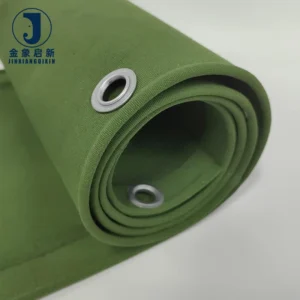
Canvas Tarps for Truck Cover – Custom Made
Read more -
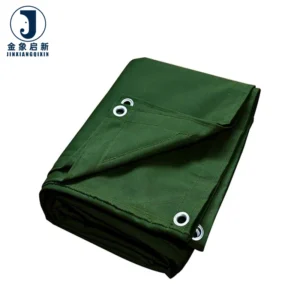
Custom Heavy Duty Woven PVC Laminated Canvas Tarpaulin – Full Range
Read more -
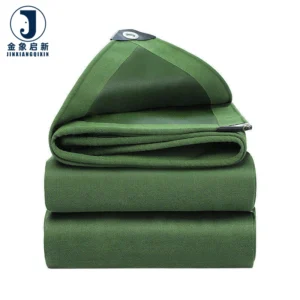
Cubierta de camión de lona de PVC laminada tejida impermeable de alta resistencia, anti-moho, muy pesada, accesorios de toldo.
¥20.00 Add to cart -
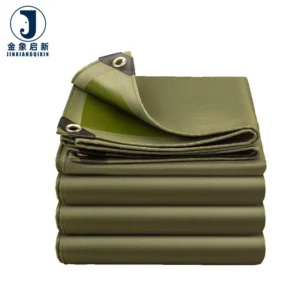
Custom Made PVC Laminated Canvas Tarpaulin for Truck Cover – Full Range
Read more