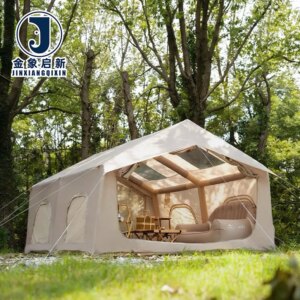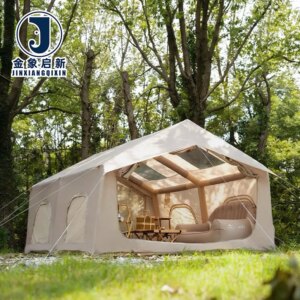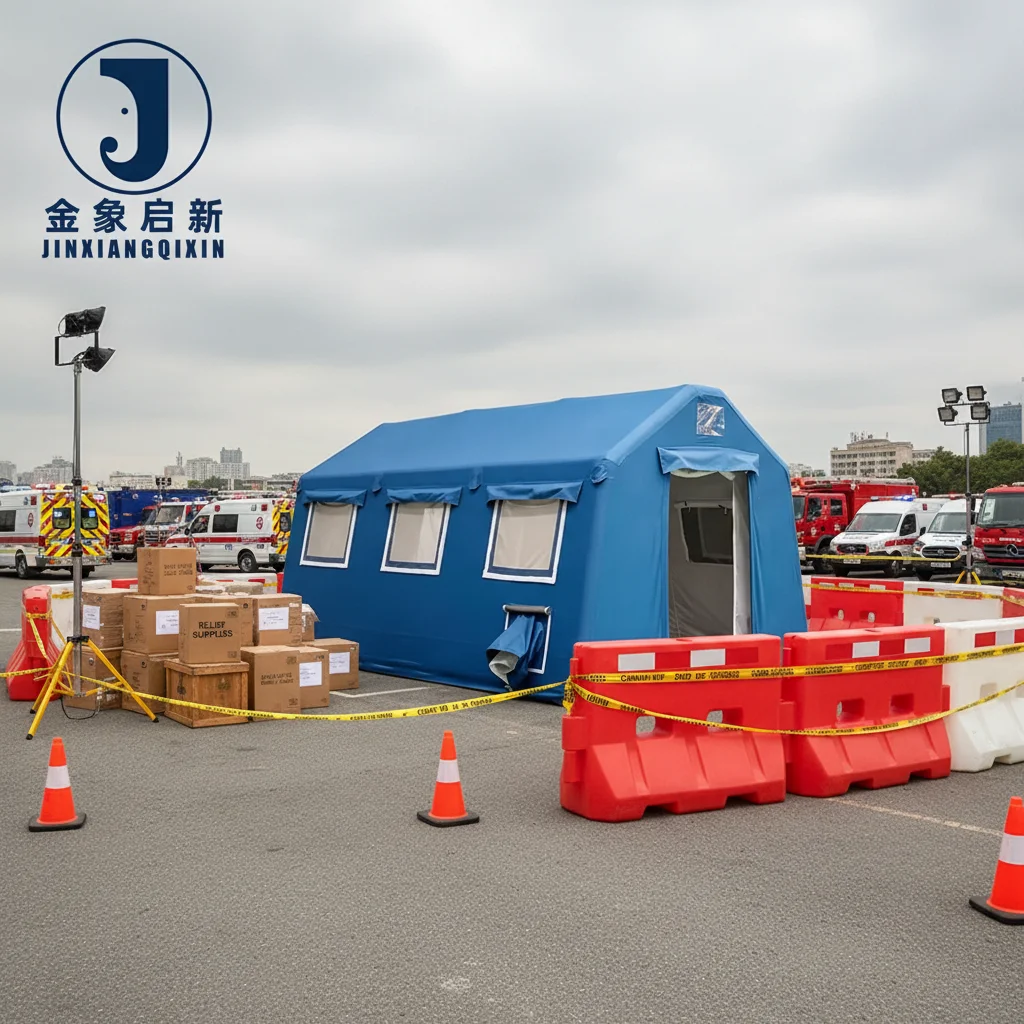
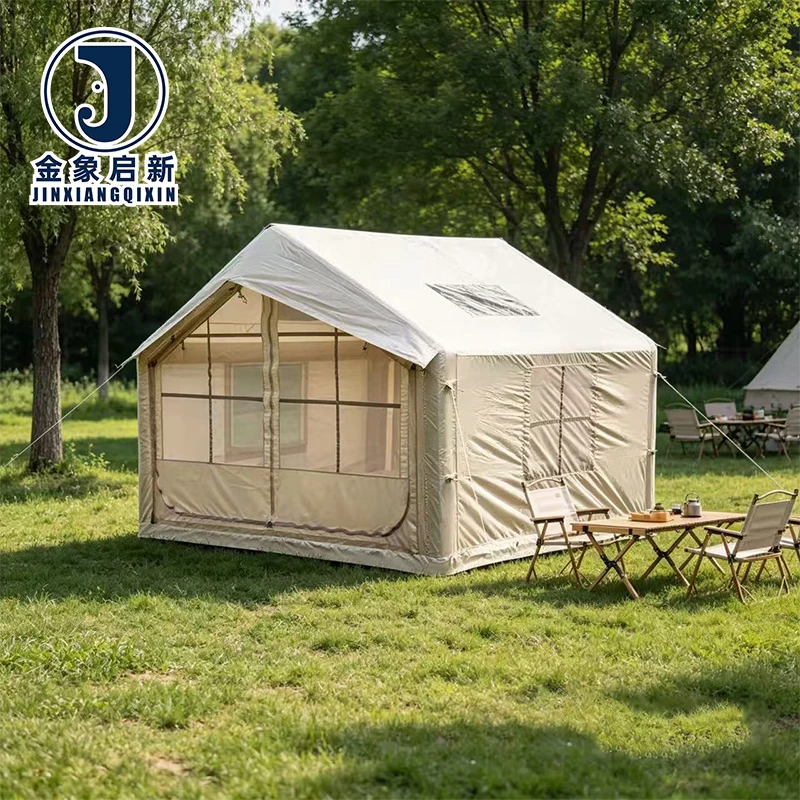
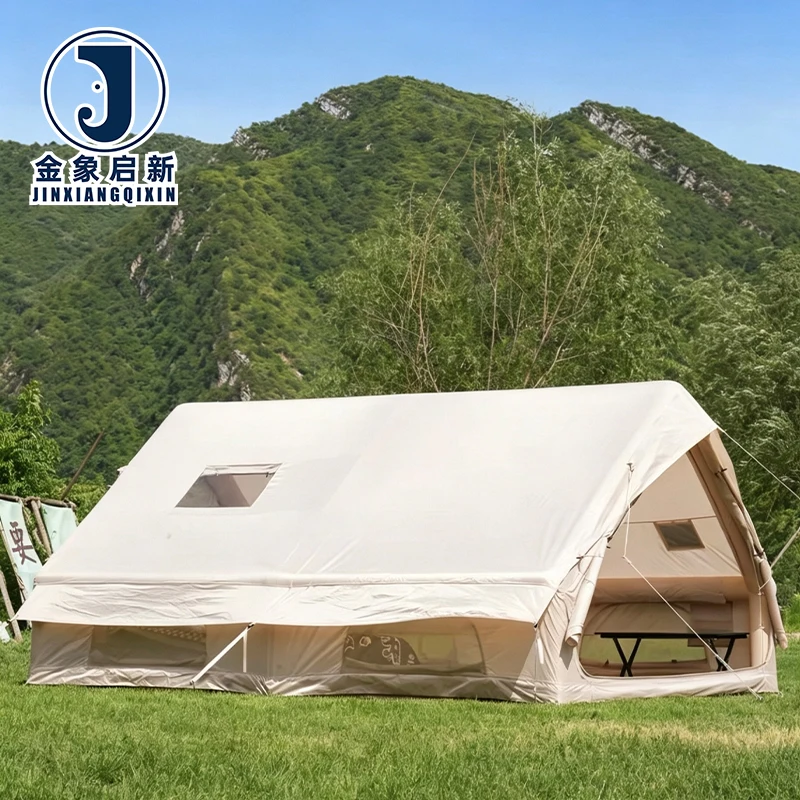
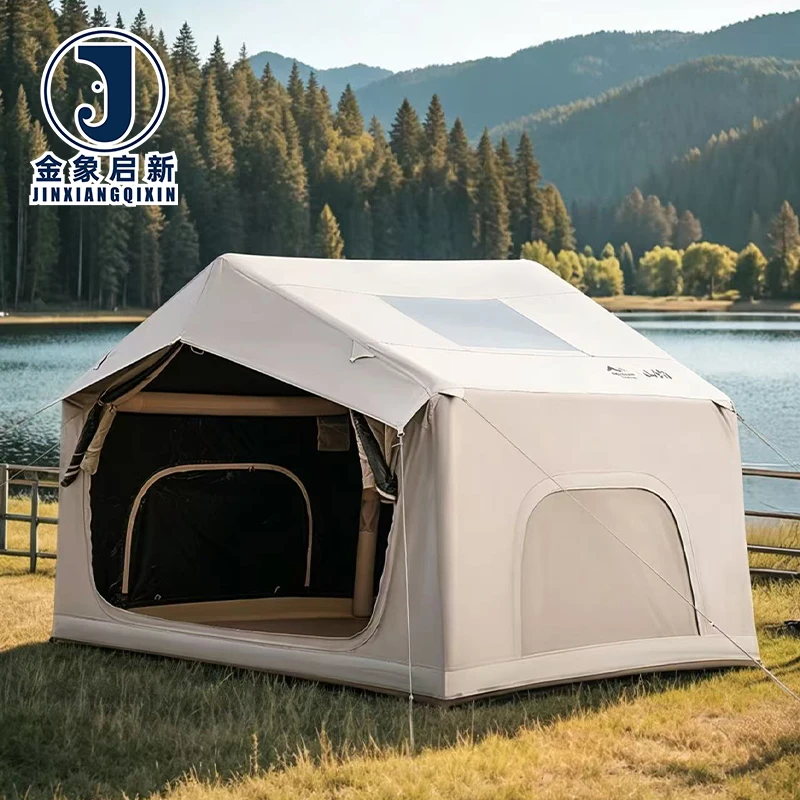
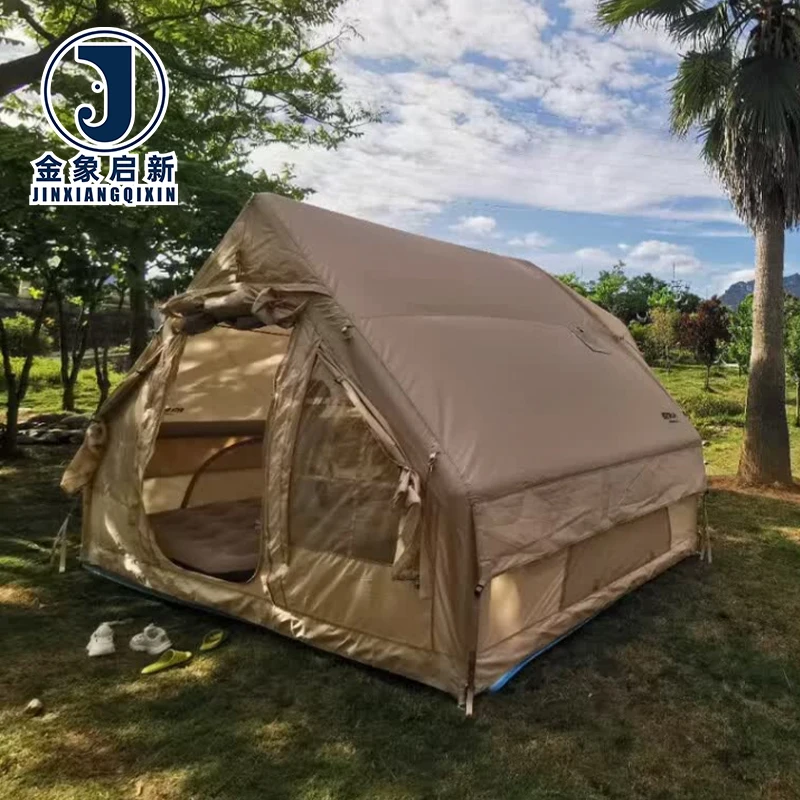
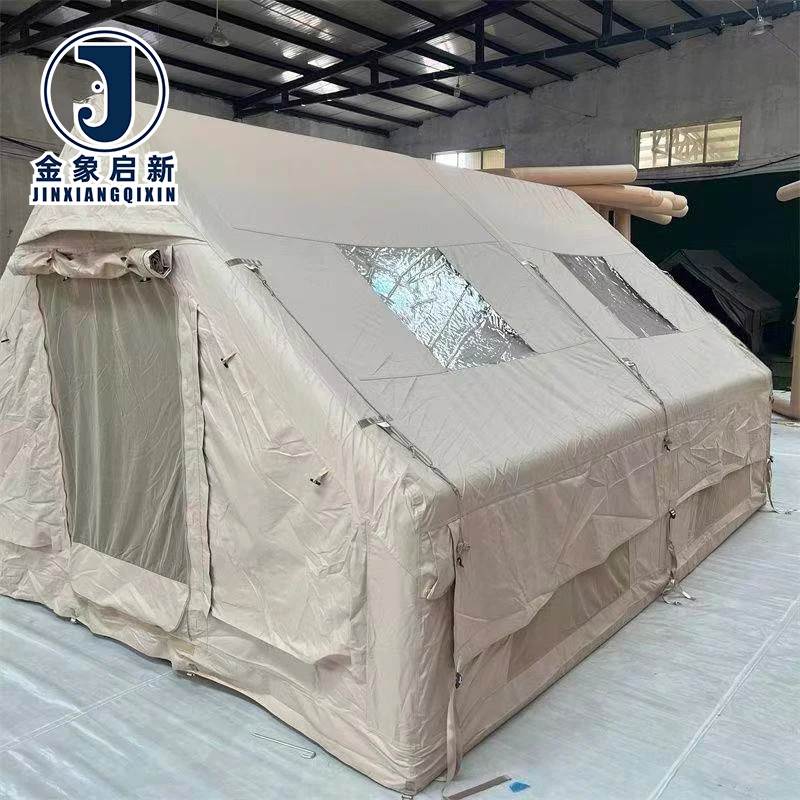
Inflatable Camping Tent, Waterproof PVC, >3000mm Rating, 4-Season Design — quick-inflation air shelter engineered for commercial outdoor and industrial field use.
- PVC tarpaulin fabric delivers verified waterproof performance with welded seam integrity at high-stress flex points
- Supports OEM/ODM with full pattern printing and custom sizing from a 10-person R&D team
Backed by 100% pre-shipment inspection and dedicated QA at every production stage across 3 full lines.
Description
Coated fabric process control — Nearly 30 years focused on PVC coating delivers consistent inflatable tent fabric performance verified through in-house QA at every production stage.
Technical Specifications
| Parameter | Value |
|---|---|
| Product Type | Inflatable Tent |
| Core Material | PVC Tarpaulin |
| Waterproof Rating | >3000mm |
| Season Rating | 4-Season Design |
| Product Form | Family Shelter |
| UV Treatment | UV-resistant PVC formulation (test basis not stated in source) |
| Setup Feature | Rapid deployment / Easy Setup |
| Customization | OEM & ODM, sample customization, pattern printing, color customization, logo integration, size adjustment |
| Production Capacity | 3 full production lines, 36 sets of processing equipment |
| R&D Support | 10 technicians |
| Standards | ISO9001, ISO14001, ISO45001, CE |
Application Suitability
| Application | Exposure & Requirement |
|---|---|
| Commercial inflatable camping tents | Repeated inflation cycles, ground abrasion, multi-season weather exposure, waterproof integrity at welded seams |
| Temporary event shelters | Rapid deployment, wind loading on air beams, UV exposure during extended outdoor installation |
| Mobile field stations | Year-round outdoor installation, temperature fluctuation, structural stability under continuous air pressure |
| Industrial site accommodations | Heavy-duty floor contact, chemical and dust exposure, compliance documentation for site safety audits |
| Outdoor gear manufacturing lines | Batch-to-batch material consistency, predictable heat-welding behavior, reliable color matching across production runs |
Why Inflatable Tent Fabric Fails at the Seam Before the Fabric Does
Welded seam integrity determines the actual service life of an inflatable shelter, not the base fabric strength alone.
When an inflatable tent is pressurized, the highest stress concentrates at the junctions where air beams meet cross-members and where the floor panel joins the wall. If the PVC coating does not achieve full fusion during heat welding, the seam peels under cyclic loading — long before the fabric body reaches its tear limit. I have reviewed field returns where the coated fabric itself showed no damage, yet the beam junction separated after repeated inflation and deflation cycles. This is a process control issue, not a material selection issue. [NEED_CITE: tensile and tear test methods for coated fabrics per ISO 1421] Sourcing an Inflatable Tent Fabric manufacturer that controls coating weight and adhesion at every production stage is the difference between a shelter that holds pressure reliably and one that develops slow leaks at the seams within its first season.
Full-Catalogue PVC Inflatable Tent Fabric With In-House Customization
Our material range covers the PVC grades required for inflatable tent production, from lightweight family camping shelters to heavier industrial-grade air beam structures. As an Inflatable Tent Fabric manufacturer operating three dedicated production lines, we handle material selection, pattern printing, color matching, and size adjustment under one roof. This eliminates the coordination gaps that arise when fabric sourcing and finishing are split across separate suppliers.
What Consistent Waterproof Performance Actually Requires
A stated waterproof rating above 3000mm means little if the coating thickness varies from roll to roll. Our QA process verifies coating weight and adhesion at each production stage, with 100% inspection before dispatch. For buyers producing commercial inflatable camping tents, this means every roll in a batch delivers the same welding response and the same waterproof barrier — eliminating the scenario where one roll welds cleanly while the next delaminates at the seam. [NEED_CITE: PVC coating adhesion and weld strength testing standards]
Reading Beyond the Specification Sheet
The waterproof rating, UV treatment, and season design classification each describe a different aspect of field performance, but none operates in isolation. A 4-season inflatable tent must resist tearing when the PVC stiffens in cold temperatures, which depends on the base fabric denier and weave density as much as the coating formulation. The UV-resistant PVC formulation extends outdoor service life, though the specific test basis should be confirmed against your target market’s requirements. Custom inflatable tent PVC orders allow buyers to specify the balance of weight, flexibility, and surface finish that matches their inflation system and expected deployment conditions. Glossy surfaces shed dirt more readily, while matte finishes reduce glare for event and exhibition use.
The Hidden Cost of Batch Inconsistency in Inflatable Tent Production
When color shifts between rolls in the same order, the variation becomes visible the moment two panels are welded side by side on the production floor. The entire batch may need sorting or rejection, delaying product shipments and eroding margins. Similarly, if the coating weight drifts outside the agreed tolerance, heat-welding parameters that worked on the sample no longer produce reliable seams on the production run. These failures trace back to insufficient process control during coating, not to the material specification itself. [NEED_CITE: batch consistency standards for coated technical textiles] Buyers who have experienced this recognize that pre-shipment inspection records and batch-specific test data are not optional extras — they are the baseline documentation for predictable manufacturing.
Why Buyers Source Inflatable Tent Fabric Here
Nearly 30 years of PVC coated fabric production provides the process depth needed to control coating adhesion, which directly determines weld seam reliability on inflatable structures. Three full production lines with 36 sets of processing equipment support the volume requirements of commercial inflatable tent manufacturers without extended lead times. A 10-technician R&D team develops pre-production samples within days, allowing design and performance confirmation before mass manufacturing begins. Dedicated QA/QC at every production stage with 100% pre-shipment inspection ensures that waterproof performance, material thickness, and color consistency match the specification agreed at the sample stage. Full OEM and ODM capability — including pattern printing, logo integration, and custom sizing — keeps the entire product development cycle under direct factory control.
Documentation & Verification
- Material specification sheet stating base fabric, coating type, color reference, and waterproof rating per order
- Batch-specific waterproof performance verification with inspection records before dispatch
- Pre-production sample approval documentation confirming design and material performance
- ISO9001, ISO14001, ISO45001, and CE certificates included in the shipment documentation package
- UV treatment and flame retardant test reports provided where applicable to the grade specified
Fabrication, Handling & Storage
- Heat-weld temperature and dwell time must be calibrated to the specific PVC coating thickness for reliable seam fusion
- Store rolls upright on pallets in a dry, shaded area to prevent creasing that affects inflation panel flatness
- Avoid dragging PVC tarpaulin rolls across unprotected surfaces to prevent coating abrasion before fabrication
- Clean welded seams with compatible PVC solvent before field repair to ensure patch adhesion
- Allow cold-stored rolls to reach ambient temperature before unrolling to prevent coating micro-cracking
Starting Your Inflatable Tent Fabric Inquiry
To specify the right custom inflatable tent PVC material, share your target deployment conditions — expected temperature range, wind loading, and duration of continuous outdoor exposure. Confirm the compliance requirements for your destination market, including any fire classification or environmental standards the finished shelter must meet. Indicate your required roll width, annual volume, and whether you need finished cut panels or raw fabric for your own fabrication line. If color matching, pattern printing, or logo integration is part of the product design, provide reference files so we can develop a pre-production sample for your approval.
Frequently Asked Questions
Q: How is waterproof performance verified and documented per batch before shipment?
A: Every production batch undergoes in-process coating weight checks and a 100% pre-shipment inspection. The inspection record documents waterproof performance, material thickness, and visual consistency. A material specification sheet accompanies each order, stating the verified waterproof rating alongside base fabric and coating details for your quality records.
Q: What customization options are available for size, color, pattern printing, and logo integration?
A: Our 10-technician R&D team handles full OEM and ODM customization including custom dimensions, color matching to your reference, pattern printing, and logo integration. Pre-production samples are developed within days so you can confirm design, material feel, and welding behavior before authorizing mass production on our three dedicated lines.
Q: How do you ensure batch-to-batch material consistency across large-volume orders?
A: Process control is maintained across three full production lines with 36 sets of professional equipment. Dedicated QA/QC checkpoints at every production stage verify coating weight, color consistency, and adhesion properties. Batch-specific inspection records are generated before dispatch, ensuring each roll matches the approved sample specification.
Q: What certifications and test documentation are provided for international market compliance?
A: Each shipment includes ISO9001, ISO14001, ISO45001, and CE certificates as part of the documentation package. Where applicable to the grade specified, test reports for UV resistance and flame retardant performance are provided. Confirm your target market’s specific compliance requirements during the inquiry stage so the correct grade is selected.
Q: What is the sample development process and lead time before mass production?
A: Share your application requirements, dimensions, color, and treatment specifications. Our R&D team develops a pre-production sample within days for your evaluation of material performance, welding response, and visual appearance. Once you approve the sample, mass production proceeds with the same material and process parameters locked in.
Related products
-
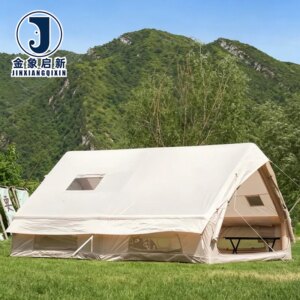
Tienda de Camping Inflable PVC para Cuatro Estaciones Impermeable al Aire Libre con Apertura Automática Rápida para 2-3 Personas
Read more -
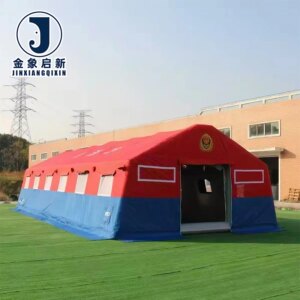
Tienda Inflable de PVC de Lujo para Glamping al Aire Libre Impermeable con Apertura Automática Rápida Diseño Plegable de Cuatro Estaciones y Bomba
Read more -
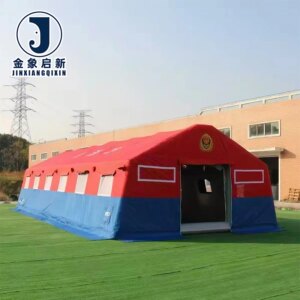
Tienda de Camping Inflable de PVC A Prueba de Agua de Cuatro Estaciones Certificada por CE Apertura Automática Rápida 3000mm+ Venta Directa de Fábrica
Read more -
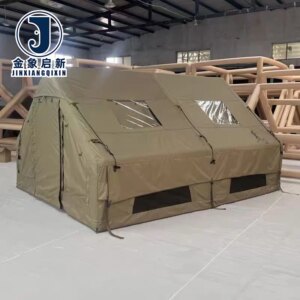
Tienda de camping inflable impermeable al aire libre, fácil de montar, tienda de aire para camping
Read more