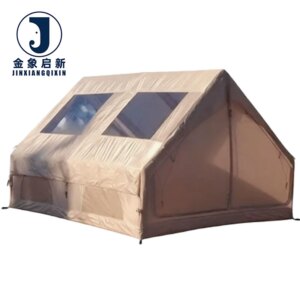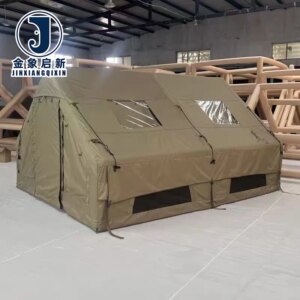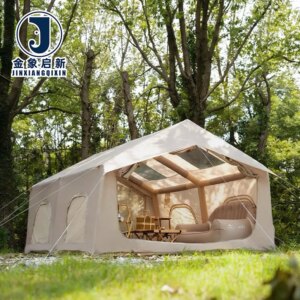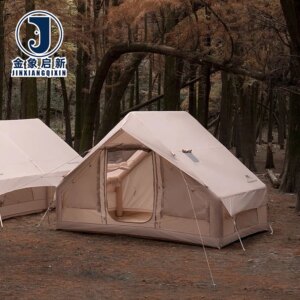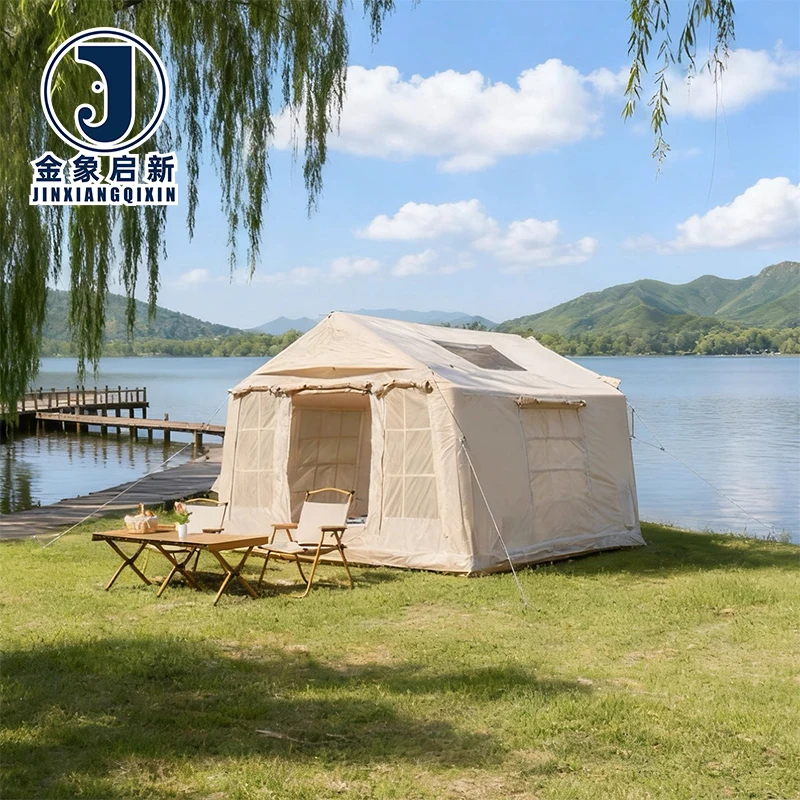
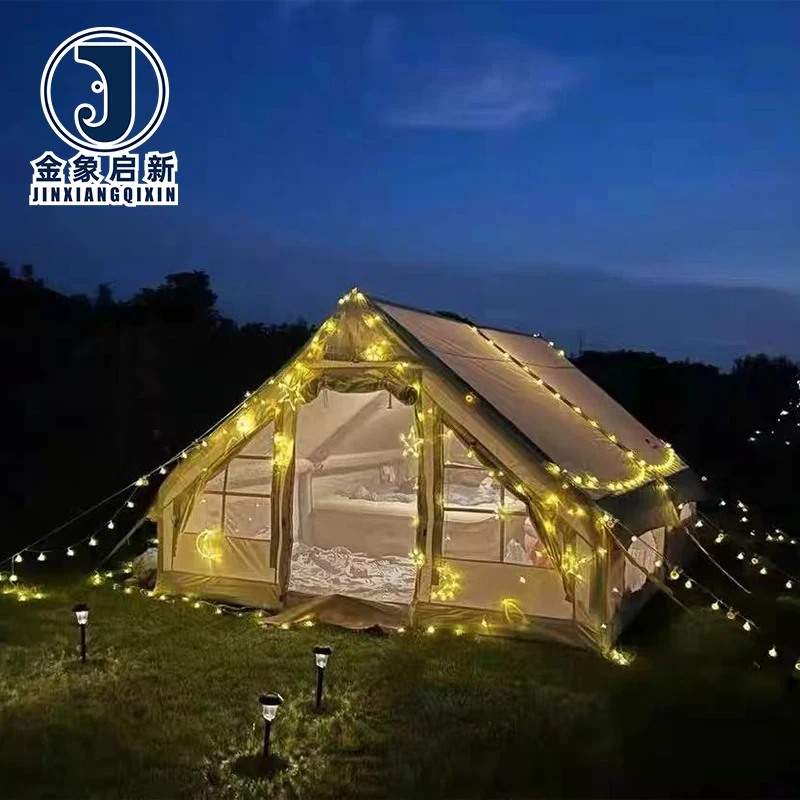
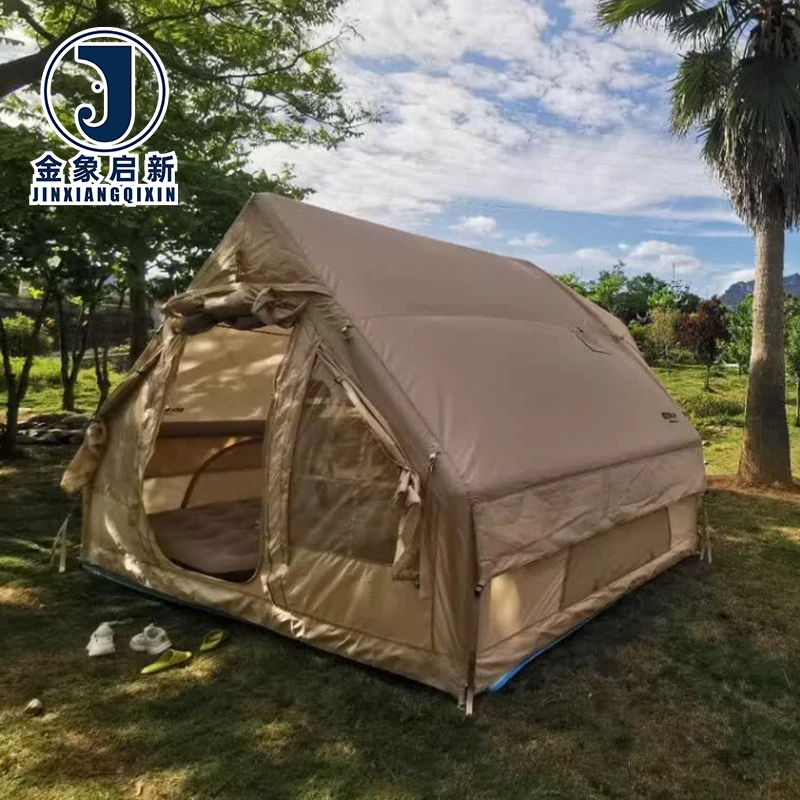
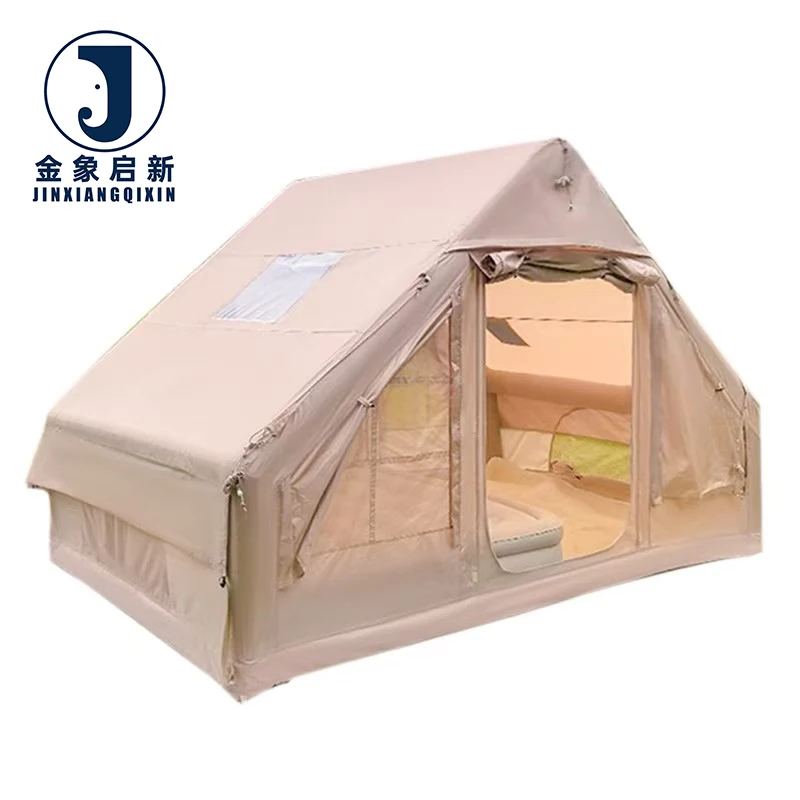
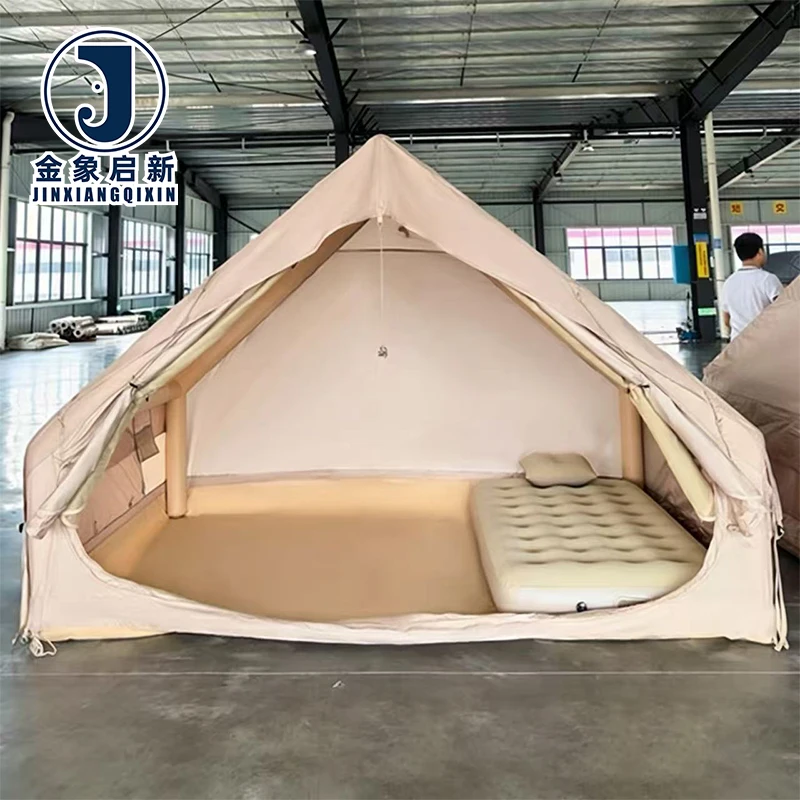
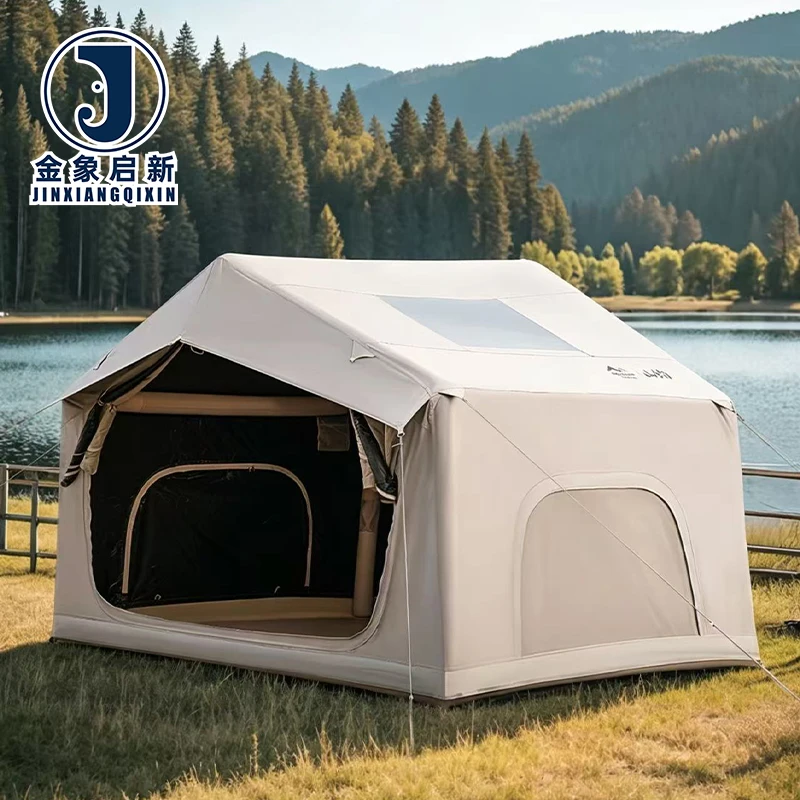
Inflatable Camping Tent 650 g/m², -20°C to 60°C, 3000 N Tear Resistance — PVC knife-coated fabric engineered for repeated commercial deployment cycles across four seasons.
- Quick automatic opening reduces setup time versus traditional pole structures
- 100% inflation test held 24 hours per unit with serialized quality certificates
- Custom sizing, colour and pattern printing supported with sample approval before bulk
Backed by 3 full production lines, dedicated QA at every stage, and pre-shipment inspection records supplied with each order.
Description
Nearly 30 Years of Coated-Fabric Process Control — Every inflatable tent we produce starts with PVC knife-coated fabric at verified GSM, tested under 24-hour pressure retention before leaving the facility.
Technical Specifications
| Parameter | Value |
|---|---|
| Product Type | Inflatable Tent |
| Core Material | PVC Tarpaulin (PVC knife-coated fabric) |
| Coating Method | Knife coated |
| Coating Material | PVC |
| Material Weight | 650 g/m² |
| Tearing Resistance | 3000 N (test standard not stated) |
| Operating Temperature Range | -20°C to 60°C |
| UV Treatment | UV-resistant (test basis not stated) |
| Waterproof Rating | Waterproof (rating not stated) |
| Capacity | 6–8 Person |
| Construction | Single layer |
| Setup Mechanism | Quick automatic opening (inflatable air beam) |
| Customization Options | Custom dimensions, color matching, logo printing, reinforced stress points |
| Inflation Test | 24-hour pressure retention test per finished unit |
| Standards | ISO 9001, ISO 14001, ISO 45001, CE |
Application Suitability
| Application | Exposure & Requirement |
|---|---|
| Commercial base camps for industrial field teams | Repeated assembly cycles, wind loading, extended outdoor UV exposure |
| Mobile command centers on infrastructure projects | Rapid deployment, dimensional stability, all-weather sealing |
| Equipment housing at remote worksites | Puncture resistance, temperature swings from -20°C to 60°C |
| Commercial rental fleets | Hundreds of inflation/deflation cycles, batch colour consistency |
| Temporary storage at outdoor events | Waterproof integrity, custom branding, quick teardown |
| Expedition outfitting shelters | Lightweight portability relative to rigid structures, cold-weather flexibility |
Why Welded Seam Integrity Matters More Than Fabric Weight for Inflatable Tents
A tent that holds pressure on day one but fails at the beam joints by week four is a procurement loss, not a material saving. Seam failure at flex points remains the leading cause of inflatable structure downtime in commercial rental and industrial deployment.
When air beams inflate and deflate across hundreds of cycles, the welded joints experience concentrated stress that the flat fabric body never sees. Buyers who focus only on GSM without evaluating how seams are engineered for those flex zones often discover the gap after the first batch is in the field. Inflatable tent manufacturer custom orders require seam specifications to be documented alongside fabric weight, not treated as an afterthought [NEED_CITE: tensile and tear test methods for coated fabrics per ISO 1421].
Knife-Coated PVC at 650 g/m²: What It Means for Repeated Deployment
The knife-coating process forces PVC into the base fabric weave under controlled pressure, producing a bond that resists delamination during the repeated flexing an inflatable tent manufacturer custom order demands. At 650 g/m², the coated fabric carries enough mass to resist tearing at 3000 N while remaining manageable for a two-person setup crew. This weight grade supports the structural rigidity air beams need to hold shape under wind load without requiring internal bracing that would defeat the quick-opening advantage.
Batch Consistency Across Multi-Unit Commercial Orders
Commercial rental operators and expedition outfitters who order multiple units need every tent to match in colour, weight and pressure-holding performance. Colour variation between units becomes immediately visible when tents are pitched side by side at an event site or base camp. Our 10-person R&D team manages Pantone colour matching and pattern printing at the coating stage, controlling pigment dispersion so that roll-to-roll and unit-to-unit consistency holds across the full order.
Reading the Specification Sheet Beyond GSM
Material weight at 650 g/m² tells part of the story, but the base fabric denier and weave density determine how the PVC coating transfers load across the structure. A lighter base with heavier coating may hit the target GSM yet tear more easily along the weft. Knife coating produces superior peel strength compared to laminated alternatives, which matters when air beam joints are heat-welded and the coating must fuse without separating from the base yarns. The operating range of -20°C to 60°C indicates the PVC formulation resists low-temperature embrittlement and high-temperature softening across most commercial deployment climates [NEED_CITE: PVC coating behaviour at temperature extremes for technical textiles].
The Hidden Cost of Skipping the Inflation Retention Test
Inflatable structures that pass a quick five-minute pressure check but are never held under sustained load reveal slow leaks only after deployment in the field. A seam that bleeds air gradually forces rental crews to re-inflate units mid-event or causes industrial base camp shelters to sag overnight in cold conditions. Units tested for a full 24-hour retention cycle with serialized documentation give buyers traceable evidence that each tent held pressure through temperature variation and fabric relaxation. Skipping this step shifts the risk entirely onto the end user [NEED_CITE: inflation pressure loss rates in PVC coated inflatable structures].
Why Buyers Specify With Us
Three full production lines and 36 sets of professional equipment allow us to move from sample approval to bulk production without queuing behind unrelated product runs. The dedicated QA/QC team inspects every finished inflatable tent unit, not just a statistical sample, before shipment documentation is issued. Our 10-person R&D team handles material selection, custom dimensioning and pattern printing in-house, so specification changes do not require renegotiating with a third-party converter. ISO 9001, ISO 14001, ISO 45001 and CE certification underpin the production workflow from raw fabric intake to final packing [NEED_CITE: ISO 9001 quality management requirements for coated textile manufacturing].
Documentation & Verification
- Material specification sheet stating 650 g/m² GSM, base fabric weave and knife-coated PVC details
- 24-hour inflation retention test record with serialized certificate per tent unit
- UV and waterproof test reports available to confirm treatment levels for your market
- ISO 9001, ISO 14001, ISO 45001 and CE certificates included in shipment documentation
- Pre-shipment 100% inspection record covering seam integrity and pressure performance
- Third-party testing through SGS or Intertek available on request for project compliance
Fabrication, Handling & Storage
- Heat-weld air beam joints at temperatures suited to 650 g/m² knife-coated PVC to ensure coating fusion without base fabric damage
- Reinforce stress points at beam-to-floor junctions where repeated inflation cycles concentrate flex load
- Store rolled units upright in dry conditions to prevent permanent creasing of the single-layer PVC construction
- Allow cold-stored tents to reach above -20°C before unfolding to avoid coating micro-cracking at low temperature
- Use mild detergent and soft brush for cleaning; avoid solvent-based products that degrade the PVC coating surface
- Patch field damage with compatible PVC-coated fabric and solvent cement matching the knife-coated formulation
Requesting a Technical Proposal
Tell us the deployment environment, expected number of annual setup cycles and whether units will be rented commercially or used for permanent field operations. Share any custom dimensions, Pantone colour references and logo artwork so we can confirm feasibility and sample lead time. Specify the fire-retardant or compliance grades required by your destination market so the correct treatment level is applied during coating.
Frequently Asked Questions
Q: How is the 650 g/m² GSM verified on arrival and what happens if actual weight deviates?
A: Each shipment includes a material specification sheet documenting stated GSM, base fabric and coating details. Buyers can weigh a cut sample on arrival and cross-reference against the pre-shipment inspection record. If measured weight falls outside the agreed tolerance, our quality team investigates the production batch and arranges replacement or credit based on documented findings.
Q: What UV and weather-resistance test basis supports outdoor deployment claims?
A: The PVC fabric carries UV-resistant treatment, though the specific test standard is confirmed at the quotation stage. For projects requiring documented UV performance, third-party testing through SGS or Intertek can be arranged to produce a report matching your local regulatory or procurement requirements before production begins.
Q: How are colour consistency and batch variation controlled across multi-unit orders?
A: Pigment is blended at the coating stage under controlled dispersion parameters managed by our R&D team. Pantone colour references are matched and approved through physical samples before bulk coating starts. Every roll produced for the order is compared against the approved standard under consistent lighting before cutting and fabrication.
Q: What are the MOQ and lead-time expectations for custom dimensions and logo printing?
A: Minimum order quantities and lead times depend on the level of customization — standard sizes move faster than fully bespoke dimensions with multi-colour logo printing. We confirm both after reviewing your artwork and size requirements, and we provide a sample unit for approval before bulk production is scheduled.
Q: How are welded seams and air beam joints tested to prevent failure at high-flex points?
A: Every finished unit undergoes a 24-hour inflation retention test that stresses all welded joints through temperature fluctuation and fabric relaxation. Units that show pressure loss are inspected, the failing seam is identified and the unit is reworked or rejected. A serialized quality certificate accompanies each tent that passes.
Related products
-
Tienda Inflable Tamaño Familiar Cuatro Estaciones Apertura Automática Rápida Impermeable 2-8 Personas Venta Directa de Fábrica
Read more -
Tienda de camping inflable impermeable al aire libre, fácil de montar, tienda de aire para camping
Read more -
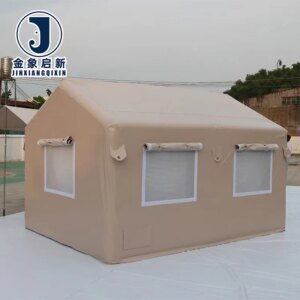
Tienda de Camping Inflable PVC Impermeable para Cuatro Estaciones, Tienda de Aire Exterior con Apertura Automática Rápida para 3-4 Personas
Read more -
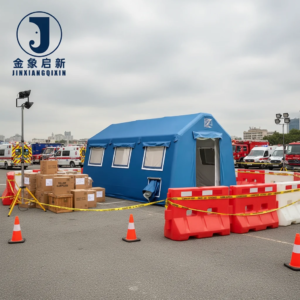
Tienda de Camping Inflable Impermeable PVC Tienda de Aire Exterior Fácil de Montar Refugio Familiar para Camping Cuatro Estaciones >3000mm Impermeable Rápido
Read more