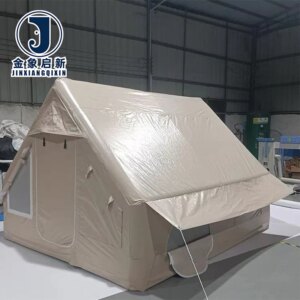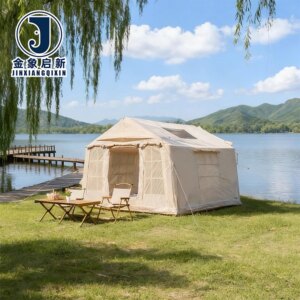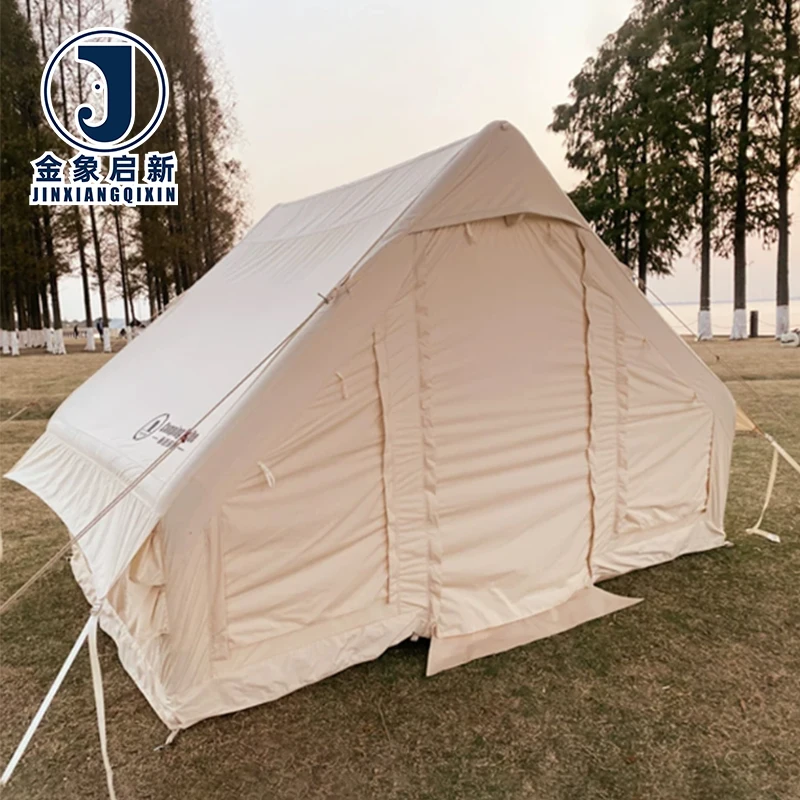
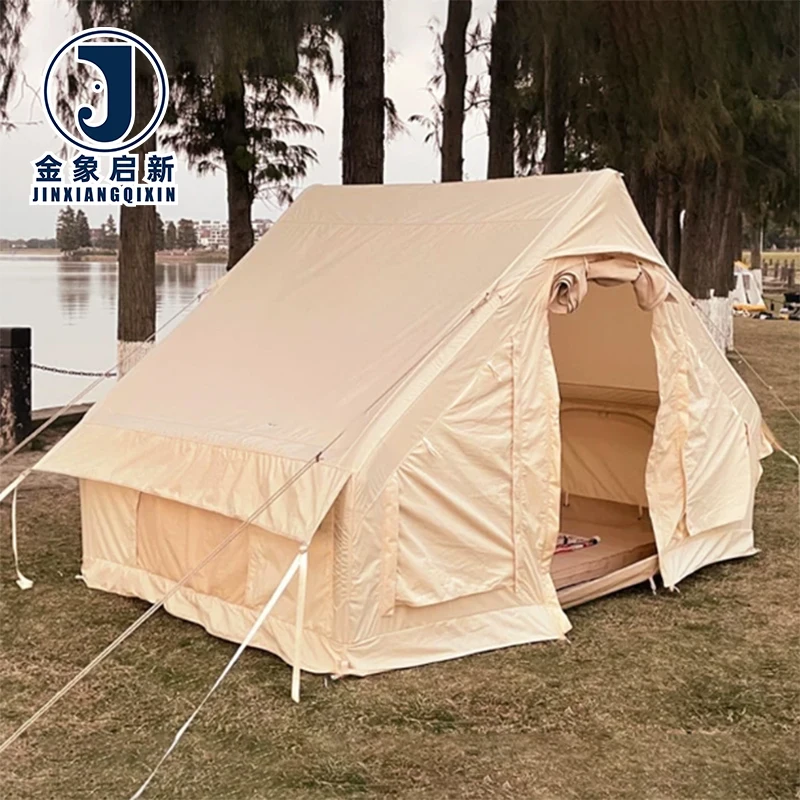
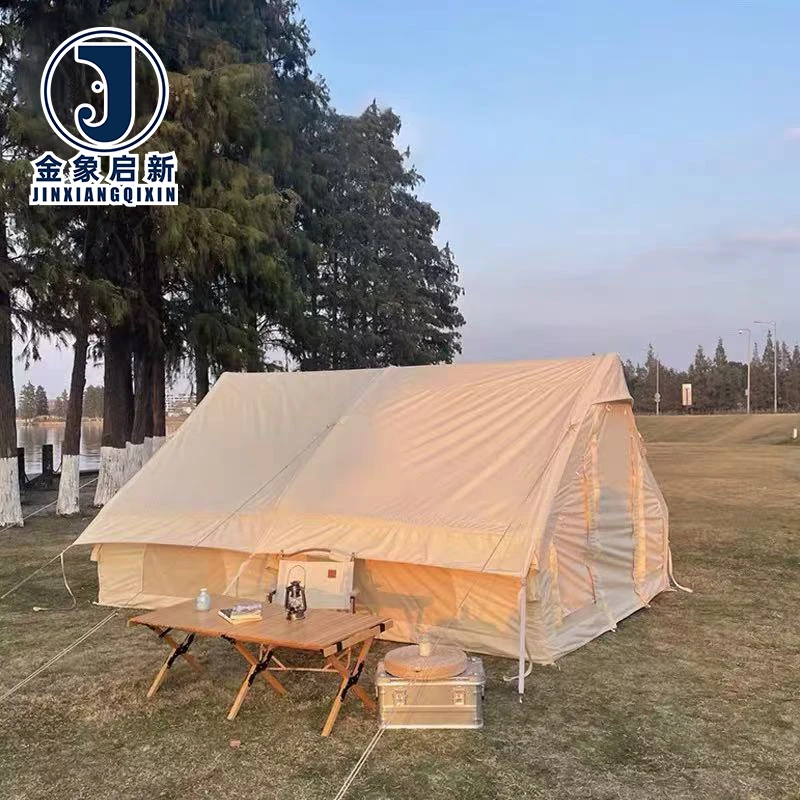
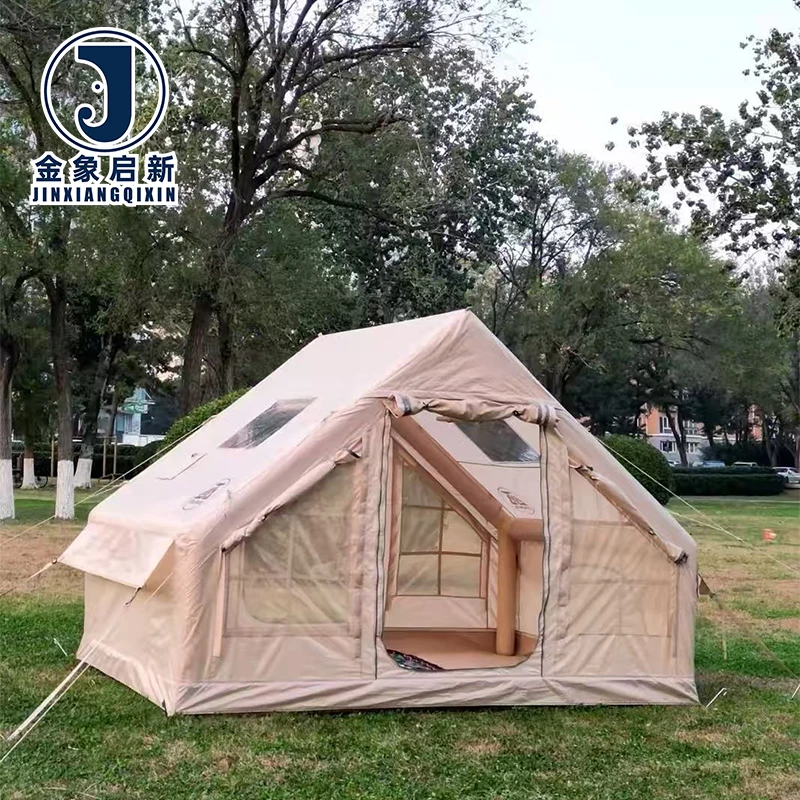
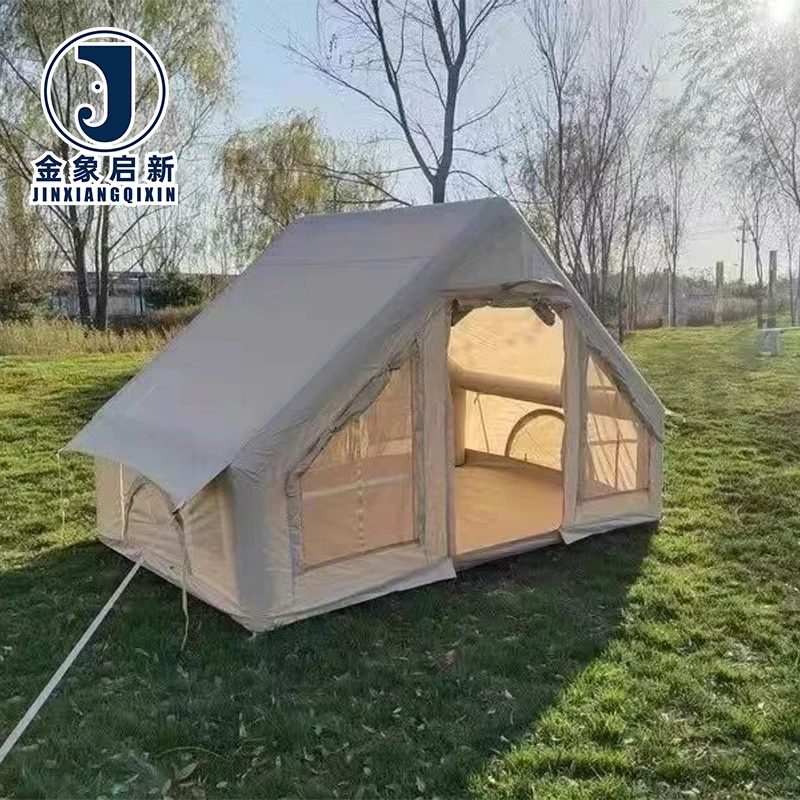
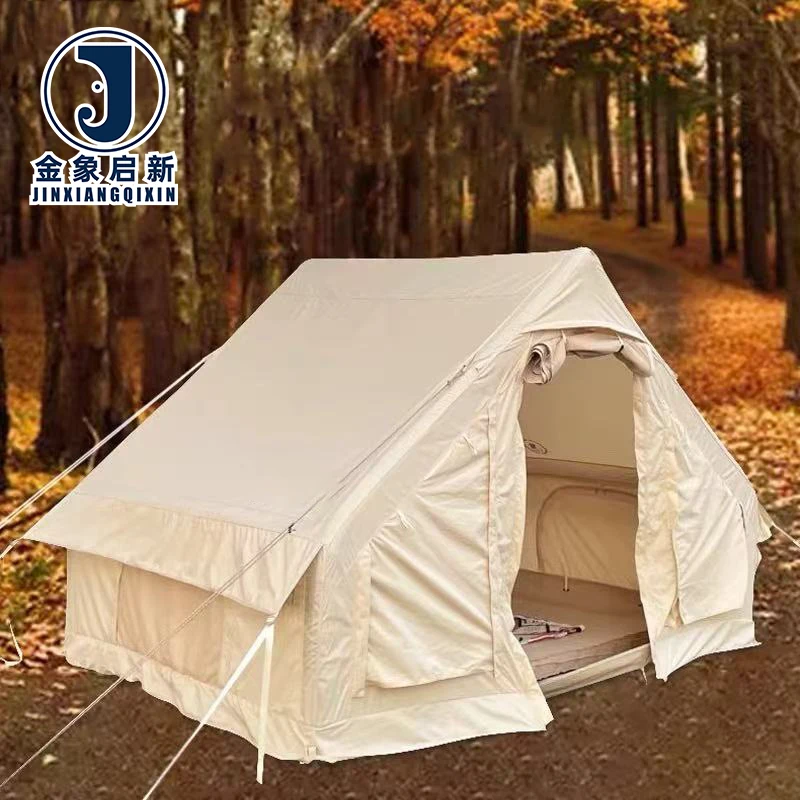
Inflatable Camping Tent with UV-resistant PVC fabric, hydrostatic head >5000mm, 1 bedroom + 1 living room layout — engineered for sustained outdoor deployment under continuous sun and rain exposure.
- Coating formulation and seam reinforcement at flex points prevent weld failure when wind loads stress the structure
- Full custom capability in size, colour, material thickness (0.3mm–0.8mm) and branding via pattern printing
- 10-person R&D team delivers sample development within days, with 100% pre-shipment inspection on every order
Description
Coating Consistency Assurance — Every roll of PVC-coated inflatable tent fabric undergoes 100% pre-shipment weight and adhesion verification, locking the specification before the air column ever inflates.
Technical Specifications
| Parameter | Value |
|---|---|
| Product Type | Inflatable Tent |
| Core Material | UV Water-resistant PVC Fabric |
| Key Performance | UV Protection, Water Resistance, Tear Resistance |
| Product Forms | Extended type with 1 bedroom & 1 living room |
| Hydrostatic Head Rating | Exceeding 5000mm |
| Tear Strength | 300N/5cm warp and weft |
| UV Resistance | Minimum 5000 hours sunlight exposure |
| Wind Load Capacity | Beaufort scale 6 |
| Material Thickness Options | 0.3mm to 0.8mm |
| Customization Service | OEM & ODM, sample customization, pattern printing |
| Production Facility | 9180 square meters, 3 full production lines |
| Processing Equipment | 36 sets of professional equipment |
| R&D Team Scale | 10 technicians |
| Certifications | ISO9001, ISO14001, ISO45001, CE |
| Tested Standards | ISO 5912 (waterproofness), ISO 4892-3 (UV resistance), EN 13725 (tear resistance) |
Application Suitability
| Application | Exposure & Requirement |
|---|---|
| Construction site crew accommodation | Continuous UV exposure, wind-driven rain, frequent relocation and re-inflation requiring seam durability |
| Temporary shelter for outdoor equipment storage | Moisture ingress prevention, dust sealing, thermal load under direct sunlight |
| Mobile field stations for research teams | Rapid deployment, reliable inflation retention, resistance to ground abrasion and chemical contact |
| Emergency response temporary facilities | Quick inflation under adverse weather, high-visibility or specified colour requirements, transport compactness |
| 4-season outdoor deployment | Low-temperature flexibility, snow load resistance, sustained hydrostatic pressure from driving rain |
Why Coated Fabric Selection Defines Your Inflatable Tent Longevity
The air column only holds pressure if the PVC coating adheres uniformly and the base fabric resists creep under constant internal stress.
Retail-grade camping fabrics often quote a high denier count but mask a thin coating layer that degrades under continuous job-site UV exposure. When the air column flexes under wind load, the stress concentrates at the welded seams — if the coating adhesion is weak or the base fabric is under-weighted, the weld fails before the fabric itself tears. I have watched project managers reject entire container loads because the material specification sheet claimed a certain weight, yet the actual rolls measured lighter upon arrival, leaving the inflatable structure unable to maintain rigidity in sustained winds [NEED_CITE: tensile and tear test methods for coated fabrics per ISO 1421].
What Commercial Buyers Must Verify Before Approving the Sample
When sourcing an inflatable tent + aftermarket supplier, the sample approval stage is where specification drift gets caught or missed entirely. Request a cut swatch from the exact production batch and measure the hydrostatic head and tear strength against the stated values. A visual inspection reveals surface consistency, but only a peel test at a sample weld line confirms whether the heat-sealing parameters match the coating formulation. Material thickness between 0.3mm and 0.8mm covers a wide operating range, yet the chosen gauge must align with the internal air pressure the column will sustain during deployment.
Coating Adhesion and the Inflatable Structure Stress Cycle
An inflatable structure places continuous outward force on every seam and valve penetration point. The PVC coating must bond to the base fabric with enough peel strength to resist delamination as the air column cycles between inflation and deflation across temperature variations. Coating weight and base fabric denier work together here — a heavier coating on a loosely woven base will still crack at the flex point, while a tight weave with insufficient coating leaves the yarn exposed to moisture ingress. Confirming these parameters in writing before production begins eliminates the ambiguity that causes field failures [NEED_CITE: peel adhesion testing for coated textiles].
Reading the Specification Sheet Beyond the Headline Numbers
A hydrostatic head exceeding 5000mm indicates sustained resistance to driving rain, meaning the tent can handle extended deployment in wet conditions without moisture breakthrough at the floor-to-wall junction. Tear strength rated at 300N/5cm in both warp and weft directions shows that the base fabric will resist tear propagation if punctured by sharp ground debris or equipment contact during installation. UV resistance rated for a minimum of 5000 hours of sunlight exposure means the coating formulation includes stabilizers that slow the plasticizer migration responsible for fabric embrittlement. Wind load capacity to Beaufort scale 6 reflects the combined performance of fabric stiffness, air column pressure, and anchoring geometry — a rating that assumes the stated material thickness is maintained consistently across every panel.
The Cost of Accepting a Quotation Without Cross-Checking the Batch
Procurement teams that approve an inflatable tent based on the headline specification without verifying the actual batch weight and coating adhesion risk structural collapse under load. Lighter-than-specified material will stretch beyond design limits when the air column pressurizes, causing valve leakage and seam separation at the highest stress points. Colour variation between rolls in the same order becomes immediately visible once multiple units are deployed side by side on a project site, forcing a costly replacement cycle. Welded seams that fail before the fabric does typically trace back to inconsistent coating weight across the roll width, leaving insufficient material for a reliable heat bond [NEED_CITE: weld failure analysis in PVC coated fabrics].
Why Sourcing the Fabric Directly from the Coating Line Matters
Direct access to three full production lines and 36 sets of processing equipment means your inflatable tent + aftermarket supplier can control the coating formulation from the mixing stage through to the final wind-up. A 10-person R&D team handles the pattern printing, dimensional modifications, and valve system integration during the sample phase, so the approved specification is what enters bulk production. The 9180 square meter facility supports the volume required for multi-unit project deployments without subcontracting the coating process to external mills. Dedicated QA/QC at every stage, with 100% inspection before shipment, ensures the GSM, colour reference, and coating adhesion match the signed sample.
Documentation & Verification
- Material specification sheet confirming exact GSM, base fabric denier, coating weight, and colour reference per roll
- UV resistance test report against ISO 4892-3 and waterproofness report against ISO 5912 shipped with each batch
- Tear strength verification per EN 13725 included in the pre-shipment inspection record
- Roll packing list cross-referencing batch numbers to production dates for full traceability
- Certificate of origin and customs documentation prepared for international project logistics
Fabrication, Handling & Storage
- Heat-seal at temperatures matching the specific PVC coating formulation to avoid burn-through on the 0.3mm to 0.8mm thickness range
- Reinforce valve penetration points with additional fabric patches bonded to the coated surface using matched adhesive
- Store rolls horizontally on padded racking to prevent permanent creasing that affects inflation symmetry
- Allow cold-stored fabric to acclimatize to ambient temperature before unrolling to avoid coating micro-cracking
- Clean deployed surfaces with pH-neutral detergent to preserve the UV-stabilized coating layer
Preparing Your Enquiry for Accurate Specification Matching
To move from a generic request to a locked production specification, share the intended deployment environment including expected wind exposure and ground conditions. Specify whether the inflatable tent requires custom dimensions beyond the standard extended format, and confirm the colour reference or any pattern printing needed for site identification. Indicate the annual volume and whether you need the fabric supplied in rolls for your own fabrication line, or as finished units assembled to your valve and anchoring design. Request a pre-production sample to validate the material thickness and coating adhesion before committing to the full order.
Frequently Asked Questions
Q: What material thickness options are available for different climate conditions?
A: The PVC fabric is available in thicknesses from 0.3mm to 0.8mm. Thinner gauges suit short-term deployment in mild conditions, while heavier gauges provide the structural rigidity needed for sustained wind loads and low-temperature flexibility. Your specific air column pressure and expected temperature range determine the appropriate selection.
Q: Can the tent be customized in size, colour and branding for project requirements?
A: Yes. The 10-person R&D team handles dimensional modifications, colour matching to your reference standard, and pattern printing for site identification. A pre-production sample is developed for approval before bulk commitment, ensuring the final output matches the agreed specification exactly.
Q: What certifications and test reports ship with each order?
A: Each shipment includes the ISO 5912 waterproofness test report, ISO 4892-3 UV resistance documentation, EN 13725 tear strength verification, and the ISO9001 quality certificate. The pre-shipment inspection record confirms all values match the signed sample specification.
Q: What is the sample development and bulk production lead time?
A: Sample development for custom requirements is completed within days, allowing rapid validation of material thickness, coating adhesion, and colour accuracy. Bulk production lead time depends on order volume and customization complexity, with scheduling confirmed at the quotation stage.
Q: How are welded seams tested to prevent field failure?
A: Welded seams undergo peel testing during the sample approval phase to confirm adhesion matches the coating formulation. During production, in-process QA checks seam integrity at regular intervals, and the 100% pre-shipment inspection verifies that no seam weakness exists before dispatch.
Related products
-
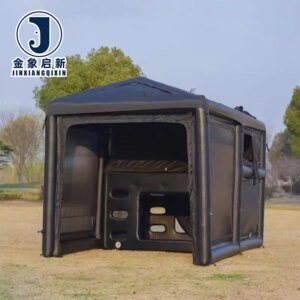
Tienda inflable premium para camping de cuatro estaciones, fácil de usar, espaciosa, portátil, impermeable, tienda exterior rápida.
Read more -
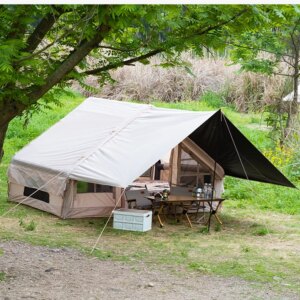
Tienda de Camping Inflable PVC Impermeable Resistente a los UV Cuatro Estaciones Apertura Automática Rápida Personalizable 2-3 Personas
Read more -
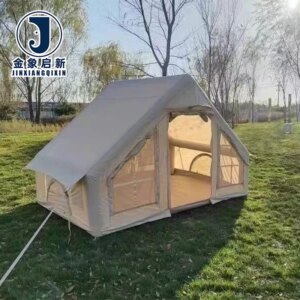
Tienda inflable portátil de camping al aire libre de lujo para uso en todas las estaciones, espacio grande, a prueba de lluvia, aislada, apertura automática rápida.
Read more -
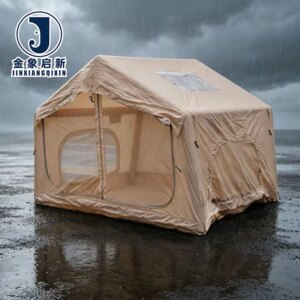
Tienda de Camping Inflable Impermeable Tienda de Aire Exterior para Camping Refugio de Tienda Inflable
Read more