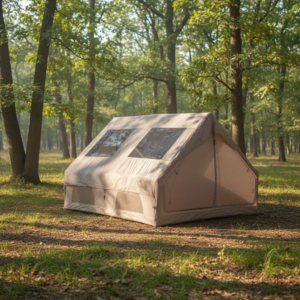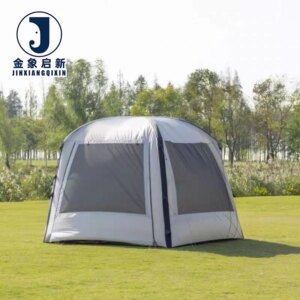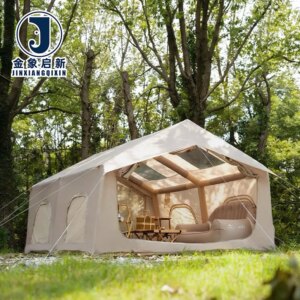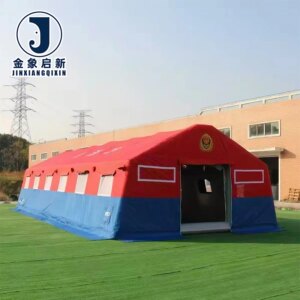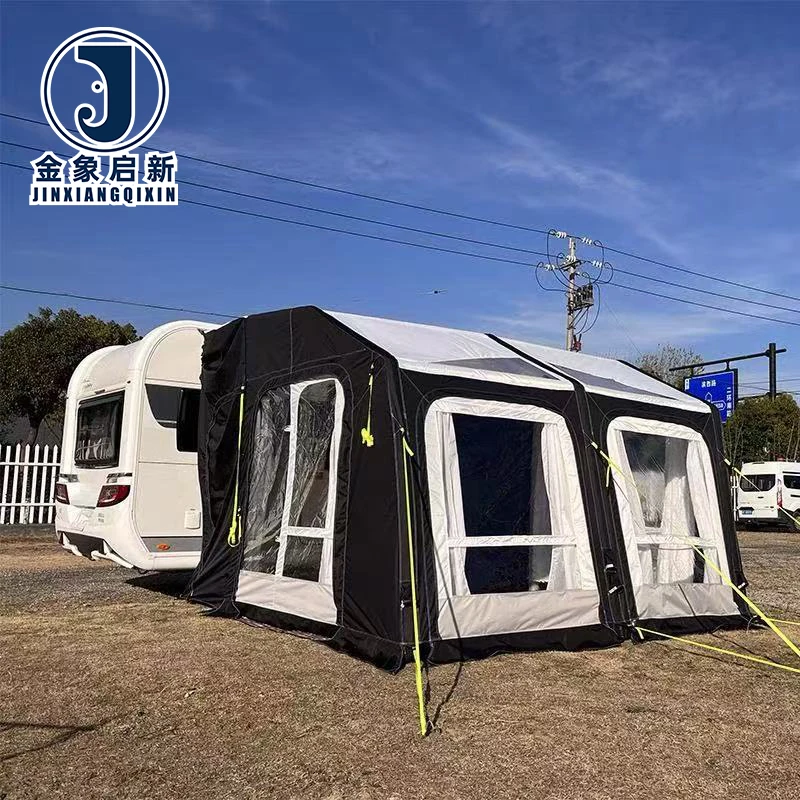
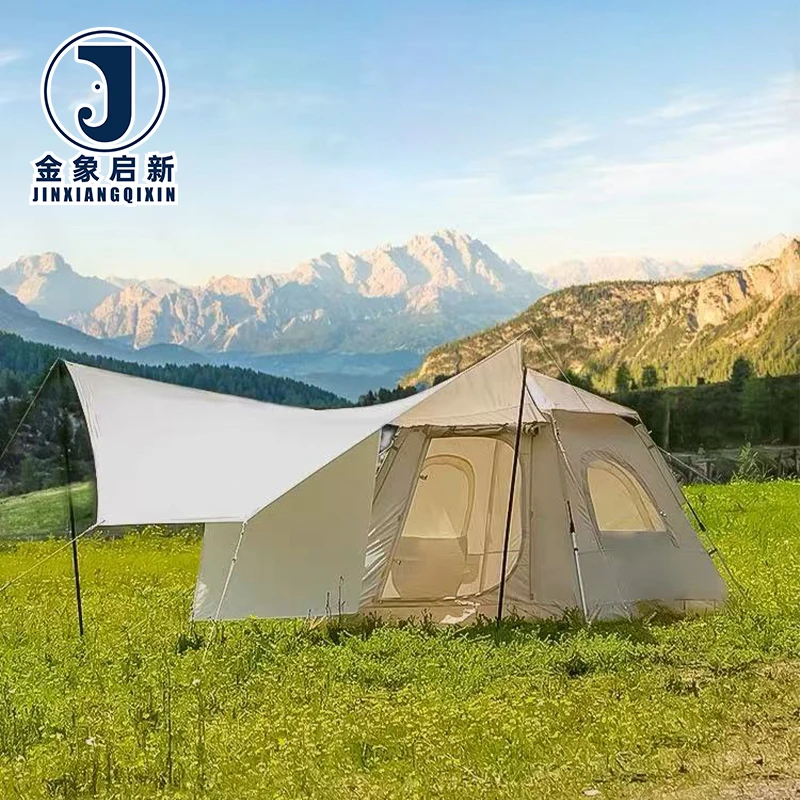
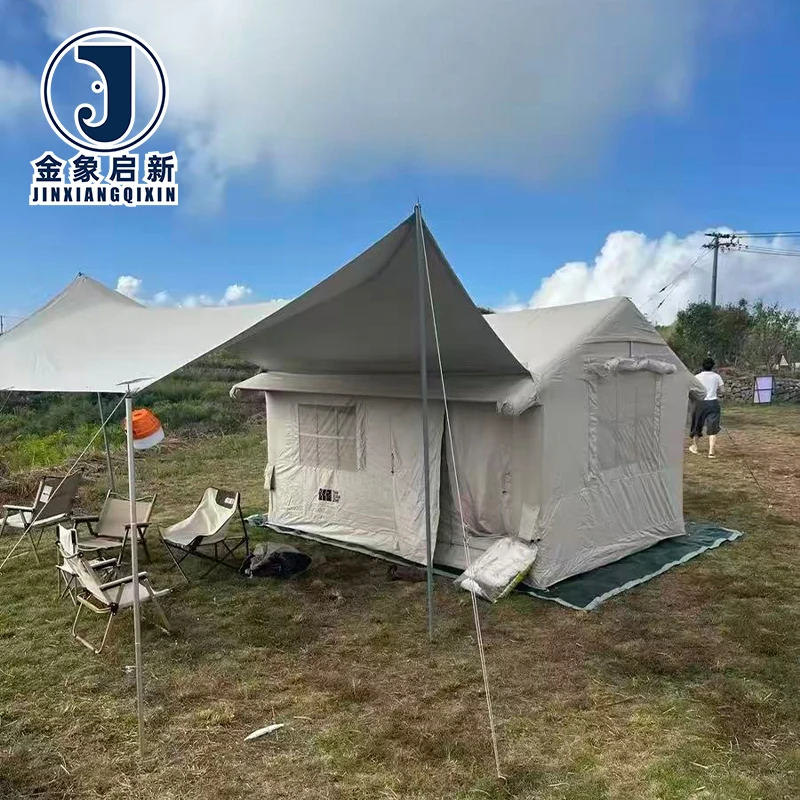
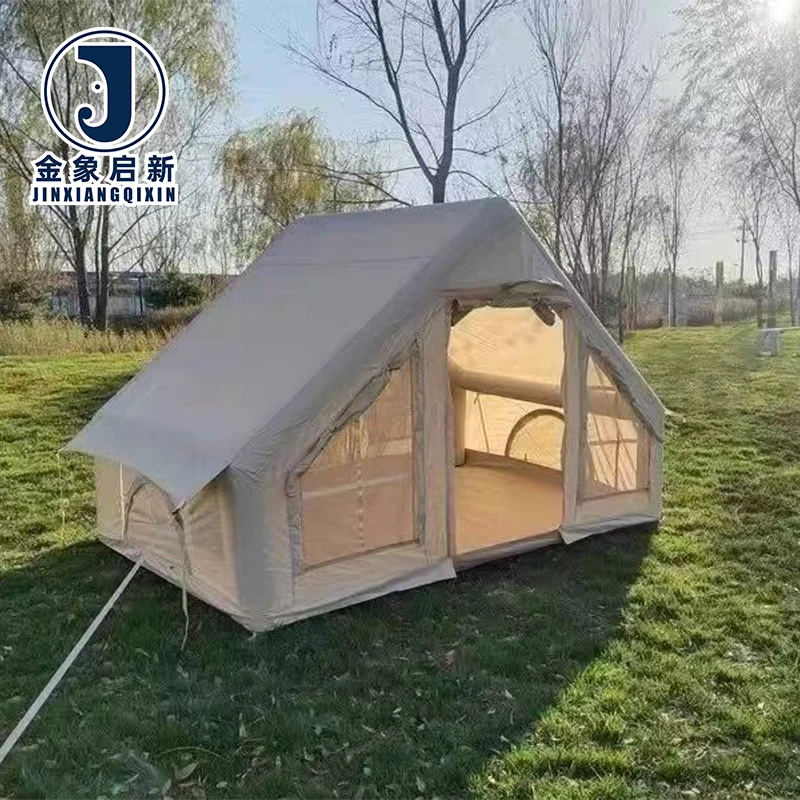
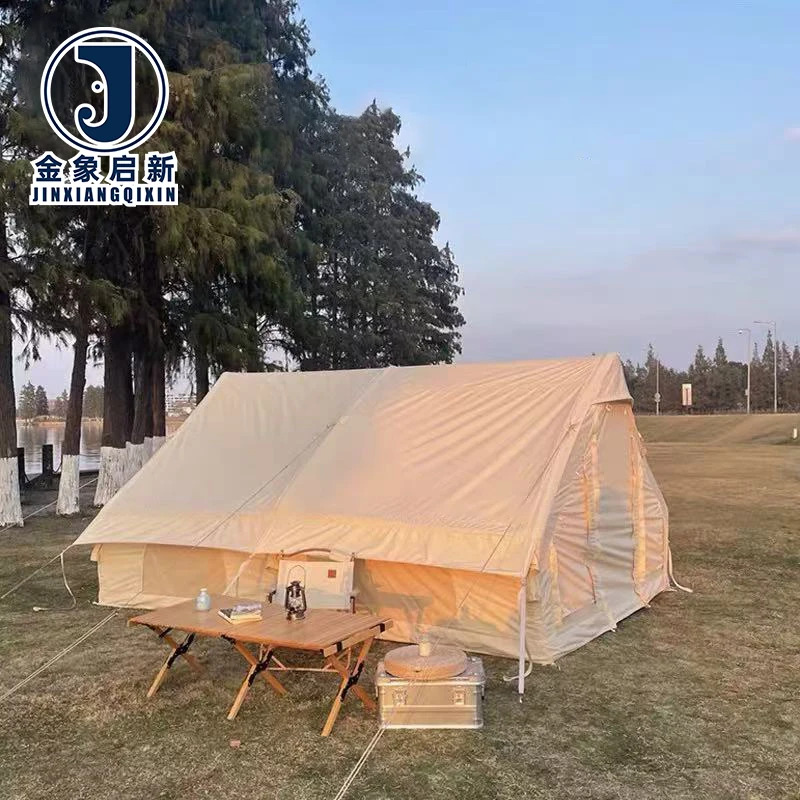
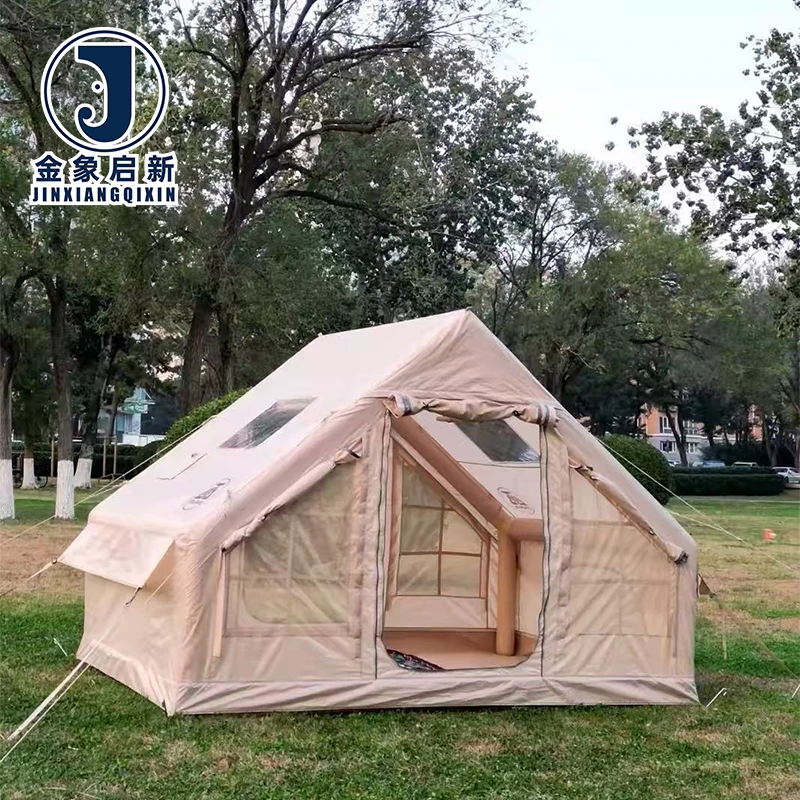
Inflatable Tent — PVC Tarpaulin core material with waterproof, UV-resistant and fire-retardant performance for rapid deployment in demanding outdoor environments
- Engineered as a complete shelter system, the PVC coated fabric base determines tensile integrity and seam weld strength at flex points where inflatable beams bend under wind load
- Backed by 3 full production lines, dedicated QA/QC inspection at every stage, and samples developed within days for custom sizing and pattern requirements
Description
Process control from base weaving to final coating — every roll of PVC tarpaulin leaving our Jinan lines is cross-checked for coating adhesion and weight consistency before it reaches the cutting table for your inflatable tent components.
Technical Specifications
| Parameter | Value |
|---|---|
| Product Type | Inflatable Tent |
| Core Material | PVC Tarpaulin |
| Key Features | Waterproof, UV-resistant, Tear-resistant, Fire-retardant, Anti-static |
| Certifications | ISO9001, ISO14001, ISO45001, CE |
| Production Facility Area | 9180 square meters |
| Production Lines | 3 full production lines |
| Processing Equipment | 36 sets of professional processing equipment |
| R&D Team Scale | 10 technicians |
| Customization Service | OEM & ODM (sample customization, pattern printing) |
| Product Forms | Inflatable Camping Tent, Emergency Shelter |
| Quality Control System | Full-process quality inspection with dedicated QA&QC staff |
Application Suitability
| Application | Exposure & Requirement |
|---|---|
| Temporary site offices during construction projects | Prolonged outdoor weathering, wind load on inflated structure, daily foot traffic abrasion at entry points |
| Equipment storage shelters in outdoor logistics yards | Standing water on low-slope roofs, UV degradation from year-round sun exposure, dust and debris accumulation |
| Mobile command centers for infrastructure maintenance teams | Rapid deployment and repeated inflation cycles, generator exhaust proximity, interior lighting and equipment mounting |
| All-season emergency shelter | Sub-zero inflation stress, snow load on fabric membrane, quick assembly under adverse conditions |
Why Material Consistency Matters More Than a Single Specification Sheet for Your Inflatable Tent Aftermarket Supplier
An inflatable tent fails at the seam before the fabric does when coating adhesion varies roll to roll.
Buyers reviewing quotes often compare GSM figures and assume equal performance across suppliers. I have watched heavy-grade coated rolls fail at the weld line because the plasticiser content drifted between batches, leaving the heat weld brittle in cold weather. The inflatable tent aftermarket supplier you choose needs to show you test data from the actual production run, not a generic datasheet from a different fabric grade. [NEED_CITE: tensile and peel strength behaviour of PVC coated fabrics at welded seams per ISO 1421]
Coating Adhesion and the Inflatable Structure
When an inflatable camping tent is pressurised, every panel carries load in two directions simultaneously. The PVC coating must bond to the base fabric strongly enough that peeling forces at welded seams do not separate the layers. Our coating lines run controlled plastisol application with monitored oven zones so the plasticiser migrates evenly into the yarn structure, producing consistent peel strength across the full roll width that the inflatable tent aftermarket supplier market demands.
Air Retention Through the Fabric Membrane
Inflatable structures rely on the fabric itself acting as a gas barrier. Pinholes, under-coated spots, or thin edges along the selvedge allow slow air loss that the blower must constantly compensate for, raising energy consumption and noise. Full-width coating coverage verified during in-process inspection keeps the membrane continuous, which is essential when your inflatable tent sits inflated through multi-day site operations. [NEED_CITE: air permeability test methods for coated technical textiles]
Reading the Specification Sheet Beyond the Headline Weight
GSM tells you the combined mass of base fabric and coating per square metre, but it does not reveal how that mass is distributed. A 1000-denier base fabric with a lighter coating will tear differently from a 500-denier base with a heavier coat, even at identical GSM. For inflatable tent panels that flex under wind gust, the base fabric denier and weave density govern how a small puncture propagates, while the coating thickness governs surface abrasion resistance and heat-weld receptivity. UV-resistant and fire-retardant formulations alter plasticiser ratios, which in turn affect low-temperature flexibility — a critical factor when the tent inflates in cold conditions. Available in fire-retardant grades — confirm the grade required for your market and the test standard your jurisdiction mandates before specifying.
What Happens When the Wrong Grade Reaches the Site
A logistics yard ordered shelter fabric specified for mild climates and deployed it in a northern winter. The plasticiser formulation was not rated for sub-zero flex, and the panels cracked along fold lines during the first inflation cycle. The entire structure was grounded, the project schedule slipped, and the buyer absorbed replacement freight costs. Mismatched material grades quietly introduce these failures because the fabric looks identical on the roll until it is pressurised in real conditions. [NEED_CITE: low-temperature embrittlement of plasticised PVC in flexible structures]
Why Source Your Inflatable Tent Fabric Here
Three dedicated production lines run PVC coating with stage-by-stage QA, so the inflatable tent material you receive matches the approved sample in coating weight and colour. A ten-technician R&D team develops custom samples within days, letting you validate weld parameters and inflation behaviour before committing to a bulk run. Thirty-six sets of processing equipment handle slitting, printing, and cutting to your panel dimensions. Every roll undergoes inspection before dispatch, catching adhesion or weight drift before it leaves the facility. ISO9001, ISO14001, ISO45001 and CE certifications frame the quality management system behind each shipment.
Documentation & Verification
- Material specification sheet stating coating weight, base fabric denier, and colour reference for each roll
- Test reports for UV-resistant and fire-retardant grades where applicable to your inflatable tent order
- ISO and CE certificates covering the manufacturing quality system
- Pre-shipment inspection record confirming weight and visual checks on every roll
- Roll packing list with net and gross weights matched to the inflatable tent aftermarket supplier purchase order
- Certificate of origin and customs documentation for cross-border shipment
Fabrication, Handling & Storage
- Heat-weld parameters should be dialled to the specific PVC coating thickness of your inflatable tent panels to avoid burn-through or cold joints
- Reinforced hems at inflation valve openings distribute point loads across the coated fabric and prevent tear initiation
- Store rolls upright on end caps in a shaded, ventilated area to prevent flat spots that telegraph into inflated panel surfaces
- Allow cold-transported rolls to reach ambient temperature before unrolling to avoid cracking the PVC coating at low flex
- Use mild detergent and soft brush for cleaning; solvent-based cleaners can extract plasticiser from the PVC coating and stiffen the membrane
- Panel nesting on the cutting table should account for roll width to minimise offcut waste from the inflatable tent aftermarket supplier order
What to Include in Your Enquiry
Tell us the deployment climate range and inflation cycle frequency so we can match the plasticiser formulation to your operating conditions. Specify any fire-retardant or anti-static compliance your market requires, along with the test standard your safety officer will audit against. Confirm whether you need finished cut panels with valve openings and welded hems, or full rolls for your own fabrication line. Request a sample roll if colour matching or weld parameter validation is needed before the main order.
Frequently Asked Questions
Q: What customization options are available for inflatable tent dimensions and features?
A: Panel dimensions, valve opening positions, and reinforcement layouts are developed to your drawings. Our R&D team produces custom samples so you can verify inflation behaviour, weld strength, and fit before bulk production begins. Pattern printing and colour matching are also available across the order.
Q: Can I request samples before placing a bulk order?
A: Yes. Sample rolls or cut panels are developed within days once your specification is confirmed. Testing weld parameters, inflation response, and colour accuracy on the sample helps avoid surprises when the full inflatable tent aftermarket supplier shipment arrives at your facility.
Q: What certifications does the product carry?
A: The manufacturing facility holds ISO9001, ISO14001, ISO45001 and CE certifications. These cover the quality management and environmental systems governing your inflatable tent fabric production, and copies of the certificates are included in the shipment documentation package.
Q: What documentation is included with each shipment?
A: Every dispatch includes a material specification sheet, pre-shipment inspection record, roll packing list, and certificate of origin. Where fire-retardant or UV-resistant grades are specified, the corresponding test reports accompany the documentation for your inflatable tent aftermarket supplier records.
Q: How do I initiate a custom order with specific requirements?
A: Share your deployment conditions, required compliance standards, and panel dimensions through the enquiry form. Our technical team reviews the application, recommends a formulation, and prepares a sample so you can evaluate performance before committing to production volumes.
Related products
-
Tienda Inflable de PVC Premium para Cuatro Estaciones para Camping Fácil de Usar Espaciosa Portátil Impermeable Tienda Exterior con Bomba
Read more -
Tienda Inflable de Cuatro Estaciones Capa Única >3000mm Impermeable a Viento Apertura Automática Rápida Tela de PVC Ecológica
Read more -
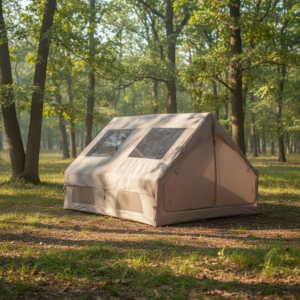
Tienda Inflable Cuatro Estaciones Apertura Automática Rápida PVC 3000mm Impermeable Plegable Ecológica para Uso Exterior 2-3/3-4/6-8 Personas
Read more -
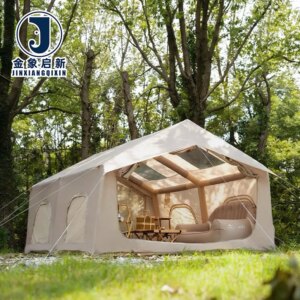
Tienda Inflable de Alta Calidad para Cuatro Estaciones para Acampar, Duradera, PVC Impermeable, Resistencia a Todas las Climas, Apertura Automática Rápida
Read more