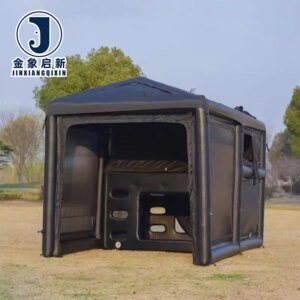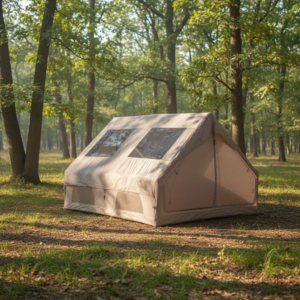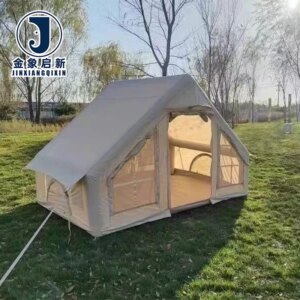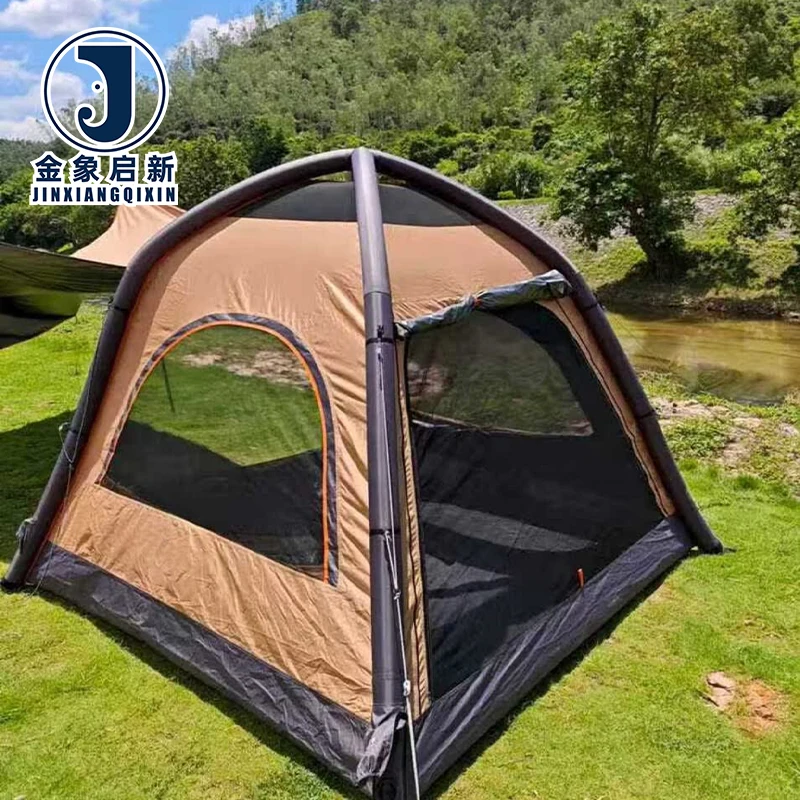
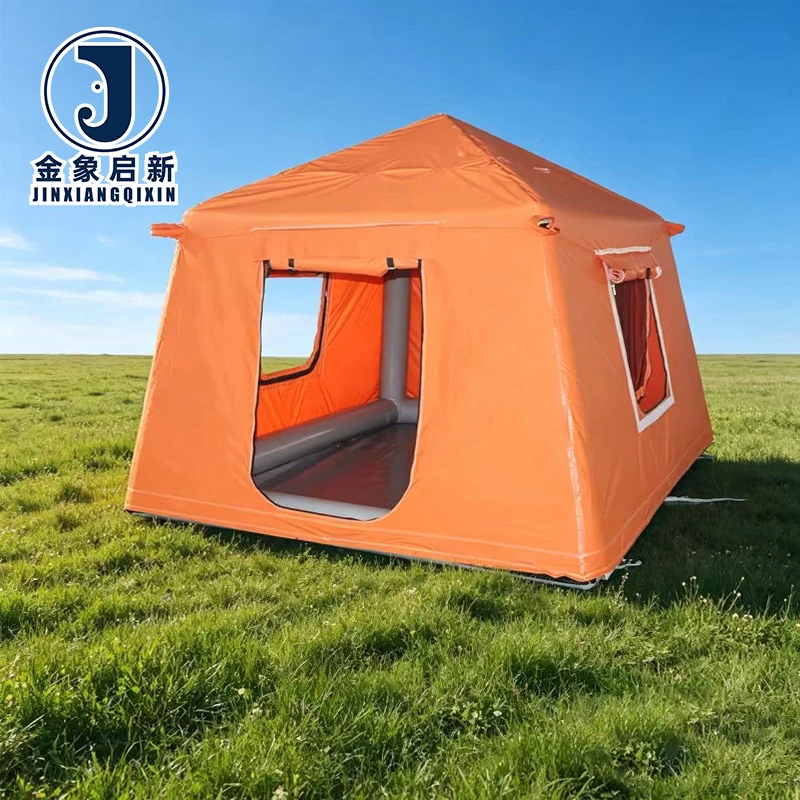
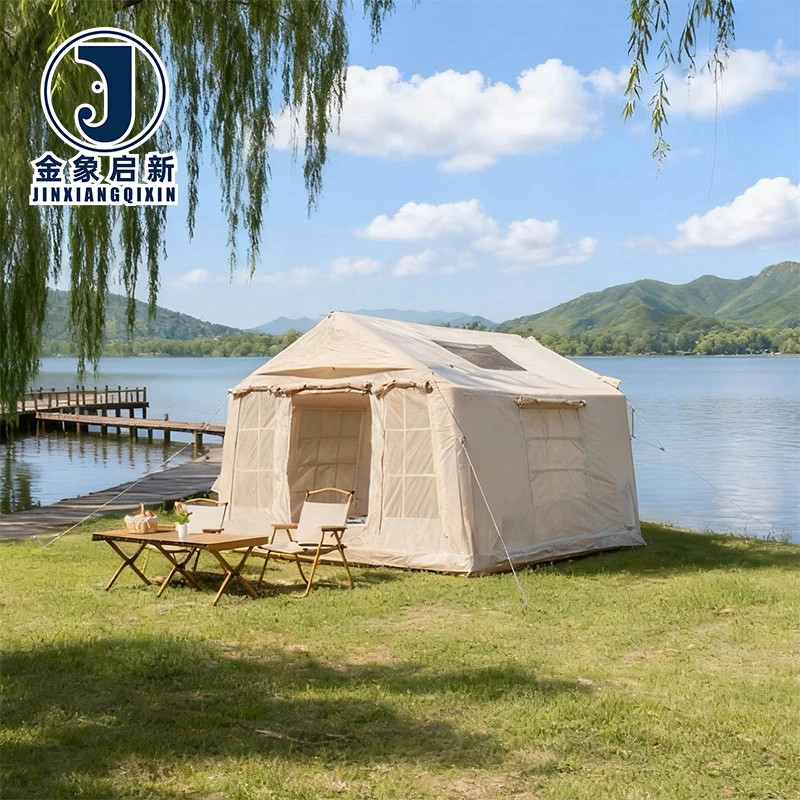
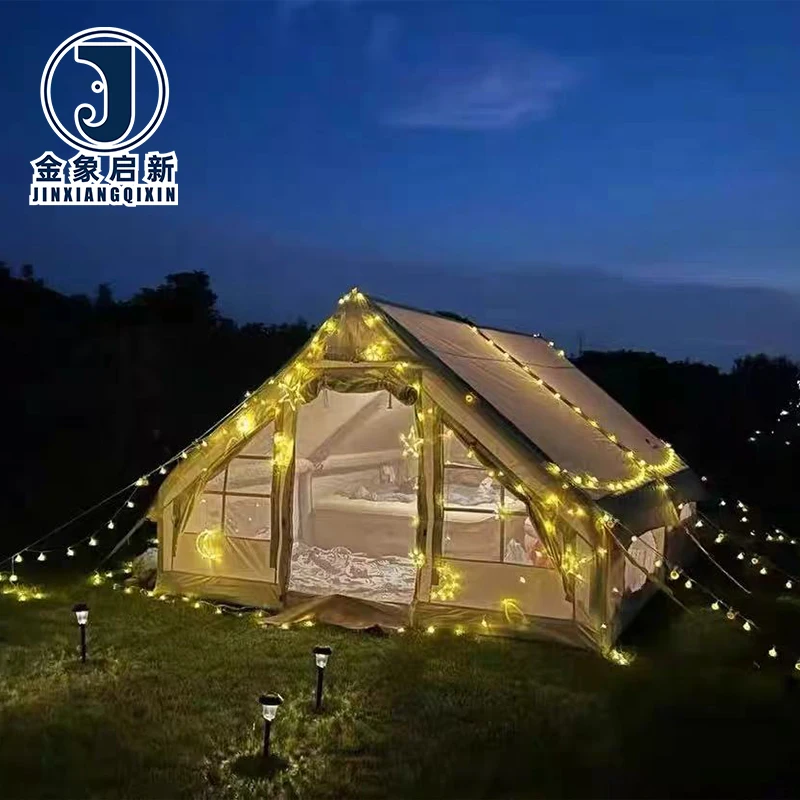
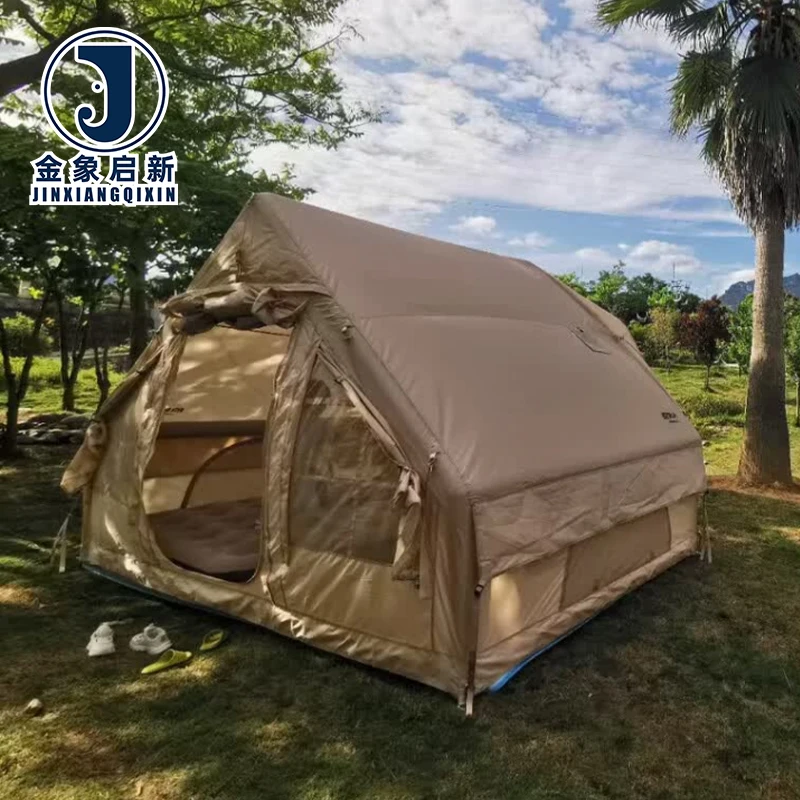
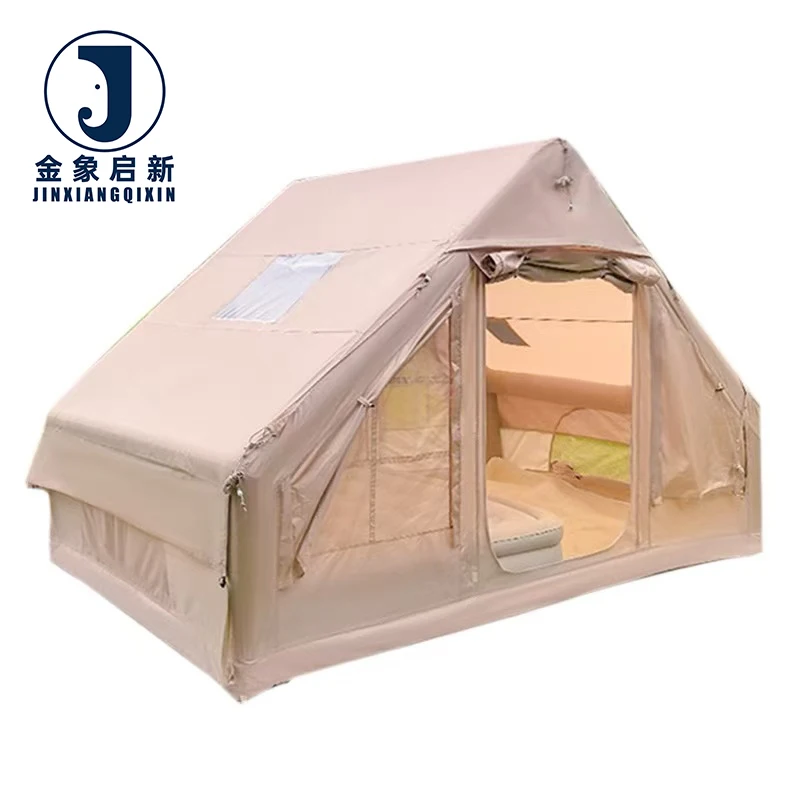
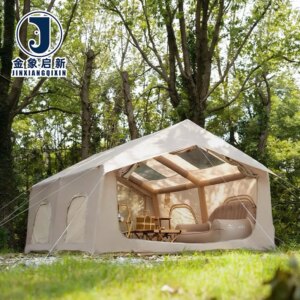
Inflatable Camping Tent — 8-10 person capacity, 4-season rating, automatic inflatable deployment with PVC tarpaulin construction. Waterproof and tear-resistant for commercial camping operations and temporary site facilities. Rapid setup reduces installation time for emergency shelters and outdoor event pavilions. Material selection balances structural integrity with field deployment requirements across multiple seasons. Supported by 36 sets of production equipment ensuring batch consistency and reliable delivery schedules for volume orders.
Description
Custom Made Inflatable Tent for Camping – Manufacturer
Specification Consistency — Every roll of PVC tarpaulin destined for inflatable tent fabrication is weighed and tested against the stated specification before it leaves the production line, eliminating the GSM discrepancy that causes shipment rejections.
Technical Specifications
| Parameter | Value |
|---|---|
| Product Type | Inflatable Tent |
| Core Material | PVC Tarpaulin |
| Product Category | PVC Tent |
| Capacity | 8-10 Person |
| Season Rating | 4 Season |
| Construction | Single Layer |
| Deployment | Automatic Inflatable Opening |
| Key Features | Waterproof, UV-resistant, Tear-resistant, Fire-retardant, Anti-static |
| Certifications | ISO9001, ISO14001, ISO45001, CE |
Application Suitability
| Application | Exposure & Requirement |
|---|---|
| Temporary site offices | Continuous weather exposure, foot traffic abrasion, wind loading on inflatable beams |
| Mobile equipment storage | Water ingress protection, UV degradation over extended deployment, puncture from sharp tools |
| Outdoor event pavilions | Crowd safety compliance, flame retardant requirements, rapid setup and teardown cycles |
| Emergency response shelters | Immediate deployment under adverse conditions, thermal insulation, multi-season reuse |
| Commercial camping operations | Guest comfort standards, repeated inflation cycles, long-term UV and weather resistance |
Why Coated Fabric Claims Fail When the Tent Inflates
A fire-retardant label means nothing if the test report does not match the grade your jurisdiction requires.
Sourcing teams often receive material data sheets that list flame retardant or anti-static treatment without specifying the classification standard. When an inflatable camping tent is inspected on a commercial campsite or construction site, the authority having jurisdiction asks for the test certificate — not the marketing sheet. I have watched entire batches of inflatable tent fabric get held at customs because the documentation referenced a standard that did not align with the destination market’s building code. The aftermarket supplier is then left explaining why the material arrived without the paperwork needed to clear inspection. [NEED_CITE: fire classification standards for temporary structures and tents]
Matching the Fabric to the Inflatable Beam Load Path
An inflatable tent depends entirely on the air-holding integrity of its beam structure. The PVC tarpaulin used for these beams must resist flex fatigue at every joint where the tube bends during inflation and deflation cycles. When the base fabric denier and weave density are insufficient for the internal pressure, micro-cracks propagate along the coating interface and the beam loses rigidity within hours. Selecting the correct material starts with understanding how the inflatable tent will be pressurised and how many deployment cycles the operator expects per season.
What Separates a Commercial Shelter from a Consumer Tent
A 4-season inflatable tent deployed at a mining camp or commercial glamping operation faces conditions that consumer-grade products cannot sustain. Wind-driven rain tests the seam integrity at every welded joint. Prolonged UV exposure degrades unprotected PVC surfaces, leading to chalking and loss of tensile strength. The single-layer construction of this inflatable tent requires the coating itself to serve as both the weather barrier and the structural membrane, meaning coating adhesion to the base fabric is the single most critical performance variable. [NEED_CITE: coating adhesion test methods for PVC tarpaulin per ISO 2411]
How the Specification Sheet Translates to Field Performance
The 8-10 person capacity defines the internal volume, which directly determines the surface area of PVC tarpaulin under tension when the inflatable beams are pressurised. Larger volumes place greater hoop stress on the tube walls, demanding higher tensile strength from the base fabric. The 4-season rating indicates the material must perform across a broad temperature envelope — remaining flexible enough in cold conditions to resist brittle fracture at the weld lines, and stable enough in heat to prevent the coating from softening under sustained internal pressure. Fire-retardant and anti-static treatments are available, but the specific grade must be confirmed against your site’s safety protocol before production begins. Waterproof performance depends on the integrity of the heat-welded seams as much as the coated surface, making weld parameter control during fabrication a non-negotiable checkpoint.
What Happens When the Weld Fails Before the Fabric Does
The most common failure point on an inflatable tent is not the coated surface — it is the welded seam where two panels join at a stress concentration. When the heat-weld temperature or dwell time is set for a generic PVC grade rather than the specific coating formulation in production, the bond line becomes brittle or under-fused. I have seen inflatable beams that held pressure perfectly in the factory lose rigidity within days on site because the weld failed at the exact point where the beam flexes during wind loading. The operator then faces a field repair on a seam that was never designed to be re-welded in uncontrolled conditions. Batch-specific weld parameter records are the only defence against this. [NEED_CITE: heat welding parameters and peel strength for PVC coated fabrics]
Why Production Control Matters More Than the Brochure
Every production run of PVC tarpaulin for inflatable tent fabrication passes through dedicated quality checkpoints where coating weight and adhesion are measured against the order specification. The three full production lines allow batch separation so that custom colours and widths do not compete with stock orders for line time. A 10-person R&D team develops samples within days, confirming material selection and weld compatibility before bulk production is authorised. The 100% pre-shipment inspection covers roll weight verification, surface defect scanning, and weld test pieces pulled from the same production batch — not from a reference sample made weeks earlier.
Documentation & Verification
- Material specification sheet confirming PVC coating weight, base fabric construction, and colour reference for each roll
- Fire-retardant test report citing the classification standard applicable to the destination market
- Pre-shipment inspection record documenting GSM measurement and visual defect check per roll
- ISO9001, ISO14001, ISO45001 and CE certificates covering the manufacturing management system
- Certificate of origin and customs documentation supporting international shipment clearance
Fabrication, Handling & Storage
- Heat-weld parameters must be calibrated to the specific PVC coating formulation before joining inflatable beam panels
- Inflatable beam seams should be reinforced with overlap welding at all junction points to distribute hoop stress
- Rolls must be stored upright on pallets to prevent permanent creasing that weakens the coating at fold lines
- Cold-weather transport requires gradual acclimatisation before unrolling to avoid brittle fracture in the PVC layer
- Surface cleaning should use neutral pH agents only, as solvents degrade the fire-retardant treatment
What We Need to Move Your Inquiry Forward
Provide the end-use environment for your inflatable tent — whether it will serve construction sites, commercial campsites, or emergency staging areas — along with the fire safety classification required by the local authority. Specify the beam diameter and internal pressure your design calls for, as these determine the tensile load the PVC tarpaulin must sustain. Confirm whether you need rolls in a specific width for your own fabrication line, or finished panels cut and welded to your pattern. If colour consistency across multiple units is critical, request a sample roll to validate shade matching before committing to a production batch.
Frequently Asked Questions
Q: What customization options are available for commercial inflatable tent specifications?
A: We can adjust the PVC tarpaulin width, colour, and fire-retardant grade to match your fabrication requirements. Custom printing for branding is available on the tent surface. Samples are produced within days so you can validate material performance and weld compatibility before bulk production begins. Confirm your target specification and we will prepare a matching sample.
Q: Which safety certifications does the inflatable tent material comply with?
A: The manufacturing system holds ISO9001, ISO14001, ISO45001, and CE certifications. For fire-retardant and anti-static grades, we supply test reports referencing the specific classification standard. You should verify which standard your local authority requires for temporary structures and communicate that before we schedule production.
Q: How can I verify the fire-retardant and UV-resistant treatment claims?
A: Each production batch is accompanied by a test report from an accredited laboratory, citing the exact classification standard the material was tested against. We do not rely on generic datasheets. Request the specific test report for your order and cross-reference it with your site’s compliance requirements before acceptance.
Q: What documentation ships with a commercial inflatable tent fabric order?
A: You receive a material specification sheet, batch-specific inspection records, test reports for any treated grades ordered, packing list, certificate of origin, and relevant ISO and CE documentation. All paperwork references the actual production batch so traceability is maintained from roll to installed tent.
Q: How do I validate tent capacity and dimensions for my specific application?
A: Provide your intended floor plan, beam diameter, and operating pressure. We will recommend the PVC tarpaulin specification that delivers the required tensile and tear strength for that geometry. A sample panel can be fabricated for pressure testing in your own facility before you commit to full production volume.
Related products
-
Tienda de Camping Inflable de Cuatro Estaciones - Recubierta de PVC, Impermeable, Ecológica, Inflación Rápida, Certificada CE, ODM/OEM Aceptado
Read more -
Tienda de Camping Inflable PVC Impermeable Resistente a los UV Cuatro Estaciones Apertura Automática Rápida Personalizable 2-3 Personas
Read more -
Tienda Inflable de Lujo para Glamping, Tienda de Aire Impermeable para Exterior con Bomba
Read more -
Tienda de Camping Inflable Impermeable de PVC Tienda de Aire Exterior Montaje Fácil Refugio Familiar para Camping
Read more