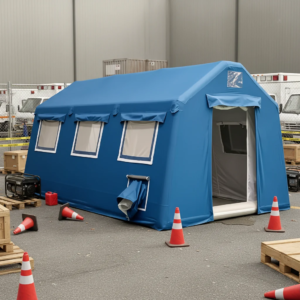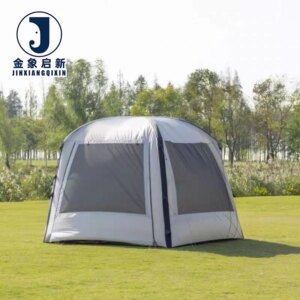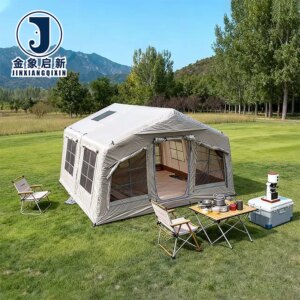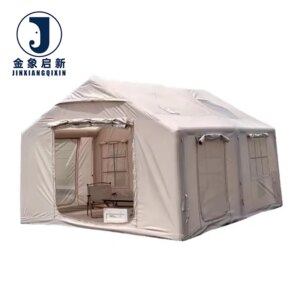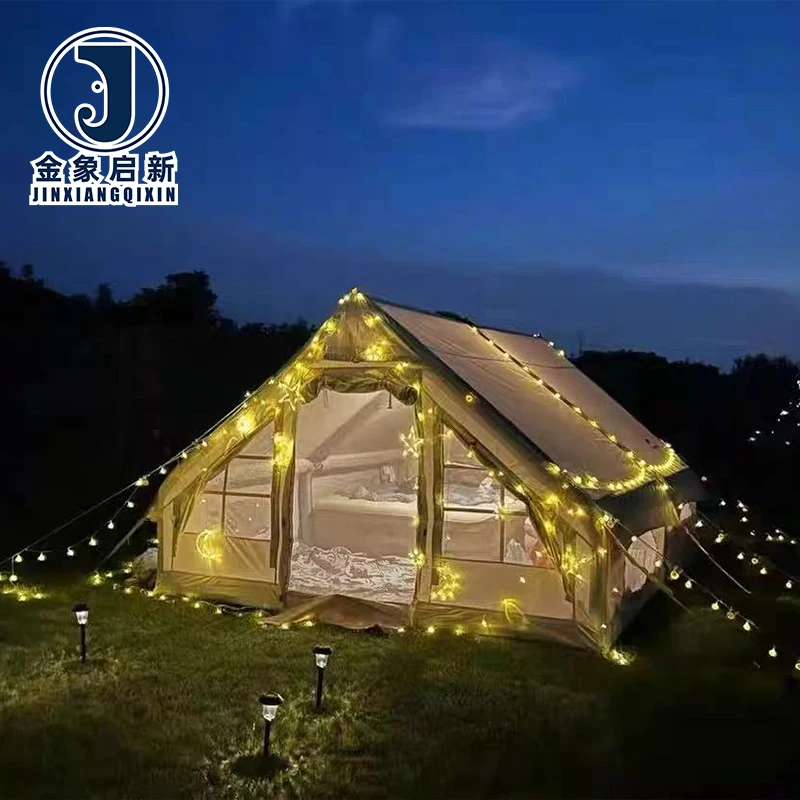
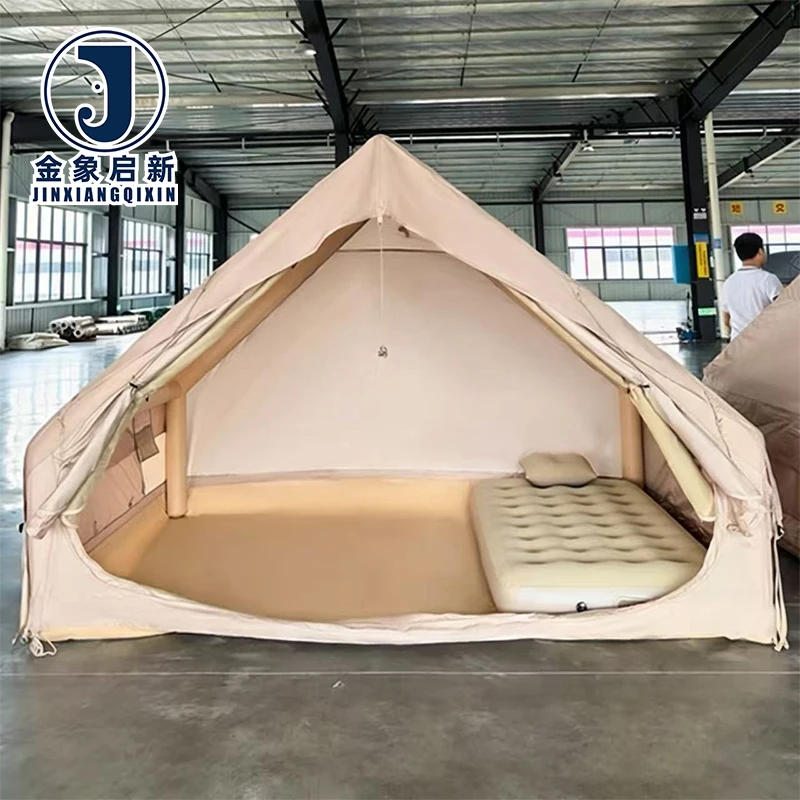
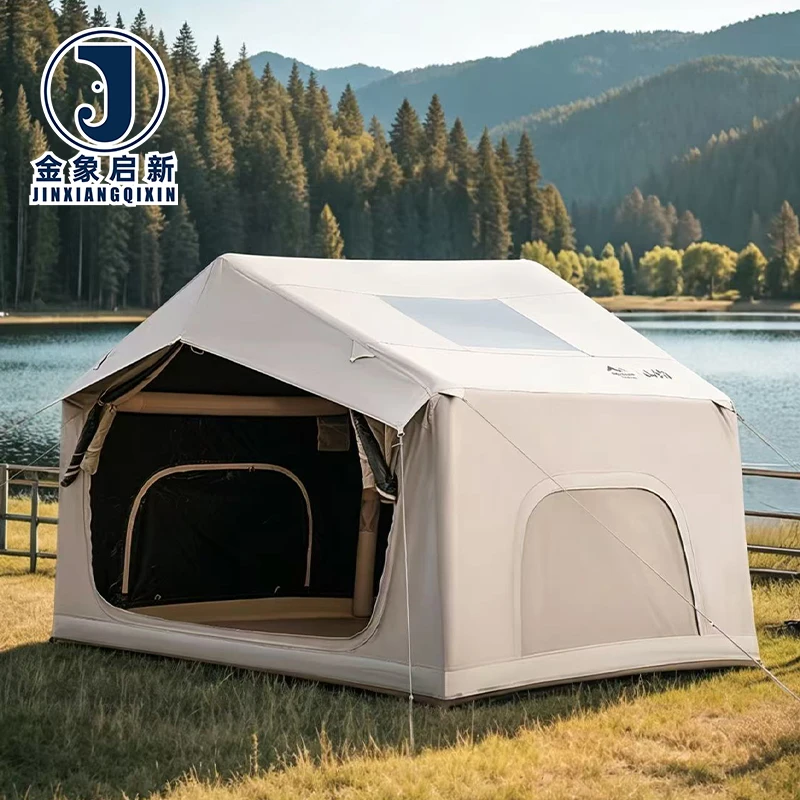
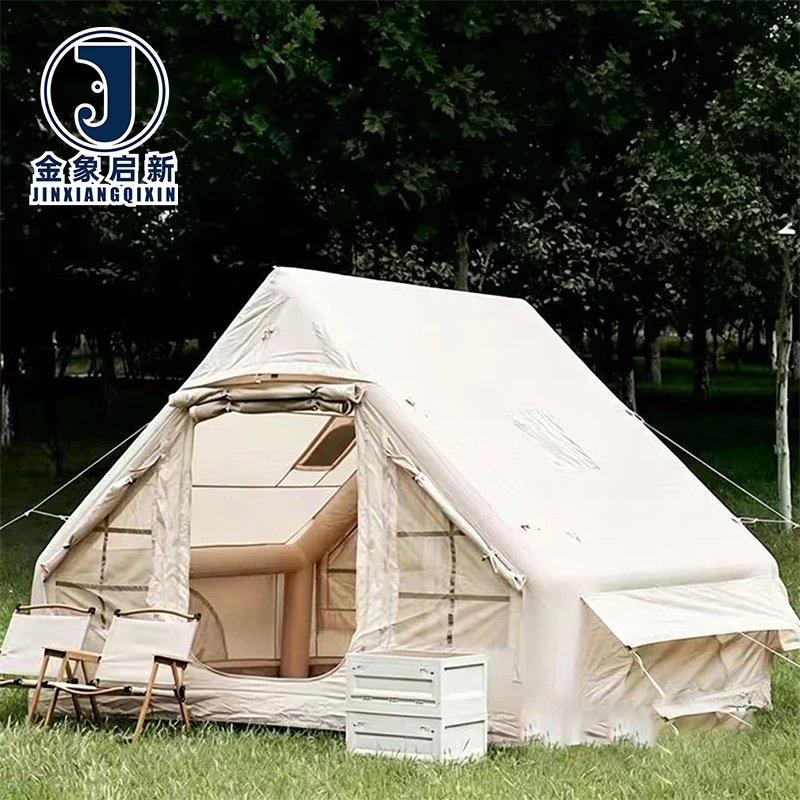
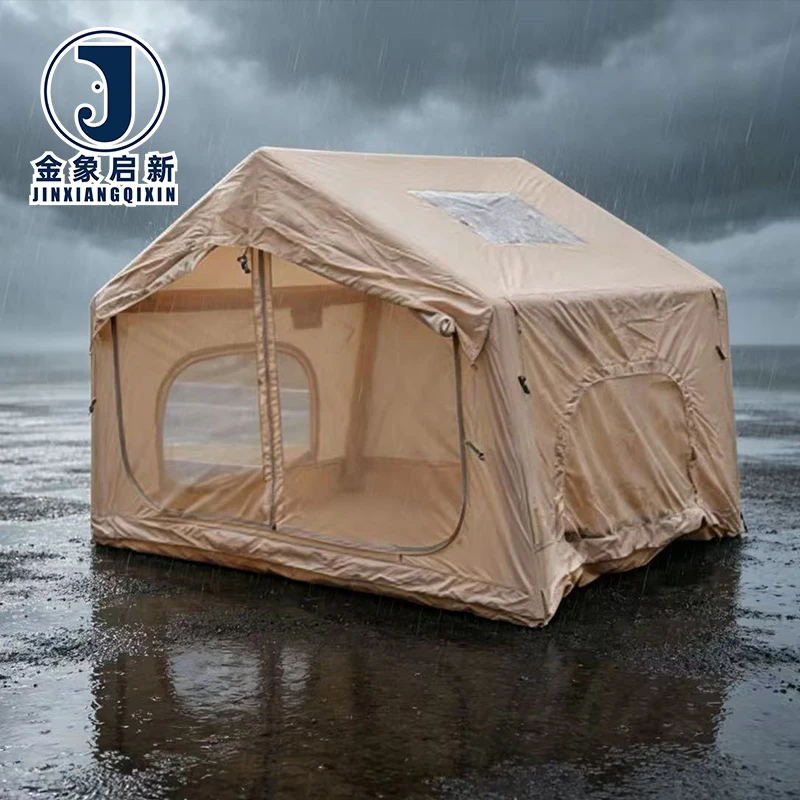
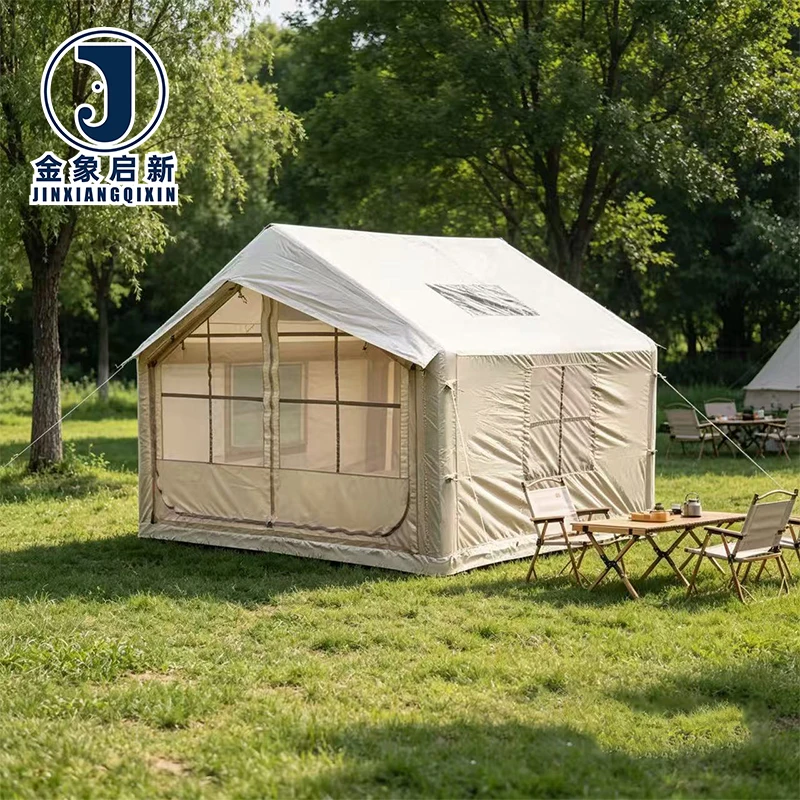
Portable Inflatable Camping Tent, 4-6 person capacity with waterproof and UV-resistant PVC tarpaulin construction for four-season deployment. Single-layer design balances durability with transport efficiency across remote sites.
Engineered for rapid setup in industrial environments where temporary shelters must withstand sustained weather exposure and frequent relocation cycles. Automatic inflation streamlines deployment for field teams managing tight operational timelines.
- OEM & ODM customization including size, material thickness, and pattern printing
- 10-person R&D team supporting sample development within days
- Full-process QA/QC inspection with batch-specific quality reports
- ISO and CE certified production across 3 dedicated lines
Description
Proven process control — Nearly 30 years focused on PVC coated fabric gives this inflatable tent manufacturer custom capability rooted in repeatable coating weight and adhesion, not trial-and-error on your project.
Technical Specifications
| Parameter | Value |
|---|---|
| Product Type | Inflatable Tent |
| Core Material | PVC Tarpaulin |
| Key Performance | Waterproof, UV-resistant (test basis not stated), Tear-resistant |
| Construction | Single layer inflatable structure |
| Capacity | 4-6 Person |
| Season Rating | Four-Season |
| Customization | OEM & ODM including sample development and pattern printing |
| Production Facility | 9,180 m² with 3 full production lines and 36 sets of equipment |
| R&D Support | 10 technicians |
| Quality Control | Full-process inspection with dedicated QA & QC staff |
| Certifications | ISO 9001, ISO 14001, ISO 45001, CE |
Application Suitability
| Application | Exposure & Requirement |
|---|---|
| Temporary site offices on construction and mining camps | Continuous UV exposure, wind loading, dust ingress, rapid deployment and relocation |
| Equipment storage shelters in remote operations | Water ingress prevention, abrasion from machinery movement, tear resistance at stress points |
| Field operation bases and personnel accommodation | Thermal comfort across seasons, structural stability under inflation pressure, repeated assembly cycles |
| Outdoor event management enclosures | Visual presentation, brand printing fidelity, quick inflation and deflation between events |
Why Stated Performance Means Nothing Without Batch-Level Proof
An inflatable tent that looks right on the sample can fail on site when the production run uses a lighter base fabric or skips the UV treatment.
Buyers of inflatable structures often receive a quotation referencing waterproof and tear-resistant PVC tarpaulin, then discover the delivered fabric feels noticeably thinner. The inflatable tubes lose rigidity faster under sun exposure, and seam stress points show early cracking. This is not a defect in the design — it is a gap between the specification agreed at inquiry and the material actually coated on the production line. [NEED_CITE: coated fabric weight verification methods for inflatable structures] When sourcing an Inflatable Tent manufacturer custom build, the question is never whether the supplier can make a good sample, but whether every roll in your order matches that sample.
Design-to-Delivery Control Over Inflatable Tent Geometry
The inflatable structure depends entirely on fabric behaviour under internal air pressure. A single layer PVC tarpaulin construction must balance tube rigidity against overall weight — too heavy and the structure demands excessive blower capacity, too light and the walls deform under wind load. As an Inflatable Tent manufacturer custom builder, the R&D team handles pattern cutting and panel layout so that inflation pressure distributes evenly across seams, avoiding the stress concentration that causes premature tube failure at the base.
Pattern Printing and Visual Consistency Across Panels
When event management companies or branded installations require printed graphics on inflatable surfaces, colour alignment between adjacent panels becomes critical. A visible mismatch across a seam undermines the professional appearance the structure was meant to project. The printing and finishing stage is coordinated within the same facility where the PVC tarpaulin is coated, meaning colour reference and print registration are checked against the same batch material — not reconciled between two separate suppliers after the fact. [NEED_CITE: colour consistency standards for printed PVC coated fabrics]
How Base Fabric and Coating Weight Determine Real-World Behaviour
The tear resistance of a PVC tarpaulin inflatable structure depends on the base fabric denier and weave density working together with the coating weight. Coating alone does not provide structural strength — it seals the weave and provides waterproofing. The base fabric carries the tensile and tear loads when the inflatable tubes are pressurised. A higher GSM reading from added coating mass does not automatically mean stronger fabric; a lighter-coated fabric with a denser base weave can outperform a heavier-coated one with a looser weave. This is why material specification sheets must state base fabric construction alongside total GSM, and why buyers should request both values before approving a production run.
The Cost of Overlooking Batch Consistency in Inflatable Fabric
A batch of inflatable tent panels cut from rolls with inconsistent coating weight will inflate unevenly — some tubes hold shape while others sag, creating an asymmetrical structure that looks unprofessional and stresses specific seams. Colour variation between rolls becomes visible once panels are joined and viewed side by side in daylight. Welded seams on under-weight material fail earlier because the coating does not penetrate the base fabric adequately, leaving a weak bond at the heat-weld line. [NEED_CITE: weld strength testing for PVC coated inflatable structures] These failures are not caught by a visual pre-shipment check alone; they require measured weight verification and documented in-process inspection at the coating stage.
Why Production Depth Matters for Custom Inflatable Orders
Three full production lines running 36 sets of processing equipment allow this facility to coat, print, cut, and weld inflatable tent structures without outsourcing critical stages to third parties. A 10-person R&D team develops samples and adjusts panel geometry before full production begins, reducing the risk that a custom design fails at the inflation stage. Full-process QA and QC inspection means coating weight, colour, and weld integrity are checked at each stage rather than only at final packing. ISO 9001, ISO 14001, ISO 45001, and CE certifications provide the compliance framework for cross-border procurement. [NEED_CITE: ISO management system requirements for coated fabric manufacturers] OEM and ODM orders proceed from sample sign-off to batch production with documentation at each gate, so the buyer can trace any delivered unit back to its coating batch and inspection record.
Documentation & Verification
- Material specification sheet stating PVC base fabric, coating type, and colour reference per roll
- Batch-specific quality inspection report with measured weight and performance test results
- ISO 9001, ISO 14001, ISO 45001, and CE certificates for cross-border compliance documentation
- Pre-shipment inspection record confirming 100 percent check before dispatch
- Sample approval documentation linking signed-off sample to production batch
Fabrication, Handling & Storage
- Heat-weld parameters must match the PVC tarpaulin coating thickness to achieve full bond penetration at tube seams
- Store rolled inflatable fabric on core tubes in a dry environment to prevent permanent creasing across the coating surface
- Use compatible PVC adhesive for field repairs on single layer inflatable structures to maintain waterproof integrity
- Avoid dragging deflated structures across abrasive ground to protect the PVC tarpaulin outer coating layer
- Clean with mild detergent only — solvent-based cleaners can degrade the PVC coating and affect waterproof performance
What to Include in Your Inquiry
Specify the intended deployment environment, including expected wind conditions, temperature range, and whether the inflatable structure will remain deployed continuously or be inflated and deflated between uses. Provide target dimensions, colour references or Pantone codes, and any pattern printing requirements so the R&D team can assess panel layout and print registration. Confirm the compliance certifications required by your destination market to ensure the correct documentation accompanies the shipment.
Frequently Asked Questions
Q: How is fabric weight verified on arrival and reconciled with the quotation?
A: Each production batch undergoes measured weight verification against the stated specification before dispatch. The pre-shipment inspection record includes actual GSM readings per roll, allowing you to reconcile the delivered material against your purchase order. Any deviation outside the agreed tolerance is flagged and resolved before the order ships.
Q: What UV-resistance test basis supports the outdoor exposure claim?
A: UV resistance is available as a treatment option for the PVC tarpaulin used in inflatable structures. The specific test basis and exposure rating depend on the treatment grade selected for your order. Confirm the UV performance level required for your deployment environment and destination market so the appropriate treatment and test documentation can be arranged.
Q: How are batch colour consistency and pattern print alignment controlled?
A: All panels for a single inflatable structure are cut from the same coating batch, and colour reference is checked against the approved sample before production. Pattern printing registration is verified during the print stage, with QA inspection confirming alignment across adjacent panels before welding proceeds.
Q: What are the custom sizing and sample development arrangements?
A: OEM and ODM customisation covers size adjustments, material selection, and pattern printing. The R&D team develops a sample based on your specifications for review and sign-off before full-scale production begins. Lead time depends on the complexity of the custom design and current production scheduling.
Q: Which certifications and documents accompany each export order?
A: Each shipment includes ISO 9001, ISO 14001, ISO 45001, and CE certificates, a material specification sheet, batch inspection report, packing list, and certificate of origin. Additional documentation can be arranged based on the import requirements of your destination country.
Related products
-
Tienda inflable portátil de camping al aire libre de lujo para uso en todas las estaciones, espacio grande, a prueba de lluvia, aislada, apertura automática rápida.
Read more -
Tienda de Camping Inflable PVC Impermeable Resistente a los UV Cuatro Estaciones Apertura Automática Rápida Personalizable 2-3 Personas
Read more -
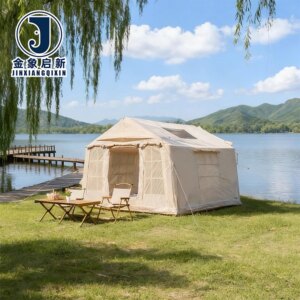
Tienda Inflable de Lujo para Glamping, Tienda de Aire Impermeable para Exterior con Bomba
Read more -
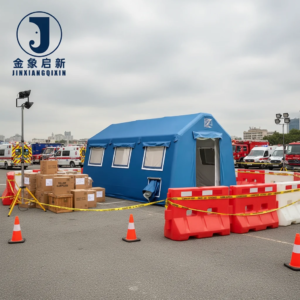
Tienda de Camping Inflable Impermeable PVC Tienda de Aire Exterior Fácil de Montar Refugio Familiar para Camping Cuatro Estaciones >3000mm Impermeable Rápido
Read more