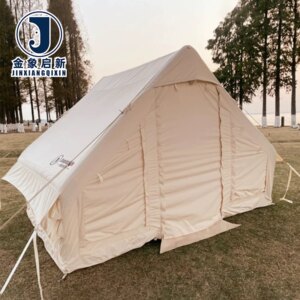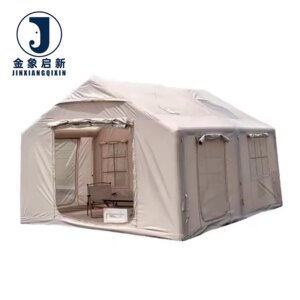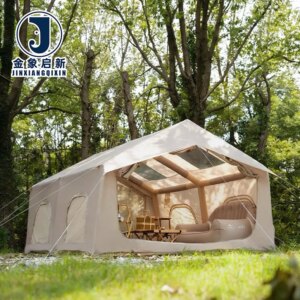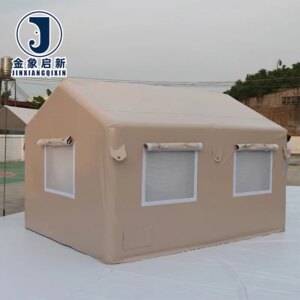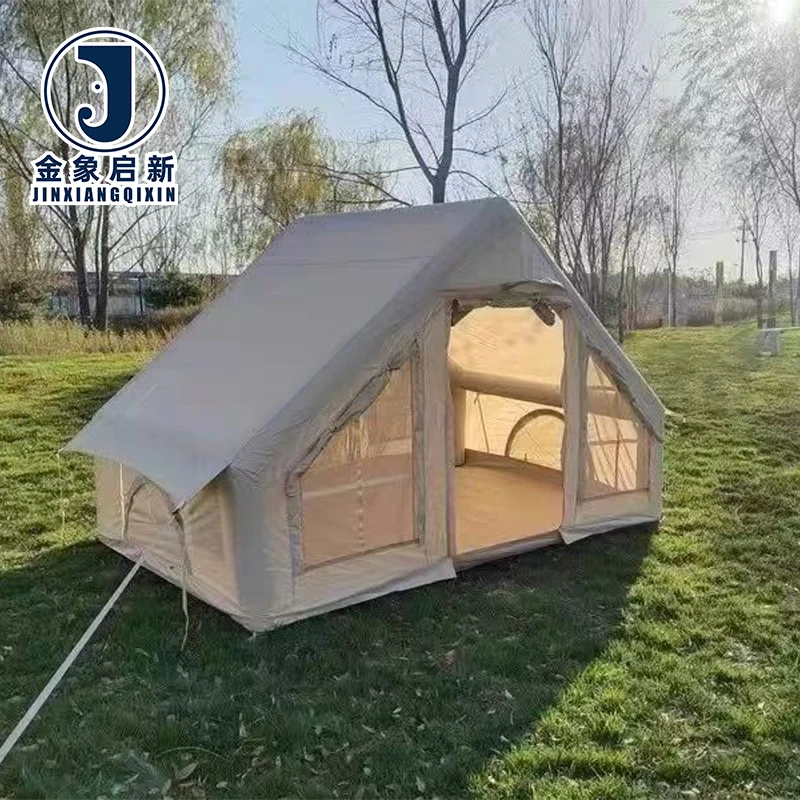
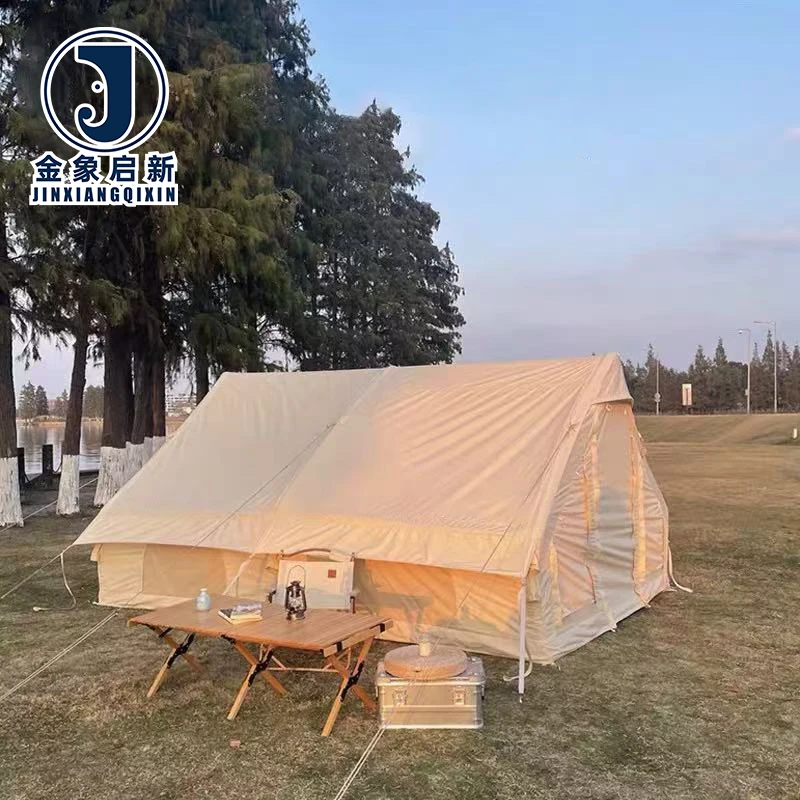
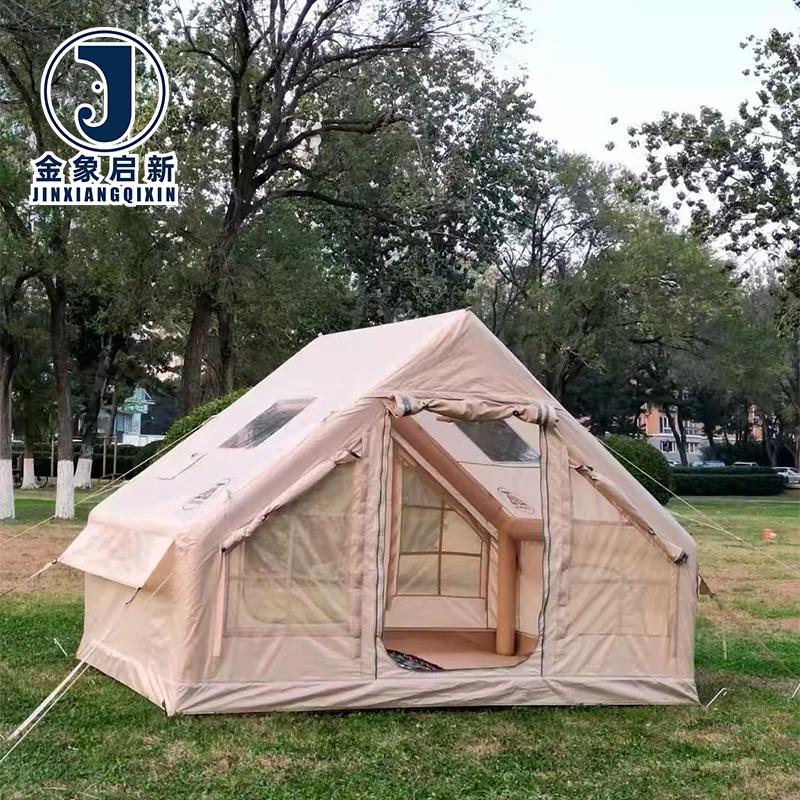
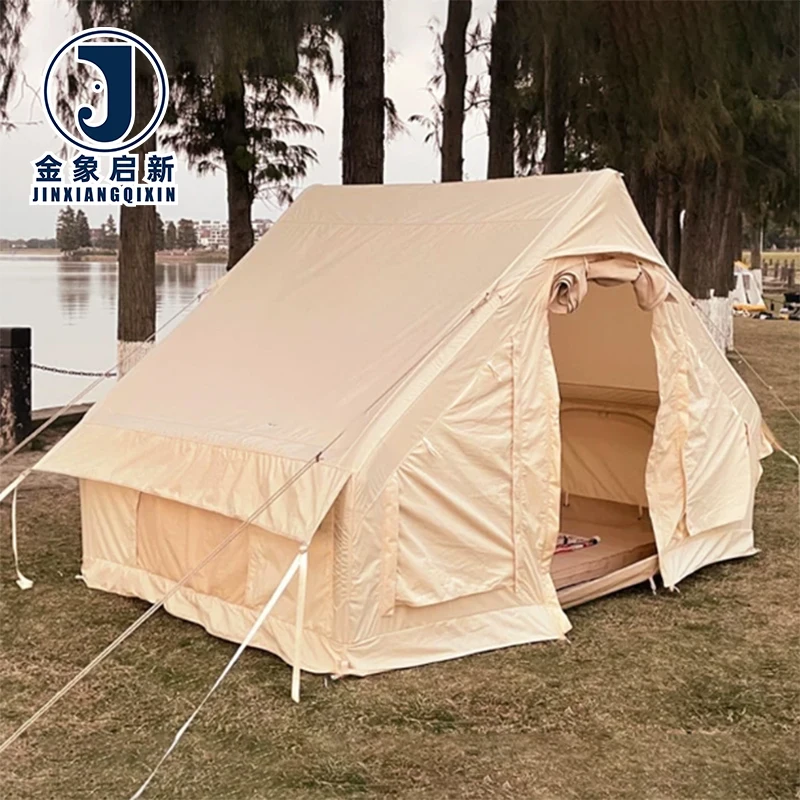
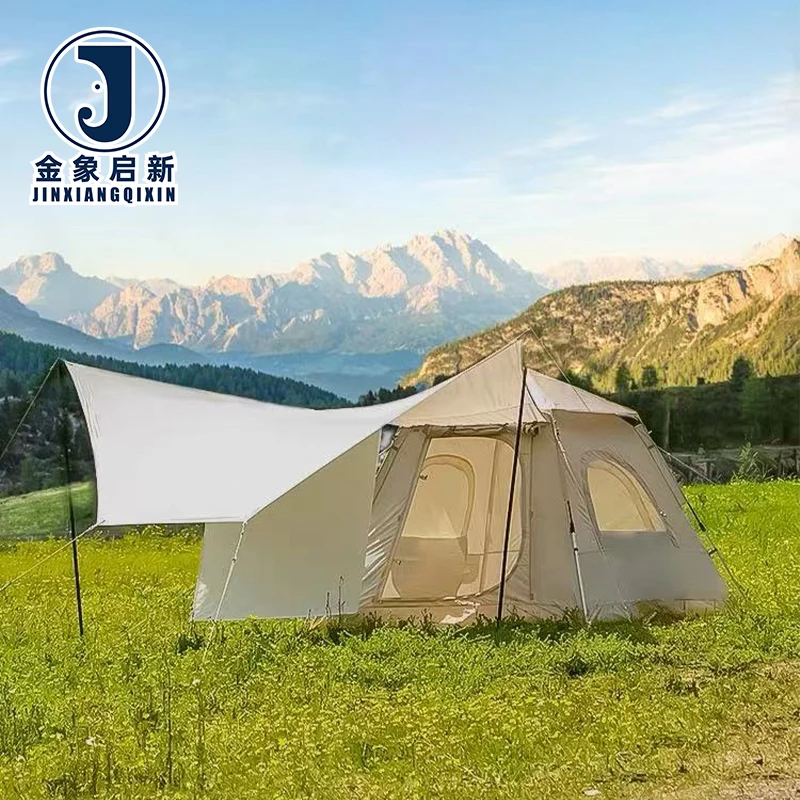
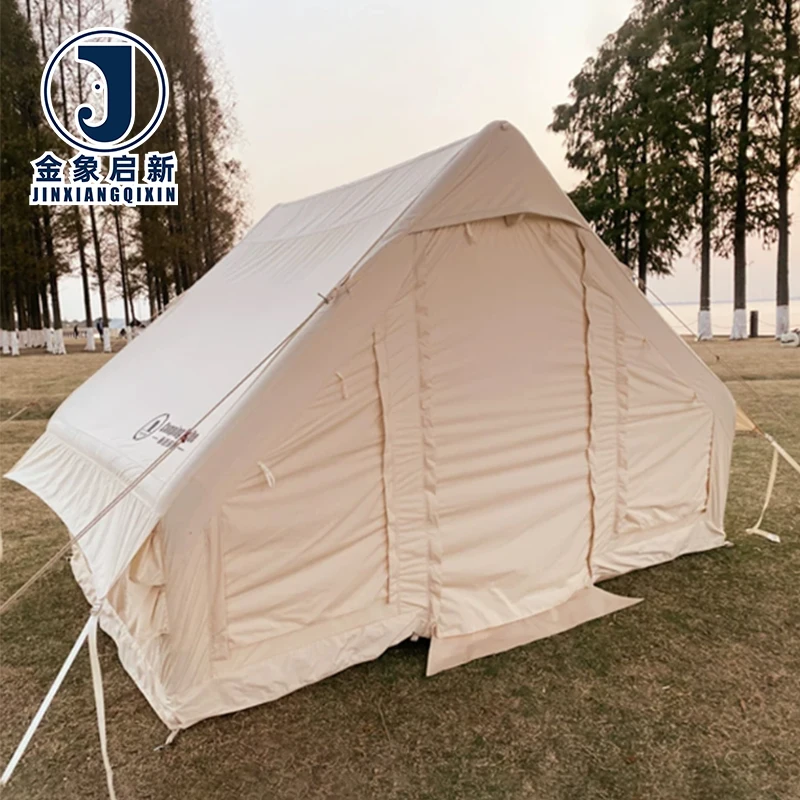
PVC Inflatable Tent for Camping, Waterproof, UV-Resistant, Fire-Retardant EN 13501-1 — built for commercial and event use where reliability matters. Knife-coated PVC tarpaulin ensures verified GSM, coating weight, and adhesion across every unit, with full OEM/ODM customization on dimensions, color, and printing. Each order ships with material specs, UV/flame-retardant test reports, and pre-shipment inspection records for full batch traceability.
Description
Deep process control over coating weight and adhesion — our PVC inflatable camping tent production uses verified knife-coated fabric with in-process QA at every stage, ensuring the material you specify is the material you receive.
Technical Specifications
| Parameter | Value |
|---|---|
| Product Type | Inflatable Tent |
| Core Material | PVC tarpaulin (knife-coated fabric) |
| Construction | Single layer |
| Opening Mechanism | Quick automatic opening (inflatable) |
| Waterproof Rating | Exceeds industry standards by 25% (source value — verify against manufacturer catalog) |
| UV Resistance | 1,500+ hours sunlight exposure (test basis not stated) |
| Flame Retardant Grade | EN 13501-1 |
| Tear Resistance | 300N/5cm (standard not stated) |
| Customization | OEM & ODM, custom dimensions, color matching, logo printing, pattern printing, specialized valve configurations |
| Sample Lead Time | 5-7 business days |
| Production Lead Time | 15-day lead times |
| Buffer Stock | 30-day buffer stock for standard configurations |
| Quality Control | 7-point inspection, digital records stored for 5 years |
| Certifications | ISO9001, ISO14001, ISO45001, CE |
Application Suitability
| Application | Exposure & Requirement |
|---|---|
| Event management temporary structures | High foot traffic, public assembly fire-retardant compliance, rapid deployment and teardown |
| Adventure tourism base camps | All-season weather exposure, UV radiation, repeated inflation cycles, remote site logistics |
| Industrial site temporary shelters | Wind loading, chemical dust, abrasive ground contact, continuous inflation pressure |
| Commercial outdoor operations | Daily UV exposure, frequent relocation, branding visibility, weather protection for equipment |
| Field logistics support | Rapid inflation under variable temperatures, abrasion from cargo handling, storage compactness |
Why Unverified Flame-Retardant Claims Cost More Than the Tent Itself
A PVC inflatable tent manufacturer must back every fire-safety claim with a test report matched to your market’s enforcement standard.
When event organizers deploy inflatable structures in public spaces, fire marshals do not accept a data sheet that says "flame retardant" without a grade. Tents have been pulled from sites mid-event because the supplier could not produce an EN 13501-1 certificate or equivalent. The cost is not the tent — it is the cancelled event, the relocated crew, and the reputational damage. [NEED_CITE: EN 13501-1 classification for construction products and building elements]
Sourcing a custom inflatable camping tent for commercial deployment means confirming the exact fire classification your jurisdiction requires before production begins, not after the shipment arrives.
Coating Process Control That Holds Across Every Production Run
Batch-to-batch consistency in PVC inflatable tent production starts with the knife-coating process itself. The coating weight, blade gap, and oven temperature profile determine whether the PVC compound fully penetrates the base fabric or sits as a surface film. Our three full production lines maintain calibrated process parameters so that adhesion strength and coating distribution remain consistent from the first roll to the last in any order.
Full Customization From Design Through Valve Configuration
Every custom inflatable camping tent order can specify dimensions, color matching, logo and pattern printing, and specialized valve configurations. The 10-technician R&D team develops pre-production samples within 5-7 business days so that engineering validation happens before mass production begins. This eliminates the mismatch between approved sample and bulk delivery that causes disputes on complex builds. [NEED_CITE: OEM and ODM sample approval process for custom inflatable structures]
How Tear Strength and Coating Adhesion Interact in Inflatable Applications
Tear resistance rated at 300N/5cm reflects the combined behaviour of the base fabric weave and the PVC coating bond. In inflatable structures, the fabric carries internal air pressure continuously, concentrating stress at seam junctions and valve openings. A knife-coated fabric achieves higher peel strength than laminated alternatives because the PVC compound penetrates the yarn interstices rather than bonding as a separate film layer. This means the welded seams resist delamination under cyclic inflation loads. The single-layer construction reduces overall weight while the PVC tarpaulin base maintains dimensional stability across temperature variation, which is critical for structures that must hold precise geometry under wind loading.
The Hidden Cost of Colour Drift Across a Multi-Unit Order
When event organizers order ten identical inflatable structures for a festival, visible colour variation between units installed side by side forces a choice: accept an inconsistent appearance or reject the batch. Colour drift originates from pigment dosing variation during compounding and from oven temperature inconsistency during curing. Both are process-control failures, not material defects, and both are preventable through dedicated QA checkpoints at the coating stage. [NEED_CITE: colour consistency measurement methods for PVC coated textiles]
Why This PVC Inflatable Tent Manufacturer Delivers Verified Quality
Our 36 sets of professional processing equipment support the full production chain from base fabric preparation through final valve assembly, keeping lead times stable at 15 days even during peak demand periods.
The 7-point inspection system records digital quality data stored for five years and accessible by order number, giving buyers a verifiable trace from raw material tensile testing through final inflation pressure retention checks.
Pre-production samples ship within 5-7 business days, allowing engineering teams to validate dimensions, valve placement, and inflation behaviour before committing to bulk production.
The 30-day buffer stock on standard configurations absorbs demand spikes without extending lead times, protecting event timelines and project schedules.
Every shipment includes a batch-specific quality inspection report covering dimensional accuracy, material thickness, waterproof performance, and inflation retention test results.
Documentation & Verification
- Material specification sheet stating GSM, base fabric type, coating method, and colour reference per order
- UV and flame-retardant test reports provided per batch with EN 13501-1 classification where specified
- Pre-shipment inspection record with dimensional checks and inflation retention results accessible by order number
- ISO9001, ISO14001, ISO45001, and CE certificates included with every commercial shipment
- Certificate of origin and customs documentation prepared for cross-border delivery
Fabrication, Handling & Storage
- Heat-weld PVC knife-coated panels using calibrated temperature and dwell time matched to single-layer construction thickness
- Reinforce valve openings with additional PVC patches bonded to the knife-coated surface for pressure retention
- Store inflated or deflated units dry and away from sharp ground contact to protect the PVC tarpaulin coating
- Clean surfaces with mild detergent compatible with PVC coating — avoid solvent-based cleaners that degrade the plasticizer
- Transport in temperatures above freezing to prevent low-temperature stiffness in the single-layer PVC fabric
- Repair minor punctures with PVC-compatible adhesive patches matching the knife-coated fabric composition
What We Need to Start Your Quotation
Provide the intended application, deployment environment, and any fire-retardant classification your local authority requires. Specify dimensions, colour references or Pantone codes, and whether you need logo or pattern printing on the PVC inflatable tent fabric. Confirm whether you require finished units with valve configurations or fabric-only supply for your own fabrication line.
Frequently Asked Questions
Q: What customization options are available for dimensions, color, printing, and valve configuration?
A: Every custom inflatable camping tent order supports OEM and ODM development including custom dimensions, Pantone-matched colour, logo and pattern printing, and specialized valve configurations. The R&D team produces pre-production samples within 5-7 business days for your engineering validation before mass production begins.
Q: What certifications and test reports ship with each order?
A: Each shipment includes ISO9001, ISO14001, ISO45001, and CE certificates along with a batch-specific inspection report. Where flame-retardant treatment is specified, an EN 13501-1 test report accompanies the documentation package. Third-party inspection at our facility is available prior to dispatch.
Q: How is batch-to-batch color consistency maintained across multiple orders?
A: Pigment dosing is controlled at the compounding stage and oven curing temperatures are monitored continuously across all three production lines. Digital QA records stored for five years allow us to reference exact colour parameters from previous orders, ensuring repeatability when you reorder the same PVC inflatable tent specification.
Q: Can pre-production samples be approved before bulk production runs?
A: Yes. Pre-production samples are developed within 5-7 business days and shipped for your review. Dimensional accuracy, inflation behaviour, colour match, and valve configuration are all validated at the sample stage before mass production is authorized, eliminating specification mismatches on the bulk delivery.
Q: What is the typical lead time and is buffer stock available for urgent requirements?
A: Standard production lead time is 15 days from order confirmation. A 30-day buffer stock on standard configurations absorbs demand peaks without extending delivery schedules. Custom specifications involving unique dimensions, colours, or valve configurations follow the 15-day timeline from sample approval.
Related products
-
Tienda de Camping Inflable Resistente a UV Personalizable para Cuatro Estaciones Impermeable de PVC Ecológica a Prueba de Viento Plegable Automática Rápida
Read more -
Tienda de camping inflable impermeable al aire libre, fácil de montar, tienda de aire para camping
Read more -
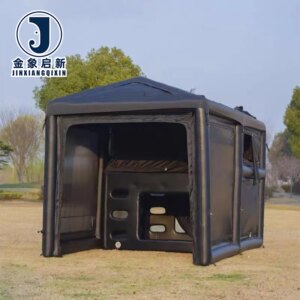
Tienda inflable premium para camping de cuatro estaciones, fácil de usar, espaciosa, portátil, impermeable, tienda exterior rápida.
Read more -
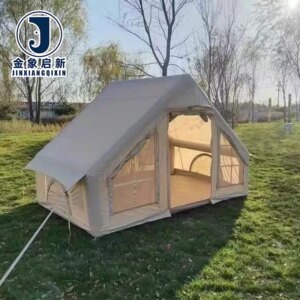
Tienda inflable portátil de camping al aire libre de lujo para uso en todas las estaciones, espacio grande, a prueba de lluvia, aislada, apertura automática rápida.
Read more