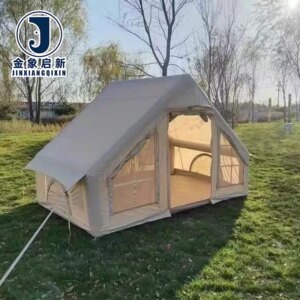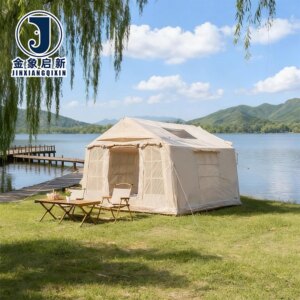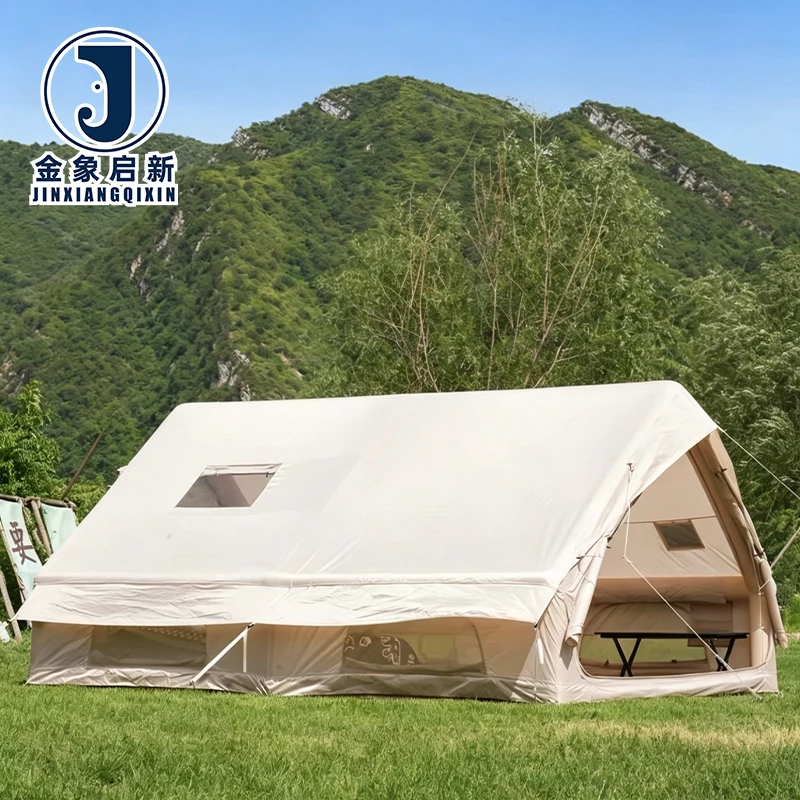
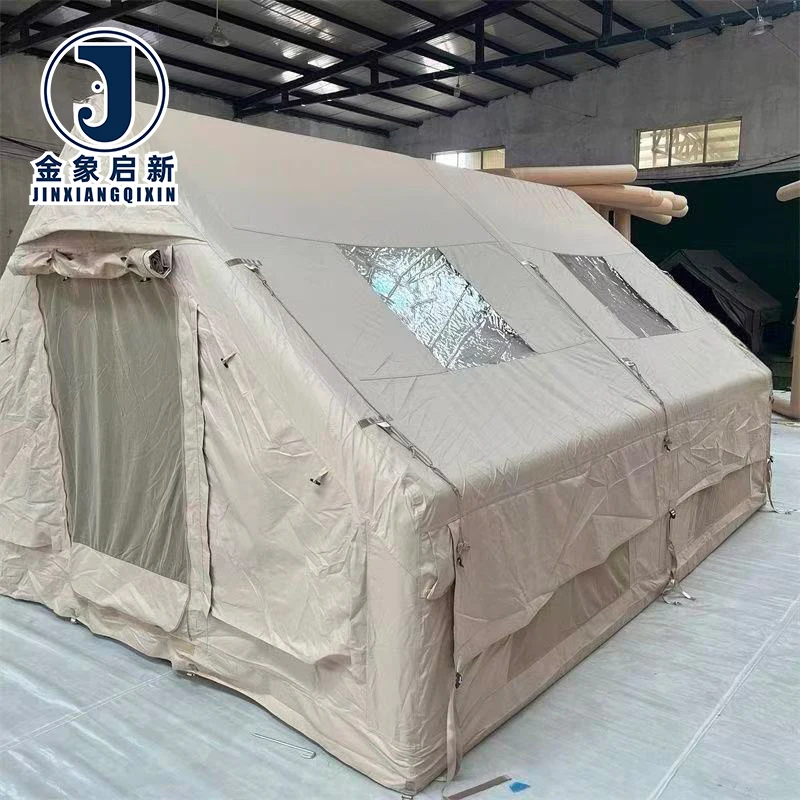
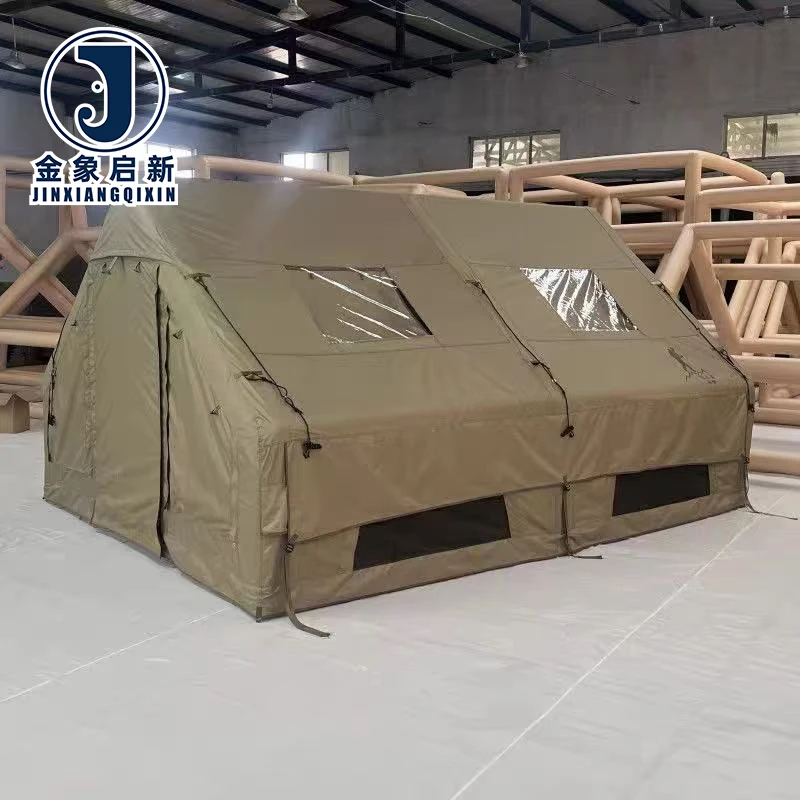
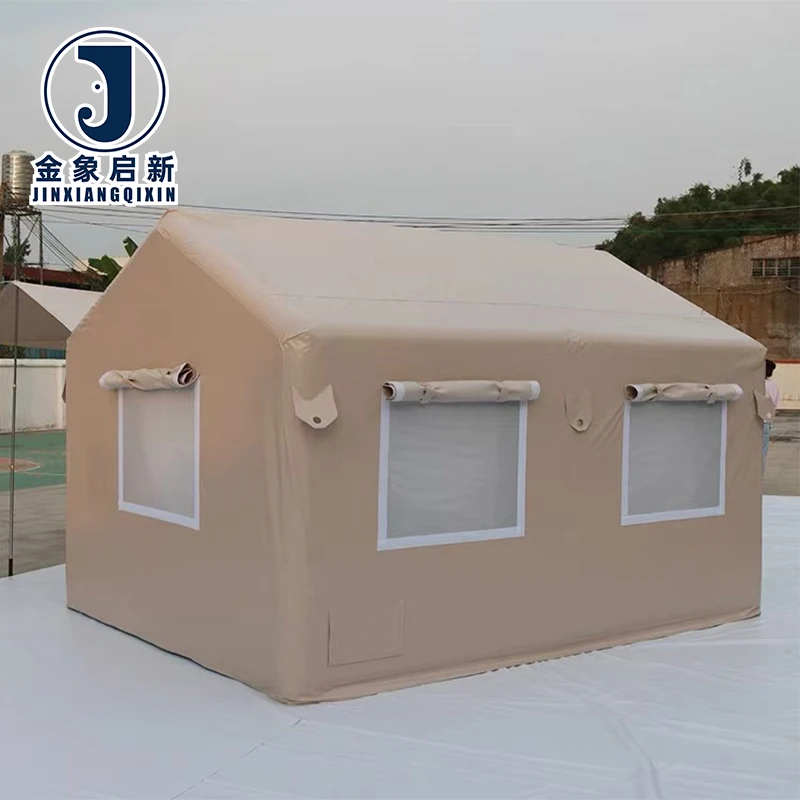
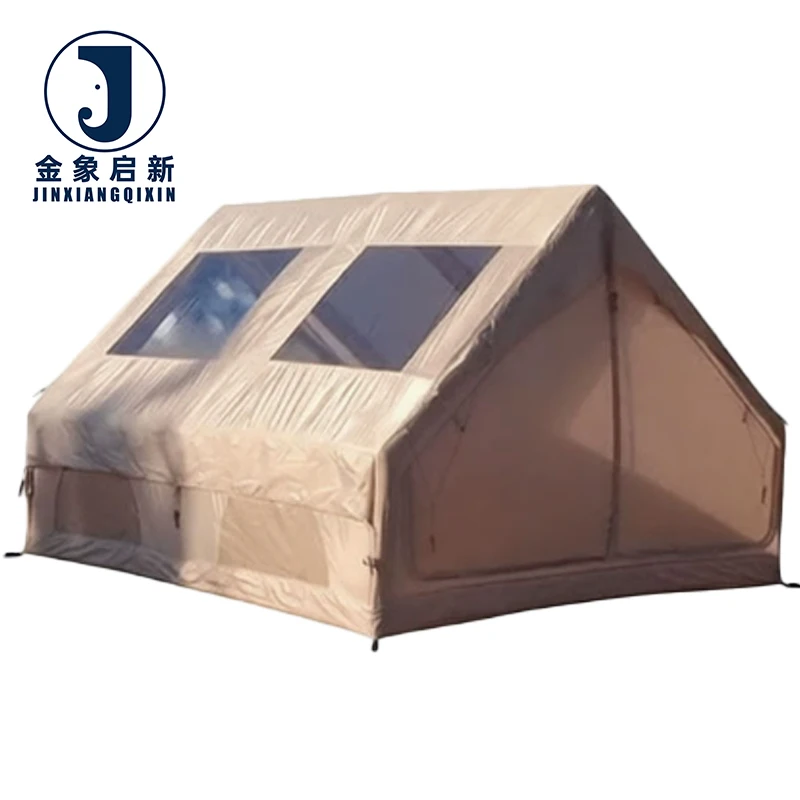
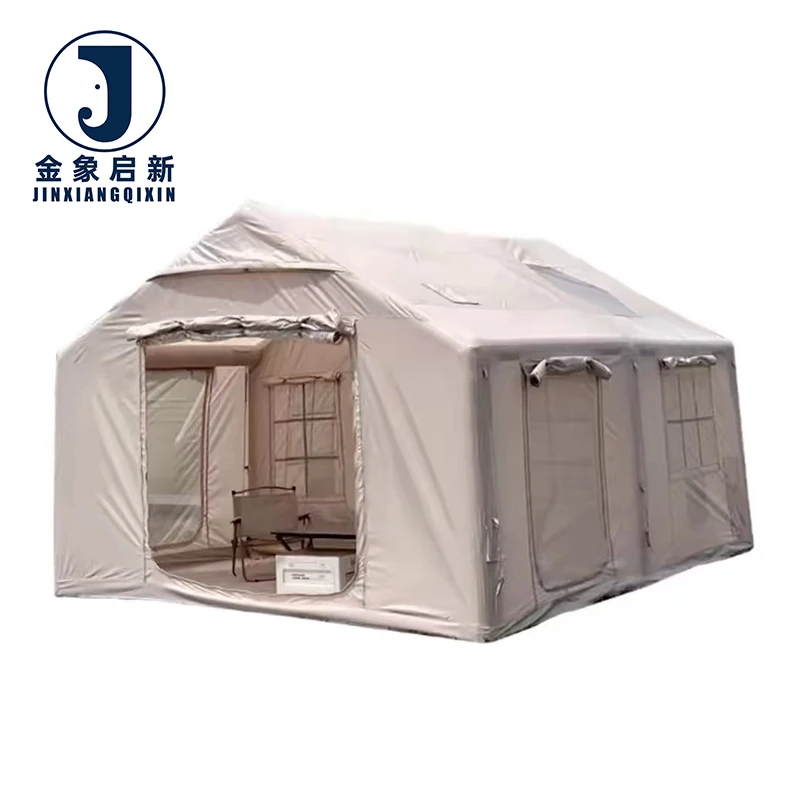
Large Inflatable Camping Tent — PVC tarpaulin construction, waterproof and UV-resistant, fully customizable dimensions and branding.
- Engineered from in-house coated PVC tarpaulin with controlled coating weight and adhesion for consistent tensile and tear performance across every unit
- Full OEM & ODM capability covering sizing, colour matching, pattern printing, and logo branding to your project specifications
10-person R&D team develops samples within days, with 100% pre-shipment inspection ensuring every tent meets specification before dispatch.
Description
Proven Coated Fabric Process Control — nearly 30 years of focused PVC tarpaulin production with in-house coating, pattern printing, and 100% pre-shipment inspection for every inflatable tent fabric order.
Technical Specifications
| Parameter | Value |
|---|---|
| Product Type | Inflatable Tent |
| Core Material | PVC tarpaulin |
| Key Performance | Waterproof, UV-resistant (test basis not stated in source), tear-resistant |
| Customization Service | OEM & ODM (sample customization, pattern printing) |
| R&D Team Scale | 10 technicians |
| Production Lines | 3 full production lines |
| Processing Equipment | 36 sets of professional processing equipment |
| Quality Control System | Strict full-process quality inspection with dedicated QA&QC staff |
| Standards | ISO9001, ISO14001, ISO45001, CE |
Application Suitability
| Application | Exposure & Requirement |
|---|---|
| Temporary event pavilions | Rapid deployment, repeated inflation cycles, high foot traffic, variable weather |
| Industrial site shelters | Constant outdoor exposure, wind load on inflated structure, dust and debris abrasion |
| Mobile exhibition spaces | Frequent packing and transport, visual branding consistency, indoor-outdoor transition |
| Equipment storage in outdoor environments | Prolonged water contact, UV exposure, puncture resistance against sharp tools or edges |
| Outdoor group camping | Multi-day weather exposure, occupant safety, ground moisture resistance |
Why Inflatable Tent Fabric Fails Long Before the Structure Does
Welded seams parting at flex points — not the fabric tearing — accounts for most early inflatable tent failures.
When sourcing PVC tarpaulin for inflatable structures, buyers often focus on the stated GSM or the base fabric denier. What causes real downtime on site is a seam that opens under the cyclic stress of inflation and deflation, or a coating that delaminates at the fold line after repeated packing. These failures trace back to coating adhesion consistency and heat-weld parameter control — variables that are invisible on a quotation sheet. An inflatable tent manufacturer who cannot show you in-process QA records and weld peel test data is asking you to take on the risk [NEED_CITE: tensile and peel test methods for coated fabrics per ISO 1421].
Coating Adhesion and the Inflatable Structure Lifecycle
Every inflation cycle puts the PVC tarpaulin under biaxial tension, and every deflation cycle folds it into crease lines that become permanent stress concentrators. The coating must bond to the base fabric with enough peel strength to survive thousands of these cycles without delaminating at the seam overlap. Our in-house coating lines allow direct control over coating weight and adhesion formulation at every production run.
Batch-to-Batch Consistency for Branding and Visual Identity
When inflatable tent structures are deployed at commercial events, colour variation between fabric panels is immediately visible. Buyers ordering multiple units or replacement panels need roll-to-roll colour matching that holds across production batches. Our pattern printing and OEM & ODM service includes colour reference documentation tied to each order, so a replacement panel shipped months later matches the original deployment [NEED_CITE: colour fastness and batch consistency standards for coated textiles].
Reading the Specification Sheet Beyond GSM
The weight of a PVC tarpaulin is a single data point, not a performance guarantee. Two fabrics at the same GSM can differ significantly in tear resistance depending on the base fabric denier, the weave density, and the coating method used. Knife-coated fabrics typically achieve higher peel strength than laminated alternatives, which matters when heat-welded seams must carry the structural load of an inflated form. Review the base fabric construction and coating type alongside the stated weight to understand how the material will behave under real inflation pressure.
The Hidden Cost of Skipping Pre-Shipment Weld Verification
A seam that passes visual inspection can still fail under cyclic inflation stress if the heat-weld temperature or dwell time was not matched to the specific coating formulation. When inflatable tent fabric arrives at the fabrication stage with inconsistent weld adhesion, the cost is not limited to rework — it includes delayed deployment, damaged credibility with the end user, and potential safety incidents on site. These are failures that 100% pre-shipment inspection with documented peel testing is designed to prevent [NEED_CITE: weld strength testing protocols for PVC coated fabrics].
Why Sourcing PVC Inflatable Tent Fabric Here Makes Sense
In-house coating across three full production lines means coating weight and adhesion are controlled at source, not outsourced to a separate laminator. The 10-person R&D team handles material selection, pattern printing, and sample development specific to inflatable tent applications, reducing the gap between your design brief and the finished fabric. A dedicated QA and QC team inspects every roll before dispatch, with documentation tied to each shipment. Custom widths, colours, and branding are developed within days as samples, not weeks, keeping your project timeline intact.
Documentation & Verification
- Material specification sheet stating base fabric, coating type, and colour reference for each inflatable tent order
- UV and flame-retardant test reports provided for applicable grades — confirm the standard required for your market
- Pre-shipment inspection record with roll-by-roll documentation before dispatch
- ISO9001, ISO14001, ISO45001, and CE certificates available for compliance verification
Fabrication, Handling & Storage
- Heat-weld parameters must match the specific PVC coating formulation — request our recommended temperature and dwell time guide for inflatable tent seams
- Store rolls upright in a dry, shaded area to prevent surface creasing that transfers into visible marks on inflated panels
- Use compatible PVC adhesive for field repairs on punctured inflatable tent panels to maintain coating bond integrity
- Avoid dragging rolls across unsealed concrete floors to protect the coating surface before fabrication
- Clean with mild detergent and soft cloth — solvents may degrade the PVC coating surface on inflatable tent fabric
What to Include in Your Inquiry
Provide the intended application environment, expected inflation cycle frequency, and any fire classification or UV performance standard required by your local regulations. Specify whether you need fabric rolls for your own fabrication line or finished custom-sized inflatable tent structures with pattern printing and branding. Include target dimensions, colour references, and estimated annual volume so we can match the right coating grade and production schedule to your project.
Frequently Asked Questions
Q: How do you ensure batch-to-batch colour consistency across inflatable tent fabric orders?
A: Each order is tied to a colour reference documented on the material specification sheet. Our in-house coating and pattern printing process allows direct control at every production stage, and dedicated QA staff verify colour match roll by roll before dispatch.
Q: What UV and flame-retardant test reports are available for the PVC tarpaulin used in inflatable tents?
A: Test reports are available for UV and flame-retardant grades where applicable. Because fire classification requirements vary by market, we recommend confirming the specific standard your project demands — such as DIN 4102 or NFPA 701 — before committing to bulk production.
Q: What customization options exist for sizing, pattern printing, and branding on inflatable tent structures?
A: Our OEM & ODM service covers custom dimensions, colour selection, and pattern printing for branding or identification. The 10-person R&D team develops samples within days, allowing you to approve material, print quality, and construction before mass production begins.
Q: What is the sample development and approval process before mass production?
A: After receiving your application requirements and design brief, we produce a sample reflecting the specified material, colour, and printing. Once you approve the sample, full production begins with in-process QA checks at every stage and 100% pre-shipment inspection.
Q: What documentation ships with each order for receiving and quality verification?
A: Each shipment includes a material specification sheet, packing list, certificate of origin, and pre-shipment inspection record. ISO and CE certificates are available on request, along with applicable test reports for UV or flame-retardant grades.
Related products
-
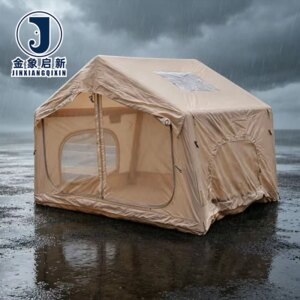
Tienda de Camping Inflable Impermeable Tienda de Aire Exterior para Camping Refugio de Tienda Inflable
Read more -
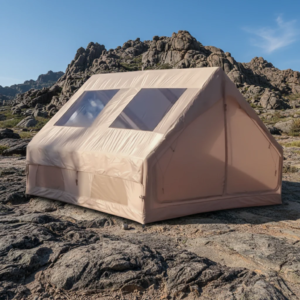
Tienda Inflable de Alta Calidad para Cuatro Estaciones para Acampar Material de PVC Duradero Resistencia a Todas las Condiciones Climáticas Apertura Automática Rápida
Read more -
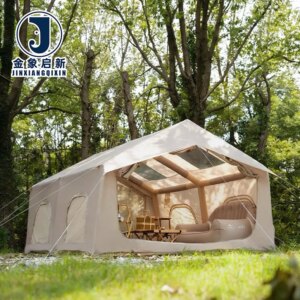
Tienda de Camping Inflable Impermeable de PVC Tienda de Aire Exterior Montaje Fácil Refugio Familiar para Camping
Read more -
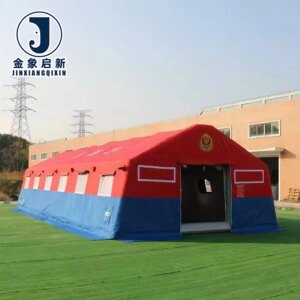
Tienda de Camping Inflable de PVC A Prueba de Agua de Cuatro Estaciones Certificada por CE Apertura Automática Rápida 3000mm+ Venta Directa de Fábrica
Read more