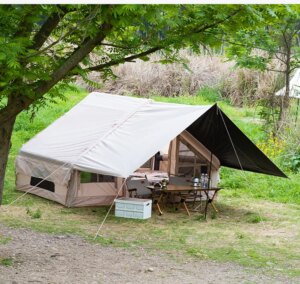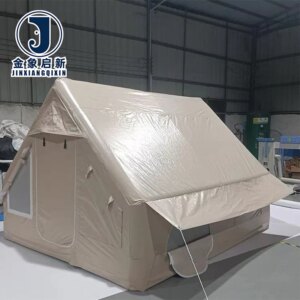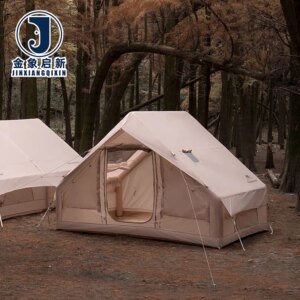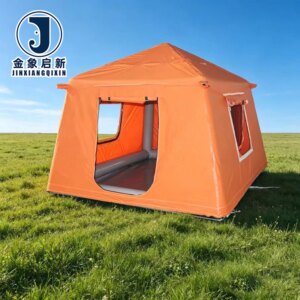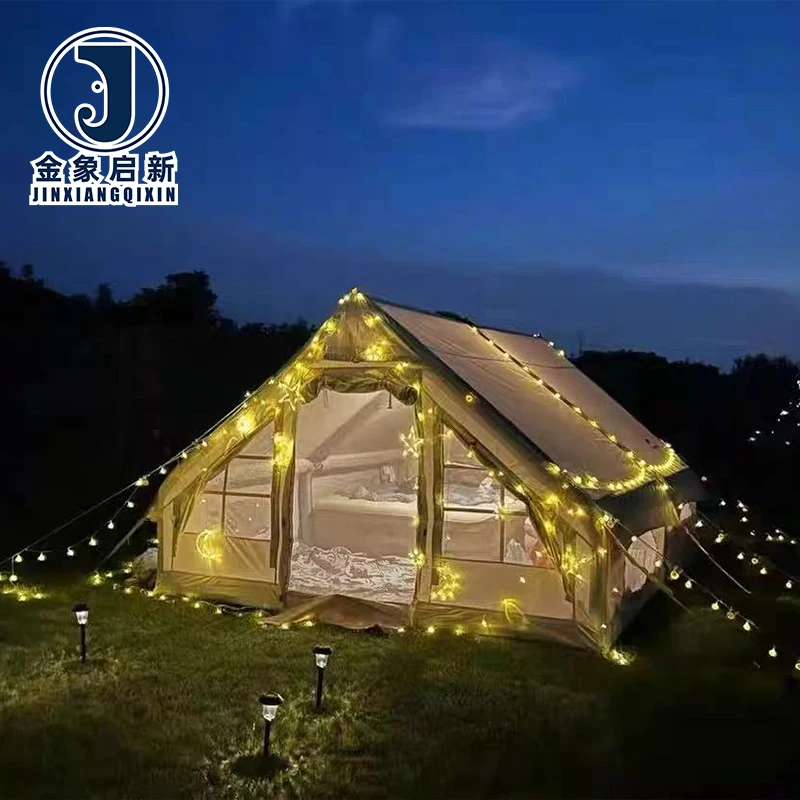
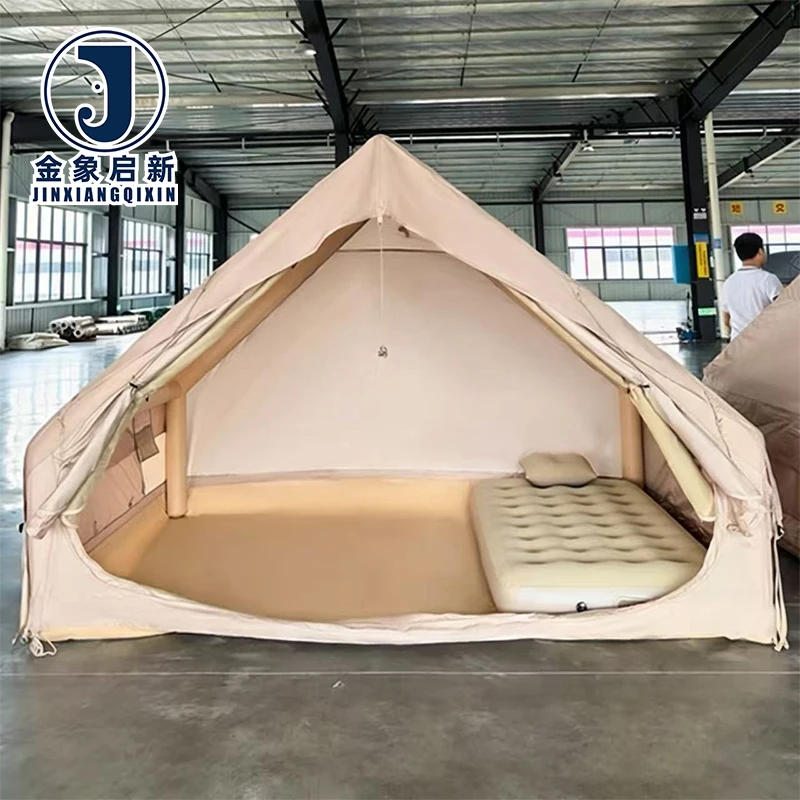
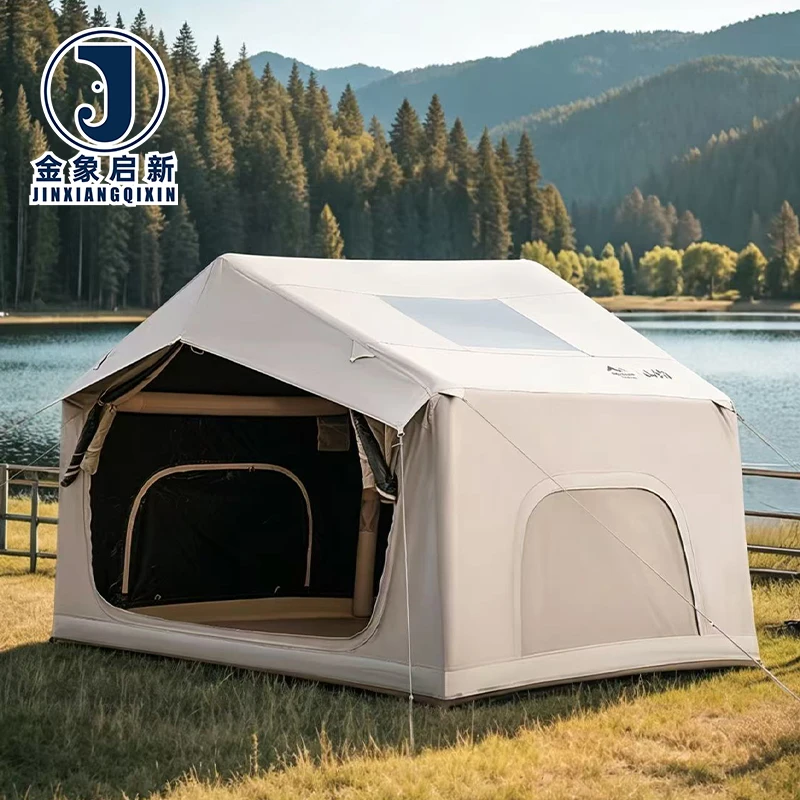
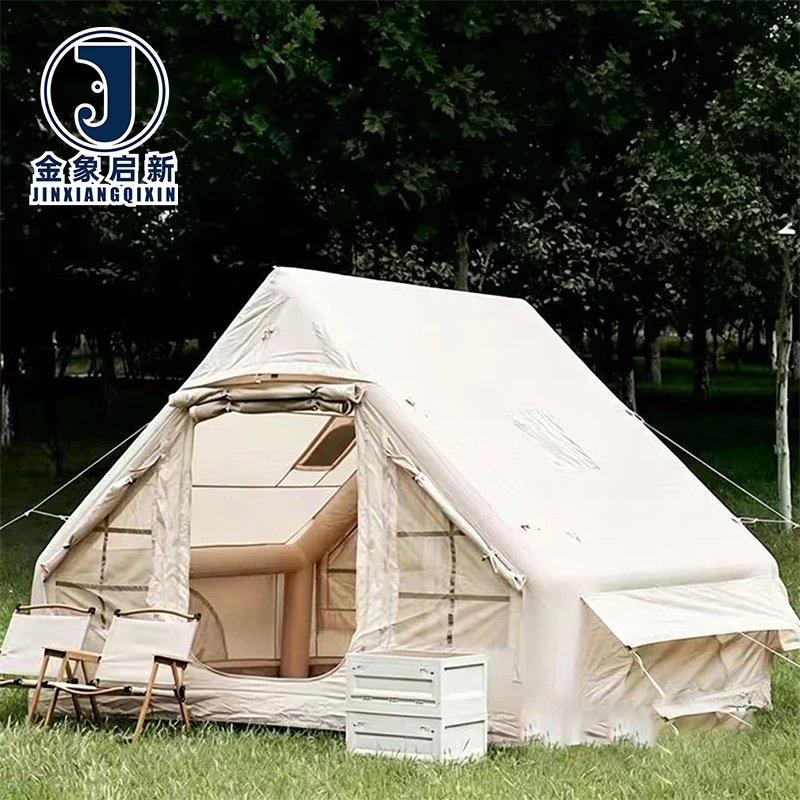
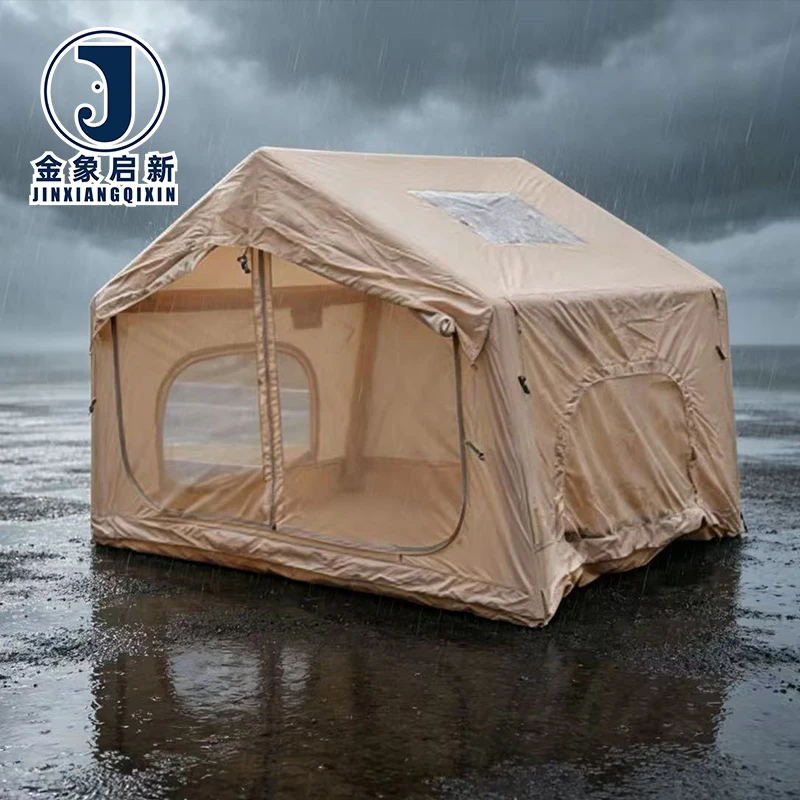
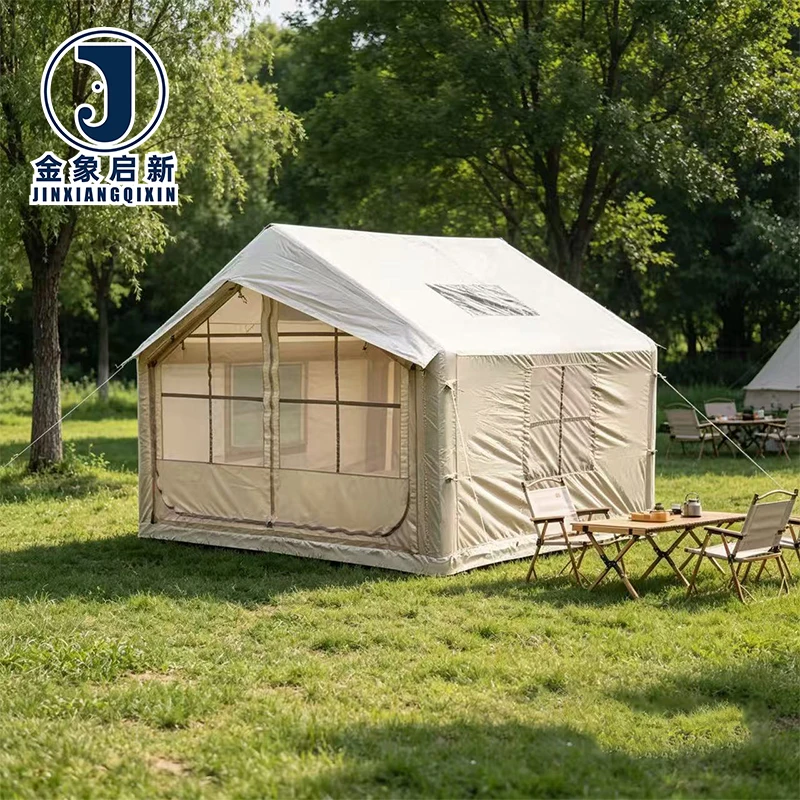
Inflatable Tent — Waterproof, UV-resistant, Tear-resistant PVC Tarpaulin with single-layer inflatable structure for rapid deployment and transport efficiency.
- Full OEM & ODM customisation on size, material thickness, and pattern printing for project-specific branding
- Coating weight and base fabric selection directly determine tensile and tear performance — our R&D team matches material grade to your structural load and climate requirements
Backed by 36 sets of professional processing equipment and 100% pre-shipment inspection, every batch ships with roll-level quality documentation for full traceability.
Description
Process-Controlled Coating — Every roll of PVC tarpaulin for inflatable tent production is monitored for coating weight and adhesion at each stage on our three full lines.
Technical Specifications
| Parameter | Value |
|---|---|
| Product Type | Inflatable Tent |
| Core Material | PVC Tarpaulin |
| Key Performance | Waterproof, UV-resistant, Tear-resistant |
| Product Forms | Inflatable structure, single layer construction |
| Customization Service | OEM & ODM (sample customization, pattern printing) |
| Production Facility Area | 9180 square meters |
| Production Lines | 3 full production lines |
| Processing Equipment | 36 sets of professional processing equipment |
| R&D Team Scale | 10 technicians |
| Quality Control System | Full-process quality inspection with dedicated QA & QC staff |
| Standards | ISO9001, ISO14001, ISO45001, CE |
Application Suitability
| Application | Exposure & Requirement |
|---|---|
| Temporary site offices | Wind loading, UV exposure, rapid deployment |
| Equipment storage shelters | Weather protection, moisture ingress prevention |
| Field operation bases | Temperature fluctuation, structural integrity under inflation |
| Construction and mining enclosures | Abrasion, dust ingress, heavy-duty anchoring |
| Outdoor event management | Visual appearance, frequent assembly cycles |
| Remote personnel accommodation | Thermal comfort, ventilation compatibility |
Batch Colour Drift: Why Roll-to-Roll Consistency Determines Project Viability
Visual uniformity across every unit in a multi-tent deployment is a procurement baseline, not an optional extra.
When an order requires several inflatable tents standing side by side at an event or site, even slight hue variation between rolls becomes immediately obvious once inflated. I once had to re-inspect a batch after a client reported that two adjacent structures looked like they belonged to different orders — the root cause was uncontrolled pigment dosing during coating. Sourcing an Inflatable Tent + aftermarket supplier without verifying batch consistency protocols invites this exact risk on every container shipped [NEED_CITE: colour consistency measurement protocols for coated textiles].
Catalogue Depth Meets One-Project Delivery
Our PVC inflatable tent range spans the weight and treatment grades that commercial and industrial buyers specify. Because this is a full-catalogue offering rather than a single stock SKU, the same supplier relationship that covers a lightweight event shelter also supplies the heavier-grade fabric needed for a mining site enclosure. This eliminates the fragmentation that forces procurement teams to manage multiple vendors for a single project’s inflatable tent requirements.
Treatment Grades and What They Actually Mean in the Field
The waterproof, UV-resistant, and tear-resistant classifications listed on any Inflatable Tent + aftermarket supplier’s data sheet must be backed by test reports relevant to your market. UV resistance, for instance, is available in grades matched to regional solar exposure — confirm the grade required for your market before placing a production order. Waterproofing in PVC tarpaulin is inherent to the coated construction rather than a surface treatment that degrades, but seam integrity under repeated inflation cycles depends on heat-welding parameters matched to the specific coating chemistry [NEED_CITE: ISO 1421 tensile and tear test methods for coated fabrics].
Decoding the Specification Sheet for Inflatable Structure Fabric
The interaction between base fabric denier, weave density, and PVC coating weight determines how the material behaves once inflated and subjected to wind load. A higher GSM does not automatically translate to better performance if the base fabric is loosely woven — the coating adds mass but the underlying yarn structure governs tear propagation. Single layer construction in an inflatable tent balances transport weight against structural rigidity; the air-beam design compensates for the absence of a rigid frame, so the fabric must resist puncture and maintain dimensional stability under internal pressure. OEM and ODM customization, including pattern printing for project branding, requires a coating surface that accepts ink adhesion without compromising the PVC layer’s continuity.
The Hidden Cost of Specification Shortcuts
Specifying a lighter GSM to reduce per-unit cost on an inflatable tent often results in premature failure at stress points where the air beam bends under load. Fabric that lacks verified UV-resistant treatment degrades faster in direct sunlight, becoming brittle and prone to cracking along fold lines after repeated deployment cycles. When batch colour is not controlled, an entire multi-unit order may need to be rejected at the installation site — a failure that costs far more than the material savings initially targeted [NEED_CITE: common failure modes in PVC inflatable structures under cyclical loading].
Why Procurement Teams Source Inflatable Tent Fabric Here
Nearly 30 years of focused coated fabric production means the process parameters for every PVC inflatable tent grade are documented and repeatable across production runs. Three full production lines and 36 sets of processing equipment provide the capacity to fulfil multi-container orders with reliable scheduling. The 10-person R&D team develops material formulations and sample runs for custom specifications — including pattern printing for branded event structures — within days rather than weeks. Dedicated QA and QC staff conduct 100% pre-shipment inspection on every roll, catching colour variation, coating defects, and GSM deviation before the goods leave the facility.
Documentation & Verification
- Material specification sheet stating GSM, base fabric denier, coating type, and colour reference for every inflatable tent order
- UV-resistant treatment test report provided where applicable to support your market compliance claims
- Pre-shipment roll inspection record confirming batch colour consistency across the entire order quantity
- ISO and CE certificates included for cross-border procurement and customs clearance documentation
- Roll packing list detailing net weight, roll count, and dimensional data per container load
Fabrication, Handling & Storage
- Heat-weld parameters must match the specific PVC coating chemistry of your inflatable tent fabric grade
- Store rolls horizontally on pallets to prevent permanent creasing in the single layer PVC tarpaulin construction
- Allow cold-transported rolls to reach ambient temperature before unrolling to avoid coating surface cracking
- Clean with mild detergent only; harsh solvents will damage the PVC coating and UV-resistant treatment layer
- Pattern printing adhesion depends on surface preparation matched to the selected coating finish grade
Moving Forward With Your Specification
Provide the intended application environment, anticipated deployment frequency, and any regional compliance requirements for fire classification or UV performance. Confirm whether you require roll stock for in-house fabrication or finished units with custom sizing and pattern printing. Supplying target dimensions and annual volume enables accurate lead-time and container-loading projections for your inflatable tent project.
Frequently Asked Questions
Q: What GSM and treatment options are available for inflatable tent fabric?
A: The full catalogue covers PVC tarpaulin grades from lightweight event-use weights up to heavy-duty industrial specifications. UV-resistant and waterproof treatments are standard across the range; flame retardant grades are available — confirm the grade required for your market. A material specification sheet detailing exact GSM, base fabric, and coating parameters is provided with each inquiry.
Q: Can custom dimensions and pattern printing be done for project-specific requirements?
A: OEM and ODM customization covers size, material thickness, and pattern printing for branded commercial or event inflatable tents. The 10-person R&D team develops samples for custom specifications within days. Approval samples are produced before bulk runs to confirm print registration, colour accuracy, and structural performance under inflation.
Q: How is colour consistency ensured across multiple units in the same order?
A: Every roll undergoes colour verification against the approved reference standard before dispatch. Pre-shipment inspection records document batch consistency across the entire order. Pigment dosing is controlled at the coating stage, and rolls for a single multi-unit inflatable tent project are allocated from the same production batch.
Q: What documentation ships with each batch for compliance and traceability?
A: Each shipment includes a material specification sheet, applicable UV or treatment test reports, pre-shipment inspection records, roll packing list, and ISO and CE certificates. This documentation package supports customs clearance, site compliance verification, and quality traceability for every inflatable tent fabric order.
Q: What is the sample development lead time for custom specifications?
A: Sample development for custom inflatable tent specifications — including specific GSM, colour, and pattern printing requirements — is handled by the R&D team. Samples are typically prepared within days of specification confirmation, allowing buyers to evaluate material performance and visual appearance before committing to full production volumes.
Related products
-
Tienda Inflable de PVC de Lujo para Glamping al Aire Libre Impermeable con Apertura Automática Rápida Diseño Plegable de Cuatro Estaciones y Bomba
Read more -
Tienda de campaña inflable resistente a los UV personalizable para cuatro estaciones, impermeable, de PVC, con apertura automática rápida, para 2-3 personas, exterior.
Read more -
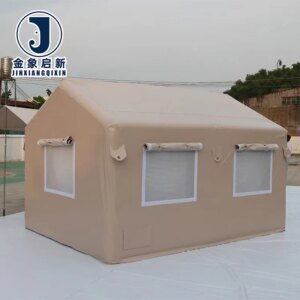
Tienda de Camping Inflable PVC Impermeable para Cuatro Estaciones, Tienda de Aire Exterior con Apertura Automática Rápida para 3-4 Personas
Read more -
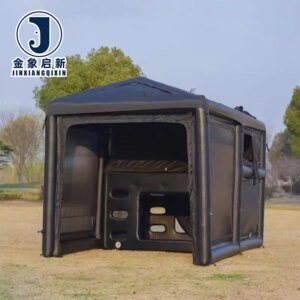
Tienda inflable premium para camping de cuatro estaciones, fácil de usar, espaciosa, portátil, impermeable, tienda exterior rápida.
Read more