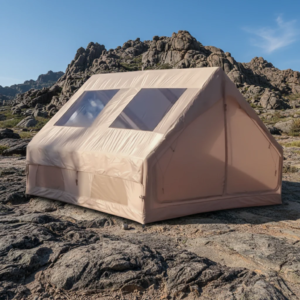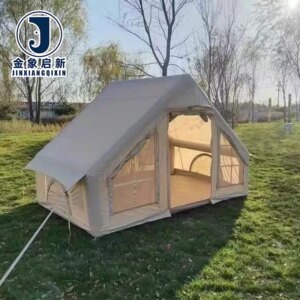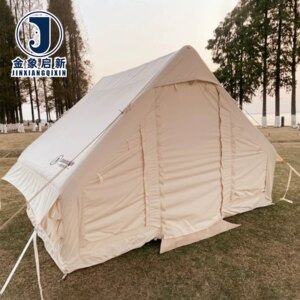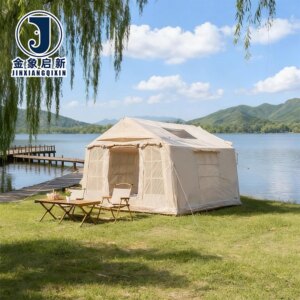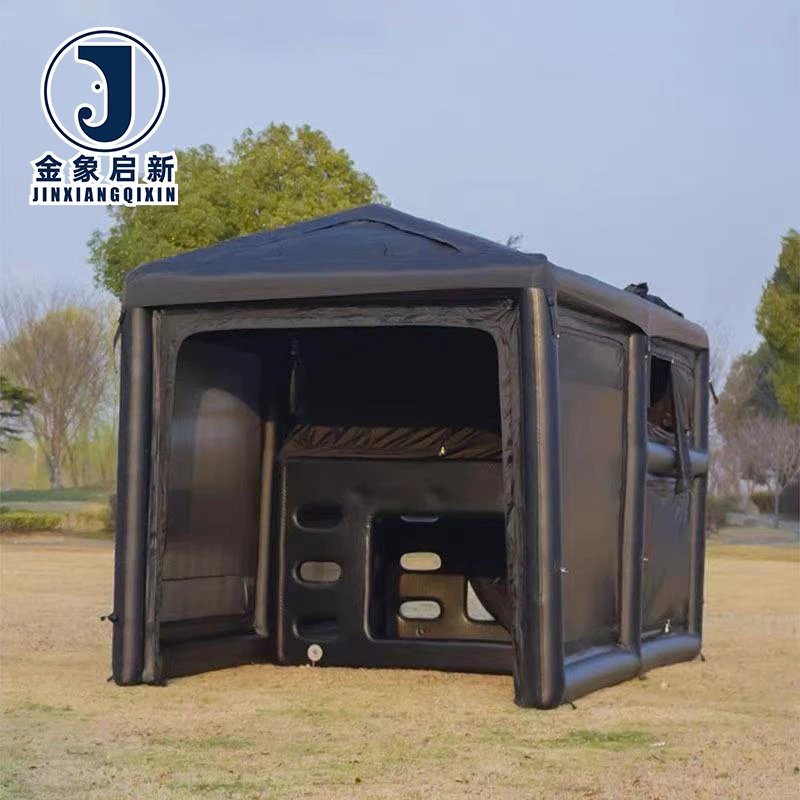
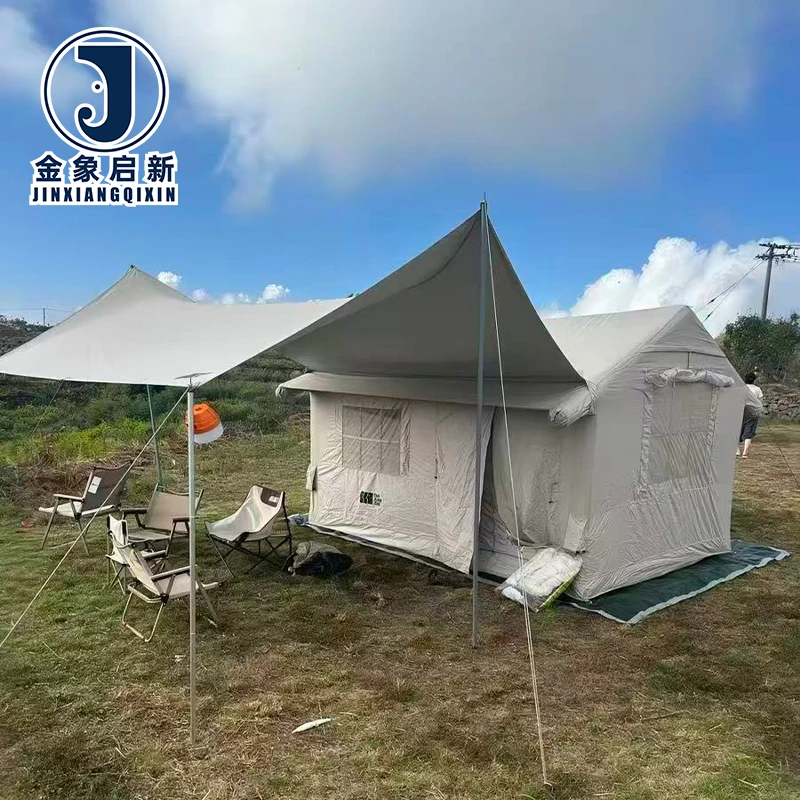
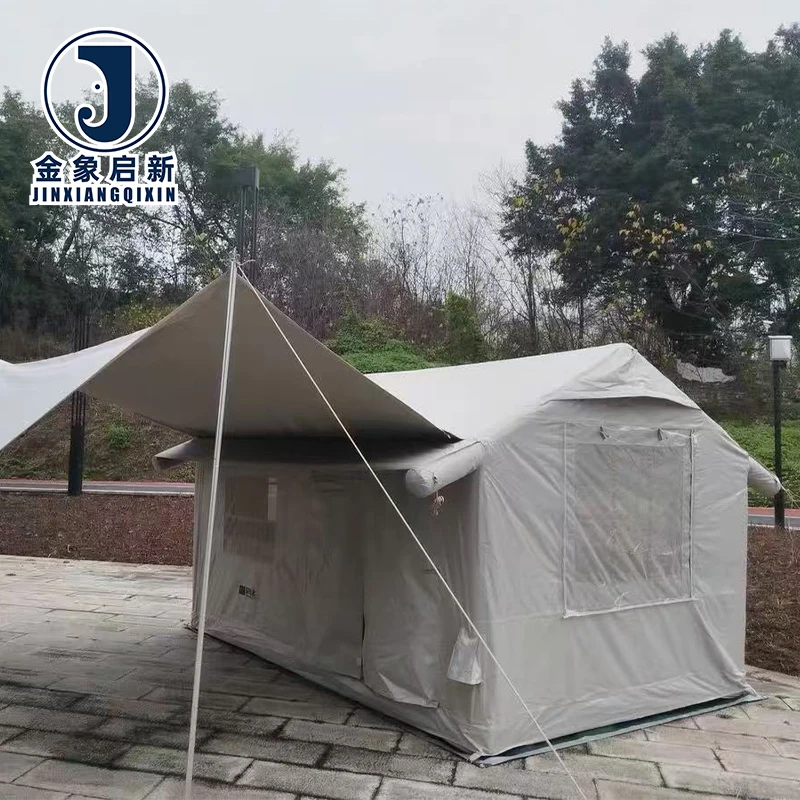
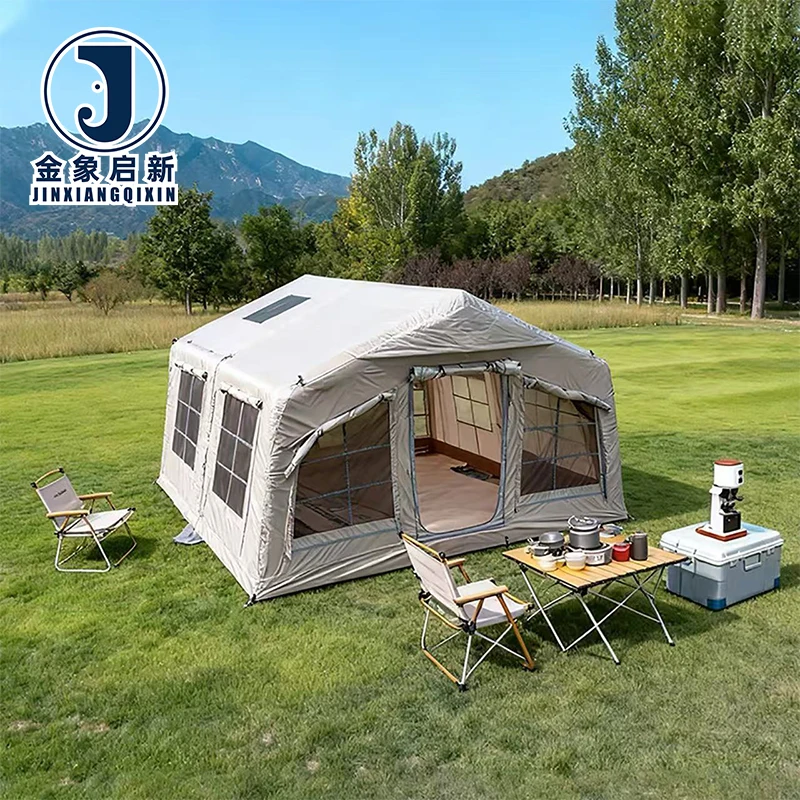
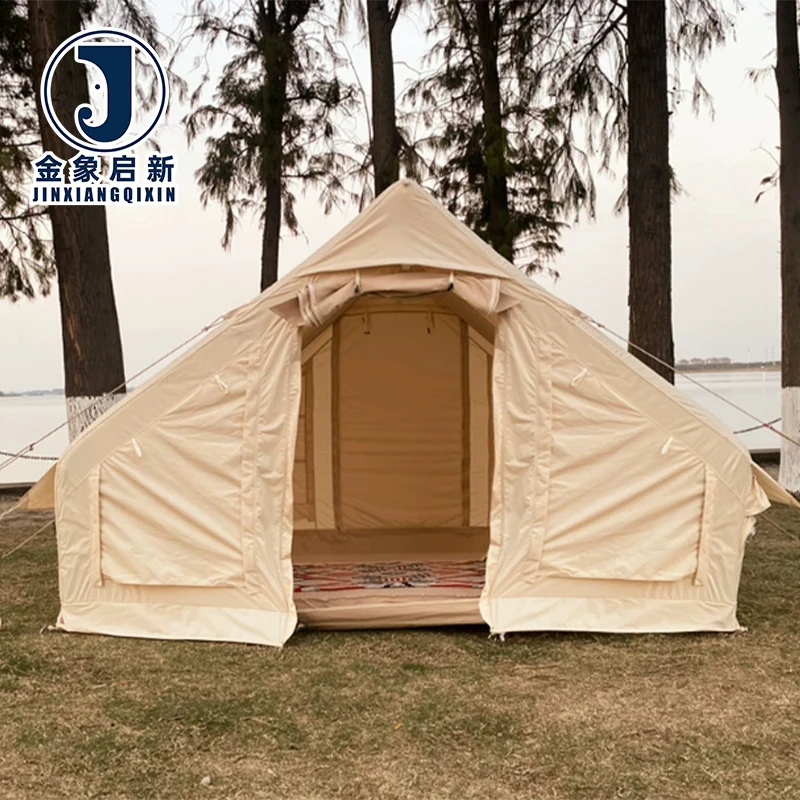
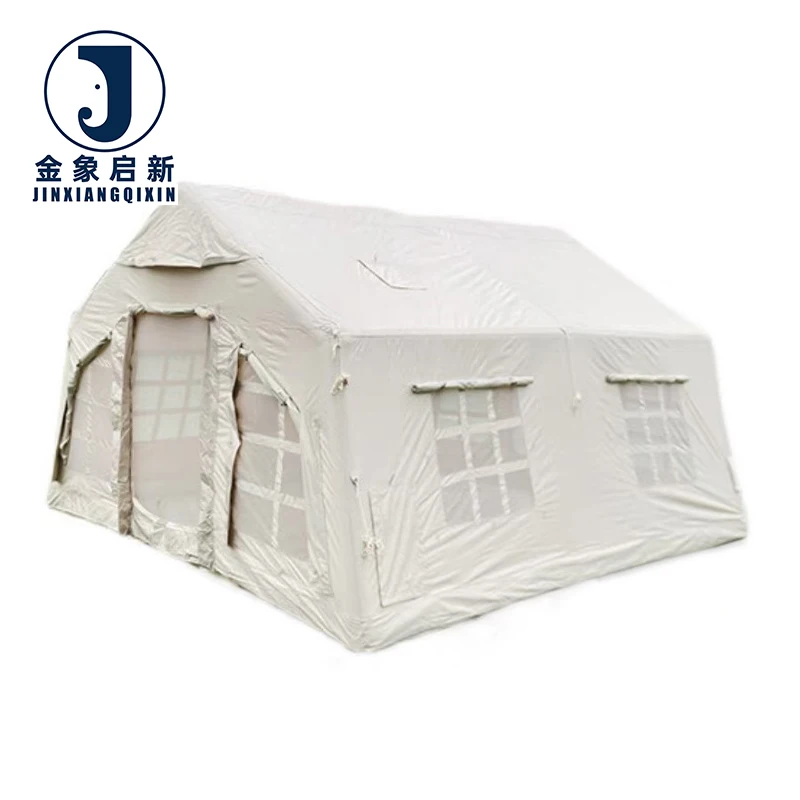
Inflatable Tent with waterproof, UV-resistant and fire-retardant PVC tarpaulin — engineered for construction sites, outdoor events and emergency response shelters.
- Coating weight and base fabric density jointly determine tensile and tear performance, ensuring structural integrity under sustained air pressure and wind load
- Heat-welded seams match the fabric strength at flex points, preventing failure where the inflatable frame bends most
Backed by nearly 30 years of coated fabric process control and 100% pre-shipment inflation testing across 3 full production lines.
Description
Proven Process Control — Nearly three decades of coating weight and adhesion management underpin every roll of inflatable tent fabric we ship, ensuring batch-to-batch consistency that structure manufacturers depend on.
Technical Specifications
| Parameter | Value |
|---|---|
| Product Type | Inflatable Tent |
| Core Material | PVC tarpaulin |
| Waterproof | Yes |
| UV-Resistant | Available with anti-UV treatment — confirm UV grade required for your market (test basis not stated) |
| Tear-Resistant | Yes |
| Fire-Retardant | Available in fire-retardant grades — confirm the grade required for your market (grade not stated) |
| Anti-Static | Available with anti-static treatment — confirm the standard required for your market (standard not stated) |
| Product Form | Inflatable structure |
| Customization | OEM & ODM — sample customization, pattern printing, material selection, product design |
| Quality System | ISO 9001, ISO 14001, ISO 45001, CE |
| R&D Support | 10 technicians handling material selection, pattern design, and sample development |
Application Suitability
| Application | Exposure & Requirement |
|---|---|
| Construction site temporary shelter | Wind loading, rain ingress, dust abrasion, rapid inflation and deflation cycles |
| Outdoor event logistics enclosures | UV exposure, crowd-contact abrasion, repeated assembly and teardown |
| Emergency response command centers | All-season weather, rapid deployment, interior climate retention |
| Mobile field stations | Remote transport vibration, temperature fluctuation, ground contact moisture |
| Year-round industrial deployment | Continuous inflation pressure, thermal expansion, seasonal UV variation |
Why Specified Treatments Without Documentation Put Your Inflatable Tent at Risk
A flame-retardant claim without a test report is a compliance gap waiting to surface on the job site.
Procurement teams sourcing an Inflatable Tent manufacturer custom solution often receive quotations that list fire-retardant and anti-static properties as standard features. Yet when the site safety officer requests the certificate, the documentation trail goes cold. [NEED_CITE: fire classification standards for temporary structures and inflatable enclosures] Fabric that enters a construction zone or public event venue without verifiable treatment grades can halt operations, trigger insurance disputes, or force an emergency replacement mid-project. The cost of re-specifying and re-deploying a shelter under time pressure far exceeds the effort of confirming grades at the inquiry stage.
Full-Catalogue Custom Capability from Base Fabric to Finished Panel
Inflatable structure manufacturers need a fabric partner who treats customization as a production process, not an afterthought. Our Inflatable Tent manufacturer custom service covers material thickness selection, color matching against a physical reference, and pattern printing for branding or wayfinding. The 10-person R&D team develops samples within days so that fabricators can run inflation trials and seam tests before committing to bulk yardage. Every custom run passes through dedicated QA and QC checkpoints, matching the specification sheet agreed at the quotation stage.
Coating Consistency Across Rolls and Production Runs
When a membrane structure spans multiple fabric panels, even subtle variation in coating weight becomes visible under site lighting. Our three full production lines and 36 sets of professional processing equipment maintain controlled coating application so that adjacent panels exhibit uniform surface behavior. This consistency matters especially for inflatable tent applications where panels are heat-welded together; uneven coating thickness can cause weld parameters to drift from one seam to the next. [NEED_CITE: coating adhesion and weld strength test methods for PVC tarpaulin per ISO 1421] Buyers receive a roll packing list that traces each roll back to its production batch, supporting traceability when the structure is erected in the field.
Reading the Specification Sheet Beyond the Headline Weight
GSM alone does not predict how an inflatable tent fabric will behave under inflation pressure or wind load. The base fabric denier and weave density determine how tear forces propagate once a puncture occurs, while the coating type — whether knife-over-roll, laminated, or calendered — governs peel strength and heat-weld compatibility. A heavier coating adds surface protection but may stiffen the fabric at low temperatures, affecting pack-down behavior during transport. Surface finish also plays a role: a glossy top coat sheds dirt and resists mildew adhesion, whereas a matte finish reduces glare and improves ink adhesion for printed graphics. Buyers specifying fabric for four-season inflatable deployment should request the full parameter set — base fabric construction, coating method, coating weight, and surface treatment — rather than relying on GSM as a single proxy for performance.
The Hidden Cost of Specifying on Price Per Kilogram Alone
A quotation that looks attractive on a per-kilogram basis can conceal a lighter base fabric underneath a thick coating, creating a material that feels heavy but tears easily along the weft. Inflatable tent structures concentrate stress at welded seams and inflation tube junctions; when the base fabric lacks sufficient denier and weave density, failures appear at these high-flex zones long before the coating surface shows wear. [NEED_CITE: common failure modes in coated fabric structures at welded seams] Similarly, a fire-retardant treatment applied at a lower concentration to cut chemical costs may pass a small-sample lab test yet fail when the certification body tests a full-scale panel. These mismatches surface only after the structure is erected and inspected, turning a material saving into a project delay.
Why Fabricators and Procurement Teams Source Here
Deep process control over coating weight and adhesion, built across nearly 30 years of focused PVC coated fabric production, gives buyers confidence that the material arriving at the dock matches the sample approved weeks earlier. Three full production lines and 36 sets of professional processing equipment support volume runs without sacrificing the tight tolerances inflatable structure panels require. The on-site R&D team handles everything from custom width slitting to pattern printing, removing the need to coordinate multiple suppliers for a single project. Every production stage includes dedicated QA and QC staff performing in-process checks, and 100 percent pre-shipment inspection verifies inflation pressure retention and seam integrity before dispatch. Documentation — from material specification sheets to certificates of origin — ships with each order so that customs clearance and site compliance proceed without follow-up delays.
Documentation & Verification
- Material specification sheet stating base fabric denier, coating type, and color reference for every roll
- Fire-retardant and UV-resistant test reports supplied with grades applicable to the order
- Pre-shipment inspection record covering inflation pressure retention and seam integrity checks
- Roll packing list linking each roll to its production batch for field traceability
- Certificate of origin and customs documentation included for international shipments
Fabrication, Handling & Storage
- Heat-weld parameters must be adjusted per coating thickness; request our recommended temperature and dwell time for the PVC grade ordered
- Reinforce inflation tube junctions and high-stress corners with additional PVC patches before final welding
- Store rolls upright on pallets in a dry, shaded area to prevent compression marks on the coating surface
- Allow cold-stored rolls to acclimatize to ambient temperature before unrolling to avoid coating micro-cracking
- Use mild, non-solvent cleaners on the PVC surface to preserve the coating finish and any printed graphics
- Repair minor field punctures with compatible PVC adhesive patches matching the coating type supplied
Planning Your Inflatable Tent Fabric Inquiry
To receive an accurate specification recommendation and sample, share the intended deployment environment, expected inflation cycle frequency, and any fire-safety or anti-static standards enforced at the site. Confirm whether you require rolls at stock width or custom slit widths, and provide target color references or artwork files if pattern printing is needed. Indicating annual volume and preferred shipment schedule helps the production team plan capacity and maintain batch consistency across your orders.
Frequently Asked Questions
Q: Which fire-retardant grades are available for inflatable tent fabric, and how do I confirm compliance?
A: We offer fabric in fire-retardant grades aligned to common international standards. The specific grade must match the fire safety code enforced at your project site or event venue. Provide the required standard at the inquiry stage so we can supply the correct treatment and the corresponding test report with your shipment.
Q: What is the basis for UV-resistance claims, and how does it affect outdoor service life?
A: Anti-UV treatment is available as an option and is applied during the coating process to slow degradation from solar exposure. The test basis and expected outdoor performance depend on the specific grade selected. Request the UV test report for your chosen treatment level before approving the production sample.
Q: What custom dimensions and minimum order quantities apply to inflatable tent fabric?
A: Custom widths and lengths are available, subject to production line capability and slitting constraints. Minimum order quantities vary by whether the order is for stock-width rolls or fully custom dimensions with pattern printing. Share your panel layout and yardage estimate so we can confirm feasibility and MOQ at the quotation stage.
Q: How do you control color consistency across a large-volume inflatable tent fabric order?
A: Each production batch follows a defined color reference, and in-process QA checks compare the running output against the approved standard. Rolls from the same batch are grouped on the packing list. For orders spanning multiple batches, we coordinate production scheduling to minimize inter-batch variation and flag any expected shift before shipping.
Q: Can you supply samples for inflation and weld testing before I commit to bulk?
A: Yes. The R&D team prepares samples based on your material selection, color, and treatment requirements. These samples ship within days so you can conduct inflation trials, weld parameter calibration, and seam strength tests. Sample approval is a formal gate before bulk production begins.
Related products
-
Tienda de Camping Inflable PVC Impermeable para Cuatro Estaciones, Tienda de Aire Exterior con Apertura Automática Rápida para 3-4 Personas
Read more -
Tienda de Camping Inflable Impermeable de PVC Tienda de Aire Exterior Montaje Fácil Refugio Familiar para Camping
Read more -
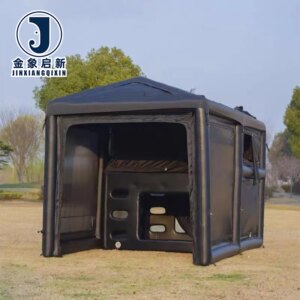
Tienda inflable premium para camping de cuatro estaciones, fácil de usar, espaciosa, portátil, impermeable, tienda exterior rápida.
Read more -
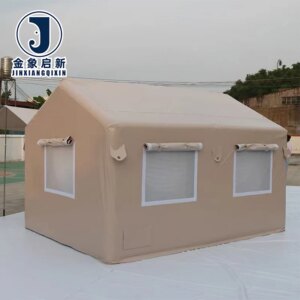
Carpa de Evento Inflable de Cuatro Estaciones al Aire Libre Impermeable de PVC Apertura Automática Rápida para 6-8 Personas con Logo Personalizado
Read more