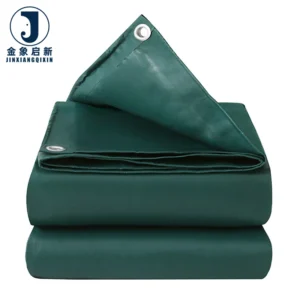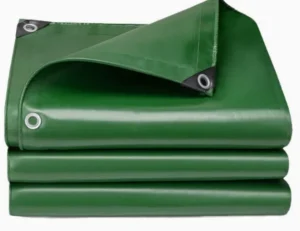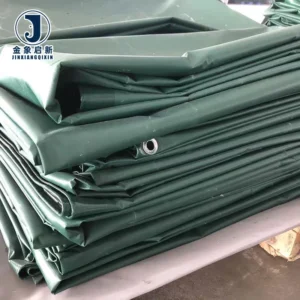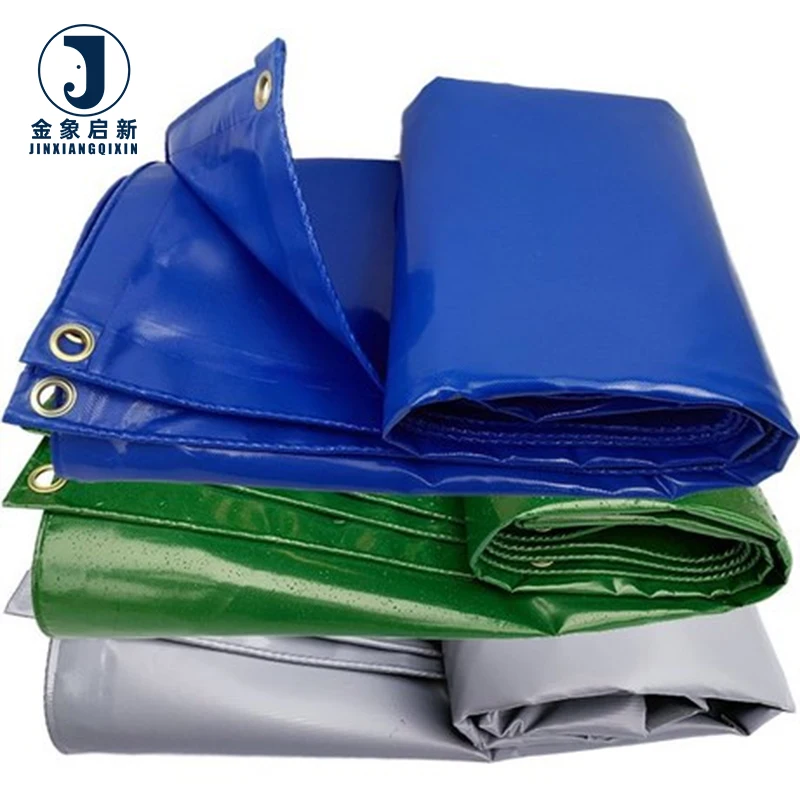
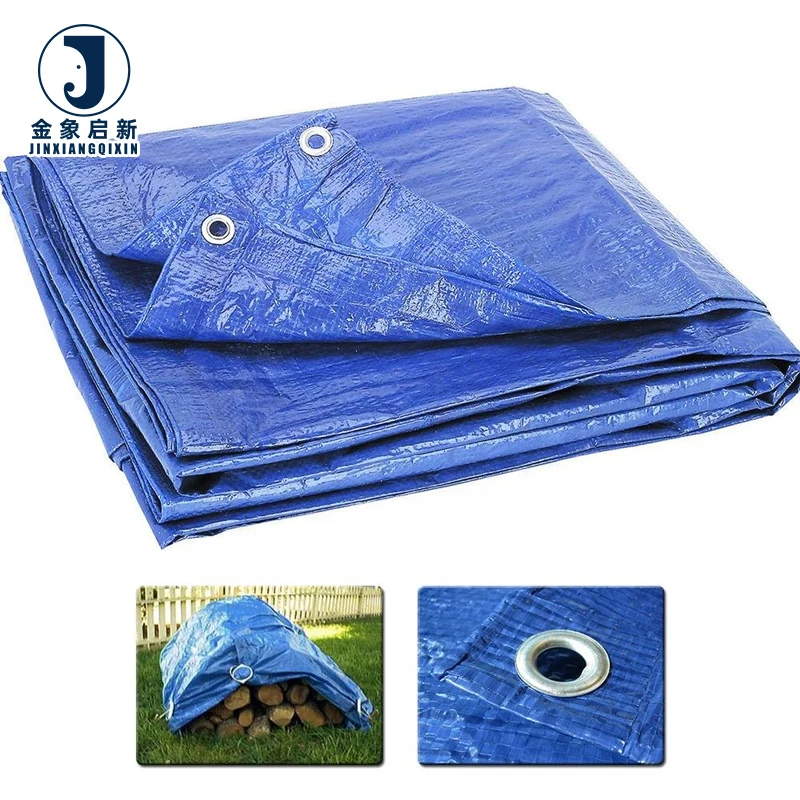
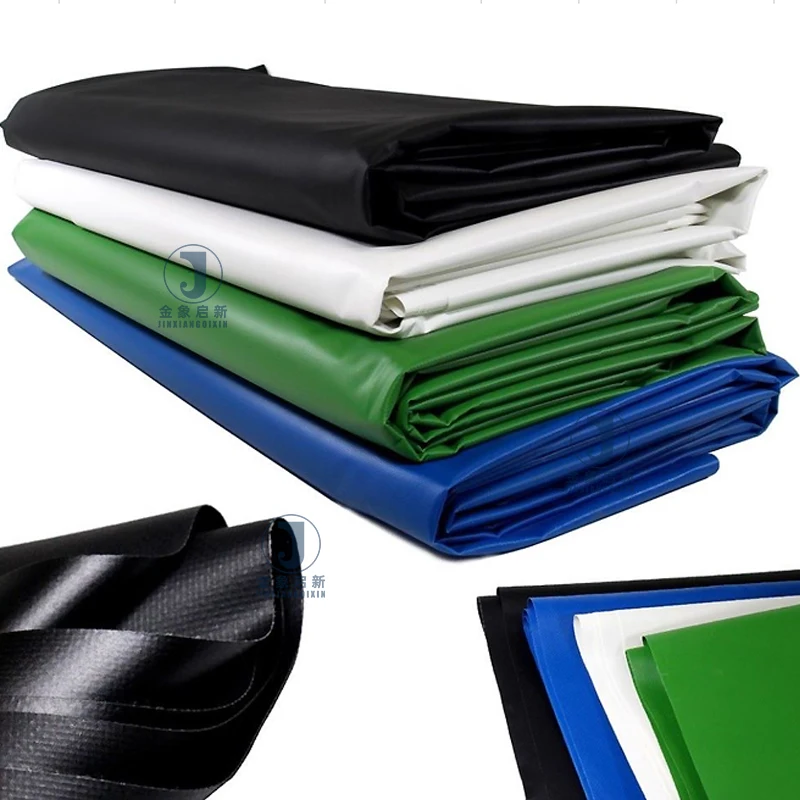
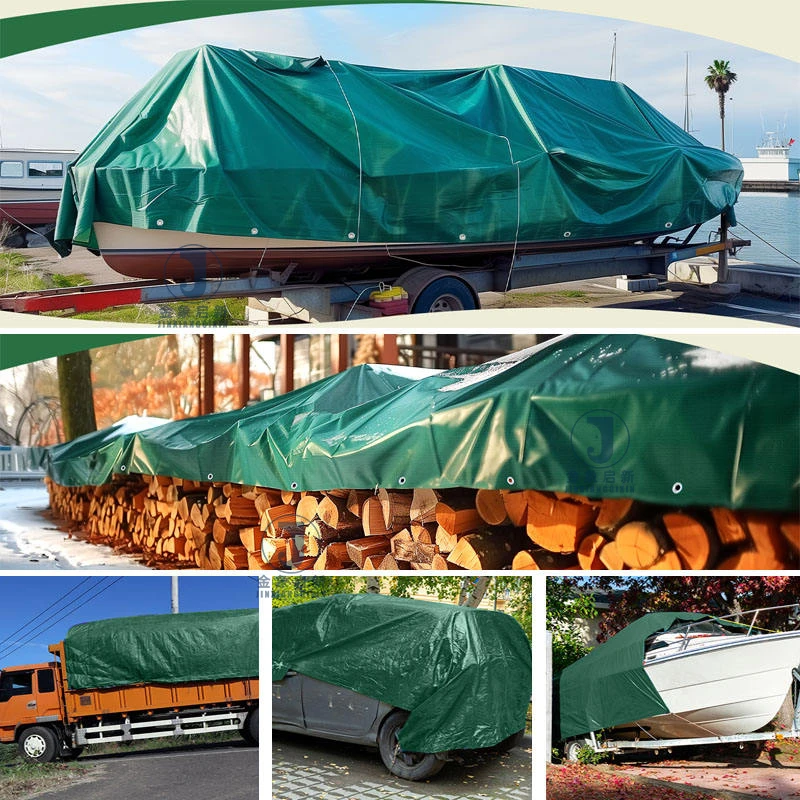
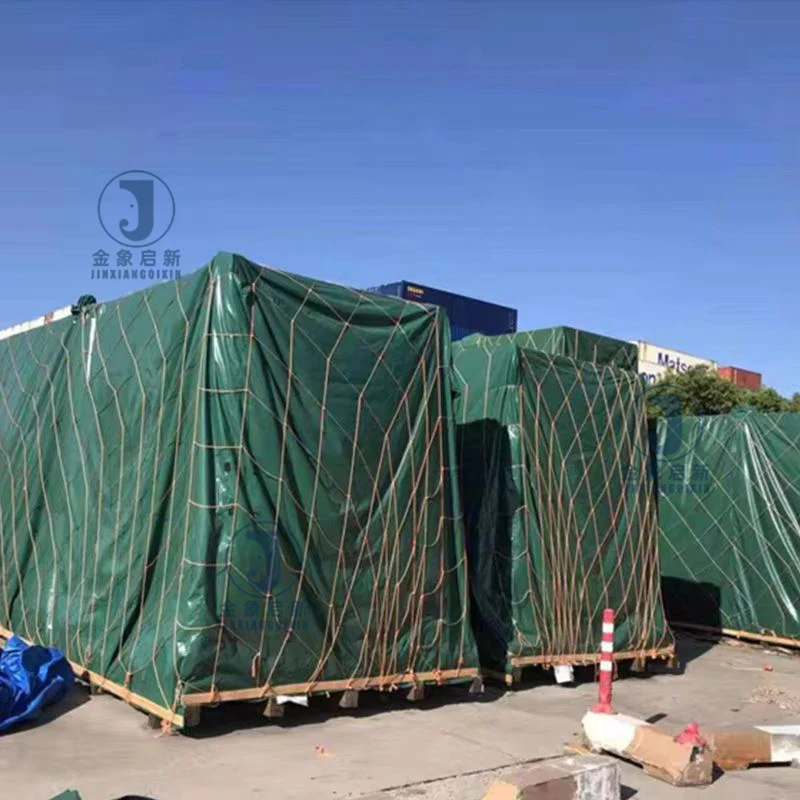
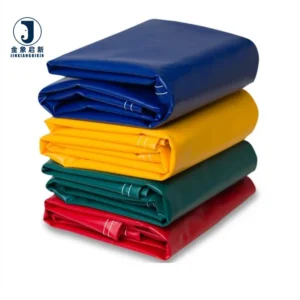
PVC Coated Fabric 450-900 g/m², 500D×500D polyester base with double-sided PVC coating — smooth leather-like surface, hot air weldable for lasting seam integrity.
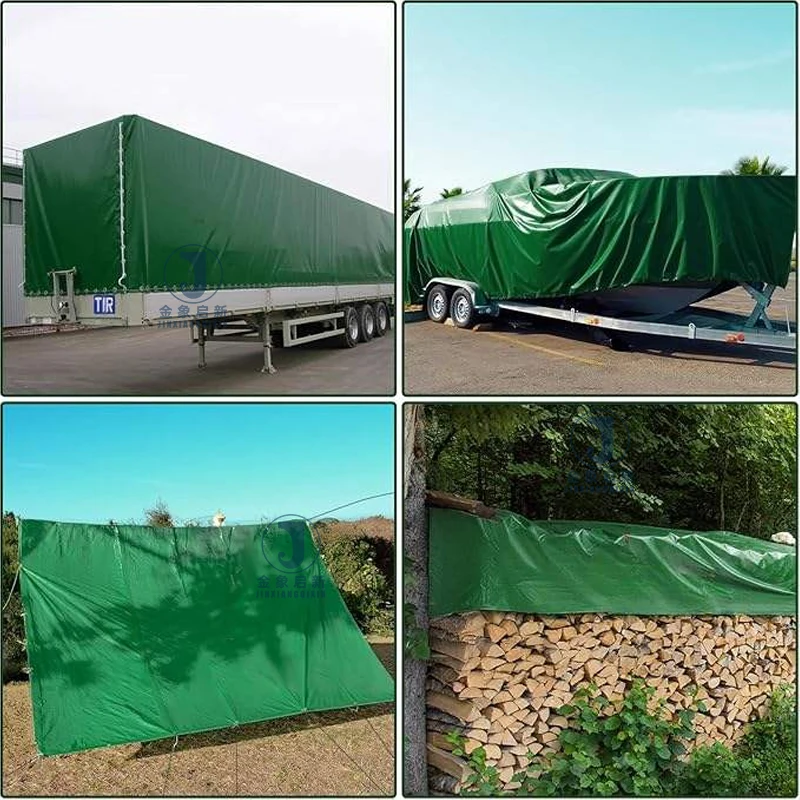
Engineered for truck, trailer and tent covers, the base denier and coating weight together determine tensile and tear behaviour, while custom widths reduce off-cuts and splice joints across large-format builds.
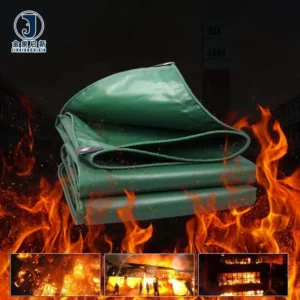
- Flame-retardant and anti-UV treatments available with test reports on request
- Colour consistency verified roll-to-roll within each production run
- GSM checked against quotation through 100% pre-shipment inspection
Nearly three decades of coating process control underpin every roll shipped from dedicated lines with full QA at each stage.
Description
Verified Process Control — Every roll of PVC coated tarpaulin produced at Jinan Jinxiang undergoes stage-by-stage QA across three full production lines, ensuring the GSM, coating adhesion, and colour reference on the specification sheet match what arrives at your facility.
Technical Specifications
| Parameter | Value |
|---|---|
| Product Type | PVC Coated Tarpaulin |
| Base Fabric Denier | 500D-500D Polyester |
| Coating Material | Double-Sided PVC Coating |
| Thickness Measurement | 450–900 g/m² |
| Surface Characteristics | Smooth, soft surface with leather-like texture |
| Waterproof Performance | Fully waterproof coated construction |
| Abrasion Resistance | Very strong |
| UV Resistance | Available in anti-UV grades — confirm the grade required for your market |
| Flame Retardancy | Available in flame retardant grades — confirm the grade required for your market |
| Repairability | Hot air weldable |
| Key Features | Water resistant, flame retardant, waterproof, anti-UV |
| Package | Roll packing, bale packing, carton |
Application Suitability
| Application | Exposure & Requirement |
|---|---|
| Truck and trailer load covering | Constant flexing at tie-down points, road abrasion, wind-driven rain, UV exposure during transit |
| Vehicle and machinery protection | Prolonged outdoor storage, dust and moisture ingress, surface abrasion from cover movement |
| Timber and building stock cover | Weather exposure over weeks to months, UV degradation risk, moisture wicking from ground contact |
| Awning and tent fabrication | Repeated tensioning and folding, sun and rain exposure, seam welding and eyelet loading |
Why Stated GSM Without Process Proof Leaves Buyers Exposed
A quoted GSM is only as reliable as the inspection record that accompanies it.
Across the coated fabric supply chain, discrepancies between quoted weight and delivered weight rank among the most common reasons for load rejection at the warehouse gate. Buyers specify 450–900 g/m² PVC coated tarpaulin for heavy-duty transport and construction cover applications, yet rolls arriving lighter than agreed compromise tensile performance and shorten service intervals. Without pre-shipment weight verification tied to a documented inspection protocol, the specification on paper becomes a claim rather than a guarantee [NEED_CITE: tensile and tear test methods for coated fabrics per ISO 1421].
Coated Fabric Selection for Full-Range Custom Orders
Purchasing PVC coated tarpaulin for diverse applications — from truck side curtains to tent panels — demands a supplier capable of producing consistent material across multiple widths, weights, and treatment profiles within a single order. The 500D×500D polyester base fabric provides a stable tensile foundation, while double-sided PVC coating seals the weave against moisture penetration. This construction supports hot air welding for seam fabrication, a critical advantage when finished covers must withstand repeated flexing at load-bearing joints.
Treatment Options That Require Documentation, Not Promises
Anti-UV and flame retardant treatments are available as custom options for this PVC coated tarpaulin, but the grade must be specified at inquiry stage to align with the regulatory requirements of the destination market. Flame retardant classifications vary by jurisdiction, and a treatment described generically as "flame retardant" without a named test standard provides no basis for site inspector approval [NEED_CITE: DIN 4102 fire classification for building materials]. Request the applicable test report with your quotation so the grade can be confirmed before production begins.
Reading the Specification Sheet Beyond GSM
The 450–900 g/m² range reflects multiple weight grades available within this PVC coated tarpaulin product line, not a single fixed value. GSM alone does not determine fabric strength; the 500D×500D polyester yarn count defines the base fabric density, which works in combination with coating weight to produce the final tensile and tear figures. A lighter base fabric with heavier coating may reach the same GSM as a denser base with thinner coating, yet behave very differently under load. Double-sided PVC coating applied to this base ensures full encapsulation of the polyester yarns, which improves adhesion at welded seams and reduces the risk of delamination when the cover flexes in cold or high-wind conditions. Surface texture — described as smooth with a leather-like finish — affects both cleaning behaviour and print adhesion for branded applications [NEED_CITE: peel strength test methods for PVC-coated polyester fabrics].
The Cost of Underspecifying Treatment Grades
When a construction site requires flame retardant covers and the delivered PVC coated tarpaulin arrives without a matching test certificate, the entire batch may be rejected by the site safety officer — halting work and triggering replacement orders under time pressure. Similarly, anti-UV treatment specified without a named test basis can lead to premature surface chalking and colour shift across rolls installed side by side on a single awning or tent structure. These failures are not material defects; they are specification gaps that surface only after delivery [NEED_CITE: UV degradation testing protocols for coated technical textiles].
Production Capability Behind the Product
Three full production lines and 36 sets of professional equipment support bulk and custom PVC coated tarpaulin output with reliable on-time delivery. A dedicated 10-person R&D team handles material selection, custom width and length development, pattern printing specification, and sample production within days rather than weeks. QA/QC checkpoints operate at every production stage, with 100% pre-shipment inspection ensuring each roll matches the agreed GSM, colour reference, and treatment grade before dispatch.
Documentation & Verification
- Material specification sheet stating GSM, 500D base fabric denier, and PVC coating type per order
- UV and flame retardant test reports supplied with applicable treatment grades
- Pre-shipment inspection record confirming weight and colour against the quotation
- ISO and CE certificates included in every export documentation pack
- Roll packing list with batch reference for traceability across multiple rolls
- Certificate of origin and customs documentation provided for international shipment
Fabrication, Handling & Storage
- Hot air welding suited to 450–900 g/m² PVC coating; test weld temperature on offcuts before production runs
- Store rolls upright on pallets to prevent flat-spot creasing across the double-sided PVC surface
- Allow cold-stored rolls to reach ambient temperature before unrolling to avoid coating crack at low flex points
- Use PVC-compatible cleaners only; solvent-based agents may soften the leather-like surface coating
- Plan cut patterns to maximise yield from the available custom width, reducing seam count on large covers
- Field-repairable by hot air welding at seam failures, extending cover life without full replacement
Specifying Your PVC Coated Tarpaulin Order
To move from inquiry to quotation, provide the application type and exposure conditions, the target GSM and any flame retardant or anti-UV grade required by your market, and the roll width or finished cut dimensions you need. If colour matching or printed branding is part of the specification, include Pantone or RAL references so a sample can be developed for approval before full production.
Frequently Asked Questions
Q: How do I verify the GSM on arrival matches what was quoted?
A: Every shipment includes a pre-shipment inspection record documenting the measured weight of each roll. You can cross-check this against the material specification sheet and your original quotation. If a discrepancy is found, the inspection record provides the batch reference needed for a traceable resolution with the production team.
Q: What flame retardant grades are available, and which test standards do they meet?
A: Flame retardant treatment is available as a custom option. The specific grade and corresponding test standard depend on your market requirements — confirm the classification needed for your jurisdiction at inquiry stage so the correct formulation is applied and the matching test report is included with your documentation pack.
Q: How is batch-to-batch colour consistency controlled across multiple rolls?
A: Colour reference is recorded on the material specification sheet for each order. Production QA checkpoints monitor coating colour at multiple stages across the run. For orders spanning multiple rolls, the same batch reference is maintained to ensure visual consistency when panels are installed side by side on awnings, tents, or truck covers.
Q: What custom widths, lengths, eyelet placements, and printing options can be specified?
A: The in-house R&D team develops custom width and length configurations, along with pattern printing and branding, based on your application drawings. Samples are produced within days for approval before bulk production. Eyelet placement and reinforced hem details can be specified for finished cut-size covers as part of the same order.
Q: What is the recommended hot air welding process for seam fabrication and field repair?
A: Hot air welding parameters should be tested on offcuts of the specific GSM grade before full production. The double-sided PVC coating on the 500D polyester base supports strong weld adhesion. For field repairs, the same hot air method can be used to patch seam failures without removing the cover from service.
Related products
-
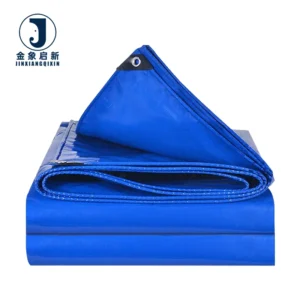
Lona de PVC Plástico Resistente Lona de PVC Impermeable Lona Recubierta de HDPE
¥1.80 Select options This product has multiple variants. The options may be chosen on the product page -
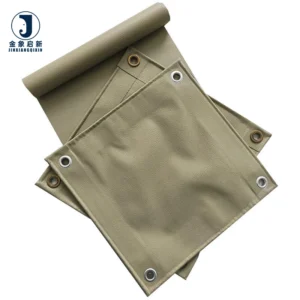
JX Tela Impermeable de PVC Hoja de Alta Resistencia para Cubiertas Industriales y al Aire Libre
¥1.90 Select options This product has multiple variants. The options may be chosen on the product page -
Lona para camiones de servicio pesado 1000d PVC Lona impermeable de lona de PVC
¥1.20 Add to cart -

Lona de PVC recubierta Lona de tela de PVC lona de alta resistencia retardante de fuego lona de PVC recubierta impermeable lona de PVC enrollable
¥1.00 Select options This product has multiple variants. The options may be chosen on the product page