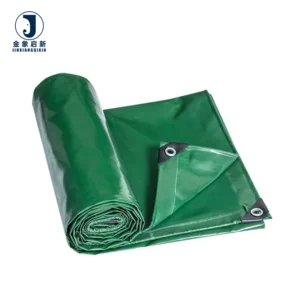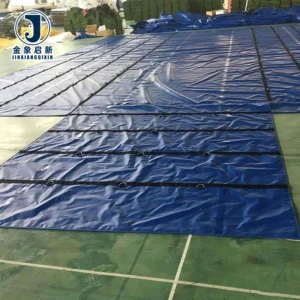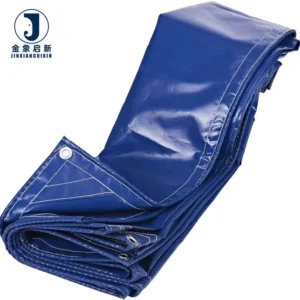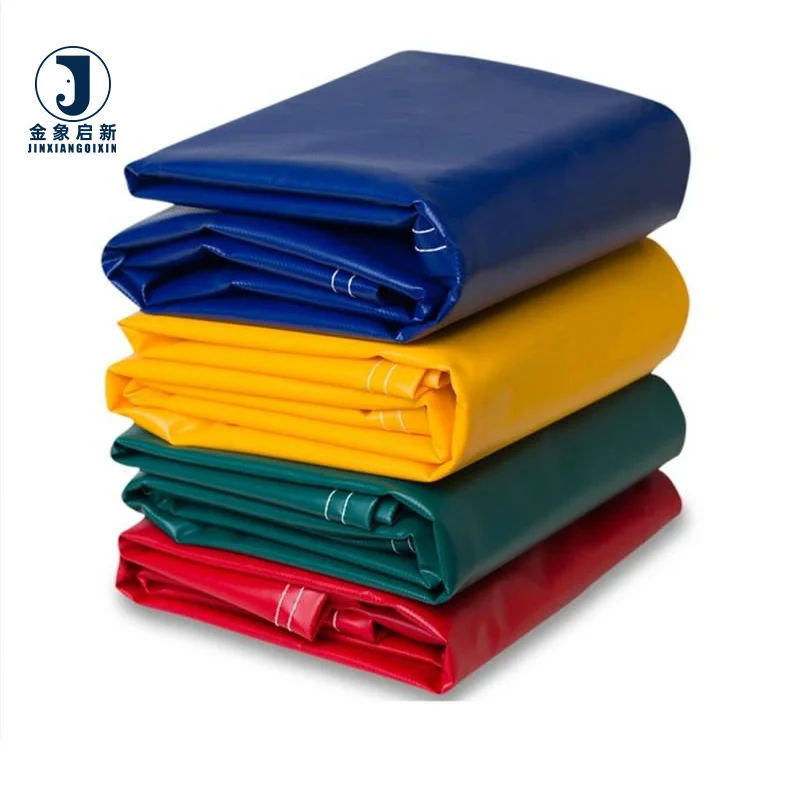
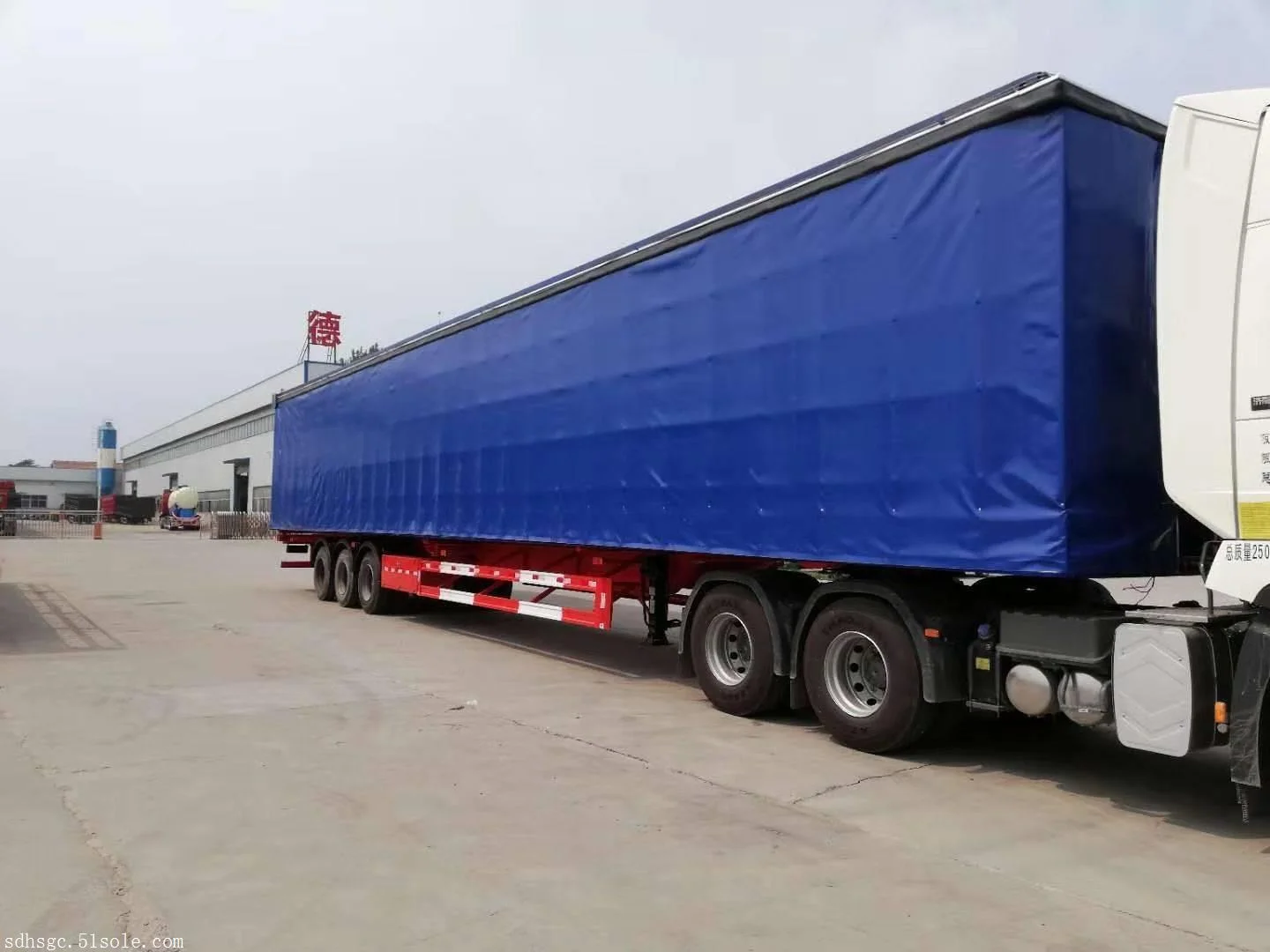
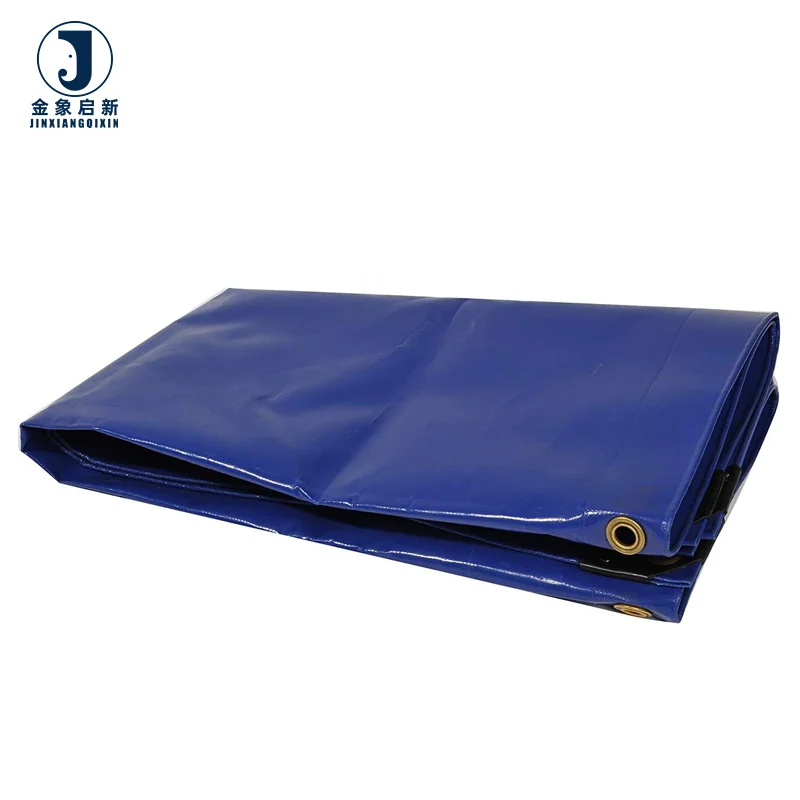
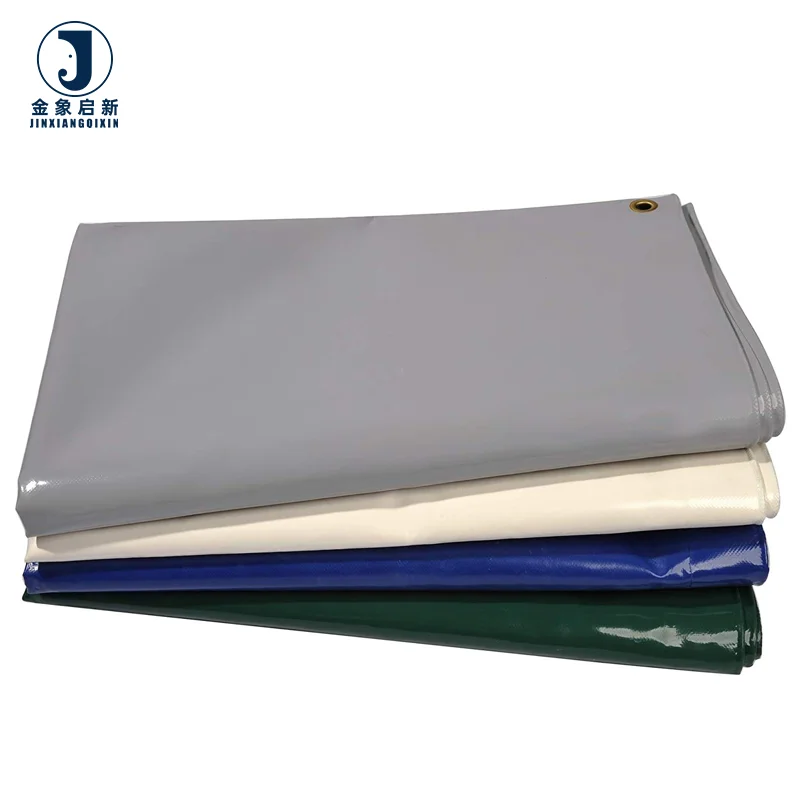
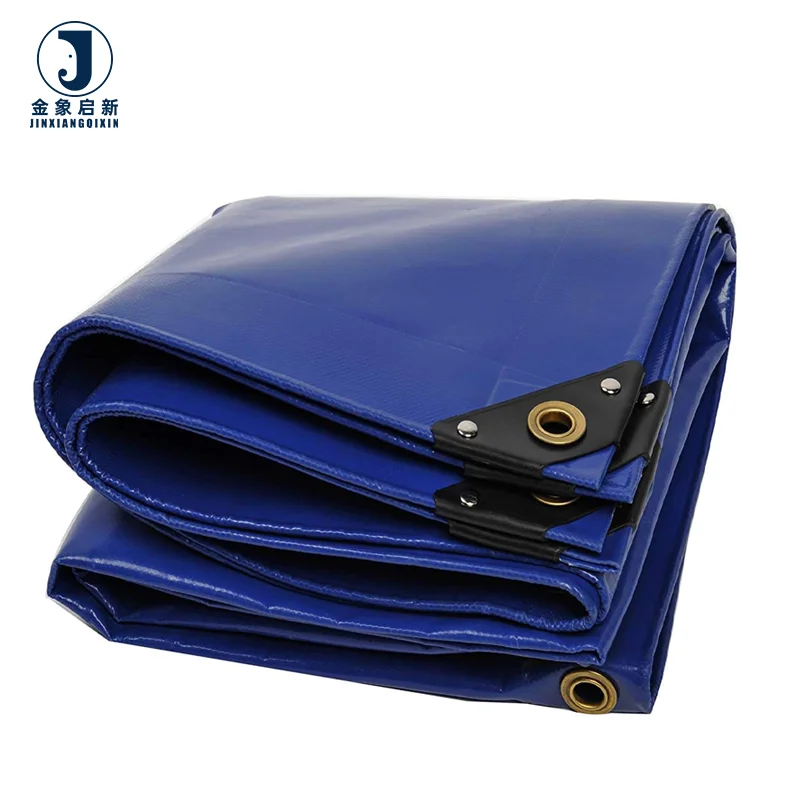
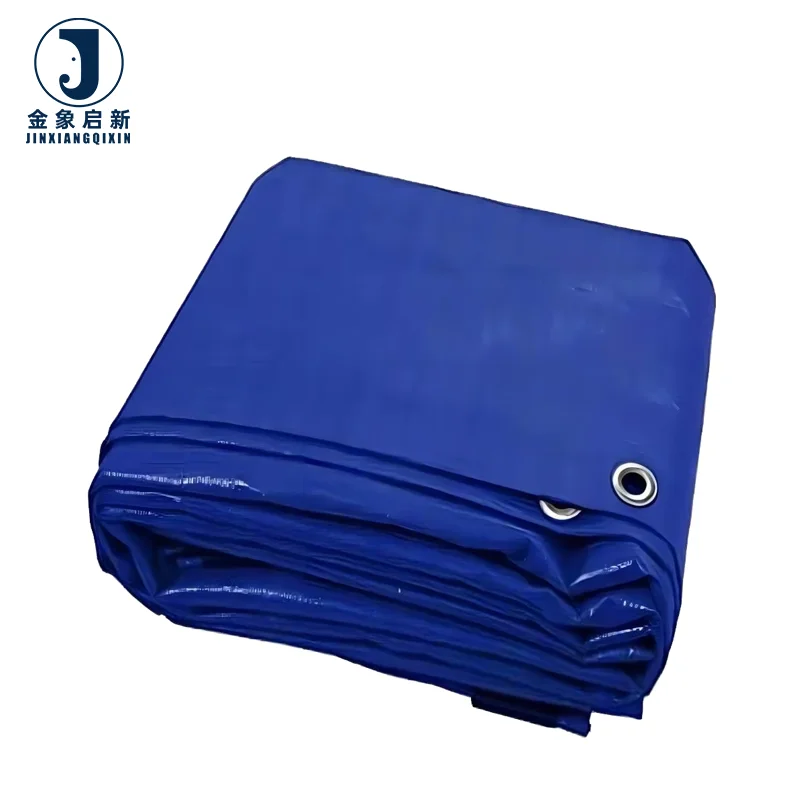
PVC Coated Tarpaulin with 350–900gsm weight range, 500D×840D to 1300D×1300D yarn count options and double-sided coating — engineered for truck side curtains, trailer covers and outdoor structural membranes.
- Base fabric denier and weave density paired with PVC coating weight determine tensile and tear performance across all grades
- High-frequency hot melt welding at seams and reinforced corners with 3cm aluminum eyelets handle tie-down loads at flex points
Backed by nearly 30 years of coated fabric process control, with GSM and colour consistency verified roll-to-roll before dispatch.
Description
Three production lines — every roll undergoes stage-by-stage QA with 100% pre-shipment inspection before leaving the facility, ensuring the PVC coated tarpaulin you specify matches what arrives.
Technical Specifications
| Parameter | Value |
|---|---|
| Product Type | PVC Coated Tarpaulin |
| Base Fabric | Polyester woven substrate with double-sided PVC coating |
| Weight Options | 350gsm, 400gsm, 420gsm, 500gsm, 600gsm, 650gsm, 750gsm, 900gsm |
| Yarn Count Options | 500D×840D / 500D×1000D / 1000D×1000D / 1000D×1300D / 1300D×1300D / 1000D×2000D |
| Mesh Density | 30×19 / 20×20 / 30×15 |
| Total Thickness | 0.29mm – 0.65mm |
| Tensile Strength (Warp/Weft) | 1650/1600 N – 3900/3500 N (test basis not stated in source) |
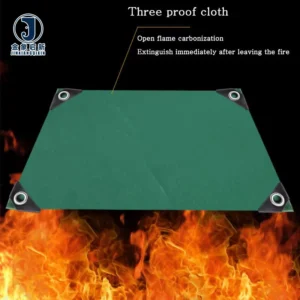
| Flame Retardant | Available in flame retardant grades — confirm the grade required for your market |
| UV Treatment | Available with anti-UV treatment — confirm test standard for your region |
| Anti-Mildew | Treated for mildew resistance |
| Waterproof | Fully waterproof coated construction |
| Edge Finishing | 5mm rope hem with high-temperature heat-sealed seamless edge wrapping |
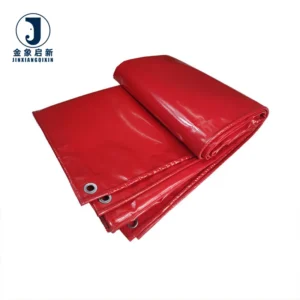
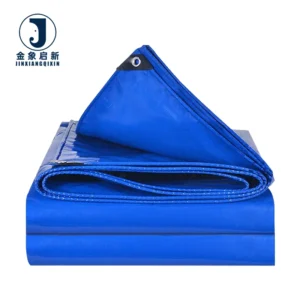
| Eyelets | 3cm enlarged aluminum alloy buttonhole, reinforced corners |
| Joining Methods | High-frequency hot melt / Hot air welding / Sewing |
| Surface Finish | Smooth, leather-like texture |
| Density | 1.15–2.00 g/cm³ |
| Brittle Temperature | ≤ -50 to -60 °C |
| Softening Temperature | ≥ 80 °C |
| Printing | Customizable per roll or per finished piece |
Application Suitability
| Application | Exposure & Requirement |
|---|---|
| Truck and trailer side curtains | Constant flexing at load points, road debris abrasion, sustained UV exposure, wind-driven rain ingress |
| Pallet and equipment covers | Abrasion from loading and unloading, chemical splash in warehouse environments, UV during outdoor staging |
| Outdoor event and block-out tents | Full sunlight exposure, repeated assembly and teardown, fire safety compliance for public gatherings |
| Awnings and pergola covers | Permanent outdoor mounting, pooling water load, colour fade under direct sun |
| Inflatable and membrane structures | Internal air pressure stress, wind uplift, welded seam integrity across large panels |
| Construction site shelters | Heavy wind loading, impact from falling debris, temporary structural tension |
Why the Quoted GSM Rarely Tells the Full Story for PVC Coated Tarpaulin
GSM is only meaningful when the base fabric denier, mesh count and coating weight are verified together before the roll ships.
Buyers frequently receive PVC coated tarpaulin that matches the quoted weight on paper but underperforms in the field. The reason is often a lighter base fabric compensated by a thicker PVC coating layer — the scale reads correctly, but the tensile and tear behaviour diverge sharply from what the application demands [NEED_CITE: tensile and tear test methods for coated fabrics per ISO 1421]. For truck side curtains that flex thousands of times per trip, a coating-heavy construction will crack along the fold line long before a balanced fabric-and-coating construction shows wear. The only defence is a pre-shipment inspection record that documents weight, base fabric specification and coating adhesion per roll, not just a certificate of weight from the production floor.
Matching Weight Grade to the Load and the Route
Specifying a PVC coated tarpaulin by weight alone leaves too much to chance. A 650gsm roll built on a 1000D×1000D base with a 20×20 mesh count behaves very differently from a 650gsm roll built on a 500D×840D base with a 30×19 mesh, even though the scale shows the same number. The former distributes stress across heavier yarns with wider coating penetration between the weave, giving better tear propagation resistance for flatbed covers that experience point loads from uneven cargo. The latter offers a smoother surface and tighter weave, suited to applications where print quality and visual finish matter more than structural load-bearing.
Treatment Selection Must Follow the End-Use Environment
The PVC coated tarpaulin range supports anti-UV, flame retardant and anti-mildew treatments, each addressing a distinct failure mode. UV degradation manifests as surface chalking and coating embrittlement, first visible at welded seams where the coating has already been heat-stressed [NEED_CITE: accelerated UV weathering test protocols for PVC coated polyester]. Flame retardant requirements vary by jurisdiction and application — a mining ventilation duct faces different classification demands than a public event tent. Anti-mildew treatment matters most for covers stored damp or deployed in high-humidity climates where fungal growth attacks the base fabric through micro-cracks in the coating. Confirm the specific grade and test standard your market requires before placing a bulk order.
How Base Fabric Architecture Governs Field Performance
The relationship between denier, mesh count and coating weight determines whether a PVC coated tarpaulin fails by tearing, delaminating or cracking. Heavier deniers such as 1300D×1300D or 1000D×2000D produce a base fabric with substantially higher yarn-level tensile capacity, but only if the coating penetrates the weave fully to bond with each filament — insufficient penetration leaves the coating sitting on the surface, vulnerable to peeling under flex stress. Mesh count controls the coating’s mechanical keying: a 30×19 mesh gives more interstices per square centimetre for the PVC to grip, improving peel strength compared to a more open 20×20 mesh at the same coating weight. The brittle temperature of ≤ -50 to -60 °C means the material remains flexible in cold-climate logistics, while the softening threshold of ≥ 80 °C sets the upper boundary for hot-air welding parameters and for deployment in high-solar-load environments [NEED_CITE: thermal behaviour boundaries for plasticised PVC coatings on woven polyester substrates].
The Hidden Cost of Getting the Specification Wrong
Ordering a lighter grade than the application requires leads to predictable failures: eyelets tearing out under tie-down tension, weld seams parting at the fold line, and coating delamination where the fabric flexes repeatedly over sharp-edged cargo. Colour inconsistency between rolls in the same shipment forces installers to reject panels that will sit side by side on a truck or structure, turning a material cost into a rework cost. When a flame retardant grade is specified on the purchase order but the shipment arrives without a matching test report, the entire installation can fail site inspection — a delay that costs far more than the fabric itself [NEED_CITE: common causes of tarpaulin specification disputes in cross-border procurement].
What This Supply Arrangement Covers
Three full production lines and 36 sets of professional equipment provide capacity for bulk roll orders without sacrificing lead-time reliability. A 10-person R&D team handles colour matching, pattern printing and custom sizing, with sample development turnaround measured in days rather than weeks. Every production stage carries dedicated QA/QC, culminating in 100% pre-shipment inspection where each roll’s weight, dimensions and visual quality are documented before packing. ISO and CE certifications underpin the quality management system across all product families. Custom widths, colours and printed branding are supported with practical minimums, and the edge finishing system — 5mm rope hem, 3cm aluminum eyelets and reinforced corners — is applied to all cut sizes.
Documentation & Verification
- Material specification sheet per order stating exact GSM, base fabric denier, mesh count and coating type
- UV and flame retardant test reports supplied with applicable grades — verify standard against your market
- Pre-shipment inspection record documenting weight and visual quality per roll before dispatch
- Roll-level packing list with dimensions, net weight and colour reference for warehouse receiving
- Certificate of origin and customs documentation included with every international shipment
- Sample approval record locking the agreed specification before production begins
Fabrication, Handling & Storage
- High-frequency hot melt welding suits heavier deniers (1000D and above) for seam strength at flex points
- Hot air welding works across the full GSM range; set temperature below the ≥ 80 °C softening threshold to avoid coating distortion
- 3cm aluminum alloy eyelets with reinforced corners distribute tie-down loads across the 5mm rope hem
- Store rolls upright on a clean, dry surface to prevent flat-spotting and edge creasing in heavier grades
- Unroll lighter GSM grades (350–500gsm) carefully in cold conditions, as the PVC coating stiffens approaching the brittle temperature
- Custom printed panels should be stored face-to-face with interleaving to protect the surface finish
Before You Request a Quote
Provide the intended application, exposure conditions and the fire safety or regulatory standards your market enforces so the correct treatment grade can be specified from the start. State whether you need rolls in stock widths or finished cut sizes with eyelet and hem reinforcement, and confirm the colour reference or print artwork if branding is required. Indicate your annual volume and target delivery schedule to align production planning with your project timeline.
Frequently Asked Questions
Q: How is the GSM verified on each roll before shipment?
A: Every roll undergoes weight verification during the 100% pre-shipment inspection stage. The inspection record documents the actual GSM measured against the quoted specification, along with base fabric denier and coating type, so you receive documented proof — not just a production certificate — that the material matches your order.
Q: What flame retardant grades can be supplied, and how do I confirm suitability?
A: Flame retardant grades are available across the PVC coated tarpaulin range, but the specific classification required depends on your market’s building, transport or mining regulations. Request the available test standards during the quotation stage and compare them against your local compliance requirements before approving production.
Q: How do I specify custom width, colour and printing for this fabric?
A: Submit your required width, Pantone or RAL colour reference, and print artwork during the inquiry. The R&D team develops a physical sample for approval within days, locking the specification before bulk production begins. Minimum order quantities vary by customisation level and will be confirmed at quotation.
Q: How is colour consistency maintained across multiple rolls in one order?
A: All rolls in a single production run are coated from the same batch of compounded PVC, and colour is checked roll-to-roll against the approved reference during in-process QA. Any roll falling outside the agreed tolerance is flagged and held before packing, ensuring uniform appearance when panels are installed side by side.
Q: What edge finishing options are available for custom cut sizes?
A: Standard finishing includes a 5mm rope hem with heat-sealed seamless edge wrapping, 3cm enlarged aluminum alloy eyelets spaced to your requirement, and reinforced corners for high-stress tie-down points. Alternative eyelet spacing, additional reinforcement patches and custom hem treatments can be specified during the sample approval stage.
Related products
-
Material de tela de PVC Lona tejida Lona impermeable Tela tejida de lona
¥0.50 Add to cart -
Venta Directa de Fábrica Lonas para Remolques de Plataforma Negras de Alta Resistencia Lona de PE para Madera Hoja de Lona para Transporte de Camiones de Plataforma
¥1.25 Select options This product has multiple variants. The options may be chosen on the product page -
Lona de venta caliente 30M X 30M Lona de PVC terminada para agricultura Lona
¥1.48 Add to cart -
Lona de PVC Plástico Resistente Lona de PVC Impermeable Lona Recubierta de HDPE
¥1.80 Select options This product has multiple variants. The options may be chosen on the product page