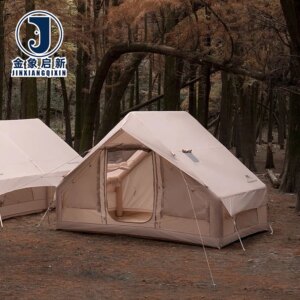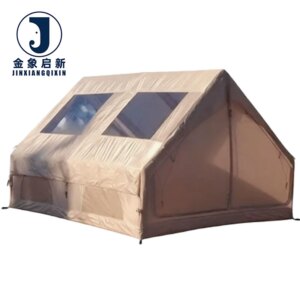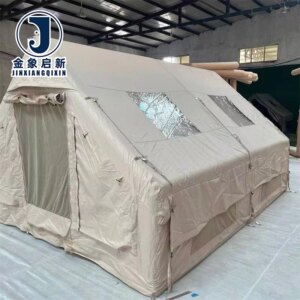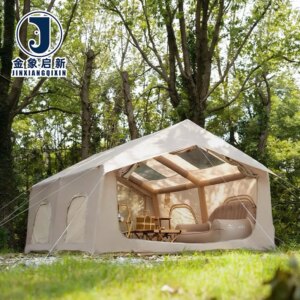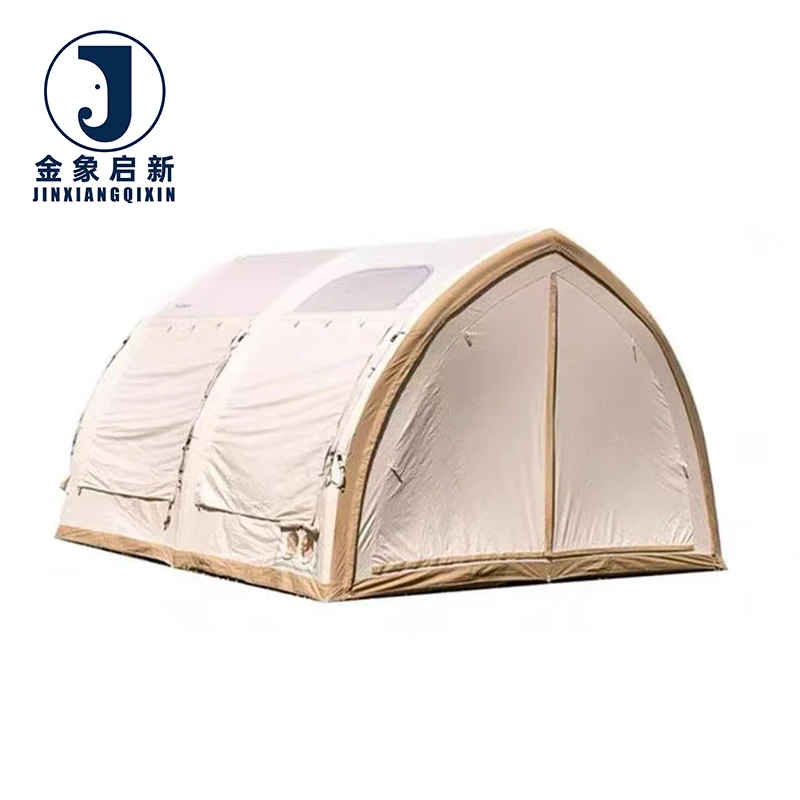
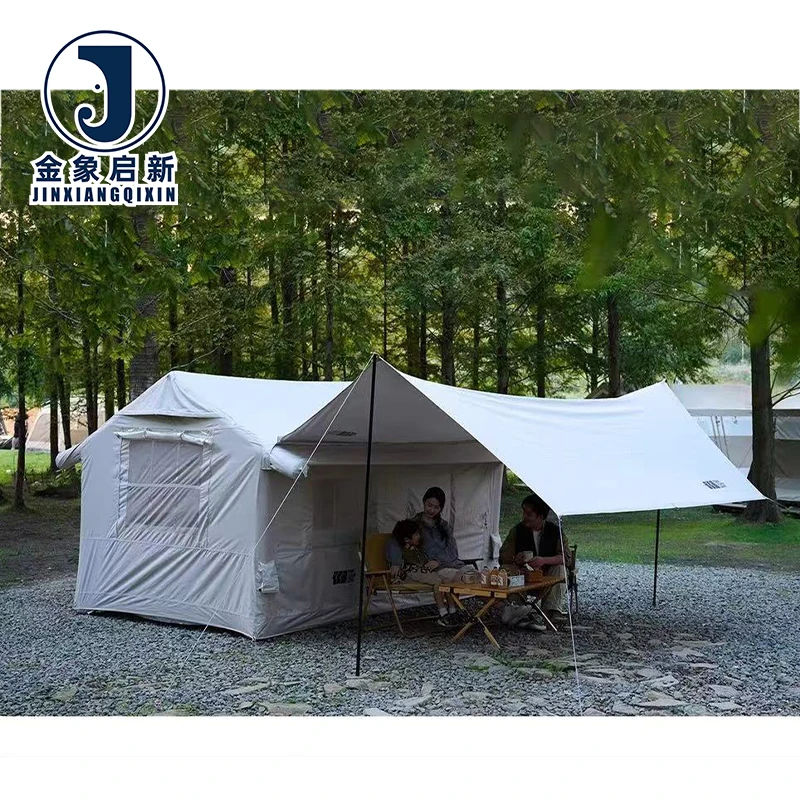
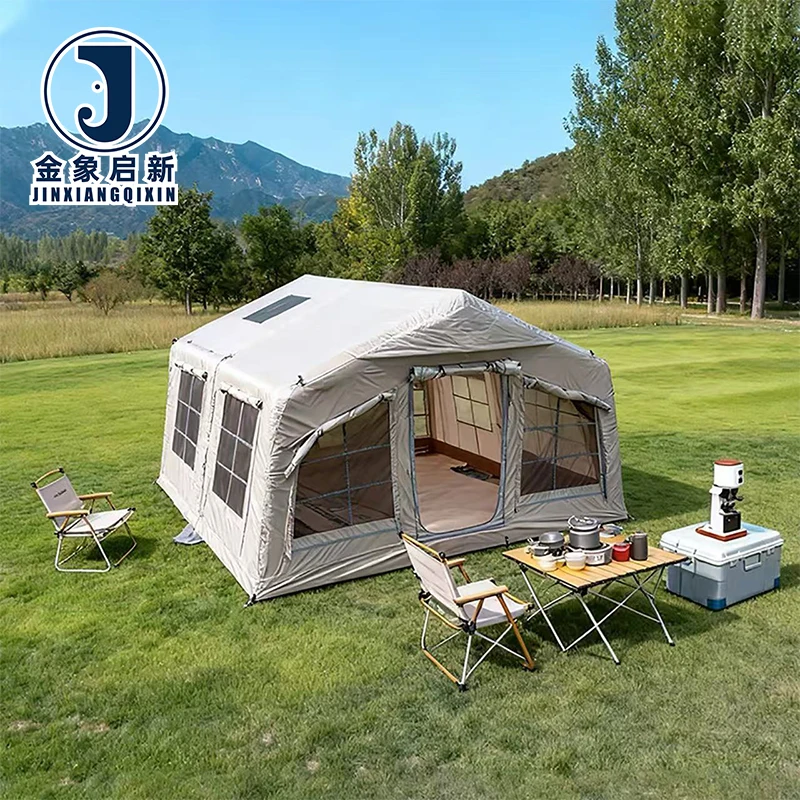
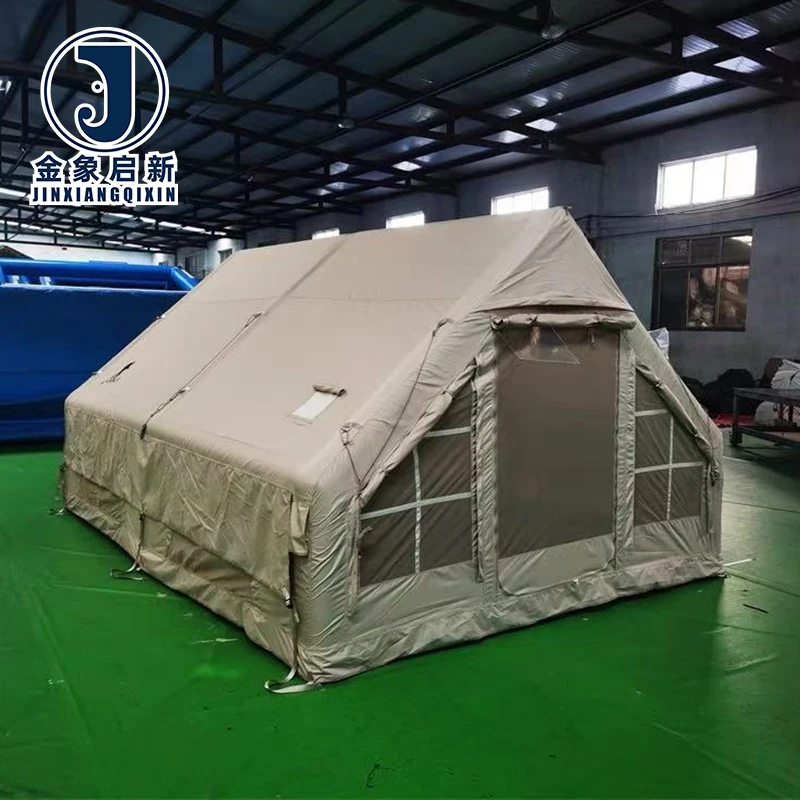
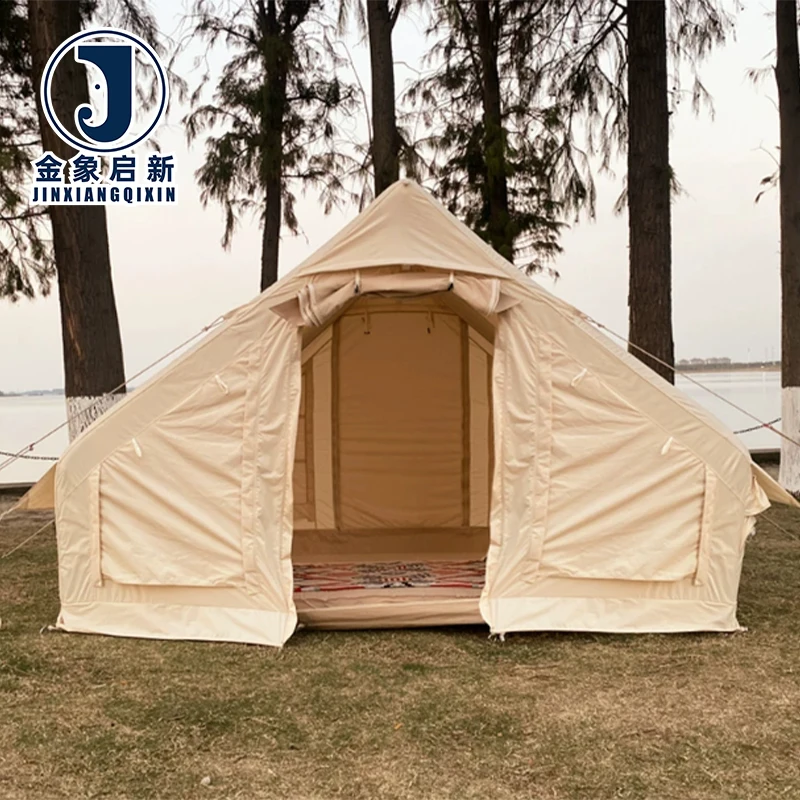
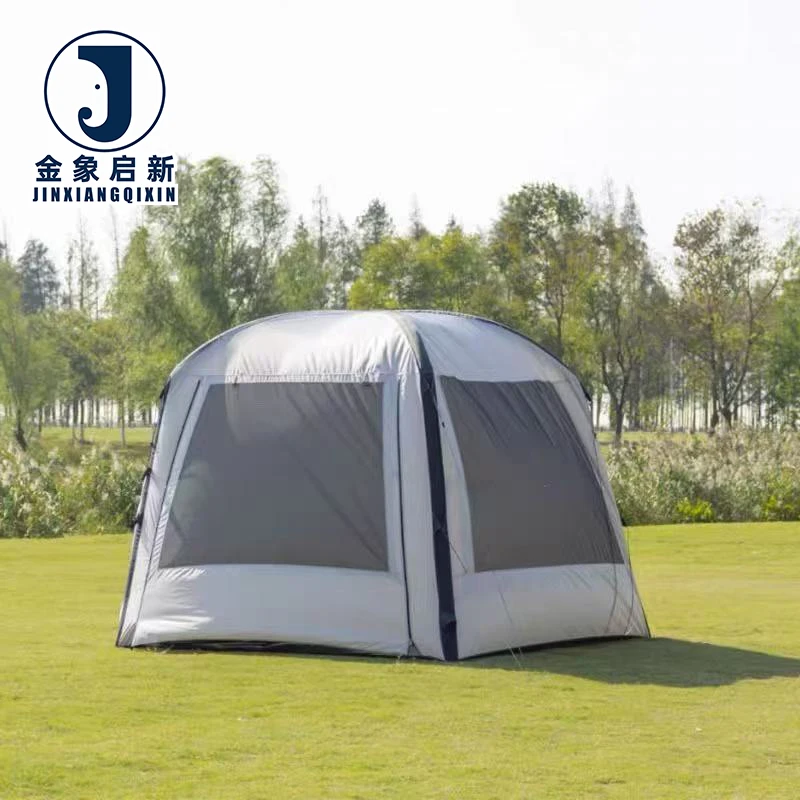
PVC Inflatable Tent — waterproof, UV-resistant, tear-resistant PVC tarpaulin construction with automatic opening mechanism for rapid four-season deployment.
Engineered for industrial shelters where rapid setup and weather protection matter, these inflatable structures rely on coated fabric adhesion and seam welding quality to maintain airtightness under sustained pressure. Base fabric denier and coating weight together determine how the tent handles wind load and flex stress at connection points.
- Fire-retardant and anti-static features available for industrial safety compliance
- Full OEM/ODM customization with pattern printing and dimension tailoring
- ISO 9001, ISO 14001, ISO 45001 and CE certified production
Three dedicated production lines with 100% pre-shipment inspection and 10-person R&D team supporting sample development within days.
Description
Process Control Over Coated Fabric — Nearly 30 years focused on PVC coated fabric with dedicated QA/QC at every production stage, ensuring every custom inflatable tent meets specification before dispatch.
Technical Specifications
| Parameter | Value |
|---|---|
| Product Type | Inflatable Tent |
| Core Material | PVC Tarpaulin |
| Key Performance | Waterproof, Tear-resistant, Four-Season Use |
| UV Resistance | Available with anti-UV treatment — confirm the level required for your market |
| Flame Retardant | Available in flame retardant grades — confirm the grade required for your market |
| Anti-Static | Available — verify against manufacturer catalog for specific standard |
| Product Forms | Inflatable structure with automatic opening mechanism |
| Customization Service | OEM & ODM (sample customization, pattern printing, dimensions, color patterns, logo printing, material thickness adjustment) |
| Quality Control System | 12 checkpoints throughout production, 24-hour pressure testing for airtightness verification |
| Sample Lead Time | Standard 7 working days, customized 10-14 days |
| Production Lead Time | 45 days for standard orders |
| Certifications | ISO9001, ISO14001, ISO45001, CE |
Application Suitability
| Application | Exposure & Requirement |
|---|---|
| Temporary site shelters for construction projects | Wind loading, rain exposure, dust ingress, rapid deployment and relocation |
| Mobile storage facilities for logistics operations | Weather protection for stored goods, forklift and foot traffic abrasion at base |
| Auxiliary accommodation units for industrial camps | Thermal comfort across seasons, ventilation integration, occupant safety |
| Commercial emergency preparedness scenarios | Immediate deployment, airtight integrity under variable temperature, repeated inflation cycles |
| Commercial outdoor applications | UV exposure, public safety compliance, branding and visual identity requirements |
Why Sourcing PVC Inflatable Tents Without Verified Specifications Costs More Than the Fabric Itself
Colour variation between rolls in the same order, or material arriving lighter than quoted, are failures that surface only after installation — when rework is most expensive.
When buyers specify a PVC inflatable tent for a construction camp or logistics shelter, the quoted GSM often becomes the sole checkpoint. Yet coated fabric performance depends on the interplay between base fabric denier, weave density, and coating weight. A lighter base fabric with heavier coating may meet the GSM target on paper but behave differently under inflation pressure and wind flex. [NEED_CITE: tensile and tear test methods for coated fabrics per ISO 1421] This is why a custom inflatable tent order must be evaluated on the full specification sheet, not a single weight figure.
Full OEM and ODM Capability for Inflatable Structure Manufacturers
Tent and inflatable structure manufacturers sourcing PVC inflatable tent fabric need a supplier that can match specific material requirements across dimensions, color patterns, logo printing, and material thickness. Our 10-person R&D team handles material selection and sample development, with standard samples ready within 7 working days and customized prototypes in 10-14 days. This allows buyers to confirm colour accuracy, coating adhesion, and welding behaviour before committing to a production run. Pattern printing is managed in-house, reducing the risk of colour drift between the sample and the bulk order.
Consistent Batch Quality Across Custom Print Orders
When a commercial inflatable tent order involves custom colours or printed branding, roll-to-roll consistency becomes critical. Visible colour variation between adjacent panels undermines the professional appearance of the finished structure. Our production process integrates dedicated QA/QC at every stage, with batch-level colour checks against the approved reference. [NEED_CITE: colour measurement standards for coated textile batches] This discipline extends to coating weight verification, ensuring the PVC tarpaulin used across a single order meets the stated specification throughout, not just on the sample submitted for approval.
Reading the Specification Sheet Beyond the GSM Figure
The PVC tarpaulin used in inflatable tent construction performs as a composite system. Base fabric denier and weave density determine how the material resists tear propagation when stressed at inflation seams or anchor points. Coating weight contributes to waterproof integrity and surface durability, but a heavier coating on a low-density base may crack under repeated folding or low-temperature flex. The coating method — whether knife-over-roll, dip, or calender — affects peel strength between the coating and the yarn, which directly influences heat-weld performance during fabrication. Surface finish, glossy or matte, influences both cleanability and the adhesion of printed graphics. Understanding these relationships prevents specification decisions based on GSM alone, which can lead to premature failure at stress points [NEED_CITE: coating adhesion and peel strength test methods for PVC tarpaulin].
The Hidden Cost of Specification Shortcuts in Inflatable Structures
A PVC inflatable tent that arrives lighter than the quoted GSM may pass an initial visual check but fail the 24-hour pressure test during quality verification. Welded seams on underweight material tend to delaminate at lower inflation pressures, particularly at flex points where the structure bends under wind load. Flame retardant grades claimed without a supporting test report create compliance risk at the installation site, especially where local fire codes demand documented certification. [NEED_CITE: fire classification requirements for temporary structures in commercial and industrial settings] Batch colour inconsistency in a custom print order means panels installed side by side show visible differences, forcing the buyer to either accept a compromised appearance or reorder at additional cost and delay.
What Distinguishes This Supply Source for Inflatable Tent Buyers
Deep process control over coating weight and adhesion, developed through nearly 30 years of focused PVC coated fabric production, underpins every PVC inflatable tent we supply. Three full production lines and 36 sets of professional processing equipment support bulk commercial orders within a standard 45-day lead time. The 10-person R&D team handles every customization request — from material thickness adjustment to pattern printing — with sample turnaround measured in working days, not weeks. A 12-checkpoint quality control system, including 24-hour pressure testing for airtightness on every inflatable structure, catches defects before shipment rather than at the buyer’s receiving dock. Every order ships with complete documentation for compliance and audit purposes.
Documentation & Verification
- Material specification sheet stating base fabric, coating type, and colour reference for each PVC inflatable tent order
- Test reports for UV and flame-retardant grades where applicable to the specified material variant
- Pre-shipment inspection record with batch-specific airtightness test data, retrievable by order number
- ISO9001, ISO14001, ISO45001, and CE certificates included with every shipment
- Roll packing list and certificate of origin supporting customs clearance at destination
Fabrication, Handling & Storage
- Heat-weld parameters must match the specific PVC tarpaulin coating thickness to ensure airtight seam integrity
- Inflate and inspect the structure within a controlled environment before final site deployment
- Store PVC tarpaulin rolls upright in a dry, shaded area to prevent flat-spot deformation on the coating surface
- Use mild detergent and soft cloth for cleaning; avoid solvent-based agents that may attack the PVC coating layer
- Field repairs to minor punctures require compatible PVC adhesive and patch material of matching coating weight
What to Include in Your Inquiry
To provide an accurate specification and quotation for your custom inflatable tent, share the intended application and environmental exposure conditions, including typical wind and temperature ranges. Specify any fire-retardant or anti-static standards required by your local jurisdiction or site safety regulations. Indicate the dimensions, quantity, colour or print requirements, and whether you need finished structures or fabric rolls for your own fabrication line. If colour matching to an existing reference is critical, send the sample or Pantone code with your inquiry so our R&D team can begin sample development immediately.
Frequently Asked Questions
Q: What dimensions and MOQ apply to custom inflatable tent orders?
A: Dimensions are fully customizable to your structure design. Our three production lines support both prototype quantities and bulk commercial volumes. Minimum order quantities depend on the specific PVC tarpaulin specification, colour, and customization scope. Contact us with your drawing or size requirement and we will confirm the applicable MOQ alongside the lead time for your order.
Q: How is colour consistency and pattern accuracy ensured across rolls in the same custom print order?
A: Every custom print order references an approved colour standard, and our QA/QC team checks each roll against that reference during production. The 12-checkpoint quality control system includes batch-level colour verification. Pre-shipment inspection records document the results, ensuring that panels installed side by side show no visible variation across the inflatable tent structure.
Q: How can buyers verify the PVC tarpaulin weight and coating specification upon delivery?
A: Each shipment includes a material specification sheet stating the base fabric type, coating method, and confirmed GSM. The pre-shipment inspection record provides batch-specific test data. Buyers may conduct independent weight verification on arrival using the documented reference values to confirm compliance with the agreed specification.
Q: What fire-retardant grades are available, and which certification documentation supports site compliance?
A: PVC tarpaulin is available in flame retardant grades — confirm the grade required for your market and application. When a specific grade is selected, the corresponding test report is included with the shipment documentation. ISO9001, ISO14001, ISO45001, and CE certificates are provided with every order to support audit and regulatory compliance.
Q: What welding and seam construction methods are used to ensure airtight integrity at flex and stress points?
A: Welding parameters are calibrated to the specific PVC tarpaulin coating thickness and formulation used in each inflatable tent order. High-frequency or hot-air welding is applied depending on the material construction. Every finished inflatable structure undergoes 24-hour pressure testing as part of the 12-checkpoint quality control system to verify airtightness before dispatch.
Related products
-
Tienda Inflable Impermeable para Exteriores para Camping, Refugio de Tienda de Aire Portátil
Read more -
Tienda de Camping Inflable de PVC A Prueba de Agua de Cuatro Estaciones Certificada por CE Apertura Automática Rápida 3000mm+ Venta Directa de Fábrica
Read more -
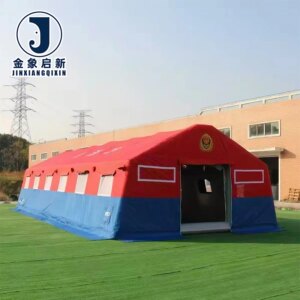
Tienda Inflable de PVC de Lujo para Glamping al Aire Libre Impermeable con Apertura Automática Rápida Diseño Plegable de Cuatro Estaciones y Bomba
Read more -
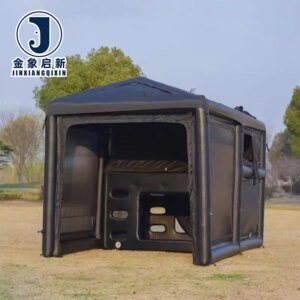
Tienda inflable premium para camping de cuatro estaciones, fácil de usar, espaciosa, portátil, impermeable, tienda exterior rápida.
Read more