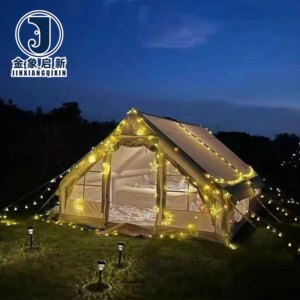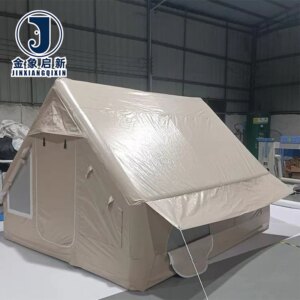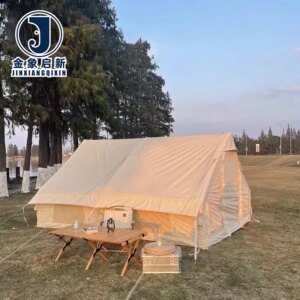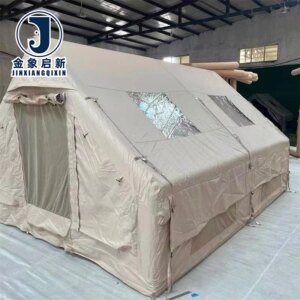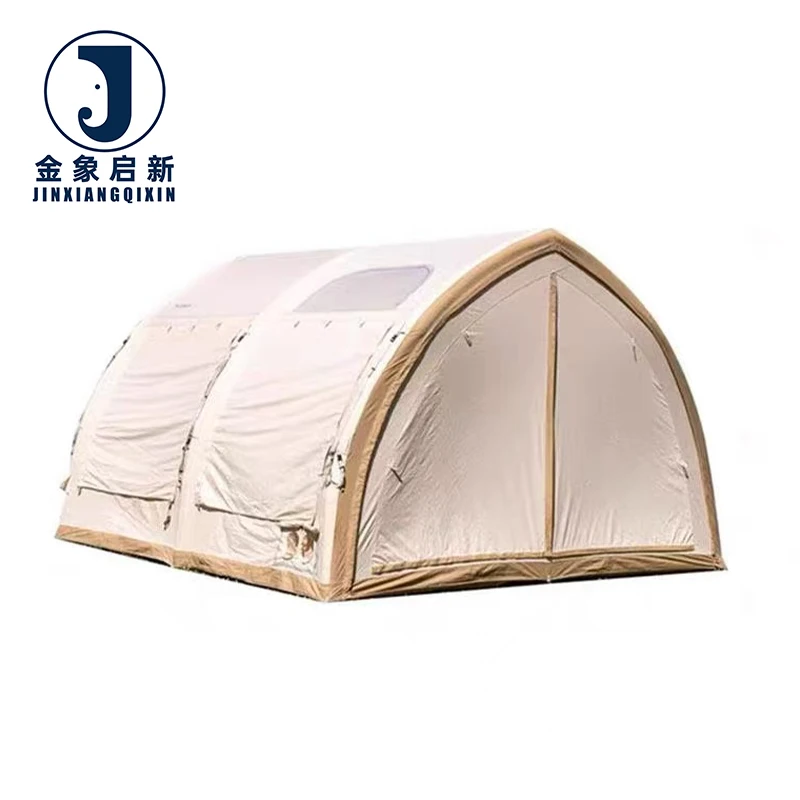
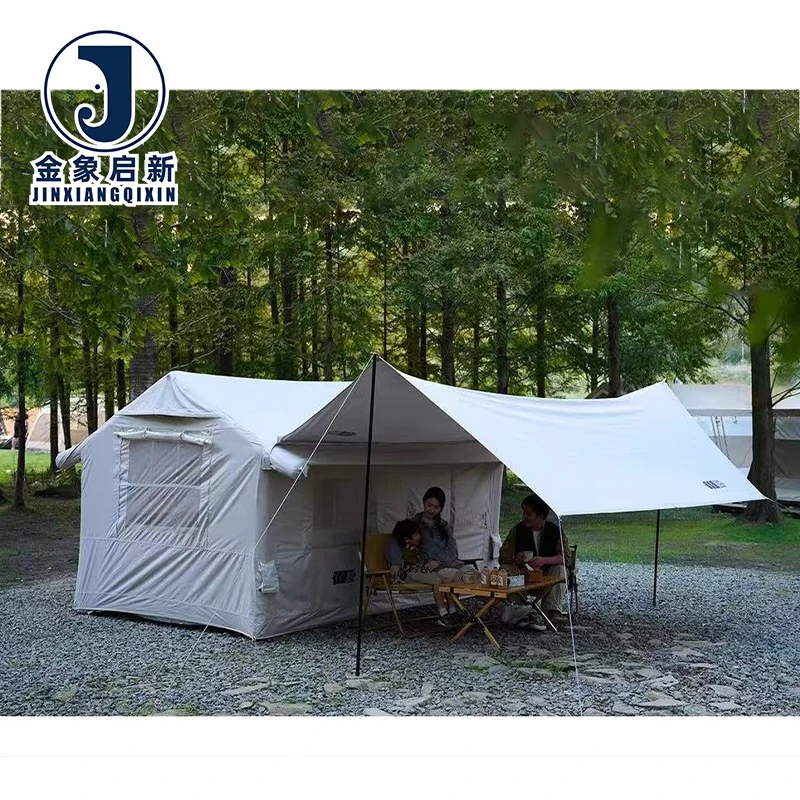
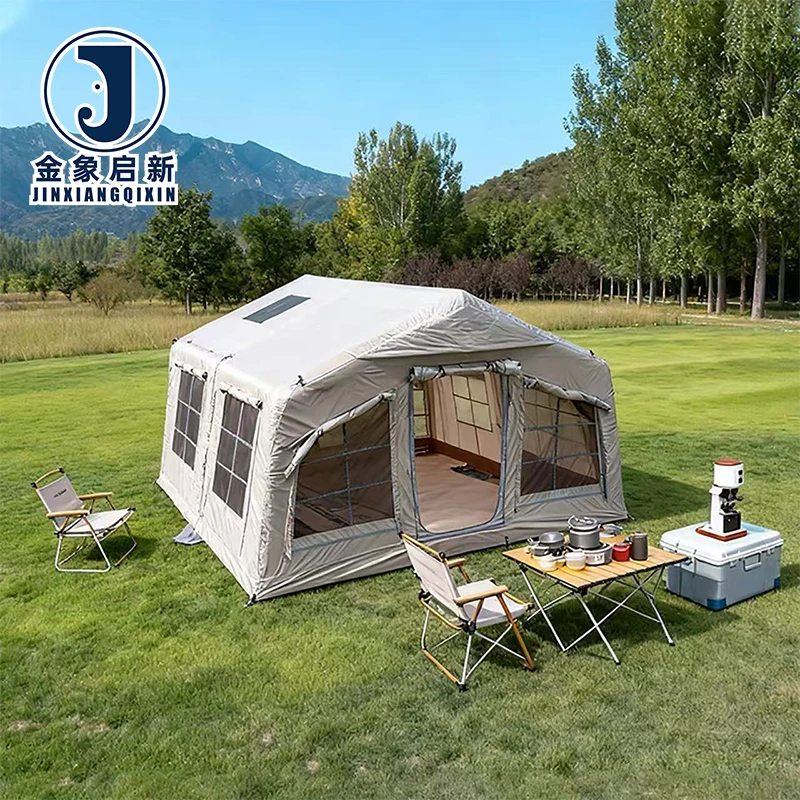
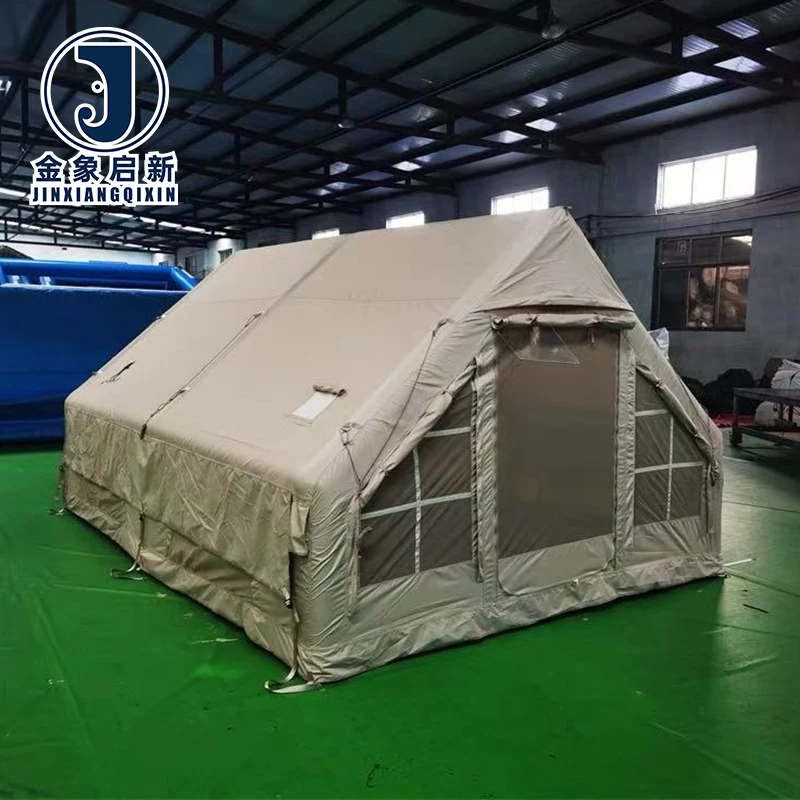
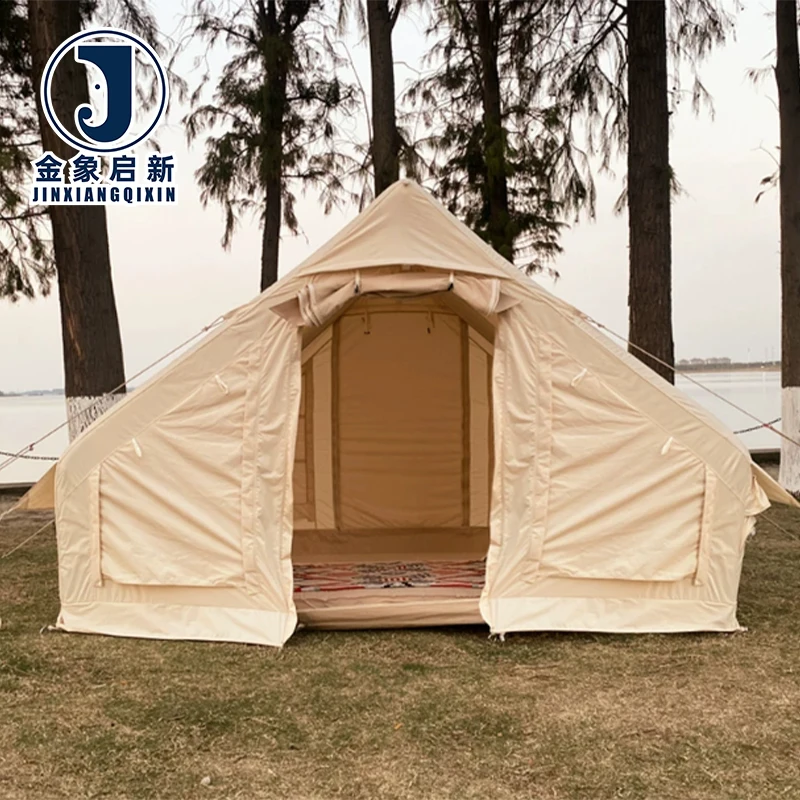
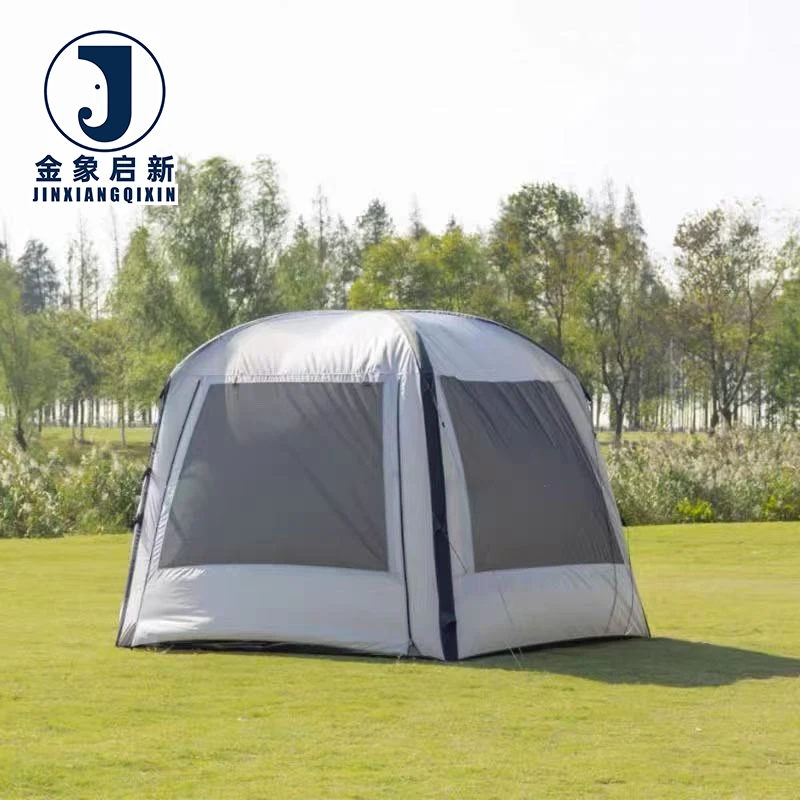
PVC Inflatable Camping Tent — waterproof, UV-resistant, tear-resistant PVC tarpaulin with automatic opening mechanism and single-layer construction. Engineered for commercial and industrial outdoor deployment where rapid site mobilization matters, with coating weight and base fabric verified at every production stage. Full OEM & ODM customization covers dimensions, color, logo printing, and material thickness to match your project drawing. Backed by 12-checkpoint quality control with 24-hour airtightness pressure testing before every shipment.
Description
Deep Process Control — Nearly 30 years of coated fabric production with proprietary knife-coating technology, delivering verified coating weight and adhesion consistency across every roll of PVC inflatable tent fabric.
Technical Specifications
| Parameter | Value |
|---|---|
| Product Type | Inflatable Tent |
| Core Material | PVC Tarpaulin |
| Construction | Single-layer |
| Key Performance | Waterproof, Tear-resistant, Four-Season Use |
| UV Resistance | Available with anti-UV treatment — confirm required service life for your region |
| Flame Retardant | Available in flame retardant grades — confirm the grade required for your market |
| Anti-Static | Available with anti-static treatment — surface resistance standard to be specified |
| Customization | OEM & ODM (sample customization, pattern printing, dimension, color, logo printing, material thickness adjustment) |
| Quality Control | 12 checkpoints throughout production, 24-hour pressure testing for airtightness |
| Sample Lead Time | 7 working days (standard), 10–14 days (customized) |
| Production Lead Time | 45 days (standard orders) |
| Standards | ISO 9001, ISO 14001, ISO 45001, CE |
Application Suitability
| Application | Exposure & Requirement |
|---|---|
| Temporary site shelters for construction projects | Continuous outdoor weather exposure, wind load on inflatable frame, rapid deployment and relocation across phases |
| Mobile storage facilities for logistics operations | UV and rain exposure on open yards, abrasion from loading and unloading, secure enclosure for inventory |
| Auxiliary accommodation units for industrial camps | Four-season temperature fluctuation, occupant comfort requirements, fire safety compliance in camp layouts |
| Commercial emergency preparedness | Immediate inflation and deployment, reliable airtightness under field conditions, repeated pack-and-deploy cycles |
| Outdoor commercial operations | Extended sun and weather exposure, branded exterior surfaces, high foot traffic around entry points |
Why Stated Flame Retardancy Means Nothing Without the Right Grade for Your Market
A flame retardant certificate that does not match your local fire code is just a piece of paper — confirm the exact standard before placing your order.
Inflatable structures used at public events, construction camps, or mining sites face different fire safety requirements depending on jurisdiction. A PVC inflatable tent aftermarket supplier may claim flame retardancy in general terms, but if the material does not meet the specific standard enforced on your project — whether that is a local building code, a mining site safety regulation, or an event licensing requirement — the structure will not pass inspection. This is a recurring source of project delays and material rejection [NEED_CITE: fire classification standards for temporary membrane structures]. The only reliable approach is to state the required standard at the inquiry stage and verify that the test report covers the exact product being supplied.
Coating Integrity That Holds Air, Not Just Water
Inflatable structures place a unique demand on coated fabric: the material must maintain airtightness under sustained internal pressure, not merely shed rainwater. The PVC tarpaulin used for this custom inflatable tent PVC application is knife-coated to achieve a continuous film across the base fabric, filling the weave structure to eliminate pinholes. This coating method produces higher adhesion between the PVC layer and the polyester substrate compared to laminated alternatives, which is critical when the fabric is under constant pneumatic stress. Every production unit undergoes a 24-hour pressure test to verify that the material and its welded seams hold air without measurable decay.
From Roll Stock to Finished Inflatable Structure
The path from a roll of PVC inflatable tent fabric to a deployed structure involves cutting, welding, and assembly steps that each introduce potential failure points. Our role as an Inflatable Tent Fabric manufacturer extends beyond supplying raw material — the 10-technician R&D team works with buyers on pattern layouts that minimize weld lines in high-stress zones, specifies material thickness adjustments for different panel functions (load-bearing air beams versus non-structural walls), and develops samples that allow full assembly testing before production commitment. Sample development completes within 7 working days for standard specifications, or 10–14 days for customized requirements including pattern printing and branding.
Reading the Specification Sheet Beyond the Headline Numbers
A single GSM figure does not define how an inflatable tent fabric will perform in the field. The base fabric denier and weave density determine how tear forces propagate once a puncture occurs — a tightly woven, high-denier polyester substrate resists tear spread even if the coating is damaged. The coating weight and method influence peel strength, which directly affects how well welded seams hold under the cyclic inflation and deflation that inflatable shelters experience. Surface finish — glossy or matte — affects both cleanability and the adhesion of printed branding. Flame retardant and anti-static treatments alter the surface chemistry and must be specified to match the compliance framework of the destination market, not assumed from a generic product description [NEED_CITE: ISO 1421 tensile and tear test methods for coated fabrics]. Understanding these interactions allows buyers to specify material that actually matches the deployment environment rather than selecting on a single parameter.
What Happens When Batch Consistency Is Ignored
Colour variation between rolls in the same inflatable tent order becomes immediately visible once panels are welded side by side on the finished structure. For commercial applications where the tent exterior carries branding or operates in a public-facing environment, inconsistent colour across panels forces costly rework or outright rejection. Similarly, variation in coating weight between batches affects weld parameters — material that requires different heat settings than the previous batch leads to seam failures that appear only after the structure is inflated and loaded [NEED_CITE: coating weight variance and weld failure correlation in PVC tarpaulins]. Our 12-checkpoint quality control system with 100% pre-shipment inspection addresses these risks by verifying coating weight, colour reference, and surface consistency against the approved sample before any roll leaves the facility.
Why Fabric Buyers Source Inflatable Tent Material Here
Coating weight and adhesion are controlled at the process level, not inspected in after the fact — three full production lines with 36 sets of professional equipment maintain tight control over every pass of the knife-coating head. The 10-person R&D team handles material selection, sample development, and custom sizing rather than functioning as a separate department disconnected from production. Every inflatable tent fabric order passes through dedicated QA/QC with 100% inspection before shipment, catching coating defects, colour drift, and dimensional errors before they reach the buyer. Batch-specific quality data is retained and retrievable by order number, providing traceability for repeat orders and warranty investigations. ISO 9001, ISO 14001, ISO 45001, and CE documentation ships with every consignment.
Documentation & Verification
- Material specification sheet stating base fabric denier, coating method, and confirmed GSM for each roll
- Batch-specific test data for waterproof rating and tensile properties, retrievable by order number
- Flame retardant and anti-static test reports provided when applicable treatments are specified
- Pre-shipment inspection record with QA/QC sign-off covering colour, weight, and surface quality
- ISO 9001, ISO 14001, ISO 45001, and CE certificates included with every shipment
Fabrication, Handling & Storage
- Weld temperature and dwell time must be calibrated to the specific PVC coating formulation before production begins
- Pattern cutting layouts should minimize seam intersections at air beam junctions to reduce leak paths
- Rolls must be stored upright on pallets to prevent flat-spot deformation of the PVC coating layer
- Unroll and allow material to acclimatize to ambient temperature before welding in cold conditions
- Clean printed branding surfaces with mild detergent only — solvents degrade the PVC topcoat
- Store finished inflatable units dry and loosely folded to avoid permanent crease marks on the single-layer construction
What to Include in Your Inquiry
To provide an accurate specification and quotation for your inflatable tent project, share the deployment environment and expected seasonal conditions, the fire safety or anti-static standards enforced at the installation site, and the required dimensions or panel layout if available. If branded exterior surfaces are needed, provide artwork files and colour references so that print samples can be developed alongside the material sample. Confirm whether you require finished cut-and-welded panels or roll stock for fabrication at your own facility.
Frequently Asked Questions
Q: What are the custom sizing limits and MOQ for inflatable tent fabric orders?
A: Dimensions, material thickness, and panel configurations are adjustable through our OEM and ODM service. Custom sizing is developed by the R&D team with samples delivered in 10–14 days. Minimum order quantities vary by specification complexity — standard stock grades carry lower thresholds than fully customized colour and print orders. Confirm your target dimensions and annual volume at the inquiry stage for a precise quotation.
Q: How do you ensure colour consistency across multiple rolls in a single inflatable tent order?
A: Every roll is checked against the approved colour reference during our 12-checkpoint quality control process. The 100% pre-shipment inspection verifies that no visible colour variation exists between rolls in the same order. Batch-specific production data is retained and retrievable by order number, ensuring that repeat orders match the original supply.
Q: What flame retardant grades are available, and do they meet my market’s fire safety standards?
A: Flame retardant treatments are applied to order based on the standard required at your installation site. Because fire safety regulations differ by country and application — mining camp, public event, construction site — we ask buyers to state the specific standard or test method their project demands so that the correct grade is supplied with supporting documentation.
Q: How does the pattern printing and sample confirmation process work for branded inflatable tents?
A: Provide artwork files and colour references at the inquiry stage. The R&D team produces printed samples alongside the material sample, allowing you to approve colour accuracy and print definition before mass production begins. Standard samples complete in 7 working days; customized print samples require 10–14 days.
Q: What is the test basis for UV resistance, and how does it translate to outdoor service life?
A: UV-resistant treatment is available and specified based on the expected deployment climate and exposure duration. The test basis and projected outdoor performance vary by treatment level — we recommend discussing your specific installation environment and expected service conditions at the inquiry stage so the appropriate grade is selected for your inflatable tent application.
Related products
-
Tienda de campaña inflable resistente a los UV personalizable para cuatro estaciones, impermeable, de PVC, con apertura automática rápida, para 2-3 personas, exterior.
Read more -
Tienda Inflable de PVC de Lujo para Glamping al Aire Libre Impermeable con Apertura Automática Rápida Diseño Plegable de Cuatro Estaciones y Bomba
Read more -
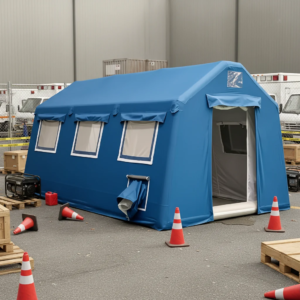
Tienda Inflable Impermeable para Exteriores para Camping, Refugio de Tienda de Aire Portátil
Read more -
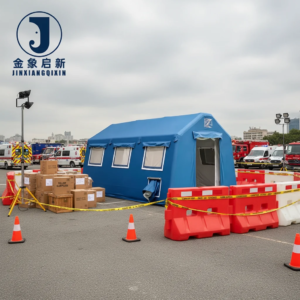
Tienda de Camping Inflable Impermeable PVC Tienda de Aire Exterior Fácil de Montar Refugio Familiar para Camping Cuatro Estaciones >3000mm Impermeable Rápido
Read more