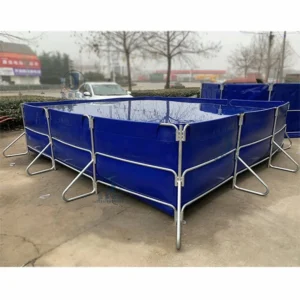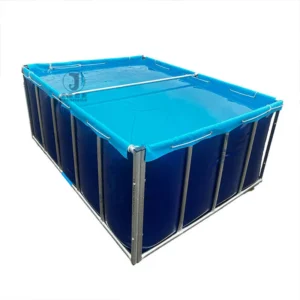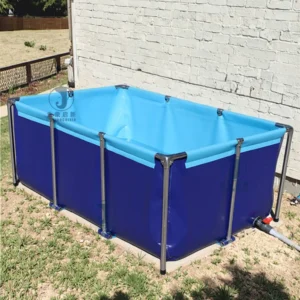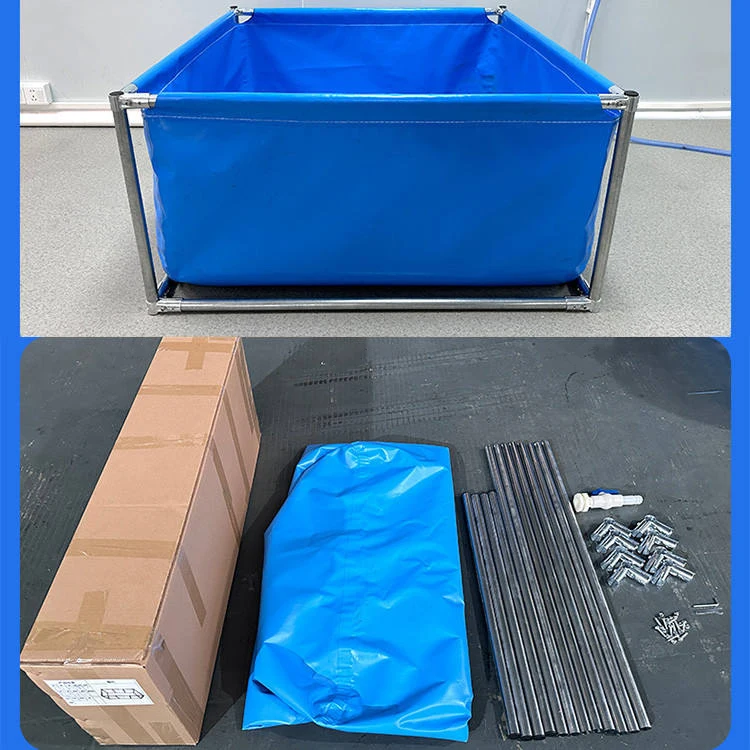
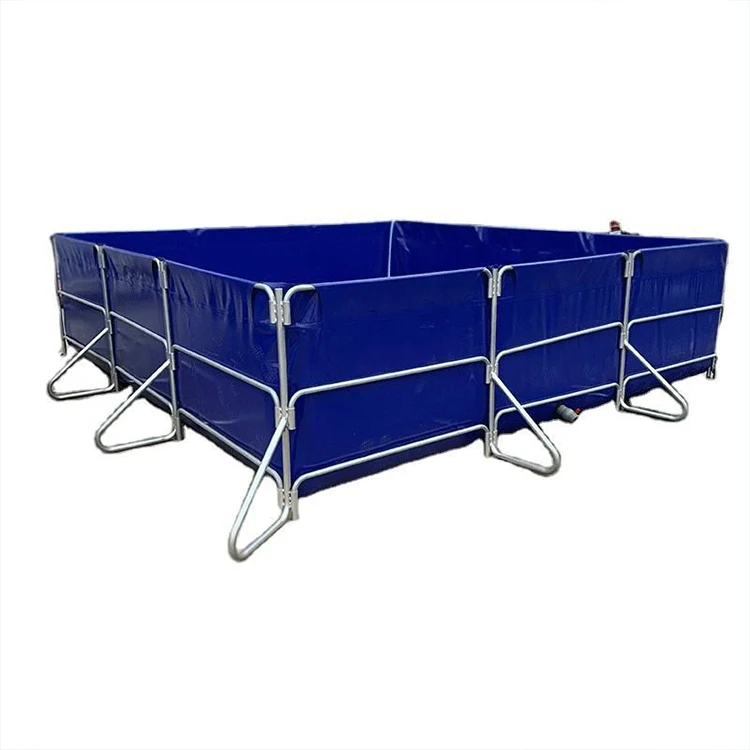
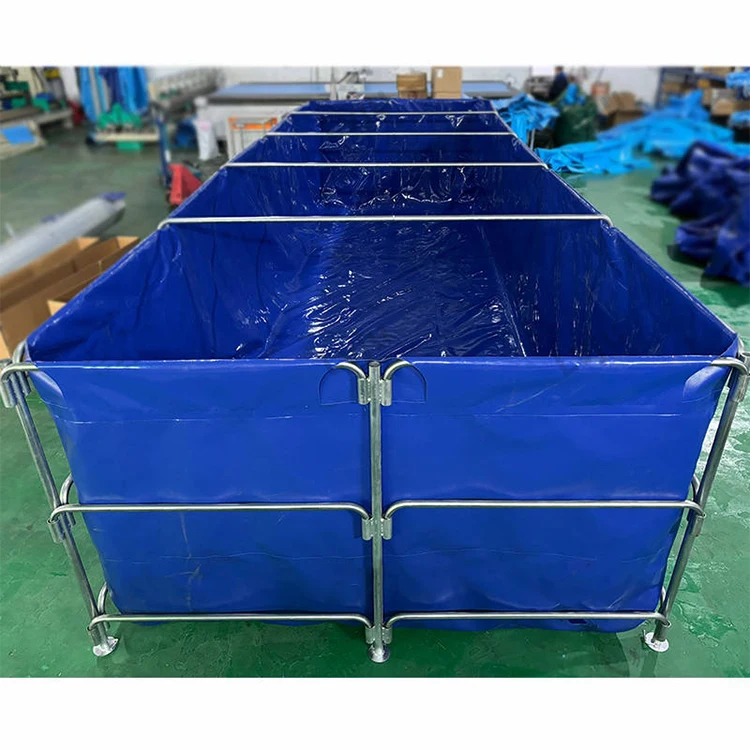
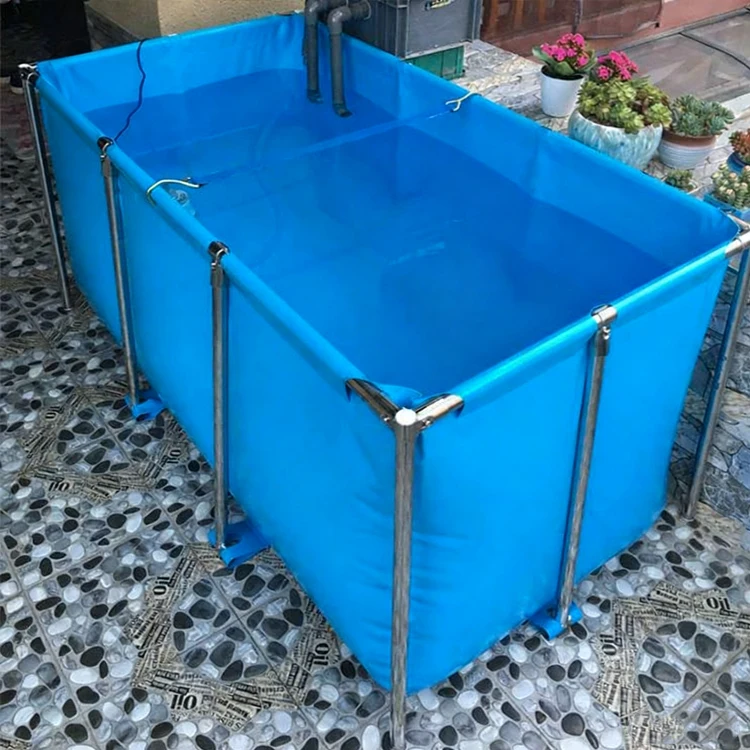
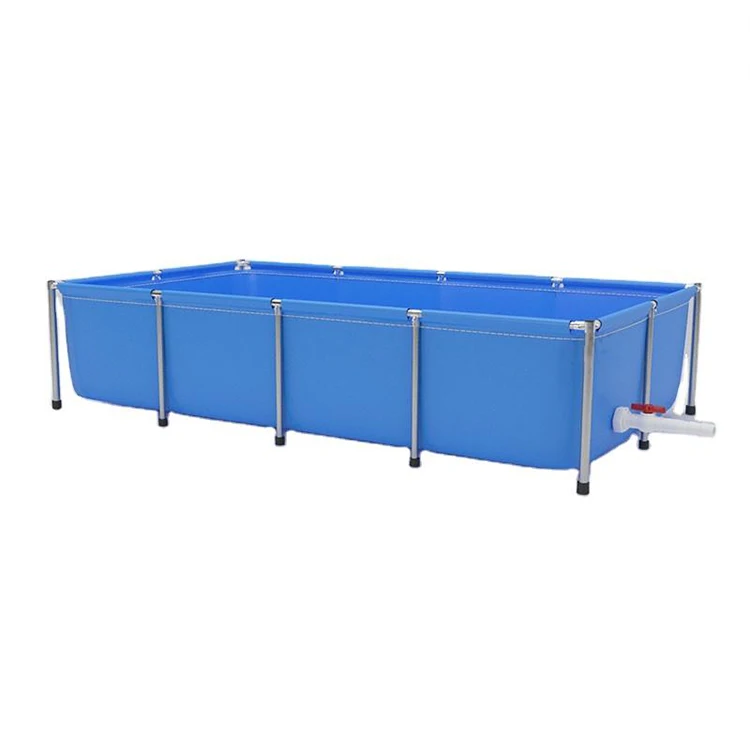
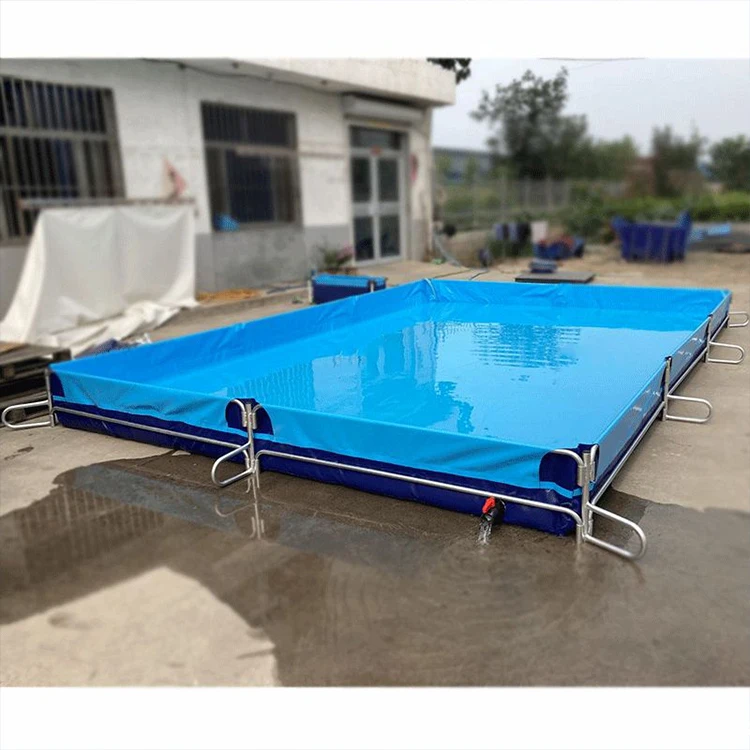
Foldable PVC Tarpaulin Fish Pond Liner — circular and rectangular shapes for aquaculture tanks and ponds.
- PVC coated fabric with heat-welded seams to prevent leaks at fold and flex points
- Custom width and length cuts with UV treatment options supported by test reports
- Backed by 30 years of coated fabric process control and 100% pre-shipment inspection on every roll.
Description
Deep Coating Process Control — Nearly three decades focused on coated fabric gives us repeatable adhesion and coating weight across every roll of PVC tarpaulin fish pond liner we produce.
Technical Specifications
| Parameter | Value |
|---|---|
| Product Type | PVC Tarpaulin Fish Pond Liner |
| Coating Material | PVC |
| Shape Options | Circular / Rectangular |
| Feature | Foldable |
| Waterproof | Yes (source value — verify against manufacturer catalog) |
| Standards | ISO, CE |
| UV Treatment | Available in UV-treated grades — confirm the treatment level required for your climate |
| Flame Retardant | Available in flame retardant grades — confirm the grade required for your market |
Application Suitability
| Application | Exposure & Requirement |
|---|---|
| Intensive aquaculture pond lining | Permanent water contact, soil chemistry, puncture risk from substrate |
| Hatchery and nursery portable tanks | Frequent folding and unfolding, rapid deployment, hygiene between cycles |
| Agricultural water containment | Seasonal UV exposure, temperature fluctuation, mechanical abrasion |
| Recirculating aquaculture system (RAS) tank lining | Continuous water immersion, chemical dosing contact, structural frame fitment |
Why Quoted GSM Is Only Half the Story When Choosing a PVC Tarpaulin Fish Pond Liner Manufacturer
Coating weight and base fabric construction must be evaluated together — neither alone predicts field performance.
Many buyers receive pond liner that measures lighter on arrival than the GSM printed on the quotation. The discrepancy often traces back to suppliers quoting total weight without separating coating from base fabric, or substituting a lower-denier weave that saves cost but shifts the puncture and tear balance [NEED_CITE: material specification sheet verification practices for coated fabrics]. For aquaculture operators, a liner that fails at a welded corner seam mid-season means draining a stocked pond — a loss measured in biomass, not square metres.
Shaping the Liner to Your Frame Geometry
Circular and rectangular configurations serve different structural purposes in aquaculture. Circular PVC tarpaulin fish pond liners distribute hydrostatic pressure evenly against the retaining wall, reducing stress concentration at any single point. Rectangular liners suit timber or steel-framed tanks where flat panels meet at right angles, placing the highest demand on welded corner seams. We fabricate both formats from the same coated fabric base, cutting and welding to your frame dimensions so the liner sits without tension folds that accelerate wear.
Foldability as a Logistics and Deployment Advantage
The foldable construction of this PVC tarpaulin fish pond liner reduces shipping volume compared to rigid tank alternatives, allowing more units per container. On site, the fold pattern is designed to minimise hard crease lines that could become crack initiation points after repeated seasonal deployment. Hatchery operators who rotate tanks between production cycles benefit from a liner that packs down flat and redeploys without requiring specialised tools or heat treatment to remove storage creases [NEED_CITE: fold crease recovery in flexible PVC coated fabrics].
Reading the Specification Sheet Beyond the Headline Number
Total GSM tells you how much material is present per square metre but not how that weight is distributed. A liner built on a high-denier base fabric with moderate coating will resist tearing differently than one with a light base and heavy coating, even at identical total GSM. The coating method — whether knife-over-roll, laminating, or calendering — determines peel strength between layers, which directly affects how well welded seams hold under continuous water pressure. Base fabric weave density in the warp and weft directions governs tear propagation resistance; a loose weave allows a puncture to extend rapidly under load. Surface finish also plays a role: a glossy top coat sheds biofilm and eases cleaning between cycles, while a matte surface may be specified where glare reduction matters in hatchery environments.
The Hidden Cost of Underspecifying Your Pond Liner
A liner that is one grade too light for the pond depth will stretch under hydrostatic load, concentrating stress at the welded seams until they delaminate. Buyers who specify only total GSM without requesting a base fabric denier reference may receive material that passes the weight check but tears easily during installation over rough substrate. Batch-to-batch colour variation between rolls becomes visible once panels are welded side by side in a lined pond — an aesthetic issue in visible installations and a potential indicator of inconsistent coating formulation [NEED_CITE: roll-to-roll colour consistency standards in PVC coated fabric production]. Welded seams that fail before the fabric itself point to process parameters that were not matched to the specific material grade.
Why Procurement Teams Source This Liner Through Jinxiang
Three full production lines and 36 sets of professional equipment support bulk pond liner orders with consistent output across the run. A 10-person R&D team handles custom sizing, shape development, and sample fabrication so your liner fits the exact tank frame before the bulk order enters production. Dedicated QA/QC at every production stage with 100% inspection before shipment means welded seams, coating adhesion, and dimensional accuracy are verified roll by roll, not by batch sampling. Samples are developed within days for custom pond dimensions, letting you confirm fit, fold behaviour, and weld quality before committing to volume [NEED_CITE: ISO 1421 tensile and tear test methods for coated fabrics].
Documentation & Verification
- Material specification sheet stating GSM, base fabric denier, and coating weight per product
- Pre-shipment inspection record covering weld integrity and dimensional accuracy
- UV and flame-retardant test reports provided where applicable to the grade ordered
- Certificate of origin and customs documentation included with every shipment
- Roll packing list detailing dimensions and quantity per unit for receiving verification
Fabrication, Handling & Storage
- Heat-weld seams using parameters matched to the PVC coating weight to prevent delamination under water pressure
- Reinforce corner welds on rectangular pond liners where hydrostatic stress concentrates at right angles
- Store folded liners flat in shaded areas to prevent UV degradation before deployment
- Avoid dragging the PVC surface over sharp substrate during installation to protect the coating layer
- Use mild detergent for cleaning between aquaculture cycles; avoid solvent-based agents that attack PVC
What to Include in Your Inquiry
Provide the pond or tank frame dimensions, preferred shape (circular or rectangular), and the water depth your liner must hold. Specify any UV treatment or flame-retardant grade your local regulations require, along with the annual volume and whether you need finished liners or roll stock for your own fabrication.
Frequently Asked Questions
Q: How is GSM verified on arrival and what is the re-inspection process?
A: Every roll ships with a material specification sheet stating GSM, base fabric, and coating weight. We conduct 100% pre-shipment inspection. On arrival, buyers can cross-check weight per square metre using a calibrated scale and compare against the documented specification to confirm compliance.
Q: What UV treatment options are available and what test basis supports them?
A: UV-treated grades are available with treatment levels matched to your climate zone. We supply test reports supporting the UV claim for the specific grade ordered. Confirm your market’s exposure requirements so we recommend the appropriate treatment level.
Q: How are welded seams reinforced at high-stress pond corners?
A: Rectangular pond liners concentrate hydrostatic load at welded corners. We adjust weld parameters to the coating weight and apply overlap dimensions suited to the pond depth, ensuring the seam holds under continuous water pressure without delaminating before the fabric itself.
Q: What custom shapes, sizes and minimum order quantities apply?
A: We fabricate circular and rectangular pond liners to your exact frame dimensions. Minimum order quantities depend on the grade and customisation level required. Request a quotation with your dimensions and annual volume for specific terms.
Q: How do I clean, maintain and repair a PVC pond liner in the field?
A: Between cycles, clean the PVC surface with mild detergent and water. Avoid solvents that degrade the coating. Small punctures can be patched using compatible PVC repair material and heat-welded in place, matching the weld temperature to the liner’s coating weight.
Related products
-
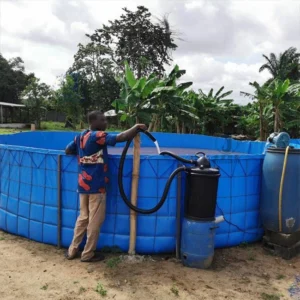
Lona de PVC 0.65mm Tela Tejida Industrial Estilo Sencillo Recubrimiento Impermeable para Tanque de Peces Piscina Desde Vietnam
¥0.50 Add to cart -
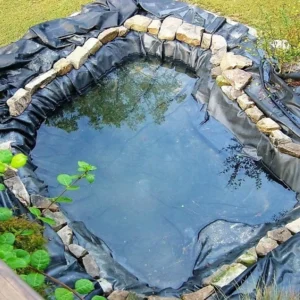
Lona de camión impermeable de alta resistencia recubierta para estanque de peces, cubierta de lona, tienda, liner para piscina, anti UV
¥1.00 Select options This product has multiple variants. The options may be chosen on the product page -
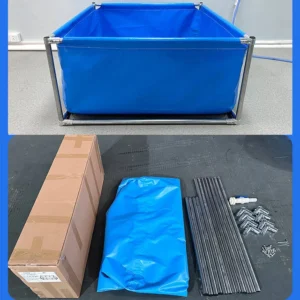
Custom Made PVC Tarpaulin Fish Pond for Aquaculture
Read more -
Custom Made PVC Fish Pond Liner for Aquaculture – Full Range
Read more