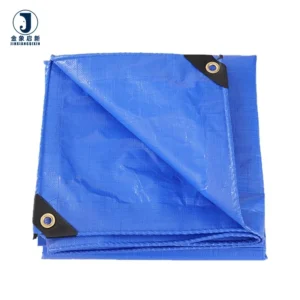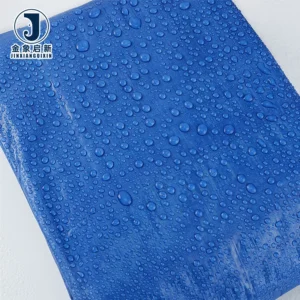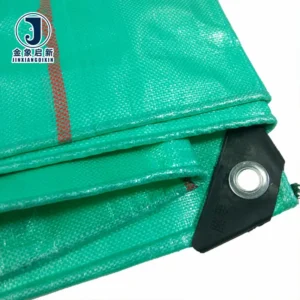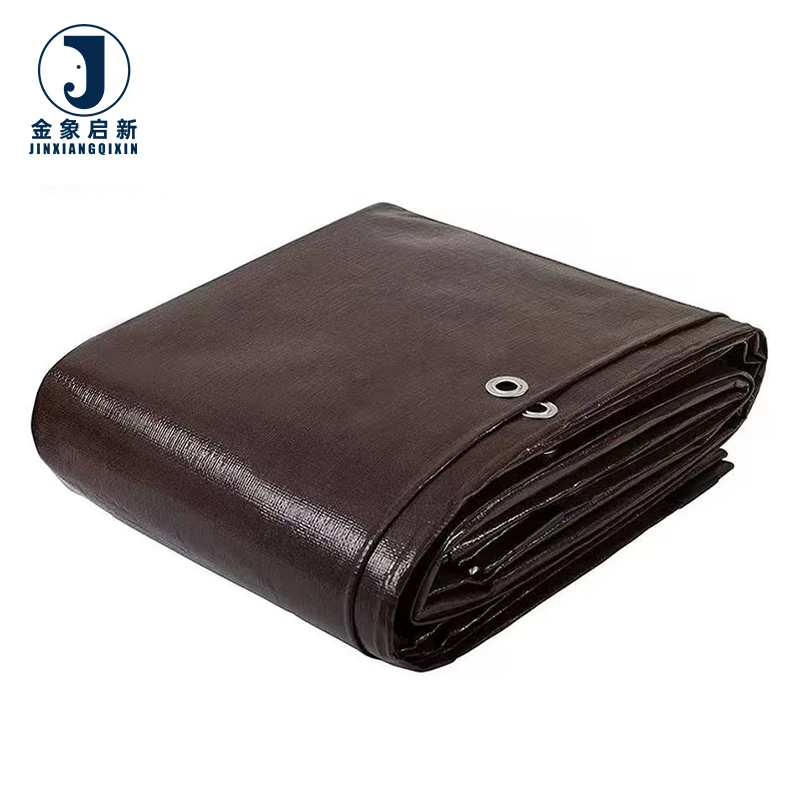
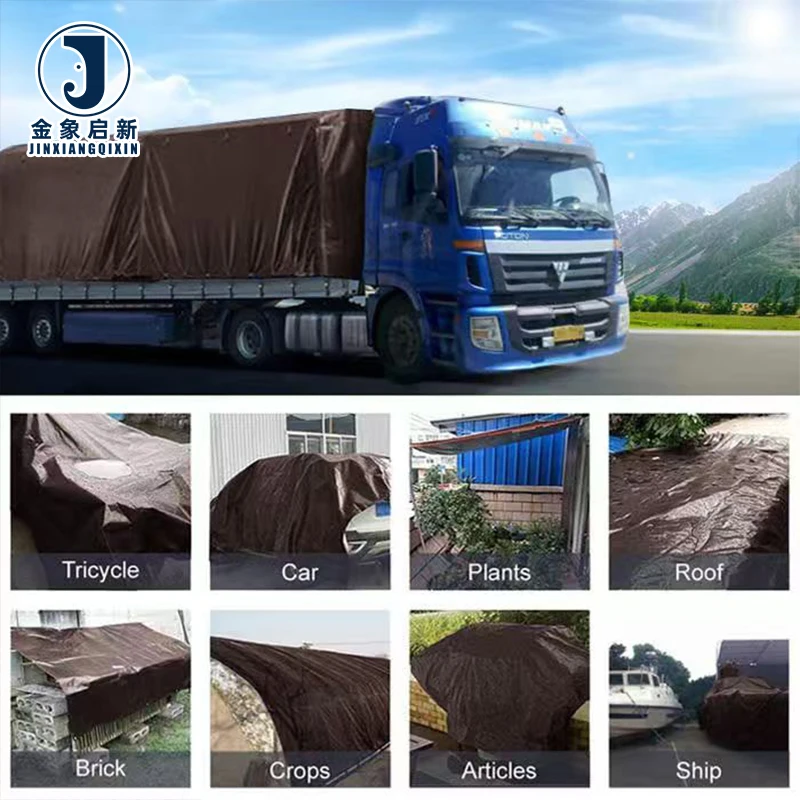
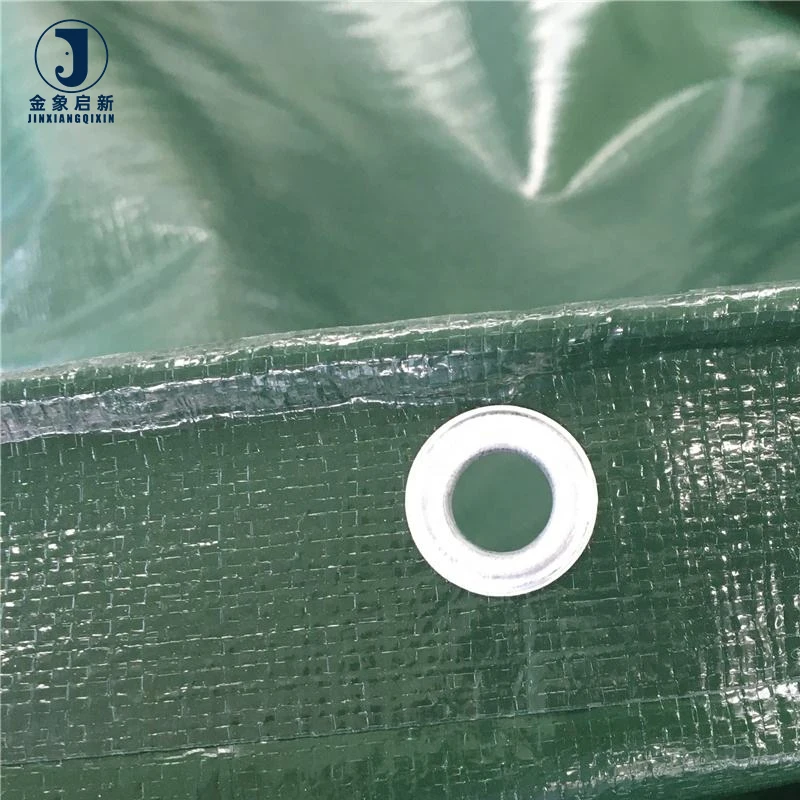
Custom PE Tarpaulin for Industrial Use — polyethylene fabric available in 40g~500g/m² weight range with knitting densities from 5×5 to 20×20.
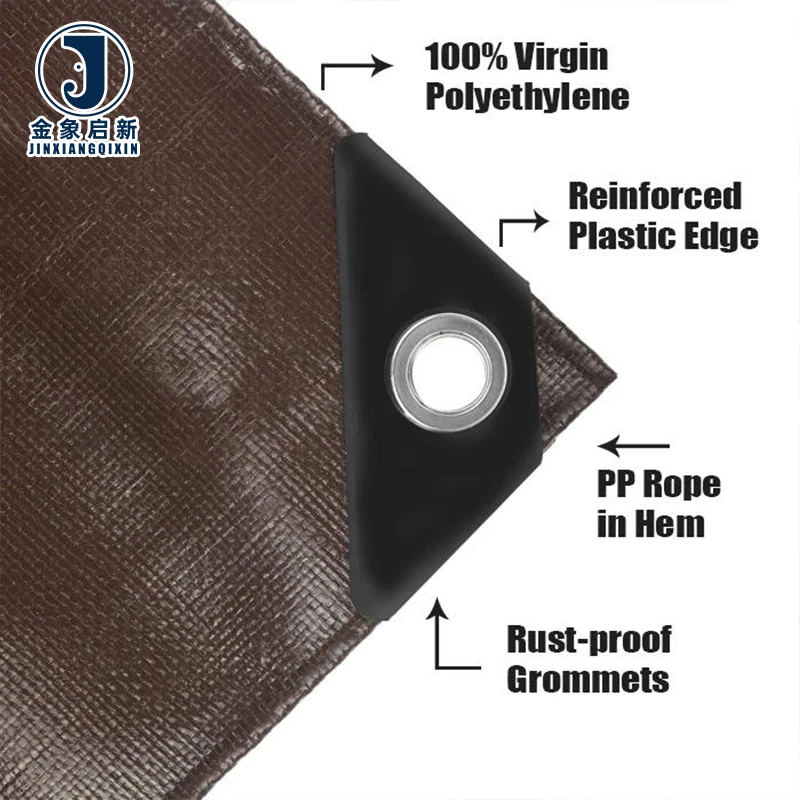
- Double waterproof surfaces with reinforced corners for tear-resistant durability
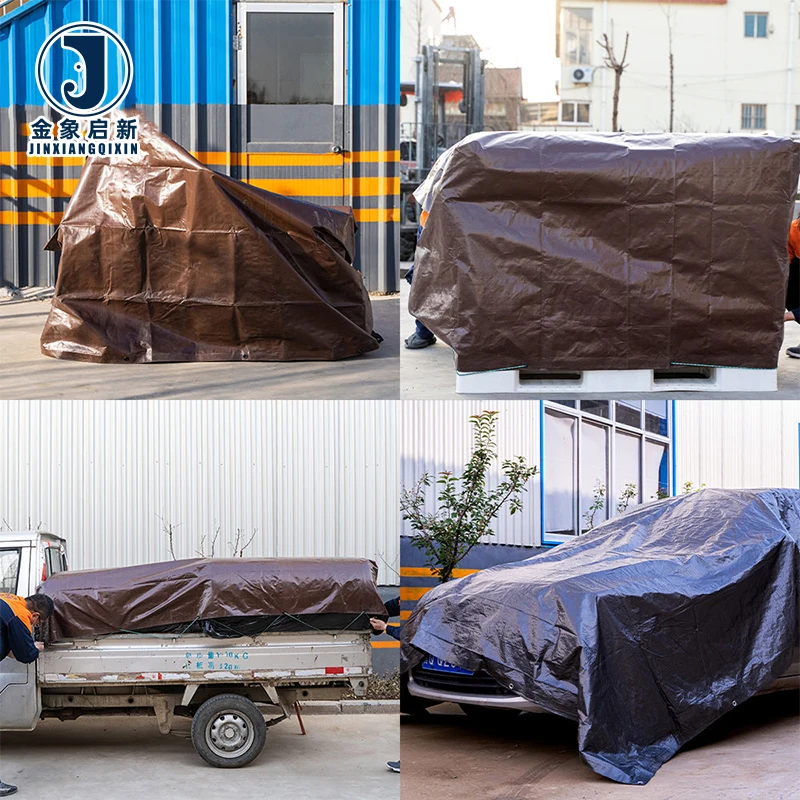
- Lightweight to heavy-duty grades covering agricultural, transport, and industrial applications
- Full size and color customization supported by 10-person R&D team with samples developed within days for rapid project turnaround
Description
Three Full Production Lines — supporting consistent bulk output and on-time dispatch for PE Tarpaulin orders across agriculture, transport, and industrial covering.
Technical Specifications
| Parameter | Value |
|---|---|
| Product Type | PE Tarpaulin |
| Material | Polyethylene |
| Weight Range | 40g~500g/m2 |
| Lightweight Weight | 80-110 g/m² |
| Lightweight Thickness | 0.18-0.22 mm |
| Lightweight Knitting Density | 8*8 |
| Lightweight Tensile Strength | Meridian 300-500/Latitude 250-450 N/5cm |
| Medium-sized Weight | 120-150 g/m² |
| Medium-sized Thickness | 0.22-0.28 mm |
| Medium-sized Knitting Density | 10×10 |
| Medium-sized Tensile Strength | Meridian 500-800/Latitude 400-700 N/5cm |
| Heavy-duty Weight | 160-240 g/m² |
| Heavy-duty Thickness | 0.30-0.35 mm |
| Heavy-duty Knitting Density | 12*12 |
| Heavy-duty Tensile Strength | Meridian 900-1200/Latitude 700-1000 N/5cm |
| Size | Custom size |
| Color | Custom color |
| Water Resistance | Double waterproof surfaces |
| Item Thickness | 5×5~20×20 |
| Center To Center Spacing | 39.4 Inches |
| Standards | ISO, CE |
Application Suitability
| Application | Exposure & Requirement |
|---|---|
| Agricultural Covering | Continuous sun exposure, moisture contact, mechanical stress from wind loading, need for lightweight handling |
| Truck Tarpaulin | Road abrasion, constant vibration, tie-down tension at flex points, weather exposure during transit |
| Warehouse Coverage | Dust protection, intermittent water exposure, long-term storage without degradation |
| Industrial Protective Covers | Equipment protection from contamination, abrasion from sharp edges, repeated handling and folding |
| Transportation Tarpaulin | Load securing, multi-modal exposure, frequent deployment and stowage cycles |
| Lightweight Covering Cloth | Short-term seasonal use, temporary stockpile protection, minimal handling weight requirement |
Why Stated Weight Alone Cannot Predict Fabric Behaviour
GSM tells you how much material is there, not how it performs under load.
When sourcing a PE Tarpaulin aftermarket supplier, buyers often anchor decisions on grams per square metre, assuming a heavier sheet will automatically last longer on the truck or in the field. In practice, the relationship between weight and service performance depends on how the base fabric is woven and how the coating is applied. I have watched rolls that matched the quoted weight arrive on site and still tear at the first corner pull, because the weave density did not match the tensile demand of that particular load shape. [NEED_CITE: tensile and tear test methods for coated fabrics per ISO 1421]
From Lightweight Stock Covers to Heavy-Duty Load Protection
The full PE tarpaulin range spans from 40g/m2 covers used for short-term agricultural shelter up to 240g/m2 sheets specified for industrial transport and construction site protection. Each weight band corresponds to a distinct knitting density and thickness profile, which means the selection process starts with defining the mechanical and environmental exposure before choosing a grade. A PE Tarpaulin aftermarket supplier who understands this spectrum can recommend a grade that matches the actual demand rather than defaulting to a mid-range option that fails prematurely or an over-specified fabric that adds unnecessary weight and cost.
Matching Knitting Density to the Tensile Demand at Tie-Down Points
Knitting density — whether 88 for lightweight covers or 1212 for heavy-duty applications — directly governs how load distributes through the base fabric when tension is applied at grommets and tie-downs. A lower density weave will deform locally around the fastening point, concentrating stress and initiating a tear that propagates along the meridian or latitude yarn. This is where specifying by tensile strength values alongside weight becomes necessary: the heavy-duty grade delivers meridian tensile strength of 900-1200 N/5cm, which is what prevents the fabric from splitting when a ratchet strap bites into it during highway transit. [NEED_CITE: relationship between weave density and tear propagation in woven polyethylene fabrics]
Reading the Weight and Density Table Before You Commit
Three tiers define the PE tarpaulin offering: lightweight at 80-110 g/m² with 0.18-0.22 mm thickness, medium at 120-150 g/m² with 0.22-0.28 mm, and heavy-duty at 160-240 g/m² with 0.30-0.35 mm. The critical insight is that weight and knitting density must be evaluated together. A 150 g/m² fabric at 10×10 density behaves very differently from a 150 g/m² fabric at 8*8 density — the former distributes load more evenly and resists tear propagation. Thickness also correlates with puncture resistance: the heavy-duty 0.30-0.35 mm range withstands contact with sharp-edged cargo where thinner grades would be compromised on first use.
What Happens When the Wrong Grade Reaches the Job Site
Choosing a medium-weight PE tarpaulin for a heavy-duty transport application might pass the procurement checklist on paper, but the consequences surface within the first few loading cycles. Corner reinforcements pull through low-density weave, seams separate at the point of maximum flex, and colour inconsistency between rolls becomes visible once sheets are deployed side by side on adjacent trucks. These failures are not defects in manufacturing — they are specification mismatches that could have been caught by comparing the tensile strength values and knitting density against the actual tie-down configuration and load profile. [NEED_CITE: field failure analysis of polyethylene tarpaulins under transport conditions]
Why Buyers Consolidate PE Tarpaulin Orders Here
Three full production lines allow bulk capacity to be maintained without sacrificing delivery schedules, which matters when a fleet operator needs an entire order shipped in one window. A dedicated R&D team handles custom sizing, pattern requirements, and sample development within days rather than weeks, so specification can be locked before production starts. QA/QC inspection runs at every production stage with full pre-shipment checks, preventing the situation where GSM on the quotation does not match the rolls that arrive. Colour matching is controlled across rolls in the same production run, eliminating the visible variation that forces rework on site.
Documentation & Verification
- Material specification sheet confirming stated weight range and knitting density per roll
- Test reports for applicable treatments including UV stabilisation grades where specified
- Pre-shipment inspection record with individual roll weight verification against the quotation
- Roll packing list with batch identification for traceability across the shipment
- Certificate of origin and customs documentation to support import clearance
- ISO and CE certification documents available for compliance submissions
Fabrication, Handling & Storage
- Heat sealing parameters vary by thickness — 0.30-0.35 mm heavy-duty grades require adjusted dwell time versus 0.18 mm lightweight sheets
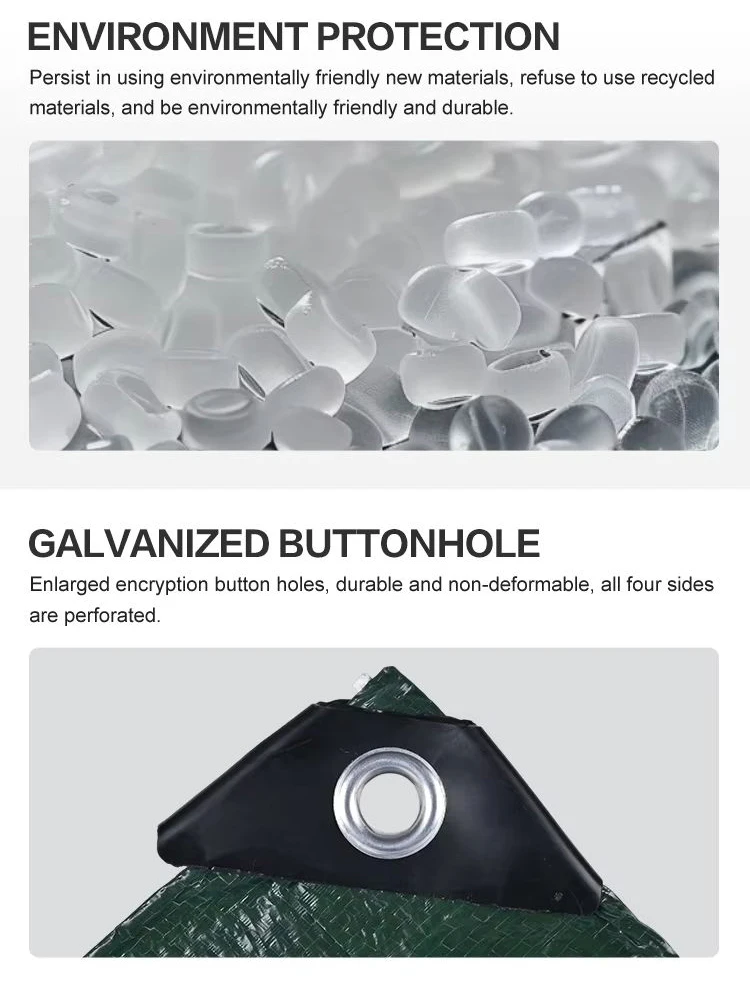
- Grommet spacing at 39.4 inches center-to-center distributes tie-down load; reinforce corners with additional webbing on heavy-duty grades
- Store rolls horizontally on pallets to prevent permanent creasing through the polyethylene coating layers
- Unfold cold-stored sheets gradually at ambient temperature before deployment to avoid coating micro-cracking
- Clean with mild detergent only — solvent-based cleaners degrade the double waterproof surface treatment
- Repair minor punctures on site using compatible polyethylene patch material matched to the base fabric weight grade
What to Include in Your Enquiry
To receive an accurate specification recommendation, share the intended application along with the mechanical and environmental exposure your covers will face — whether that is highway transit, static outdoor storage, or agricultural seasonal use. Indicate the required dimensions, preferred weight band, and whether you need finished cut sizes with reinforcement or roll stock for your own fabrication. If your market requires specific certifications or documentation for import clearance, state those requirements upfront so they can be included in the quotation.
Frequently Asked Questions
Q: How do you verify GSM matches the quotation?
A: Every roll undergoes weight verification during pre-shipment inspection. We document the actual measured GSM against the stated specification and include this in the inspection record. If your order requires third-party verification, we can accommodate sampling protocols before dispatch. This prevents the situation where material arrives lighter than agreed and avoids costly disputes after the shipment has cleared customs.
Q: What customization options are available for size, color, and printing?
A: We produce custom sizes from the full weight range of 40g to 500g per square metre, with color matched to your specification across all rolls in the same production run. Pattern printing and branding are available through our R&D team, who develop samples within days for approval before bulk production proceeds. This ensures colour consistency and print accuracy across your entire order.
Q: How do you ensure color consistency across multiple rolls?
A: Color is controlled at the coating stage with batch-level matching, and all rolls within a single order are produced in the same production run. Pre-shipment inspection includes a visual comparison between rolls to catch any variation before packing. This eliminates the problem where colour differences become visible only after sheets are installed side by side on adjacent equipment or structures.
Q: What documentation comes with each shipment?
A: Each dispatch includes a material specification sheet, pre-shipment inspection record, roll packing list, and certificate of origin. Where applicable, test reports for UV or other treatment grades are included. ISO and CE certificates are available for compliance submissions. We provide full customs support documentation to streamline your import process and avoid clearance delays.
Related products
-
Multi-color & Size Waterproof Breathable Organic Blackout Coated PE Tarpaulin with UV Customizable Weft Knitted for Boys & Girls
¥0.21 Select options This product has multiple variants. The options may be chosen on the product page -
Lona de Weft recubierta de PVC orgánico transpirable de alta resistencia 400gsm impermeable y resistente a los UV para camiones, edificios, agricultura y niños.
¥0.87 Select options This product has multiple variants. The options may be chosen on the product page -
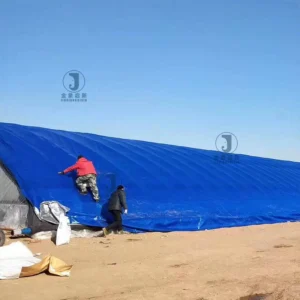
Tela de aceite impermeable de PVC orgánico transpirable al por mayor, tela de blackout, protección solar, toldo exterior, tienda industrial.
¥0.89 Select options This product has multiple variants. The options may be chosen on the product page -
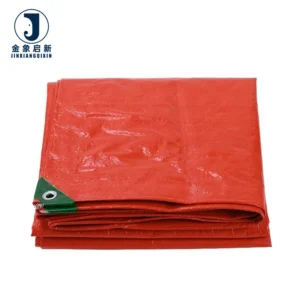
China JINGXIANG PE Coated Waterproof Blackout Truck & Trailer Cover Tarpaulin for Boys & Girls
¥0.35 Select options This product has multiple variants. The options may be chosen on the product page