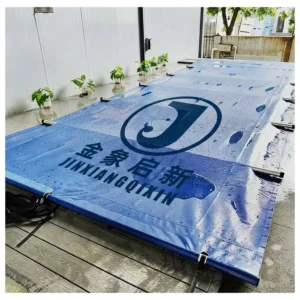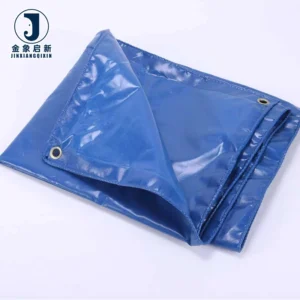
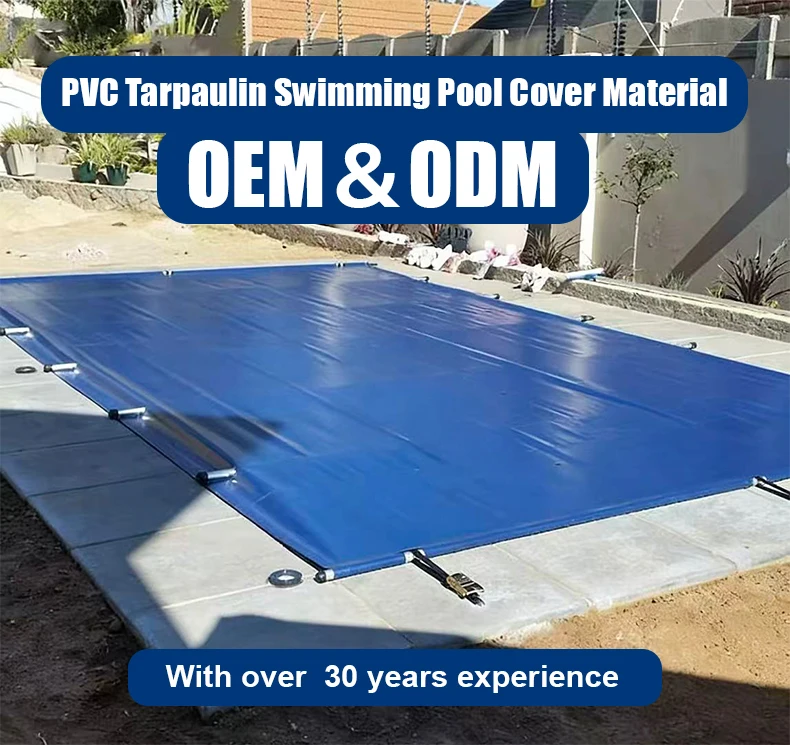
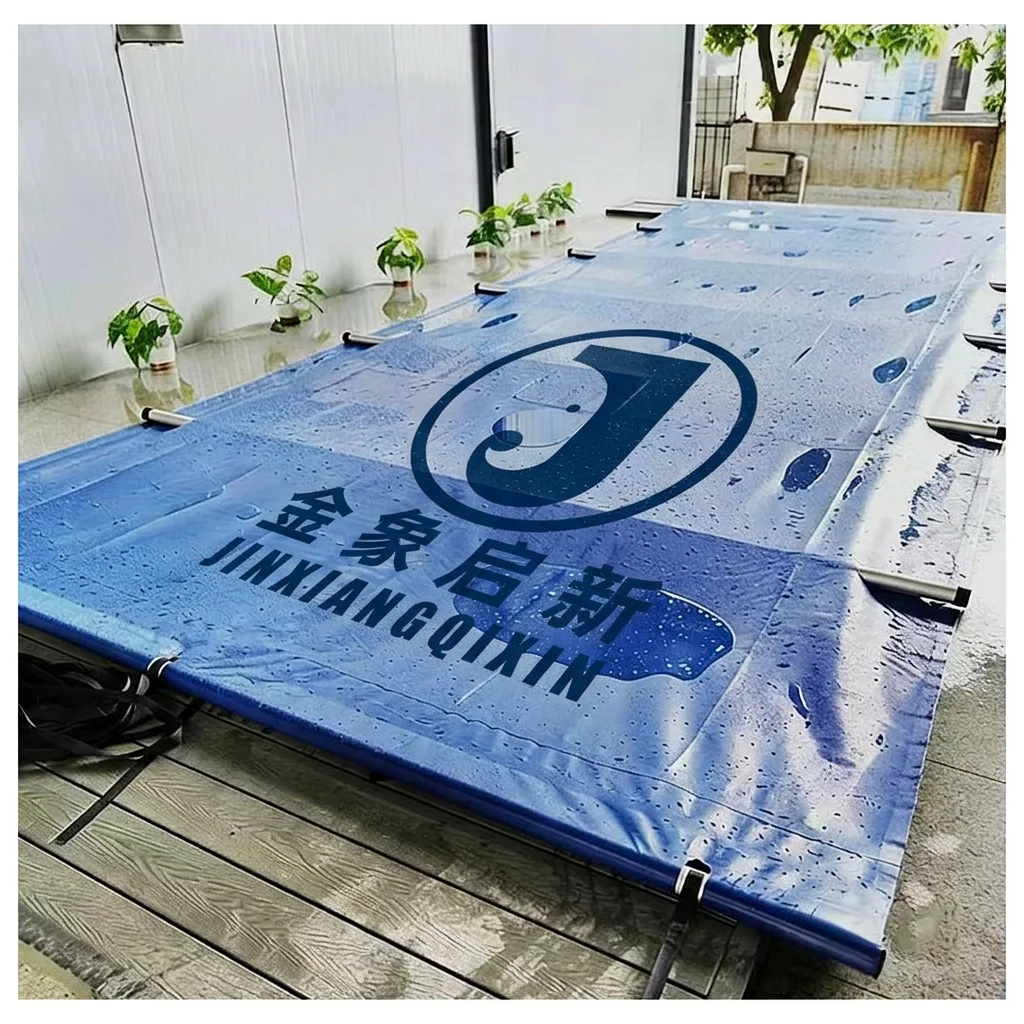
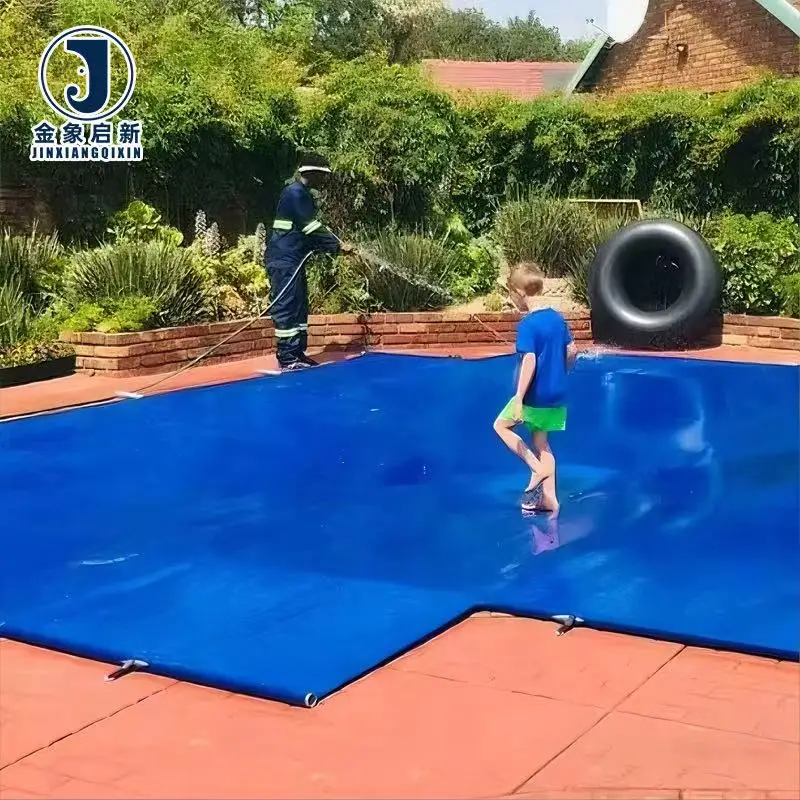
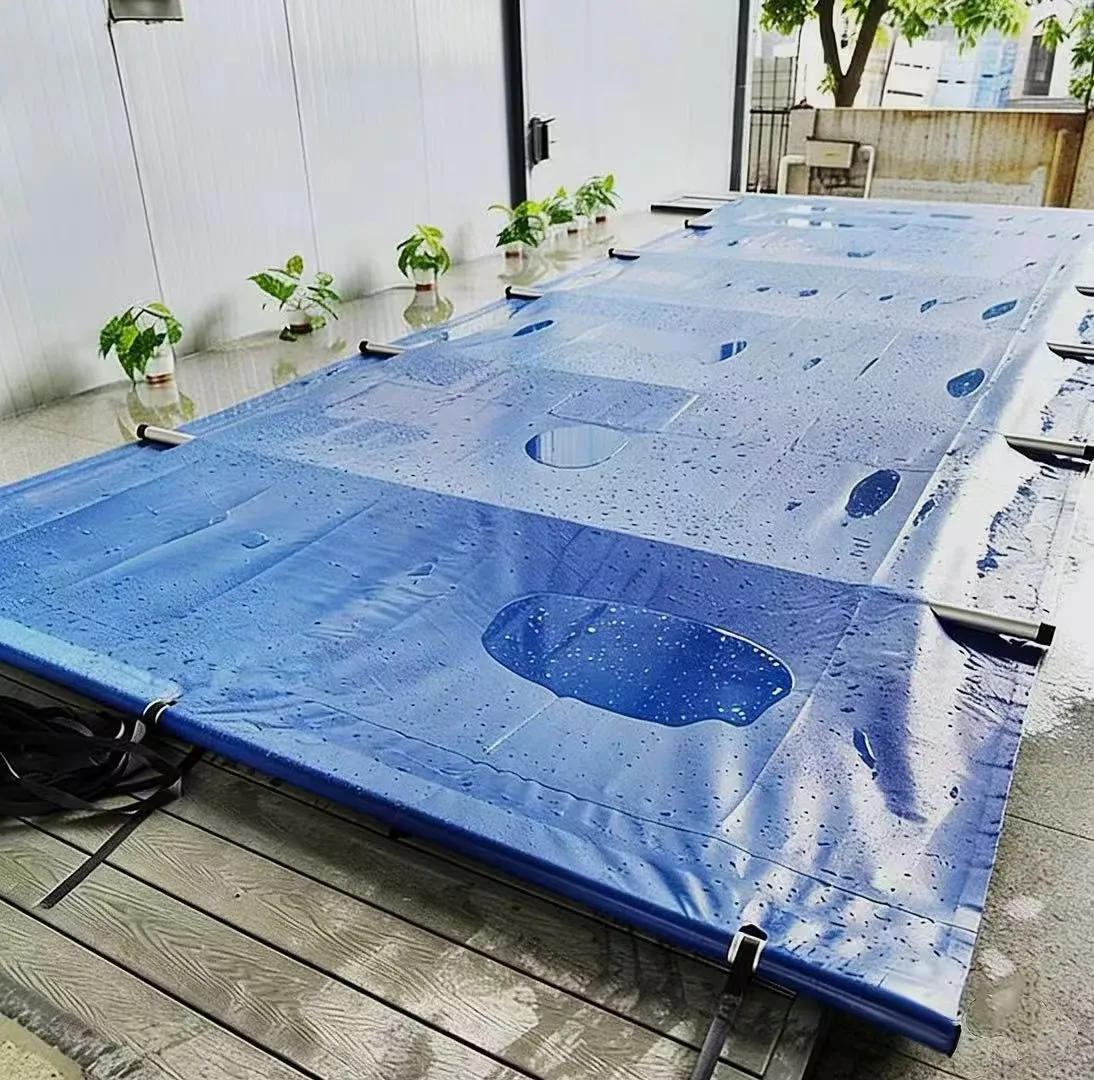
PVC Pool Cover Tarpaulin, 350–750gsm, High-Strength Polyester Mesh Base — laminated with hot-melt coating technology for superior adhesion and weld strength at seams.
- Anti-UV, waterproof, and cold-crack resistant for long-term outdoor pool exposure
- Custom sizing available for both irregular and rectangular pool configurations
- Multiple color options with consistent dye lots across rolls
Supported by 10-person R&D for rapid sample development and 100% pre-shipment inspection on every order.
Description
Custom Specification Range — Multiple GSM grades from 350gsm to 750gsm with matched thickness options, produced across dedicated coating lines that hold tight weight tolerances roll to roll.
Technical Specifications
| Parameter | Value |
|---|---|
| Product Type | PVC Coated Tarpaulin Roll |
| Material | PVC + High-strength polyester mesh fabric |
| Coating Method | Laminated Technology & Hot-melt Coating Technology |
| Weight (GSM) | 350gsm / 420gsm / 500gsm / 550gsm / 600gsm / 750gsm |
| Total Thickness | 0.32mm / 0.35mm / 0.4mm / 0.45mm / 0.5mm / 0.65mm |
| Roll Size | 2m width × 75m length / 2.1m width × 50m length |
| Finished Product Size | Custom items per customer requirement or sold by inventory |
| Key Features | Waterproof, Sunproof, Cold Crack Resistance, Anti-Mildew, Anti-Static treatment, Outstanding tearing strength for welding, Best color fastness |
| UV Treatment | Anti-UV (test basis not stated in source) |
| Flame Retardant | Available in flame retardant grades — confirm the grade required for your market |
| Standards | ISO, CE |
Application Suitability
| Application | Exposure & Requirement |
|---|---|
| Custom-shaped swimming pool covers | Constant UV and water contact, chemical splash from pool treatment, tensioning via hook systems on irregular contours |
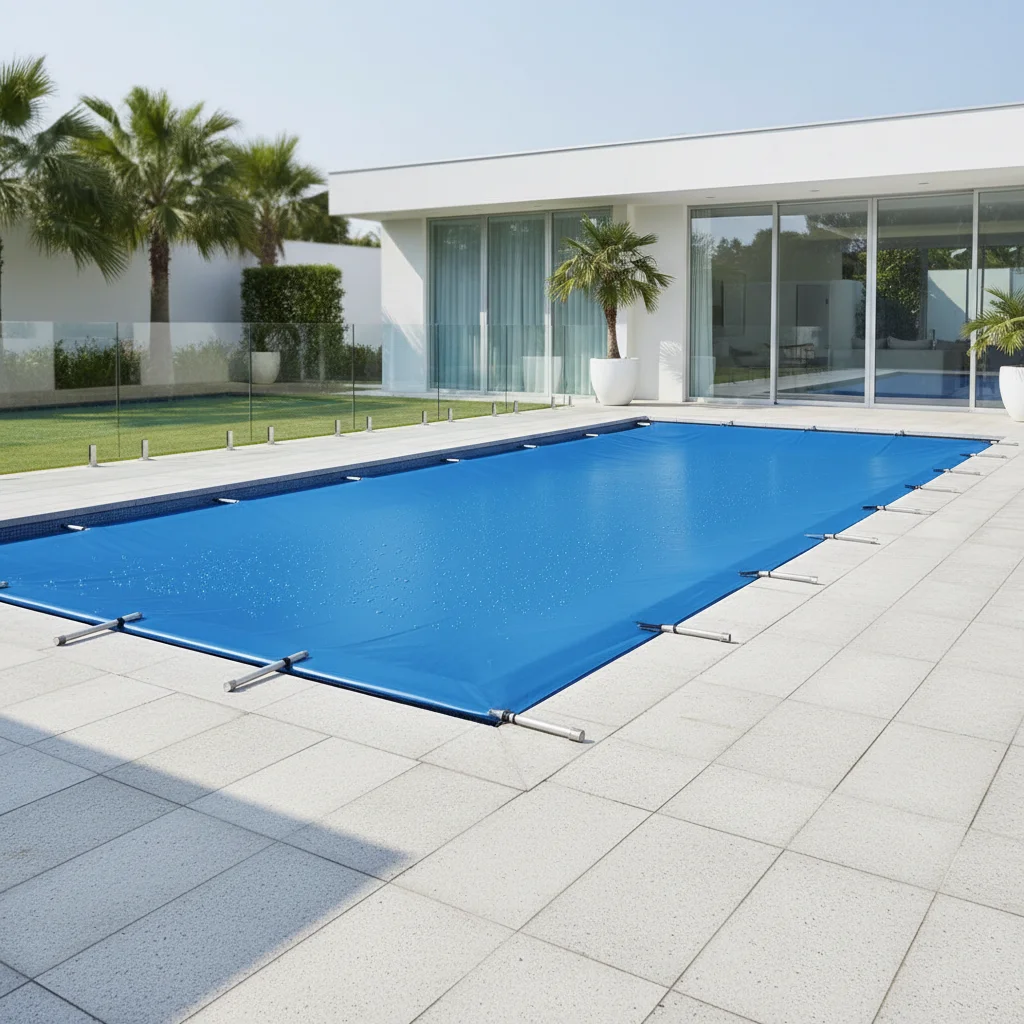
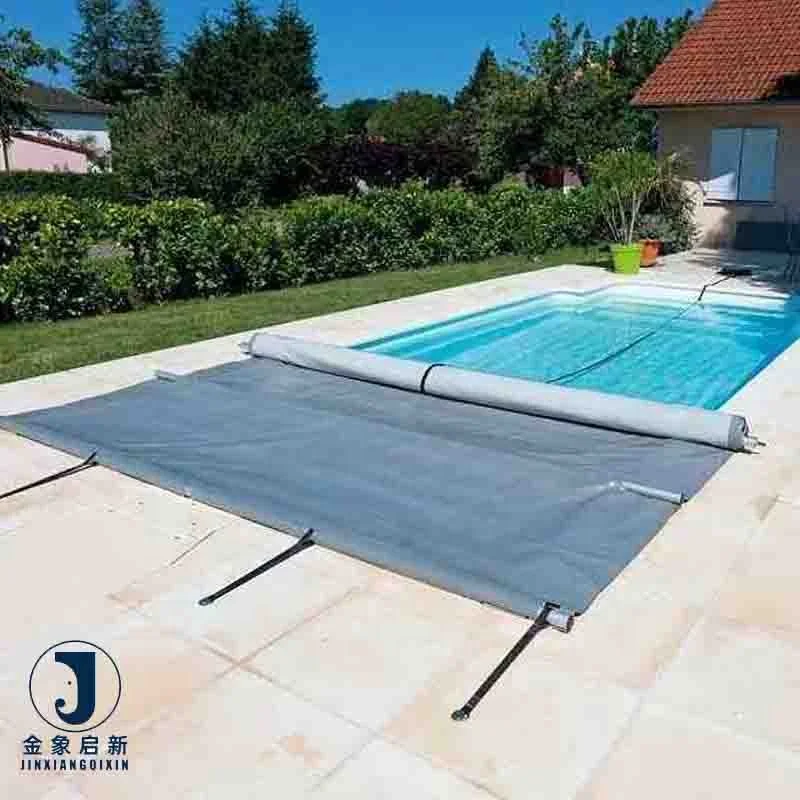
| Rectangular pool covers with aluminium bar tensioning | High tension across wide spans, repeated seasonal deployment and retraction, standing water load |
| Tent and awning fabric by the roll | Prolonged sun exposure, wind-driven rain, repeated folding and unfolding at crease points |
| Truck awning and cargo ship covers | Road abrasion, diesel exhaust contamination, salt air on marine routes, flex at mounting brackets |
Why GSM Alone Does Not Tell You How Strong a Pool Cover Fabric Is
Weight per square metre indicates how much coating was applied, not how well the fabric will hold tension across a pool span.
Buyers often specify a Custom PVC Pool Cover Tarpaulin aftermarket supplier by GSM on the purchase order, then discover on arrival that the material feels lighter and flexes more than expected. The discrepancy usually sits in the base fabric denier and weave density — two values that rarely appear on a quotation but govern tear propagation once the cover is tensioned. [NEED_CITE: tensile and tear test methods for coated fabrics per ISO 1421]
A roll that meets its stated GSM can still underperform if the polyester mesh was loosely woven before coating. The PVC layer adds weight without adding meaningful tear resistance. This is why two rolls at the same GSM from different mills can behave completely differently when stretched over an aluminium bar tensioning system on a rectangular pool.
Lamination and Hot-Melt Coating on High-Tenacity Polyester
The coating method matters as much as the coating weight. Laminated technology bonds the PVC film to the polyester mesh under heat and pressure, creating a continuous interface that resists delamination when the cover is folded, rolled, or pulled taut over a pool edge. Hot-melt coating penetrates the mesh more deeply, filling the interstices between yarns and locking them in place, which improves tear initiation resistance.
For pool cover applications where the fabric cycles between tensioned and relaxed states seasonally, adhesion between the PVC layer and the base fabric determines whether micro-cracks form at the coating interface. A Custom PVC Pool Cover Tarpaulin aftermarket supplier offering both methods allows buyers to match coating type to the specific tension and flex demands of their pool geometry.
Custom Sizing for Irregular and Rectangular Pool Configurations
Standard roll widths of 2m and 2.1m cover most residential rectangular pools with minimal cross-direction joins. For freeform pools with curved edges, narrow bays, or integrated spa cutouts, custom cut sizes reduce on-site fabrication and ensure the cover follows the pool contour without excess material bunching at the edges. [NEED_CITE: DIN 4102 fire classification for building materials]
Hook systems suit irregular shapes where tension points must be placed at varying intervals around the pool perimeter. Aluminium bar and ratchet tensioner setups work on rectangular pools where a single tension force can be applied evenly across the full width. Choosing the right fastening approach before ordering determines whether the PVC Pool Cover tarpaulin aftermarket supplier should deliver full rolls or pre-cut panels with hem reinforcement.
How Weight, Thickness, and Mesh Density Interact
GSM and thickness move together — 350gsm corresponds to approximately 0.32mm total thickness, while 750gsm reaches 0.65mm. However, total thickness includes both the PVC coating and the embedded polyester mesh, so a thicker roll is not automatically more puncture-resistant if the base fabric carries a lower thread count.
The polyester mesh density governs how a tear, once started at an edge or eyelet, propagates through the fabric. High tenacity polyester yarns in a tight weave arrest tear spread more effectively than a heavier coating over a loose weave. When specifying a Custom PVC Pool Cover Tarpaulin aftermarket supplier grade, request the base fabric denier and warp-weft density alongside GSM to predict real-world tear behaviour across a tensioned pool cover.
The Hidden Cost When Specification Assumptions Miss
A cover that arrives lighter than quoted creates a cascade of downstream problems. The installer tensioning it over a commercial pool frame notices the fabric stretches more than expected, requiring additional fastening points. Welded seams, set up for a stiffer material, may not hold the same peel strength. Colour shifts between rolls become visible when panels are joined side by side on a large rectangular pool, forcing a full reorder to maintain visual consistency. [NEED_CITE: ISO 1421 coated fabric tensile test standard]
Flame retardant claims without a stated grade create a different risk. A building inspector or municipal pool authority may request certification documentation that the supplier cannot produce, delaying project handover. These specification gaps cost far more to resolve after delivery than a sample approval step before production.
Why Source This Fabric Here
Three full production lines running laminated and hot-melt coating processes mean that custom width and GSM orders do not wait behind stock roll schedules. A dedicated 10-person R&D team handles sample development for custom colours, widths, and cut sizes, with samples produced within days rather than weeks.
QA inspection at every production stage with full pre-shipment inspection means the roll weight, colour, and coating integrity are verified before dispatch — not after the buyer receives the container. The facility holds ISO and CE certification, and documentation including material specification sheets, pre-shipment inspection records, and test reports for applicable treatments travels with every shipment.
Documentation & Verification
- Material specification sheet stating exact GSM, base fabric denier, and coating type per roll
- Pre-shipment inspection record confirming weight and dimensional tolerance before dispatch
- Test reports for UV and flame-retardant grades where applicable to the ordered specification
- Roll packing list with individual roll IDs matching the purchase order line items
- Certificate of origin and customs documentation for destination-country clearance
Fabrication, Handling & Storage
- Hot-air welding parameters should be adjusted per GSM grade — 350gsm requires lower temperature and dwell time than 750gsm to avoid coating burn-through
- Store rolls on their core in a shaded area; laying rolls flat on concrete can create permanent crease marks in the 0.65mm grades
- Cut panels with a sharp blade or rotary cutter; frayed polyester yarns at the cut edge weaken the weld zone if not trimmed clean
- When tensioning 2m-wide panels on aluminium bars, distribute clamping force evenly to prevent localised coating stretch marks
- Clean with mild detergent and water; solvent-based cleaners can soften the PVC surface and reduce colour fastness over repeated use
What to Include in Your Enquiry
Provide the pool geometry — whether rectangular with aluminium bar tensioning or freeform with hook fastening — along with the total cover area and any cutouts for skimmers or spa sections. State your target GSM and whether your market requires a specific flame retardant grade for compliance.
Confirm if you need full rolls in standard 2m or 2.1m widths for your own fabrication, or finished cut-to-size panels with reinforced hems. Include your colour reference and annual volume so the production schedule can be planned around your deployment timeline.
Frequently Asked Questions
Q: How do you verify that the actual GSM matches the quoted specification on arrival?
A: Every roll undergoes weight verification against the stated GSM during pre-shipment inspection. We record the measured value per roll and include the inspection data in your dispatch documentation. If you require independent third-party verification, we can arrange sampling from the production batch before the container is sealed.
Q: What test basis supports the anti-UV claim for outdoor pool cover use?
A: Anti-UV treatment is applied during the coating process, and the specific test standard depends on the grade selected. Request the UV test report for the grade you intend to order so you can confirm it meets the exposure requirements of your destination climate and any local compliance standards.
Q: Can covers be custom-cut to irregular pool shapes with cutouts for equipment?
A: Yes. Provide a dimensioned drawing or template of the pool outline including any skimmer, drain, or spa cutouts. We cut panels to your specification with reinforced hems at edges and stress points, reducing on-site fabrication and ensuring a clean fit to the pool contour.
Q: What is the difference between hook system and aluminium bar installation for pool covers?
A: Hook systems use individual fastening points spaced around the pool perimeter, which suits freeform pools with curved or irregular edges. Aluminium bar systems clamp the cover edge into a continuous channel with a ratchet tensioner, providing even tension across the full width — this method is standard for rectangular pool configurations.
Q: How do you control colour consistency across multiple rolls in the same order?
A: All rolls in a single order are produced from the same coating batch using the same colour reference. Our in-process QA checks colour at multiple points during production, and the pre-shipment inspection includes a side-by-side visual comparison before the rolls are packed for dispatch.
Related products
-
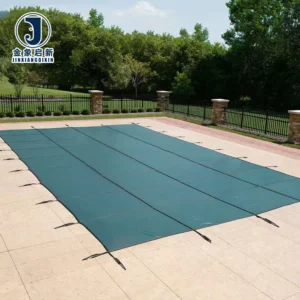
Cubierta de piscina de PVC Cubierta de piscina in-ground Cubierta de piscina de invierno de PVC Tela de seguridad para cubiertas de piscina
¥0.50 Add to cart -
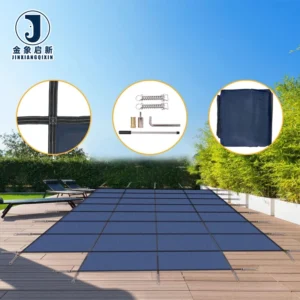
Custom PVC Pool Cover for Inground Pools – Full Range
Read more -
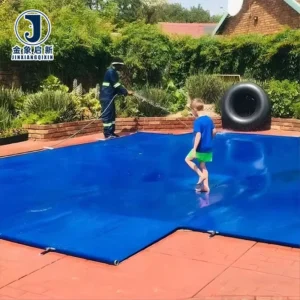
Custom PVC Pool Cover Tarpaulin – Waterproof Anti-UV
Read more -
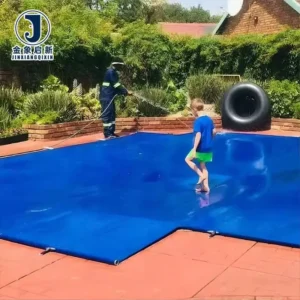
Cubiertas de piscina de tela de tarpaulin recubierta JX PVC laminada, impermeable, transpirable, anti-UV, blackout, orgánica, de trama lisa.
¥1.78 Select options This product has multiple variants. The options may be chosen on the product page