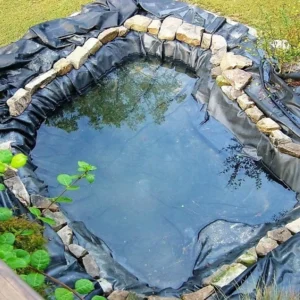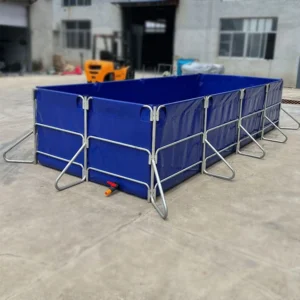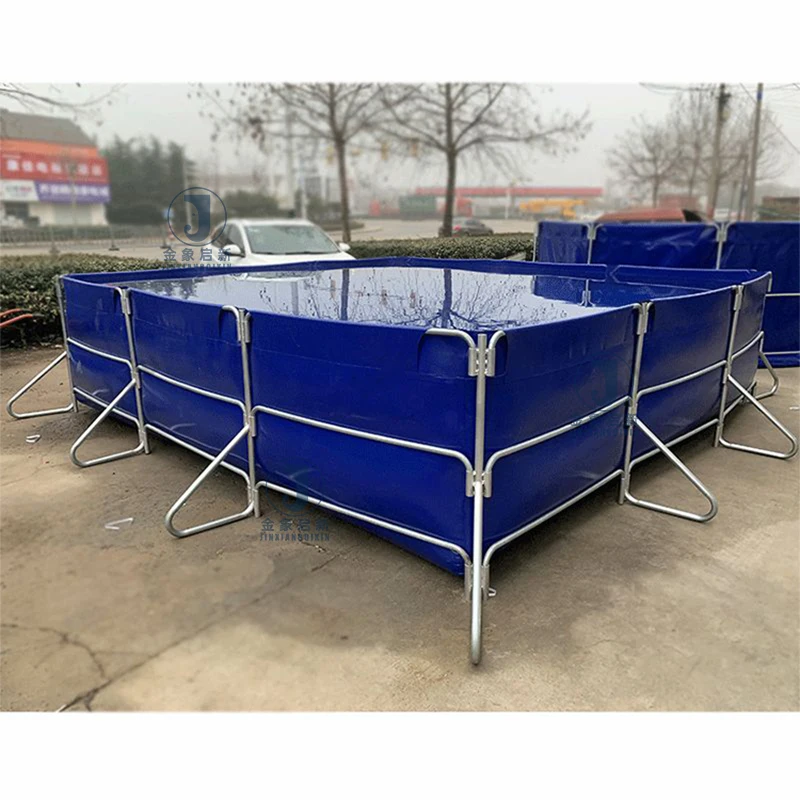
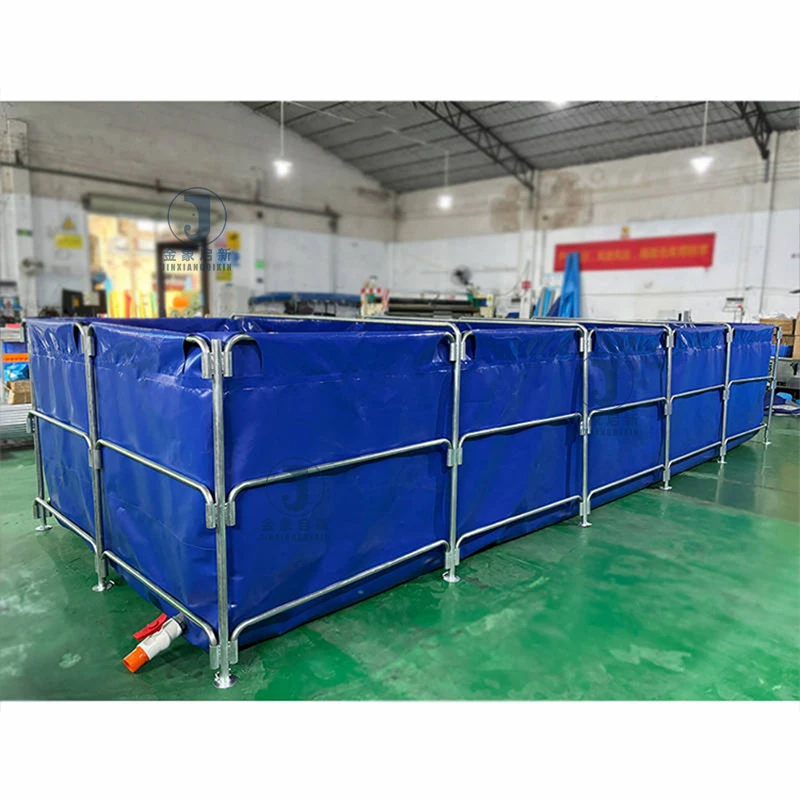
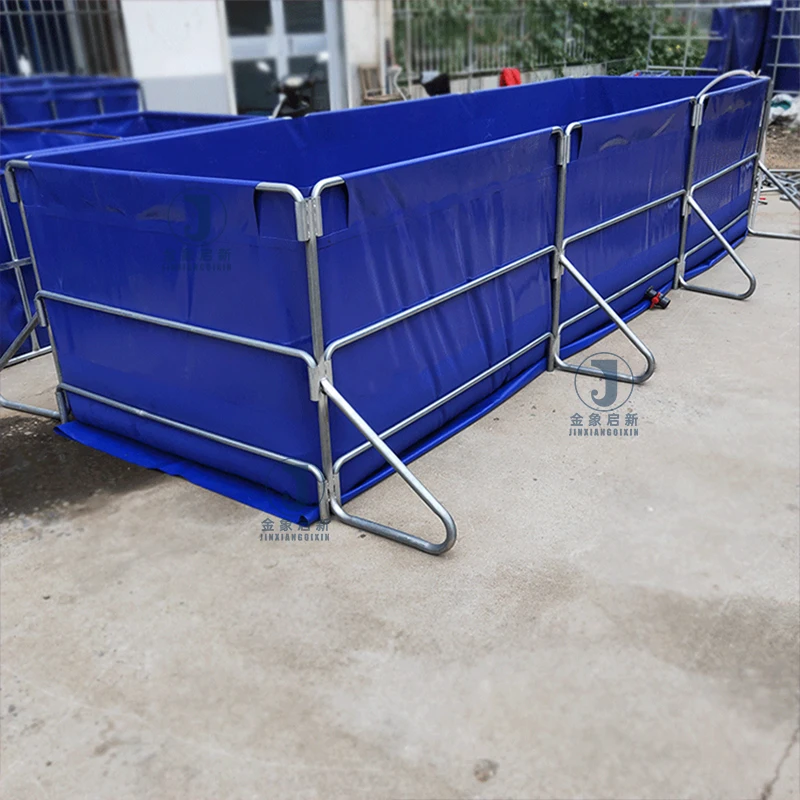
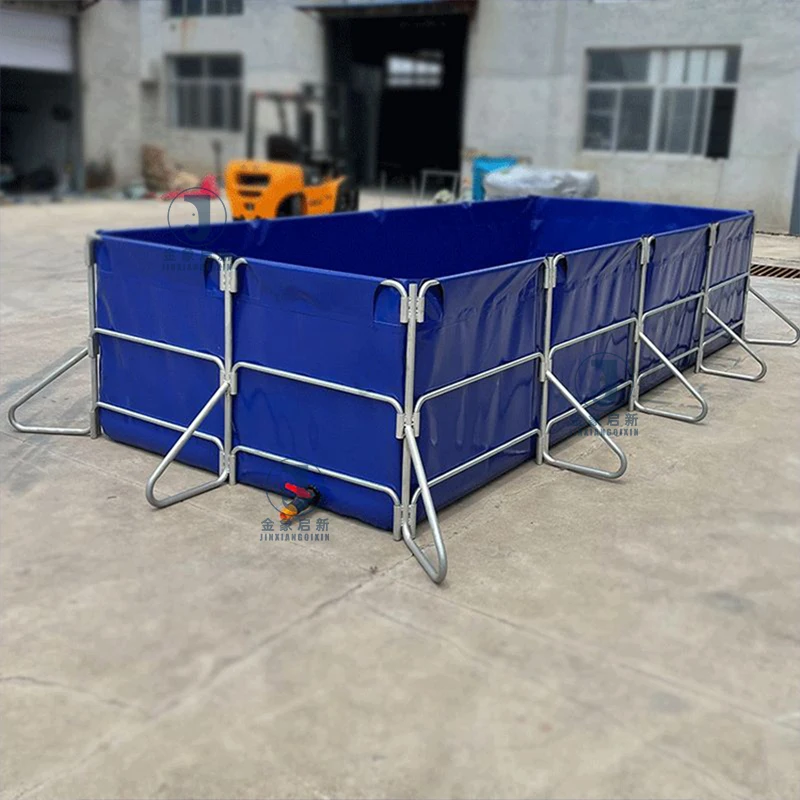
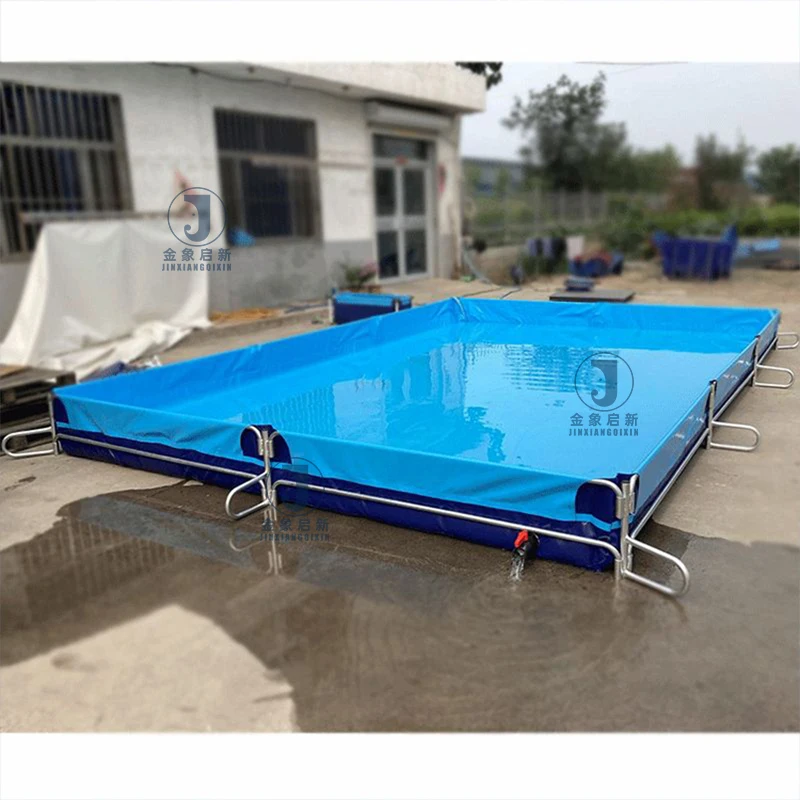
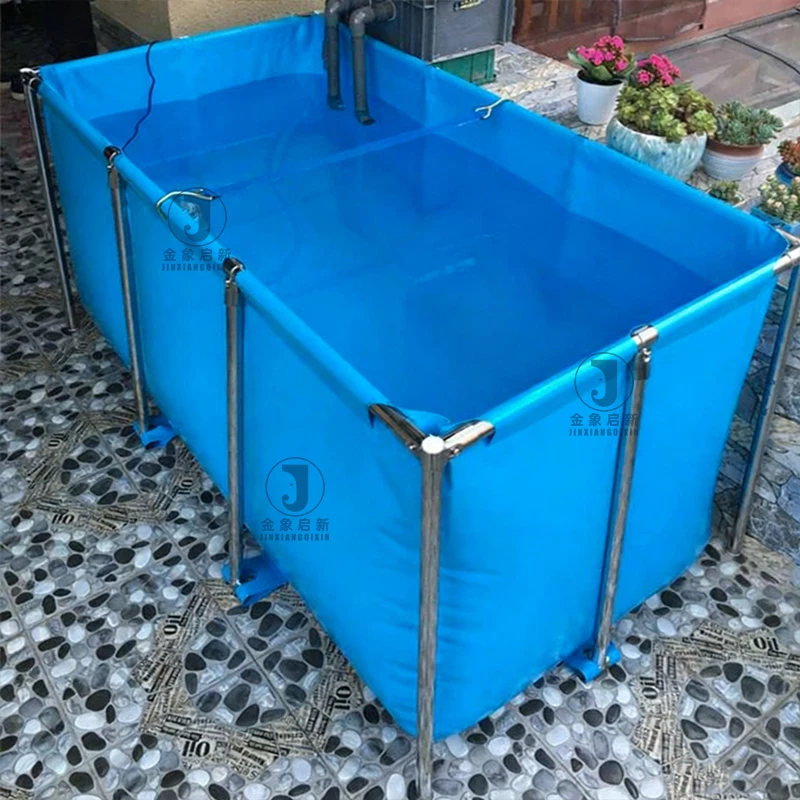
Foldable Circular Rectangular PVC Tarpaulin Fish Pond Liner, 350–900gsm, 500D–2000D Base — PVC coated polyester with verified tensile strength across eight weight classes. Anti-UV and flame retardant treatments available with test documentation.
Purpose-built for aquaculture containment, where coating adhesion and weld integrity at flex points determine whether a liner lasts one season or several. GSM and base fabric density are matched to tensile and tear performance, not overspecified.
- Circular and rectangular formats with reinforced hems and eyelets for frame mounting
- Custom dimensions and colour runs with roll-to-roll consistency confirmed before production
100% pre-shipment inspection covering coating adhesion and seam weld strength, backed by three full production lines for reliable on-time delivery.
Description
Custom Pond Engineering — Every roll undergoes 100% pre-shipment inspection to confirm coating weight and dimensions match your aquaculture specification before dispatch.
Technical Specifications
| Parameter | Value |
|---|---|
| Product Type | PVC Tarpaulin Fish Pond Liner |
| Material | PVC coated polyester |
| Base Fabric Denier Options | 500D×500D / 500D×840D / 500D×1000D / 1000D×1000D / 1000D×1300D / 1300D×1300D / 1000D×2000D |
| Weight Options | 350 GSM / 400 GSM / 420 GSM / 500 GSM / 600 GSM / 650 GSM / 750 GSM / 900 GSM |
| Thickness Range | 0.29 mm (400 GSM) to 0.65 mm (900 GSM) |
| Mesh Count | 30×19 / 20×20 / 30×15 |
| Tensile Strength Warp | 1650 N to 3900 N (test basis not stated in source) |
| Tensile Strength Weft | 1600 N to 3500 N (test basis not stated in source) |
| Key Features | Water resistant, flame retardant grades available, anti-UV treatment available |
| Colour | Customizable per order |
| Printing Option | Custom brand printing accepted |
Application Suitability
| Application | Exposure & Requirement |
|---|---|
| Circular aquaculture fish ponds | Permanent water immersion, hydrostatic pressure on seams, continuous UV exposure outdoors |
| Rectangular breeding and grow-out tanks | High-density stock movement causing abrasion against liner walls and floor |
| Shrimp pond containment | Soil chemistry contact, puncture risk from substrate, seasonal temperature variation |
| Agricultural irrigation reservoirs | Large surface area exposure, wind uplift stress on anchored edges, sediment accumulation |
| Hatchery water tanks | Frequent draining and refilling cycles, chemical disinfectant contact, fold-down storage between cycles |
Why a Quoted GSM Does Not Guarantee What Arrives on Your Dock
We verify coating weight at every production stage — the liner you receive matches the spec sheet you approved.
Buyers sourcing PVC tarpaulin fish pond liner materials frequently report that the roll arriving at the warehouse feels lighter than the quotation stated. Coating thickness varies across the width, and some suppliers offset material cost by running the lower end of the tolerance band on every roll. When a pond is filled, that missing weight shows up as premature coating delamination at the waterline. [NEED_CITE: tensile and tear test methods for coated fabrics per ISO 1421]
Eight Weight Grades Covering Every Aquaculture Scenario
From 350 GSM hatchery tanks to 900 GSM commercial grow-out ponds, this PVC fish pond liner range lets you match material to water depth and expected service conditions. Lighter grades fold flat for seasonal storage, while heavier grades provide the structural mass needed for permanent outdoor installations where hydrostatic load is constant. Selecting the correct grade at the specification stage prevents both over-engineering and early field failure.
Coating Integrity Where Water Never Stops Pushing
PVC double-sided coating with heat-welded seams creates a continuous water barrier that outperforms single-layer constructions at the joints. Where PE welded joints tend to separate under sustained water pressure, PVC coated seams fuse the material into a single homogeneous layer. The PVC tarpaulin fish pond liner fabric maintains this seal across the full range of circular and rectangular configurations available. [NEED_CITE: seam peel strength requirements for PVC coated polyester in water containment]
Understanding How Denier, Mesh Count and GSM Work Together
Base fabric denier determines individual yarn thickness, while mesh count defines how densely those yarns are woven. A 1000D×2000D fabric at 30×15 mesh count achieves high tensile strength because thicker yarns carry more load per thread. GSM reflects total system weight — base fabric plus both coating layers — so two liners at the same GSM can perform differently if their base fabrics differ. Heavier denier with open mesh distributes coating deeper into the weave, improving adhesion and weld strength at seam lines. The thickness progression from 0.29 mm to 0.65 mm across the weight range reflects this coating buildup rather than base fabric change alone.
When the Wrong Specification Costs More Than the Liner Itself
Specifying a lighter GSM for a deep commercial pond leads to coating creep under hydrostatic pressure, where the material stretches at stress points until the weld opens. Colour inconsistency between rolls in the same installation becomes visible once the pond is assembled and viewed from above. Flame retardant grades without supporting test documentation cause site rejection when inspectors request certification. [NEED_CITE: fire safety classification requirements for aquaculture structures in different export markets]
What We Control Before Your Order Ships
Dedicated QA/QC runs at every production stage with 100% inspection before dispatch, catching coating weight deviations and colour variation before rolls are packed. Three full production lines and 36 sets of professional equipment support bulk pond liner orders with reliable on-time delivery across multiple container loads. The 10-person R&D team develops custom samples within days, confirming size, shape, colour and brand printing before bulk production begins. ISO and CE certified processes govern material handling from polyester base fabric intake through final roll or bale packing.
Documentation & Verification
- Material specification sheet stating exact GSM, base fabric denier and coating weight per roll produced
- Test report for UV treatment and flame retardant grades supplied where applicable to your order
- Pre-shipment inspection record verifying GSM, dimensions and colour reference against purchase specification
- Roll packing list with individual roll weights and dimensions for receiving verification at your warehouse
- Certificate of origin and customs documentation supporting international aquaculture equipment import
Fabrication, Handling & Storage
- Heat-weld seams at manufacturer-recommended temperature for each GSM grade to ensure coating fusion without base fabric damage
- Store rolls horizontally on pallets in shaded areas to prevent PVC coating deformation from sustained sun exposure before fabrication
- Allow cold-weather rolls to reach ambient temperature before unrolling to prevent coating crack at the fold line
- Use PVC-compatible adhesive for field repairs on 600 GSM and above grades where patch adhesion must match original coating
- Cut patterns with allowance for hem folding on reinforced edges where eyelets carry anchoring load
Starting Your Pond Liner Specification
Provide your pond dimensions, water depth, and whether the installation is permanent or seasonal fold-down. Specify your target market so we confirm applicable fire safety or environmental compliance requirements for the liner material. Let us know if you need circular or rectangular formats, custom colour matching, or brand printing on the outer surface. Request a production sample to verify GSM, colour and weld performance before committing to the full order volume.
Frequently Asked Questions
Q: How do I verify the GSM of pond liner rolls when they arrive?
A: Our pre-shipment inspection records document actual GSM measured on each roll before packing. Upon receipt, you can cross-check by cutting a measured sample area and weighing it against the specification sheet values. Any discrepancy triggers our claims process with documented evidence from both sides.
Q: Which GSM grade suits my pond depth and climate?
A: Shallow backyard ponds typically use 350 to 500 GSM grades, while commercial aquaculture ponds with deeper water columns require 650 GSM and above for structural containment. We recommend sharing your exact depth, climate zone and whether the pond is permanent or seasonal so we can match the appropriate weight class.
Q: Can circular and rectangular pond liners be welded on-site?
A: Yes, PVC coated polyester responds well to hot-air welding on-site for joining panels or repairing damage. The double-sided coating fuses into a homogeneous seam when proper temperature and pressure are applied. We supply welding parameters matched to the specific GSM grade you ordered.
Q: Do you supply test reports for anti-UV and flame retardant treatments?
A: Test reports accompany orders where UV treatment or flame retardant grades are specified and produced. These documents confirm the treatment applied to your specific batch. Request the applicable certification format required by your local aquaculture or construction authority at the inquiry stage.
Q: What is the minimum order for custom size and colour pond liners?
A: Custom dimensions and colours are produced to your specification with samples developed for approval before bulk runs. Minimum quantities depend on the GSM grade, width and colour selected. Share your required dimensions and annual volume so we can confirm the production minimum and lead time for your specific configuration.
Related products
-
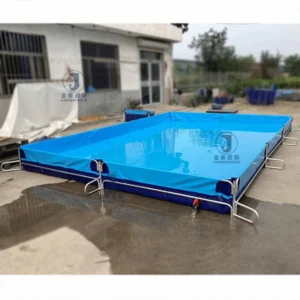
Liner de estanque de peces de PVC duradero y a prueba de fugas, tanques de acuicultura plegables para estanques de peces.
¥153.00 Add to cart -
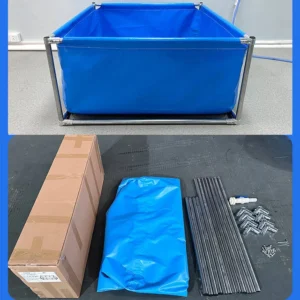
Lona de PVC rectangular circular plegable para estanque de peces para acuario
¥0.53 Select options This product has multiple variants. The options may be chosen on the product page -
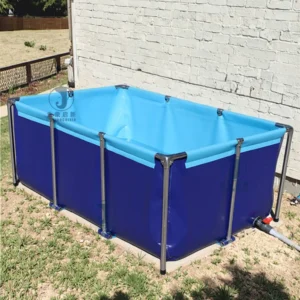
PVC Tarpaulin Roll for Fish Pond Lining & Aquaculture Tanks-Anti-Bacteria Abrasion-Resistant Medium Weight
¥0.53 Add to cart -
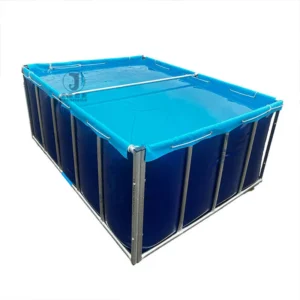
PVC Coated Tarpaulin for Fish Pond – Custom Made
Read more