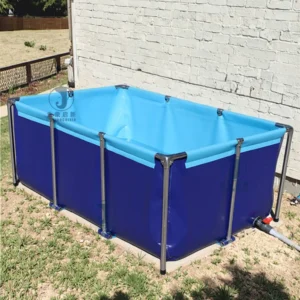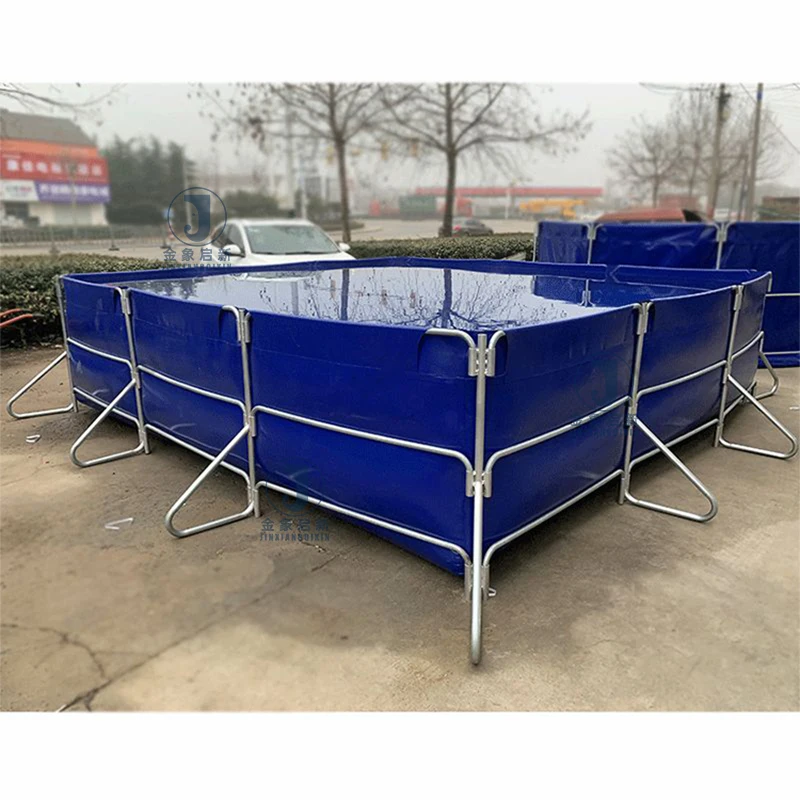
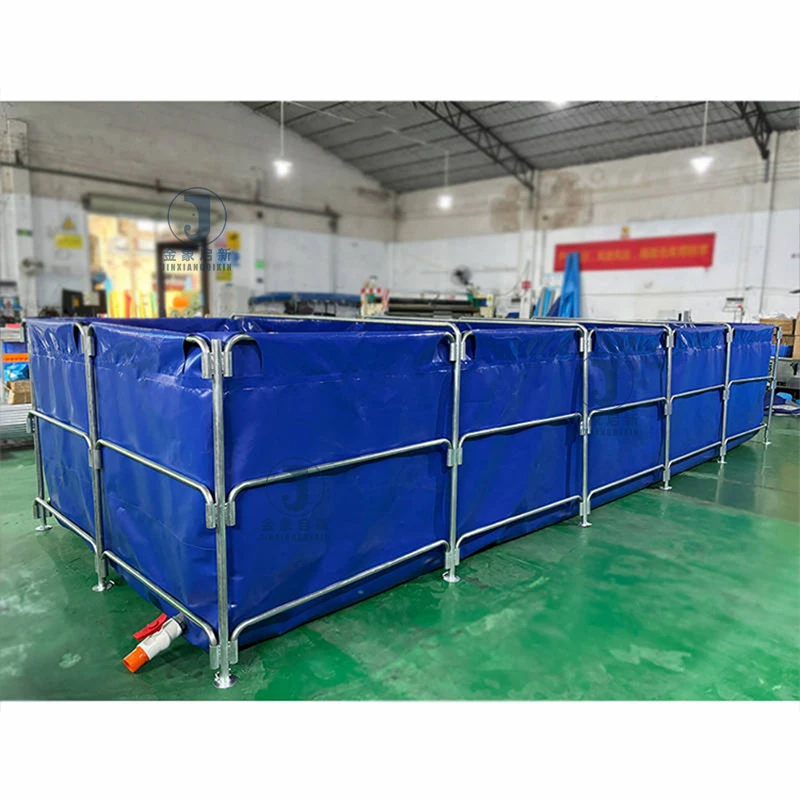
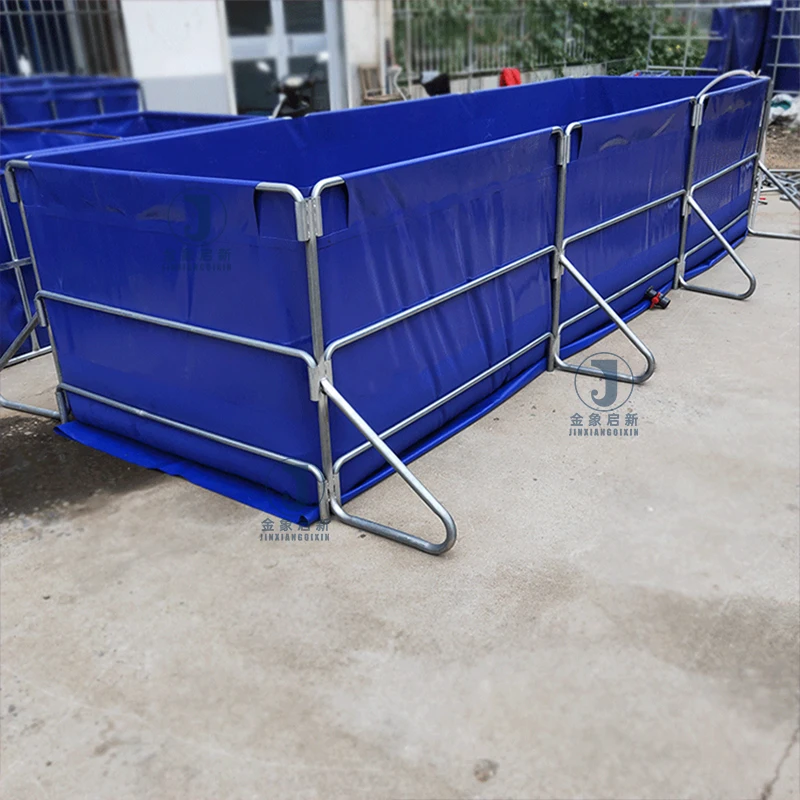
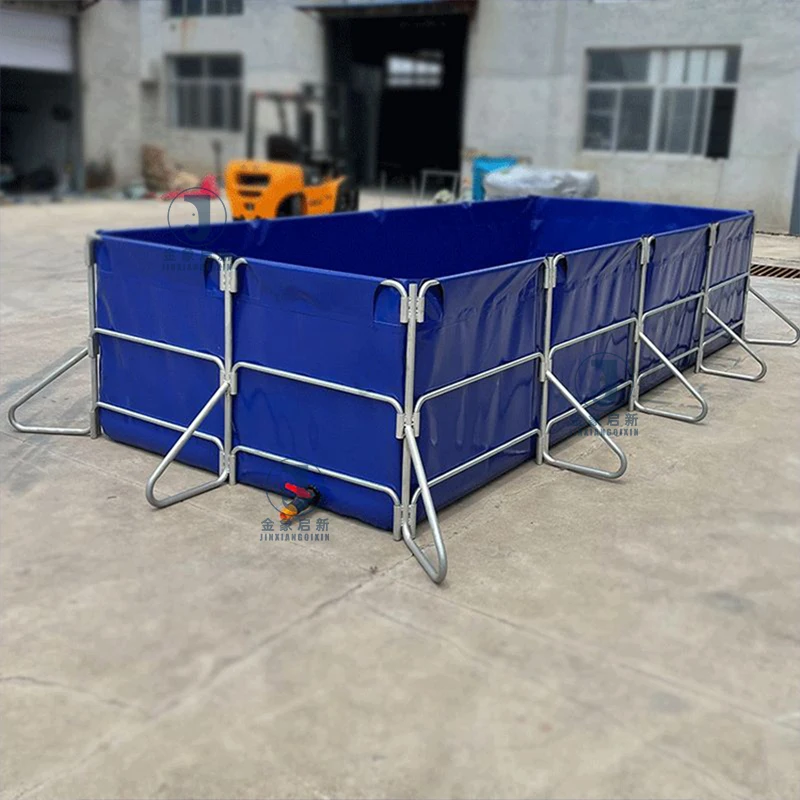
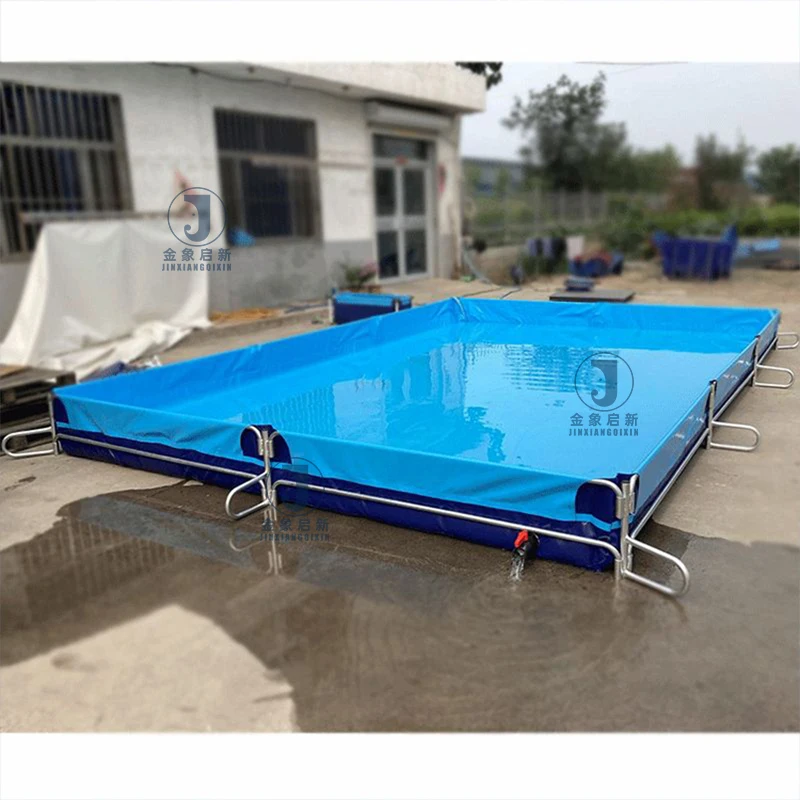
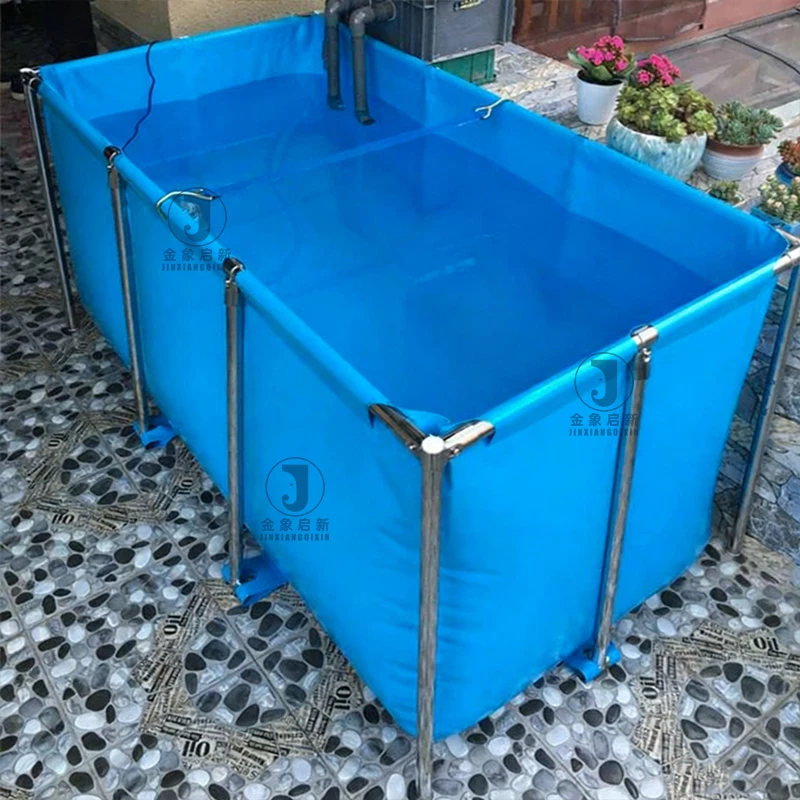
Foldable Circular Rectangular PVC Tarpaulin Fish Pond Tarpaulin, 500D–2000D Base, 350–900 g/m² — engineered for aquaculture and water containment with multiple yarn count and weight options.
- Choose denier and GSM together: higher yarn count plus coating weight delivers the tensile strength your pond depth demands, not just thickness alone
- Anti-UV and flame retardant treatments available with test reports where applicable
- Custom width, length, and colour with samples developed within days for project approval
- 100% pre-shipment inspection on every roll, backed by nearly 30 years of coated fabric process control and full QA documentation
Description
Coated Fabric Process Control — Every roll of PVC tarpaulin fish pond liner undergoes dedicated QA/QC at each production stage with 100% pre-shipment inspection, ensuring the coating weight you specify is the coating weight you receive.
Technical Specifications
| Parameter | Value |
|---|---|
| Product Type | PVC Tarpaulin Fish Pond Liner |
| Base Fabric Denier | 500D×500D, 500D×840D, 500D×1000D, 1000D×1000D, 1000D×1300D, 1300D×1300D, 1000D×2000D |
| Mesh Density | 20×20, 30×15, 30×19 |
| Coating Material | PVC coated over polyester base fabric |
| Weight Options | 350, 400, 420, 500, 600, 650, 750, 900 GSM |
| Thickness Range | 0.29mm – 0.65mm |
| Tensile Strength (Warp) | 1650N – 3900N |
| Tensile Strength (Weft) | 1600N – 3500N |
| Waterproof | Fully waterproof coated construction |
| Anti-UV | Available in anti-UV treated grades — confirm the treatment level required for your installation |
| Flame Retardant | Available in flame retardant grades — confirm the grade required for your market |
| Shape Options | Circular, rectangular, foldable |
| Colour | Customizable |
| Printing | Custom brand printing available |
| Standards | ISO, CE |
Application Suitability
| Application | Exposure & Requirement |
|---|---|
| Commercial aquaculture ponds | Permanent water contact, sustained hydrostatic load, soil chemistry resistance, puncture risk from substrate |
| Circular fish tanks | Constant water immersion, foldable deployment for seasonal use, clean surface for biofilm management |
| Shrimp farming ponds | Saline water exposure, high UV in open-air installations, frequent cleaning and partial replacement |
| Agricultural water containment | Seasonal deployment, UV exposure, mechanical stress from filling and draining cycles |
| Hatchery and nursery ponds | Lighter GSM grades suitable, frequent handling, requirement for clean and inert liner surface |
Why the GSM on Your Quotation Does Not Guarantee the Liner You Receive
The only way to confirm coating weight is through verified inspection at the point of production, not assumption from a product code.
A PVC Tarpaulin Fish Pond Liner specified at a given GSM can arrive lighter than agreed when coating weight is not controlled during manufacture. The difference may not be visible once the liner is unfolded and filled, but it shows up as premature wear at stress points, reduced puncture resistance against rocky substrates, and seams that split under hydrostatic pressure. Buyers who have received underweight material often discover the problem only after a season of use, when repair costs and stock losses exceed any initial savings [NEED_CITE: coating weight verification methods per ISO 3374].
Base Fabric Denier Selection for Pond Containment
The PVC Tarpaulin Fish Pond Liner range starts at 500D×500D base fabric and extends to 1000D×2000D, with each denier step matched to a corresponding GSM and tensile strength grade. Heavier denier base fabrics distribute hydrostatic load across more yarn intersections, reducing the concentration of stress at any single point in the weave. For deep-water ponds or large-diameter circular installations, the higher denier options provide the structural foundation that the PVC coating alone cannot supply.
Coating Adhesion and Weld Integrity in Water Containment
Double-sided PVC coating over the polyester base fabric creates a fully sealed liner, but the long-term performance depends on coating adhesion at every welded seam. When the pond is filled, the liner flexes under water weight and any ground settlement, placing repeated peel stress on the joints. The coating formulation and application process determine whether the weld holds as long as the fabric itself or becomes the first failure point [NEED_CITE: seam strength testing for coated fabrics per ISO 1421].
How Denier, Mesh Count and GSM Work Together
The base fabric denier and mesh density determine how much yarn is present per square metre, while the PVC coating weight fills the gaps and adds surface protection. A 500D×840D fabric at 30×19 mesh provides a tighter weave than 20×20, giving higher tensile values at the same GSM because more yarn is carrying the load. However, higher mesh count with the same denier means thinner individual yarns, which can reduce tear propagation resistance. Selecting the right combination depends on whether the pond design prioritises tensile load from water pressure or tear resistance from substrate irregularities and installation handling. The thickness values across the range — from 0.29mm at 350 GSM to 0.65mm at 900 GSM — reflect the combined contribution of base fabric and coating rather than coating alone. Warp tensile strength reaches 3900N on the 900 GSM grade, supporting large commercial installations where sustained hydrostatic pressure demands maximum structural capacity.
The Cost of Underspecifying Your Pond Liner
Selecting a lighter GSM grade to reduce material cost can lead to liner failure well before the expected service interval. A liner that is too thin for the water depth will stretch beyond its recovery point, thinning further at the base where hydrostatic pressure is greatest. Welded seams on underspecified material are more likely to delaminate because the coating layer is too thin to form a strong bond during heat welding. In open-air installations, insufficient anti-UV treatment on a light-grade liner accelerates surface embrittlement, leading to cracking at fold lines during seasonal redeployment [NEED_CITE: UV degradation patterns in PVC coated polyester fabrics]. Buyers who experience these failures typically face pond draining, stock relocation, and complete liner replacement — costs that far outweigh the initial material savings.
Why Source Your Pond Liner From This Production Line
Three full production lines and 36 sets of professional equipment support bulk PVC Tarpaulin Fish Pond Liner orders with reliable scheduling, so aquaculture operators can plan pond preparation around confirmed delivery dates rather than supplier promises. A 10-person R&D team handles material selection, custom sizing and sample development, producing cut-to-size samples within days so pond dimensions and GSM grades can be verified before bulk production begins. Dedicated QA/QC runs at every production stage with 100% pre-shipment inspection, meaning each roll is checked for coating weight, colour consistency and surface defects before it leaves the facility. The coating process control built over nearly 30 years of focused production ensures that adhesion strength, surface finish and dimensional accuracy remain consistent from the first roll to the last in any order volume. Custom circular and rectangular shapes with foldable construction are fabricated in-house, eliminating the need for third-party cutting and welding that introduces an uncontrolled variable into the supply chain.
Documentation & Verification
- Material specification sheet stating exact GSM, base fabric denier, mesh count and coating weight for the grade ordered
- Pre-shipment inspection record confirming coating weight verification against the quotation for every roll
- Test report for anti-UV and flame retardant grades where applicable to the pond installation environment
- Roll packing list with quantity, dimensions and weight per roll for container loading planning
- Certificate of origin and customs documentation for international shipment clearance
Fabrication, Handling & Storage
- Heat welding parameters must be adjusted to the specific GSM grade, as coating thickness varies from 0.29mm to 0.65mm across the range
- Folded liners should be stored flat and rotated periodically to prevent permanent crease marks forming at fold lines in heavier GSM grades
- Unfold the liner at ambient temperature to avoid stress cracking in the PVC coating, particularly with grades above 650 GSM in cold conditions
- Clean the liner surface with mild detergent only, as solvent-based cleaners can soften the PVC coating and reduce seam adhesion
- Site repairs on punctured sections require PVC-compatible patching material matched to the coating formulation of the liner grade installed
- When cutting circular pond shapes from rectangular stock, nest the patterns to minimise offcut waste and reduce the number of welded seams needed
What to Include in Your Pond Liner Enquiry
Provide the pond dimensions — diameter and depth for circular ponds, length, width and depth for rectangular — along with the installation environment, including whether the pond is open-air or covered and the typical climate conditions. Specify any fire safety or compliance requirements for your market so the correct flame retardant grade can be quoted. Indicate whether you need the liner supplied as finished cut-to-size panels with welded seams or as roll stock for on-site fabrication, and confirm whether custom colour or brand printing is required for the project.
Frequently Asked Questions
Q: How do I verify the GSM of the liner when it arrives?
A: Every shipment includes a pre-shipment inspection record confirming the coating weight measured against your quotation. You can also conduct a simple cut-and-weigh test on arrival: cut a measured square from the roll edge, weigh it, and compare to the stated GSM on the specification sheet. Any discrepancy should be reported immediately with photographic evidence before installation begins.
Q: Which GSM grade is right for my pond depth and size?
A: Lighter grades in the 350–500 GSM range suit shallow nursery tanks and seasonal ponds with minimal substrate stress. Mid-range grades from 500–650 GSM work for standard commercial aquaculture ponds with moderate depth. Heavy grades from 750–900 GSM are specified for large-diameter or deep-water installations where sustained hydrostatic pressure demands maximum tensile capacity and puncture resistance.
Q: Can you supply test reports for anti-UV and flame retardant claims?
A: Anti-UV treated and flame retardant grades are available across the PVC Tarpaulin Fish Pond Liner range. Test reports are provided for the specific grade ordered, documenting the treatment level and the test basis used. Confirm the compliance standard required in your destination market so the appropriate grade and documentation can be prepared before production.
Q: What is the turnaround time for custom-sized pond liner samples?
A: Samples for custom pond shapes, colours and GSM grades are developed within days of specification confirmation. This allows you to verify material hand feel, coating finish, colour accuracy and fold behaviour before committing to bulk production. Sample approval is a required step in the production process before full order quantities are manufactured.
Q: How do you ensure colour consistency across multiple rolls in one order?
A: Colour matching is controlled through dedicated QA/QC at the coating stage, with reference standards checked against each production batch. The 100% pre-shipment inspection process includes visual comparison of rolls destined for the same order, so any variation is identified before dispatch rather than discovered when the liner panels are installed side by side on site.
Related products
-
Lona de PVC rectangular circular plegable para estanque de peces para acuario
¥0.53 Select options This product has multiple variants. The options may be chosen on the product page -
Custom Made PVC Tarpaulin Fish Pond for Aquaculture
Read more -
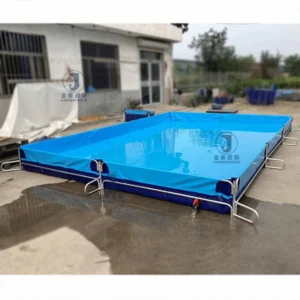
Custom Made PVC Tarpaulin Fish Pond Liner for Aquaculture
Read more -
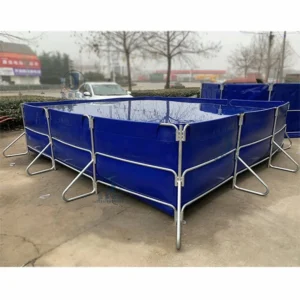
Custom PVC Tarpaulin Fish Pond Liner for Aquaculture – Manufacturer
Read more