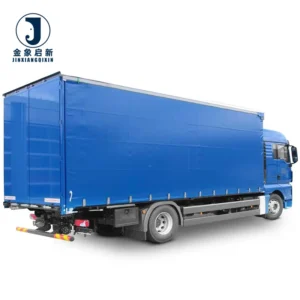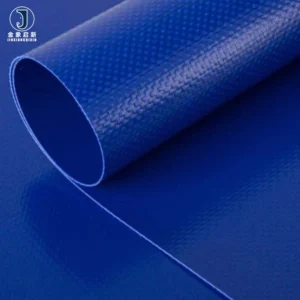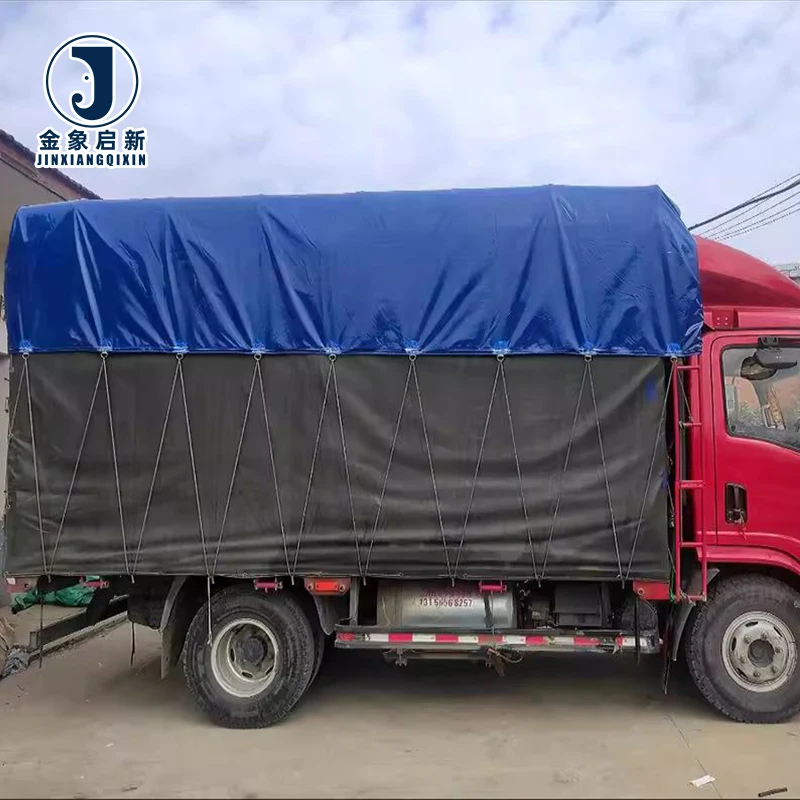
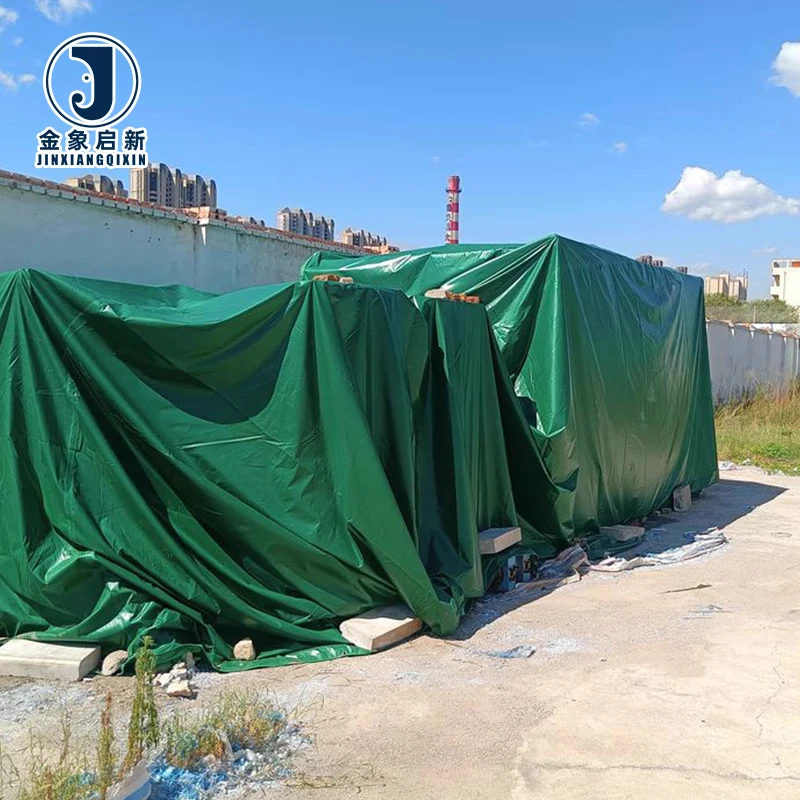
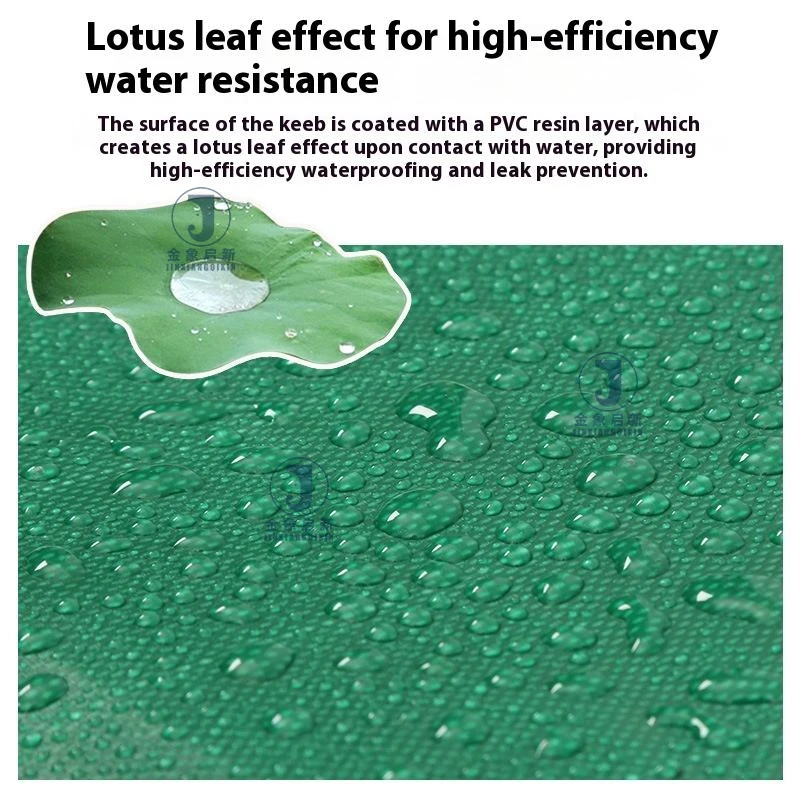
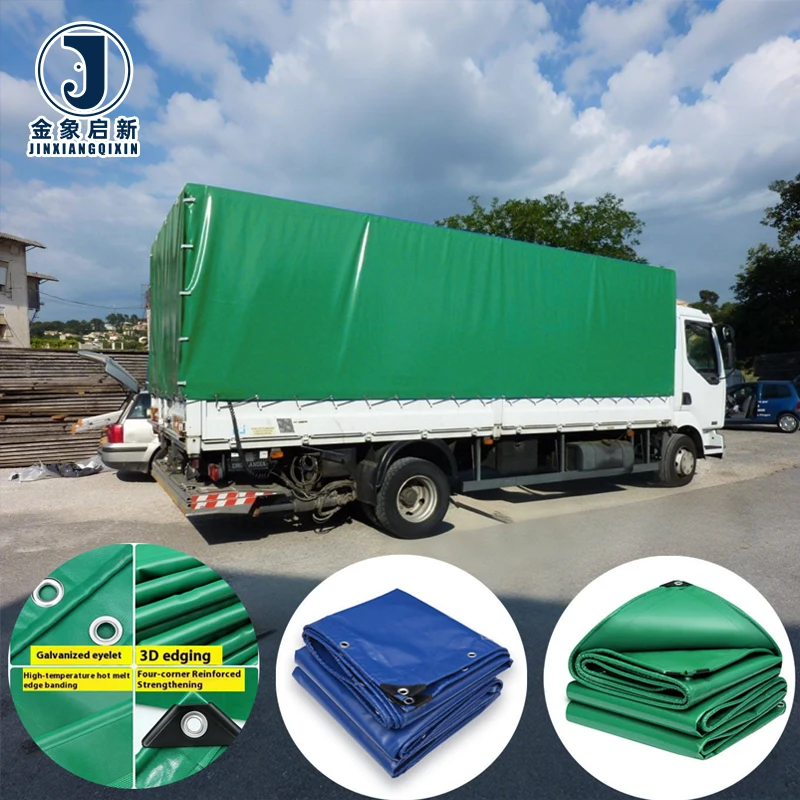
PVC Truck Cover with anti-UV treatment, flame retardant finish, and double-faced coating — designed to fit specific trailer model dimensions rather than generic cut sizes.
Produced with tight coating weight control so GSM stays consistent across every panel, and heat-welded seams engineered to match fabric tensile strength at high-flex points.
Backed by 100% pre-shipment inspection, a 10-person R&D team for custom sizing, and nearly 30 years of coated fabric process expertise.
Description
Precision Fitment — every PVC truck cover cut and welded to your specific trailer dimensions, backed by three full production lines and in-process QA at every stage.
Technical Specifications
| Parameter | Value |
|---|---|
| Product Type | PVC Truck Cover / Trailer Curtain / Tent Fabric |
| Coating Material | PVC / Vinyl / Laminated |
| Construction | Double-Faced |
| Water Resistance | Fully waterproof coated construction |
| Anti-UV Treatment | Available in anti-UV grades — confirm the grade required for your market |
| Flame Retardant | Available in flame retardant grades — confirm the grade required for your market |
| Color Options | Multiple colors available |
| Customization | Custom width, length, and branding available |
| Certifications | ISO, CE |
Application Suitability
| Application | Exposure & Requirement |
|---|---|
| Truck and trailer top cover | Continuous UV exposure, wind load, road debris impact, tie-down stress at eyelets |
| Trailer side curtain | Constant flexing at folds, road abrasion, repeated opening and closing cycles |
| Pallet and equipment cover | Static outdoor storage, moisture ingress prevention, handling abrasion |
| Outdoor event tent (block-out) | Full light blockage, wind uplift, temporary structure loading |
| Architecture membrane structure | Long-term weather exposure, tensile loading, welded seam integrity |
| Inflatable structure fabric | Internal air pressure, flex fatigue, puncture resistance |
Why "Waterproof" Is Not Enough for a PVC Truck Cover on the Highway
A truck cover that holds water in a puddle test can still fail at the first welded seam under highway vibration.
Most transport operators specify waterproof as the baseline requirement, then discover that the real failure points are the seams, the eyelets, and the flex zones where the fabric folds over the trailer frame. I have seen covers that passed a static water test split at the hem within weeks of daily route service. The PVC truck cover manufacturer custom process must account for dynamic load, not just static coverage. A double-faced laminated construction distributes stress across both coating layers, while heat-welded seams — when done with correct temperature and dwell time — produce a bond that matches or exceeds the base fabric tensile strength [NEED_CITE: tensile and tear test methods for coated fabrics per ISO 1421]. Without verified seam data, the waterproof claim only covers the flat sheet, not the finished cover.
Fitment to Vehicle Model Eliminates Cargo Exposure Gaps
Generic-size covers leave gaps at the trailer tail and roof edge where wind-driven rain enters. We cut each PVC truck cover manufacturer custom order to the exact vehicle model dimensions — length, width, drop, and hem allowance — so the cover sits flush against the trailer body. Fleet operators ordering for mixed fleets provide the trailer model list, and each cover is tagged to its assigned vehicle, removing guesswork at the loading bay.
Color Matching Across a Fleet Order
When a fleet orders multiple covers, visible colour variation between units undermines the company’s professional image. Batch-to-batch colour consistency is controlled through calibrated pigment dosing and documented colour reference confirmation before production. This means covers installed side by side on adjacent trailers show no visible shift, even under direct sunlight. The PVC truck cover manufacturer custom colour process includes a pre-production swatch approval step for fleet branding orders [NEED_CITE: colour fastness testing methods for PVC coated textiles].
Specification Choices That Determine Road Life
The double-faced PVC coated construction provides uniform tensile behaviour on both surfaces, meaning the inner face resists load abrasion while the outer face handles UV and weather exposure. Laminated PVC sheet structure adds dimensional stability, reducing the stretch that causes covers to sag between tie-down points over long routes. Anti-UV treatment options are available for routes with high solar exposure — confirm the grade required for your operating region. Flame retardant grades are also available where tunnel or indoor storage regulations apply, and the specific grade should be matched to the compliance standard enforced in your market.
The Hidden Cost of Specifying on Price Per Square Metre Alone
Covers ordered on lowest-cost GSM often arrive lighter than quoted, with the coating weight reduced to hit the price point. The result is a material that passes the initial visual check but degrades at flex points within the first season of use. Welded seams on underweight material fail prematurely because the coating cannot absorb the heat input without burning through. Colour inconsistency across rolls forces operators to reject entire batches when covers are installed side by side [NEED_CITE: coating weight adhesion and peel strength test standards for PVC tarpaulin]. These failures are not visible at the quotation stage — they only appear once the cover is under real load.
Why Transport Operators Source This PVC Truck Cover Here
Deep process control over coating weight and adhesion means the GSM stated on your quotation is the GSM you receive, verified per roll before dispatch. Three full production lines and 36 sets of professional equipment support bulk fleet orders with reliable on-time delivery across multiple trailer model specifications. A dedicated 10-person R&D team handles pattern printing, custom sizing, and sample development — samples for custom dimensions and colour are developed within days. Every production stage includes in-process QA, with 100% pre-shipment inspection documented before dispatch.
Documentation & Verification
- Material specification sheet stating GSM, base fabric, and coating type per order line
- Test reports for anti-UV and flame retardant grades supplied where applicable
- Pre-shipment inspection record with full roll-by-roll QC data
- Colour reference confirmation document signed off before production starts
- Roll packing list with individual cover identification for fleet allocation
- Certificate of origin and customs documentation for export shipments
Fabrication, Handling & Storage
- Heat-weld seams using temperature and dwell time matched to the double-faced PVC coating thickness
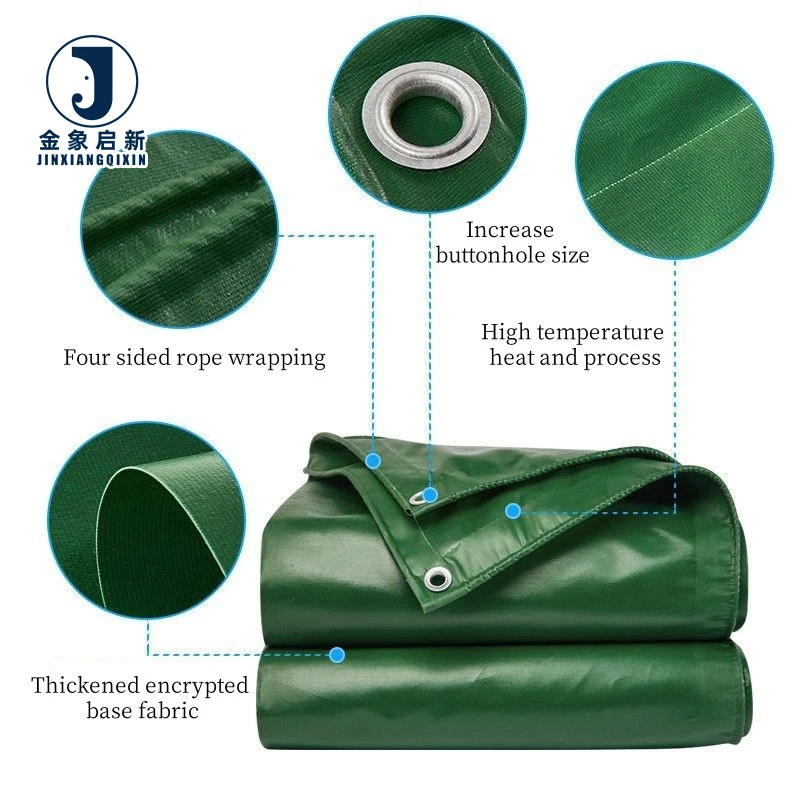
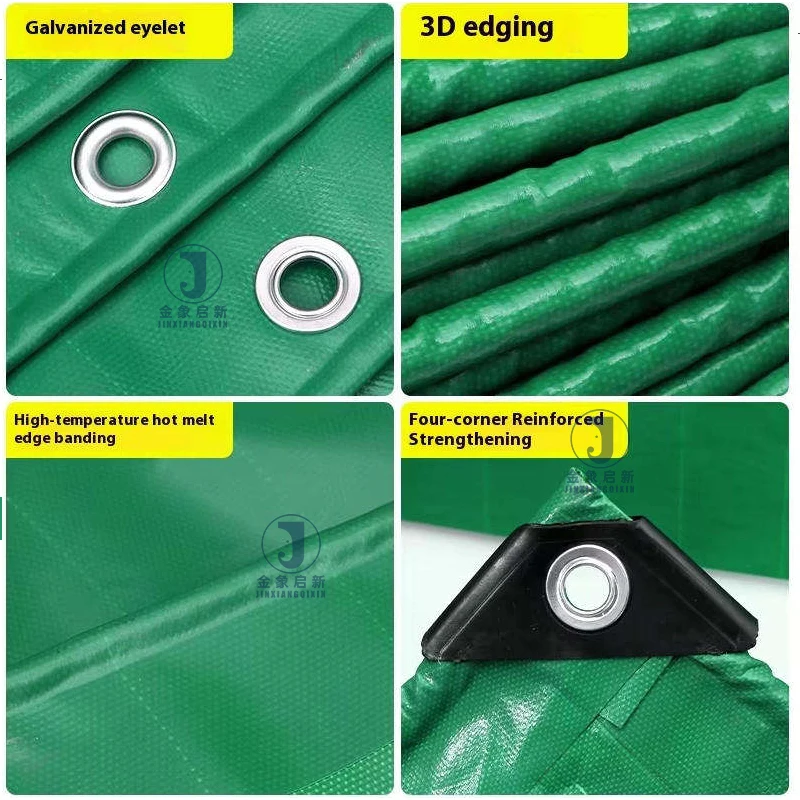
- Reinforce eyelet zones with additional PVC patches to distribute tie-down load across the laminated structure
- Store rolls on cores in a flat, shaded area to prevent creasing of the coated surface
- Allow cold-stored rolls to reach ambient temperature before unrolling to avoid coating crack
- Clean with mild detergent only — solvent-based cleaners attack the PVC coating plasticiser layer
- Repair field damage with compatible PVC repair patches heat-bonded to the existing coating surface
What to Include in Your Enquiry
Provide your trailer model list with exact dimensions, the operating environment including UV exposure and temperature range, and any fire compliance standard required at your terminals or tunnels. Specify whether you need finished covers with eyelets and hems or roll stock for your own fabrication. If fleet branding is required, include colour references and logo placement details so we can prepare samples for your approval.
Frequently Asked Questions
Q: How is sizing confirmed for my specific trailer model before production?
A: We request the trailer make, model, and year along with measured length, width, and drop dimensions. A cutting diagram is prepared and shared for your approval before any material is cut. For fleet orders covering multiple vehicle types, each cover is labelled to its assigned trailer to prevent installation errors at the depot.
Q: What test reports are available for anti-UV or flame retardant claims?
A: Test reports are provided for the specific anti-UV and flame retardant grades applied to your order. The grade must be confirmed at enquiry stage so the correct treatment is included in production. Reports reference the test standard used and the result achieved, supporting compliance submissions in your market.
Q: How do you ensure colour consistency across a multi-cover fleet order?
A: Pigment dosing is calibrated per batch and a colour reference swatch is produced for your sign-off before full production runs. All covers within a single order are produced from the same coating batch where possible, minimising roll-to-roll variation when covers are installed side by side.
Q: What reinforcement options are available at eyelet and hem points?
A: Eyelet zones receive additional PVC patches welded to both faces of the double-faced construction, distributing tie-down load away from the puncture point. Hems are folded and heat-welded rather than stitched, eliminating needle holes that become water ingress paths under highway rain exposure.
Q: How is welded seam strength validated against fabric tensile strength?
A: Seam samples are peel-tested during production setup to confirm the weld bond meets or exceeds the base fabric strength. Temperature, pressure, and dwell time are recorded per batch. This prevents the common failure mode where seams split at flex points while the surrounding fabric remains intact [NEED_CITE: peel and shear test methods for heat-welded PVC joints].
Related products
-
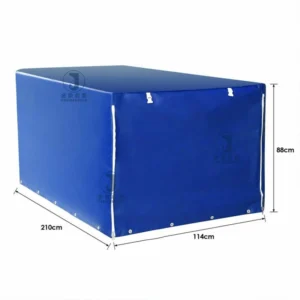
Custom PVC Truck Cover for Trailer – Manufacturer
Read more -
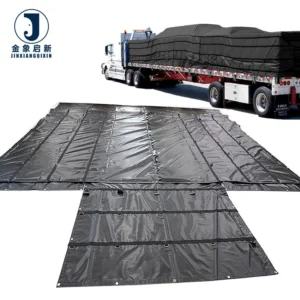
Custom PVC Truck Cover for Flatbed Semi – Manufacturer
Read more -
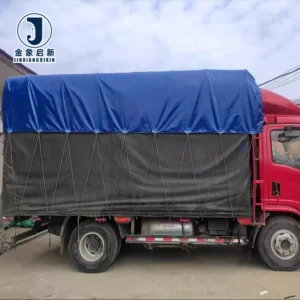
Toldo de alta resistencia para camión / Lona de PVC laminada / Lona de vinilo para remolque de camión
¥1.25 Select options This product has multiple variants. The options may be chosen on the product page -
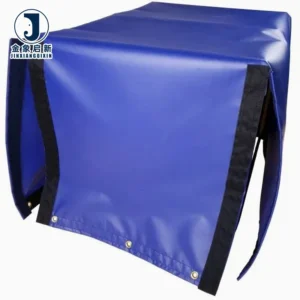
Custom PVC Truck Cover for Trailer – Manufacturer
Read more