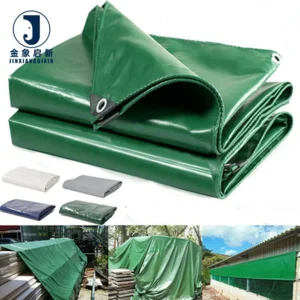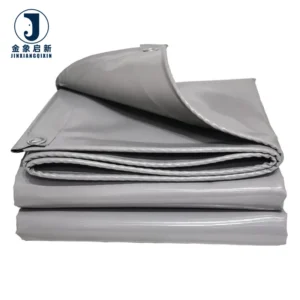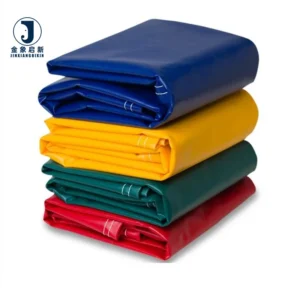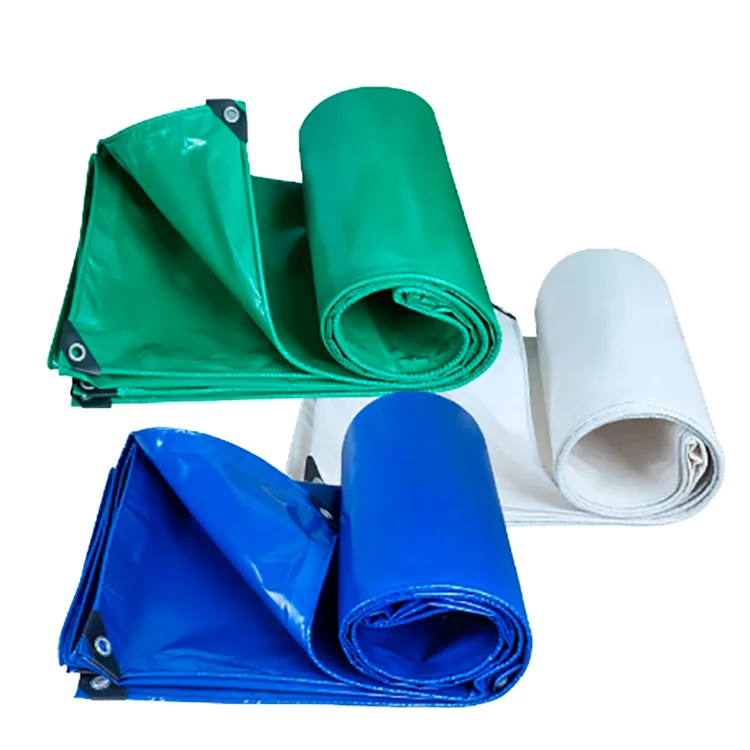
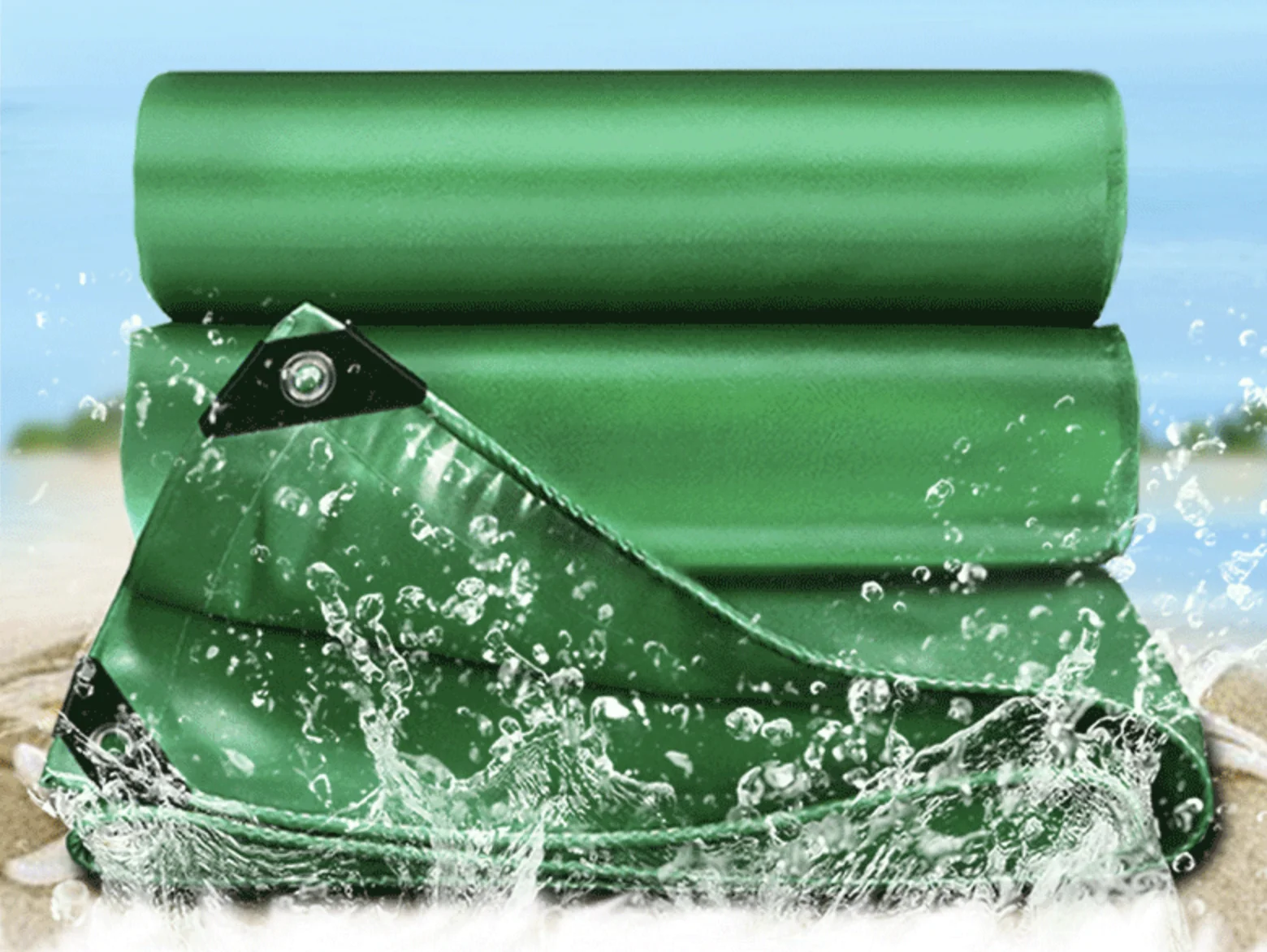
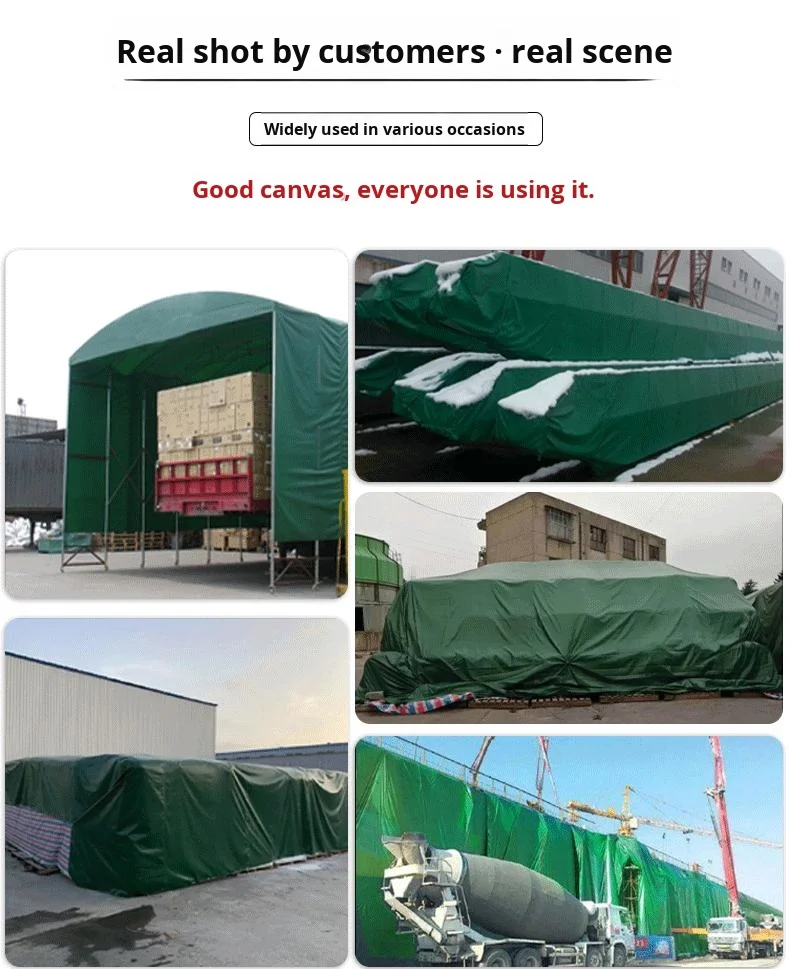
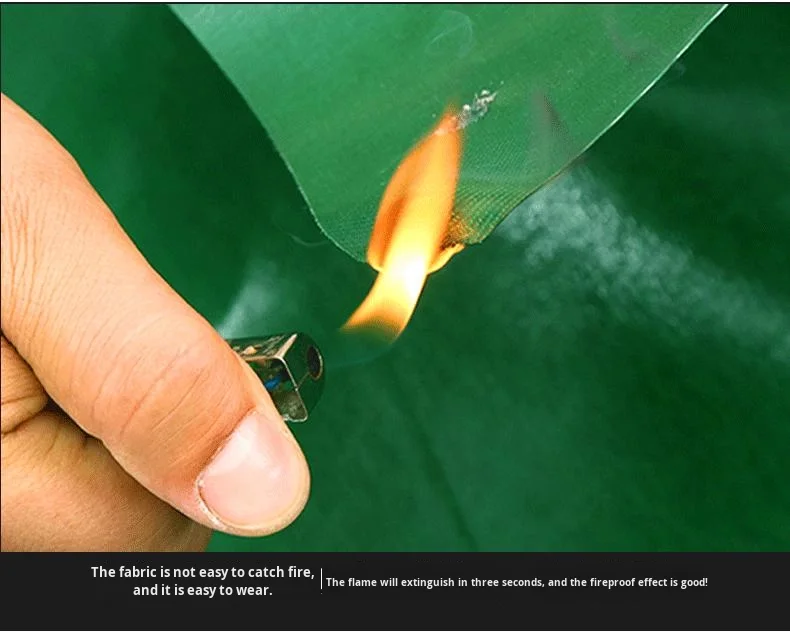
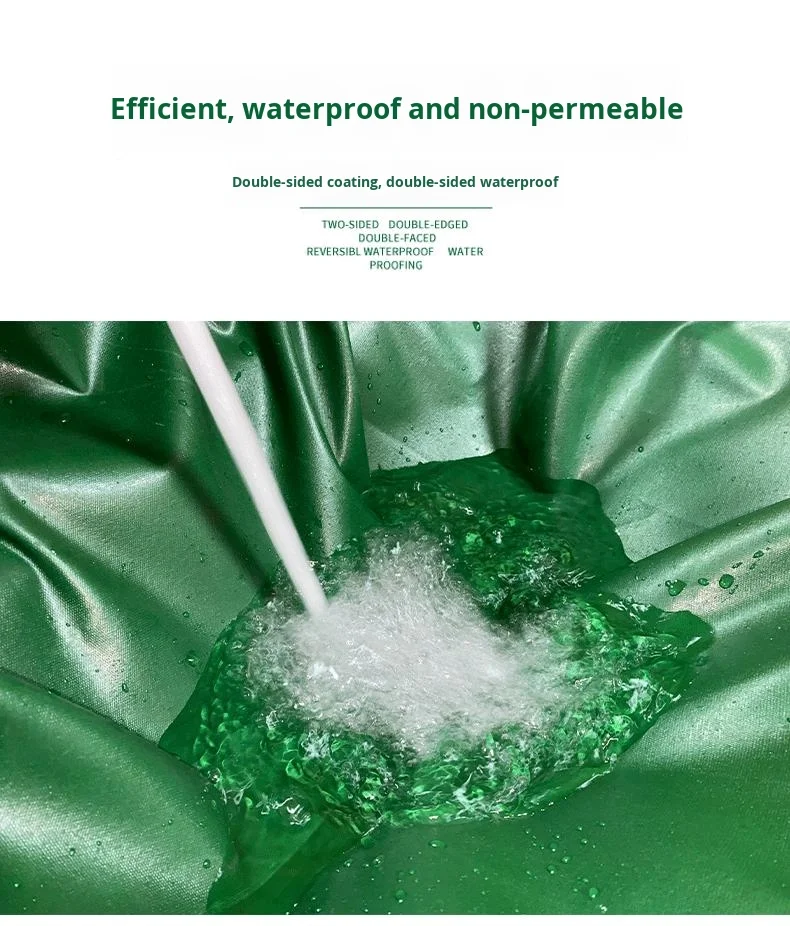
PVC Knife-Coated Tarpaulin Fabric for Tents and Awnings — 500GSM, waterproof ≥20KPa, low-temperature flexible to -30°C, flame retardant ≤10 seconds. Available in tricot or woven plain base with anti-UV, mildew-proof, and corrosion-resistant treatments.
- Custom width, colour, pattern printing, and reinforced edge finishing available per roll
- GSM verified at every stage; flame retardant and UV backed by test reports on request
- Batch colour consistency and 100% pre-shipment inspection across all production runs
Supported by three full production lines, a 10-person R&D team for sample development, and dedicated QA/QC with documented inspection records before dispatch.
Description
Process-Controlled Coating — Three dedicated production lines with in-process QA at each stage ensure every roll of knife coated PVC tarpaulin matches the approved specification before dispatch.
Technical Specifications
| Parameter | Value |
|---|---|
| Product Type | Knife Coated Tarpaulin |
| Coating Method | Knife coated |
| Coating Material | PVC |
| Waterproof Rating | Anti-permeable ≥ 20KPa |
| Flame Retardant Grade | ≤ 10 seconds (grade not stated) |
| UV Treatment | Anti-UV (test basis not stated) |
| Anti-Corrosion | Acid, alkali and brine corrosion resistant |
| Temperature Range | Low-temperature flexibility at -30°C |
| Weight (GSM) | 500GSM |
| Finish | Plain style, wrinkle resistant |
| Anti-Mildew | Mildew proofing properties stated |
| Standards | ISO, CE |
Application Suitability
| Application | Exposure & Requirement |
|---|---|
| Tent and canopy fabric | Wind load, rain exposure, repeated assembly and teardown, UV degradation |
| Awning and shade structure | Continuous sun exposure, colour fastness, wrinkle-free drape appearance |
| Truck and trailer cover | Road abrasion, vibration flex, weather protection for cargo |
| Industrial equipment cover | Chemical splash, dust ingress, outdoor storage corrosion |
| Outdoor shelter membrane | Long-term weathering, low-temperature handling, structural tension |
Why Stated GSM Does Not Guarantee the Fabric You Receive
Every roll is weighed and inspected before it leaves the facility — what you approve on the sample is what arrives at your dock.
Buyers who source coated fabric across multiple suppliers frequently encounter a gap between the GSM printed on the quotation and the actual weight measured on arrival. Lighter material passes visual inspection but underperforms in tensile and tear resistance once fabricated into a tensioned structure. The discrepancy often surfaces only after the tent frame is raised or the awning is extended, when the fabric shows premature sag or stress whitening at seam points. [NEED_CITE: tensile and tear test methods for coated fabrics per ISO 1421]
When sourcing a knife coated PVC tarpaulin manufacturer custom order, weight verification at the production stage — not just at final packing — is the control point that separates consistent supply from speculative delivery.
How Knife Coating Builds the Waterproof Barrier
Unlike laminated or calendar-pressed alternatives, knife coating forces PVC paste directly into the interstices of the base fabric under controlled blade pressure. This produces a continuous film that locks into the yarn structure rather than sitting on top of it, creating the anti-permeable ≥ 20KPa rating that holds under sustained hydrostatic load. For tent and canopy manufacturers, this means the waterproof performance does not degrade at fold lines or where grommets concentrate local stress.
Low-Temperature Flexibility and Cold-Climate Deployment
Fabric that performs well at ambient temperature can become brittle when ambient conditions drop sharply. The -30°C low-temperature flexibility verified for this knife coated PVC tarpaulin means the material remains pliable enough to fold, drape and tension in cold-weather installations without fracturing at crease points. This matters for event contractors who erect temporary structures in winter months and for canopy suppliers shipping to northern-latitude markets where storage temperatures routinely fall below freezing. [NEED_CITE: low-temperature bend test protocols for flexible PVC compounds]
Reading the Specification Sheet Beyond Weight Alone
GSM tells you how much material is present, but the base fabric denier, weave density and coating adhesion together determine how the fabric behaves under load. A 500GSM knife coated PVC tarpaulin built on a high-density woven plain will resist tear propagation differently than one on a lighter base with heavier coating. The wrinkle-resistant plain finish specified here indicates a coating formulation calibrated for visual smoothness — important when the fabric is installed as a visible awning or canopy face where surface irregularities show under direct light. Acid, alkali and brine corrosion resistance further extends the usable environment beyond standard freshwater exposure to coastal and industrial sites.
The Hidden Cost of Colour Drift Across Rolls
When a canopy installer unrolls two panels from the same shipment and the shade difference is visible at the overlap, the entire structure must be re-cut from a single batch — wasting material and delaying the project. Colour variation between rolls in the same order is a recurring complaint in coated fabric procurement, particularly when production runs span multiple coating batches without pigment lot control. Mildew proofing treatment must also be applied uniformly; inconsistent dosing leads to localised fungal growth on stored rolls before they reach the fabrication floor. [NEED_CITE: pigment dispersion standards for PVC plastisol coating lines]
Why Production Control Matters for Custom Orders
Three full production lines and 36 sets of professional equipment support bulk capacity while maintaining on-time delivery across concurrent orders. A 10-person R&D team handles material selection, custom width slitting, colour matching and sample development — turning around samples within days so buyers can verify weight, finish and colour before committing to a bulk run. Dedicated QA/QC checkpoints at each production stage catch GSM deviation, coating thickness variation and colour drift before the roll reaches packing. Pre-shipment inspection covers 100% of rolls rather than statistical sampling, ensuring the fabric received matches the sample approved.
Documentation & Verification
- Material specification sheet stating GSM, base fabric type, coating method and colour reference for each roll
- Test reports for flame retardant and anti-UV grades available where applicable — request before production begins
- Pre-shipment inspection record documenting weight verification, visual check and dimension confirmation per roll
- Roll packing list with net weight, gross weight and roll count for customs and warehouse reconciliation
- Certificate of origin and customs documentation support for cross-border shipment
Fabrication, Handling & Storage
- Heat-weld parameters should be calibrated to the 500GSM weight and knife coated PVC construction to prevent seam delamination
- Store rolls upright on pallets in a dry, shaded area to avoid flat-spot deformation and UV pre-exposure
- Allow cold-stored rolls to acclimatise above 0°C before unrolling to prevent surface cracking at -30°C rated flexibility limits
- Use PVC-compatible cleaners only; solvent-based agents may attack the wrinkle-resistant plain finish surface
- When cutting panels for tent or awning fabrication, nest patterns to maximise yield from the custom width ordered
What to Include in Your Inquiry
Provide the end-use application and expected environmental exposure so the correct treatment package can be specified. Confirm your market’s fire classification requirements and whether a specific test standard applies to your project. State the width, roll length and annual volume you need, along with any colour reference or printed branding requirements. Indicate whether you require rolls only or finished cut-to-size panels with edge reinforcement.
Frequently Asked Questions
Q: How is GSM verified on arrival and what does your pre-shipment inspection cover?
A: Every roll is weighed individually during the pre-shipment inspection, not sampled from a batch. The inspection covers GSM against the stated value, visual assessment for coating defects, dimension confirmation and colour consistency across all rolls in the order. A documented inspection record ships with the consignment.
Q: What flame retardant grades are available and which test standards do they meet?
A: Flame retardant grades are available with self-extinguishing performance rated at ≤ 10 seconds. The specific test standard depends on your market — confirm whether your project requires DIN 4102, NFPA 701, M2 or another classification before production so the correct formulation is applied and the matching test report is issued.
Q: How do you control colour consistency across multiple rolls in the same order?
A: Pigment lots are matched at the mixing stage and production runs for a single order are scheduled on the same line with consistent coating parameters. Pre-shipment inspection includes a side-by-side visual check of all rolls before packing to flag any visible shade variation.
Q: What custom widths, roll lengths and finishing options can be specified?
A: Custom widths and roll lengths are available to match your cutting layout and reduce waste. Finishing options include eyelets at specified spacing, reinforced hems and pattern printing. The 10-person R&D team develops samples within days so you can approve dimensions, colour and finish before bulk production begins.
Q: How are samples developed and approved before bulk production begins?
A: Once you confirm the application, required treatments and target specification, the R&D team produces a sample reflecting your chosen weight, colour and finish. You review the sample for appearance, drape and performance characteristics. Upon approval, production proceeds against that reference with QA checkpoints at each stage.
Related products
-
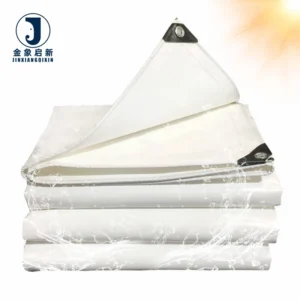
Lona Impermeable de Alta Resistencia 650Gsm Agricultura China Plástico Lonas Cubierta Hoja Azul Naranja 15oz Lonas de PVC para Camión
¥2.50 Select options This product has multiple variants. The options may be chosen on the product page -
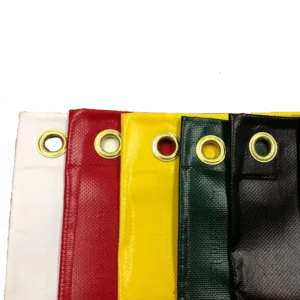
Lona de tarpaulin de tela recubierta de PVC de 300-600gsm de alta resistencia o personalización
¥0.83 Select options This product has multiple variants. The options may be chosen on the product page -
PVC Tarpaulin 650Gsm for Truck Cover – Custom Made
Read more -
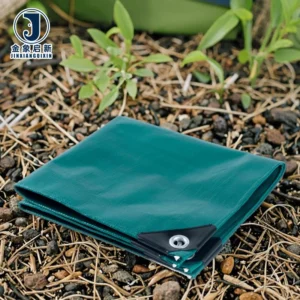
Lona de plástico Material PVC Lona para camiones Lona de tienda Color verde Alta resistencia Alta calidad
¥0.90 Select options This product has multiple variants. The options may be chosen on the product page