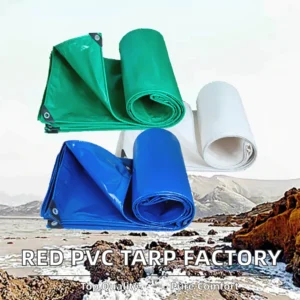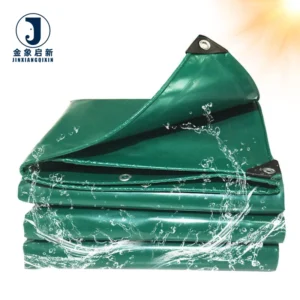
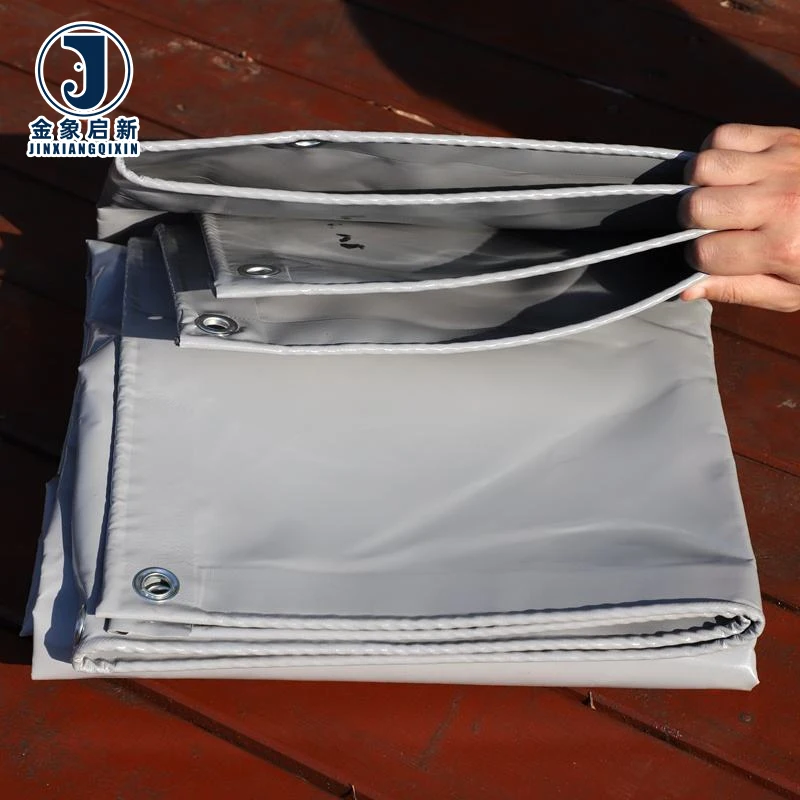
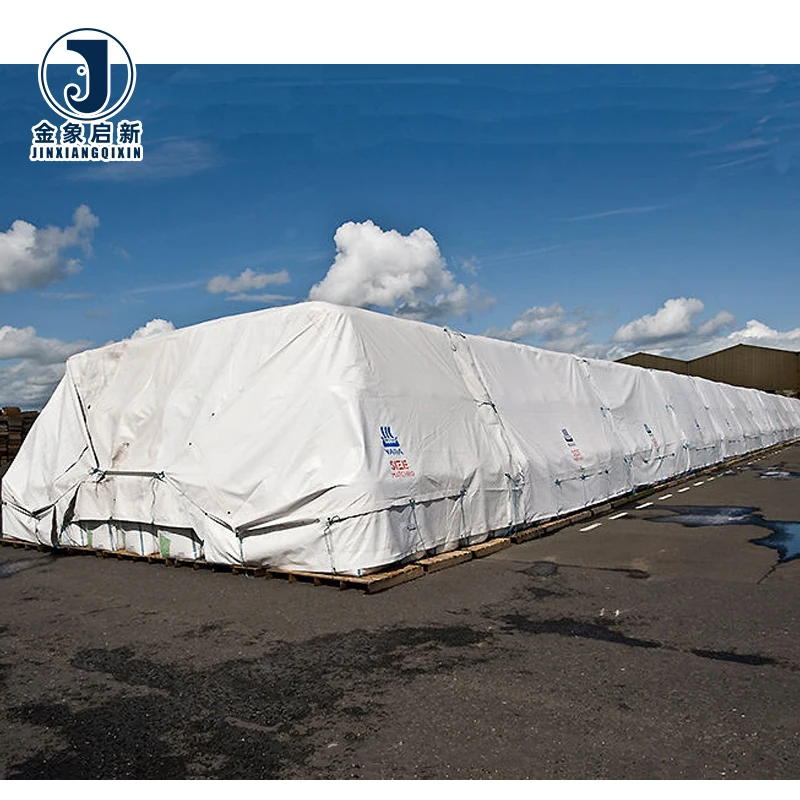
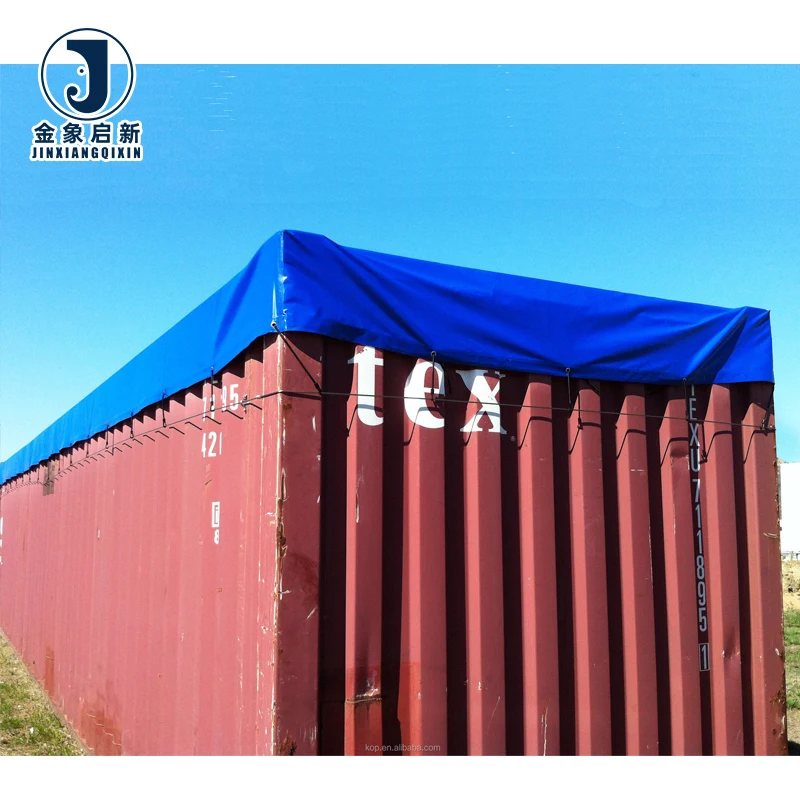
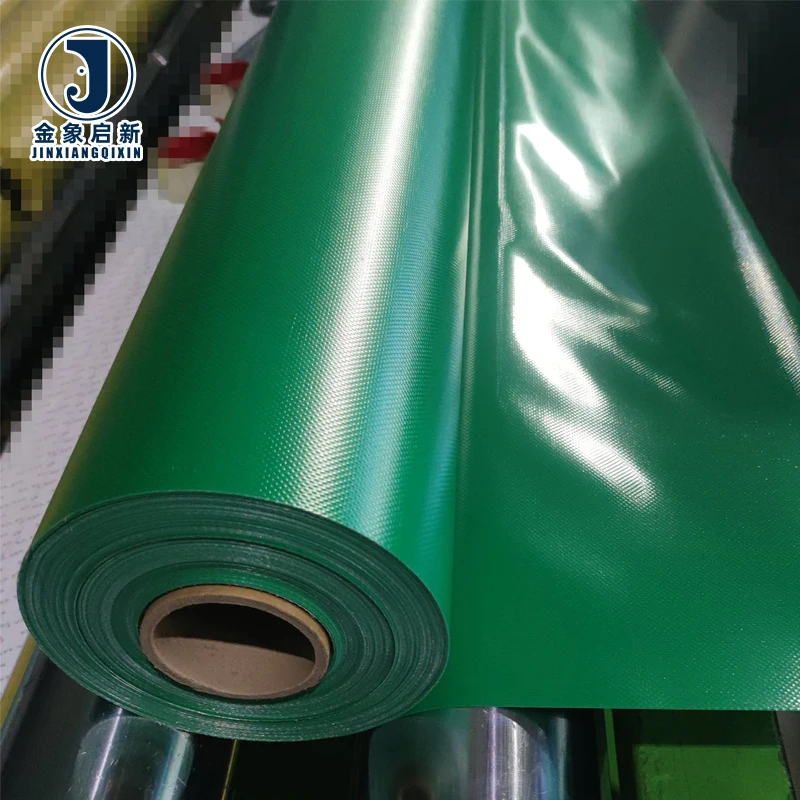
Heavy Duty PVC Coated Tarpaulin — 400–1500 g/m², 500D–2000D polyester base, hot melt and lamination coating
- Available with UV resistant, flame retardant, anti-static, cold resistant and mold proof treatments
- Roll-to-roll GSM consistency controlled across three full production lines
- Custom width, length, colour, eyelet spacing and pattern printing supported
Samples developed within days for custom requirements, with 100% pre-shipment inspection on every roll.
Description
Precision coating weight control — every roll of Heavy Duty PVC Coated Polyester Fabric Tarps passes 100% pre-shipment inspection so the GSM on your material specification sheet matches the fabric on your dock.
Technical Specifications
| Parameter | Value |
|---|---|
| Product Type | PVC Coated Tarpaulin Roll |
| Base Material | 100% high tenacity polyester yarn |
| Coating Technology | Lamination and hot melt coating |
| Medium-duty Thickness | 0.35–0.45 mm |
| Medium-duty Weight | 400–500 g/m² |
| Medium-duty Yarn Denier | 500D |
| Medium-duty Tensile Strength | Warp 1500–2000 / Weft 1200–1800 N/5cm |
| Heavy-duty Thickness | 0.70–1.0 mm |
| Heavy-duty Weight | 700–1000 g/m² |
| Heavy-duty Yarn Denier | 1000D |
| Heavy-duty Tensile Strength | Warp 2000–2500 / Weft 1800–2200 N/5cm |
| Super Heavy-duty Thickness | 1.2–1.5 mm |
| Super Heavy-duty Weight | 1100–1500 g/m² |
| Super Heavy-duty Yarn Denier | 500D–2000D |
| Super Heavy-duty Tensile Strength | Warp 2500–3000 / Weft 2200–2800 N/5cm |
| Treatment Options | Flame retardant (grade not stated), Anti-static (standard not stated), Cold resistant, Mold proof, UV resistant (test basis not stated) |
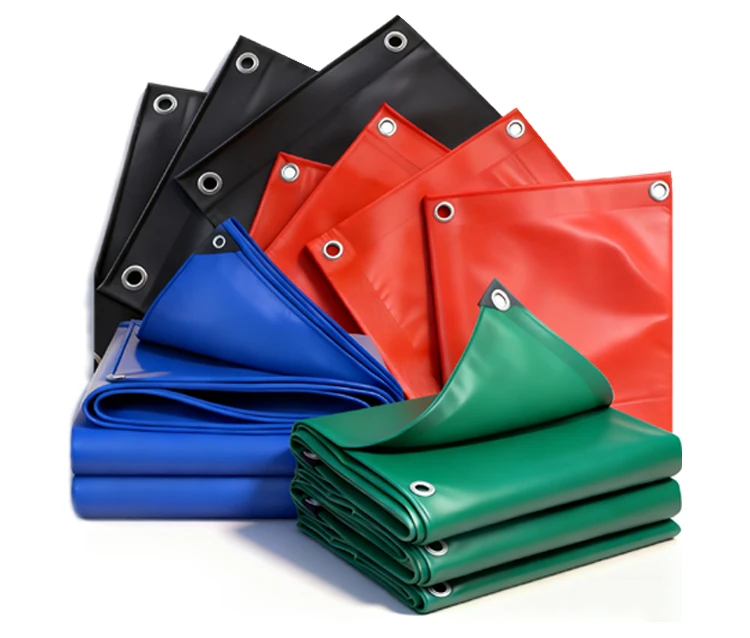
| Available Colors | Blue, Blue-Orange, Green, Grey, Black, Clear, Grey-Green, Orange, Custom |
| Key Features | Fully waterproof, anti-mildew, cold resistant, custom branding available |
| Certification | ISO, CE (company-level) |
Application Suitability
| Application | Exposure & Requirement |
|---|---|
| Truck and trailer tarpaulin | Constant flexing at load points, road spray, UV exposure, abrasion from tie-down straps |
| Industrial pipe canopy | Long-term weathering, wind uplift tension, chemical-laden atmosphere near processing plants |
| Tensioned membrane structure | Sustained biaxial stress, UV and thermal cycling, weld seam integrity under load |
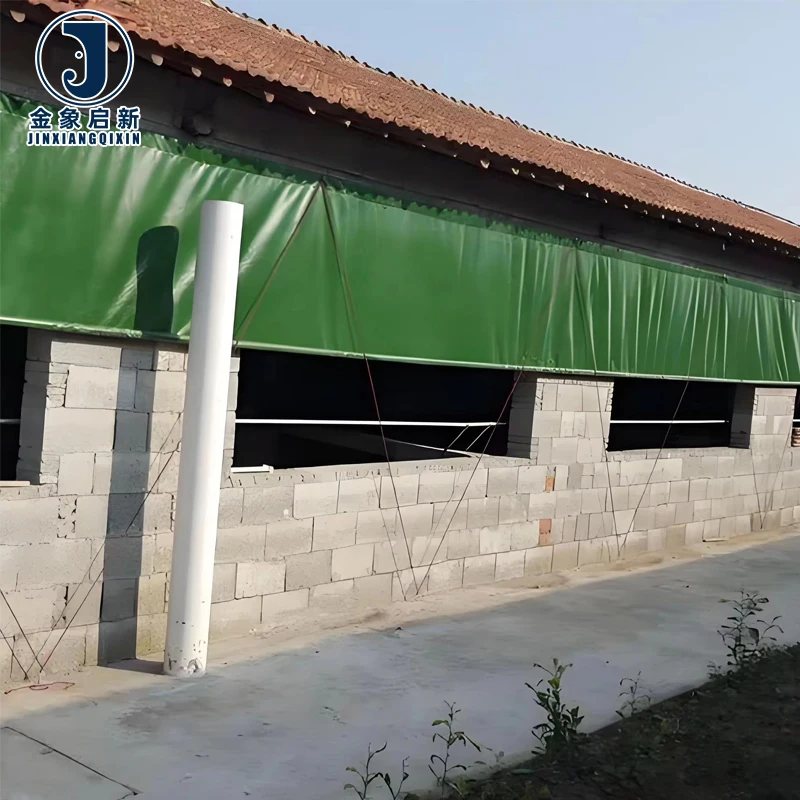
| Farm and construction site cover | Puncture from equipment edges, mud and standing water, daily handling and repositioning |
| Inflatable and membrane structure fabric | Internal air pressure load, repeated inflation cycles, seam strength under peel stress |
| Side curtain fabric | High-frequency rolling and unrolling, lateral wind load, thermal expansion and contraction |
Why the PVC Coated Tarpaulin Manufacturer You Choose Determines More Than Price
Fabric weight alone never tells the full story — coating adhesion, base fabric density, and process control decide whether the material survives its first season.
Buyers who focus solely on quoted GSM often discover problems only after the rolls arrive and the fabric goes into service. A PVC coated tarpaulin manufacturer custom capability means little if the coating delaminates at the weld line or the colour shifts between rolls in the same shipment. These failures trace back to inconsistent coating weight application and inadequate base fabric specification rather than the stated GSM itself. [NEED_CITE: tensile and tear test methods for coated fabrics per ISO 1421]
Three Weight Tiers Covering Every Load Class
The Heavy Duty PVC Coated Polyester Fabric Tarps range spans three distinct weight classes, from 400–500 g/m² for medium-duty covers up to 1100–1500 g/m² for super heavy-duty structural and industrial applications. Each tier pairs a specific polyester denier with matched coating thickness, so tensile strength scales predictably with weight rather than relying on excess PVC to compensate for a light base fabric.
Coating Adhesion That Survives the Weld Line
Lamination and hot melt coating technology bonds the PVC layer to the polyester base at high temperature and pressure. This produces a coating-to-fabric bond that resists peeling under the thermal stress of hot-air welding, a critical requirement when fabricators join panels for truck curtains or tensioned canopies. Poor adhesion shows up first at welded seams, where the fabric flexes and peels apart long before the body of the material degrades. [NEED_CITE: coating adhesion and peel strength requirements for PVC-coated polyester fabrics]
Reading the Specification Sheet Like a Fabricator
GSM, base fabric denier, and coating method interact to determine real-world performance in ways that a single number cannot capture. A 1000D polyester base at 900 g/m² will resist tear propagation far better than a 500D base at the same weight, because the thicker yarns absorb more energy before individual filaments break. Coating thickness also matters independently of total weight: a thicker PVC layer improves puncture resistance and weather barrier performance but adds stiffness, which affects how the fabric handles during fabrication and how it folds for storage. Understanding these trade-offs helps buyers select the correct tier from the PVC coated tarpaulin manufacturer custom range for their specific application, rather than defaulting to the heaviest option available.
The Hidden Cost of Colour Variance Across Rolls
When a logistics fleet orders twenty rolls of grey PVC coated fabric and three of them arrive a visible shade darker, the installer faces an impossible choice: reject the batch and delay the project, or install mismatched panels on trucks that will be seen by customers every day. Colour inconsistency within a single order usually points to pigment dosing variation during the coating run or to rolls pulled from different production batches. The financial impact extends beyond aesthetics — re-sorting, returning, and re-ordering adds weeks to a project timeline and erodes trust between the buyer and their end customer. [NEED_CITE: colour fastness and batch consistency standards for coated technical textiles]
Why Jinxiang’s Production Setup Matters for Your Order
Three full production lines and 36 sets of professional equipment mean that bulk orders of PVC coated tarpaulin rolls move through coating, inspection, and packing without queuing behind unrelated product runs. A 10-person R&D team handles material selection, pattern printing, and custom sizing, developing samples within days so buyers can confirm colour, weight, and hand feel before committing to a full container. Dedicated QA and QC at every production stage catches coating weight drift, colour shift, and surface defects before the roll reaches the packing area, supported by 100% pre-shipment inspection on every order.
Documentation & Verification
- Material specification sheet confirming GSM, base denier, coating type, and colour reference for each roll
- Test reports supplied for flame retardant and UV resistant grades where applicable — confirm the grade required
- Pre-shipment inspection record verifying weight and visual quality before dispatch
- Roll packing list with individual roll weights and dimensions for container planning
- Certificate of origin and customs documentation included with every export shipment
Fabrication, Handling & Storage
- Hot-air welding parameters must match the PVC coating thickness; heavier grades above 1000 g/m² require higher temperature and longer dwell time
- Store rolls upright on end-caps in a dry environment to prevent permanent creasing in the polyester base fabric
- Avoid dragging super heavy-duty 1100–1500 g/m² rolls across concrete floors, which can abrade the surface coating
- Clean laminated PVC surfaces with mild detergent only; solvents degrade the hot melt coating bond over time
- Allow cold-resistant grades to acclimate to ambient temperature before unrolling to prevent cracking at low temperature
- Plan cutting layout to minimise offcuts, especially on custom widths where remnant material has limited reuse value
Specifying Your PVC Coated Tarpaulin Order
To move from inquiry to sample quickly, provide the end-use application, the exposure conditions the fabric will face, and any fire-retardant or anti-static compliance your local regulations require. Specify target weight, preferred colour with a RAL or Pantone reference if available, and whether you need roll stock or finished cut sizes with fabricated edges. If custom printing or branding is required, include artwork dimensions and placement so the R&D team can develop a representative sample.
Frequently Asked Questions
Q: How is GSM verified on each roll before shipment?
A: Every roll of PVC coated tarpaulin is weighed and measured during the 100% pre-shipment inspection. The actual weight per square metre is recorded and compared against the material specification sheet. Rolls that fall outside the agreed tolerance are held for rework or replacement before the consignment leaves the factory, so the GSM you ordered is the GSM you receive.
Q: What flame retardant and anti-static grades are available?
A: Flame retardant and anti-static treatments are available across the product range, but the specific grade depends on your market requirements. Buyers should specify the test standard their project demands, such as B1 per DIN 4102 or the relevant local building code, so the correct formulation is applied and a matching test report is supplied with the shipment.
Q: How do you control colour consistency across multiple rolls?
A: Pigment dosing is controlled at the mixing stage and verified against a colour reference standard during production. Rolls within a single order are produced in the same coating run wherever possible. A production sample is available for buyer approval before the bulk run proceeds, reducing the risk of shade variation across the finished batch.
Q: What custom options are available for width, length, and printing?
A: PVC coated tarpaulin rolls can be produced in custom widths and lengths to suit your container loading plan and fabrication layout. Custom colours and pattern printing are supported, with samples developed within days. Minimum order quantities vary by specification, so share your target dimensions and annual volume for an accurate quotation.
Q: What documentation ships with each consignment?
A: Each shipment includes a material specification sheet, a roll packing list with individual weights, and a pre-shipment inspection record. Where applicable, UV or flame retardant test reports are enclosed. A certificate of origin and full customs documentation are provided to support smooth clearance at the destination port.
Related products
-
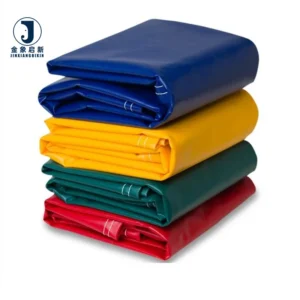
Cubierta de lona de PVC impermeable de alta resistencia para carpa de camión, almacenamiento al aire libre y uso industrial
¥1.48 Add to cart -
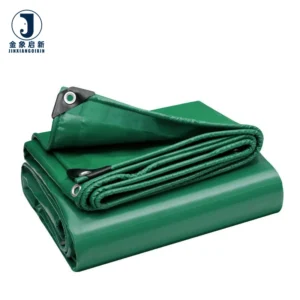
Factory Direct 20×30 Feet 13mil Heavy-Duty Vinyl Tarps PVC Tarpaulin for Firewood Roof Camping Patio Pool Boat Dump Trailer
¥2.60 Add to cart -
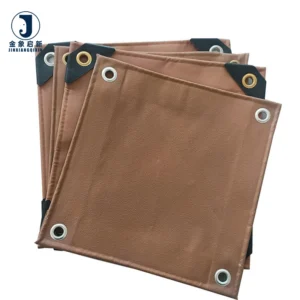
Cubierta de carga para camiones de PVC impermeable personalizable JX Fireproof 500gsm 600gsm
¥0.79 Select options This product has multiple variants. The options may be chosen on the product page -
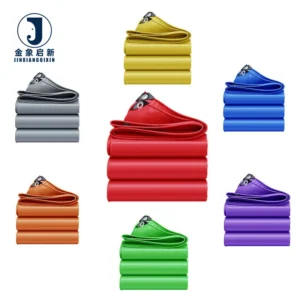
Lonas industriales reforzadas de vinilo pesado con recubrimiento de PVC, impermeables, para exteriores, para tiendas de campaña y cubiertas de camiones.
¥1.45 Add to cart