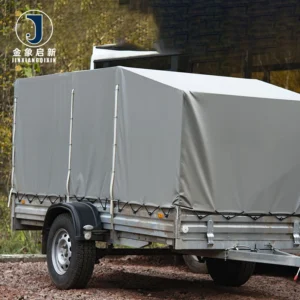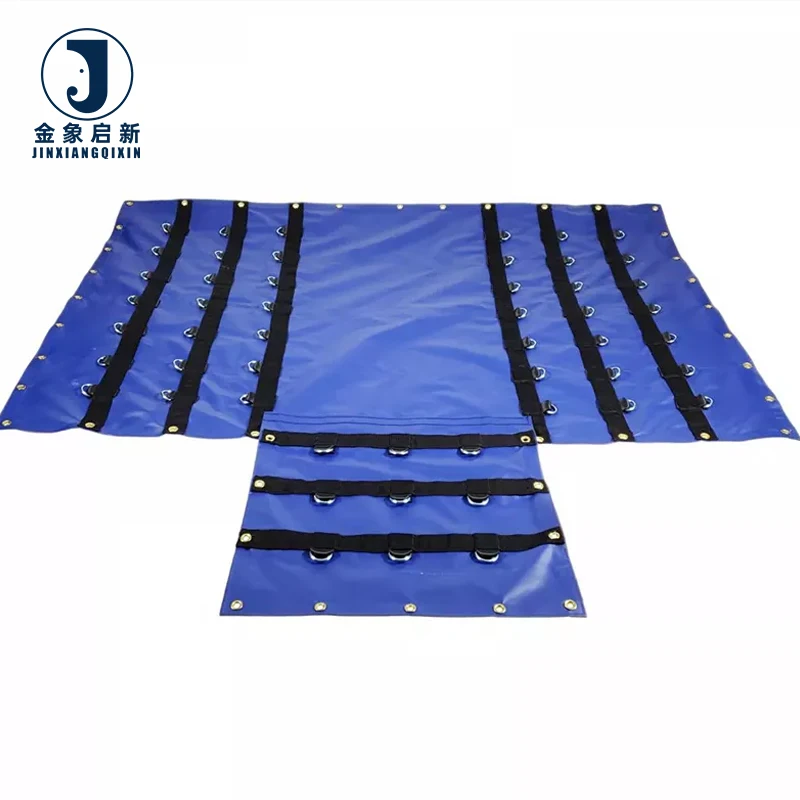
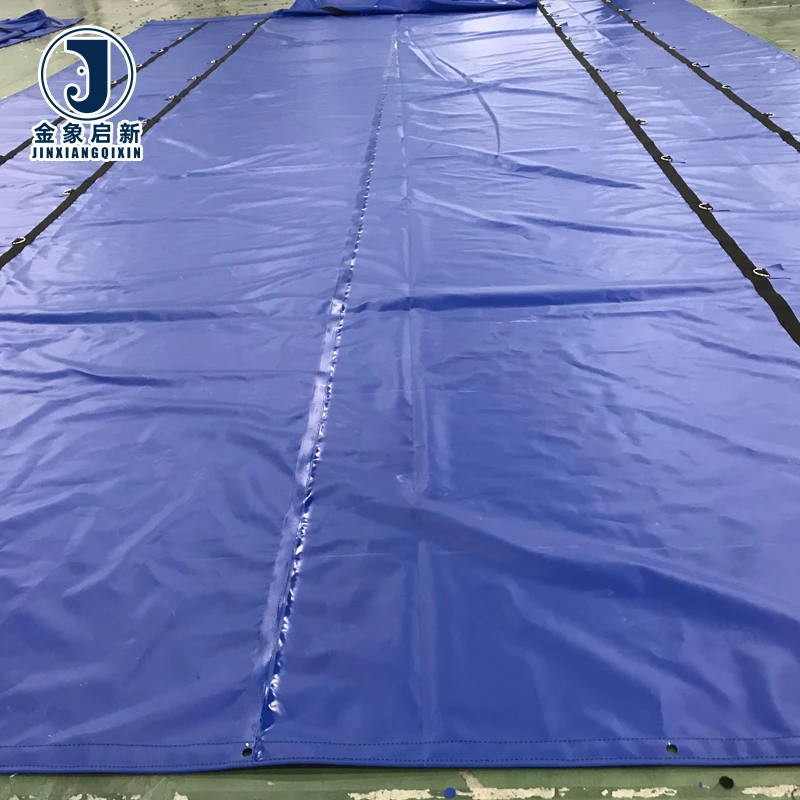
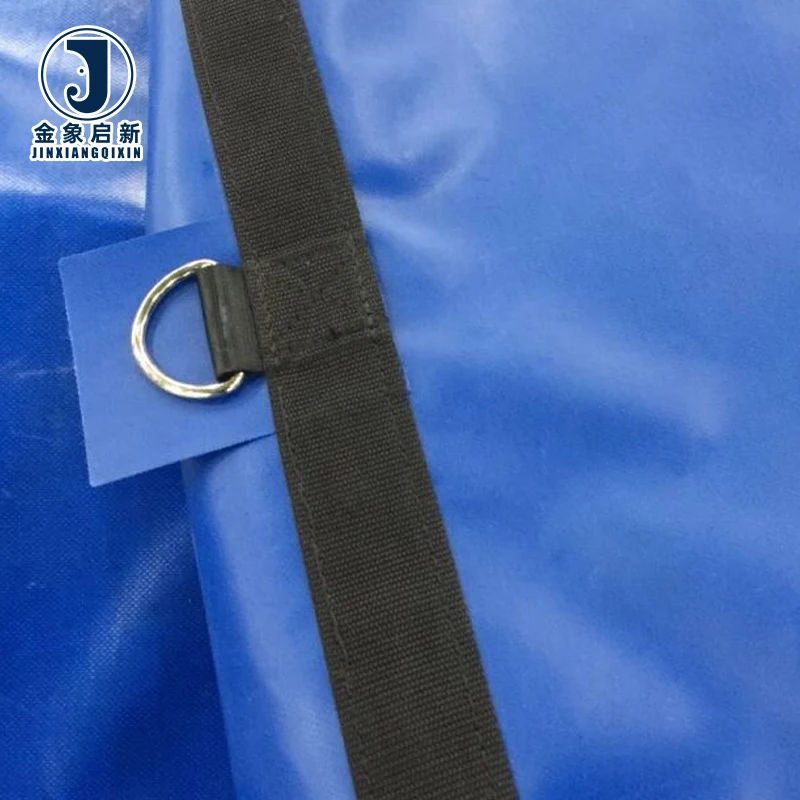
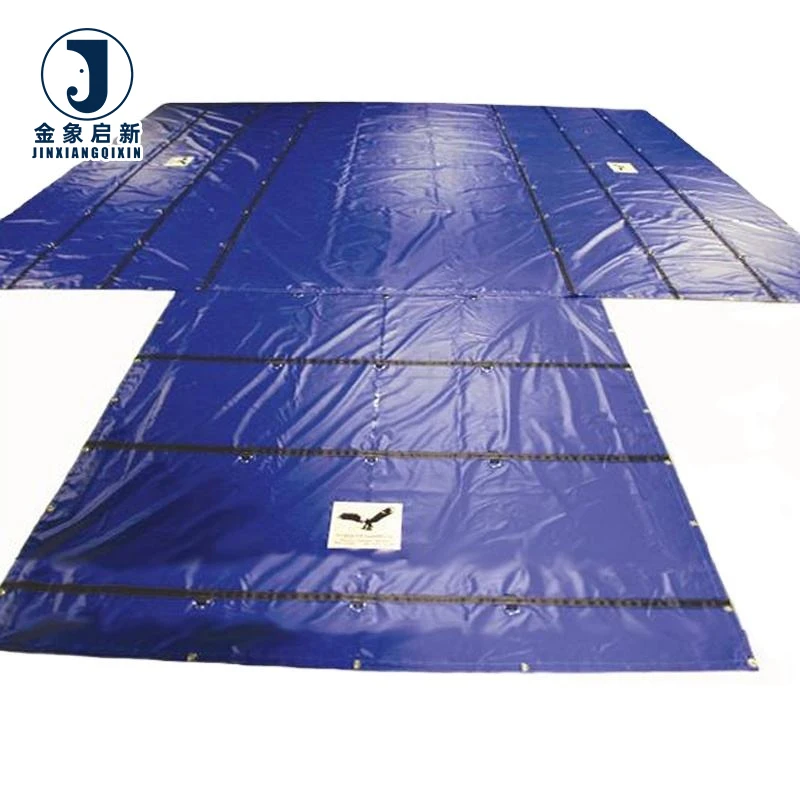
PVC Lumber Tarpaulin 24′ X 27′, 8ft Drop, 18oz (610gsm) — engineered for flatbed trailer lumber transport with 1000D base fabric and 3 rows of D-rings. Tail wing included for full 6′ and 8′ drop coverage.
- Coating weight and base fabric denier together determine tensile performance; 610gsm over 1000×1000D delivers verified strength at high-stress flex points
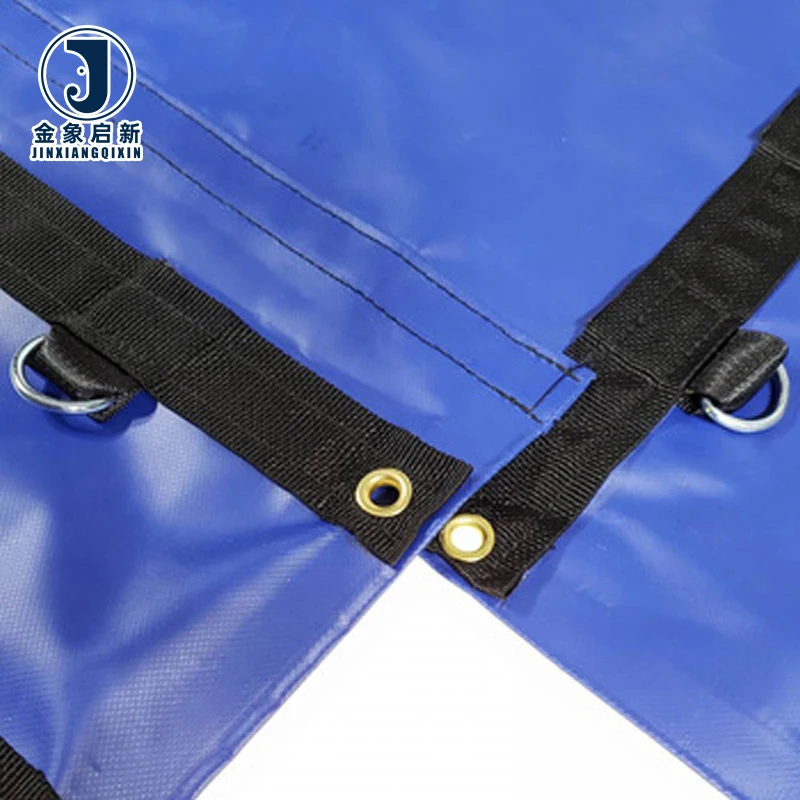
- Welded seams reinforced at load-bearing junctions prevent premature failure during long-haul transit
Backed by 100% pre-shipment inspection and dedicated QA across three production lines.
Description
Proven Coating Control — 100% GSM verification on every roll of this PVC lumber tarpaulin for flatbed trailer aftermarket supplier orders before it leaves the production line.
Technical Specifications
| Parameter | Value |
|---|---|
| Product Type | PVC Truck Cover |
| Dimensions | 24′ x 27′ |
| Drop | 8 ft. |
| Base Fabric | 1000D |
| Weave Construction | 20×20 or 18×18 |
| Weight | 18 oz (610 gsm), 16 oz, or 14 oz options |
| Thickness | 0.70-1.0 mm |
| Tensile Strength | Meridian 2000-2500 / Latitude 1800-2200 N/5cm |
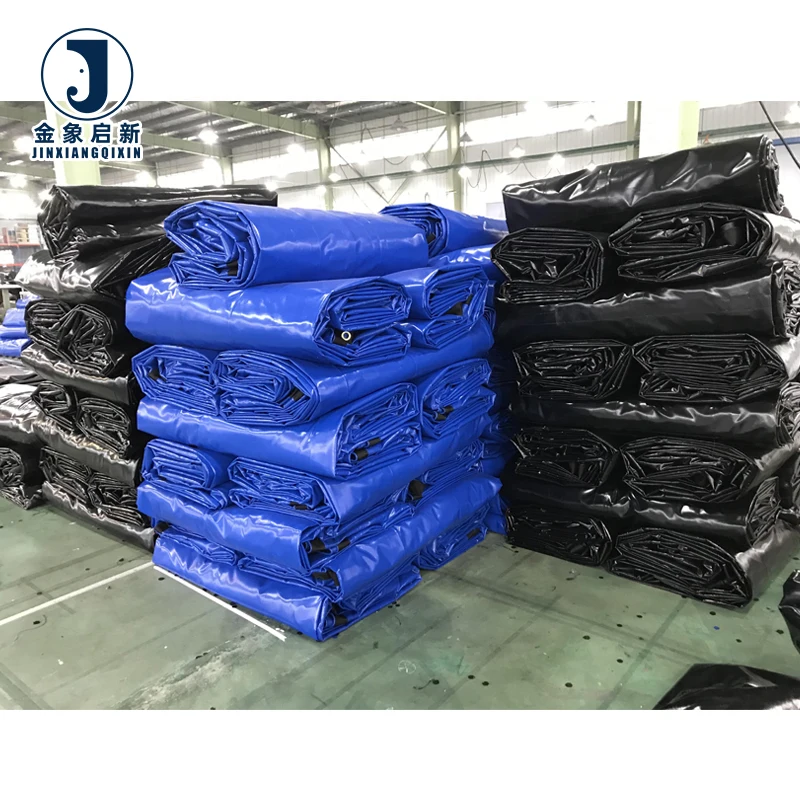
| Colour Options | Black / Blue |
| Operating Temperature | -35 ~ 70 °C |
| Hardware | 3 Rows of D-Rings |
| Tail Wing | Included on 6′ and 8′ drops |
| Surface Treatment | Acid-resistant, waterproof |
| Certifications | ISO, CE |
Application Suitability
| Application | Exposure & Requirement |
|---|---|
| Flatbed trailer lumber transport | Constant load shifting, tie-down abrasion, road debris impact, prolonged UV exposure |
| Stacked timber and wall panel coverage | High-profile load flex, wind uplift at D-ring anchor points, rainwater ingress prevention |
| Long-haul mixed cargo operations | Frequent deployment and retraction, cold-crack resistance in northern routes, colour consistency across matched sets |
Why a Generic 24′ x 27′ Lumber Tarp Fails on a Modern Flatbed
A lumber tarp cut to a universal size ignores the actual trailer deck geometry and load profile, concentrating stress until the hardware tears free.
Most flatbed operators have experienced a PVC lumber tarpaulin for flatbed trailer aftermarket supplier delivery that looks correct on the invoice but fails within months. The D-rings pull away from the hem at the exact point where the load flexes most. The tail wing is too short to cover the rear overhang. The drop does not reach the deck rail. These are not material defects; they are specification errors that happen when a supplier ships a generic size without confirming the trailer model and load configuration. [NEED_CITE: stress concentration at D-ring anchor points on flatbed tarps]
Matching the Drop and D-Ring Layout to the Load Profile
An 8ft. drop on a 24′ x 27′ lumber tarp must cover the full height of a stacked timber load while allowing the fabric to drape without pooling water on top. The 3 rows of D-rings distribute tie-down force across the fabric surface, preventing single-point overload that rips the hem from the base cloth. This PVC lumber tarpaulin for flatbed trailer aftermarket supplier specification is engineered for standard flatbed trailers carrying lumber, wall panels, or similar high-profile cargo where load shift and road vibration are constant.
Coating Adhesion and Seam Behaviour Under Road Stress
PVC coated fabric relies on the bond between the base scrim and the coating layer to resist delamination at flex points. On a flatbed lumber tarp, the fabric bends and recovers with every road undulation, concentrating cyclic stress at the welded seams. The 1000D base fabric in this PVC lumber tarpaulin for flatbed trailer aftermarket supplier product provides the structural backbone, while the coating weight — available in 18 oz, 16 oz, or 14 oz — determines how much sacrificial material protects the scrim from abrasion before the structural fibres are exposed. [NEED_CITE: cyclic flex fatigue at welded seams on transport covers]
Reading the Specification Sheet Beyond the GSM Number
The weight of a PVC lumber tarp, stated as 610 gsm for the 18 oz option, tells you the total mass per square metre of coating and base fabric combined. It does not, by itself, predict tensile strength or tear resistance. Those properties come from the base fabric denier and weave density — here, 1000D yarns in either a 20×20 or 18×18 construction. A heavier coating on a lighter base cloth may weigh the same but will delaminate sooner under cyclic flex. Conversely, a dense base scrim with a thinner coating will resist tearing but may abrade through to the yarns faster. The operating temperature range of -35 to 70 °C indicates the PVC compound remains flexible in winter deployments without becoming brittle, and resists softening or tackiness in summer heat — both critical for a cover that must be deployed and retracted daily.
What Happens When the Specification Is Wrong
Ordering a lumber tarp with insufficient drop leaves the lower portion of the load exposed to road spray and debris. D-rings spaced too far apart allow the fabric to billow between anchor points, accelerating fatigue at each attachment. A PVC lumber tarpaulin for flatbed trailer aftermarket supplier order with batch-to-batch colour variation becomes immediately visible when two covers are installed side by side on adjacent trailers, signalling poor quality control to anyone inspecting the fleet. Welded seams that fail before the fabric itself indicates the heat and pressure parameters during fabrication were not matched to the specific coating weight and base cloth combination. [NEED_CITE: weld failure preceding fabric failure in PVC transport covers]
Why Sourcing This Lumber Tarp Directly From the Coating Line Matters
Three full production lines handle bulk PVC lumber tarpaulin for flatbed trailer aftermarket supplier orders with consistent coating weight and colour matching across every roll in the shipment. A dedicated 10-person R&D team confirms D-ring placement, tail wing dimensions, and drop length against your specific trailer model drawings before any cutting begins. Every production stage includes in-process QA, with 100% inspection of the finished tarp before it is packed. Custom widths, colours, and printed branding are handled in the same facility, eliminating the communication gaps that arise when a trader sources from an unknown mill. Samples are developed within days so you can verify material hand, colour, and hardware placement before committing to a full production run.
Documentation & Verification
- Material specification sheet stating exact GSM, base fabric denier, and coating weight for your order
- Test report confirming cold-flex performance across the stated operating temperature range
- Pre-shipment inspection record covering D-ring pull-strength and seam integrity
- ISO and CE certificates included with every dispatch for customs and site compliance
- Roll packing list with individual roll weights for receiving verification
Fabrication, Handling & Storage
- Heat-weld seams at parameters matched to the specific 610 gsm, 16 oz, or 14 oz coating weight to prevent delamination at flex points
- Reinforce each D-ring attachment with a cross-patch of matching PVC coated fabric to distribute tie-down load across the 1000D base scrim
- Store rolled tarps vertically on end to prevent permanent creasing through the 0.70-1.0 mm coating layer
- Allow cold-stored tarps to acclimatise above 0 °C before deployment to avoid surface micro-cracking in the PVC compound
- Clean with mild detergent only; acid-resistant surface treatment tolerates road salt residue but not aggressive solvents
- Repair minor tears with PVC-compatible adhesive patches matched to the gloss or matte finish of the original coating
Requesting a Quotation That Fits Your Fleet
Provide your flatbed trailer make and model, deck length, and typical load height so the drop and tail wing dimensions can be confirmed before production. Specify your preferred weight from the 18 oz, 16 oz, or 14 oz options, and confirm colour requirements for fleet consistency. If you need matched sets of lumber, steel, and smoke tarps in a single order, include the full cargo mix to allow coordinated sizing and hardware placement.
Frequently Asked Questions
Q: How is the GSM on my lumber tarp verified before shipment?
A: Each roll of PVC coated fabric is weighed and measured before cutting, and the finished tarp is spot-checked against the stated GSM — whether 610 gsm, 16 oz, or 14 oz. The pre-shipment inspection record documents the actual measured weight alongside the quotation value, so you can verify consistency on arrival.
Q: Can the D-ring spacing and row count be customised for my trailer model?
A: Yes. The standard configuration is 3 rows of D-rings across the 24′ x 27′ tarp, but spacing and row count can be adjusted to match your trailer’s tie-down rail layout. Provide your trailer model drawing and preferred strap routing so the D-ring positions align with your actual securement pattern.
Q: What test evidence supports the UV and cold-crack claims?
A: The operating temperature range of -35 to 70 °C is supported by cold-flex testing on the PVC compound used in your production run. UV resistance test reports are available for grades where this treatment is specified — confirm the test standard required for your market when placing your inquiry.
Q: Do you supply matched lumber, steel and smoke tarps in one order?
A: Yes. Lumber tarps, steel tarps, and smoke tarps can be produced together in a single order with coordinated colours, hardware, and branding. This ensures batch consistency across your entire flatbed cover inventory and simplifies receiving and inventory management at your depot.
Q: What documentation ships with the tarp for import and site compliance?
A: Every shipment includes a material specification sheet, pre-shipment inspection record, ISO and CE certificates, roll packing list, and certificate of origin. If your destination market requires specific fire classification or customs documentation, confirm the exact forms needed so they are prepared before dispatch.
Related products
-
Custom Made PVC Truck Cover for Trailers – Full Range
Read more -
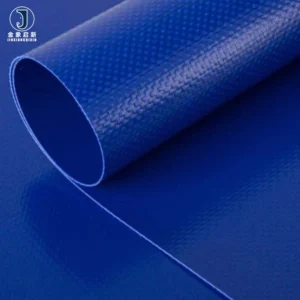
PVC Tarpaulin for Truck Covers – Custom Made
Read more -
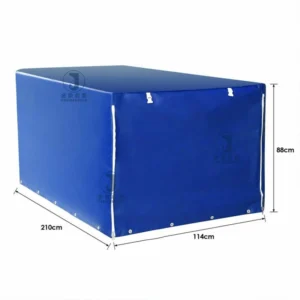
Lona de PVC recubierta a prueba de agua con recubrimiento doble cara, ecológica y multifuncional, cubierta para remolque abierto de vehículos.
¥68.50 Select options This product has multiple variants. The options may be chosen on the product page -
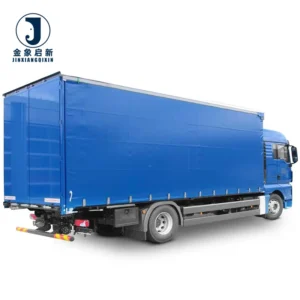
Custom PVC Tarpaulin Truck Cover for Trailer Side Curtain
Read more