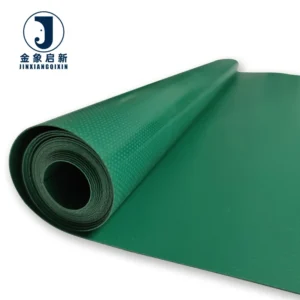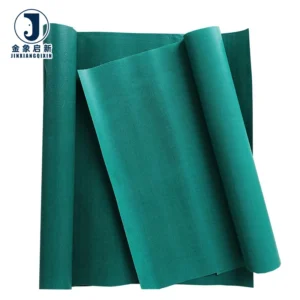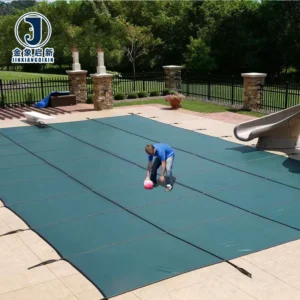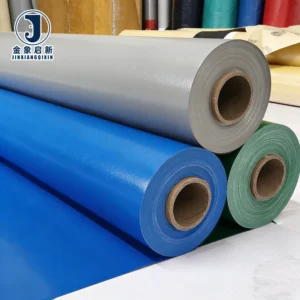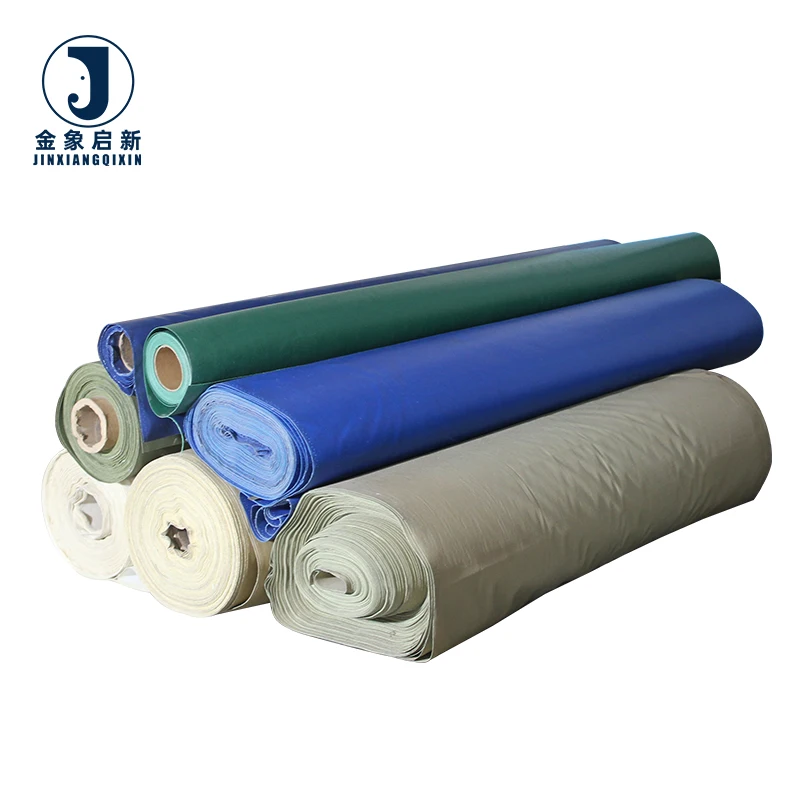
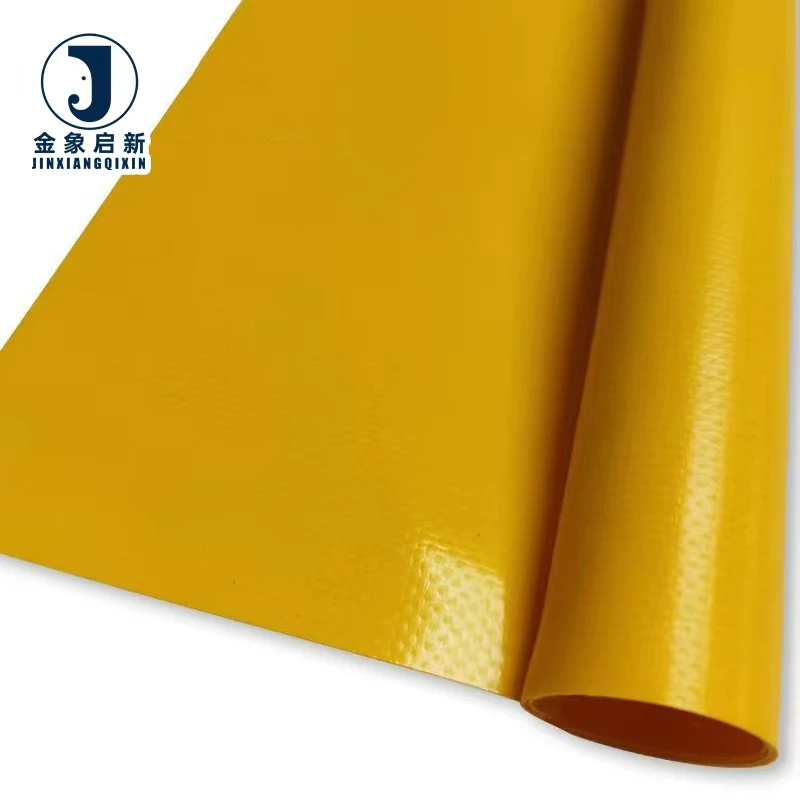
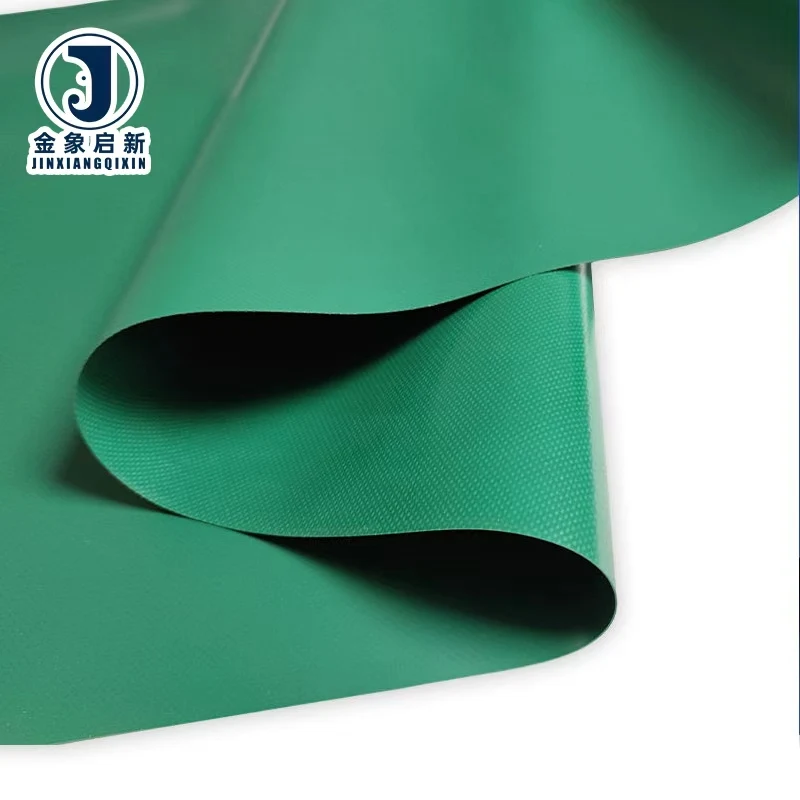
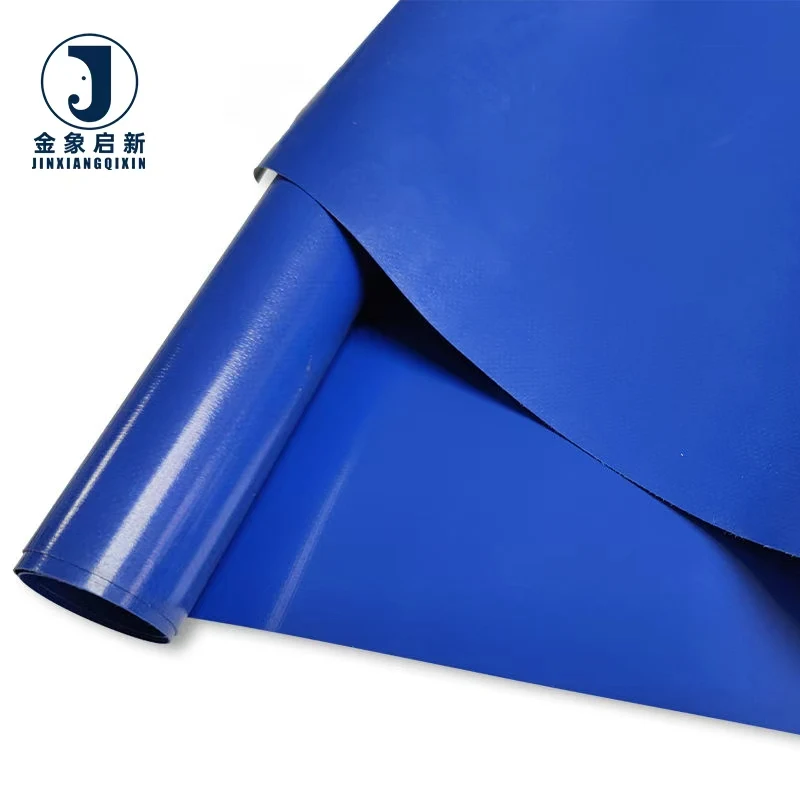
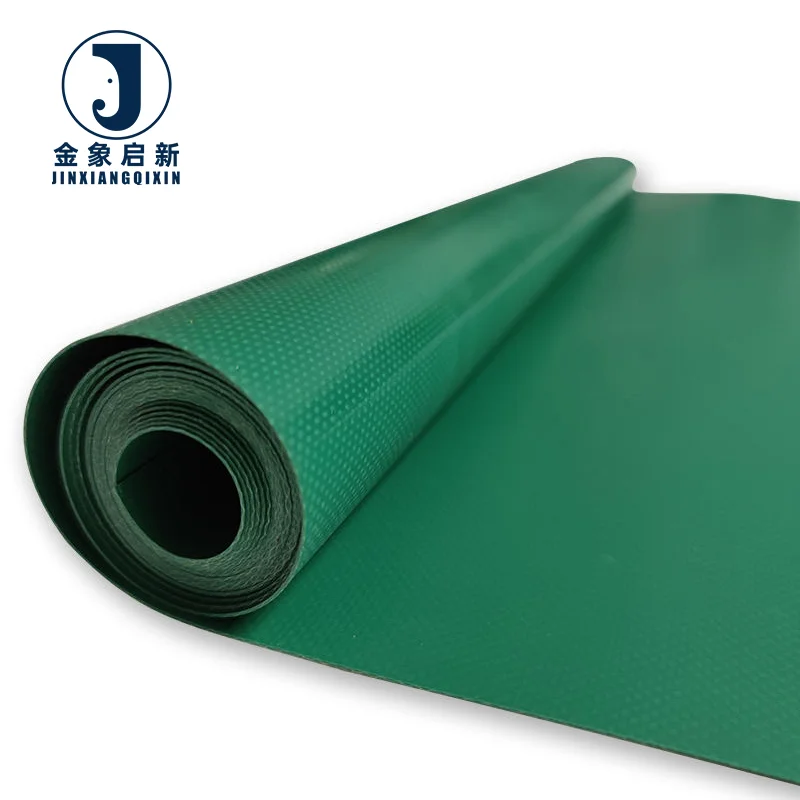
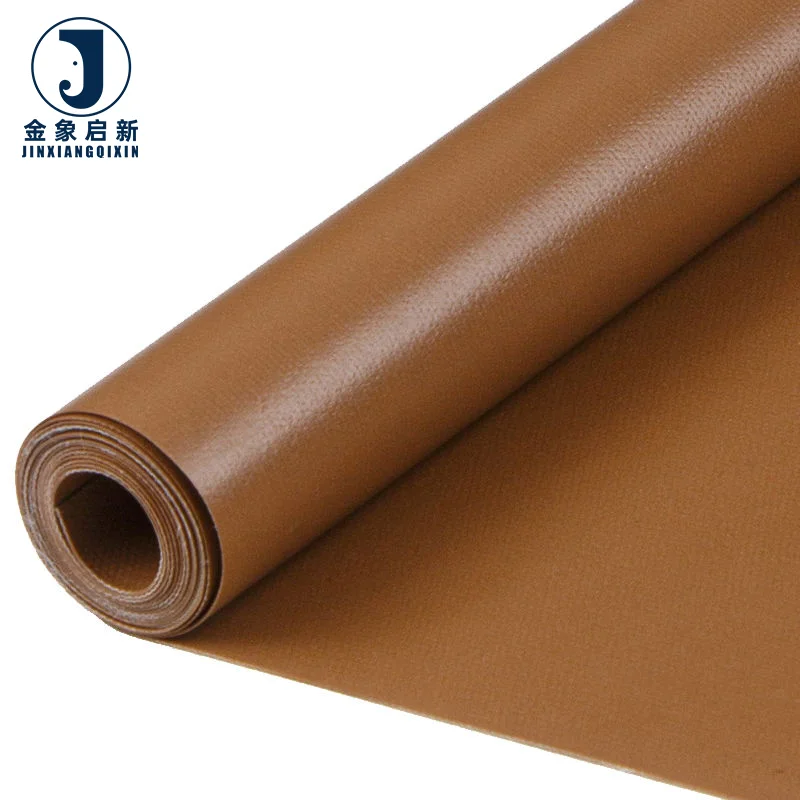
Awning and Tents Waterproof Fabric PVC Tarpaulin — available in roll or cut-to-size formats with UV treatment, mildew proofing, and tear-resistant construction.
- Thickness 0.2–0.4 mm with waterproof HDPE/LDPE laminated structure
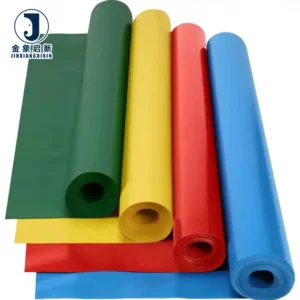
- Multiple color options or custom color matching for project consistency
- Anti-UV treatment available to reduce degradation under prolonged sun exposure
Jinxiang’s 10-person R&D team develops samples within days, letting you verify weight, color, and coating before committing to bulk production.
Description
Process Control Over Coating Weight — nearly 30 years of coated-fabric production experience ensures consistent GSM and adhesion across every PVC Tarpaulin Roll aftermarket supplier order, verified stage by stage before dispatch.
Technical Specifications
| Parameter | Value |
|---|---|
| Product Type | PVC Coated Tarpaulin |
| Base Material | HDPE weaving with LDPE lamination on both sides |
| Weight Range | 50 g/m² – 220 g/m² |
| Thickness | 0.2–0.4 mm / 8 mil–16 mil / Custom |
| Color Options | Blue, Blue/Orange, Green, Grey, Black, Clear, Grey/Green, Orange, or custom color |
| Waterproof | Yes |
| UV Treatment | Available — confirm the grade required for your market |
| Mildew Proof | Yes |
| Tear Resistant | Yes |
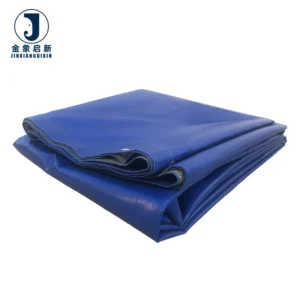
| Assembly State | Roll or cut-to-size |
| Certifications | ISO, CE |
Application Suitability
| Application | Exposure & Requirement |
|---|---|
| Tent and awning fabrication | Prolonged sun exposure, wind loading, repeated folding and transport |
| Truck and trailer load covers | Road debris abrasion, constant flexing at tie-down points, weather cycling |
| Construction site and equipment covers | UV exposure, dust and moisture ingress, puncture from sharp edges |
| Pond and reservoir lining | Permanent water contact, soil chemistry, puncture risk from substrate |
| Agricultural and aquaculture stock covering | Humidity, biological growth, mechanical handling stress |
| Inflatable and membrane structure fabric | Internal air pressure cycling, UV degradation, weld seam integrity |
Why the Label on the Roll Is Not Enough to Judge a PVC Tarpaulin Roll
A stated GSM without a test report is only a promise, not a proof.
Every season I see buyers specify a weight grade, receive the rolls on site, and discover the material feels noticeably lighter when they unroll it next to a known sample. The difference might be small per square metre, but across a full container of awning and tent fabric it compounds into thinner coating, weaker base yarn bonding, and earlier failure at the seams. When the material is destined for a construction site or a transport fleet, that gap between quotation and reality shows up as torn hems, welds that peel under load, and warranty disputes that nobody wins. [NEED_CITE: tensile and tear test methods for coated fabrics per ISO 1421]
From Lightweight PE to Heavy-Duty PVC — One Catalogue, One Source
Tent and awning makers rarely need just one fabric grade. A single production run might call for a lightweight PE sheet for temporary event structures and a heavier PVC coated tarpaulin for permanent installations. Sourcing both from separate mills introduces colour drift between orders and doubles the documentation burden. The PVC Tarpaulin Roll aftermarket supplier range spans lightweight PE grades through to heavy-duty PVC coated options, all available in full roll stock or pre-cut sizes, so buyers can consolidate their specification under one quality system and one shipment.
Treatment Options Backed by Documentation, Not Claims
Anti-UV and flame-retardant treatments are frequently stated on quotations but rarely accompanied by test data at the point of delivery. When an awning fabric is installed on a rooftop terrace or a tent is erected at a public event venue, the local fire authority will ask for the grade, not the sales pitch. Treatment options including anti-UV, flame-retardant and anti-static finishes are available across this product range — confirm the grade required for your market before placing the order, and request the corresponding test report with the quotation. [NEED_CITE: DIN 4102 fire classification for building materials]
Reading the Specification Sheet Beyond the GSM Number
GSM alone tells you how much material is in each square metre, but it does not tell you how that weight is distributed between the base fabric and the coating. A roll with a heavier base yarn and thinner coating will tear differently from one with a lighter base and thicker coating, even at identical GSM. For awning and tent applications, the base fabric denier and weave density determine how well the material resists tear propagation once a puncture starts, while the coating weight governs waterproof integrity and weld seam strength. Thickness from 0.2 mm to 0.4 mm covers light temporary covers through to more demanding permanent structures, and choosing the right point in that range depends on how the finished product will be handled, folded, and tensioned in the field.
What Happens When the Wrong Grade Reaches the Job Site
Sending a light-duty PE grade to a site that needs PVC coated fabric rarely causes an immediate problem. The rolls arrive looking correct, the tarps get cut and installed, and the first season passes without incident. Then a storm loads the structure beyond its design point, a flex cycle cracks an under-specified weld, or UV exposure degrades a coating that was never rated for continuous sunlight. By that stage the fabricator has already invoiced the client, and the dispute shifts to who bears the replacement cost. Matching the specification to the actual exposure conditions before the order is placed is the only way to avoid that conversation. [NEED_CITE: field failure patterns in coated tarpaulin installations]
Why Fabricators Source This Range for Tent and Awning Production
Nearly 30 years of focus on coated fabric gives the production team pattern recognition that newer mills have not yet developed — they know which coating weight and base fabric combinations hold a weld under tension and which ones delaminate. Three full production lines and 36 sets of equipment mean bulk roll orders are fulfilled on schedule without subcontracting to unknown secondary sources. A 10-person R&D team handles material selection, custom sizing, and sample development so specifiers can verify weight, colour, and coating adhesion before committing to container quantities. Dedicated QA and QC at every production stage, with 100% inspection before shipment, catches GSM deviation and colour variance before the rolls leave the factory. Samples are developed within days for custom requirements, cutting the approval cycle that typically delays tent and awning projects.
Documentation & Verification
- Material specification sheet stating GSM, base fabric type, coating composition, and colour reference for every roll
- Test report for UV and flame-retardant grades supplied where applicable, matched to batch number
- Pre-shipment inspection record with weight verification per roll against the stated GSM
- ISO and CE certificates plus certificate of origin included with every dispatch
- Roll packing list with individual roll weights and dimensions for warehouse receiving
Fabrication, Handling & Storage
- Heat-weld seams at temperatures matched to the LDPE lamination layer to avoid burning through the thinner 0.2 mm grades
- Reinforce eyelet positions with an additional patch layer on rolls destined for high-tension awning frames
- Store rolls horizontally on pallets to prevent edge creasing that transfers into visible marks on cut panels
- Allow cold-stored rolls to reach ambient temperature before unrolling to prevent coating micro-cracking
- Use mild detergent and soft brush cleaning to preserve the surface finish on both glossy and matte options
Before You Place the Order — What We Need From You
To recommend the correct grade from the PVC Tarpaulin Roll aftermarket supplier catalogue, share the end-use application, the environmental exposure conditions your finished product will face, and any fire classification or compliance requirement specific to your market. If you need custom width, colour, or pattern printing, provide the target dimensions and annual volume so we can confirm lead time and minimum order. Requesting a sample roll before bulk production lets you verify weight, colour consistency, and coating adhesion in your own workshop.
Frequently Asked Questions
Q: What is the difference between PE and PVC tarpaulin and which suits my awning or tent project?
A: PE tarpaulin uses HDPE weaving with LDPE lamination, making it lighter and cost-effective for temporary covers and short-term event structures. PVC coated tarpaulin offers higher tensile strength, better weld seam integrity, and longer service life under continuous UV exposure, making it suited to permanent awning installations and commercial tent fabrication.
Q: Can I order mixed colours and GSM grades in one container?
A: Yes, mixed orders are possible across the available colour range and weight grades from 50 g/m² to 220 g/m². Providing your required breakdown by colour and grade at the inquiry stage allows the production team to plan the run and confirm whether the combination fits within a single container load.
Q: How do I verify the GSM and treatment claims when the rolls arrive?
A: Every shipment includes a pre-shipment inspection record with weight verification per roll. You can cross-check by cutting a measured sample from the roll edge and weighing it on a calibrated scale. For UV and flame-retardant claims, request the batch-matched test report before the container departs the factory.
Q: What is the minimum order and lead time for custom width or colour?
A: Minimum order quantities and lead times vary depending on the specific width, colour, and treatment combination requested. Custom colours and non-standard widths require a separate production run. Providing your target specification early allows the team to confirm feasibility, minimums, and scheduling before you commit to the order.
Q: Do you supply cut-to-size pieces or only full rolls for tent and awning makers?
A: Both options are available. Full rolls suit fabricators with in-house cutting and welding capacity who want to maximise material yield. Pre-cut sizes reduce workshop handling time and are practical for standardised tent panel dimensions or repeat awning projects where the cut pattern is already established.
Related products
-
Tela de Carpa de PVC Blackout Anti-UV Lonas de PVC 1000D para Tela de Carpa para Eventos Exposición Sombra de Carpas
¥1.45 Select options This product has multiple variants. The options may be chosen on the product page -
Cubierta de industria de tarpaulines de poliéster recubiertos de vinilo con bordes reforzados de PVC de caucho rip-stop para camiones
¥8.00 Select options This product has multiple variants. The options may be chosen on the product page -
Lona de PVC Brillante 650GSM 1000D*1000D 23*23 1.50*50M/R para Cubierta Multiuso MUESTRA GRATIS
¥2.70 Add to cart -
Venta caliente de lona de camping grande y resistente al agua para uso exterior, lona laminada de PVC de 500gsm.
¥3.20 Add to cart