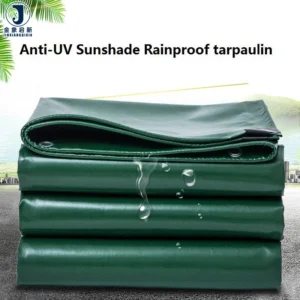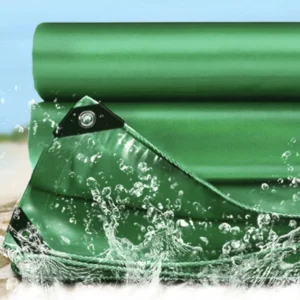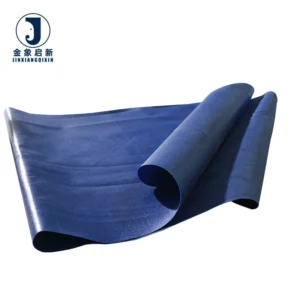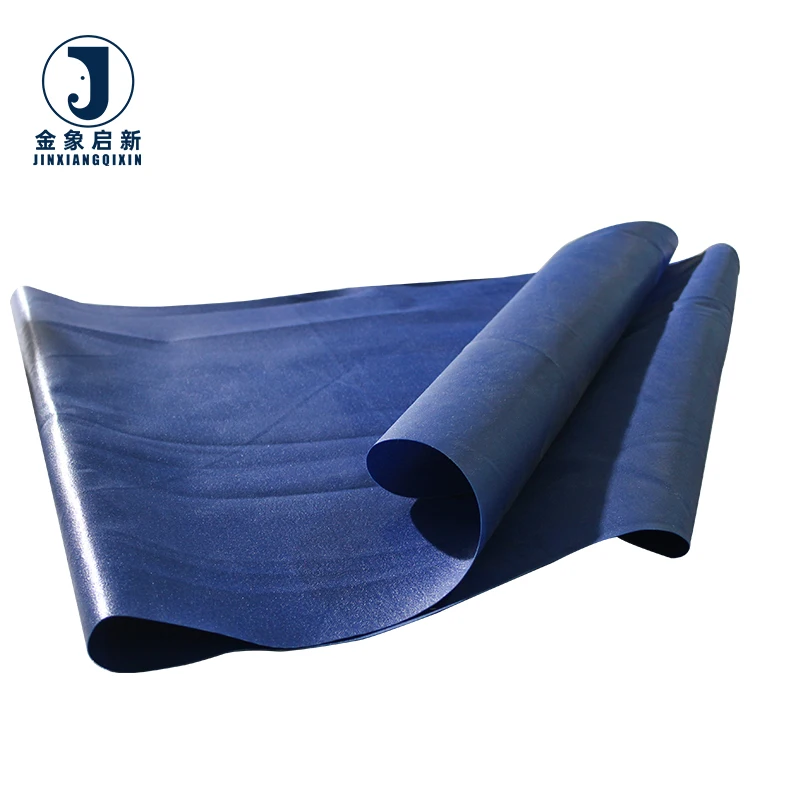
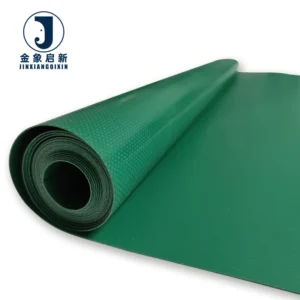
PVC Coated Fabric Tarpaulin Roll, 550g–900 GSM, Waterproof, UV Treatment Available — produced across three dedicated coating lines with full weight-grade coverage and batch-matched colour consistency roll to roll.
- Deep process control over coating weight and adhesion, supporting glossy or matte finish with single or double-side colour on the same line
- 10-person R&D team develops custom width, length, pattern printing and branding samples within days before bulk commitment
Every roll undergoes 100% pre-shipment inspection with verified actual weight and colour reference recorded before dispatch.
Description
Verified Coating Weight — Every roll ships with a material specification sheet stating exact GSM, base fabric denier, and coating type, backed by 100% pre-shipment inspection across three dedicated production lines.
Technical Specifications
| Parameter | Value |
|---|---|
| Product Type | PVC Coated Tarpaulin Roll |
| Material | HDPE weaving with LDPE lamination on both sides |
| Weight (GSM) | 550g / 600g / 650g / 900 GSM (as listed per grade) |
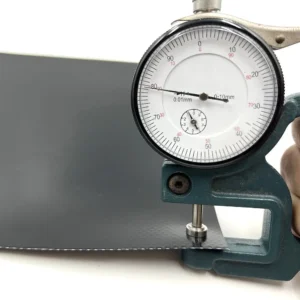
| Total Thickness | 0.2–0.4 mm / 8–16 mil / Custom |
| Color Options | Blue, Blue/Orange, Green, Grey, Black, Clear, Grey/Green, Orange, or custom |
| Coating Material | LDPE lamination |
| Base Fabric | HDPE weaving |
| Waterproof | Yes |
| UV Treatment | Available — confirm the grade required for your market |
| Anti-Mildew | Mildew proof and anti-aging claimed |
| Tear Resistance | Super durability and minimized breakage claimed |
| Standards | ISO, CE (company-level certification) |
Application Suitability
| Application | Exposure & Requirement |
|---|---|
| Truck and trailer load covering | Constant flexing at tie-down points, road abrasion, UV exposure, wind-driven rain ingress |
| Construction site and equipment covers | Debris impact, prolonged sun exposure, repeated folding and unfolding on site |
| Agricultural and aquaculture stock covering | Permanent moisture contact, organic acids, puncture risk from sharp edges |
| Tent, awning and inflatable structure fabric | Tension loading, seam stress, UV and weather cycling, flame-retardant compliance for public venues |
| Pond and reservoir liners | Continuous water immersion, soil chemistry, root penetration |
Why the Quoted GSM Does Not Guarantee Real-World Strength
Coating weight alone does not determine how a tarpaulin performs under load.
Buyers regularly receive PVC tarpaulin roll shipments that meet the stated GSM on paper yet fail prematurely at seams or flex points. A heavy-grade fabric with poor base fabric denier or inconsistent coating adhesion will tear before a lighter but better-engineered alternative. The specification sheet must state not only the total GSM but also the base fabric construction and coating method — otherwise the number on the quotation is only half the story. [NEED_CITE: tensile and tear test methods for coated fabrics per ISO 1421]
Full Catalogue Range for Roll-Based Procurement
Sourcing PVC coated tarpaulin roll stock across multiple GSM grades from a single production facility eliminates batch-to-batch variation that plagues multi-supplier orders. This range covers 550g through 900 GSM, giving distributors and fabricators the ability to consolidate container loads under one specification sheet and one quality protocol. Colour matching is controlled within a single production run, so rolls arriving at your warehouse hold consistent tone when unrolled side by side.
Custom Width, Print and Finish on Dedicated Lines
The 10-person R&D team handles custom width, length, pattern printing, and branding requests with samples developed within days rather than weeks. Glossy or matte finish, single or double-side colour, and treatment options such as UV or flame-retardant grades are all produced on the same coating lines — meaning a custom PVC coated tarpaulin roll order does not require splitting across multiple subcontractors. [NEED_CITE: DIN 4102 fire classification for building materials]
Reading the Specification Sheet Beyond Total GSM
Total GSM combines base fabric weight and coating weight into one number, but two rolls with identical GSM can behave very differently. A higher-denier HDPE base fabric with a thinner LDPE lamination will resist tear propagation better than a low-denier base carrying a thick coating layer. Coating adhesion — the bond between the LDPE lamination and the HDPE weave — determines whether the coating delaminates under flex stress or remains intact through repeated folding. Thickness, listed here from 0.2 to 0.4 mm, correlates with abrasion resistance at contact points such as truck bed edges and trailer corners. Surface finish, whether glossy or matte, influences how well the material accepts printed branding and how easily dirt releases during cleaning cycles. Width and roll length directly affect cutting yield; wider rolls reduce the number of welded seams needed to cover large spans, which matters because weld lines are often the first failure point under tension. Temperature behaviour also varies by formulation — LDPE lamination softens at lower temperatures than PVC plastisol, so the operating environment should inform grade selection.
The Hidden Cost of Specifying on Price Per Kilogram Alone
When procurement prioritises the lowest cost per kilogram, the resulting PVC tarpaulin roll often arrives lighter than the agreed GSM, with thinner coating that delaminates within months of outdoor deployment. Flame-retardant treatment claimed without a supporting test report leads to failed site inspections, forcing contractors to replace entire covers at project start. Colour variation between rolls in the same container becomes visible only after installation, turning a routine delivery into a rework claim. Welded seams that fail before the fabric does indicate that the coating formulation was not matched to the thermal welding parameters used by the fabricator. [NEED_CITE: coating adhesion and peel strength testing for laminated fabrics]
Why Procurement Teams Consolidate Here
Deep process control over coating weight and adhesion is maintained across three full production lines and 36 sets of professional equipment, giving consistent output at volume. The 10-person R&D team develops samples for custom width, colour, and print within days, locking the specification before bulk production begins. Dedicated QA/QC runs at every production stage with 100% inspection before shipment, so each roll is weighed and checked against the material specification sheet prior to packing. ISO and CE certification underpins the documentation package, and the facility’s nearly 30 years of coated fabric focus means process parameters are refined from long production history rather than generic recipes. Roll packing lists and certificates of origin ship with every container, removing customs delays at destination.
Documentation & Verification
- Material specification sheet per order stating GSM, base fabric denier, and coating type
- Test reports for UV and flame-retardant grades supplied where applicable to your market
- Pre-shipment inspection record confirming colour consistency and actual roll weight
- Roll packing list with net weight and dimensions for container loading plans
- Certificate of origin and customs documentation included with every shipment
Fabrication, Handling & Storage
- Heat-seal LDPE lamination at moderate temperature to avoid burning through the HDPE base weave
- Reinforce tie-down eyelet zones with extra lamination patches to distribute load across the HDPE weave
- Store rolls upright on pallets to prevent flat-spot deformation of the 0.2–0.4 mm coating
- Allow cold-stored rolls to reach ambient temperature before unrolling to avoid crease cracking
- Use mild detergent on glossy finish surfaces; avoid solvents that attack the LDPE lamination layer
- Plan cutting layout from full roll width to minimise off-cuts and reduce welded seam count
What to Include With Your Enquiry
Provide the target GSM grade, required roll width, and annual volume so the production team can map your order to available stock widths or schedule a custom run. Specify whether your market requires flame-retardant or UV test documentation, as the applicable standard varies by region. Confirm whether you need plain rolls or printed branding, and whether sample approval is required before bulk production.
Frequently Asked Questions
Q: How is GSM verified before shipment and what documentation comes with each roll?
A: Every roll is weighed during the pre-shipment inspection and compared against the material specification sheet. The inspection record, along with a specification sheet stating GSM, base fabric denier, and coating type, ships with the consignment. This ensures the PVC coated tarpaulin roll you receive matches the grade you ordered.
Q: Which UV and flame-retardant test reports are available for my market?
A: UV and flame-retardant treatments are available in multiple grades. The specific test report provided depends on the grade selected and your regional compliance requirement. Confirm the standard your market demands — such as local building code fire classifications — at enquiry stage so the correct documentation is prepared.
Q: How is colour consistency controlled across multiple rolls in one order?
A: All rolls in a single PVC coated tarpaulin roll order are produced within one batch run under the same dye lot. The pre-shipment inspection includes a side-by-side colour check, and any roll outside tolerance is replaced before packing. A colour reference sample is locked at the approval stage.
Q: What custom width, length, and MOQ options exist for roll stock?
A: Custom widths and lengths are available subject to the production line capability and minimum run requirements. Standard widths ship from stock for faster turnaround. The R&D team develops a sample roll for custom specifications within days, allowing you to verify width, finish, and colour before committing to bulk.
Q: How are rolls packed for container loading and what shipping documents are included?
A: Rolls are packed on pallets with protective wrapping to prevent transit damage and moisture ingress. A roll packing list detailing net weight, dimensions, and roll count accompanies each shipment, along with a certificate of origin and customs support documents to facilitate clearance at destination.
Related products
-
JX Lona de PVC Recubierta/Cubierta para Granja Impermeable Tienda de Tejido de Punto para Cerdo Broiler Oveja Pollo Estilo Sencillo
¥1.40 Add to cart -
Fabricante de Lona de PVC Resistente al Agua de Poliéster de 650gsm de Mejor Calidad
¥1.25 Select options This product has multiple variants. The options may be chosen on the product page -
Venta caliente de lona de camping grande y resistente al agua para uso exterior, lona laminada de PVC de 500gsm.
¥3.20 Add to cart -
Lona plana recubierta de PVC de alta calidad, a prueba de viento y agua, para uso en refugios industriales.
¥0.53 Add to cart