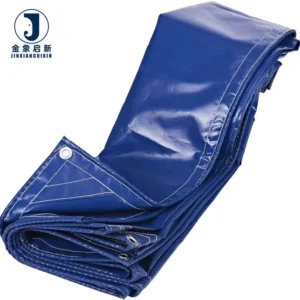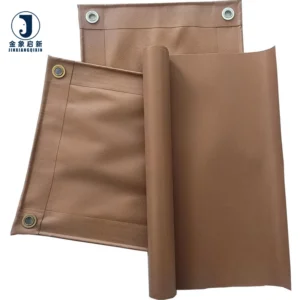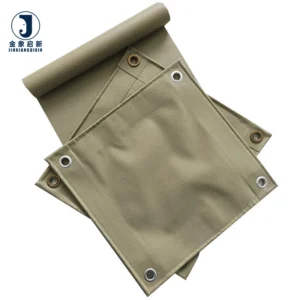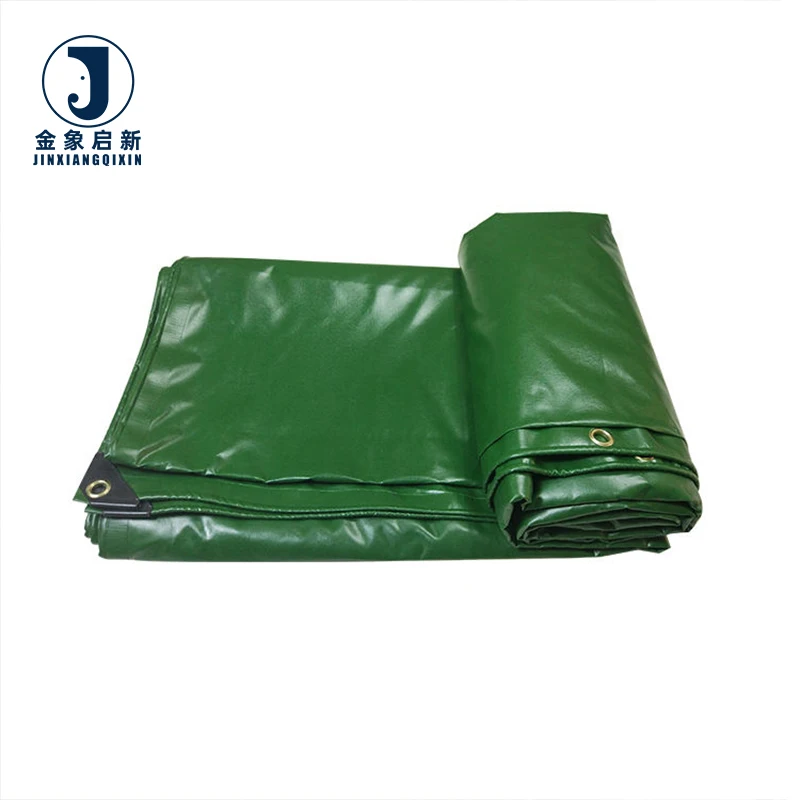
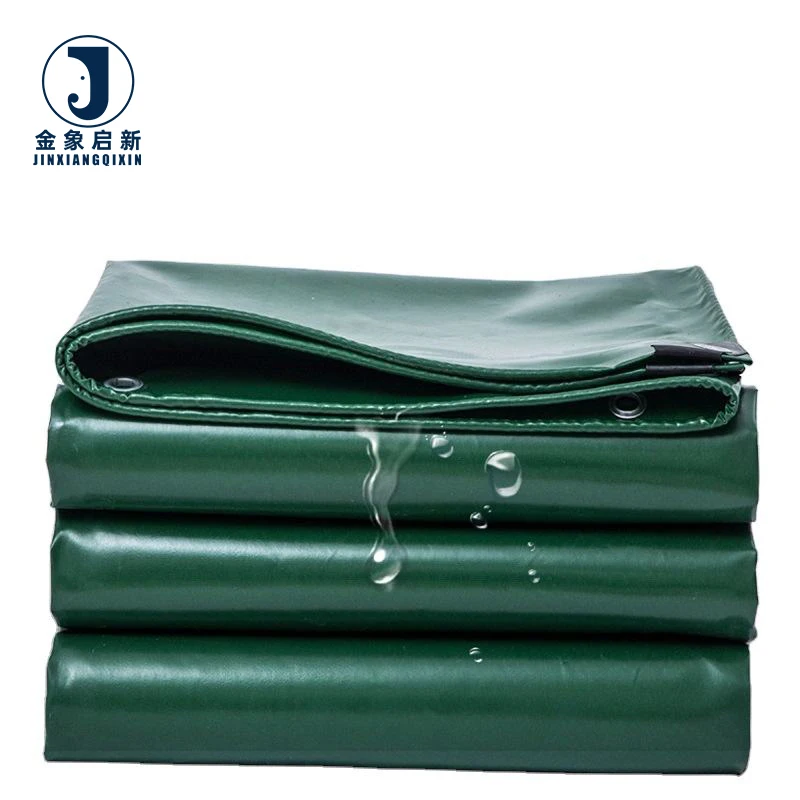
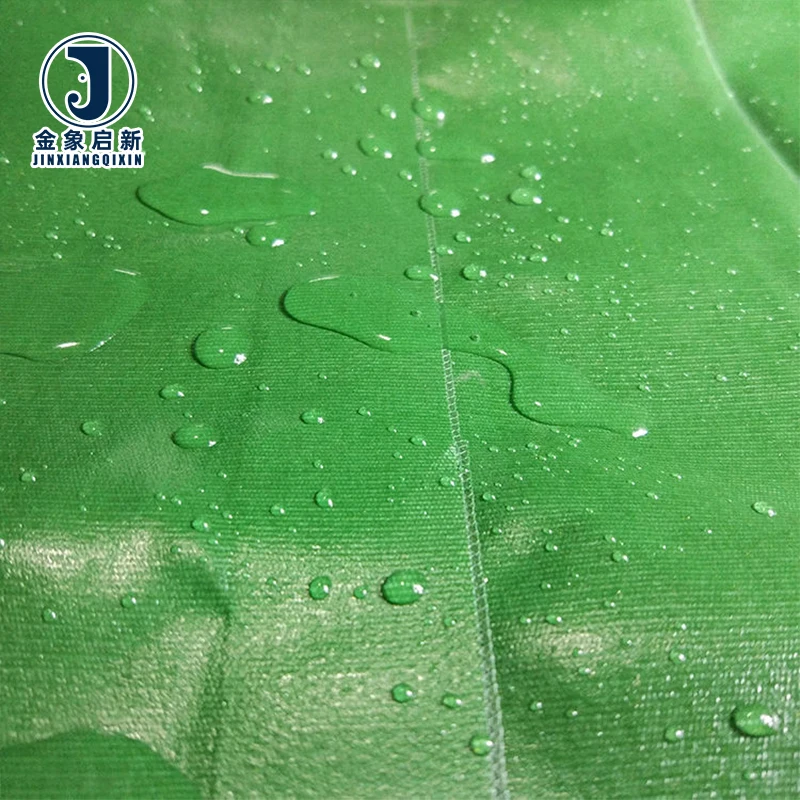
PVC Coated Tarpaulin with 350–750 GSM weight range, 0.32–0.65 mm thickness, and hot-melt laminated coating over high-strength polyester mesh for reliable seam welding.
- UV stable, anti-mildew and anti-static treatment with optional flame retardant grades
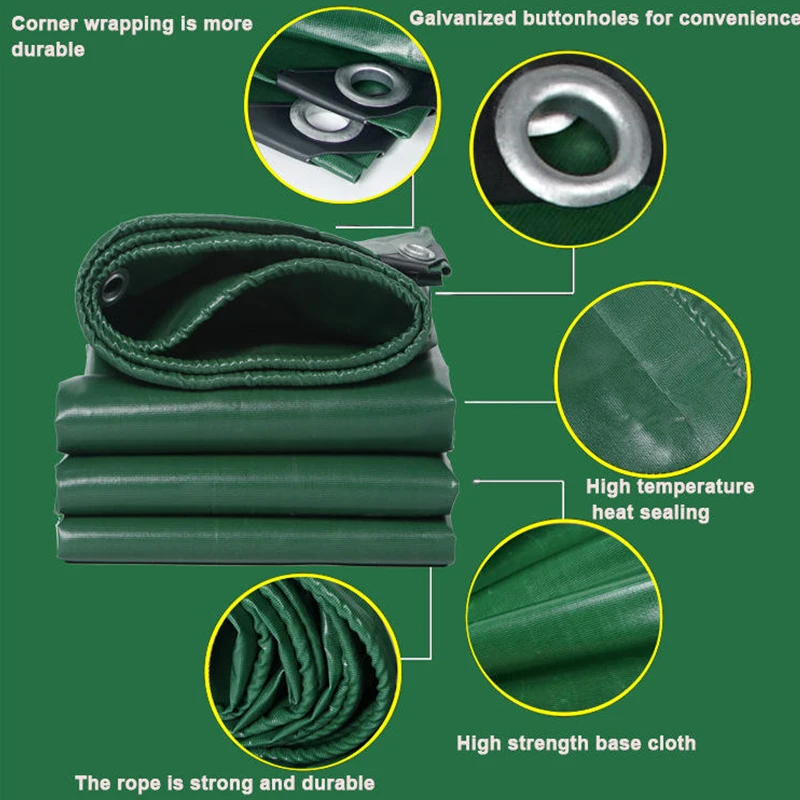
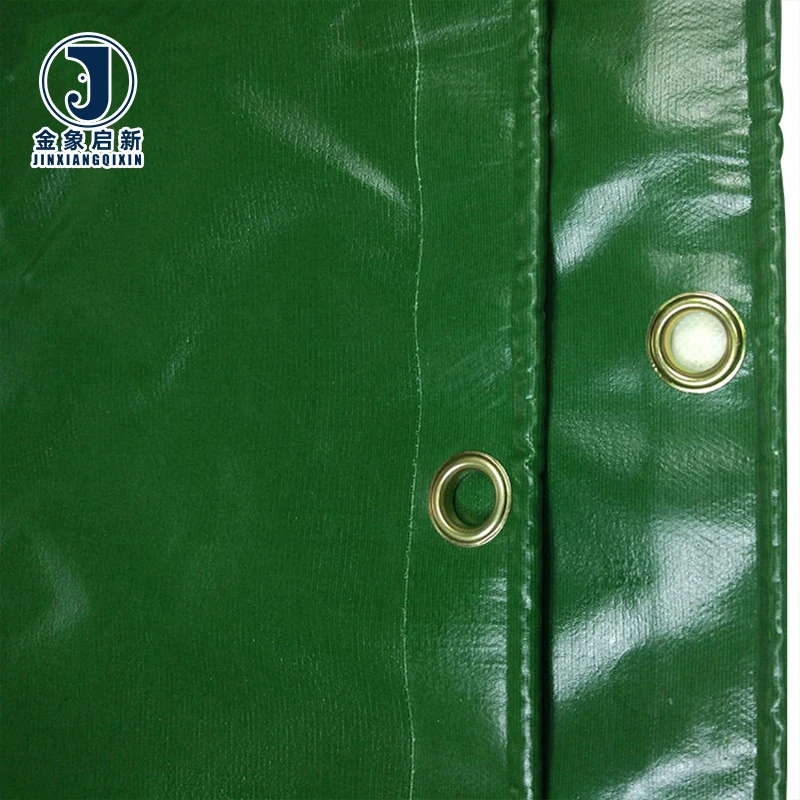
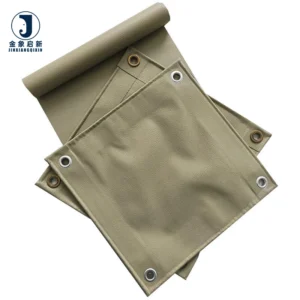
- Roll stock or custom cut sizes with reinforced hems, eyelets and pattern printing
Supported by three full production lines, 100% pre-shipment inspection, and a 10-person R&D team handling material selection and sample development within days.
Description
Precision GSM control and verified coating weight — every roll of this PVC coated tarpaulin undergoes stage-by-stage QA inspection to match the agreed specification before leaving the production line.
Technical Specifications
| Parameter | Value |
|---|---|
| Product Type | PVC Coated Tarpaulin |
| Base Fabric | High-strength polyester mesh fabric |
| Coating Material | PVC |
| Coating Method | Laminated technology & Hot-melt Coating technology |
| Weight (GSM) | 350gsm / 420gsm / 500gsm / 550gsm / 600gsm / 750gsm |
| Total Thickness | 0.32mm / 0.35mm / 0.4mm / 0.45mm / 0.5mm / 0.65mm |
| Roll Width | 2m / 2.1m |
| Roll Length | 75m / 50m |
| Colours Available | Blue, Red, Yellow, Light blue, Grey, Green (Customized) |
| Waterproof | Fully waterproof coated construction |
| Anti-Mildew | Yes |
| Cold Crack Resistance | Yes |
| UV Treatment | Available in UV stabilised grades — confirm test basis for your market |
| Flame Retardant | Available in flame retardant grades — confirm the grade required for your site |
| Anti-Static | Available in anti-static grades — confirm the standard applicable to your project |
| Recyclability | 100% recyclable |
| Certifications | ISO 14001, ISO 45001, CE, RoHS |
Application Suitability
| Application | Exposure & Requirement |
|---|---|
| Emergency rain shelter | Continuous water contact, wind load, rapid deployment and repeated folding |
| Truck and dump truck cover | Road abrasion, UV exposure, constant flexing at tie-down points |
| Outdoor equipment cover | Sun exposure, dust ingress, seasonal temperature swings |
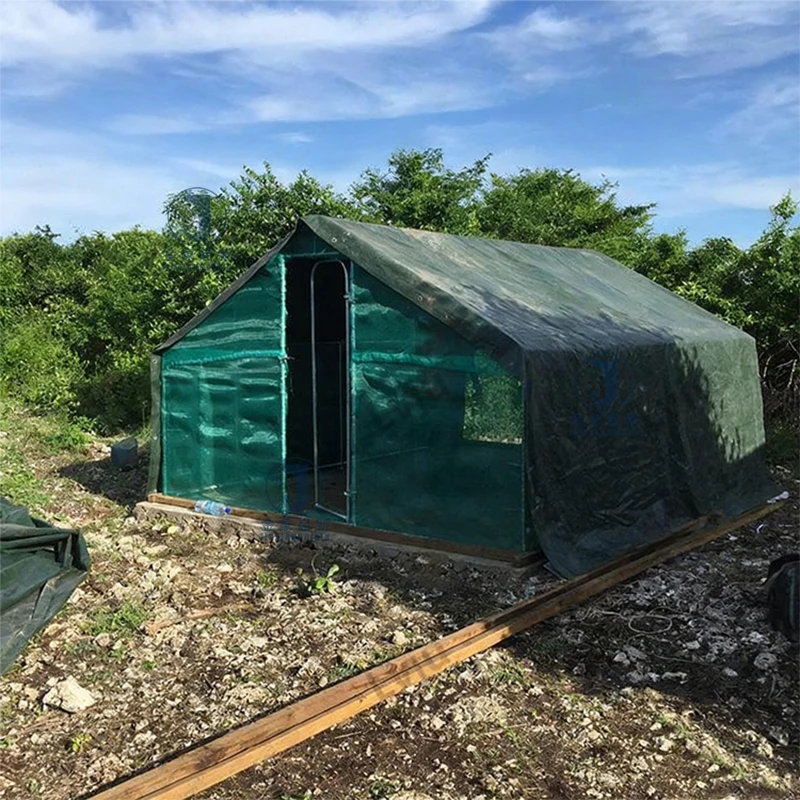
| Tent and awning canopy | Sustained tension, weather cycling, seam welding at structural joints |
| Cargo ship deck cover | Salt-laden moisture, heavy handling, puncture risk from sharp-edged freight |
| Fish tank and pool liner | Permanent water immersion, chemical balance of treated water |
Why the Stated GSM Does Not Guarantee Fabric Strength
Coating weight and base fabric density must be evaluated together, not in isolation.
Many buyers specify a GSM figure on the enquiry and assume the resulting fabric will perform to a given strength level. In practice, a PVC coated tarpaulin can meet the quoted weight while using a lighter base mesh compensated by a thicker coating layer. The thicker coat adds mass but contributes little to tensile or tear resistance. When the material flexes under load or is pulled at welded seams, the failure originates in the base fabric, not the coating [NEED_CITE: tensile and tear test methods for coated fabrics per ISO 1421]. Selecting a grade without reviewing the base fabric denier and weave density leaves the structural performance of the shelter unverified.
Matching GSM and Thickness to Shelter Load Conditions
An emergency rain shelter must resist ponding water, wind uplift, and the abrasion that comes with rapid deployment and repeated folding. For shelters that will be erected and dismantled frequently, a mid-range grade offers the flexibility needed for quick handling while still maintaining adequate puncture resistance. The PVC coated tarpaulin manufacturer custom options allow buyers to align the GSM and thickness to the expected load and handling frequency rather than defaulting to the heaviest available option. Hot-melt and laminated coating processes bond the PVC to the polyester mesh, ensuring that repeated folding does not cause delamination at stress points.
Coating Adhesion and Weld Integrity in the Field
Emergency shelters are often joined on-site using heat welding to create larger covered areas or to seal seams against driven rain. The laminated and hot-melt coating technology used in this fabric supports consistent weld adhesion, meaning the welded joint holds under tension rather than peeling apart at the coating-to-mesh interface. When the shelter is subjected to wind gusts, the load transfers through the welded seam into the base fabric. If the coating adhesion is weak, the seam separates before the fabric itself reaches its tensile limit [NEED_CITE: weld peel strength requirements for PVC coated polyester fabrics]. This PVC coated tarpaulin range is produced with controlled coating temperature and pressure to maintain adhesion across the full roll length.
Reading the Specification Sheet Beyond the Weight Column
The base fabric is a high-strength polyester mesh, and the denier of the yarns combined with the weave density determines how the material resists tear propagation once a puncture occurs. Two fabrics at the same GSM can behave very differently under load if one uses a finer yarn at higher density and the other uses a heavier yarn at lower density. The coating method — laminated versus hot-melt — also affects how the PVC penetrates the mesh structure. Laminated coating produces a uniform film over the mesh, while hot-melt coating*e thickness range from 0.32mm to 0.65mm corresponds to the different GSM grades and should be selected based on the mechanical demands of the shelter frame and expected wind conditions. Cold crack resistance ensures the fabric remains flexible in low temperatures, preventing brittle fracture when the shelter is deployed in cold or wet conditions.
What Happens When the Wrong Grade Reaches the Site
Selecting a lighter GSM than the shelter design requires leads to visible stress whitening at fold lines and tie-down points within the first deployment cycle. Colour variation between rolls sourced from different production batches becomes obvious once multiple panels are joined to form a single canopy — a mismatch that forces on-site rework or panel replacement. When flame retardant or anti-static treatment is assumed rather than verified with documentation, the shelter may fail a site safety inspection, delaying the project and requiring a full material swap [NEED_CITE: site compliance requirements for temporary shelters on construction projects]. Anti-mildew treatment prevents fungal growth on stored fabric, but only if the treatment was applied during coating and not assumed from a general product description.
Why Sourcing This Range Through Jinxiang Works
Three full production lines and 36 sets of professional equipment support bulk roll output with consistent coating weight across the run. The 10-person R&D team handles custom colour matching, width adjustment, and sample development, producing samples within days for buyer approval before full production begins. Every roll undergoes dedicated QA inspection at each production stage, with 100% inspection before shipment against the agreed material specification. Nearly 30 years of focused coated fabric production provides process control over coating adhesion and GSM accuracy that newer operations have not yet developed. Documentation including material specification sheets, test reports where applicable, and pre-shipment inspection records ships with every order.
Documentation & Verification
- Material specification sheet stating exact GSM, base fabric denier, coating method, and colour reference for each roll
- UV stability and flame retardant test reports supplied where the corresponding treatment has been specified
- Pre-shipment inspection record confirming weight verification against quoted GSM before dispatch
- Roll packing list detailing quantity, colour, width, and length per roll for receiving check
- Certificate of origin and customs documentation included for international shipments
Fabrication, Handling & Storage
- Set heat welder temperature and dwell time according to the specific GSM and coating thickness of the roll being joined
- Store rolls horizontally on pallets in a dry area to prevent permanent creasing across the 2m or 2.1m width
- Allow cold-stored rolls to reach ambient temperature before unrolling to avoid cracking the PVC coating surface
- Use mild detergent for cleaning; avoid solvent-based agents that may degrade the laminated or hot-melt coating bond
- Plan cutting layout to minimise off-cuts when working with standard 50m or 75m roll lengths
What to Include in Your Enquiry
Specify the shelter dimensions, expected wind and rain exposure, and whether the structure will be temporary or semi-permanent. Indicate the target GSM and thickness range, along with any colour, flame retardant, or anti-static requirements your site compliance demands. Clarify whether you need rolls at standard width or finished panels with welding and hemming, and state the annual volume to align production scheduling.
Frequently Asked Questions
Q: How is the GSM verified on arrival and what documentation supports the quoted weight?
A: Each roll is weighed and measured during the pre-shipment inspection, and the results are recorded against the stated GSM in the inspection report. The material specification sheet included with the shipment lists the confirmed GSM, base fabric denier, coating type, and thickness for traceability. Buyers can cross-check the figures on arrival using the roll dimensions and net weight.
Q: What flame retardant or anti-static certification is available for site compliance?
A: Flame retardant and anti-static treatments are available upon request. The specific grade and test standard depend on the compliance requirements of the destination market and the site safety specification. Confirm the required standard in your enquiry so the correct treatment is applied and the matching test report is included with the shipment documentation.
Q: How is colour consistency maintained across multiple rolls in a single order?
A: Rolls within the same production batch are manufactured using a single colour formulation run. The QA team checks colour reference against the approved sample at the coating stage and again during pre-shipment inspection. For orders spanning multiple batches, the R&D team maintains the colour formula on file to minimise variation between production runs.
Q: What custom widths, lengths, and colours are available, and what is the minimum order?
A: Standard roll widths are 2m and 2.1m with lengths of 50m or 75m. Custom widths, colours, and lengths can be developed by the in-house R&D team, with samples produced within days for buyer approval. Minimum order quantities vary depending on the level of customisation required — confirm your specification in the enquiry to receive the applicable threshold and lead time.
Q: Do you supply finished cut-to-size panels or only roll stock?
A: Both options are available. Rolls can be shipped as produced for buyer fabrication, or the factory can supply finished panels with welded seams, reinforced hems, and eyelets according to the supplied drawing or dimensional schedule. Finished product sizing is confirmed during the sample approval stage before production begins.
Related products
-
900GSM Heavy Duty PVC Coated Tarpaulin Panama Tarpaulin Curtains for Lorries
¥7.78 Add to cart -
Secure Green PVC Coated Blackout Tarpaulin Truck Tent Cover Anti-Aging Waterproof Folding Design Breathable Woven Technics
¥0.83 Select options This product has multiple variants. The options may be chosen on the product page -
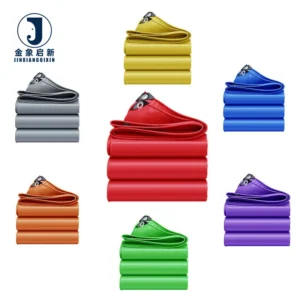
PVC-coated Waterproof Heavy-duty Vinyl Industrial Outdoor Reinforced Tarpaulins for Tents and Truck Covers
¥1.45 Add to cart -
JX PVC Waterproof Fabric High-strength Sheeting for Industrial and Outdoor Coverings
¥1.90 Select options This product has multiple variants. The options may be chosen on the product page