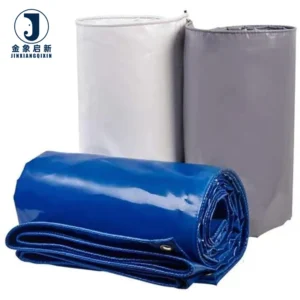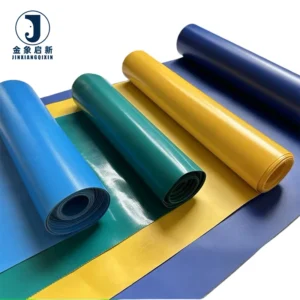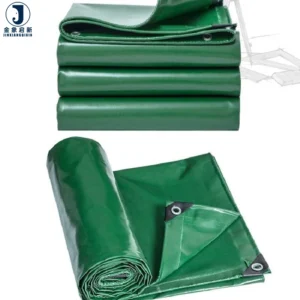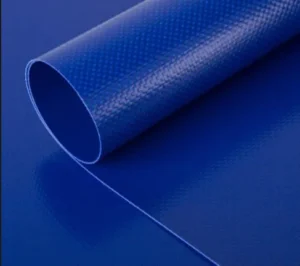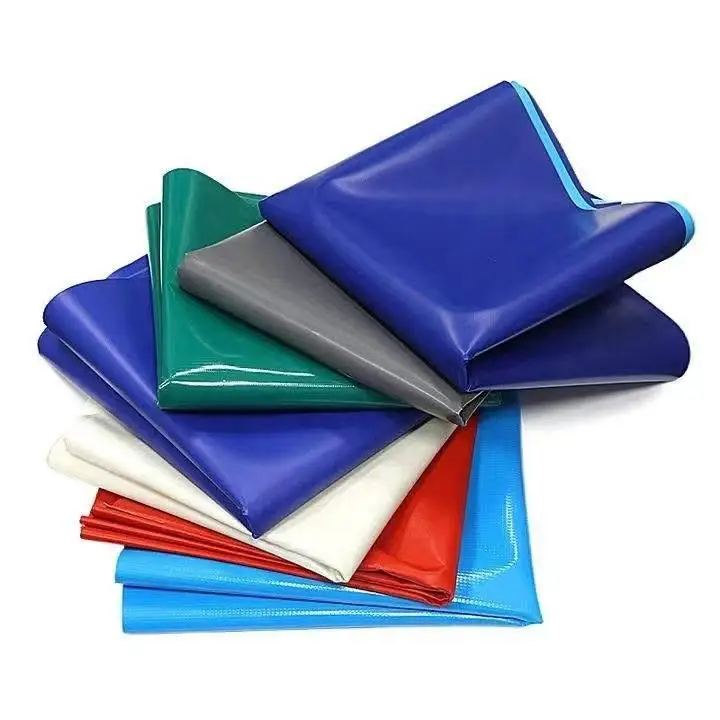
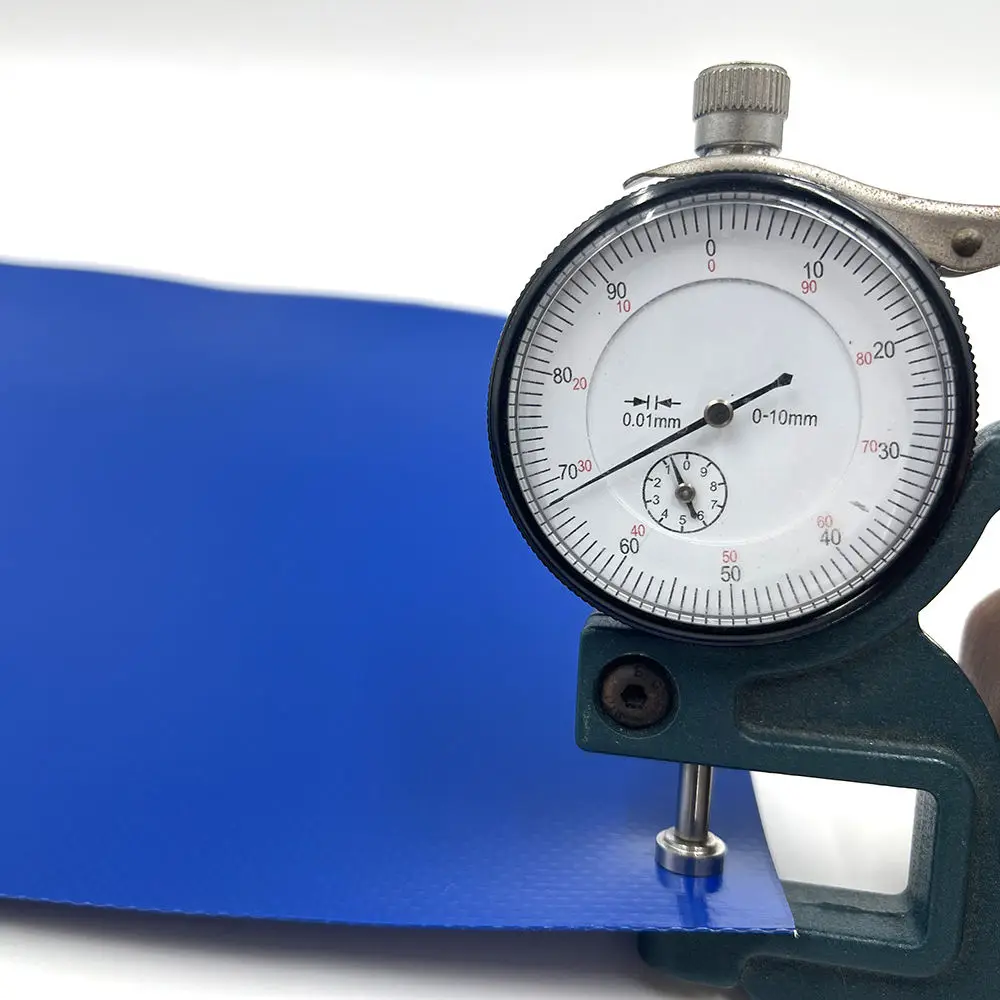
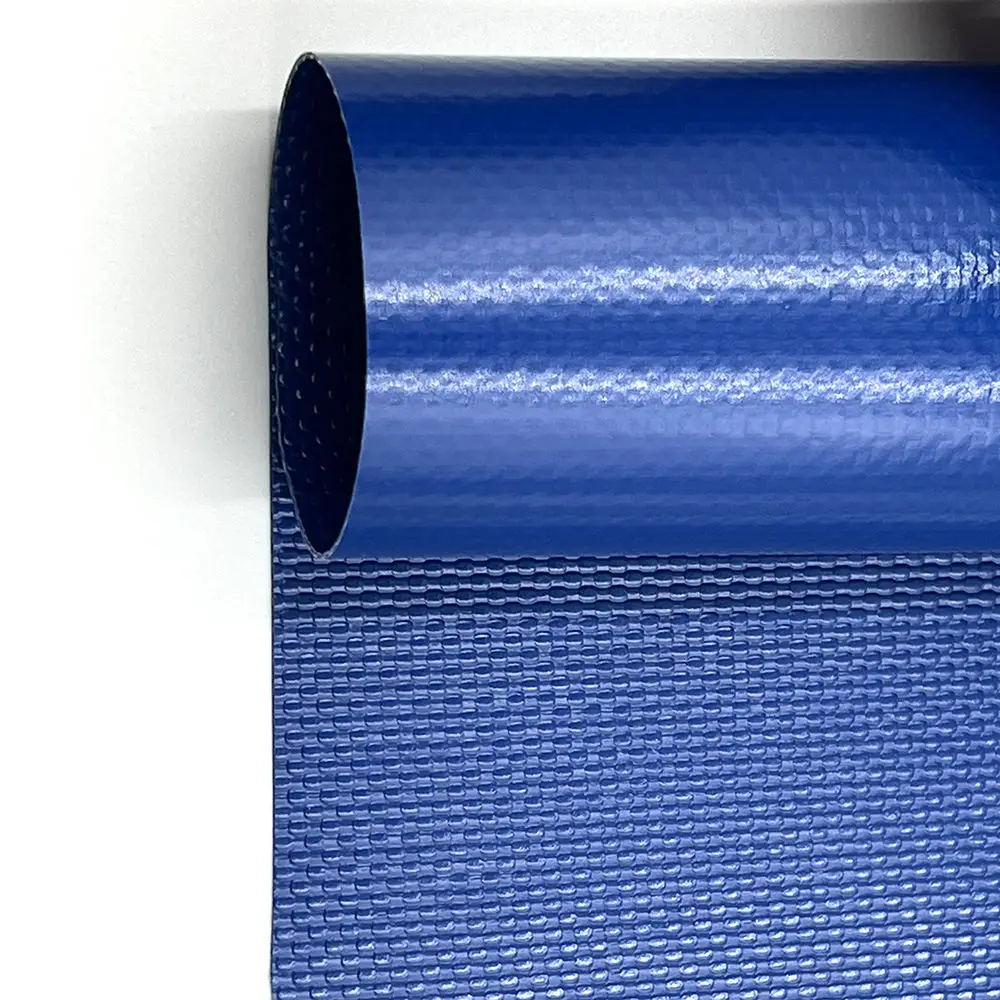
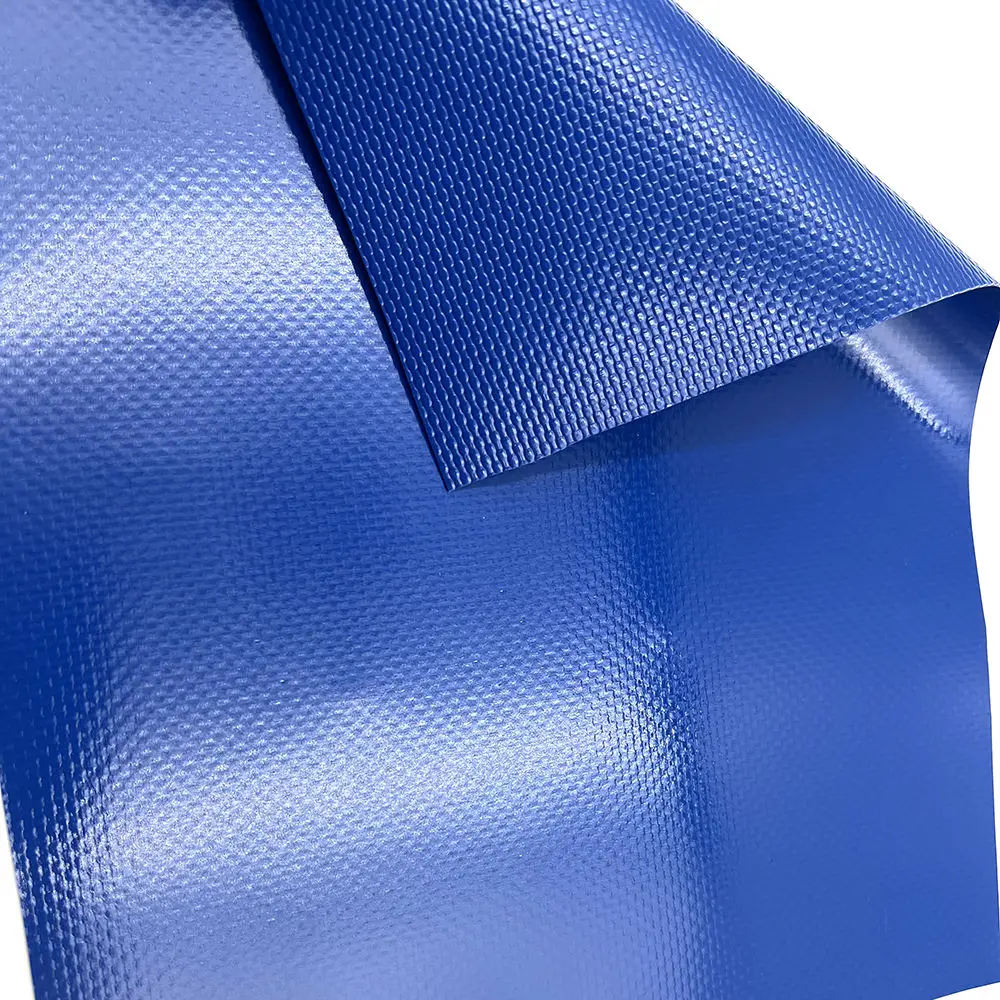
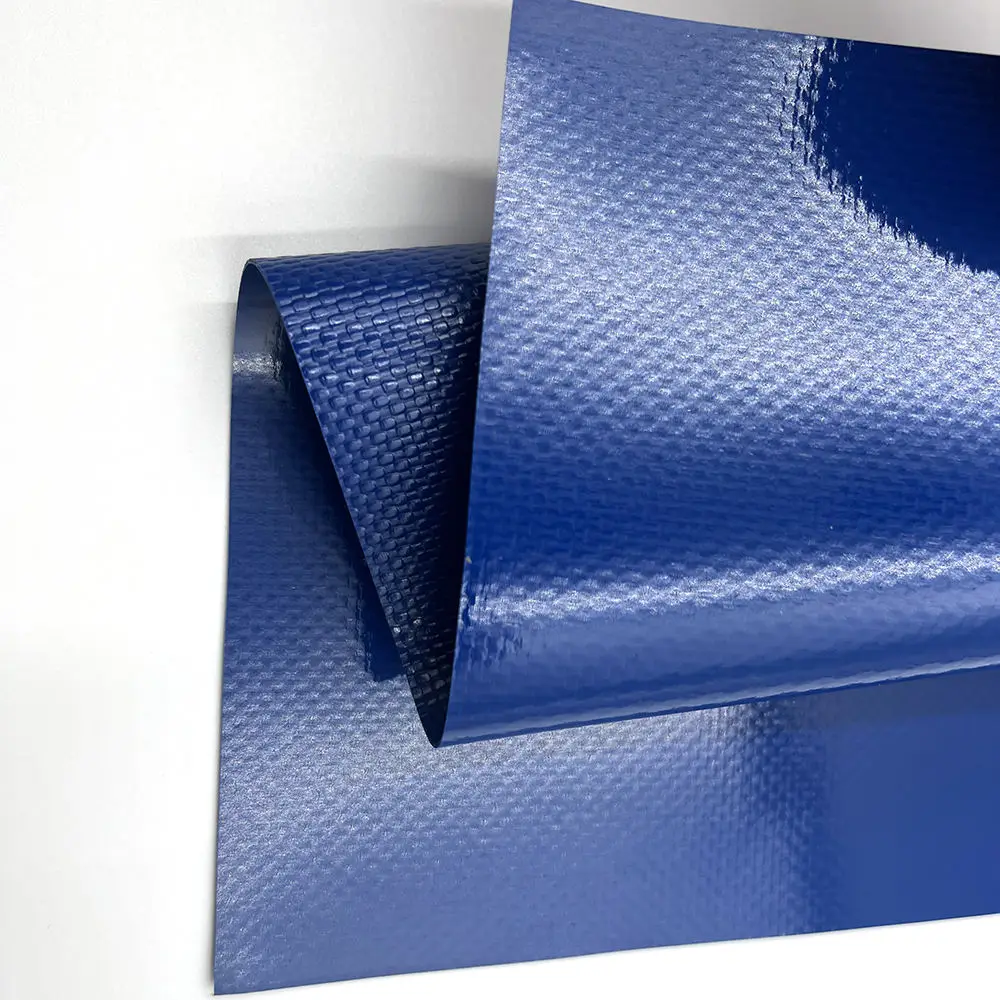
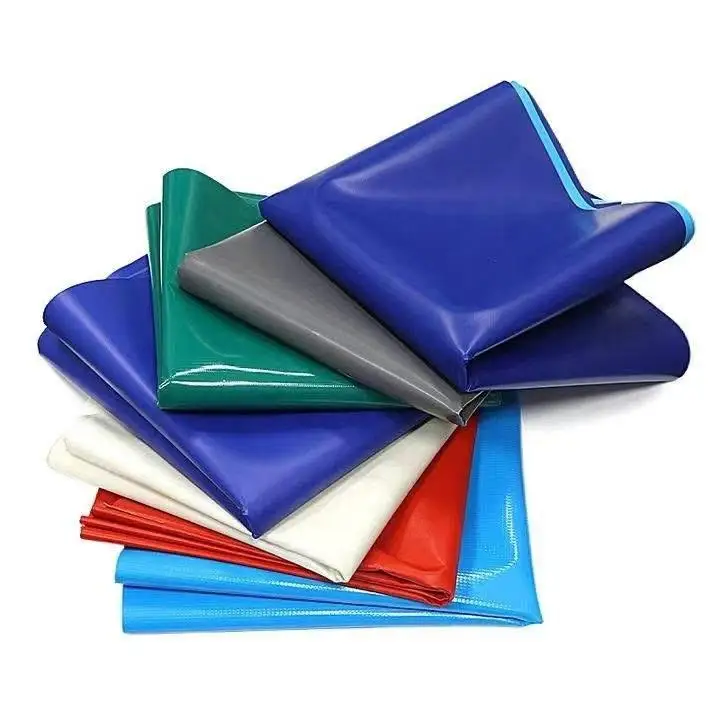
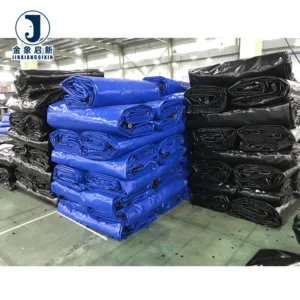
Blue PVC Knife Coated Tarpaulin Roll — UV resistant, fire retardant, highly flexible with HF, hot air and sewing compatibility. Knife coating ensures strong adhesion between PVC layers and base fabric, delivering reliable peel strength for welded truck covers and tensile structures. Roll stock available in custom widths with single or double side colour and gloss or matte finish options. Backed by 100% pre-shipment inspection, dedicated QA at every stage, and samples developed within days for custom requirements.
Description
Deep Coating Process Control — every roll of Blue PVC Knife Coated Tarpaulin we ship carries a verified material specification sheet confirming exact coating weight, base fabric construction and colour reference, so what you specify is what arrives at your workshop.
Technical Specifications
| Parameter | Value |
|---|---|
| Product Type | PVC Coated Tarpaulin Roll |
| Coating Method | Knife coated |
| Coating Material | PVC |
| Colour | Blue |
| Flame Retardant | Available in flame retardant grades — confirm the grade required for your market |
| UV Resistance | UV treated — test basis available on request |
| Anti-Mildew | Antibacterial and mildew proof |
| Waterproof Rating | Fully waterproof coated construction |
| Temperature Range | High temperature and cold resistant |
| Welding Options | HF welding, hot air welding, sewing |
| Surface Property | Self-cleaning surface |
| Chemical Resistance | Oil and stain resistant, acid and alkali resistant |
| Anti-Oxidation | Anti-oxidation and weather resistant |
| Flexibility | Highly flexible, resistant to cracking |
| Assembly State | Roll stock |
Application Suitability
| Application | Exposure & Requirement |
|---|---|
| Tensile and architectural membrane structures | Sustained wind load, solar UV exposure, welded seam integrity across large panel areas |
| Truck and trailer covers | Road abrasion, flex fatigue at tie-down points, rain and spray ingress |
| Airport hangar and stadium roofs | Fire compliance for public structures, thermal expansion across wide spans |
| Portable storage and shade systems | Repeated assembly and disassembly, UV degradation, mildew in humid climates |
Why the Quoted GSM Rarely Matches What the Scale Shows
Verified weight starts at the coating line, not at the loading dock.
Buyers routinely specify a GSM on paper, then find the roll that arrives is lighter than agreed — sometimes by enough to change the tensile class of the fabric. With PVC knife coated tarpaulin, the gap between stated and actual weight is most often caused by inconsistent paste application or base fabric substitution. We run inline weight checks at the coating head and recheck every roll before packing, so the figure on your material spec sheet is the figure the roll delivers. [NEED_CITE:]
Coating Method and Structural Implications
Knife coating forces PVC paste directly into the base fabric under controlled pressure, filling the interstices between yarns and creating a mechanical bond that resists delamination under tension. For a PVC knife coated tarpaulin manufacturer, maintaining consistent blade gap and line speed is what separates uniform adhesion from weak spots that peel after a single season. This process also yields a smoother surface than dip coating, which matters when the finished panel is visible in a tensile or architectural installation.
Welding Compatibility Across Fabrication Methods
Fabricators working with membrane structures and truck covers need the freedom to join panels by the method their design demands. This material supports high-frequency welding for clean, flexible seams on tensile panels, hot air welding for field repairs and complex geometries, and traditional sewing for reinforcement tape and edge hems. The PVC coating formulation is designed to melt and fuse consistently under each method, reducing the trial-and-error that slows production. [NEED_CITE:]
How Coating Weight, Base Fabric and Surface Treatment Interact
The performance of any coated fabric depends on how the coating, the base yarns and the surface finish work together rather than any single number in isolation. Knife coated PVC achieves strong adhesion because the paste penetrates the weave, meaning the base fabric denier and mesh count directly affect peel strength — a denser weave holds more coating and resists separation under flex. The self-cleaning surface treatment reduces dirt adhesion on exterior membranes, while the antibacterial and mildew proof formulation prevents biological staining in humid or marine environments. Acid and alkali resistance extends service life where the fabric contacts treated timber, soil chemistry or industrial airborne residues. Anti-oxidation additives slow the yellowing and embrittlement that UV and thermal cycling cause in untreated PVC, keeping the blue colour stable across consecutive rolls in a large-area installation.
What Happens When Fabricators Cut Corners on Seam Integrity
Welded seams that fail before the fabric itself is the most common field complaint in tensile and truck cover applications. The cause is usually a mismatch between welding temperature and the coating’s melt behaviour, or using a seam construction that concentrates stress at the point the load flexes most. When the coating formulation varies from roll to roll, welders cannot dial in a repeatable setting — and the result is a seam that looks sound on the table but opens under dynamic load. [NEED_CITE:]
What You Actually Get When You Source From Here
Our coating lines run with dedicated QA/QC at every production stage, meaning your Blue PVC Knife Coated Tarpaulin roll is checked for coating weight, colour consistency and surface defects before it leaves the line. Samples for custom width, colour and treatment combinations are developed within days, so you can validate the material against your design before committing to production volume. We supply a pre-shipment inspection record covering every roll in your order, eliminating the guesswork that comes with container loads you cannot verify on arrival. Our R&D team handles material selection and sample development in-house, which means custom GSM, width and treatment requests are managed by the people who control the coating process. [NEED_CITE:]
Documentation & Verification
- Material specification sheet confirming exact GSM, base fabric denier and PVC coating weight per roll
- Test reports for UV resistance and flame retardant grades matched to your shipped batch
- Pre-shipment inspection record with roll-by-roll weight and visual check before dispatch
- ISO and CE certificates plus certificate of origin for customs clearance in your destination market
- Colour reference card tied to the production batch for side-by-side panel matching
Fabrication, Handling & Storage
- HF welding parameters should be confirmed with sample pieces before full-panel production due to coating thickness variation across custom GSM options
- Hot air welding on this knife coated fabric requires consistent nozzle distance to avoid scorching the self-cleaning surface layer
- Sewn seams should use UV-stable thread and reinforced tape at stress points to match the fabric’s own weather resistance
- Store rolls horizontally on a flat pallet to prevent edge creasing that becomes permanent in cold conditions
- Avoid dragging cut panels across abrasive surfaces — the anti-oxidation coating protects against weather but not mechanical scoring
- Clean with neutral pH detergent only; acid or solvent cleaners may compromise the mildew proof surface treatment
Before You Request a Quote
Tell us the end-use application, the environmental exposure the fabric will face and the fire compliance classification your local building code or fleet specification demands. Confirm the roll width that minimises waste on your cutting table and the annual volume so we can plan batch-consistent production runs. If you need custom colour matching to an existing structure or branding printed on the roll surface, send the reference sample early so we can develop and ship a swatch for your approval.
Frequently Asked Questions
Q: What flame retardant grades can you supply for public-structure projects?
A: We offer PVC knife coated tarpaulin in flame retardant grades suited to building and transport applications. The exact grade must match the fire classification required in your market — such as DIN 4102, NFPA 701 or local building code standards. Confirm the classification with your project engineer, and we will supply the corresponding test report matched to the batch you receive.
Q: How do you ensure colour consistency across multiple rolls in one order?
A: Every production batch is mixed from a single colour formulation run, and each roll is visually checked against the batch reference card before packing. For large-area tensile installations where panels sit side by side, we recommend ordering the full project quantity in one batch to eliminate any inter-batch shade variation.
Q: Can I order custom widths to reduce cutting waste on my production line?
A: Yes. Roll width is configurable to suit your cutting table and panel layout. Provide your target width and the quantity per order, and we will confirm the achievable tolerance and minimum run length. Custom widths are produced on the same coating lines as stock sizes with identical QA checks.
Q: What welding method works best for tensile membrane panels?
A: HF welding produces the cleanest and most flexible seam for architectural membrane panels made from this knife coated PVC fabric. Hot air welding is preferred for field repairs and complex three-dimensional joints. We can supply sample pieces so your fabrication team can dial in temperature, pressure and dwell time before cutting production panels.
Q: What documentation ships with each roll order?
A: Each dispatch includes a material specification sheet stating GSM and coating details, a pre-shipment inspection record, and the applicable ISO and CE certificates. Where flame retardant or UV test reports are specified, they are matched to your production batch and included in the documentation pack along with the certificate of origin.
Related products
-
New Design Waterproof Coated Heavy Duty Pool Cover Cargo Covers Tarp for Truck
¥1.15 Add to cart -
Stock PVC Tarpaulin Fabric Rolls 500D*500D 18*17 Hot Selling Colors in Stock China Manufacture Wholesale Fabrics Best Price
¥1.26 Select options This product has multiple variants. The options may be chosen on the product page -
Wholesale 650 Gsm Waterproof Outdoor Tarp Roll Pvc Coated Industrial Tarpaulin Roll for Tent
¥1.26 Select options This product has multiple variants. The options may be chosen on the product page -
Wholesale Pricehigh Quality Outdoor Waterproof Tarp Customized Pvc Tarpaulin Roll
¥1.20 Add to cart