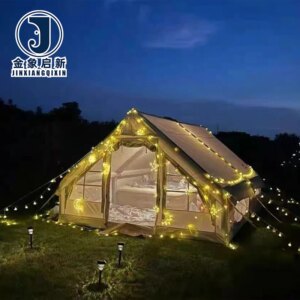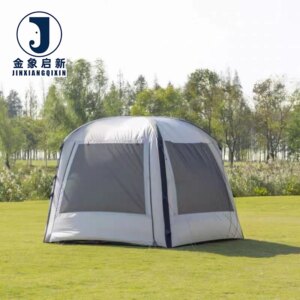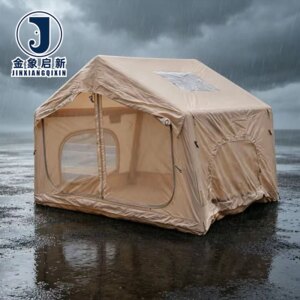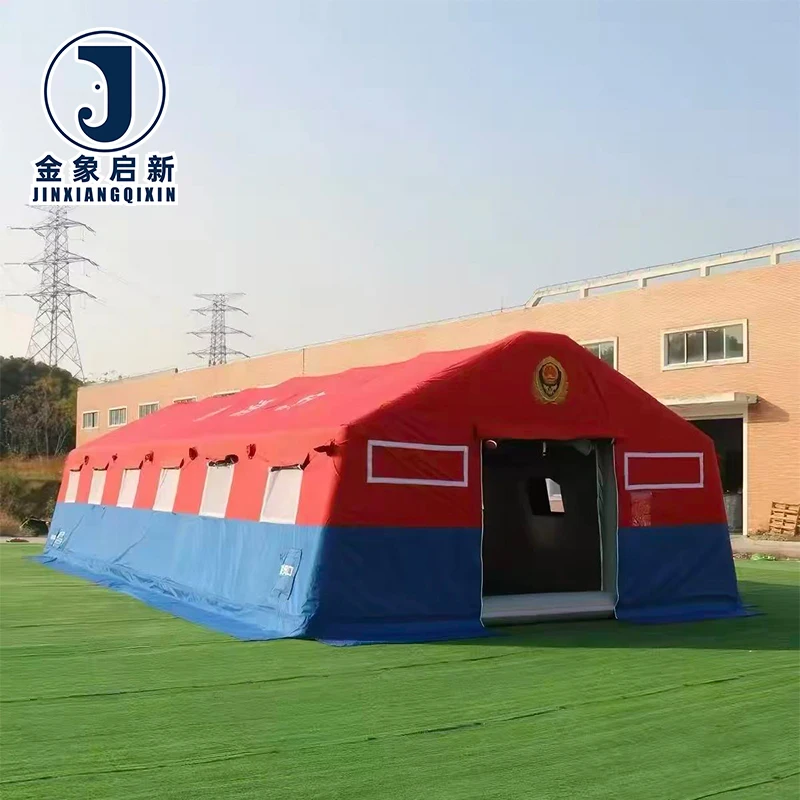
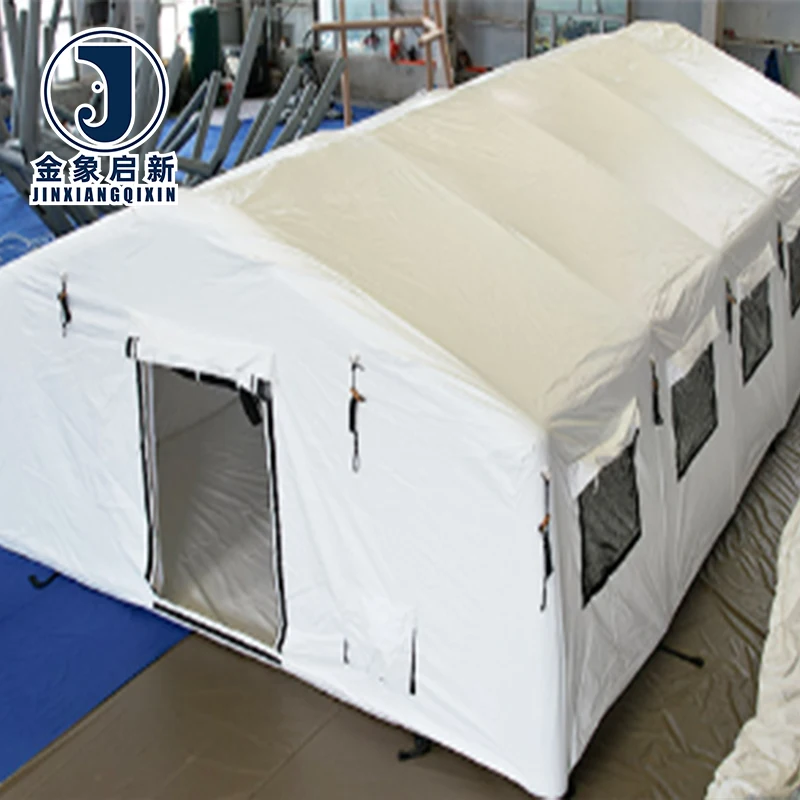
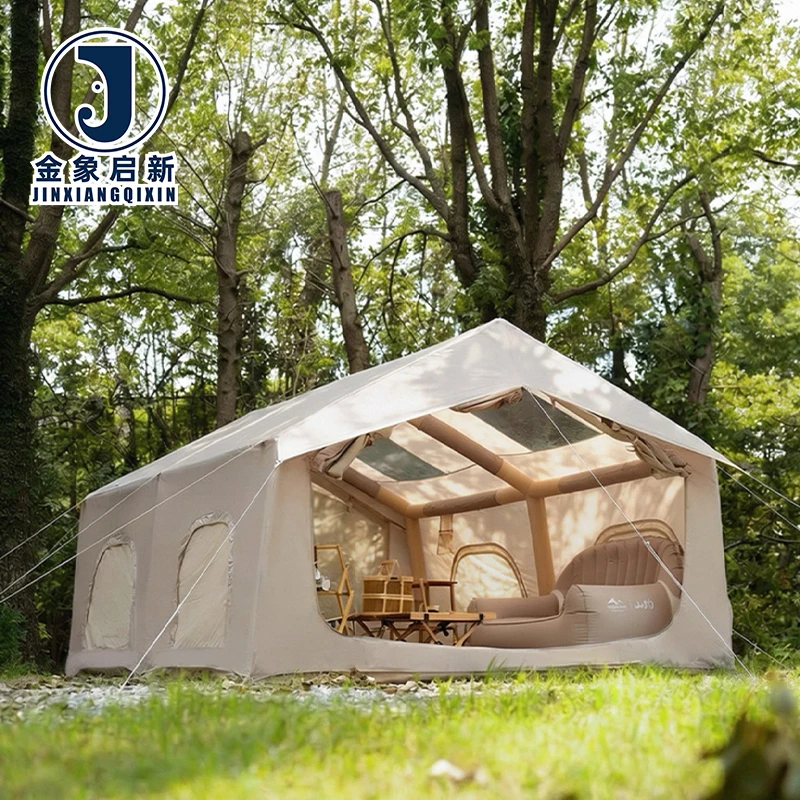
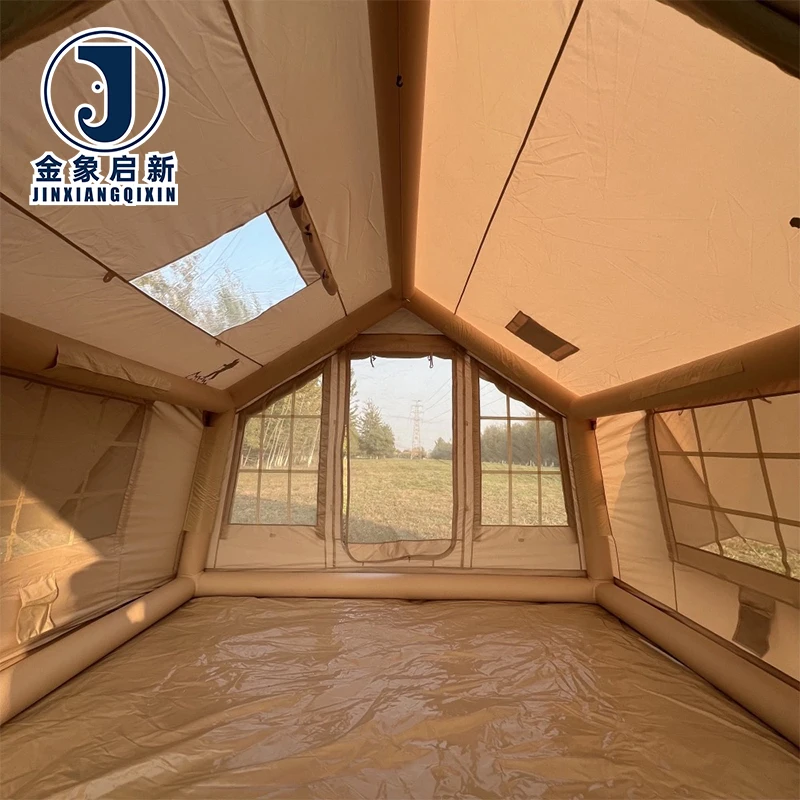
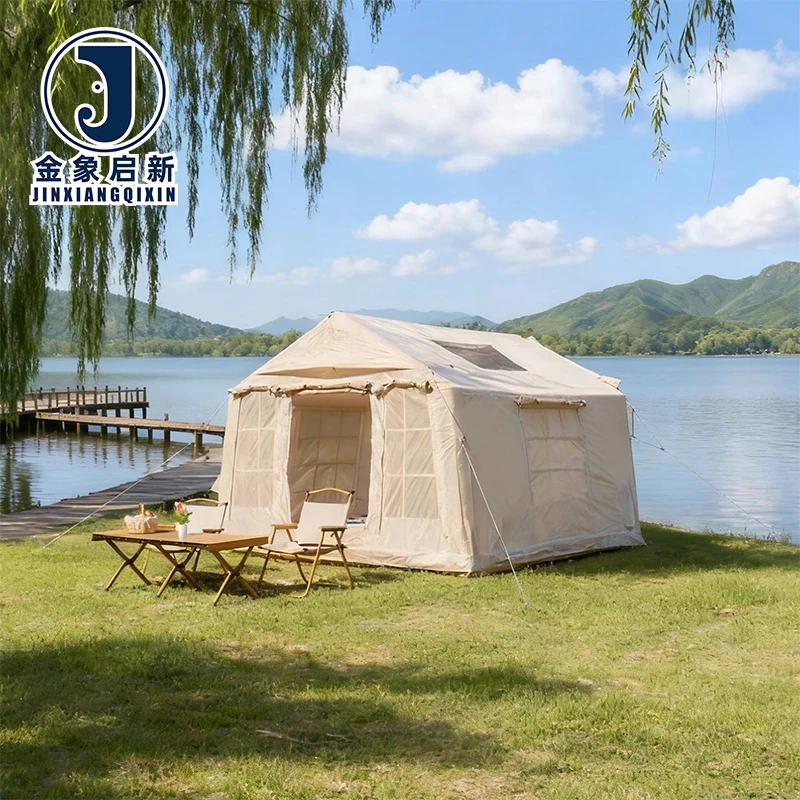
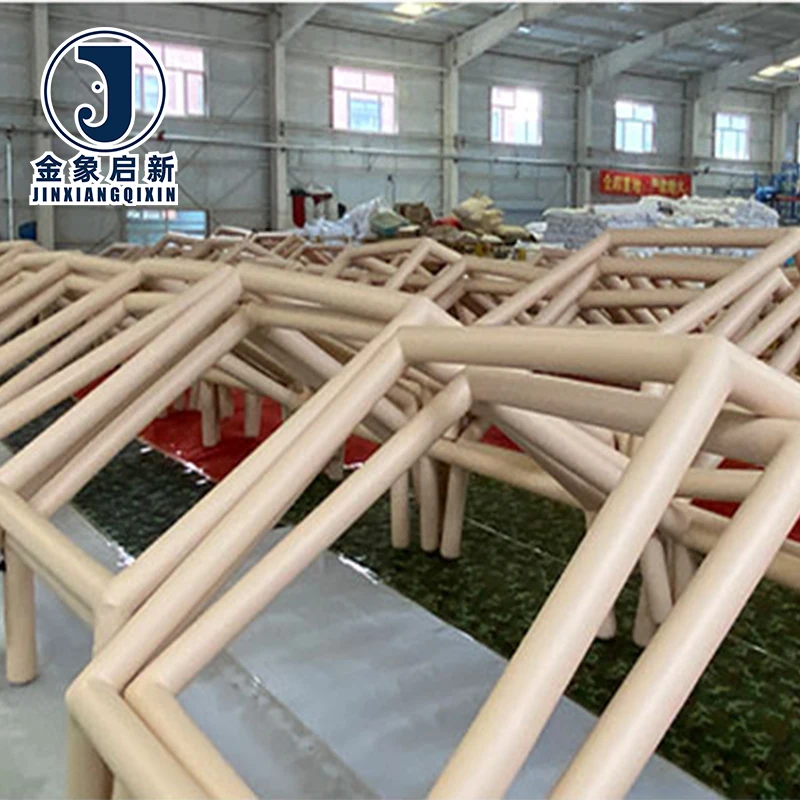
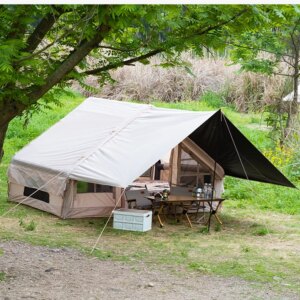
Inflatable PVC Camping Tent, 3000mm+ Waterproof, Quick Automatic Opening — single-layer, four-season extended design built for rapid deployment across industrial and emergency sites.
- Core PVC tarpaulin fabric with 3000mm+ waterproof rating supports disaster relief, construction shelters, and outdoor logistical storage
- Quick automatic opening mechanism enables fast setup where time-sensitive deployment is critical
- OEM & ODM customization covering sizing, pattern printing, color, and treatment options
Backed by a 10-person R&D team developing custom samples within days, 100% pre-shipment inspection across 3 full production lines, and complete documentation packages with material specs and test reports.
Description
Batch-Matched Coating Control — every roll of inflatable PVC tent fabric is coated on dedicated lines with in-process GSM verification, preventing panel mismatch across multi-unit orders.
Technical Specifications
| Parameter | Value |
|---|---|
| Product Type | PVC Tent |
| Core Material | PVC Tarpaulin |
| Waterproof Rating | 3000mm+ |
| Construction | Single Layer |
| Design | Four-Season, Extended Type |
| Opening Mechanism | Quick Automatic Opening |
| Flame Retardant | Available in flame retardant grades — confirm the grade required for your market |
| UV Treatment | Available with UV treatment — test basis to be confirmed per order |
| Customization Service | OEM & ODM (sample customization, pattern printing) |
| Certifications | CE, ISO9001, ISO14001, ISO45001 |
Application Suitability
| Application | Exposure & Requirement |
|---|---|
| Emergency response shelters | Rapid deployment, repeated inflation cycles, all-weather exposure |
| Construction site temporary shelters | Abrasion from equipment movement, dust, prolonged UV and rain contact |
| Disaster relief field hospitals | Hygiene-sensitive environment, quick setup, wind and rain resistance |
| Outdoor industrial events | High visibility branding, crowd capacity, multi-day weather endurance |
| Logistical storage facilities | Equipment protection from moisture, temperature fluctuation, puncture risk |
Why Inflatable Tent Fabric Demands More Than a Weight Spec
A quoted GSM means nothing if the coating adhesion fails at the weld line under inflation pressure.
Inflatable PVC tent structures place continuous stress on every seam. The internal air pressure pushes outward constantly, meaning the welded joints carry load 24 hours a day during use. When the base fabric and coating are not matched correctly, the weld zone becomes the weakest link — not the panel field. Buyers who specify only on weight frequently discover that their inflatable PVC tent manufacturer supplied material that tears at the seam before the fabric itself shows any sign of fatigue [NEED_CITE: tensile and tear test methods for coated fabrics per ISO 1421]. The real specification conversation should cover coating adhesion strength, base fabric denier, and weld compatibility as a system.
Coated Fabric Engineered for Inflatable Structures
The single-layer PVC tarpaulin construction used in these inflatable tent panels balances transport weight against the structural demands of continuous inflation. A lighter panel reduces the overall packed size and allows faster deployment on site, while the PVC coating formulation maintains flexibility across the temperature swings typical of four-season outdoor use. The quick automatic opening mechanism relies on the fabric holding a consistent air seal, which requires uniform coating thickness and controlled surface finish across every roll in a production batch.
Full Custom Range From Sample to Container
As an inflatable PVC tent manufacturer operating three full production lines, the facility handles everything from small sample runs for design validation through to multi-container bulk orders. Pattern printing and branding are completed in-house by a 10-person R&D team, meaning the colour match between your printed logo and the base fabric is controlled under one roof rather than outsourced to a third-party printer [NEED_CITE: coating adhesion and print durability testing standards]. OEM and ODM projects begin with sample development within days, allowing buyers to confirm material hand, colour, and weld response before authorising full production.
How Coating Weight and Base Fabric Interact in Inflatable Applications
The waterproof rating of 3000mm+ is achieved through the combination of PVC coating thickness and base fabric density, not coating alone. A heavier coating applied over a loosely woven base fabric may show strong initial waterproof test results but will crack along the weave intersections when the inflatable structure flexes under wind load. Conversely, a tightly woven high-denier base fabric with insufficient coating weight will allow water penetration at the yarn crossover points. The single-layer construction specified here requires both elements to be balanced — the coating must fully encapsulate the weave without adding excessive stiffness that would hinder the rapid inflation cycle. Buyers evaluating material should request the base fabric denier and weave count alongside the total coated GSM, because the ratio between coating weight and base fabric weight determines long-term waterproof durability [NEED_CITE: relationship between coating adhesion strength and base fabric construction].
The Cost of Ignoring Batch Consistency in Inflatable Tent Orders
When colour varies between rolls within the same inflatable tent order, the mismatch becomes immediately visible once panels are heat-welded side by side and the structure is inflated on site. For event shelters and branded installations, this means the entire structure may need to be re-seamed or rejected at the point where it matters most — in front of the end client. Beyond colour, inconsistent coating weight between batches causes weld parameters that worked on the sample to produce weak seams on production panels, leading to air leakage or seam separation under inflation pressure [NEED_CITE: coating weight variation and weld integrity in PVC tarpaulin production]. These failures rarely appear during factory inspection because the material passes visual checks; they surface only when the structure is pressurised in real conditions.
Why Procurement Teams Source Inflatable Fabric Here
Dedicated QA/QC at every production stage means coating weight is measured and recorded during the run, not only sampled after completion. The 36 sets of professional processing equipment across three production lines allow simultaneous coating, printing, and slitting operations so that custom colour and print orders do not sit behind standard stock in the queue. A 10-person R&D team develops samples within days, including material formulation adjustments for specific inflation pressure requirements or climate conditions. Every shipment undergoes 100% pre-shipment inspection with results traceable by order number, giving buyers documented assurance that the material received matches the approved sample. Nearly 30 years of continuous coated fabric production informs process decisions that newer operations simply have not encountered.
Documentation & Verification
- Material specification sheet stating GSM, base fabric denier, coating type, and colour reference per roll
- Test reports for waterproof rating with batch-specific data linked to order number
- ISO and CE certificates covering quality management and product compliance
- Pre-shipment inspection record with coating weight measurements and visual assessment
- Roll packing list detailing net weight, roll dimensions, and colour batch assignment
- Flame retardant or UV treatment test documentation where applicable to your specification
Fabrication, Handling & Storage
- Heat welding parameters must be calibrated to the specific PVC coating formulation — test weld on offcuts before joining structural panels
- Store rolls upright on pallets in shaded, ventilated areas to prevent flat spots and coating transfer between layers
- Use compatible PVC repair patches and solvent cement matched to the coating chemistry for field seam repairs
- Avoid folding single-layer PVC tarpaulin panels at sharp angles during packing to prevent white stress marks on the coating surface
- When slitting rolls to panel width, allow for weld seam allowance based on the inflation pressure rating of the final structure
- Clean with mild detergent and soft brush only — abrasive pads will damage the coating surface and reduce waterproof performance
What We Need to Quote Your Inflatable Tent Project
Provide the inflation pressure range your structure operates under, the climate conditions including lowest and highest expected temperatures, and any flame retardant or UV treatment grades your end market requires. Specify whether you need rolls at standard width for your own fabrication, or cut panels with heat-welded seams to your pattern. If branding or pattern printing is part of the project, share artwork files and Pantone references so that samples can be developed for your approval before production.
Frequently Asked Questions
Q: How is GSM verified on arrival and what documentation supports weight claims?
A: Each roll ships with a coating weight measurement recorded during production and verified at pre-shipment inspection. The material specification sheet included in your documentation package states the target GSM alongside the measured result for your batch, traceable by order number. Buyers can cross-check by cutting a measured sample on receipt and comparing against the stated value.
Q: What flame retardant grades are available for inflatable tent fabric?
A: Flame retardant treatment is available in multiple grades depending on your market requirements and the applicable local fire code. Because standards vary significantly between regions, we ask buyers to specify the test standard their project must meet — such as DIN 4102 B1, NFPA 701, or M2 — so that the correct formulation is applied and documented with a test report.
Q: How is batch-to-batch colour consistency controlled across a multi-roll order?
A: All rolls within a single order are coated from the same prepared colour batch and assigned matching batch codes on the packing list. Pre-shipment inspection includes visual comparison of panels from the first and last roll under standardised lighting. This ensures that when your fabricator welds panels side by side, no colour shift is visible across the finished inflatable structure.
Q: What custom sizing and printing options are available for OEM and ODM projects?
A: The in-house R&D team handles custom widths, panel cutting to your pattern, and pattern printing including logos and full-colour branding. Samples are developed within days for your review and approval. Once the sample is signed off, production follows the same specification across the full order quantity with no change in material formulation or print registration.
Q: What certifications and test reports are included with each shipment?
A: Every order ships with CE and ISO certificates, a pre-shipment inspection record, and batch-specific test data for waterproof rating. Where flame retardant or UV treatment has been specified, the corresponding test report is included in the documentation package. A complete roll packing list and certificate of origin are also provided for customs clearance.
Related products
-
Luxury Inflatable Tent for Glamping Outdoor Waterproof Air Tent with Pump
Read more -
Inflatable Tent Family Size Four-Season Quick Automatic Opening Waterproof 2-8 Person Factory Direct Sale
Read more -
Tente événementielle gonflable quatre saisons extérieure en PVC étanche ouverture automatique rapide pour 6 à 8 personnes logo personnalisé
Read more -
Tente de camping gonflable PVC imperméable résistante aux UV quatre saisons ouverture automatique rapide personnalisable 2-3 personnes
Read more