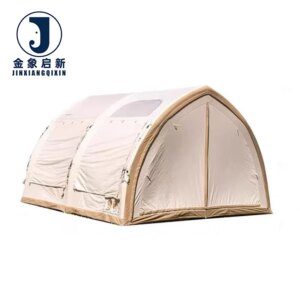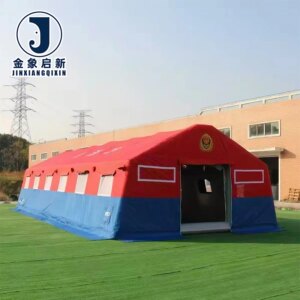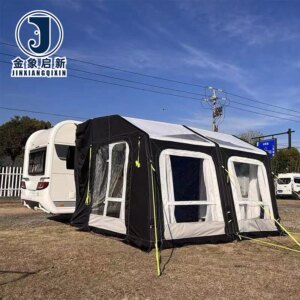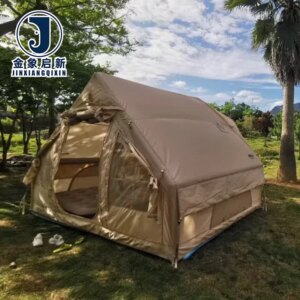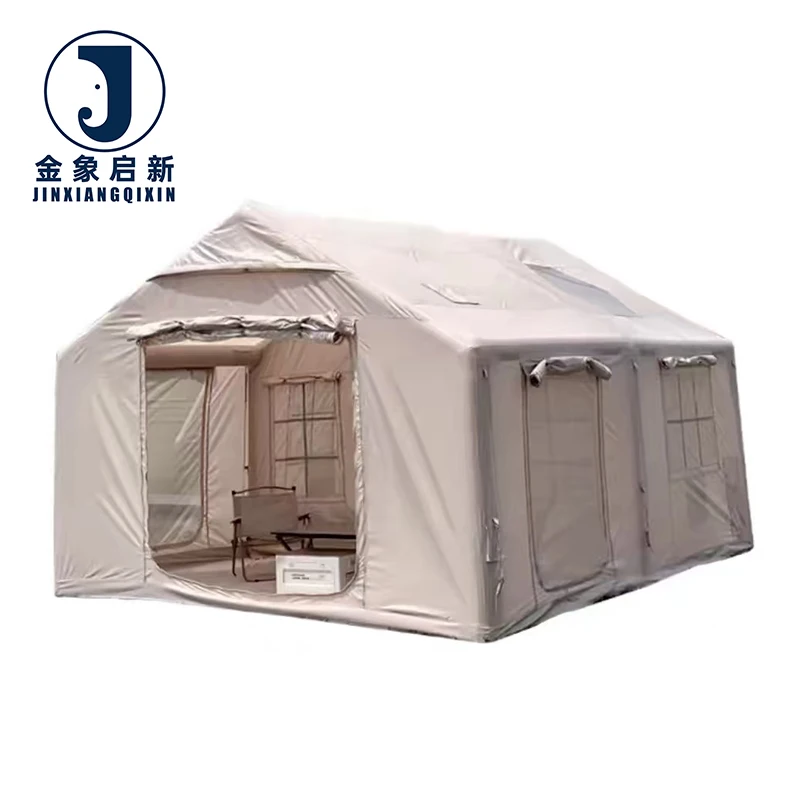
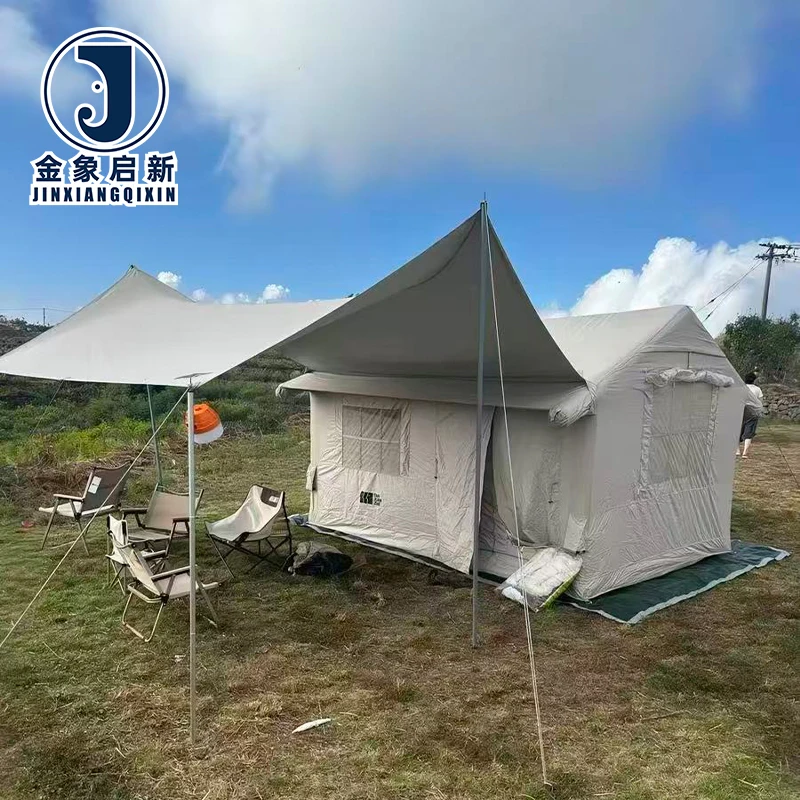
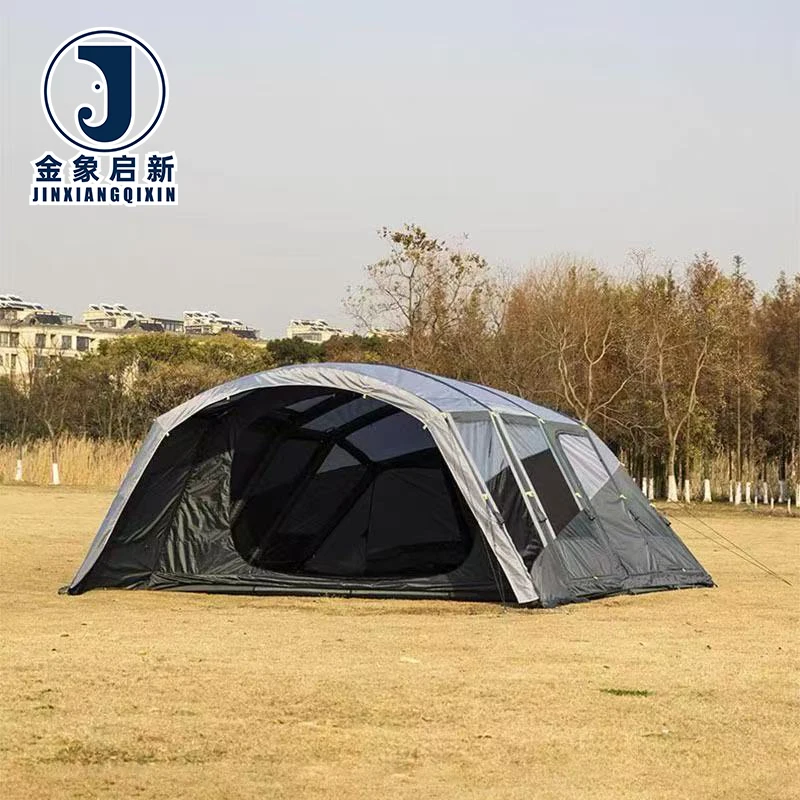
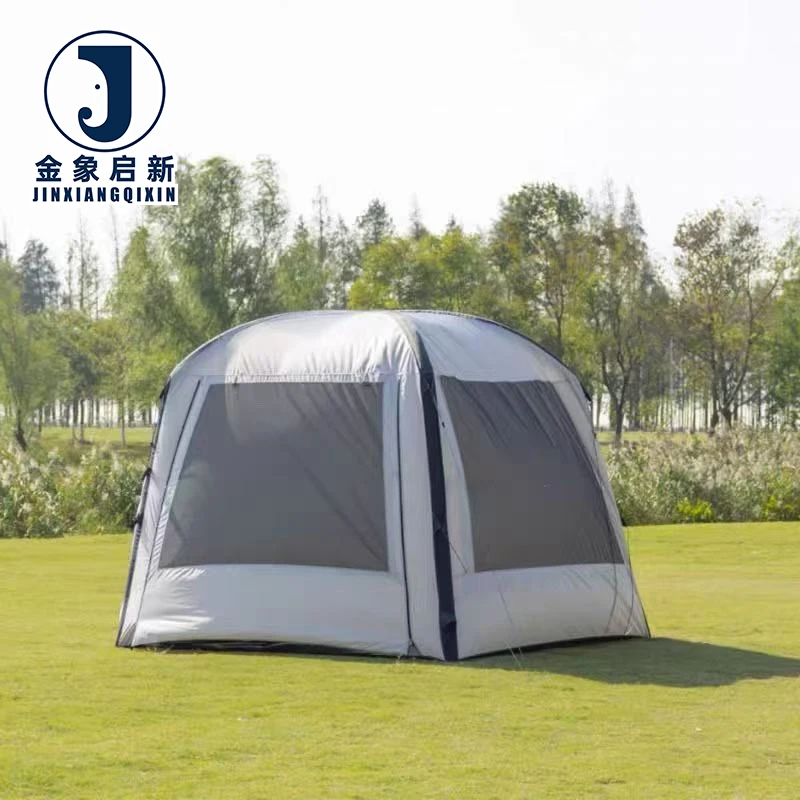
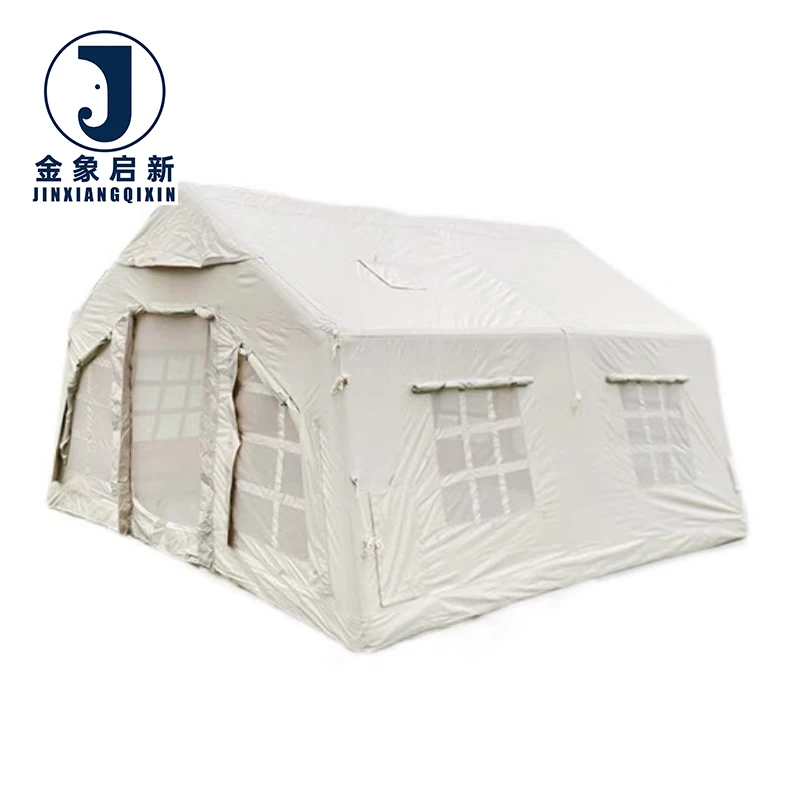
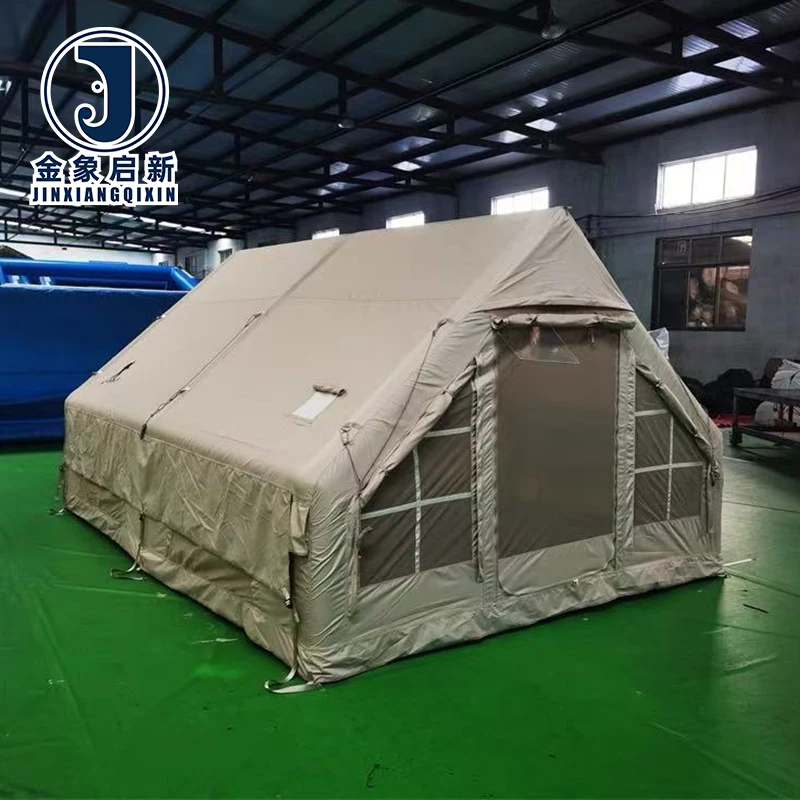
Automatic Inflatable PVC Tent, 3-5 Person, 0.4mm–1.2mm Thickness — single-layer construction with UV protection, waterproof rating ≥3000mmH₂O, and tear resistance 200N/5cm for rapid-deployment shelters.
- PVC knife-coated fabric ensures strong coating adhesion and reliable heat-welded seams at flex points.
- Full OEM & ODM capability covers custom dimensions, valve types, color options, and pattern printing, with 24-hour inflation hold test before every shipment.
Description
Material Mastery in Coated Fabric — Nearly three decades of PVC coating expertise channeled into a complete inflatable tent range, from base fabric weave to finished unit inflation testing.
Technical Specifications
| Parameter | Value |
|---|---|
| Product Type | Inflatable Tent |
| Core Material | PVC Tarpaulin (knife-coated fabric) |
| Structure | Automatic Inflatable, Single Layer Construction |
| Capacity | 3–5 Person |
| Material Thickness Range | 0.4mm to 1.2mm (customizable) |
| Waterproof Rating | ≥3000mmH₂O (source value — verify against manufacturer catalog) |
| Tear Resistance | 200N/5cm (test standard not stated in source) |
| Flame Retardancy | UL94 V-2 (source value — verify against manufacturer catalog) |
| Temperature Range | -20°C to 60°C |
| Dimensional Tolerance | ±2cm |
| UV Protection | Available — confirm the test basis required for your market |
| Customization | OEM & ODM: dimensions, valve types, color, pattern printing |
| Quality Control | 16 checkpoints, 24-hour inflation test before shipment |
| Certifications | ISO9001, ISO14001, ISO45001, CE, RoHS |
Application Suitability
| Application | Exposure & Requirement |
|---|---|
| Disaster relief shelters | Rapid deployment, multi-climate exposure, repeated inflation cycles |
| Temporary site command posts | Wind loading, UV exposure, frequent assembly and teardown |
| Equipment storage enclosures | Prolonged weather exposure, puncture resistance, waterproof seal |
| Emergency response centers | Fire safety compliance, structural integrity under continuous inflation |
| Logistics coordination hubs | High-traffic floor abrasion, temperature variation, branding visibility |
When Inflatable Shelters Fail at the Seam
Structural integrity depends more on weld consistency than on the fabric alone.
Buyers who have sourced inflatable PVC tents from multiple converters often discover that seam failure occurs well before the fabric reaches its tensile limit. The stress concentrates precisely where the air chamber flexes most during inflation and wind loading. A custom inflatable tent that passes initial inspection can still develop micro-leaks along poorly heat-welded joints after repeated deployment cycles [NEED_CITE: tensile and seam peel test methods for coated fabrics per ISO 1421]. Sourcing from an Inflatable PVC Tent manufacturer with controlled in-process quality checkpoints reduces this risk substantially.
Engineering the Air Chamber for Structural Reliability
The performance of any inflatable shelter depends on maintaining consistent internal pressure across all air beams. Our PVC knife-coated fabric provides the necessary dimensional stability so that the air chamber holds its engineered profile under load. Material thickness is adjustable from 0.4mm to 1.2mm, allowing the specification to match deployment conditions — lighter gauge for rapid-deploy emergency units, heavier gauge for semi-permanent installations where wind and snow loads are a factor.
Controlling the Heat-Weld Process at Every Joint
Heat welding of PVC tarpaulin requires precise temperature, pressure, and dwell time to achieve full molecular bonding between coating layers. Our 36 sets of professional processing equipment include dedicated hot-air and high-frequency welding stations calibrated for the specific thickness and coating weight of each production run. Every custom inflatable tent undergoes a 24-hour continuous inflation test before dispatch, verifying that no micro-leak escapes the production floor [NEED_CITE: DIN 53354 test methods for coated fabric weld integrity].
Understanding Thickness, Coating Weight, and Temperature Boundaries
Material thickness in PVC tarpaulin directly influences both puncture resistance and packed weight. The 0.4mm to 1.2mm range available on this Inflatable PVC Tent manufacturer’s line covers applications from lightweight emergency shelters to heavy-duty semi-permanent structures. Knife-coated construction bonds the PVC layer to the polyester base fabric mechanically and chemically, producing higher peel strength than laminated alternatives — critical for inflatable structures where delamination at the weld line is a common failure mode. The stated operating temperature range of -20°C to 60°C reflects the flexibility limits of plasticized PVC; below the lower bound, the material stiffens and becomes susceptible to cracking during inflation, while sustained exposure above the upper bound can accelerate plasticizer migration.
The Hidden Cost of Undocumented Material Claims
A buyer who receives an inflatable shelter without batch-specific test reports faces an impossible choice: deploy the unit and risk field failure, or delay the project while sending samples to an independent lab. Flame retardancy claimed without a verifiable grade can result in failed site inspections and rejected deliveries. Coating weight that arrives lighter than the quotation specified compromises both waterproof performance and tear strength, often discovered only after the tent is erected and pressurized [NEED_CITE: industry data on field failures attributed to coating weight discrepancies]. These costs compound when an entire batch must be replaced under urgent project timelines.
Why Procurement Teams Source Inflatable Structures Here
Three full production lines operate simultaneously, separating fabric coating, cutting and welding, and final assembly to prevent cross-contamination between stages. The 10-person R&D team develops custom dimensional drawings and valve configurations before production begins, so engineering review happens at the sample stage rather than during bulk manufacturing. Every Inflatable PVC Tent manufacturer order passes through 16 defined quality checkpoints — from incoming raw material inspection through final inflation hold — rather than relying on end-of-line sampling alone. Batch-specific test reports accompany each shipment, providing the documentation chain that project compliance officers and customs authorities require. OEM and ODM customization extends to material selection, printed branding, and valve type, managed within a single facility rather than outsourced across multiple converters.
Documentation & Verification
- Material specification sheet stating thickness, base fabric type, and coating weight for the ordered batch
- Test report for waterproof rating and tear resistance with each production batch
- UL94 V-2 flame retardancy verification documentation where specified
- RoHS compliance certificate for PVC components in the delivered units
- ISO9001, ISO14001, ISO45001, and CE certificates for project compliance filing
- Pre-shipment inspection record with 24-hour inflation test results per unit
Fabrication, Handling & Storage
- Heat-weld parameters must match the specific material thickness between 0.4mm and 1.2mm to ensure full coating fusion
- Store inflated units fully dry to prevent mildew formation on the PVC tarpaulin surface
- Avoid folding at the same crease line repeatedly to prevent coating crack initiation
- Use PVC-compatible cleaners only; solvent-based products degrade the plasticizer in the coating
- Transport in temperatures above -20°C to prevent cold-cracking during handling and unrolling
Preparing Your Specification for Quotation
Provide the intended deployment scenario and climate conditions so we can recommend the appropriate material thickness and valve configuration within the inflatable PVC tent range. Specify any fire safety classification your market requires, along with dimensional drawings if your application demands non-standard sizing. Indicate whether you need finished units with branded printing or prefer to receive cut and welded panels for final assembly at your facility.
Frequently Asked Questions
Q: What customization parameters are available for inflatable tent orders?
A: We customize material thickness from 0.4mm to 1.2mm, overall dimensions, valve types, and color or pattern printing. OEM and ODM configurations are developed with our R&D team before production. Dimensional tolerance is held to ±2cm on finished units, and samples are available for approval before bulk commitment.
Q: Can you provide test reports for flame retardancy and waterproof performance?
A: Yes. Each batch ships with test documentation covering waterproof rating, tear resistance, and UL94 V-2 flame retardancy where applicable. If your market requires a different fire classification, confirm the specific standard during the inquiry stage so we can verify material compliance before production begins.
Q: What is the lead time for custom-sized or custom-printed inflatable tents?
A: Standard production lead time is typically multi-week after sample approval. Custom dimensions, printed branding, or non-standard valve configurations require additional time for R&D development and sample confirmation. We provide a detailed timeline at the quotation stage based on your specific configuration.
Q: Do you supply the PVC tarpaulin fabric separately for self-fabrication?
A: Yes. Buyers who fabricate their own inflatable structures can order PVC knife-coated fabric by the roll with the same material specifications, thickness options, and batch-specific test reports. This is available through our roll stock program with bulk pricing tiers.
Q: What documentation accompanies each shipment for compliance purposes?
A: Every shipment includes a material specification sheet, batch-specific test reports, RoHS compliance for PVC components, ISO and CE certificates, a pre-shipment inspection record with inflation test results, packing list, and certificate of origin. Additional documentation can be arranged based on your import market requirements.
Related products
-
High Quality Four-Season Inflatable Tent for Camping Durable PVC Material All-Weather Resistance Quick Automatic Opening
Read more -
Tente de camping gonflable PVC imperméable résistante aux UV quatre saisons ouverture automatique rapide personnalisable 2-3 personnes
Read more -
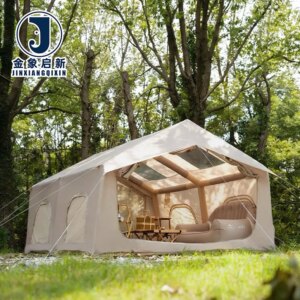
Camping Tent Inflatable UV Resistant Customizable Four-season Waterproof PVC Eco-Friendly Windproof Foldable Quick Automatic
Read more -
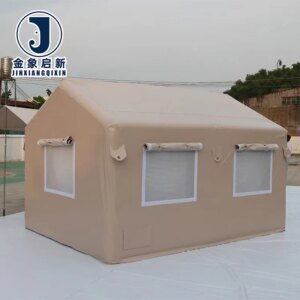
Inflatable Camping Tent PVC Waterproof Four-Season Outdoor Air Tent with Quick Automatic Opening for 3-4 Person
Read more