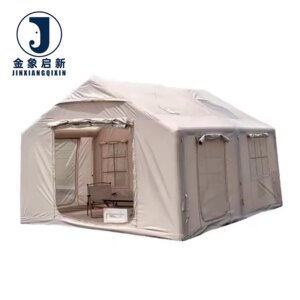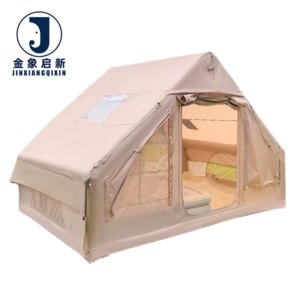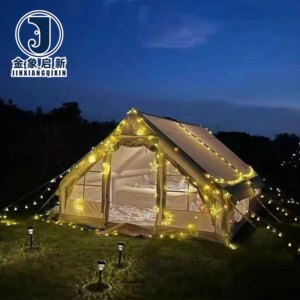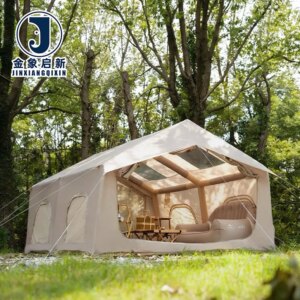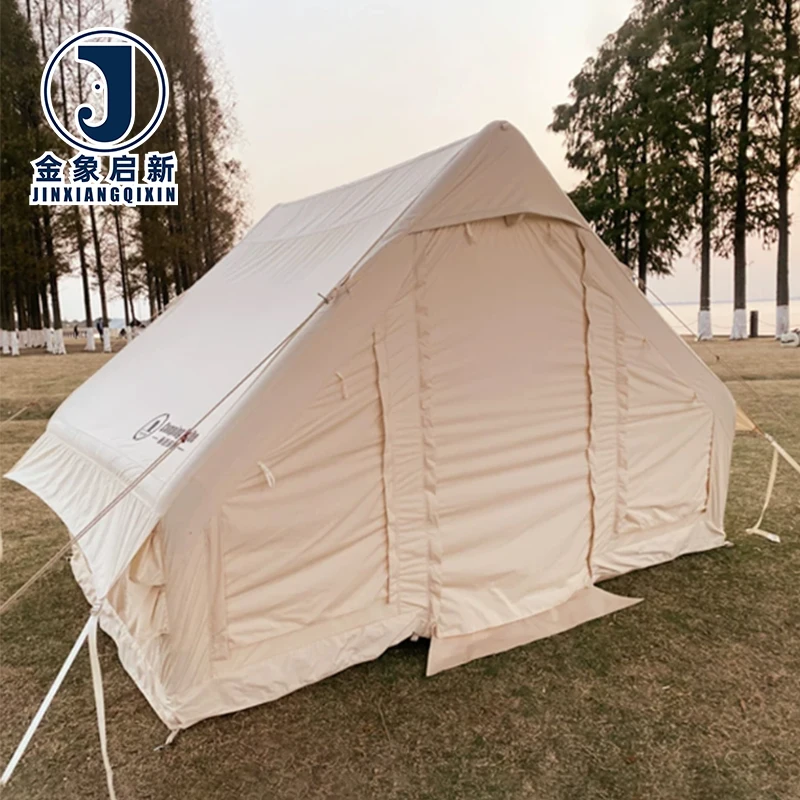
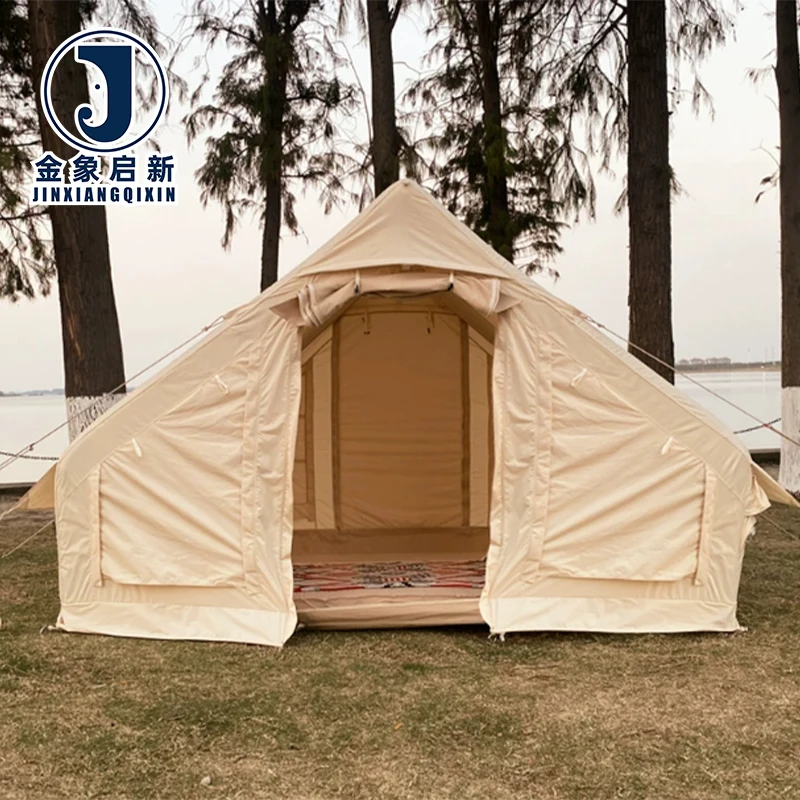
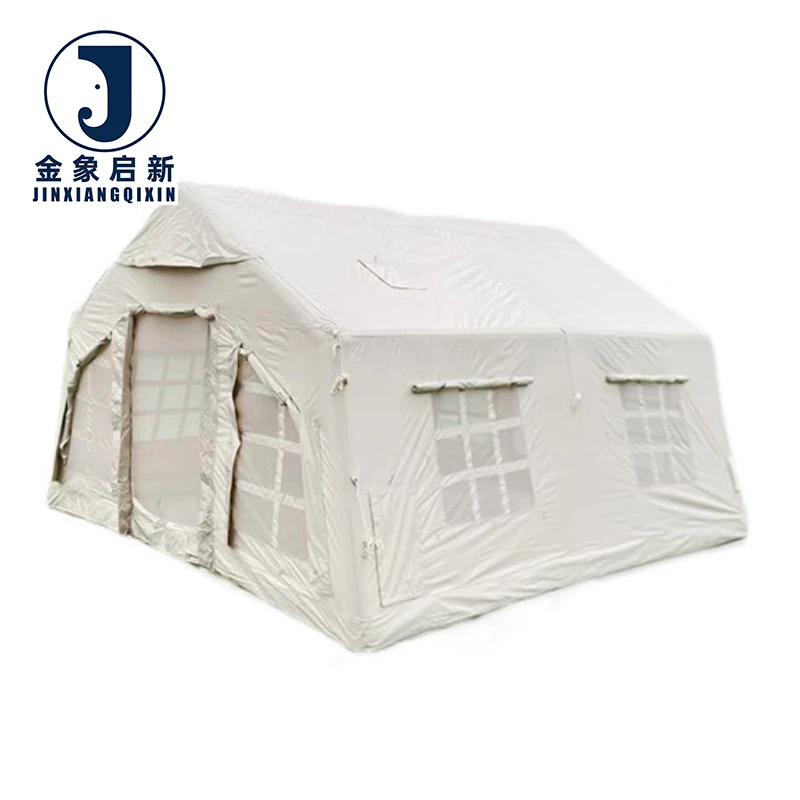
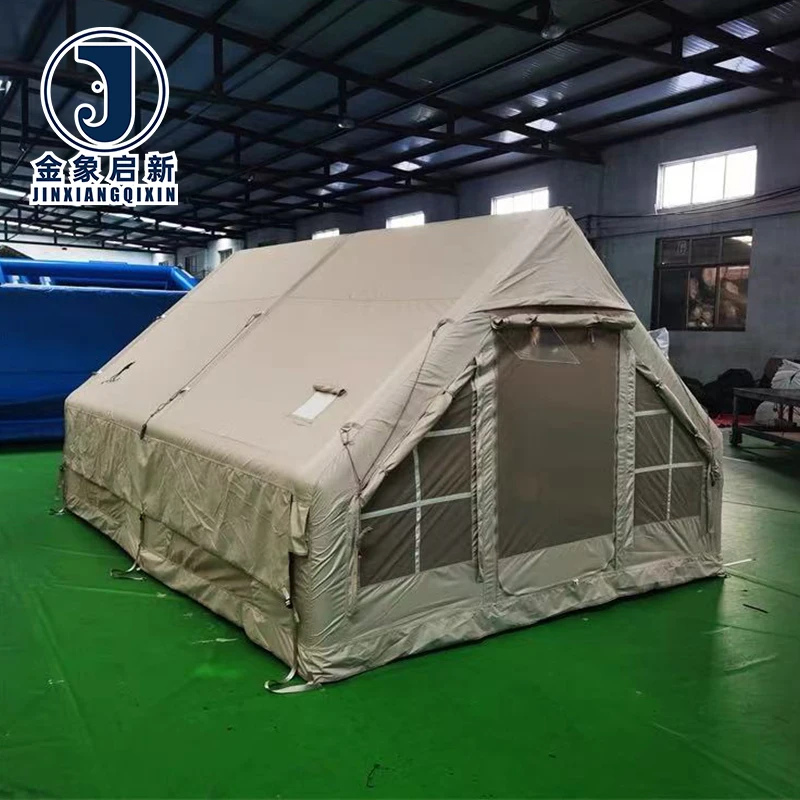
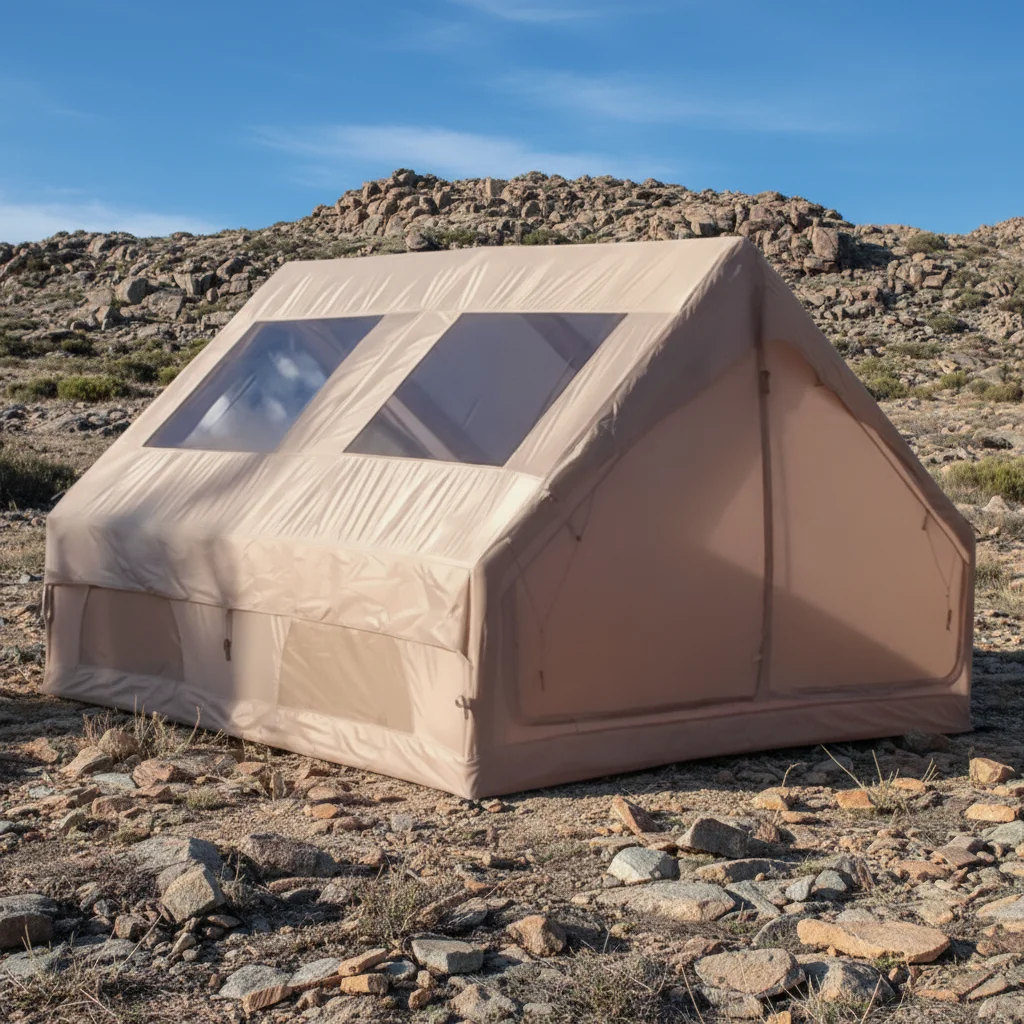
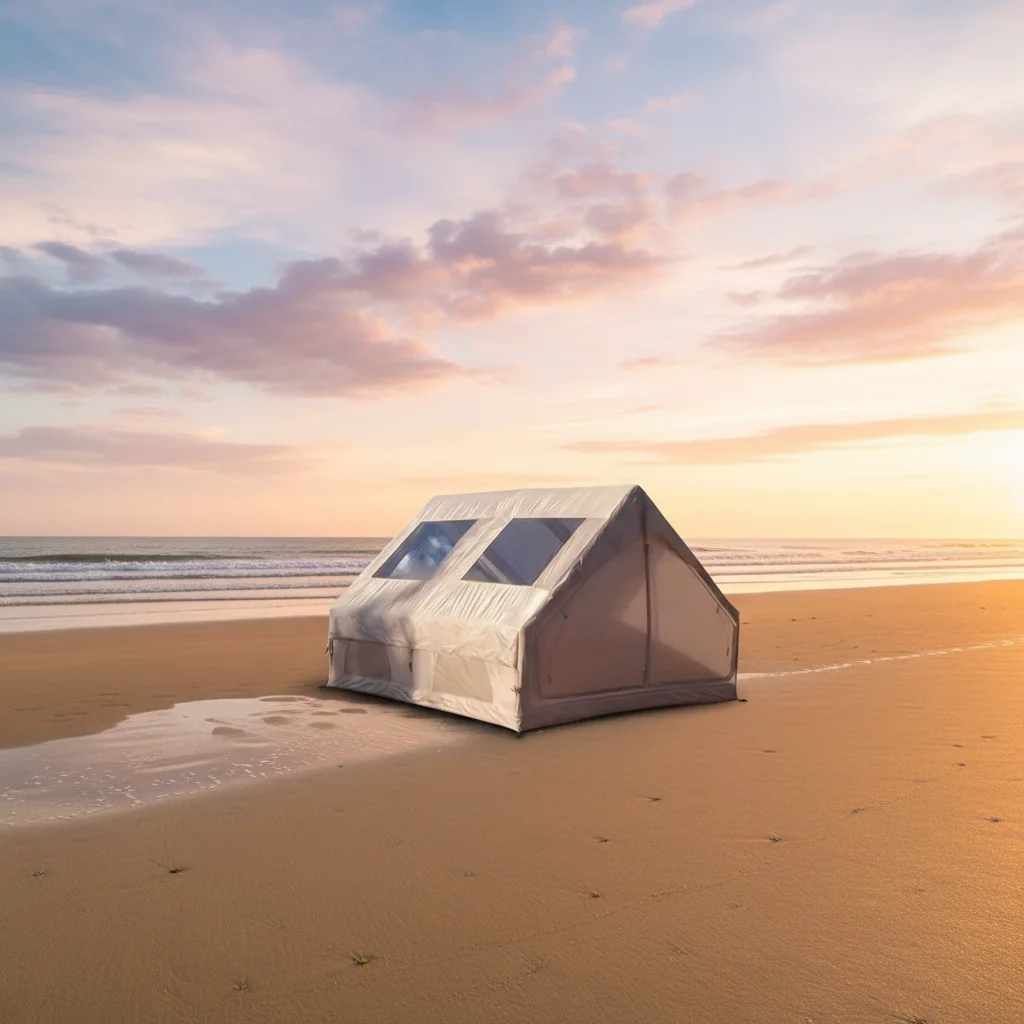
PVC Inflatable Camping Tent with waterproof, UV-resistant and tear-resistant PVC tarpaulin membrane in single-layer construction, supporting OEM/ODM sample customization and pattern printing.
- Coating weight, GSM and adhesion are tightly controlled across every roll, so colour and thickness stay batch-consistent from first panel to last.
- Fire-retardant test reports and pre-shipment inspection records ship with every order, backed by nearly 30 years of coated fabric process expertise.
Description
Coated Fabric Mastery — Nearly three decades of PVC coating process control applied to every inflatable structure, ensuring consistent GSM, adhesion, and seam performance from prototype to production run.
Technical Specifications
| Parameter | Value |
|---|---|
| Product Type | Inflatable Camping Tent |
| Core Material | PVC tarpaulin |
| Construction | Single layer construction |
| Key Features | Waterproof, UV-resistant, tear-resistant |
| Fire-Retardant Compliance | EN 13501-1 |
| Tear Strength | 300N according to ISO 13937-2 |
| UV Retention | Retains 85% of tensile strength after 500 hours accelerated weather testing |
| Air Pressure Decay | Not exceeding 5% over 24 consecutive hours |
| Seam Strength Tolerance | ±3% |
| Prototype Development Lead Time | 5 days |
| Customization Service | OEM & ODM (sample customization, pattern printing) |
| Standards | ISO 9001, ISO 14001, ISO 45001, CE |
Application Suitability
| Application | Exposure & Requirement |
|---|---|
| Commercial camping ground operations | Continuous UV exposure, repeated inflation cycles, guest safety compliance |
| Large-scale outdoor event facilities | Rapid deployment, fire-retardant certification for public assembly, wind load resistance |
| Industrial temporary shelter projects | Harsh site conditions, abrasion from equipment contact, extended weathering |
| Construction camps and expedition bases | Extreme temperature swings, high wind pressure, remote logistics constraints |
| Commercial adventure parks | High guest turnover, frequent setup and teardown, visible branding and colour consistency |
Why Fire-Retardant Claims Without a Grade Put Your Entire Project at Risk
A fire-retardant inflatable camping tent without a verifiable grade is a liability, not a shelter.
Buyers sourcing inflatable structures for commercial campsites or public events frequently receive fabric described as "flame retardant" on the quotation, only to discover that no test report accompanies the shipment. Site inspectors and insurance auditors require documentation tied to a recognised standard such as EN 13501-1, not a generic claim printed on a packing list [NEED_CITE: EN 13501-1 classification for construction and event materials]. When the certificate is missing, the entire installation is held up, sometimes at significant daily cost to the project operator. The PVC Inflatable Camping Tent supplier you choose must be able to match every batch to a specific fire classification with supporting test data.
From Roll Stock to Finished Inflatable Structure — One Source, One Standard
Commercial outdoor gear manufacturers and event facility builders need a single point of accountability for their inflatable tent fabric. When material sourcing and structure fabrication are split across suppliers, colour drift between batches, incompatible welding parameters, and finger-pointing over seam failures become routine. This PVC Inflatable Camping Tent programme keeps coating, cutting, welding, and air-pressure validation under one quality system, so the fabric arriving at your warehouse or project site performs identically to the approved prototype.
Seam Integrity as the Real Measure of Inflatable Reliability
The most common failure point on any inflatable structure is not the membrane itself but the welded seam, particularly where air pressure concentrates at curves and junctions. High-frequency welding parameters must be calibrated to the exact coating weight and PVC compound of the fabric in use. Every seam on the Inflatable Camping Tent is held to a ±3% strength uniformity tolerance, and each unit undergoes a 24-hour continuous air pressure test before dispatch, with pressure decay not exceeding 5% over the full period [NEED_CITE: high-frequency welding standards for PVC inflatable structures].
How GSM, Coating Adhesion, and Base Fabric Interact in Inflatable Applications
Tear strength of 300N per ISO 13937-2 is meaningful only when read alongside the base fabric denier and weave density. A heavier GSM achieved through excess coating rather than a denser base yarn will show acceptable tensile numbers but may crack along fold lines during repeated inflation and deflation cycles. Coating adhesion — the bond between the PVC layer and the polyester base — determines whether delamination occurs before the fabric itself wears through. For inflatable camping tent applications, the balance between coating weight and base fabric construction directly affects how the structure handles internal pressure, wind load, and the mechanical stress of packing and transport.
The Hidden Cost of Inconsistent Colour Across Rolls
When a commercial campsite or adventure park orders multiple inflatable tents for a branded installation, even a slight shade variation between production rolls becomes visible once structures are erected side by side. This colour inconsistency forces buyers to sort, match, and sometimes reject entire batches, delaying project timelines and inflating replacement costs [NEED_CITE: colour fastness and batch consistency in PVC coated fabrics]. Specifying batch-to-batch colour documentation at the inquiry stage — rather than discovering the problem at delivery — protects both the buyer’s schedule and the visual integrity of the installation.
What This Supply Programme Delivers at Every Order
Coating weight and adhesion are controlled through a dedicated in-line process, ensuring that the PVC compound applied to your Inflatable Camping Tent fabric meets the stated specification without variation across the production run. A 10-person R&D team handles material selection, pattern printing layouts, and custom sizing, developing prototypes within five days so you can validate construction before committing to bulk volumes. Every unit receives 100% pre-shipment inspection, including dimensional checks and the 24-hour air pressure test, with defective rates held below 0.3%. Custom widths, colours, and treatment grades are supported with reasonable minimums, and documentation accompanies every dispatch for customs clearance and compliance audits.
Documentation & Verification
- Material specification sheet stating GSM, base fabric construction, and coating weight for each Inflatable Camping Tent order
- Fire-retardant test report per EN 13501-1 matched to the specific production batch
- UV retention data referencing 500-hour accelerated weather test results for the supplied material
- Dimensional inspection report and 24-hour air pressure decay record included with every shipment
- Pre-shipment inspection record verifying seam strength uniformity within ±3% tolerance
- MSDS for PVC compounds confirming EU REACH compliance
Fabrication, Handling & Storage
- High-frequency welding parameters must match the PVC coating weight to achieve the specified seam strength tolerance
- Store rolls upright on pallets to prevent permanent creasing that weakens the PVC coating at fold lines
- Inflate structures gradually in cold conditions below 5°C to avoid thermal shock to the PVC membrane
- Clean with mild detergent only; solvent-based cleaners may degrade the UV-stabilised PVC compound surface
- Allow adequate ventilation during storage to prevent condensation build-up between single-layer PVC sheets
- Repair minor punctures with compatible PVC patch kits using heat-activated adhesive for lasting bond
Before You Request a Quote
Provide the intended deployment environment, including typical wind conditions, UV exposure intensity, and any fire code requirements specific to your market. Specify whether you need finished inflatable structures or roll stock for your own fabrication line, along with target dimensions and annual volume. Colour references, pattern printing artwork, and any branding requirements should be shared at the inquiry stage to ensure accurate sampling.
Frequently Asked Questions
Q: What fire-retardant grades are available and how do they align with EU or US fire codes for commercial tents?
A: The standard grade supplied complies with EN 13501-1, which covers construction and event-use materials across European markets. For US-based projects, alternative classifications may apply depending on local jurisdiction and occupancy type. Confirm your specific fire code requirement at the inquiry stage so the correct grade can be validated with a matching test report before production begins.
Q: How is UV resistance verified for this inflatable tent fabric?
A: UV resistance is measured through accelerated weather testing, with the PVC compound retaining 85% of its original tensile strength after 500 hours of continuous exposure. This test basis provides a comparative benchmark for outdoor lifespan estimation. Actual field performance depends on installation angle, local climate intensity, and maintenance frequency. Test reports are supplied per batch upon request.
Q: What OEM and ODM customisation options are available for inflatable tents?
A: Customisation covers material thickness selection, sizing to your structural design, colour matching to Pantone or RAL references, and pattern printing for branding or wayfinding. Prototype development typically requires five days from artwork and specification approval. Both OEM supply to your brand and ODM design-to-specification programmes are supported with full sample validation before bulk commitment.
Q: How is seam integrity validated on inflatable structures before shipment?
A: Every inflatable unit undergoes a continuous 24-hour air pressure test before dispatch, with pressure decay measured and required not to exceed 5% over the full period. Seam strength uniformity is held within a ±3% tolerance across all welded joints. Inspection records documenting both the pressure test and seam measurements accompany each shipment as part of the standard documentation package.
Related products
-
High Quality Four-Season Inflatable Tent for Camping Durable PVC Waterproof All-Weather Resistance Quick Automatic Opening
Read more -
Camping Tent Inflatable UV Resistant Customizable Four-season Waterproof PVC Eco-Friendly Windproof Foldable Quick Automatic
Read more -
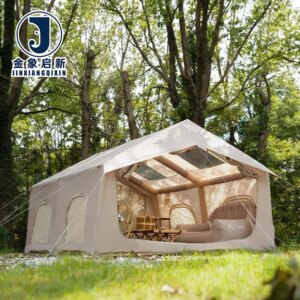
Camping Tent Inflatable UV Resistant Customizable Four-season Waterproof PVC Quick Automatic Opening 2-3 Person Outdoor
Read more -
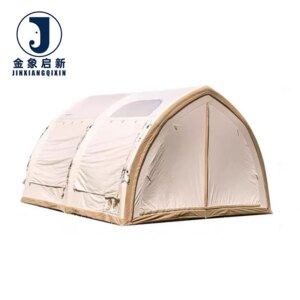
Premium Four-season PVC Inflatable Tents for Camping Easy-to-Use Spacious Portable Waterproof Outdoor Tent with Pump
Read more