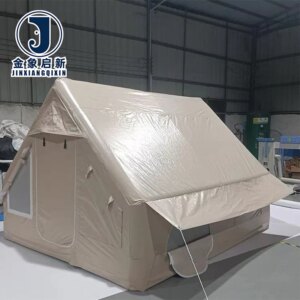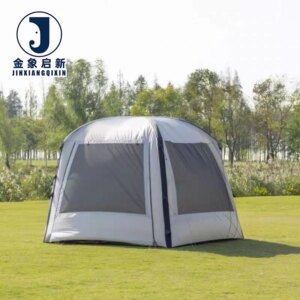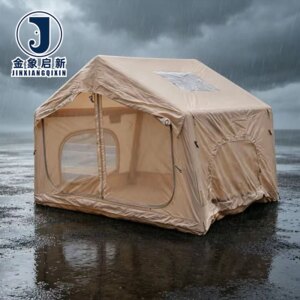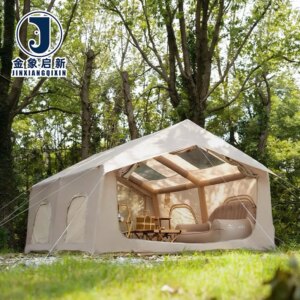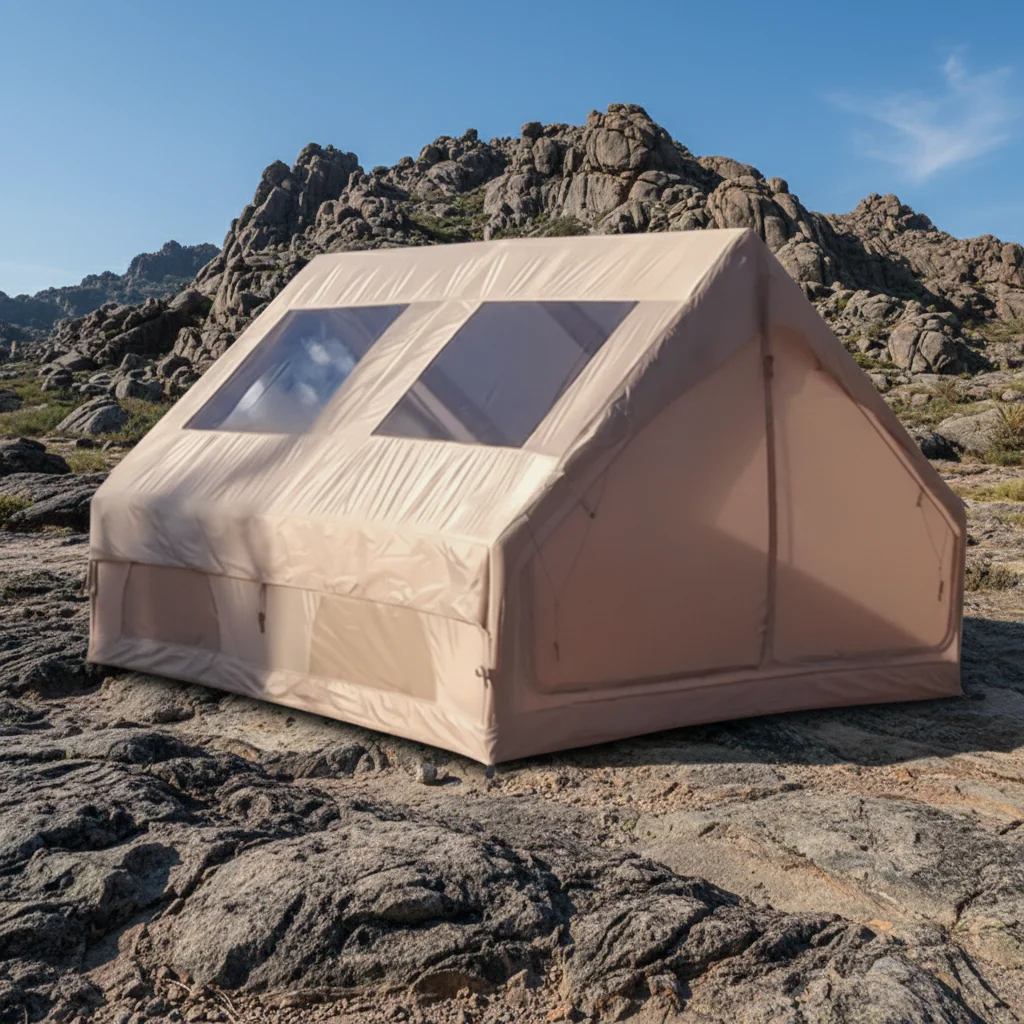
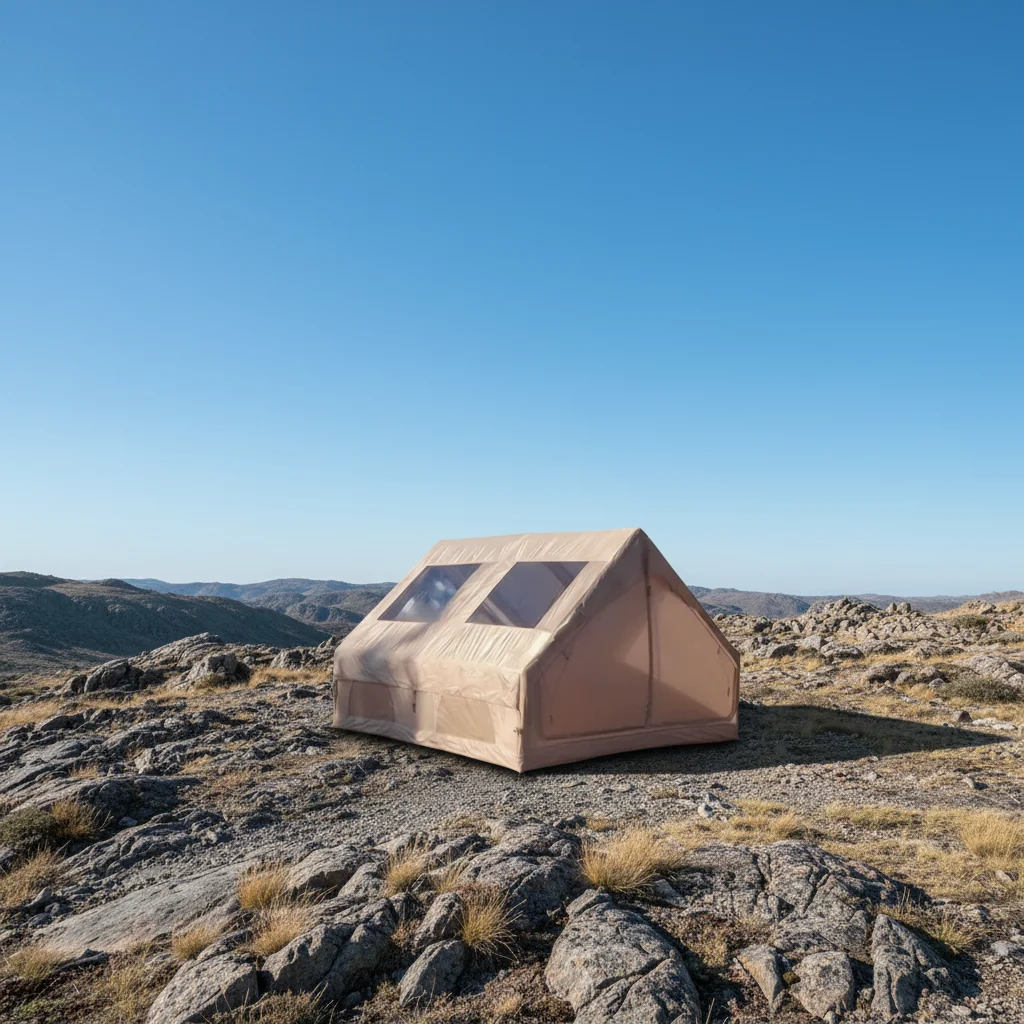
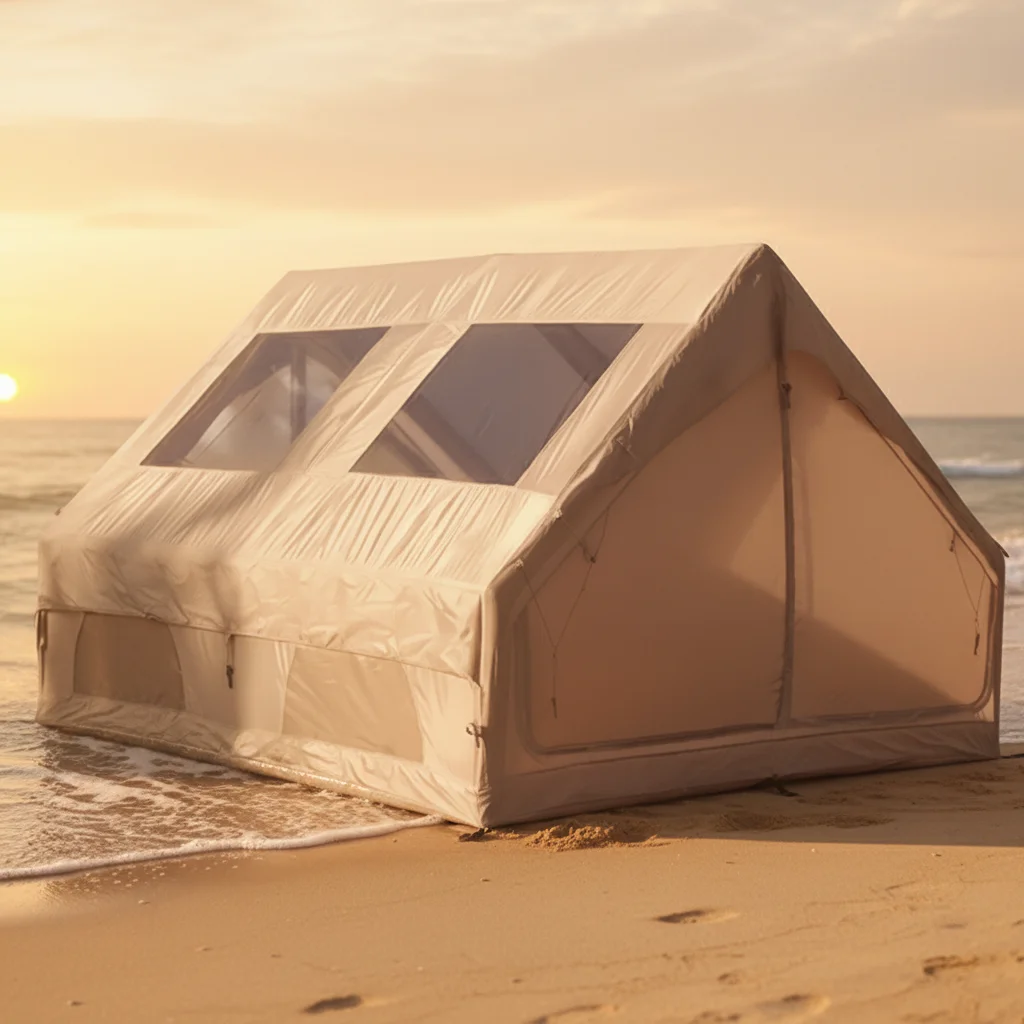
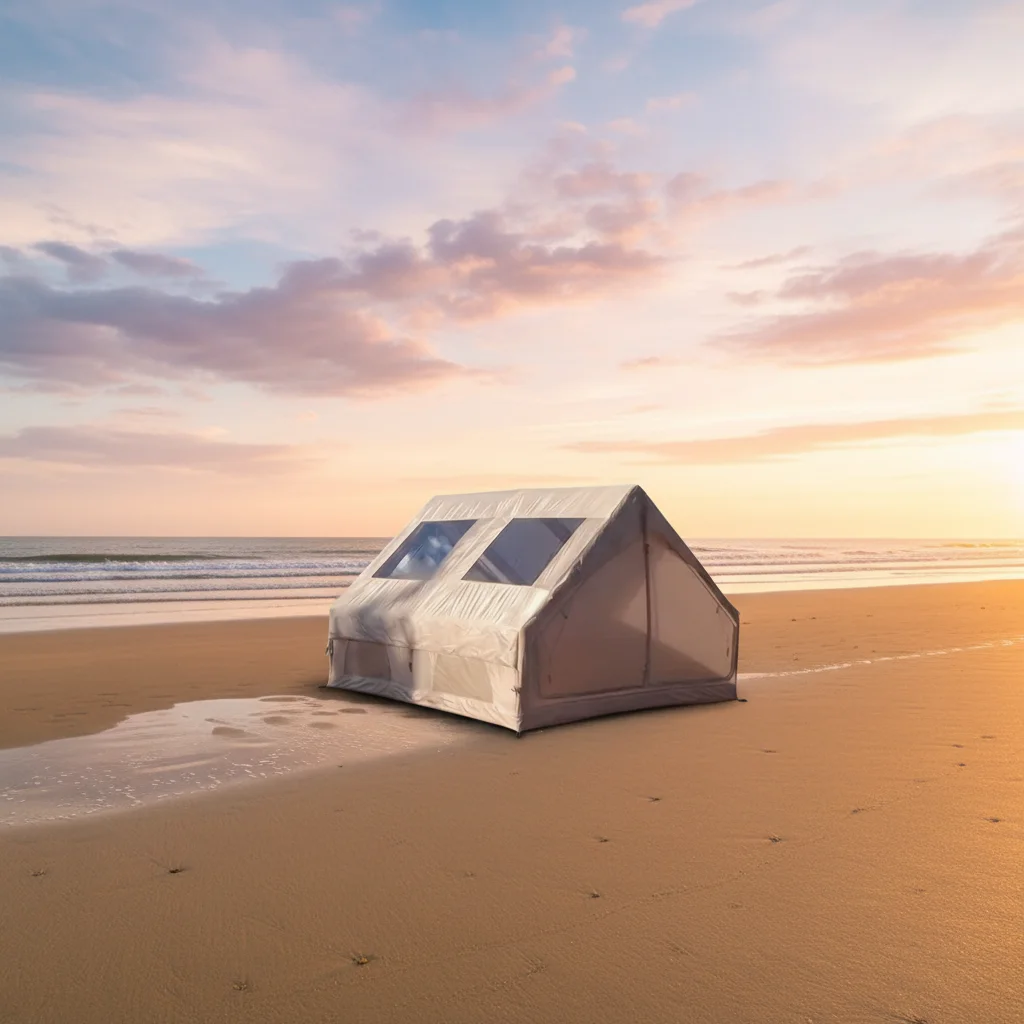
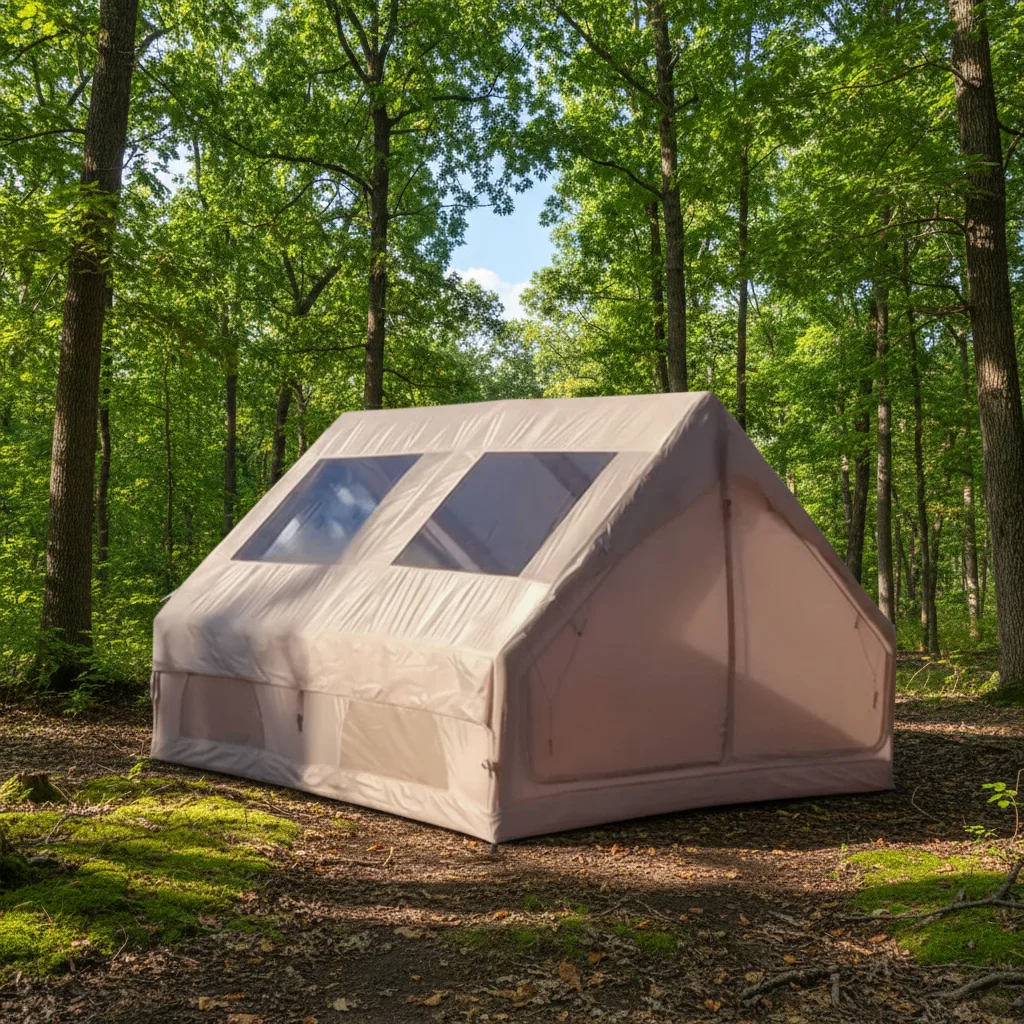
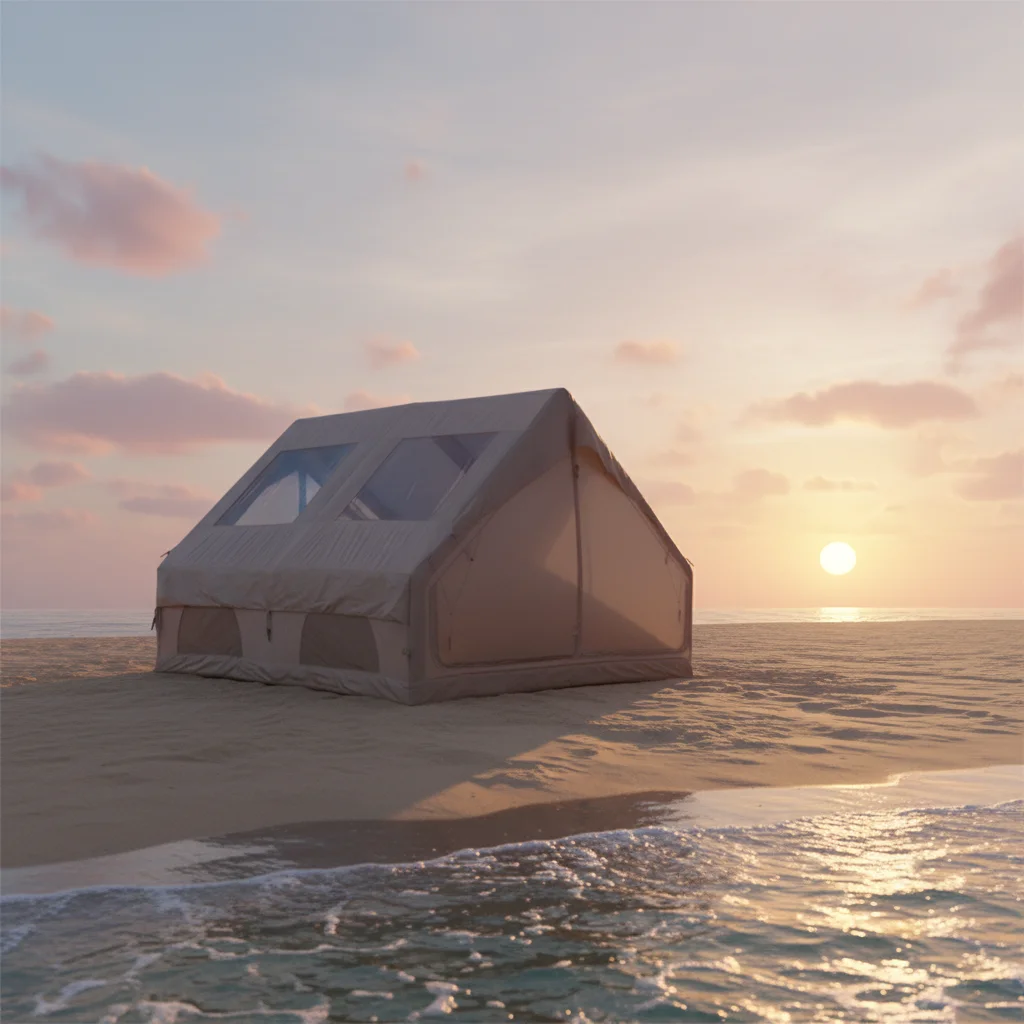
Inflatable Tent for Camping — PVC knife-coated fabric, 0.6mm to 1.2mm thickness, UPF 50+ UV protection
- Waterproof rating ≥5000mm water column with tear resistance ≥500N
- Tensile strength ≥3000N/5cm for commercial-grade durability
- OEM & ODM customization: dimensions, color matching, valve systems, logo printing
- Engineered for repeated deployment cycles in outdoor adventure and event applications
Backed by 100% pre-shipment inspection and 24-hour pressure retention testing on every unit.
Description
Process-Controlled Coating — every PVC knife-coated roll is weighed and measured against the stated areal density before it reaches the cutting table, so inflatable tent fabric arrives matching the spec you signed off on.
Technical Specifications
| Parameter | Value |
|---|---|
| Product Type | Inflatable Tent |
| Core Material | PVC tarpaulin (PVC knife-coated fabric) |
| Fabric Thickness Range | 0.6 mm to 1.2 mm |
| Construction | Single layer |
| Key Features | Waterproof, UV-resistant, tear-resistant, quick automatic opening |
| Customization | OEM & ODM — sample customization, pattern printing, custom dimensions, color matching, logo printing, valve system modifications |
| Standards | ISO 9001, ISO 14001, ISO 45001, CE |
Application Suitability
| Application | Exposure & Requirement |
|---|---|
| Commercial outdoor adventure operations | Repeated inflation/deflation cycles, field abrasion, wind load on air beams |
| Expedition outfitters in alpine or coastal zones | Salt spray or snow loading, sub-zero handling, UV at altitude |
| Event organizers — multi-day outdoor functions | Continuous sun exposure, crowd contact, rapid deploy and strike |
| Guided tour base camps | Frequent relocation, ground moisture, packing and transport wear |
Why Batch Colour Consistency Matters More Than You Think on Large Inflatable Shelters
A single off-shade roll across a multi-panel inflatable tent is visible from fifty metres away and triggers rejection on the spot.
When you source PVC inflatable tent fabric for commercial-grade shelters, the panels are cut from several rolls and heat-welded together. If one roll sits outside the colour tolerance band, the seam line becomes a visual fault that your end customer sees before they ever test the structure. I once supplied fabric for a four-season inflatable tent order destined for Chile — three rolls in the same batch drifted enough that the assembled tent looked patchwork. The buyer rejected the full shipment. Since then I treat roll-to-roll shade matching as a hard gate, not a guideline. [NEED_CITE: colour tolerance standards for coated fabrics in architectural and temporary structure applications]
Full-Range Inflatable Tent Customization From Fabric to Valve
Jinxiang operates as a PVC Inflatable Tent aftermarket supplier covering OEM and ODM from the base fabric upward. You specify the fabric thickness within the 0.6 mm to 1.2 mm range, the valve type, and the inflation chamber layout; the R&D team returns a sample within days for hands-on deployment evaluation. Dimensions, colour references, and logo placement are locked in before bulk cutting begins, which prevents the costly rework of discovering a misfit panel after welding.
Deployment Durability for Repeated Commercial Use
Commercial outdoor operators inflate and strike their shelters dozens of times per season. The PVC knife-coated fabric core resists the flex fatigue that builds up at the air-beam curvature points, and the single-layer construction keeps packed weight manageable for field crews carrying gear over rough terrain. Each unit undergoes inflation pressure retention testing and leak inspection before dispatch, so the tent you receive holds pressure through the first deployment and beyond. [NEED_CITE: inflation pressure retention testing protocols for commercial inflatable structures]
Reading the Specs That Actually Determine Field Performance
Fabric thickness in the 0.6 mm to 1.2 mm range directly affects both packed volume and wind-load resistance — thinner gauges suit backpacking-style event tents while heavier gauges anchor base-camp shelters in exposed terrain. PVC knife-coated construction bonds the coating to the base fabric under blade tension, producing higher peel strength than laminated alternatives and supporting stronger heat-welded seams at the air-beam joints. The waterproof and UV-resistant treatments work together: water column resistance keeps the interior dry under sustained rain, while UV stabilization slows plasticizer migration that would otherwise embrittle the fabric after prolonged sun exposure. Areal density and tensile strength must be evaluated together — a heavier fabric with a loose base weave can tear more easily than a lighter, tighter construction.
The Cost of Overlooking Seam and Weld Specifications
Inflatable tents fail most often at the heat-welded seams, not in the field of the fabric. When welding temperature or dwell time is set for one PVC thickness but applied to another, the bond line becomes the weak point — the beam flexes under wind load and the weld peels open before the fabric itself shows any damage. Batch colour variation across rolls compounds the problem: a tent returned for shade mismatch is a total loss, not a partial credit. [NEED_CITE: common failure modes in heat-welded PVC inflatable structures]
Why Operators Source Inflatable Tent Fabric Here
Three full production lines and 36 sets of professional equipment give this facility the capacity to run custom inflatable tent orders at volume without sacrificing lead-time reliability. A ten-person R&D team handles everything from valve system redesign to pattern printing proofs, keeping sample turnaround measured in days rather than weeks. Dedicated QA/QC runs at every production stage with 100 percent inspection before shipment — every roll is checked against the stated GSM, colour reference, and coating weight. Nearly 30 years of coated-fabric process control means the adhesion between PVC coating and base fabric is managed at the formulation level, not left to chance.
Documentation & Verification
- Material specification sheet stating GSM, base fabric construction, coating type, and colour reference per roll
- Test report for UV-resistant grades confirming the treatment level applicable to your market
- Pre-shipment inspection record covering pressure retention and leak data for each inflatable unit
- Roll packing list matched to purchase order line items for receiving verification
- ISO and CE certificates supplied with every shipment for compliance filing
Fabrication, Handling & Storage
- Heat-weld PVC knife-coated panels using temperature and dwell settings matched to the selected 0.6 mm–1.2 mm thickness
- Store rolls upright on cores in a dry, shaded area to prevent flat-spot creasing across the coating surface
- Use compatible PVC adhesive patches for field repair of punctures on the single-layer fabric
- Clean with mild, non-solvent detergents to preserve the UV-resistant coating treatment
- Avoid dragging inflated beams across abrasive ground to protect the outer coating layer
Planning Your Inflatable Tent Specification
Before you request a quote, confirm the deployment environment — altitude, temperature range, and expected wind exposure — so the correct fabric thickness and valve configuration can be recommended. Specify your target colour reference and whether logo printing or pattern printing is required on the outer surface. Indicate annual volume and whether you need finished, welded units or roll stock for your own fabrication line.
Frequently Asked Questions
Q: What customization options are available for dimensions, fabric thickness, and valve systems?
A: The R&D team works from your drawings or concept to develop custom dimensions, fabric thickness within the 0.6 mm to 1.2 mm range, and valve system modifications. Pattern printing, logo placement, and colour matching are confirmed through a pre-production sample before bulk cutting begins.
Q: How does the UV-resistant coating extend service life compared to standard PVC tents?
A: UV-resistant treatment slows plasticizer migration and surface chalking that cause standard PVC to become brittle and crack after repeated sun exposure. Confirm the specific UV grade required for your deployment climate so the correct treatment level is applied.
Q: Can you provide samples before I commit to a bulk order?
A: Samples are developed within days for custom requirements, including your specified fabric thickness, colour, and valve configuration. Hands-on deployment evaluation lets you verify inflation behaviour and seam integrity before authorizing full production.
Q: What quality documentation ships with each order?
A: Every shipment includes a material specification sheet, pre-shipment inspection record with pressure retention data, roll packing list, ISO and CE certificates, and test reports for applicable treatments such as UV resistance.
Q: What is the lead time for custom-specification inflatable tents?
A: Lead time depends on the scope of customization — fabric thickness, colour matching, valve modifications, and order volume all affect scheduling. Request a quotation with your full specification for a confirmed production timeline.
Related products
-
Inflatable PVC Camping Tent Four-Season Waterproof CE Certified Quick Automatic Opening 3000mm+ Factory Direct Sale
Read more -
Inflatable Tent Family Size Four-Season Quick Automatic Opening Waterproof 2-8 Person Factory Direct Sale
Read more -
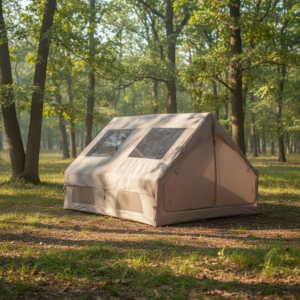
Inflatable Tent Four-Season Quick Automatic Opening PVC 3000mm Waterproof Foldable Eco-Friendly 2-3/3-4/6-8 Person Outdoor Use
Read more -
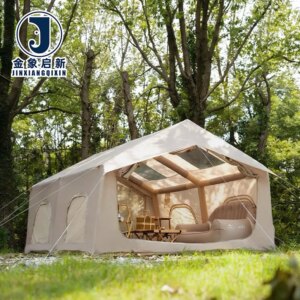
Inflatable Four-season Camping Tent-PVC Coated Waterproof Eco-Friendly Quick Inflation CE Certified ODM/OEM Accepted
Read more