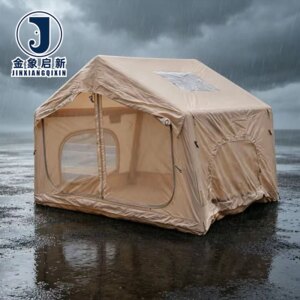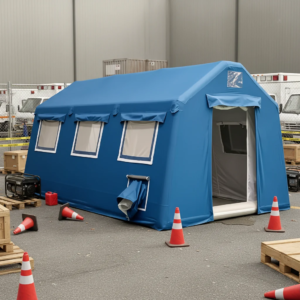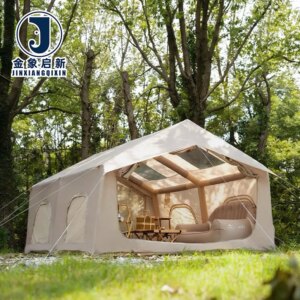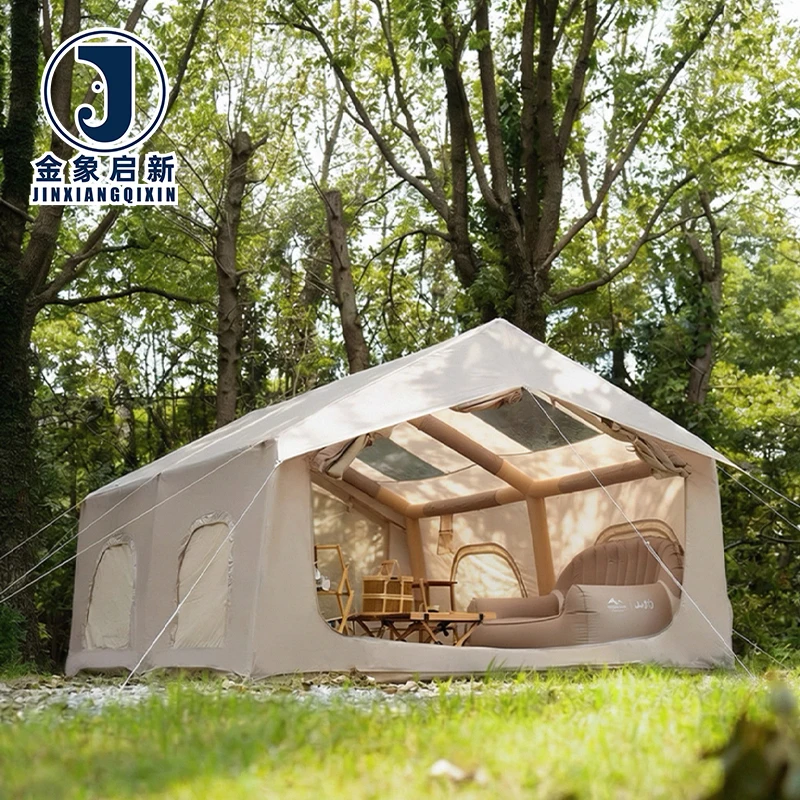
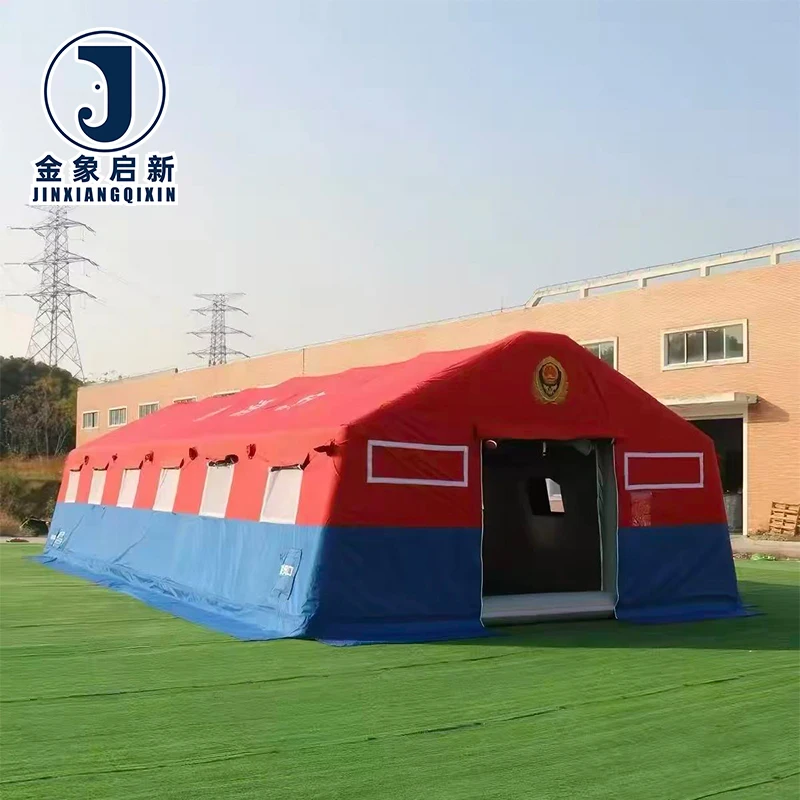
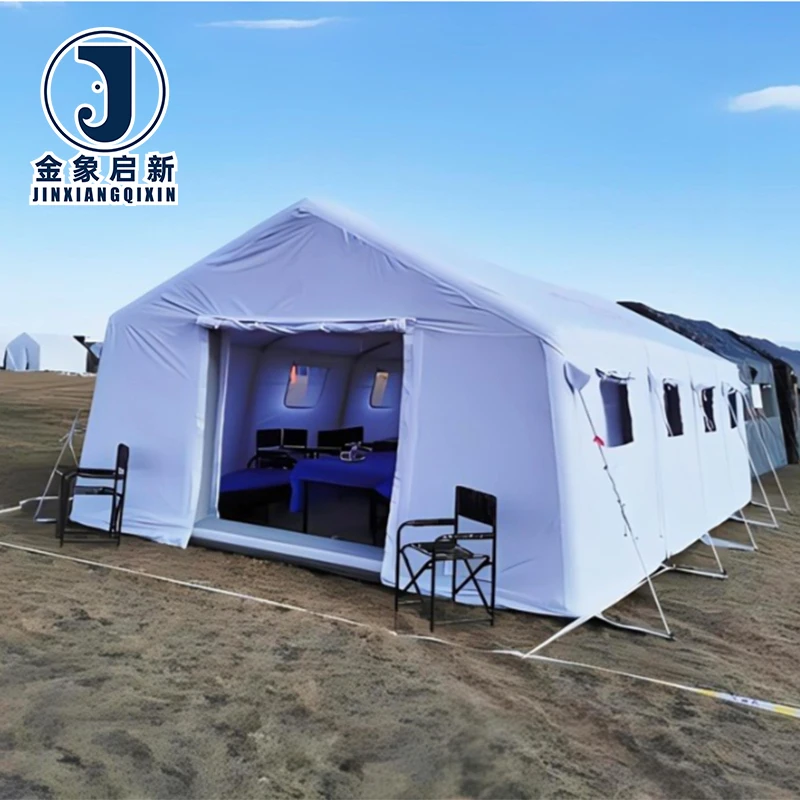
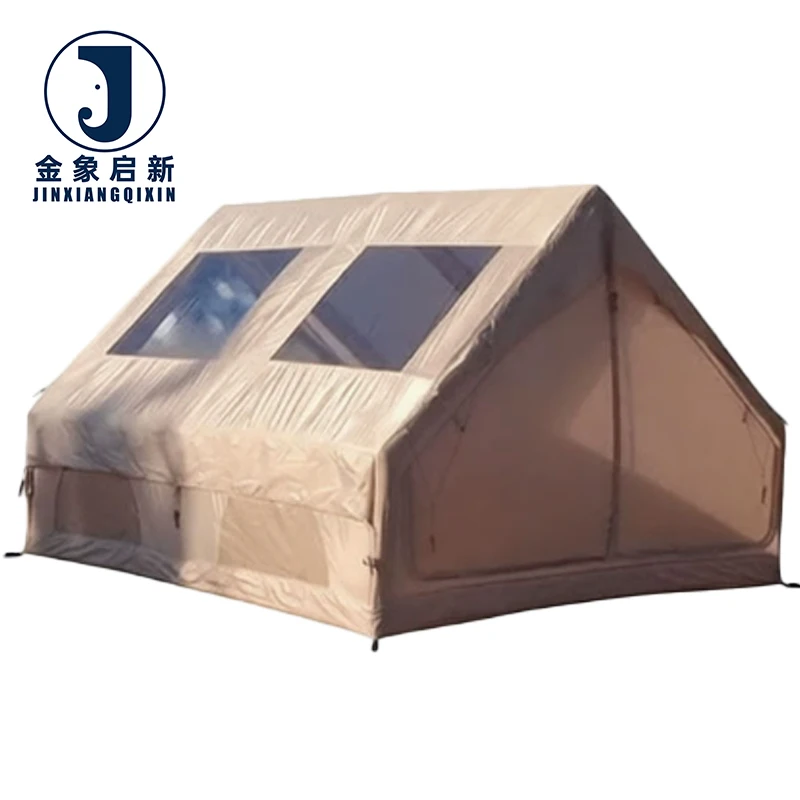
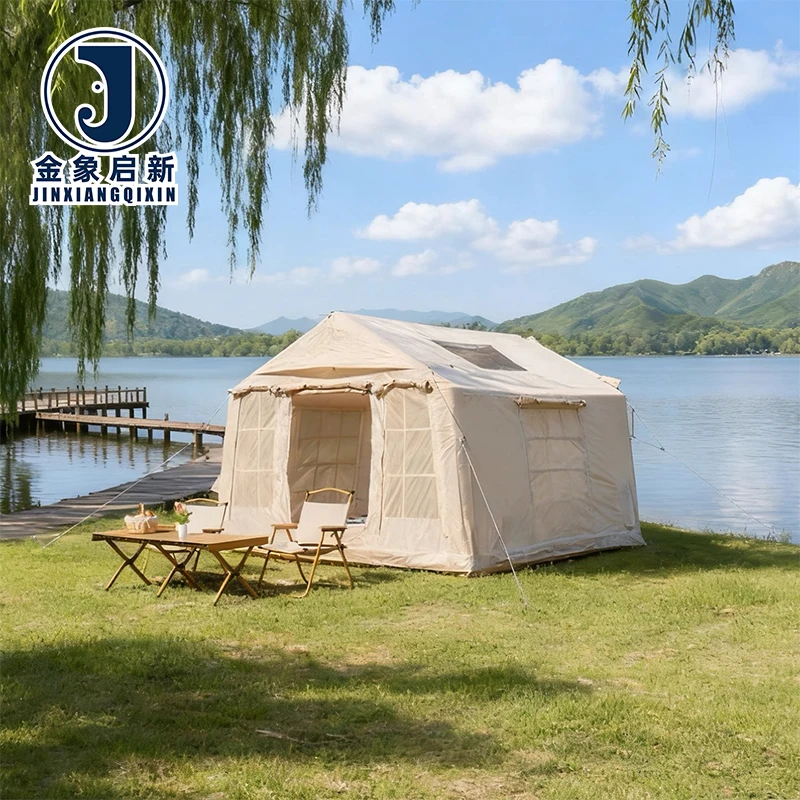
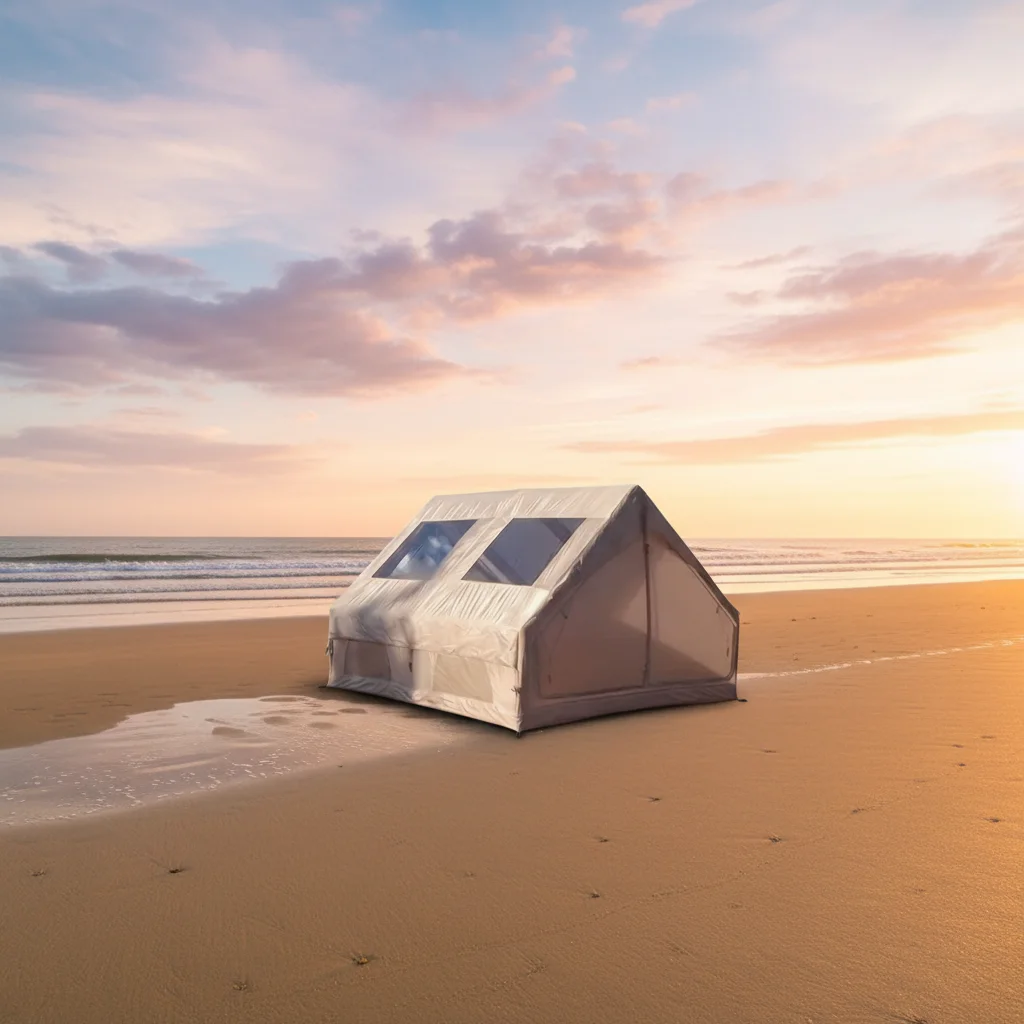
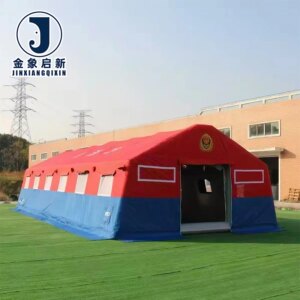
Inflatable Tent, Waterproof, UV-resistant, Tear-resistant — PVC tarpaulin construction with single-layer four-season design for 2-3 person capacity, supporting full OEM & ODM customization including material selection, product design, and pattern printing.
- Coating weight and base fabric adhesion are tightly controlled across production stages, ensuring seam strength matches the fabric body at flex points rather than failing early
- Batch-to-batch colour and GSM consistency verified through dedicated QA at every stage, with 100% pre-shipment inspection before dispatch
Description
Precision Coating Control — Deep process expertise in coating weight and adhesion ensures every roll of inflatable tent fabric meets the stated GSM and performance specification before it leaves the facility.
Technical Specifications
| Parameter | Value |
|---|---|
| Product Type | Inflatable Tent |
| Core Material | PVC Tarpaulin |
| Key Features | Waterproof, UV-resistant (test basis not stated), Tear-resistant |
| Capacity | 2-3 Person |
| Construction | Four-season, Single Layer |
| Customization | OEM & ODM — material selection, product design, pattern printing |
| Standards | ISO 9001, ISO 14001, ISO 45001, CE |
Application Suitability
| Application | Exposure & Requirement |
|---|---|
| Commercial outdoor gear manufacturing | Repeated inflation cycles, flex stress at seam lines, brand colour consistency across production runs |
| Construction site temporary shelters | Continuous UV exposure, wind loading, abrasion from site debris and equipment contact |
| Outdoor event facilities | Frequent assembly and teardown, public safety compliance, custom branding visibility |
| Industrial field camping | Multi-season weather variation, ground moisture, transport and packing wear |
Why Unverified UV Claims Cost More Than the Fabric Itself
Specify the test standard before you accept the UV treatment claim.
When sourcing PVC inflatable tent fabric for commercial outdoor gear lines, buyers frequently encounter quotations that reference UV resistance without naming the test method or exposure hours behind the claim. The material arrives, passes initial inspection, and enters production — only for finished tents to show surface chalking or colour shift after a season in the field. Returns follow, and the brand absorbs the reputational damage. An Inflatable Tent Fabric manufacturer custom approach eliminates this gap by tying every UV treatment statement to a verifiable test report that matches the destination market’s climate expectations. [NEED_CITE: UV degradation test methods for PVC coated fabrics per ISO 4892]
How PVC Coating Weight Shapes Tent Performance
The PVC tarpaulin used in inflatable tent construction derives its waterproof and tear-resistant character from the coating formulation and its bond to the base fabric. A well-controlled coating process ensures the material withstands the internal pressure of inflation without delamination at stress points. For commercial outdoor gear manufacturers, this means the tent maintains structural integrity through repeated setup and packing cycles, reducing warranty claims tied to material failure.
Weld Integrity Under Inflation Pressure
Inflatable tents concentrate mechanical stress at welded seams where air beams meet the canopy. If the weld strength does not match the base fabric tensile capacity, the seam becomes the first failure point — often visible only after the tent is pressurised in the field. A disciplined production approach addresses this by calibrating heat and pressure settings to the specific PVC formulation and thickness, so the welded joint performs as a continuous unit rather than a weak link. Buyers evaluating an Inflatable Tent Fabric manufacturer custom partner should request weld peel test data alongside the base fabric specification. [NEED_CITE: weld peel strength testing for coated fabrics per ISO 2411]
Reading the Spec Sheet Beyond GSM
GSM tells you how much material is present per square metre, but it does not describe how that weight is distributed between the base fabric and the PVC coating layers. A high GSM achieved mainly through heavy coating with a light base weave will resist abrasion on the surface yet tear more easily under puncture stress than a balanced construction of the same total weight. Single-layer, four-season inflatable tent designs depend on this balance because the fabric must carry both air-beam pressure and environmental loading without a secondary structural layer to share the load. Coating adhesion to the base fabric further determines whether the material holds together when flexed repeatedly at fold lines during packing and transport.
The Hidden Cost of Batch-to-Batch Variation
Colour drift between rolls in the same order becomes visible the moment panels are cut and joined side by side on a branded inflatable tent. For commercial outdoor gear manufacturers running seasonal product lines, this inconsistency can halt assembly, force panel re-sorting, and delay shipment to retail channels. Similarly, unverified GSM variation across a batch means some tents in the production run carry lighter fabric than specified, leading to field performance that does not match the published product data. [NEED_CITE: colour consistency measurement methods for coated textiles per ISO 105]
Why Production Discipline Matters Here
Three full production lines and 36 sets of professional processing equipment provide the capacity to fulfil container-volume orders while maintaining lot traceability from coating to dispatch. A dedicated 10-person R&D team supports each custom project from material selection through pattern printing and sample development, reducing the gap between design intent and finished product. Every roll undergoes 100 percent pre-shipment inspection, with QA and QC staff checking coating weight, colour reference, and weld performance against the order specification before packing.
Documentation & Verification
- Material specification sheet stating GSM, base fabric denier, coating type, and colour reference
- UV resistance test report applicable to the destination market climate zone
- Pre-shipment inspection record with roll-level GSM and colour verification
- ISO and CE certification documentation accompanying each batch
- Custom sample approval record linking production batch to signed-off prototype
Fabrication, Handling & Storage
- Calibrate heat-weld temperature to the specific PVC coating formulation before running production seams
- Store rolls upright on padded racks to prevent permanent creasing across the coating surface
- Use solvent-free cleaners compatible with PVC coatings to avoid surface degradation during tent maintenance
- Allow cold-stored rolls to reach ambient temperature before unrolling to prevent coating micro-cracking
- Plan cut layouts to minimise transverse seams across the air-beam stress zones
What to Include in Your Enquiry
Share the end-use environment — climate zone, expected wind loading, and inflation pressure range — so the material recommendation matches actual field conditions. Specify any colour matching requirements, pattern printing scope, and whether you need finished panels or full rolls. Confirm the compliance standards your destination market requires so the correct test reports accompany your shipment.
Frequently Asked Questions
Q: How can I verify the GSM and material thickness upon delivery?
A: Each roll ships with a pre-shipment inspection record documenting measured GSM against the agreed specification. Upon receipt, you can conduct a simple cut-and-weigh check on a sample swatch from any roll and compare it to the documented value. Any discrepancy outside the stated tolerance should be flagged immediately with the dispatch documentation as reference.
Q: What test basis supports the UV-resistant treatment claim?
A: UV resistance is available as a treatment option — confirm the specific test standard required for your target market, such as ISO 4892 or ASTM G154 exposure cycles. Request the applicable test report before approving the production run so the treatment level matches the outdoor exposure conditions your inflatable tents will face in the field.
Q: What are the sample development timelines for custom sizing and printing?
A: Custom samples covering material selection, pattern printing, and sizing are developed within a matter of days once design details are confirmed. Approve the sample with written confirmation of GSM, colour reference, and print placement before the bulk run begins, ensuring the production batch matches the signed-off prototype.
Q: How is batch colour consistency controlled across multiple rolls?
A: Every production batch is checked against the confirmed colour reference using standardised measurement methods before dispatch. Rolls within a single order are matched to one reference point to minimise visible variation when panels are installed side by side. For large orders spanning multiple batches, request the colour verification data for each production lot.
Q: What minimum order quantities apply to custom inflatable tent fabric?
A: Minimum quantities depend on the level of customisation — standard stock grades in available widths carry lower thresholds, while custom colour, width, or printed patterns require dedicated production runs. Confirm your annual volume and container loading preference during the quotation stage so the minimum and pricing tier align with your procurement plan.
Related products
-
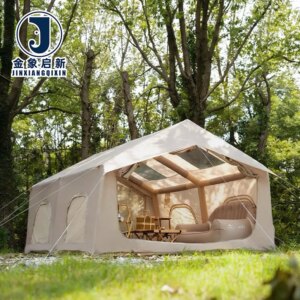
Camping Tent Inflatable UV Resistant Customizable Four-season Waterproof PVC Quick Automatic Opening 2-3 Person Outdoor
Read more -
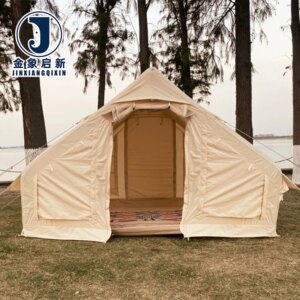
Four-Season Inflatable Tent Single Layer >3000mm Waterproof Windproof Quick Automatic Opening PVC Fabric Eco-Friendly
Read more -
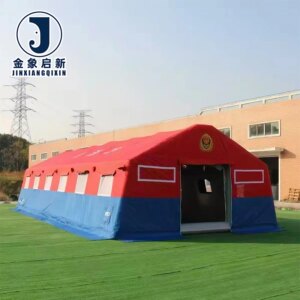
Tente gonflable en PVC de luxe pour le glamping extérieur imperméable avec ouverture automatique rapide, design pliable quatre saisons et pompe.
Read more -
Inflatable PVC Camping Tent Four-Season Waterproof CE Certified Quick Automatic Opening 3000mm+ Factory Direct Sale
Read more