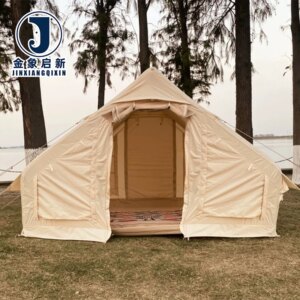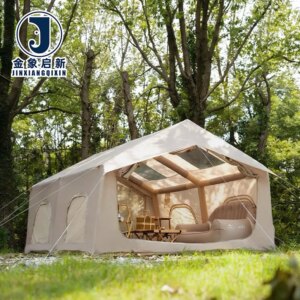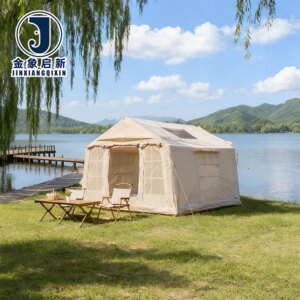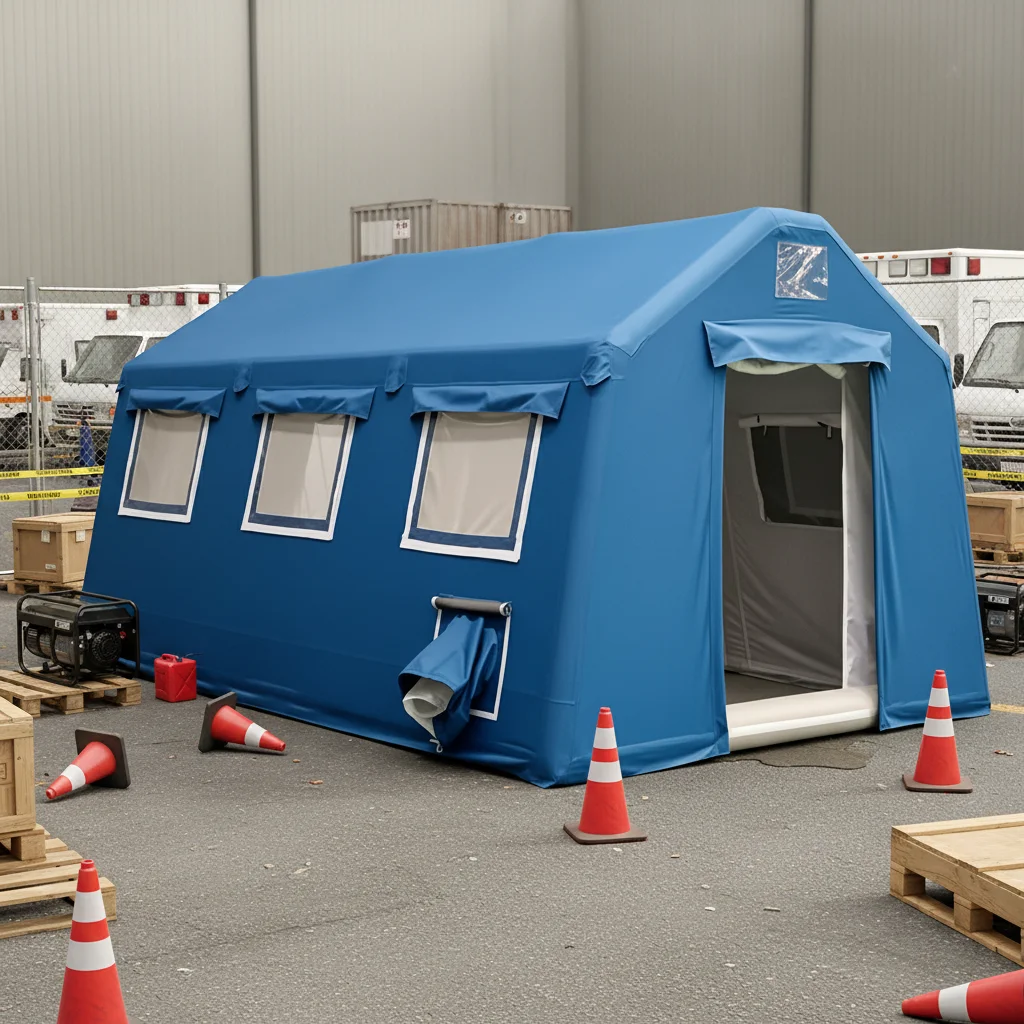
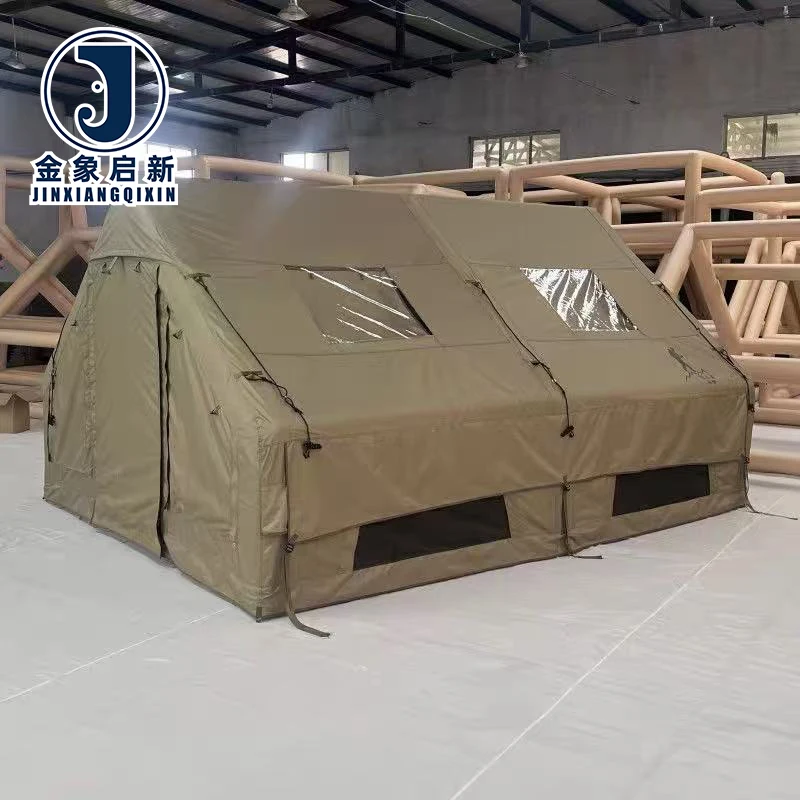
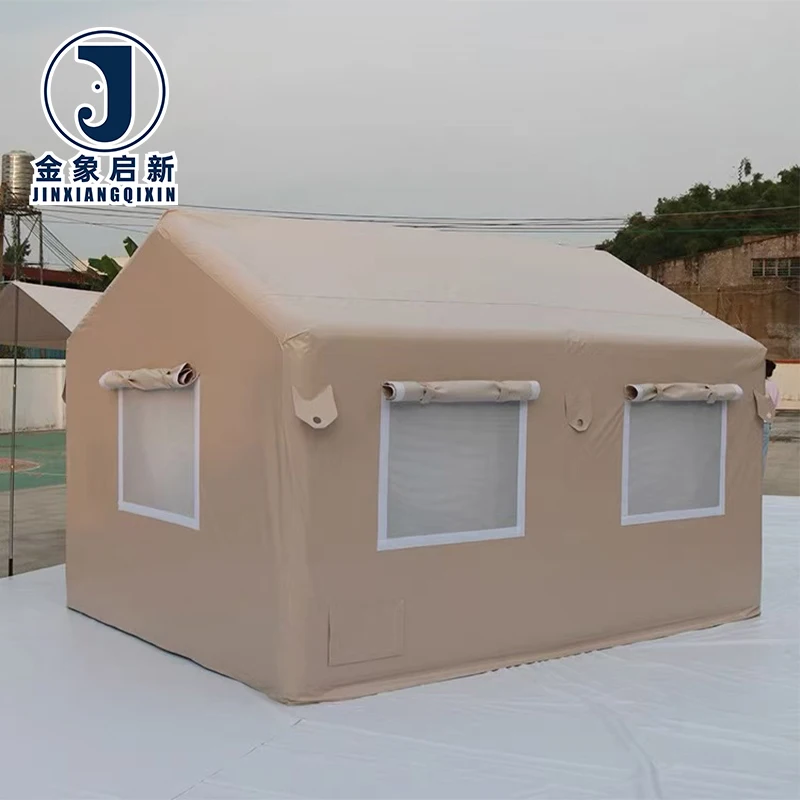
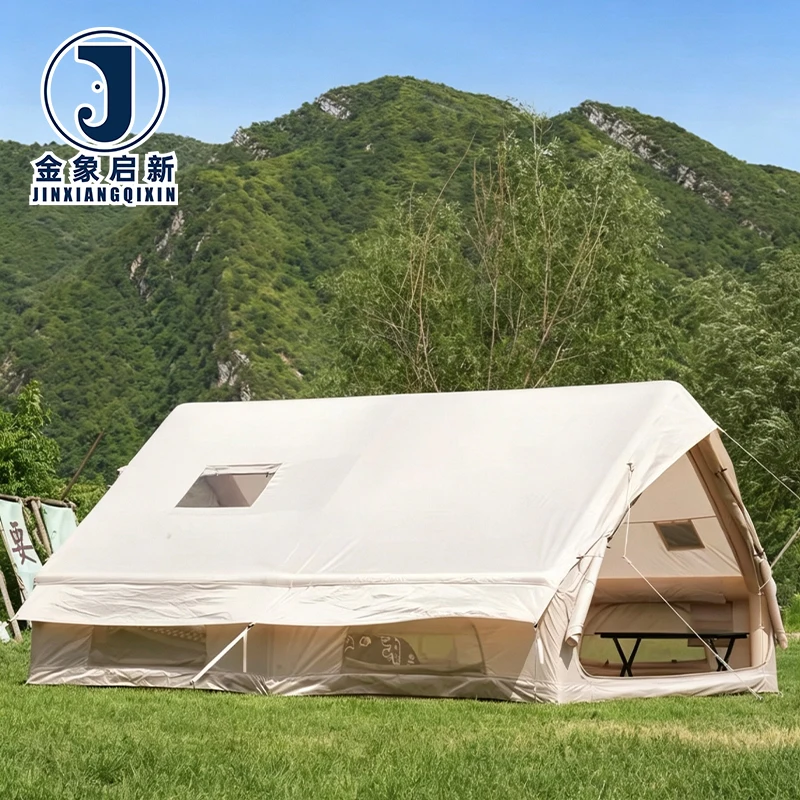
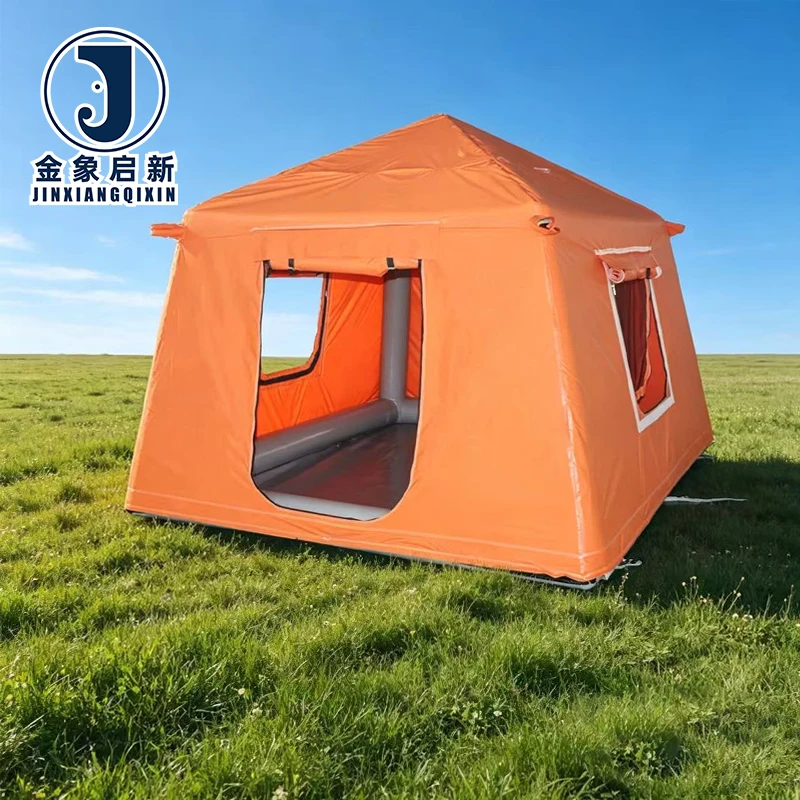
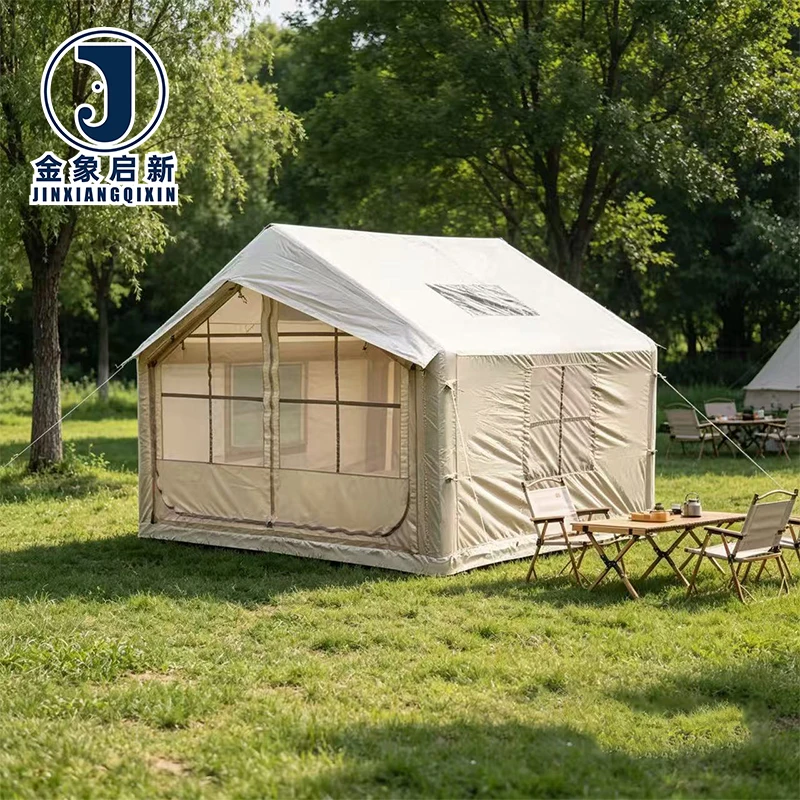
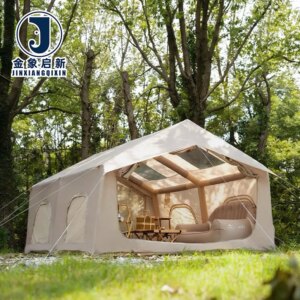
PVC Inflatable Camping Tent, Waterproof & UV-Resistant — single layer construction with industrial-grade PVC tarpaulin fabric for repeated setup and takedown cycles. Full OEM & ODM customization including sizing, pattern printing, and branding for commercial outdoor deployments. Supported by a 10-technician R&D team with samples developed within days, 100% pre-shipment inspection, and nearly 30 years of coated fabric process control.
Description
Deep Coating Process Control — Consistent PVC adhesion and uniform coating weight across every roll, verified at every production stage to eliminate batch-to-batch variation that causes field failures in inflatable tent structures.
Technical Specifications
| Parameter | Value |
|---|---|
| Product Type | Inflatable Tent |
| Core Material | PVC Tarpaulin |
| Waterproof | Stated (test basis not stated in source) |
| UV-Resistant | Available with UV treatment — confirm the test basis required for your market |
| Tear-Resistant | Stated (test basis not stated in source) |
| Product Forms | Portable, Single Layer Construction |
| Certifications | ISO 9001, ISO 14001, ISO 45001, CE |
| Customization | OEM & ODM — sample development, pattern printing, custom sizing |
| Production Facility | 9,180 m² with 3 full production lines |
| Processing Equipment | 36 sets of professional equipment |
| R&D Team | 10 technicians |
| Quality Control | Full-process QA & QC with dedicated inspection staff |
Application Suitability
| Application | Exposure & Requirement |
|---|---|
| Outdoor event portable workspaces | Repeated inflation and deflation cycles, rain exposure, direct sunlight, foot traffic abrasion |
| Temporary equipment storage at construction sites | Dust ingress, wind loading, UV degradation, ground contact moisture |
| Mobile facilities for commercial emergency deployment | Rapid setup under adverse weather, transport abrasion, multi-site redeployment |
| Four-season outdoor camping and glamping operations | Temperature fluctuation, prolonged solar exposure, condensation, snow load on inflated chambers |
| Wholesale distribution of temporary structures | Batch-consistent colour and performance, documentation compliance for international trade |
Why Batch-to-Batch Waterproof Consistency Matters More Than the Claim Itself
When inflatable tent fabric arrives on site and the waterproof performance differs from the pre-production sample, the entire shipment becomes a liability. Buyers who source inflatable tent fabric from suppliers without in-process coating verification frequently discover that early batches pass water resistance checks while later deliveries allow seepage at seam welds. This inconsistency is rarely visible on the roll — it only surfaces once the tent is inflated, pressurized, and exposed to rain.
Our full-process QA system inspects coating weight, adhesion strength, and surface uniformity at every production stage, not just before packing. The 100% pre-shipment inspection record accompanies each order so that what you approved in sampling is what you receive in bulk. [NEED_CITE: common causes of waterproof coating failure in PVC tarpaulin products]

How Single Layer Construction Balances Portability and Structural Integrity
Inflatable tent structures rely on air pressure to maintain shape, meaning the fabric itself carries all mechanical load. Single layer PVC tarpaulin construction reduces overall weight for transport and storage while maintaining the tensile strength required to withstand internal pressure and external wind forces. The PVC Inflatable Camping Tent uses a single-layer design that simplifies packing and redeployment across multiple worksites without sacrificing the durability needed for commercial-grade use.
Manufacturers sourcing inflatable tent fabric for product lines benefit from this construction approach because it eliminates delamination risk — a failure mode common in multi-layer bonded fabrics where adhesive breakdown occurs under repeated inflation cycles and temperature variation.
Pattern Printing and Custom Sizing Through Dedicated R&D
Commercial buyers ordering inflatable tent structures in volume typically require brand-specific colour matching, logo placement, and dimensional accuracy that fits their product catalogue. The 10-technician R&D team handles material selection, pattern printing setup, and custom sizing development — producing pre-production samples within days for buyer approval before mass production begins. This workflow ensures that the inflatable tent fabric leaving the production line matches the approved sample in colour reference, print alignment, and dimensional tolerance.
Each custom specification is locked in with a material specification sheet stating the base fabric, coating type, and performance parameters for that particular order, removing ambiguity between quotation and delivery. [NEED_CITE: OEM and ODM customization workflow for coated fabric products]
Understanding How Coating Weight Relates to Real-World Performance
The relationship between PVC coating weight and base fabric construction determines how the inflatable tent fabric performs under inflation pressure. Coating weight alone does not define tensile or tear strength — a heavy coating over a loosely woven base fabric may crack at fold lines during repeated setup cycles, while a moderate coating over a tightly woven high-denier base can outperform it in both tear propagation resistance and weld integrity. The single layer construction of this inflatable tent product relies on balanced coating-to-fabric ratios rather than maximum thickness.
Surface finish selection also affects long-term service behaviour. Glossy surfaces shed dirt and water more readily, reducing maintenance frequency for outdoor-deployed tents, while matte finishes minimize glare in photography-heavy event environments. UV-resistant treatment, where specified, must penetrate the coating layer uniformly to prevent surface chalking that degrades appearance before structural performance is affected. Buyers should confirm the UV test basis applicable to their target market regulations.

The Hidden Cost of Overlooking Weld Integrity in Inflatable Structures
Inflatable tents concentrate stress at seam junctions where air chambers meet, making welded seam strength a critical failure point. When heat-sealing parameters are set for a generic PVC specification rather than the actual coating weight and formulation of the batch in production, welds can fail before the fabric itself reaches its tear threshold. This failure typically occurs at the flex points where the structure bends under wind loading or during deflation and folding. [NEED_CITE: seam weld failure mechanisms in PVC coated inflatable structures]
Suppliers who do not conduct batch-specific weld testing before full production runs risk delivering inflatable tent units that pass visual inspection but separate at seams after a few inflation cycles. Our QA process includes weld strength verification matched to each production batch, ensuring that the inflatable tent fabric performs as a unified structure rather than a collection of panels held together by under-performing joints.
What Production Infrastructure Means for Your Order Timeline
Three full production lines and 36 sets of professional equipment provide the capacity to maintain stable lead times on large-volume inflatable tent fabric orders, even when custom specifications require dedicated line scheduling. The 9,180 m² facility accommodates simultaneous production of multiple customer orders without cross-contamination between different coating formulations or colour batches.
The 10-technician R&D team develops samples within days, enabling buyers to approve material, colour, and print before committing to bulk production. Full-process QA inspection with dedicated staff at every stage means coating weight, surface quality, and dimensional accuracy are checked continuously rather than only at final packing. ISO 9001, ISO 14001, ISO 45001, and CE certifications underpin the management systems that make this consistency repeatable across orders.
Documentation & Verification
- Material specification sheet stating base fabric, coating type, and performance parameters for each inflatable tent order
- UV and waterproof test reports matched to batch — request using your order number for batch-specific data
- Pre-shipment inspection record confirming 100% inspection coverage before dispatch
- ISO 9001, ISO 14001, ISO 45001, and CE certificates included with every commercial shipment
- Certificate of origin and customs documentation support for international trade clearance
Fabrication, Handling & Storage
- Heat-seal parameters must match the specific PVC coating formulation used on your inflatable tent batch — request weld temperature guidance before fabrication
- Store rolls upright in climate-controlled conditions to prevent permanent creasing that weakens the single layer PVC structure at fold lines
- Clean PVC inflatable tent surfaces with mild detergent only — harsh solvents degrade the coating adhesion over repeated applications
- Allow cold-stored rolls to acclimatize to ambient temperature before unrolling to prevent coating micro-cracking during handling
- Conduct a pre-production weld test on each new batch before committing to full inflatable tent assembly runs
Requesting a Specification That Matches Your Application
To ensure the inflatable tent fabric matches your product line requirements, share your target application environment including expected weather exposure and redeployment frequency. Specify any colour reference, pattern printing needs, and dimensional tolerances your product catalogue demands. Confirm whether your target market requires specific UV or flame-retardant compliance documentation so we can align the material specification sheet and test reporting to your regulatory framework.
Frequently Asked Questions
Q: How is the PVC coating weight and waterproof performance verified on each batch before shipment?
A: Each batch undergoes full-process QA inspection at every production stage, with coating weight and adhesion strength measured in-process. A 100% pre-shipment inspection is conducted on every unit, and the inspection record accompanies the shipment. Buyers can request batch-specific test data using their order number for independent verification of waterproof claims.
Q: What UV-resistance test basis supports the outdoor durability claim for inflatable tent fabric?
A: UV-resistant treatment is available and applied during coating production. The specific test basis and exposure rating depend on the grade selected for your order. Buyers should specify the UV test standard required by their target market, and we will match the treatment and provide the corresponding test report with the shipment documentation.
Q: What OEM and ODM customization options are available for inflatable tent orders?
A: Customization includes sample development, pattern printing, custom sizing, and colour matching handled by the 10-technician R&D team. Pre-production samples are produced within days for buyer approval before mass production begins. Minimum order quantities and lead times are confirmed during quotation based on the specific customization scope requested.
Q: How does the pre-shipment inspection ensure structural integrity of inflatable tent products?
A: Every unit undergoes inspection as part of the 100% pre-shipment QA process, with dedicated staff verifying coating uniformity, weld integrity, dimensional accuracy, and surface quality. The inspection record is provided with the shipment, giving buyers documented evidence that the delivered product matches the approved sample specification.
Q: What documentation accompanies each commercial shipment of inflatable tent fabric?
A: Each shipment includes a material specification sheet, applicable test reports, ISO and CE certificates, pre-shipment inspection record, roll packing list, certificate of origin, and customs support documentation. All documents are batch-specific where applicable, ensuring traceability from quotation through to delivery.
Related products
-
Luxury Inflatable Tent for Glamping Outdoor Waterproof Air Tent with Pump
Read more -
High Quality Four-Season Inflatable Tent for Camping Durable PVC Material All-Weather Resistance Quick Automatic Opening
Read more -
Inflatable Tent Four-Season Quick Automatic Opening PVC 3000mm Waterproof Foldable Eco-Friendly 2-3/3-4/6-8 Person Outdoor Use
Read more -
Inflatable Tent Family Size Four-Season Quick Automatic Opening Waterproof 2-8 Person Factory Direct Sale
Read more