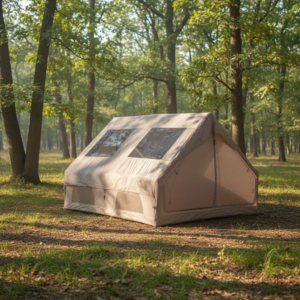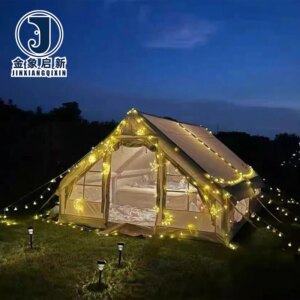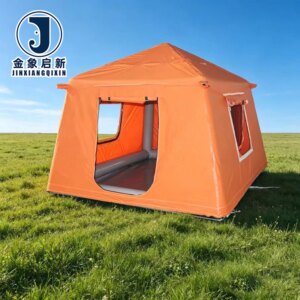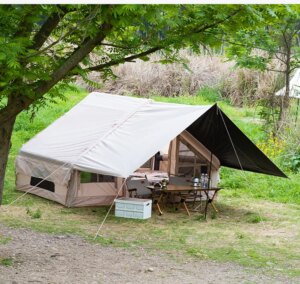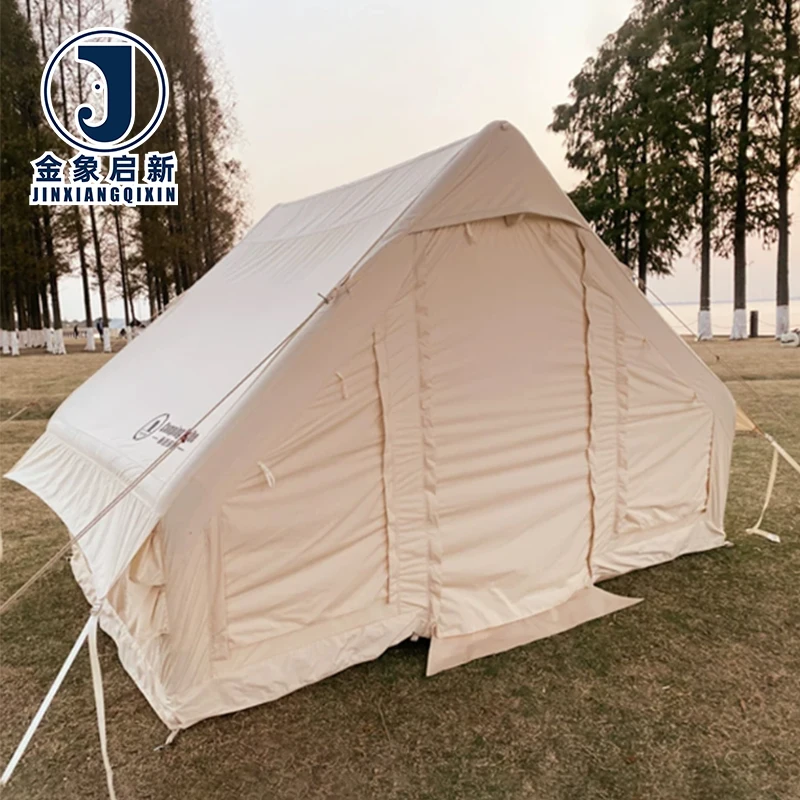
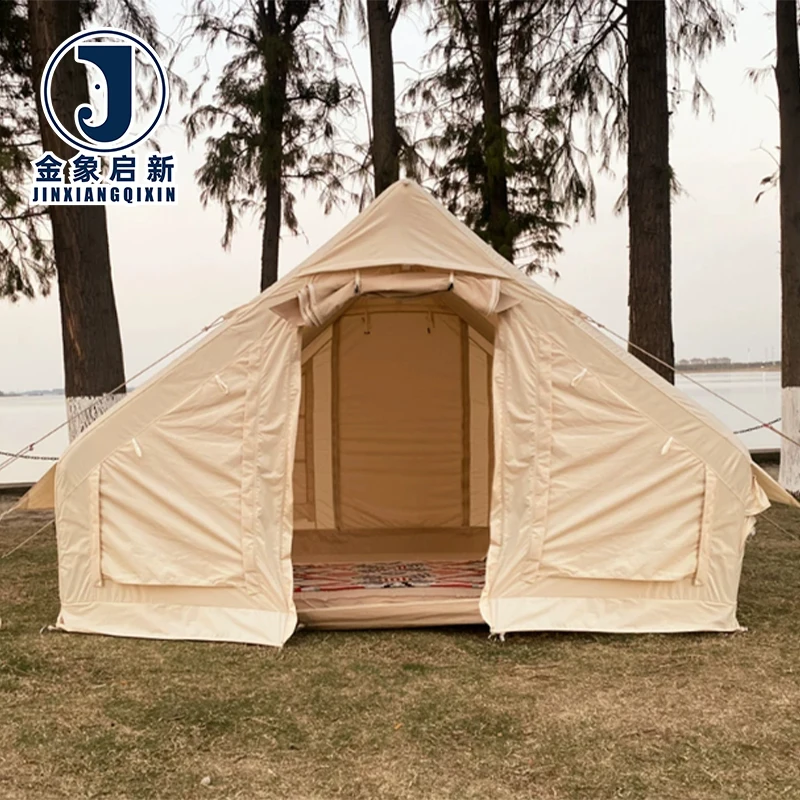
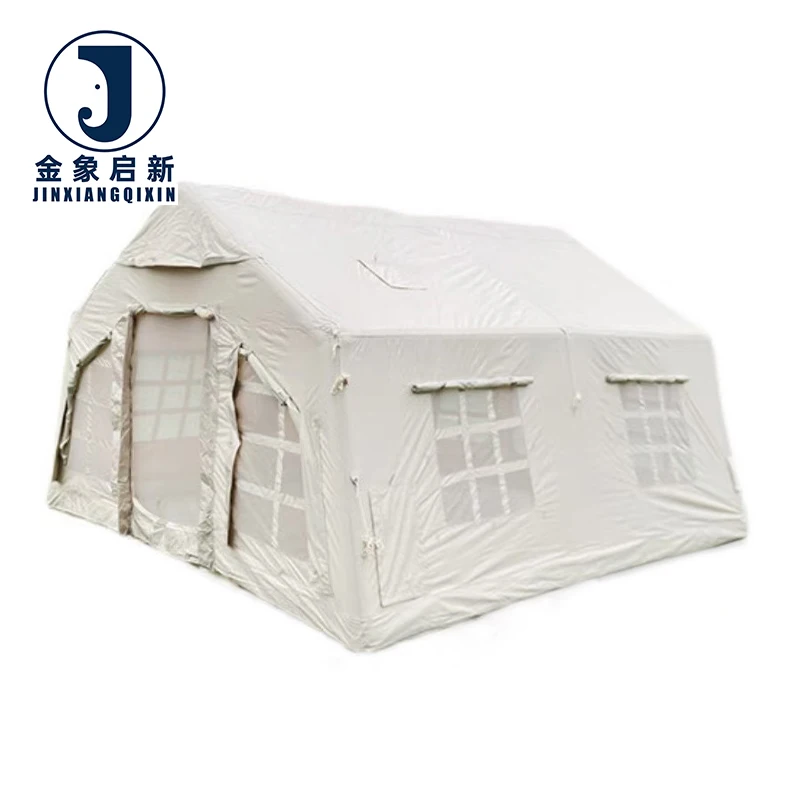
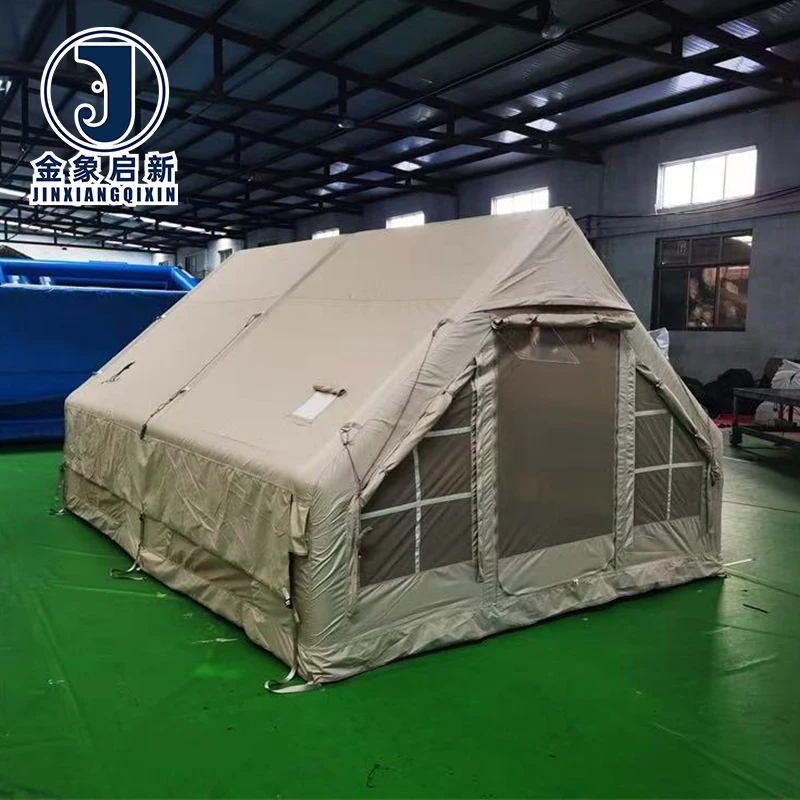
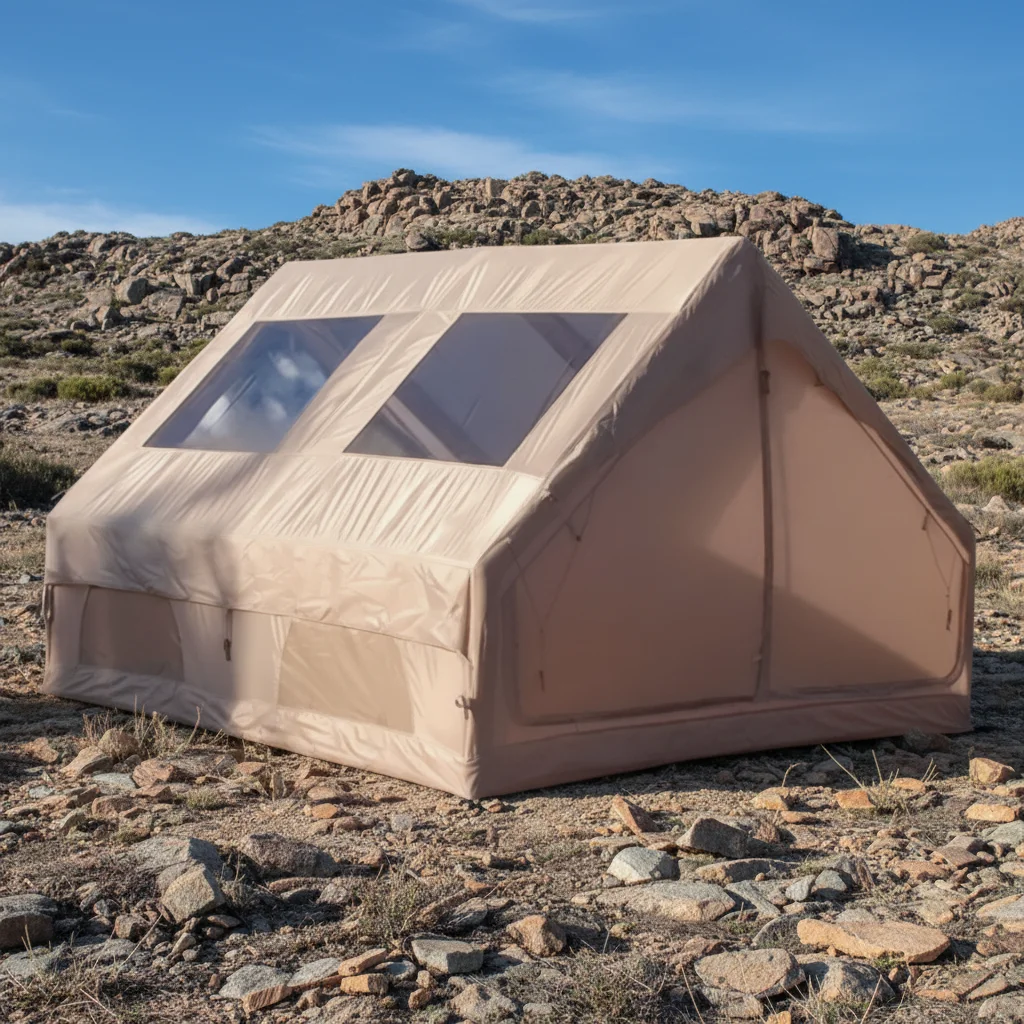
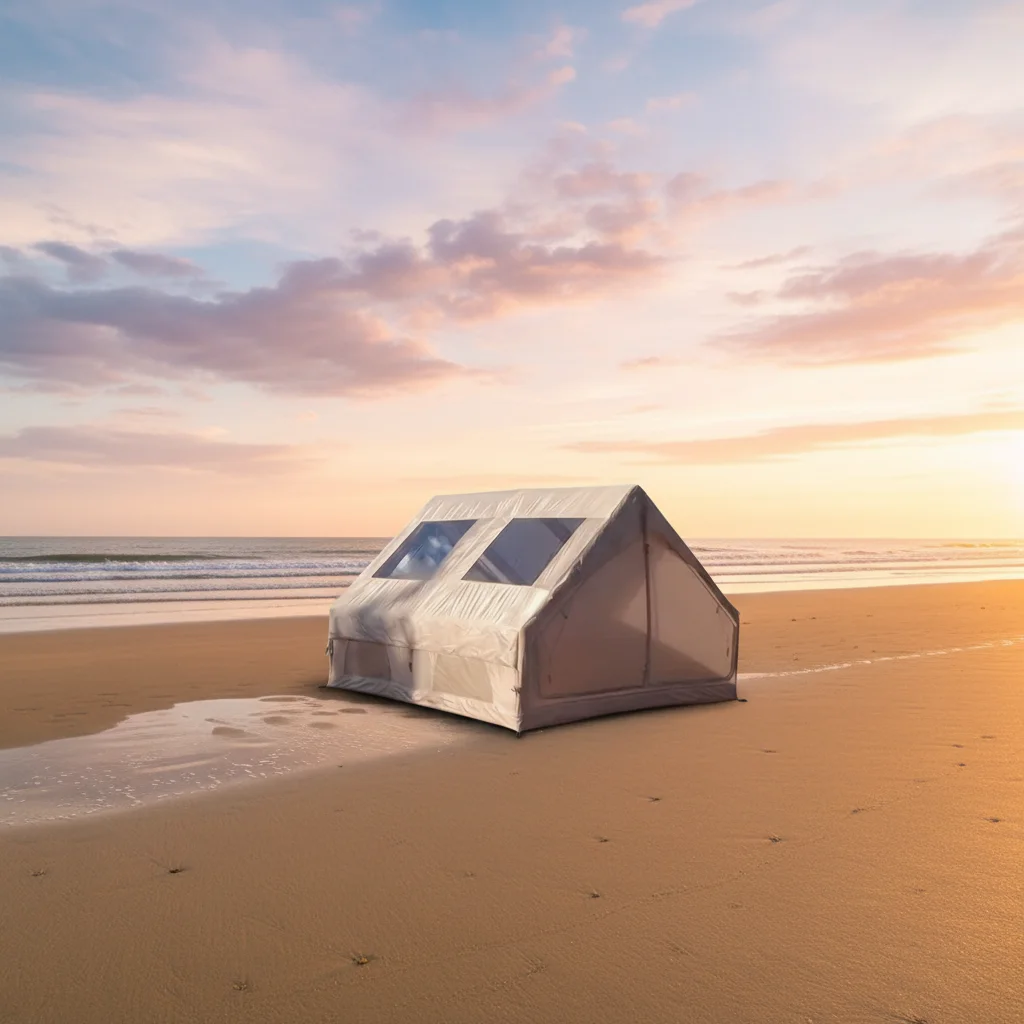
PVC Inflatable Camping Tent — waterproof, UV-resistant, tear-resistant PVC tarpaulin structure with single-layer inflatable construction for rapid deployment in demanding outdoor environments.
Built for commercial camping operations and industrial temporary shelters, this inflatable structure fabric is engineered to withstand continuous heavy-duty use across large-scale outdoor event facilities, expedition bases, and construction camps where reliability matters.
- OEM & ODM customization with sample development and pattern printing
- Manufactured across 9,180 m² facility with 3 full production lines and 36 sets of equipment
- Strict full-process QA & QC inspection with 10-person R&D team ensuring batch consistency and dimensional accuracy on every order
Description
Coated Fabric Process Control — Nearly 30 years of focused PVC coating expertise ensures consistent adhesion and weight distribution across every inflatable tent production run.
Technical Specifications
| Parameter | Value |
|---|---|
| Product Type | Inflatable Tent |
| Core Material | PVC tarpaulin |
| Product Forms | Inflatable structure, single layer construction |
| Tear Strength | 300N (ISO 13937-2) |
| Flame Retardant | EN 13501-1 |
| UV Treatment | Retains 85% tensile strength after 500 hours accelerated weather testing |
| Waterproof Rating | Industrial standard (grade not stated in source) |
| Air Pressure Test | 24 consecutive hours, pressure decay ≤ 5% |
| Seam Strength Uniformity | ±3% tolerance (high-frequency welding) |
| Customization | OEM & ODM (sample customization, pattern printing) |
| Defective Rate | Below 0.3% |
| Standards & Certifications | ISO9001, ISO14001, ISO45001, CE, EN 13501-1, ISO 13937-2, EU REACH |
Application Suitability
| Application | Exposure & Requirement |
|---|---|
| Commercial camping ground operations | Continuous UV exposure, frequent inflation cycles, guest turnover requiring rapid deployment and reliable weather protection |
| Large-scale outdoor event facilities | High wind load on inflatable frames, public safety compliance, rapid setup and teardown between events |
| Industrial temporary shelter projects | Abrasive construction environments, dust and chemical exposure, fire safety requirements on active work sites |
| Construction camps and expedition bases | Extreme temperature variation, remote logistics, extended deployment without maintenance access |
| Commercial adventure parks | High-frequency public use, liability exposure demanding certified flame retardant materials, branded visual identity |
Why "Flame Retardant" Claims Fail Without a Traceable Grade Behind Them
Specifying a flame retardant grade by standard number is the only way to pass site inspection in regulated markets.
Procurement teams sourcing inflatable tents for commercial camps or public events frequently receive fabric described as "fire resistant" with no test documentation to support the claim. When the local fire marshal requests EN 13501-1 certification, the supplier cannot produce it, and the entire installation faces shutdown. This pattern repeats because flame retardant treatment is invisible to visual inspection — two identical-looking PVC rolls can differ entirely in their fire classification. [NEED_CITE: EN 13501-1 classification system for construction products and building elements]
The PVC Inflatable Camping Tent fabric we supply carries documented EN 13501-1 compliance, verified by batch-specific test reports included with each shipment. This eliminates the gap between quotation claims and on-site compliance requirements.
Coated Fabric Selection for Inflatable Tent Manufacturers
Choosing the correct PVC tarpaulin for an inflatable tent structure requires balancing tear resistance, seam integrity, and long-term UV stability. Our Inflatable Tent manufacturer team evaluates the base fabric denier, coating adhesion, and high-frequency welding compatibility before recommending a material specification. Each custom PVC Inflatable Camping Tent project begins with a sample confirmation cycle so buyers can validate inflation behaviour, fold memory, and colour accuracy before committing to full production.
Pressure Decay Testing and Structural Reliability
An inflatable tent lives or dies by its ability to hold internal pressure through temperature swings, wind loading, and physical contact from occupants. Our production protocol includes a 24-hour continuous air pressure test on finished structures, with a maximum allowable pressure decay of 5%. This catches seam leaks, valve seat defects, and micro-porosity in the coating that shorter spot checks would miss. High-frequency welded seams are held to a ±3% strength uniformity tolerance, reducing the risk that one section of the air beam fails before the rest. [NEED_CITE: high-frequency welding parameters for PVC coated polyester fabrics]
Reading the Specification Sheet Beyond Surface Weight
Tear strength at 300N measured under ISO 13937-2 indicates how the PVC tarpaulin resists propagating a nick or cut once the coating surface is breached. This matters for inflatable tent air beams because handling during transport, staking, and ground contact all create small abrasion points. A fabric that scores poorly on tear propagation will turn a minor scuff into a structural failure along the beam. UV treatment retaining 85% of tensile strength after 500 hours of accelerated weather testing shows the coating compound resists plasticiser migration — the mechanism that causes PVC to become brittle and crack at fold lines after repeated seasonal use. The EN 13501-1 flame retardant classification addresses both ignition resistance and smoke production, which is critical when inflatable structures serve as enclosed public shelters where evacuation routes must remain visible. High-frequency welding seam uniformity at ±3% directly affects how evenly the air beam inflates; inconsistent seam strength causes one side to bulge while the opposite side remains under-pressurised, creating asymmetric load on the entire structure.
The Hidden Cost of Overlooking Seam and Coating Verification
When seam strength uniformity is not controlled, the first failure point on an inflatable tent is almost always at a welded joint rather than in the fabric body. Buyers who skip batch-specific air pressure testing discover this only after deployment, when a beam deflates in the field and the structure collapses onto equipment or guests. Colour variation between production batches of printed tents becomes visible only when two units stand side by side at an event site, forcing last-minute rotation or replacement that disrupts the client’s schedule. Flame retardant grades claimed without documentation surface as compliance failures during pre-opening inspections, with financial penalties and project delays compounding the original material cost. [NEED_CITE: common failure modes in inflatable membrane structures under wind load]
Why Procurement Teams Source Inflatable Tent Fabric Here
Three full production lines and 36 sets of professional processing equipment support the volume demands of commercial inflatable tent manufacturing without sacrificing batch consistency. A 10-person R&D team handles material selection, pattern printing layout, and prototype development, delivering sample confirmation within days for first-time buyers. Dedicated QA and QC staff inspect every production stage, with 100% pre-shipment inspection on finished inflatable structures including the mandatory 24-hour air pressure hold. Raw material traceability remains accessible by order number within two years of delivery, supporting warranty investigations and reorder matching. ISO9001, ISO14001, and ISO45001 system certifications underpin the quality management framework, while CE marking and EU REACH compliance address chemical safety requirements for European market entry.
Documentation & Verification
- Material specification sheet confirming PVC tarpaulin composition and coating weight per roll
- Batch-specific test report covering tear strength per ISO 13937-2 and flame retardant EN 13501-1
- 24-hour air pressure decay test record included with every finished inflatable tent unit
- Pre-shipment inspection report with dimensional check and visual defect count
- Certificate of origin and customs documentation pack for international dispatch
- EU REACH compliance declaration for PVC compound chemical safety
Fabrication, Handling & Storage
- High-frequency welding parameters must be calibrated to the specific PVC tarpaulin coating thickness to achieve ±3% seam uniformity
- Store rolled inflatable tent fabric vertically on pallets to prevent flat-spot creasing that weakens the coating at fold lines
- Allow cold-stored PVC material to acclimatise to above 10°C before unrolling to avoid coating micro-cracking
- Use PVC-compatible solvent cleaners only; aggressive alkaline agents degrade the plasticiser layer and reduce UV treatment effectiveness
- Field repairs on single-layer inflatable structures require compatible PVC patch material and solvent cement matched to the coating chemistry
- Pattern printing registration should be verified on a test panel before full-run production to ensure branding alignment on curved air beam surfaces
What We Need to Quote Your Inflatable Tent Project
Provide the intended application environment — commercial campground, event facility, or industrial camp — along with the fire safety classification required by your local authority. Specify whether you need raw PVC tarpaulin rolls for your own fabrication line or finished inflatable tent structures with custom dimensions and branded printing. Include your target colour references, annual volume estimate, and whether a prototype sample is required before production authorisation.
Frequently Asked Questions
Q: How is material weight verified upon delivery for custom inflatable tent orders?
A: Every roll undergoes weight verification against the stated specification before dispatch. The pre-shipment inspection record documents actual measured values alongside the order specification, so buyers can confirm the PVC tarpaulin matches what was quoted. This eliminates the common problem of receiving material lighter than agreed, which directly affects tear strength and inflation rigidity.
Q: What flame retardant grade does the tent fabric meet, and is it accepted in EU and US markets?
A: The fabric carries EN 13501-1 flame retardant classification, which is widely recognised across European Union member states for temporary structures and construction products. Buyers targeting other markets should confirm their local fire code requirements during the inquiry stage so we can advise whether additional testing or alternative treatment grades are needed for compliance.
Q: How do you control colour consistency across production batches for printed inflatable tents?
A: Colour matching is locked during the sample approval phase using physical reference panels. Each subsequent production batch is compared against the approved master under standardised lighting before release. The 100% pre-shipment inspection includes a side-by-side colour check, and any roll falling outside tolerance is held for rework rather than shipped.
Q: What documentation is provided to support customs clearance and compliance in regulated markets?
A: Each shipment includes a certificate of origin, commercial invoice, packing list, and the applicable compliance declarations including CE marking and EU REACH documentation. Batch-specific test reports for tear strength and flame retardant classification accompany the shipment, providing customs authorities and end-site inspectors with traceable quality evidence.
Q: What is the typical lead time and sample process for custom-sized inflatable tents?
A: A prototype sample is developed within days for first-time orders, allowing buyers to verify dimensions, inflation behaviour, and printed branding before authorising bulk production. Lead times for full production depend on order volume, customisation complexity, and current line capacity — these are confirmed in the quotation after the specification is finalised.
Related products
-
Inflatable PVC Camping Tent Four-Season Waterproof CE Certified Quick Automatic Opening 3000mm+ Factory Direct Sale
Read more -
Inflatable Camping Tent PVC Four-Season Waterproof Outdoor Air Tent with Quick Automatic Opening for 2-3 Person
Read more -
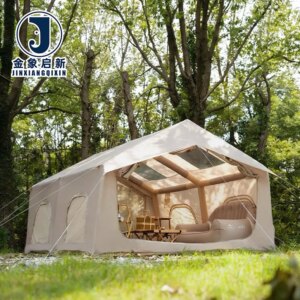
Camping Tent Inflatable UV Resistant Customizable Four-season Waterproof PVC Eco-Friendly Windproof Foldable Quick Automatic
Read more -
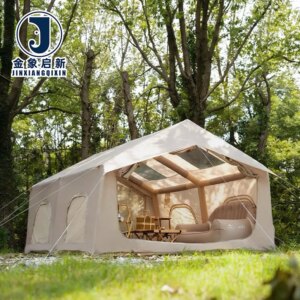
Inflatable Tent Family Size Four-Season Quick Automatic Opening Waterproof 2-8 Person Factory Direct Sale
Read more